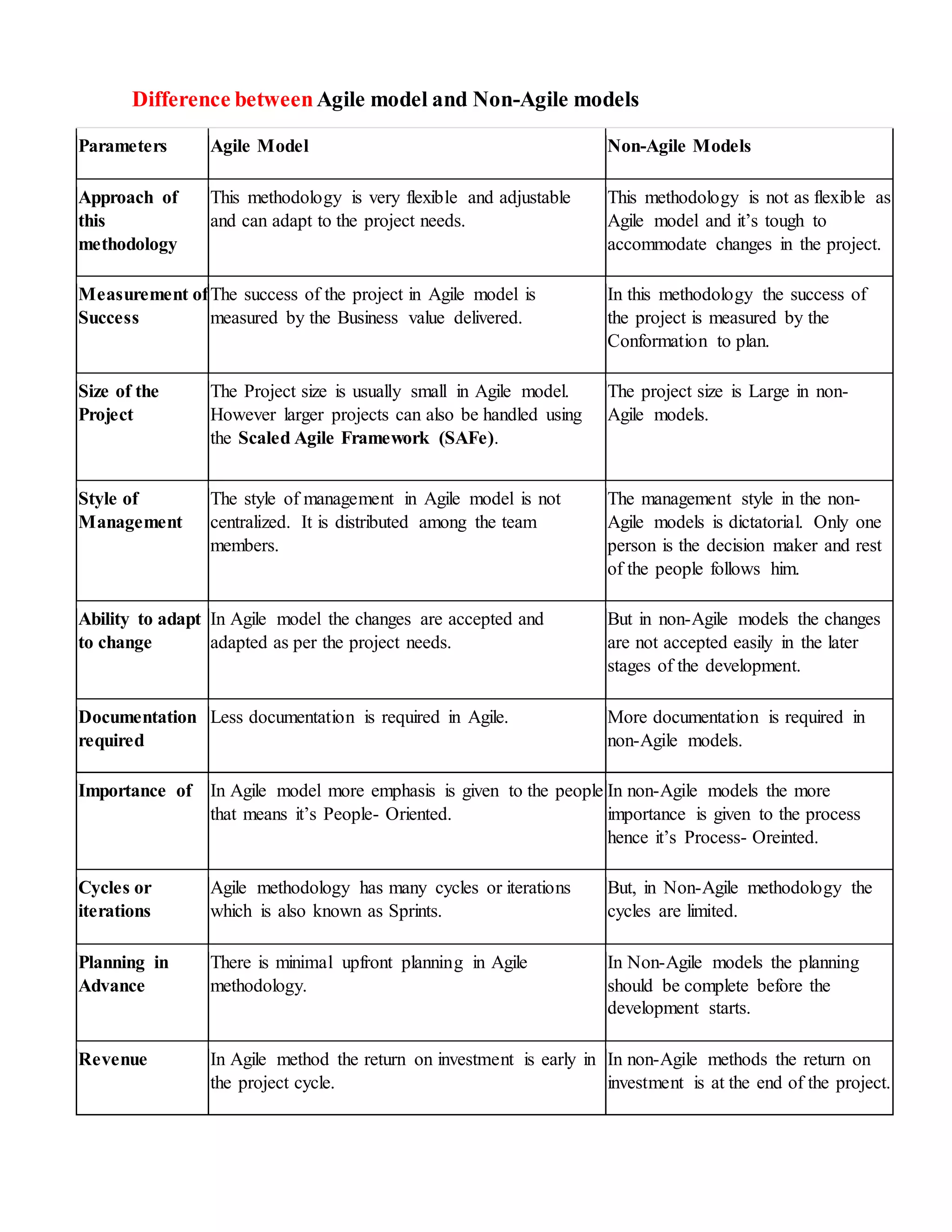
Difference betweenAgile model and Non-Agile models
Parameters Agile Model Non-Agile Models
Approach of
this
methodology
This methodology is very flexible and adjustable
and can adapt to the project needs.
This methodology is not as flexible as
Agile model and it’s tough to
accommodate changes in the project.
Measurement of
Success
The success of the project in Agile model is
measured by the Business value delivered.
In this methodology the success of
the project is measured by the
Conformation to plan.
Size of the
Project
The Project size is usually small in Agile model.
However larger projects can also be handled using
the Scaled Agile Framework (SAFe).
The project size is Large in non-
Agile models.
Style of
Management
The style of management in Agile model is not
centralized. It is distributed among the team
members.
The management style in the non-
Agile models is dictatorial. Only one
person is the decision maker and rest
of the people follows him.
Ability to adapt
to change
In Agile model the changes are accepted and
adapted as per the project needs.
But in non-Agile models the changes
are not accepted easily in the later
stages of the development.
Documentation
required
Less documentation is required in Agile. More documentation is required in
non-Agile models.
Importance of In Agile model more emphasis is given to the people
that means it’s People- Oriented.
In non-Agile models the more
importance is given to the process
hence it’s Process- Oreinted.
Cycles or
iterations
Agile methodology has many cycles or iterations
which is also known as Sprints.
But, in Non-Agile methodology the
cycles are limited.
Planning in
Advance
There is minimal upfront planning in Agile
methodology.
In Non-Agile models the planning
should be complete before the
development starts.
Revenue In Agile method the return on investment is early in
the project cycle.
In non-Agile methods the return on
investment is at the end of the project.
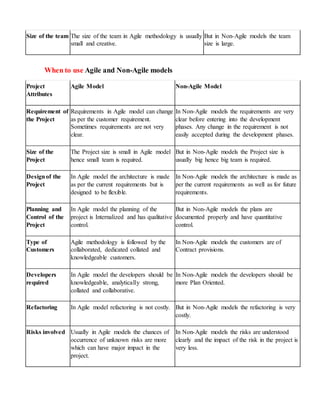
Size of the team The size of the team in Agile methodology is usually
small and creative.
But in Non-Agile models the team
size is large.
When to use Agile and Non-Agile models
Project
Attributes
Agile Model Non-Agile Model
Requirement of
the Project
Requirements in Agile model can change
as per the customer requirement.
Sometimes requirements are not very
clear.
In Non-Agile models the requirements are very
clear before entering into the development
phases. Any change in the requirement is not
easily accepted during the development phases.
Size of the
Project
The Project size is small in Agile model
hence small team is required.
But in Non-Agile models the Project size is
usually big hence big team is required.
Designof the
Project
In Agile model the architecture is made
as per the current requirements but is
designed to be flexible.
In Non-Agile models the architecture is made as
per the current requirements as well as for future
requirements.
Planning and
Control of the
Project
In Agile model the planning of the
project is Internalized and has qualitative
control.
But in Non-Agile models the plans are
documented properly and have quantitative
control.
Type of
Customers
Agile methodology is followed by the
collaborated, dedicated collated and
knowledgeable customers.
In Non-Agile models the customers are of
Contract provisions.
Developers
required
In Agile model the developers should be
knowledgeable, analytically strong,
collated and collaborative.
In Non-Agile models the developers should be
more Plan Oriented.
Refactoring In Agile model refactoring is not costly. But in Non-Agile models the refactoring is very
costly.
Risks involved Usually in Agile models the chances of
occurrence of unknown risks are more
which can have major impact in the
project.
In Non-Agile models the risks are understood
clearly and the impact of the risk in the project is
very less.
Agile and non agile

Agile and non agile

  • 1.
    Difference betweenAgile modeland Non-Agile models Parameters Agile Model Non-Agile Models Approach of this methodology This methodology is very flexible and adjustable and can adapt to the project needs. This methodology is not as flexible as Agile model and it’s tough to accommodate changes in the project. Measurement of Success The success of the project in Agile model is measured by the Business value delivered. In this methodology the success of the project is measured by the Conformation to plan. Size of the Project The Project size is usually small in Agile model. However larger projects can also be handled using the Scaled Agile Framework (SAFe). The project size is Large in non- Agile models. Style of Management The style of management in Agile model is not centralized. It is distributed among the team members. The management style in the non- Agile models is dictatorial. Only one person is the decision maker and rest of the people follows him. Ability to adapt to change In Agile model the changes are accepted and adapted as per the project needs. But in non-Agile models the changes are not accepted easily in the later stages of the development. Documentation required Less documentation is required in Agile. More documentation is required in non-Agile models. Importance of In Agile model more emphasis is given to the people that means it’s People- Oriented. In non-Agile models the more importance is given to the process hence it’s Process- Oreinted. Cycles or iterations Agile methodology has many cycles or iterations which is also known as Sprints. But, in Non-Agile methodology the cycles are limited. Planning in Advance There is minimal upfront planning in Agile methodology. In Non-Agile models the planning should be complete before the development starts. Revenue In Agile method the return on investment is early in the project cycle. In non-Agile methods the return on investment is at the end of the project.
  • 2.
    Size of theteam The size of the team in Agile methodology is usually small and creative. But in Non-Agile models the team size is large. When to use Agile and Non-Agile models Project Attributes Agile Model Non-Agile Model Requirement of the Project Requirements in Agile model can change as per the customer requirement. Sometimes requirements are not very clear. In Non-Agile models the requirements are very clear before entering into the development phases. Any change in the requirement is not easily accepted during the development phases. Size of the Project The Project size is small in Agile model hence small team is required. But in Non-Agile models the Project size is usually big hence big team is required. Designof the Project In Agile model the architecture is made as per the current requirements but is designed to be flexible. In Non-Agile models the architecture is made as per the current requirements as well as for future requirements. Planning and Control of the Project In Agile model the planning of the project is Internalized and has qualitative control. But in Non-Agile models the plans are documented properly and have quantitative control. Type of Customers Agile methodology is followed by the collaborated, dedicated collated and knowledgeable customers. In Non-Agile models the customers are of Contract provisions. Developers required In Agile model the developers should be knowledgeable, analytically strong, collated and collaborative. In Non-Agile models the developers should be more Plan Oriented. Refactoring In Agile model refactoring is not costly. But in Non-Agile models the refactoring is very costly. Risks involved Usually in Agile models the chances of occurrence of unknown risks are more which can have major impact in the project. In Non-Agile models the risks are understood clearly and the impact of the risk in the project is very less.