HIERARCHICAL MODELS OF
SOFTWARE QUALITY
Muthukumaran S,
M.E. Software Engineering,
Anna University.
A hierarchical model of software quality is
based upon a set of quality criteria, each of
which has a set of measures or metrics
associated with it.
Quality model are,
Bohem model.
McCall model.
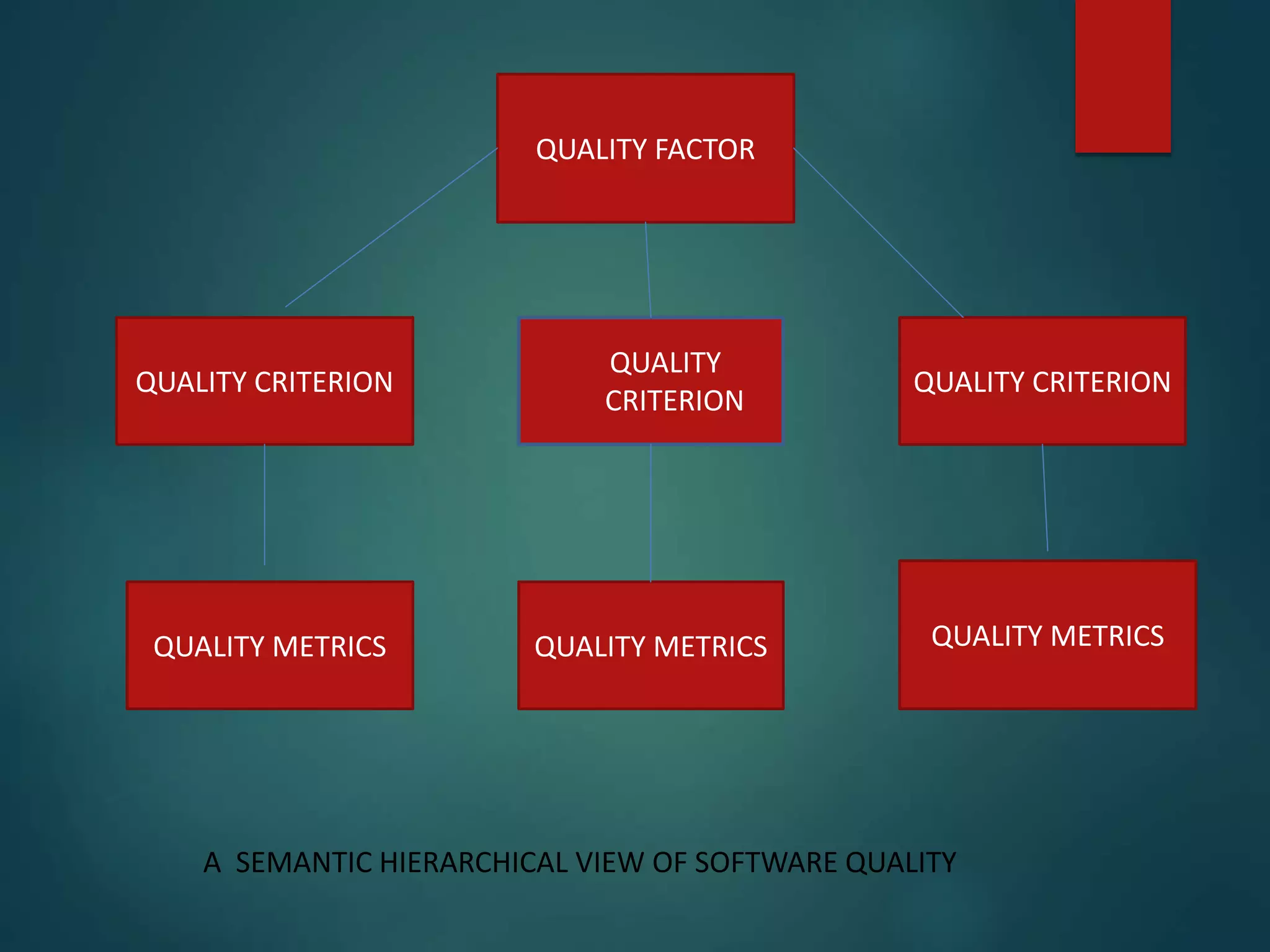
QUALITY FACTOR
QUALITY CRITERION
QUALITY METRICS
QUALITY
CRITERION
QUALITY METRICS
QUALITY CRITERION
QUALITY METRICS
A SEMANTIC HIERARCHICAL VIEW OF SOFTWARE QUALITY
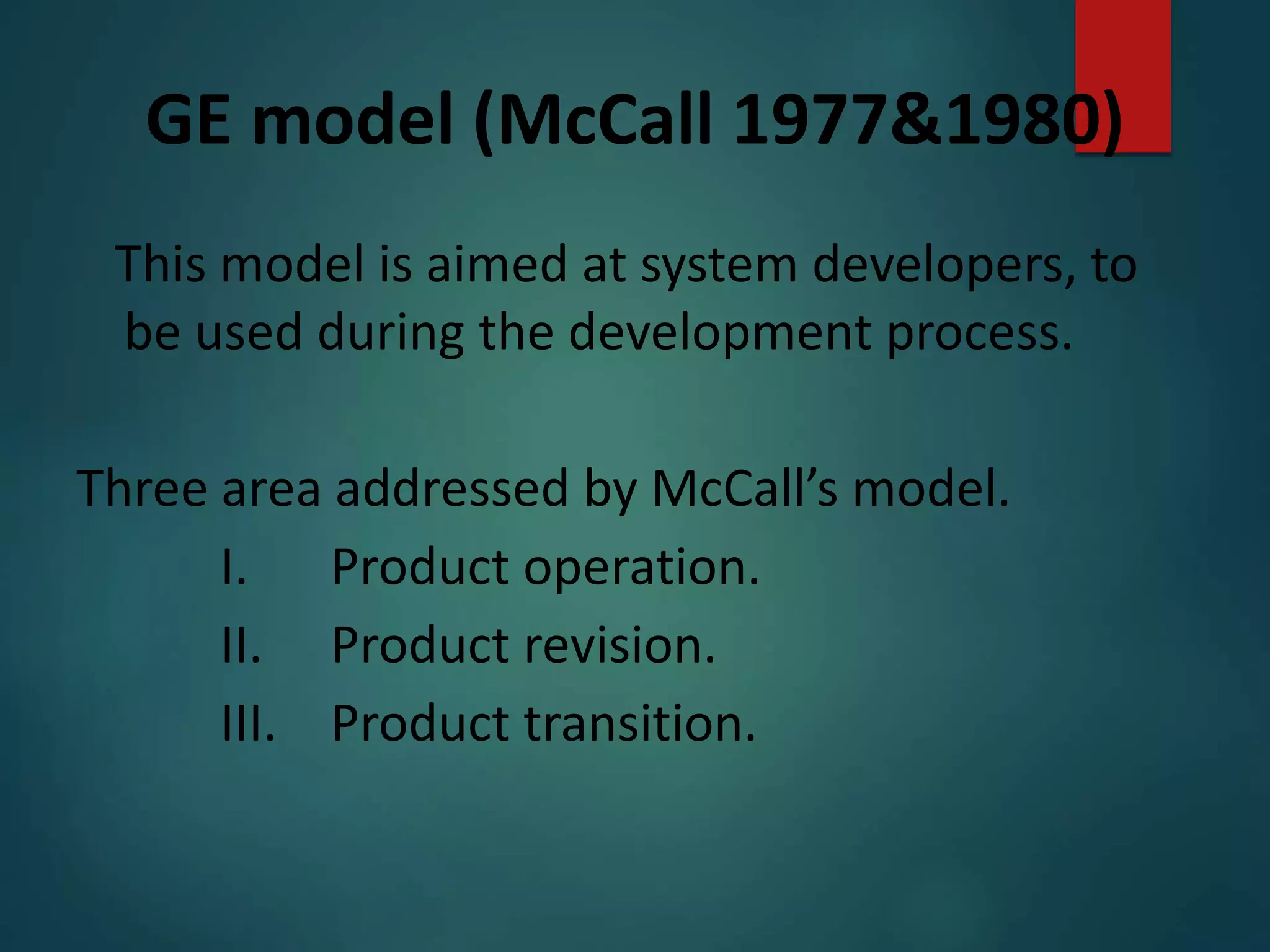
GE model (McCall 1977&1980)
This model is aimed at system developers, to
be used during the development process.
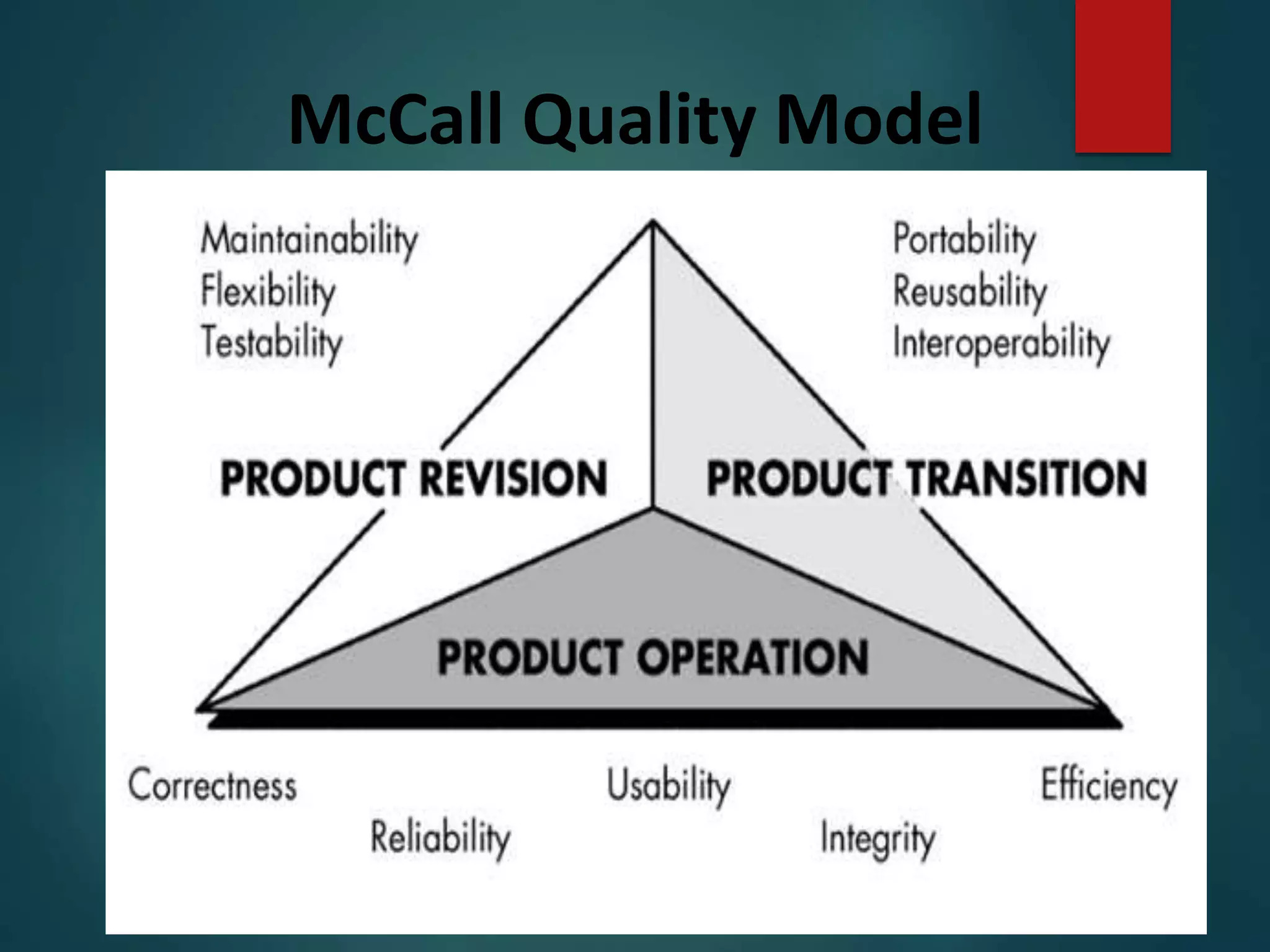
Three area addressed by McCall’s model.
I. Product operation.
II. Product revision.
III. Product transition.
McCall Quality Model
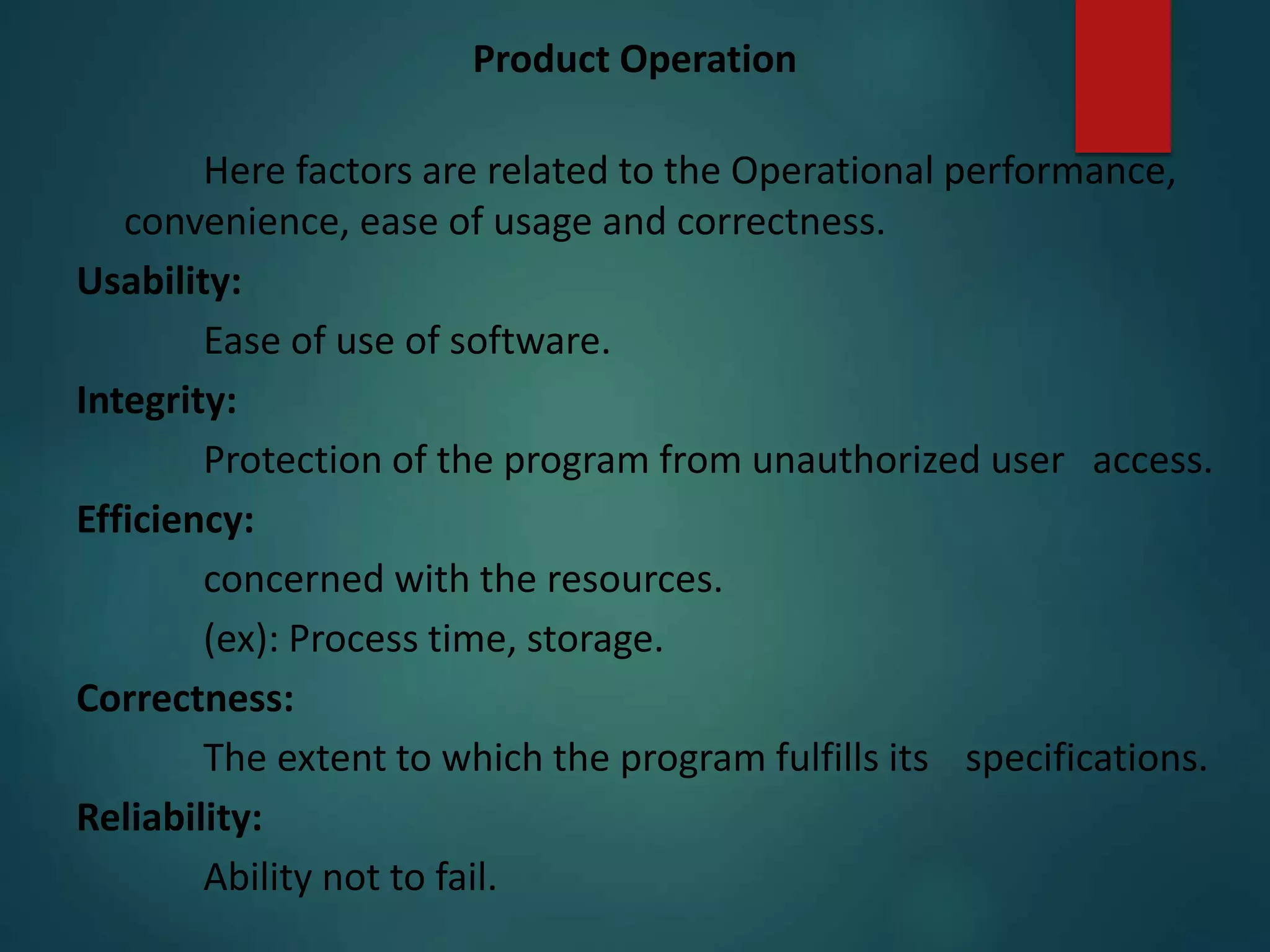
Product Operation
Here factors are related to the Operational performance,
convenience, ease of usage and correctness.
Usability:
Ease of use of software.
Integrity:
Protection of the program from unauthorized user access.
Efficiency:
concerned with the resources.
(ex): Process time, storage.
Correctness:
The extent to which the program fulfills its specifications.
Reliability:
Ability not to fail.
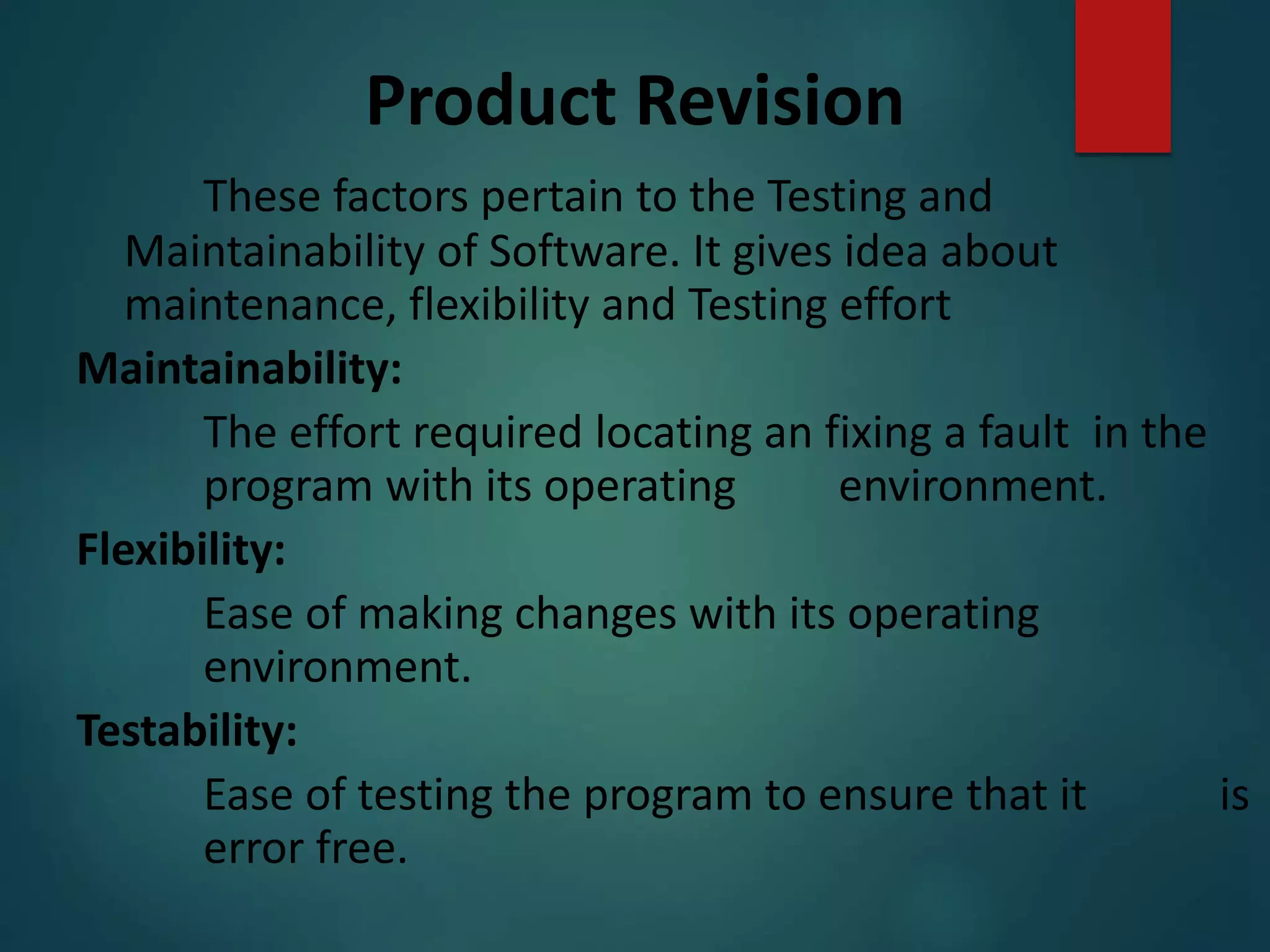
Product Revision
These factors pertain to the Testing and
Maintainability of Software. It gives idea about
maintenance, flexibility and Testing effort
Maintainability:
The effort required locating an fixing a fault in the
program with its operating environment.
Flexibility:
Ease of making changes with its operating
environment.
Testability:
Ease of testing the program to ensure that it is
error free.
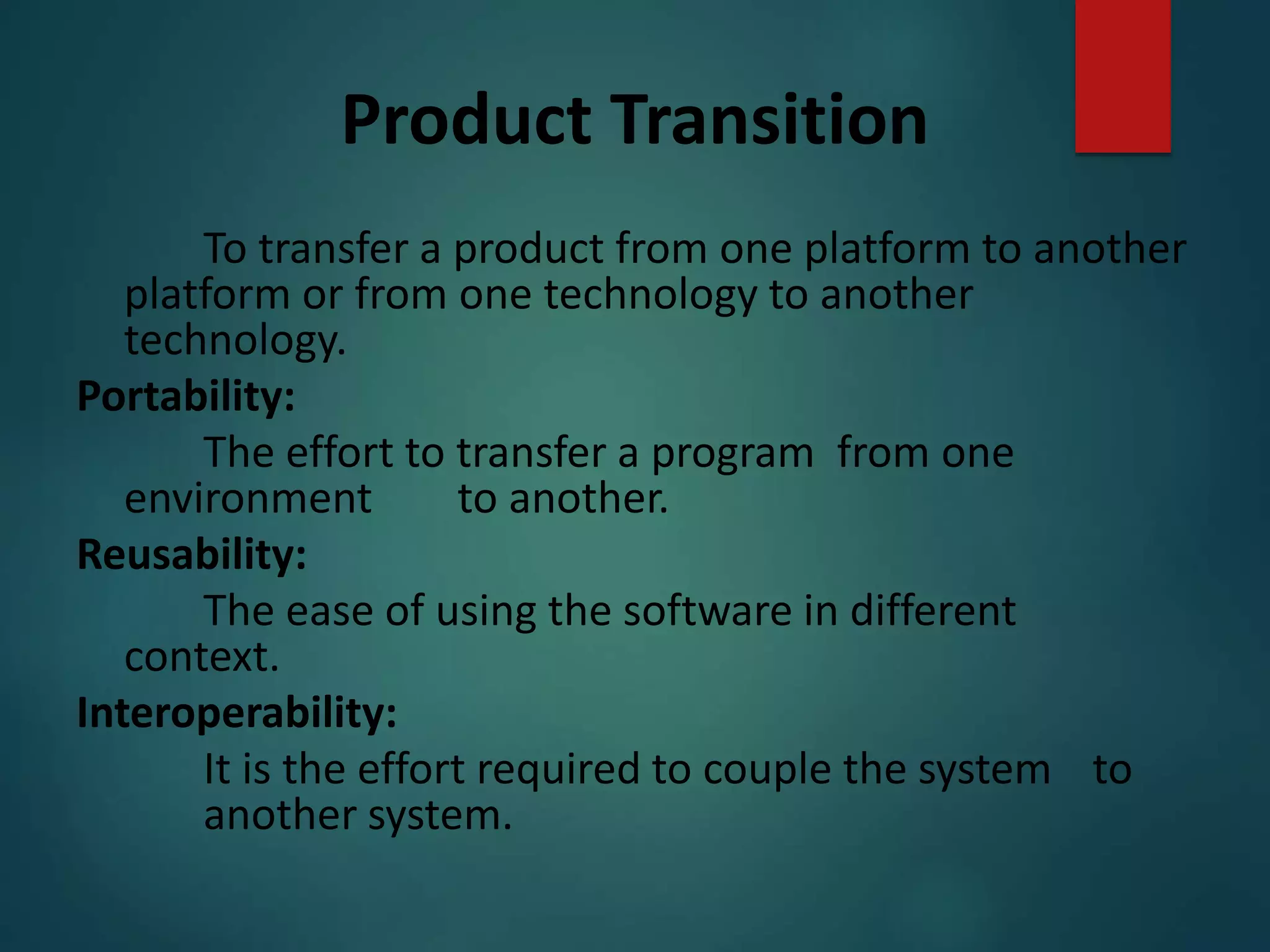
Product Transition
To transfer a product from one platform to another
platform or from one technology to another
technology.
Portability:
The effort to transfer a program from one
environment to another.
Reusability:
The ease of using the software in different
context.
Interoperability:
It is the effort required to couple the system to
another system.
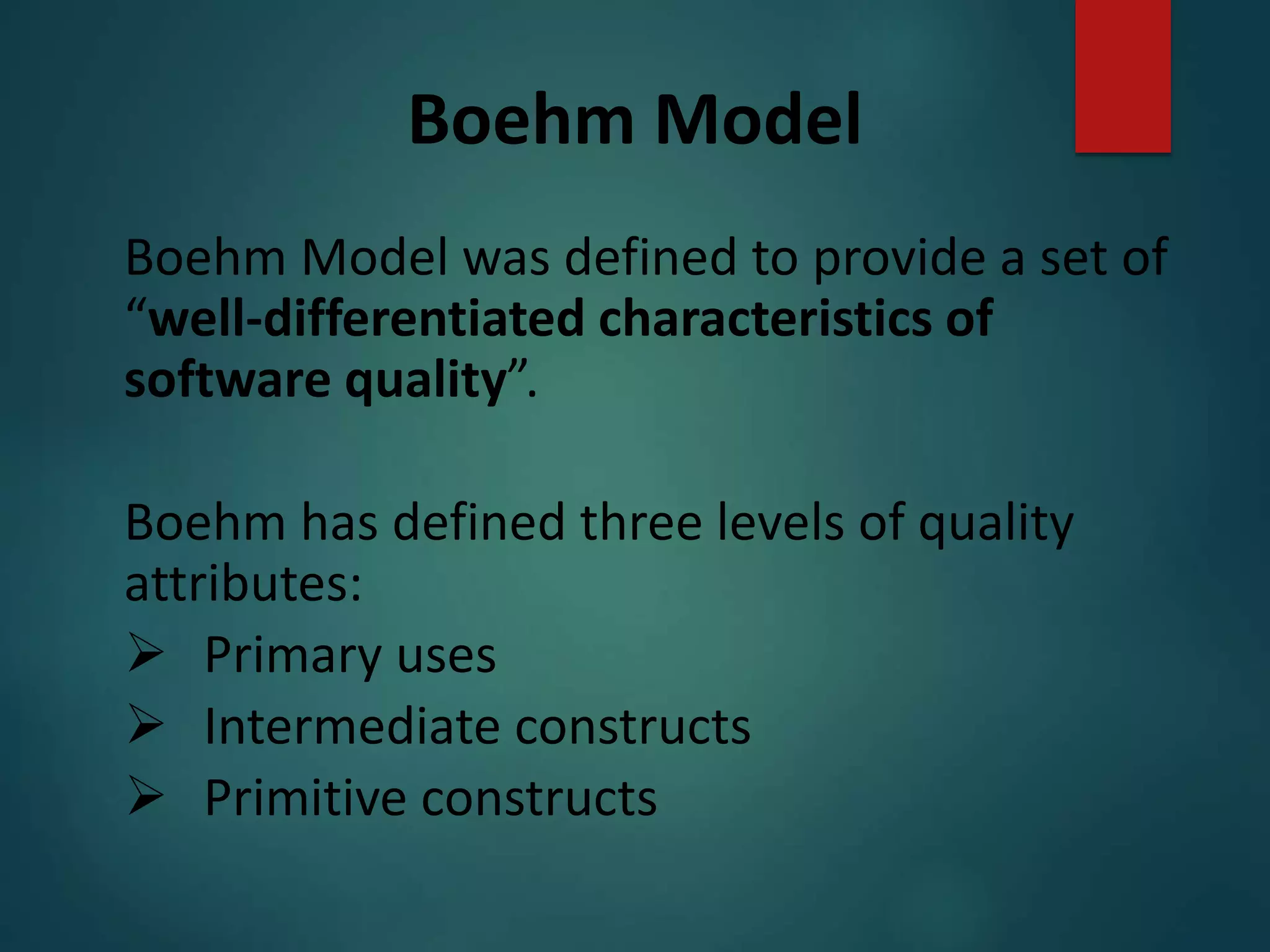
Boehm Model
Boehm Model was defined to provide a set of
“well-differentiated characteristics of
software quality”.
Boehm has defined three levels of quality
attributes:
 Primary uses
 Intermediate constructs
 Primitive constructs
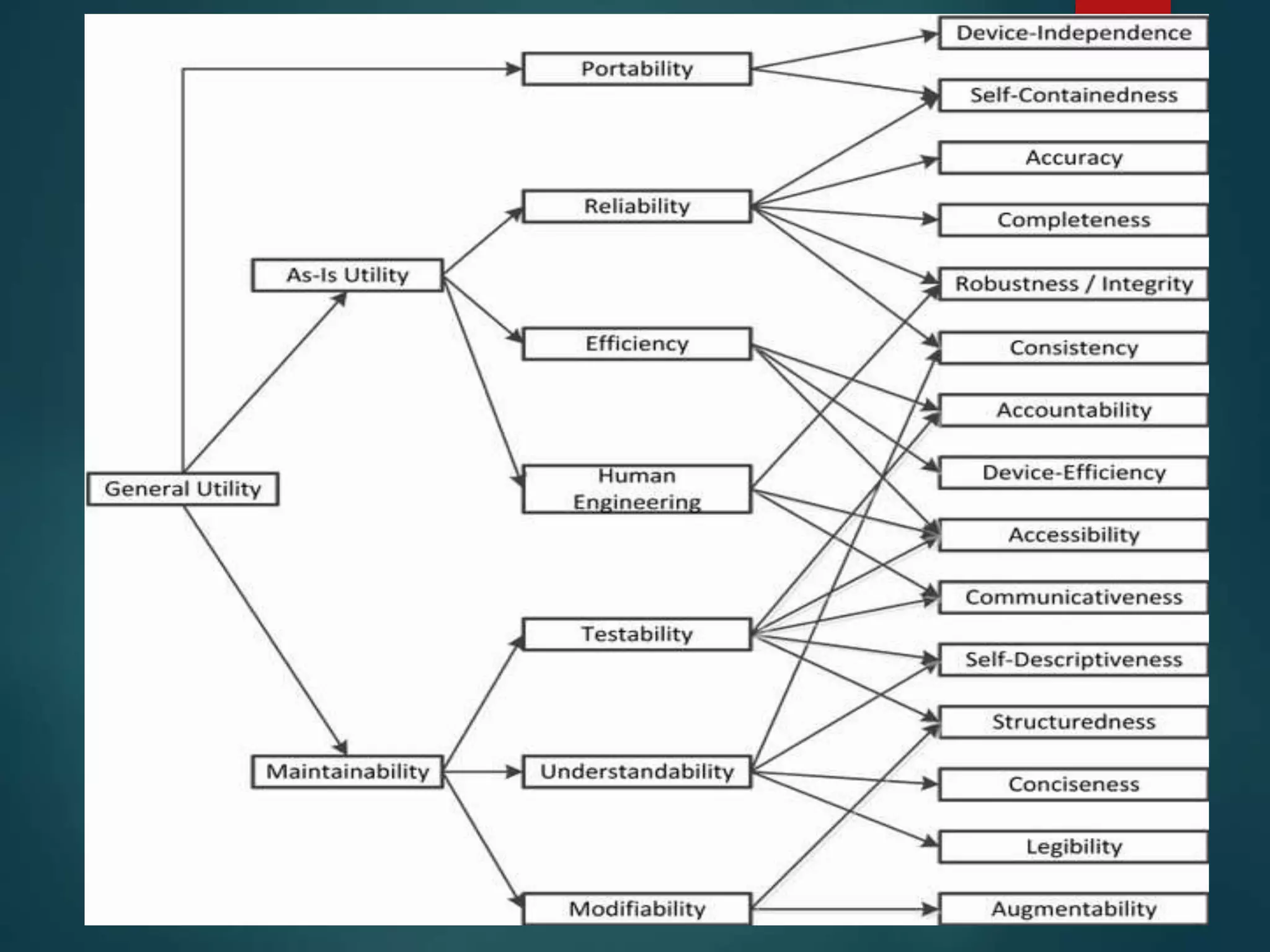
Primary uses
The high level of characteristics is made in such a way that answers
following questions:
As-Is Utility:
It defines the way a utility signifies the as-is utility. It creates a question of
how easily, reliably and efficiently an as can be utilized.
Maintainability:
This aspect decides how convenient it is to understand, change or re-
evaluate a process.
Portability:
This aspect helps in deciding an effective way to change an environment.
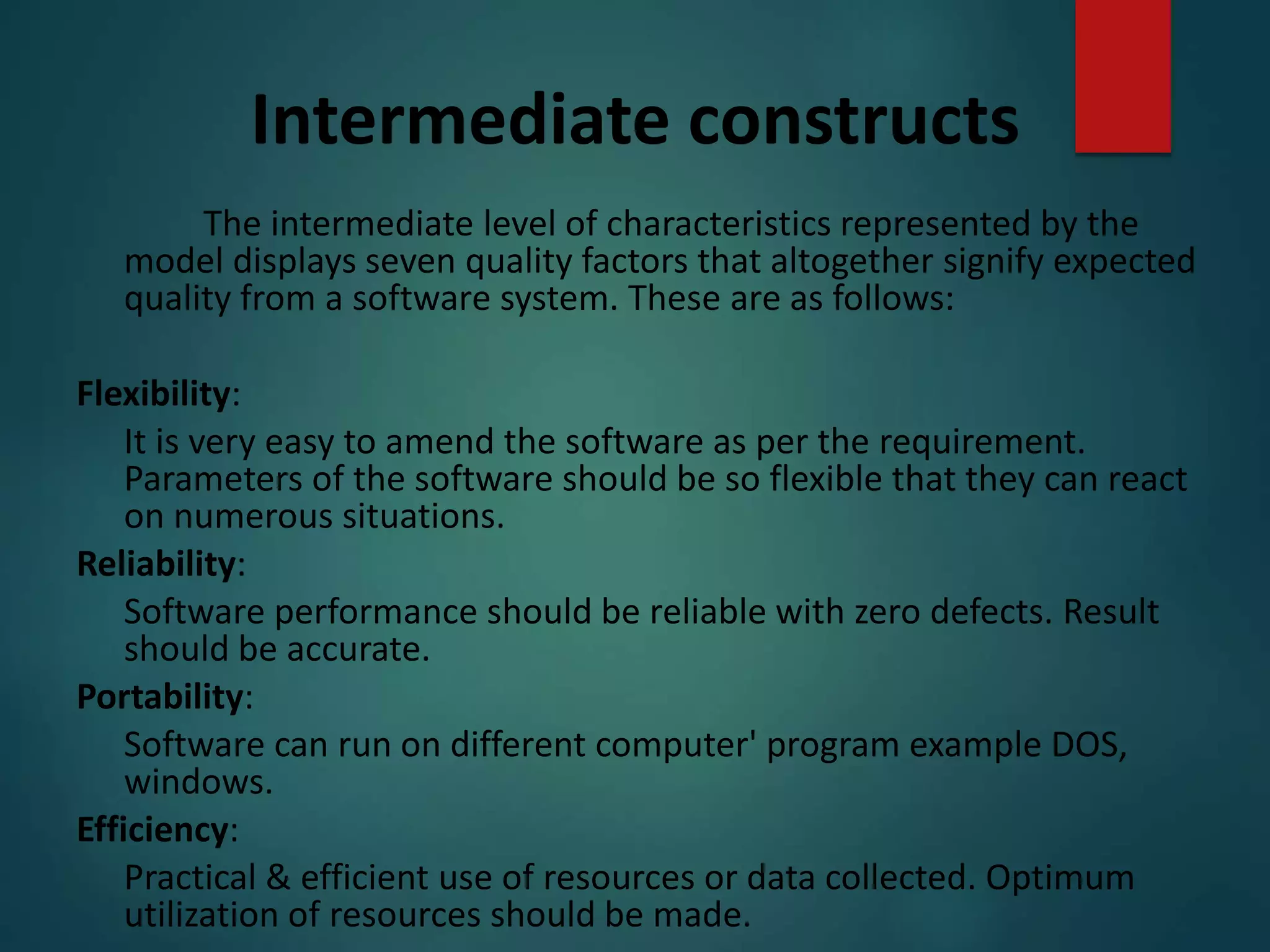
Intermediate constructs
The intermediate level of characteristics represented by the
model displays seven quality factors that altogether signify expected
quality from a software system. These are as follows:
Flexibility:
It is very easy to amend the software as per the requirement.
Parameters of the software should be so flexible that they can react
on numerous situations.
Reliability:
Software performance should be reliable with zero defects. Result
should be accurate.
Portability:
Software can run on different computer' program example DOS,
windows.
Efficiency:
Practical & efficient use of resources or data collected. Optimum
utilization of resources should be made.
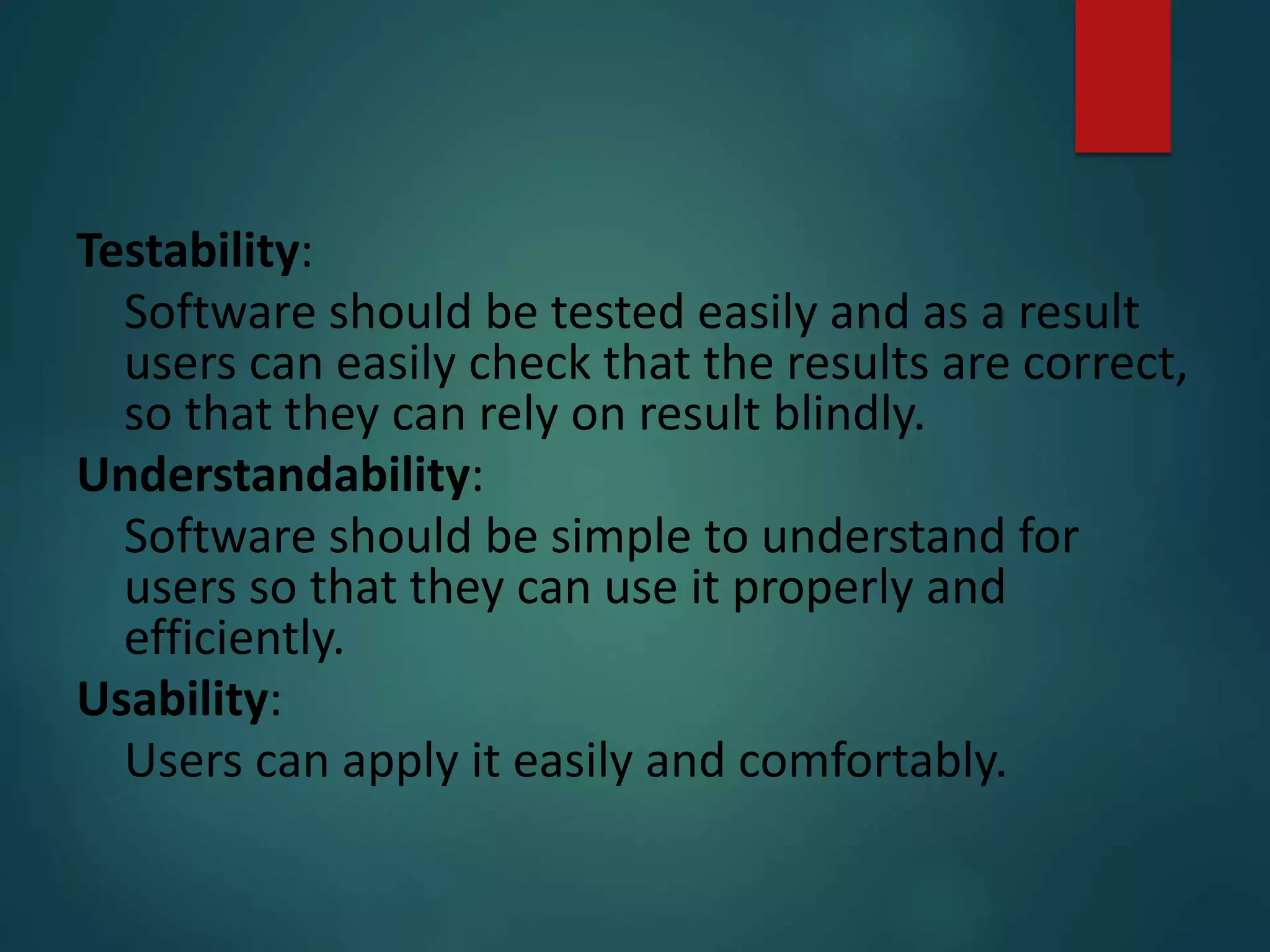
Testability:
Software should be tested easily and as a result
users can easily check that the results are correct,
so that they can rely on result blindly.
Understandability:
Software should be simple to understand for
users so that they can use it properly and
efficiently.
Usability:
Users can apply it easily and comfortably.
Primitive constructs
The factors can result into creation of other measurable
properties. These are as follows:
 Device Independence.
 Accuracy.
 Completeness.
 Robustness.
 Consistency.
 Accountability.
 Device efficiency.
 Accessibility.
 Communicativeness.
 Self-descriptiveness.
 Legibility.
 Augment-ability.
Thank you…

Hierarchical models of software quality

  • 1.
    HIERARCHICAL MODELS OF SOFTWAREQUALITY Muthukumaran S, M.E. Software Engineering, Anna University.
  • 2.
    A hierarchical modelof software quality is based upon a set of quality criteria, each of which has a set of measures or metrics associated with it. Quality model are, Bohem model. McCall model.
  • 3.
    QUALITY FACTOR QUALITY CRITERION QUALITYMETRICS QUALITY CRITERION QUALITY METRICS QUALITY CRITERION QUALITY METRICS A SEMANTIC HIERARCHICAL VIEW OF SOFTWARE QUALITY
  • 4.
    GE model (McCall1977&1980) This model is aimed at system developers, to be used during the development process. Three area addressed by McCall’s model. I. Product operation. II. Product revision. III. Product transition.
  • 5.
  • 6.
    Product Operation Here factorsare related to the Operational performance, convenience, ease of usage and correctness. Usability: Ease of use of software. Integrity: Protection of the program from unauthorized user access. Efficiency: concerned with the resources. (ex): Process time, storage. Correctness: The extent to which the program fulfills its specifications. Reliability: Ability not to fail.
  • 7.
    Product Revision These factorspertain to the Testing and Maintainability of Software. It gives idea about maintenance, flexibility and Testing effort Maintainability: The effort required locating an fixing a fault in the program with its operating environment. Flexibility: Ease of making changes with its operating environment. Testability: Ease of testing the program to ensure that it is error free.
  • 8.
    Product Transition To transfera product from one platform to another platform or from one technology to another technology. Portability: The effort to transfer a program from one environment to another. Reusability: The ease of using the software in different context. Interoperability: It is the effort required to couple the system to another system.
  • 9.
    Boehm Model Boehm Modelwas defined to provide a set of “well-differentiated characteristics of software quality”. Boehm has defined three levels of quality attributes:  Primary uses  Intermediate constructs  Primitive constructs
  • 11.
    Primary uses The highlevel of characteristics is made in such a way that answers following questions: As-Is Utility: It defines the way a utility signifies the as-is utility. It creates a question of how easily, reliably and efficiently an as can be utilized. Maintainability: This aspect decides how convenient it is to understand, change or re- evaluate a process. Portability: This aspect helps in deciding an effective way to change an environment.
  • 12.
    Intermediate constructs The intermediatelevel of characteristics represented by the model displays seven quality factors that altogether signify expected quality from a software system. These are as follows: Flexibility: It is very easy to amend the software as per the requirement. Parameters of the software should be so flexible that they can react on numerous situations. Reliability: Software performance should be reliable with zero defects. Result should be accurate. Portability: Software can run on different computer' program example DOS, windows. Efficiency: Practical & efficient use of resources or data collected. Optimum utilization of resources should be made.
  • 13.
    Testability: Software should betested easily and as a result users can easily check that the results are correct, so that they can rely on result blindly. Understandability: Software should be simple to understand for users so that they can use it properly and efficiently. Usability: Users can apply it easily and comfortably.
  • 14.
    Primitive constructs The factorscan result into creation of other measurable properties. These are as follows:  Device Independence.  Accuracy.  Completeness.  Robustness.  Consistency.  Accountability.  Device efficiency.  Accessibility.  Communicativeness.  Self-descriptiveness.  Legibility.  Augment-ability.
  • 15.