Sustainable
Development
for Travel and Tourism
WHAT IS
AGENDA 21?
 Agenda 21 is a non-binding action plan of the United Nations with
regard to sustainable development.
 It is a product of the Earth Summit (UN Conference on Environment
and Development) held in Rio de Janeiro, Brazil, in 1992.
 Comprehensive plan of action to be taken Globally, Nationally,
Locally by organizations of the United Nations system, Government
and major groups in every area in which human impacts on the
environment.
 The “21” in Agenda 21 refers to the 21st century.
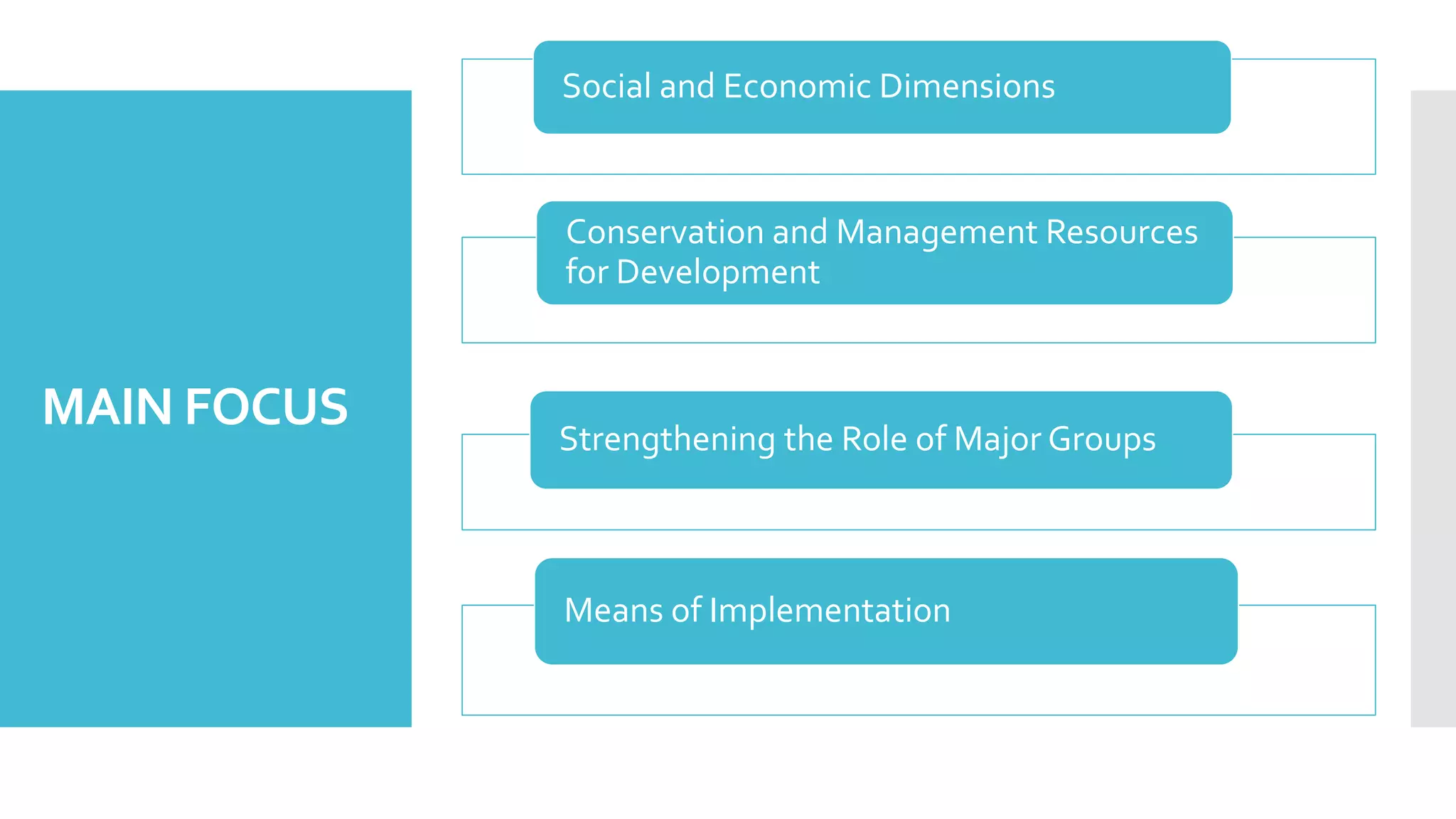
MAIN FOCUS
Social and Economic Dimensions
Conservation and Management Resources
for Development
Strengthening the Role of Major Groups
Means of Implementation
Social and
Economic
Dimensions
 International cooperation to accelerate sustainable
development in developing countries and related domestic
policies.
 Combating poverty
 Changing consumption patterns
 Demographic dynamics and sustainability
 Protecting and promoting human health conditions
 Promoting sustainable human settlement development
 Integrating environment and development in decision-making
Conservation
and
Management
Resources for
Development
 Protection of the atmosphere
 Integrated approach to the planning and management of land
resources
 Combating deforestation
 Managing fragile ecosystems: combating desertification and drought
 Promoting sustainable agriculture and rural development
 Conservation of biological diversity
 Environmentally safe management of biotechnology
 Protection of the oceans, all kinds of seas, including enclosed and semi-
enclosed seas, and coastal areas and the protection, rational use and
development of their living resources
 Protection of the quality and supply of freshwater resources
 Environmentally safe management of toxic chemicals, including
prevention of illegal international traffic in toxic and dangerous products,
hazardous wastes, solid wastes and sewage-related issues
 Safe and environmentally sound management of radioactive wastes
Strengthening
the Role of
MajorGroups
 Global action for women towards sustainable and equitable
development
 Children and youth in sustainable development
 Recognizing and strengthening the role of indigenous people
and their communities
 Strengthening the role of non-governmental organizations:
partners for sustainable development
 Local authorities' initiatives in support of Agenda 21
 Strengthening the role of workers and their trade unions
 Strengthening the role of business and industry
 Scientific and technological community
 Strengthening the role of farmers
Means of
Implementation
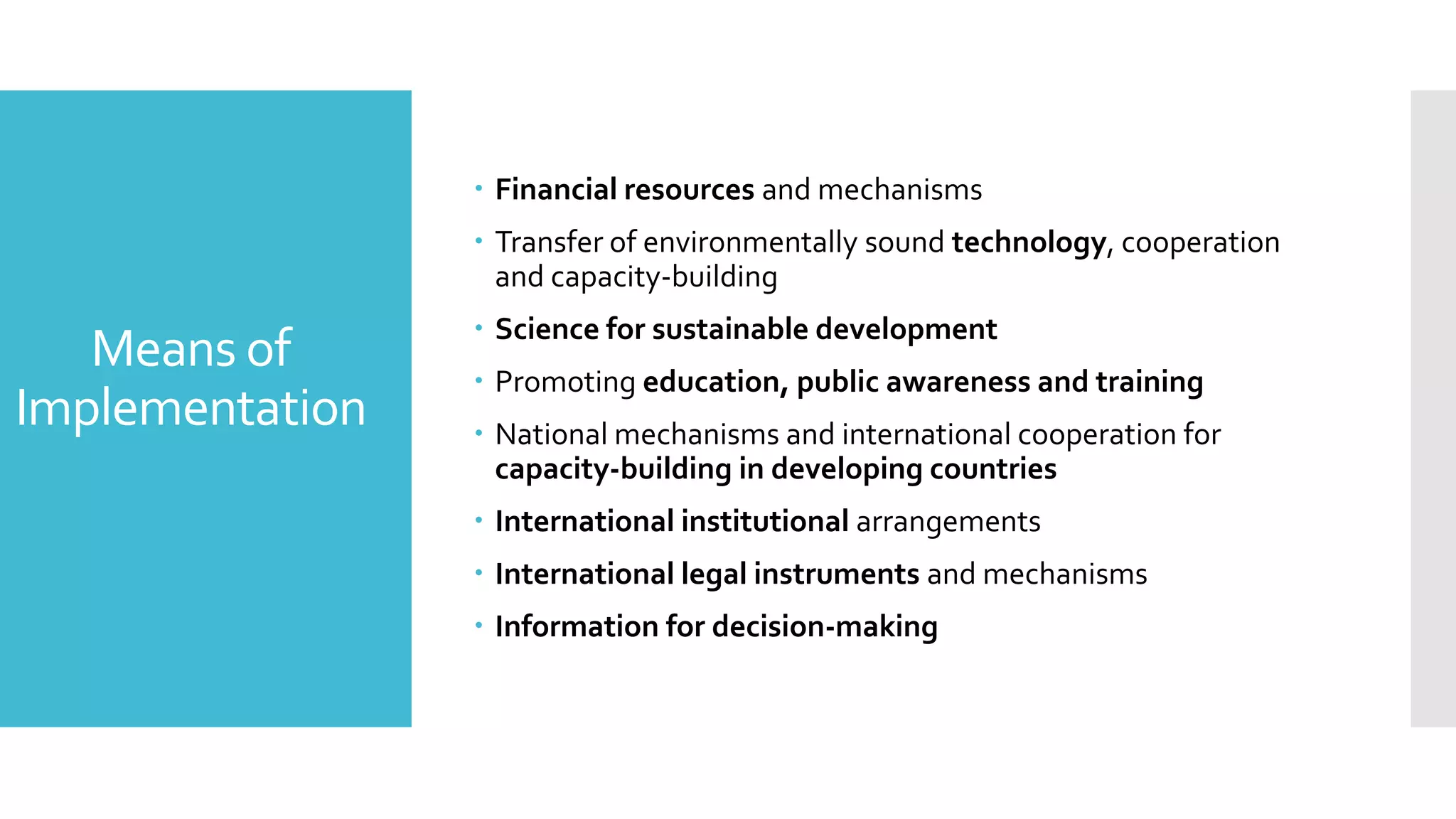
 Financial resources and mechanisms
 Transfer of environmentally sound technology, cooperation
and capacity-building
 Science for sustainable development
 Promoting education, public awareness and training
 National mechanisms and international cooperation for
capacity-building in developing countries
 International institutional arrangements
 International legal instruments and mechanisms
 Information for decision-making
Tourism and
LocalAgenda
21
 Tourism plays an important and often central role for many
local economies, particularly in developing countries.
 Local Agenda 21 processes emphasize a cooperative approach
to identifying the community’s goals for tourism and creating
an action plan to achieve these goals.
 The International Council on Local Environmental Initiatives
(ICLEI) estimates that more than three and a half thousand
local communities worldwide are now establishing or
implementing Local Agendas 21
 Ensuring that tourism follows a sustainable path requires clear
leadership from local authorities and an efficient mechanism
that involves all of the stakeholders -the local private sector,
NGOs, citizens, and other players.
Local Agenda 21 is
Agenda 21 on a local
scale, a saying is "think
globally act locally"
“Sustainable tourism development meets the needs of
present tourists and host regions while protecting and
enhancing opportunities for the future.”
The development of sustainable tourism meets the following
requirements:
•Tourist resources - natural, historical, cultural and others - are
preserved in a way that allows them to be used in the future,
whilst benefiting today’s society
•The planning and management of tourist development are
conducted in a way that avoids triggering serious ecological or
socio-cultural problems in the region concerned
•The overall quality of the environment in the tourist region is
preserved and, if necessary, improved
•The level of tourist satisfaction should be maintained to
ensure that destinations continue to be attractive and retain
their commercial potential
•Tourism should largely benefit all members of society.
Why prepare a
LocalAgenda
21 for tourism?
 Ensure that tourism planning and development address key
issues relating to the economic, social, and environmental
impact of tourism in the long and short term
 Place tourism within the overall context of the sustainable
development and environmental management of the
community
 Provide a framework for, and give legitimacy to, the
participation of a range of stakeholders in tourism and
representatives of the local community
 Raise the profile of tourism and the tourism strategy within
the community
 Strengthen the position of the authority as an organisation
that takes sustainable tourism seriously, with national and
international support
 Help the destination to attract the attention of visitors and
tour operators keen to visit or work with sustainable
destinations.
IMPLEMENTATIONOF
LA21
 These programs are often known as "Local Agenda 21" or
"LA21".For example, in the Philippines, the plan is "Philippines
Agenda 21" (PA21).
 The group, ICLEI-Local Governments for Sustainability, formed
in 1990; today its members come from over 1,000 cities, towns,
and counties in 88 countries and is widely regarded as a
paragon of Agenda 21 implementation.
 Europe turned out to be the continent where LA21 was best
accepted and most implemented.
 In Sweden, for example, all local governments have
implemented a Local Agenda 21 initiative.
THANK
YOU!!

Agenda 21 ppt

  • 1.
  • 2.
    WHAT IS AGENDA 21? Agenda 21 is a non-binding action plan of the United Nations with regard to sustainable development.  It is a product of the Earth Summit (UN Conference on Environment and Development) held in Rio de Janeiro, Brazil, in 1992.  Comprehensive plan of action to be taken Globally, Nationally, Locally by organizations of the United Nations system, Government and major groups in every area in which human impacts on the environment.  The “21” in Agenda 21 refers to the 21st century.
  • 3.
    MAIN FOCUS Social andEconomic Dimensions Conservation and Management Resources for Development Strengthening the Role of Major Groups Means of Implementation
  • 4.
    Social and Economic Dimensions  Internationalcooperation to accelerate sustainable development in developing countries and related domestic policies.  Combating poverty  Changing consumption patterns  Demographic dynamics and sustainability  Protecting and promoting human health conditions  Promoting sustainable human settlement development  Integrating environment and development in decision-making
  • 5.
    Conservation and Management Resources for Development  Protectionof the atmosphere  Integrated approach to the planning and management of land resources  Combating deforestation  Managing fragile ecosystems: combating desertification and drought  Promoting sustainable agriculture and rural development  Conservation of biological diversity  Environmentally safe management of biotechnology  Protection of the oceans, all kinds of seas, including enclosed and semi- enclosed seas, and coastal areas and the protection, rational use and development of their living resources  Protection of the quality and supply of freshwater resources  Environmentally safe management of toxic chemicals, including prevention of illegal international traffic in toxic and dangerous products, hazardous wastes, solid wastes and sewage-related issues  Safe and environmentally sound management of radioactive wastes
  • 6.
    Strengthening the Role of MajorGroups Global action for women towards sustainable and equitable development  Children and youth in sustainable development  Recognizing and strengthening the role of indigenous people and their communities  Strengthening the role of non-governmental organizations: partners for sustainable development  Local authorities' initiatives in support of Agenda 21  Strengthening the role of workers and their trade unions  Strengthening the role of business and industry  Scientific and technological community  Strengthening the role of farmers
  • 7.
    Means of Implementation  Financialresources and mechanisms  Transfer of environmentally sound technology, cooperation and capacity-building  Science for sustainable development  Promoting education, public awareness and training  National mechanisms and international cooperation for capacity-building in developing countries  International institutional arrangements  International legal instruments and mechanisms  Information for decision-making
  • 8.
    Tourism and LocalAgenda 21  Tourismplays an important and often central role for many local economies, particularly in developing countries.  Local Agenda 21 processes emphasize a cooperative approach to identifying the community’s goals for tourism and creating an action plan to achieve these goals.  The International Council on Local Environmental Initiatives (ICLEI) estimates that more than three and a half thousand local communities worldwide are now establishing or implementing Local Agendas 21  Ensuring that tourism follows a sustainable path requires clear leadership from local authorities and an efficient mechanism that involves all of the stakeholders -the local private sector, NGOs, citizens, and other players. Local Agenda 21 is Agenda 21 on a local scale, a saying is "think globally act locally"
  • 9.
    “Sustainable tourism developmentmeets the needs of present tourists and host regions while protecting and enhancing opportunities for the future.” The development of sustainable tourism meets the following requirements: •Tourist resources - natural, historical, cultural and others - are preserved in a way that allows them to be used in the future, whilst benefiting today’s society •The planning and management of tourist development are conducted in a way that avoids triggering serious ecological or socio-cultural problems in the region concerned •The overall quality of the environment in the tourist region is preserved and, if necessary, improved •The level of tourist satisfaction should be maintained to ensure that destinations continue to be attractive and retain their commercial potential •Tourism should largely benefit all members of society.
  • 10.
    Why prepare a LocalAgenda 21for tourism?  Ensure that tourism planning and development address key issues relating to the economic, social, and environmental impact of tourism in the long and short term  Place tourism within the overall context of the sustainable development and environmental management of the community  Provide a framework for, and give legitimacy to, the participation of a range of stakeholders in tourism and representatives of the local community  Raise the profile of tourism and the tourism strategy within the community  Strengthen the position of the authority as an organisation that takes sustainable tourism seriously, with national and international support  Help the destination to attract the attention of visitors and tour operators keen to visit or work with sustainable destinations.
  • 11.
    IMPLEMENTATIONOF LA21  These programsare often known as "Local Agenda 21" or "LA21".For example, in the Philippines, the plan is "Philippines Agenda 21" (PA21).  The group, ICLEI-Local Governments for Sustainability, formed in 1990; today its members come from over 1,000 cities, towns, and counties in 88 countries and is widely regarded as a paragon of Agenda 21 implementation.  Europe turned out to be the continent where LA21 was best accepted and most implemented.  In Sweden, for example, all local governments have implemented a Local Agenda 21 initiative.
  • 12.