Aerobic & Anaerobic fermentation
BEENISH SARFRAZ
FERMENTATION:
 is the conversion of carbohydrates (plant foods) to alcohols
and carbon dioxide, or organic acids, using yeasts, bacteria,
or a combination of that, under anaerobic (no oxygen)
conditions
 implies that the action of microorganisms is desirable
 complex organic compounds, such as glucose, are broken
down by the action of enzymes into simpler compounds
without the use of oxygen.
 Fermentation results in the production of energy in the
form of two ATP molecules, and produces less energy than
the aerobic process of cellular respiration
 C6H12O6 2CO2 + 2C2H5OH + 2 ATP
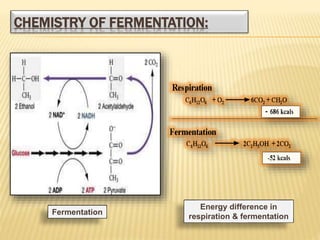
CHEMISTRY OF FERMENTATION:
Fermentation
Energy difference in
respiration & fermentation
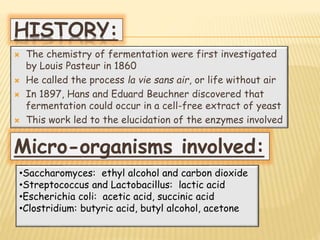
HISTORY:
 The chemistry of fermentation were first investigated
by Louis Pasteur in 1860
 He called the process la vie sans air, or life without air
 In 1897, Hans and Eduard Beuchner discovered that
fermentation could occur in a cell-free extract of yeast
 This work led to the elucidation of the enzymes involved
Micro-organisms involved:
•Saccharomyces: ethyl alcohol and carbon dioxide
•Streptococcus and Lactobacillus: lactic acid
•Escherichia coli: acetic acid, succinic acid
•Clostridium: butyric acid, butyl alcohol, acetone
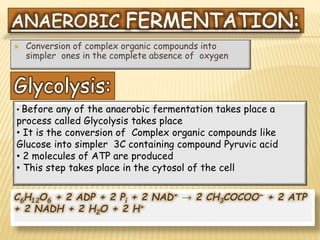
 Conversion of complex organic compounds into
simpler ones in the complete absence of oxygen
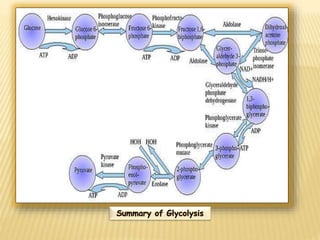
Glycolysis:
• Before any of the anaerobic fermentation takes place a
process called Glycolysis takes place
• It is the conversion of Complex organic compounds like
Glucose into simpler 3C containing compound Pyruvic acid
• 2 molecules of ATP are produced
• This step takes place in the cytosol of the cell
C6H12O6 + 2 ADP + 2 Pi + 2 NAD+ → 2 CH3COCOO− + 2 ATP
+ 2 NADH + 2 H2O + 2 H+
Summary of Glycolysis
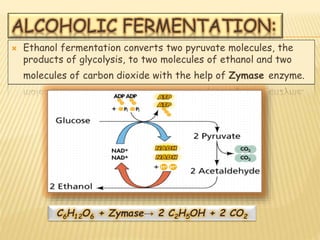
ALCOHOLIC FERMENTATION:
 Ethanol fermentation converts two pyruvate molecules, the
products of glycolysis, to two molecules of ethanol and two
molecules of carbon dioxide with the help of Zymase enzyme.
C6H12O6 + Zymase→ 2 C2H5OH + 2 CO2
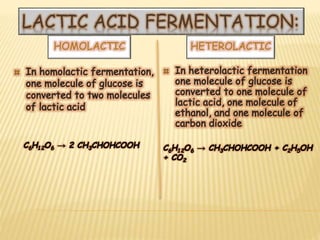
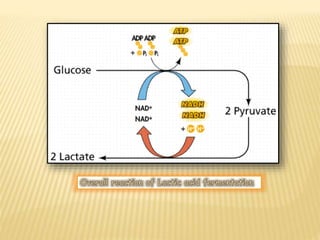
LACTIC ACID FERMENTATION:
HOMOLACTIC HETEROLACTIC
Aerobic Fermentation:
• “Aerobic” means “in the presence of oxygen”
• Aerobic fermentation is actually wrong term
• Organisms use oxygen for the conversion of complex organic
compounds, but process is known as aerobic respiration
• Some types of fermentation processes require oxygen
• Oxygen is required for the reproduction and growth of
microorganisms (Yeast/Bacteria etc)
• Yeast requires oxygen for a number of processes essential for
reproduction
• Most fermentation involves the initial introduction of oxygen
to ensure a strong yeast colony is established. And
• yeast will ferment without using oxygen even if oxygen is
available
Fermentation process is used:
 To produce antibiotics if no other method is available
 To produce ethyl alcohol which can be used as gasohol
 To produce alcoholic beverages like beer from barley or wheat
and wine from grapes
 Used to store vegetables in the form of pickling
 Yogurt is produced by fermentation of milk
 Cheese is also produced by the action of yeast on milk
 is used in the treatment of wastewater. In the activated
sludge process, aerobic bacteria are used to ferment organic
material in wastewater. Solid wastes are converted to carbon
dioxide, water and mineral salts.

Aerobic and Anaerobic Fermentation

  • 1.
    Aerobic & Anaerobicfermentation BEENISH SARFRAZ
  • 2.
    FERMENTATION:  is theconversion of carbohydrates (plant foods) to alcohols and carbon dioxide, or organic acids, using yeasts, bacteria, or a combination of that, under anaerobic (no oxygen) conditions  implies that the action of microorganisms is desirable  complex organic compounds, such as glucose, are broken down by the action of enzymes into simpler compounds without the use of oxygen.  Fermentation results in the production of energy in the form of two ATP molecules, and produces less energy than the aerobic process of cellular respiration  C6H12O6 2CO2 + 2C2H5OH + 2 ATP
  • 3.
    CHEMISTRY OF FERMENTATION: Fermentation Energydifference in respiration & fermentation
  • 4.
    HISTORY:  The chemistryof fermentation were first investigated by Louis Pasteur in 1860  He called the process la vie sans air, or life without air  In 1897, Hans and Eduard Beuchner discovered that fermentation could occur in a cell-free extract of yeast  This work led to the elucidation of the enzymes involved Micro-organisms involved: •Saccharomyces: ethyl alcohol and carbon dioxide •Streptococcus and Lactobacillus: lactic acid •Escherichia coli: acetic acid, succinic acid •Clostridium: butyric acid, butyl alcohol, acetone
  • 5.
     Conversion ofcomplex organic compounds into simpler ones in the complete absence of oxygen Glycolysis: • Before any of the anaerobic fermentation takes place a process called Glycolysis takes place • It is the conversion of Complex organic compounds like Glucose into simpler 3C containing compound Pyruvic acid • 2 molecules of ATP are produced • This step takes place in the cytosol of the cell C6H12O6 + 2 ADP + 2 Pi + 2 NAD+ → 2 CH3COCOO− + 2 ATP + 2 NADH + 2 H2O + 2 H+
  • 6.
  • 7.
    ALCOHOLIC FERMENTATION:  Ethanolfermentation converts two pyruvate molecules, the products of glycolysis, to two molecules of ethanol and two molecules of carbon dioxide with the help of Zymase enzyme. C6H12O6 + Zymase→ 2 C2H5OH + 2 CO2
  • 8.
  • 10.
    Aerobic Fermentation: • “Aerobic”means “in the presence of oxygen” • Aerobic fermentation is actually wrong term • Organisms use oxygen for the conversion of complex organic compounds, but process is known as aerobic respiration • Some types of fermentation processes require oxygen • Oxygen is required for the reproduction and growth of microorganisms (Yeast/Bacteria etc) • Yeast requires oxygen for a number of processes essential for reproduction • Most fermentation involves the initial introduction of oxygen to ensure a strong yeast colony is established. And • yeast will ferment without using oxygen even if oxygen is available
  • 11.
    Fermentation process isused:  To produce antibiotics if no other method is available  To produce ethyl alcohol which can be used as gasohol  To produce alcoholic beverages like beer from barley or wheat and wine from grapes  Used to store vegetables in the form of pickling  Yogurt is produced by fermentation of milk  Cheese is also produced by the action of yeast on milk  is used in the treatment of wastewater. In the activated sludge process, aerobic bacteria are used to ferment organic material in wastewater. Solid wastes are converted to carbon dioxide, water and mineral salts.