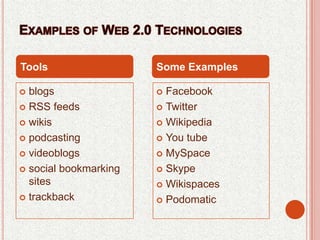
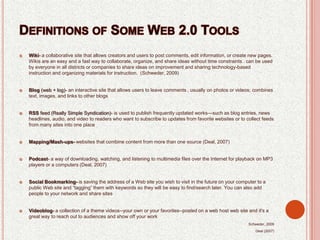
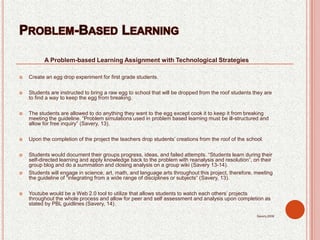
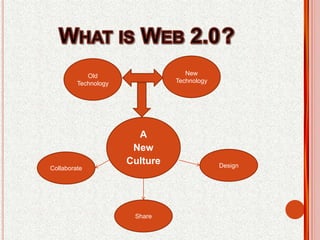
Web 2.0 allows for more collaboration and sharing on the internet compared to earlier technologies. It enables users to actively generate and edit content online through tools like blogs, wikis, social media, and video sharing. This shift from static websites to dynamic user-generated content has important implications for education by making learning more social and learner-centered. The document discusses how Web 2.0 can support approaches like project-based and problem-based learning by facilitating collaboration between students on research projects and problem solutions. Educators are encouraged to leverage Web 2.0 tools like wikis, blogs, and video sharing to engage students in authentic learning activities.


![How Does it Differ from Web 1.0only allowed people to create a site for others to viewhad more privacywas a publishing site where as Web 2.0 is more of a participation sitewas a read only format while Web 2.0 is interactivea sharper line “between producers and consumers of content and [2.0] shifted attention from access to information toward access to other people” (Brown & Adler, 18)In learning environments information is "pushed" to the student rather than "pulled" by the user, (Brown & Adler").better way of connecting people, as well as storing, retrieving, and sharing informationsocially constructed; users play a larger role in publishing sites and blogs, posting comments to other sites, and adding pictures and videos.media can be moved between websites and tagged for future reference also downloaded and uploaded to the internet. sites can be saved, addressed, or built uponpeople with common interest can collaborate by adding to projects at different times from different places; communicating their ideas and opinionsplaying a larger role in business and educationstudents and researchers can not only find information, but can debate and discuss the information they findWeb 1.0Web 2.0VS.Alexander, B. (2006). Brown & Adler (2008)](https://image.slidesharecdn.com/web20powerpoint-101008170825-phpapp01/85/Web-2-0-powerpoint-4-320.jpg)