Advantages and Disadvantages
of Technology in Business
Communication
Communication and Technology
• Information – Communication Technology (ICT) is a general
expression for a variety of different computer, information and
communication devices, applications, network and services.
Communication Technology has become important in our daily
lives. Both individuals and business use communication
technology to get what they need.
• Communication technology in an organization involves things
like Voice mail, Email, Teleconferences etc. All these forms of
communication will assist in the growth of an organization, but
they also have their down sides.
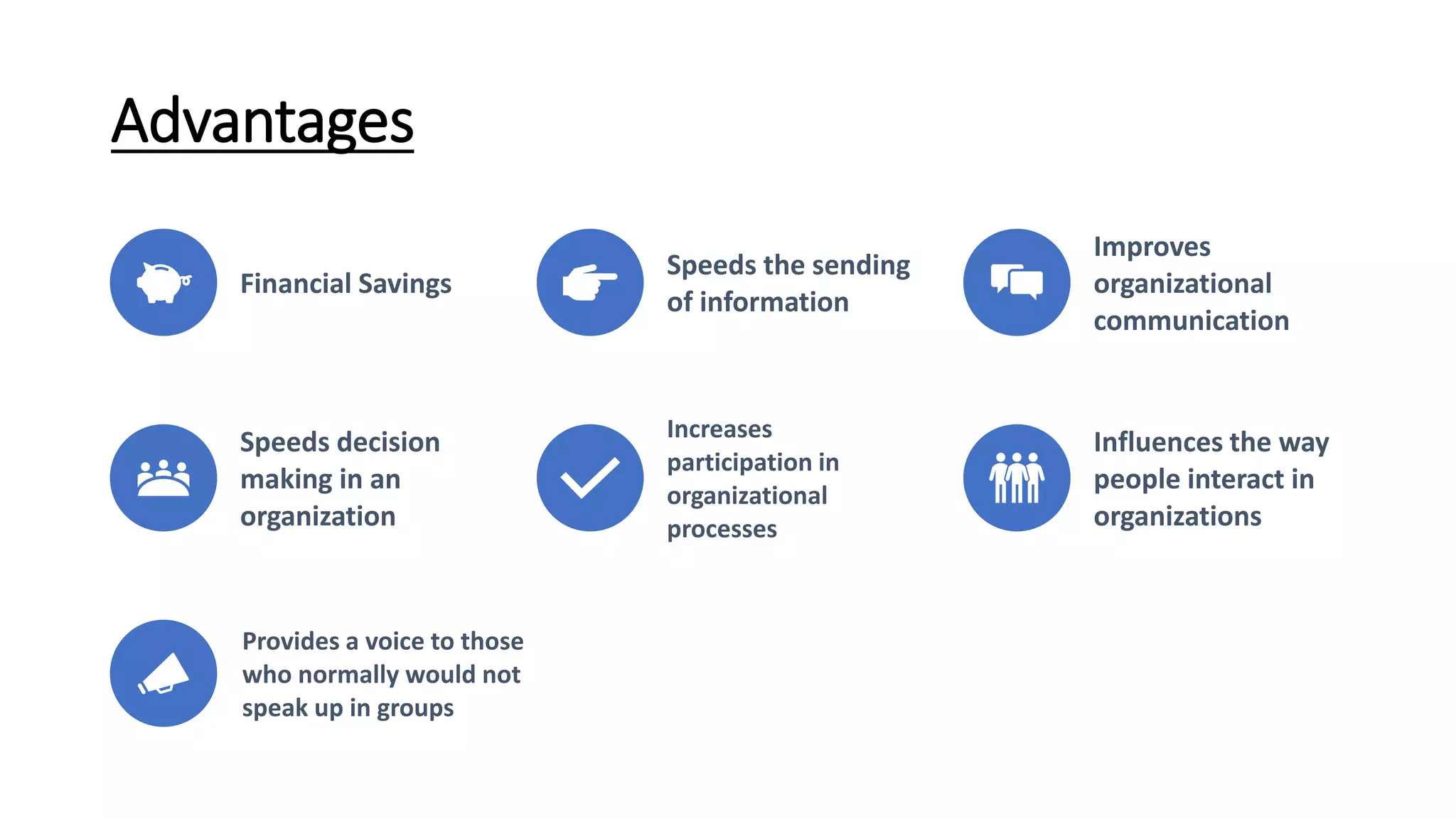
Advantages
Financial Savings
Speeds the sending
of information
Improves
organizational
communication
Speeds decision
making in an
organization
Increases
participation in
organizational
processes
Influences the way
people interact in
organizations
Provides a voice to those
who normally would not
speak up in groups
Financial
Savings
Perhaps the biggest advantage of the improvement of
technology in business communication is the financial
savings it affords small businesses and global corporations
alike. Tasks that once took large sums of money may now be
completed with a touch of a button for pennies. This has
allowed small businesses to better compete with larger
organizations in the global market.
Before Voice of Internet Protocol, or VoIP, technology, placing
a long distance telephone call was an expensive gesture.
Current VoIP and cellular telephone technology, however, has
made flat rates for local and long distance calls common
place. The same can also be said for correspondence. Not
long ago, the only way to send letters or documents from one
location to another was to engage a postal or messenger
service. The email, however, has eliminated the need to
transport hard copies. Furthermore, many email services are
free.
Speeds the Sending of Information
Communication technology tools like electronic mail and
text messaging systems, speed up the sending of information
withinandoutsideoftheorganization.
Also with the use of decentralized computing systems,
sharing of information with in an organization is very first
because all datais accessed from one centralunit‘’Database’’
and it is shared across different departments with in the
organization.
Improves Organizational Communication
Communication technology helps in the creation of a shared
information environment in an organization. Organization
information is organized in one central location, allowing any
one access that information as they need. Also technologies like
electronic mail, will enable low level employees communicate
with the manager without any need of having a dedicated time
for meeting. This allows information to flow easily from the
bottomtothetopwithoutanybarriers.
Speeds Decision Making In An
Organization
Sincecommunication technologyspeedsthetransferof
information,employeesinanorganizationcaneasilyconsult
eachotherandanalyzeinformationinashortestperiodand
makeadecision. Alsowiththeuseof(OLAP)Online
analyticalprocessing,employeescanperformqueriesona
databasetogetdataaboutaspecificclient ormatterand
makeaquickdecisionbasingonthedataretrievedfromthe
databaseaboutthatspecificclientormatter.
Increases Participation In Organizational
Processes
Every employee will have a specific task to complete and all
this can be monitored remotely by the manager. So all parties
will be active since their work is being made simple by easy
communication.
Employees who are shy to ask for advice and help, will use
tools like electronic mail or instant text messaging services to
ask for help from their workmates with in the organization,
they can also use the same medias to participate in decision
makingandcreativedesignchallenges.
Influences The Way People Interact In
Organizations
Lets look at an organization were you only see the operations
manager twice a week, by the time he comes, every one will
need to speak to them and they will have less time for each of
you. But with electronic mail, you can simply draft an email
and send it to your superior or workmate. In this case, they
don’t have to stop what they’re doing to attend to your
matter, but you will get an instant reply and continue with
yourwork.
Provides A Voice To Those Who Normally
Would Not Speak Up In Groups
Face-to-facecommunications tendstobedifficulttosome
people,sotheuseofcommunicationtechnologywillhelp
themcommunicateeffectivelyatwork.Someemployees
mighthaveafearofface-to-faceexpression,butthese
employeesmighthaverelevantsuggestionsor
contributionswhichcanhelptheorganizationgrow,so
theycaneasilyusetechnologicaltoolslikeelectronicmail
tovoiceouttheirconcerns.
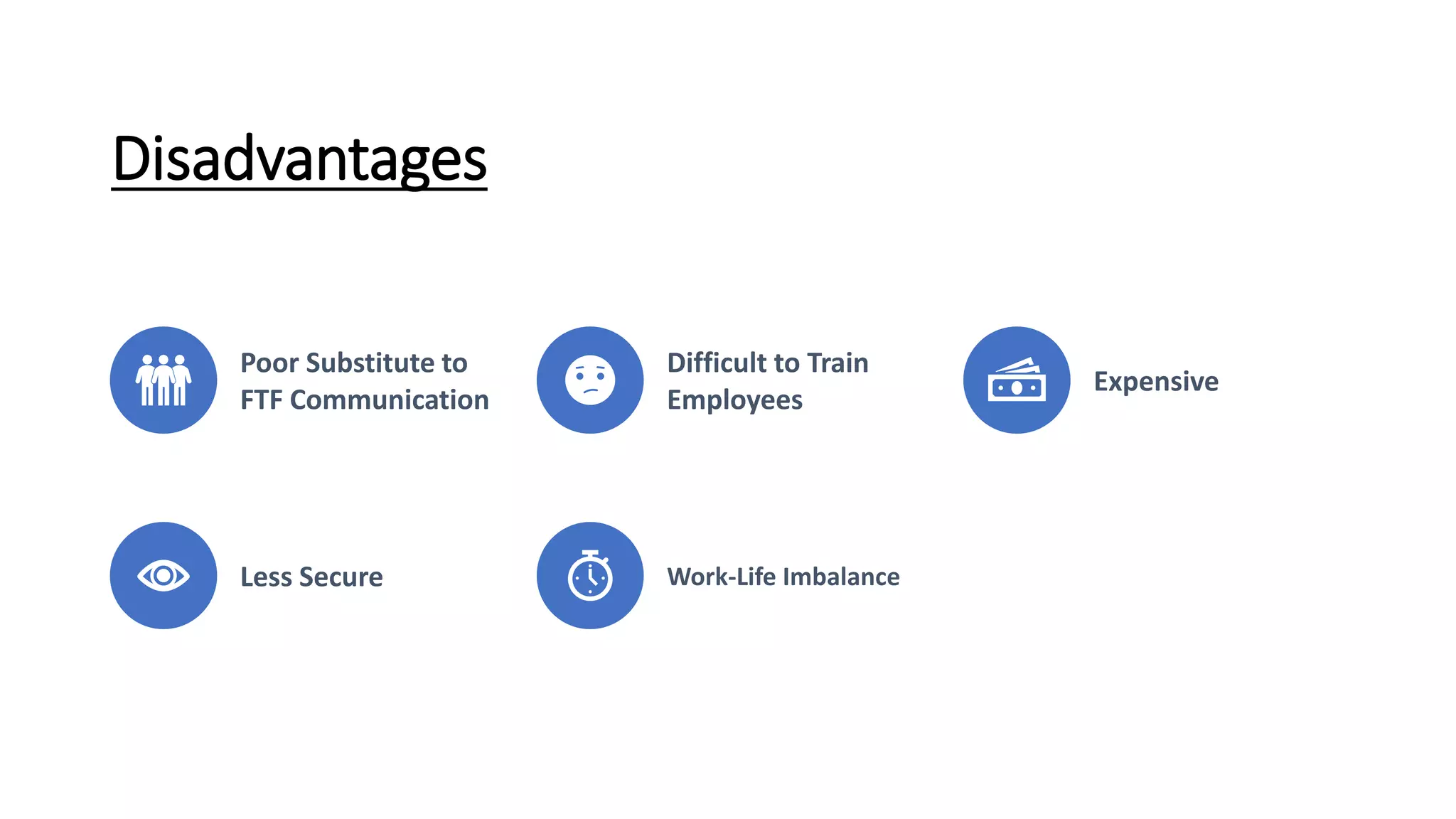
Disadvantages
Poor Substitute to
FTF Communication
Difficult to Train
Employees
Expensive
Less Secure Work-Life Imbalance
Poor substitute for face-to-face
(ftf) communication
Since employees are using machines to
communicate, they get less time to talk to each
other and know each other better. This has
resulted into increased bad relationships at work.
Even though the shy ones will benefit from this
technology , but they will also be denied the
chancetolearnhowtointeractwithothers.
Difficulty Training Employees
If an organization deploys a new
communication technology system, they will
have to pay an extra fee to train employees in
the organization to use that technology
effectively. Some times some employees will
not learn as first as others which might led to
joblosses.
Expensive
It can be very expensive to install a new communication
technology system in a very big organization. Let’s say that an
organizationhasover50employeesandtheywantthemtoaccess
informationfromacentralizedlocation.
They will have to create a strong data base which will handle all
the queries made by these employees in a minute as well they
havetobuyacomputerforeachoftheseemployees.
Security Issues
Since information has been centralized under one database, it is
exposed to people with wrong intention with in the organization. Also
information can be attacked by a hacker or a virus and all data will be
lost in a minute. So the organization must pay an extra cost to keep
thisinformationsafe.
Sensitive information can be easily shared and distributed
within a business through email. It does not matter if the email
issentaccidentallyordeliberately,theharmisthesame.
Work-Life Imbalance
Employees who receive work-related calls
outside of normal work hours, whether on a
company-provided phone or a personal cell
phone, may feel an imbalance between their
work and personal lives. It can be difficult
for an employee to enjoy time away from
work when her duties spill over into family,
socialandresttime.

Advantages and disadvantages of technology in business communication

  • 1.
    Advantages and Disadvantages ofTechnology in Business Communication
  • 2.
    Communication and Technology •Information – Communication Technology (ICT) is a general expression for a variety of different computer, information and communication devices, applications, network and services. Communication Technology has become important in our daily lives. Both individuals and business use communication technology to get what they need. • Communication technology in an organization involves things like Voice mail, Email, Teleconferences etc. All these forms of communication will assist in the growth of an organization, but they also have their down sides.
  • 3.
    Advantages Financial Savings Speeds thesending of information Improves organizational communication Speeds decision making in an organization Increases participation in organizational processes Influences the way people interact in organizations Provides a voice to those who normally would not speak up in groups
  • 4.
    Financial Savings Perhaps the biggestadvantage of the improvement of technology in business communication is the financial savings it affords small businesses and global corporations alike. Tasks that once took large sums of money may now be completed with a touch of a button for pennies. This has allowed small businesses to better compete with larger organizations in the global market. Before Voice of Internet Protocol, or VoIP, technology, placing a long distance telephone call was an expensive gesture. Current VoIP and cellular telephone technology, however, has made flat rates for local and long distance calls common place. The same can also be said for correspondence. Not long ago, the only way to send letters or documents from one location to another was to engage a postal or messenger service. The email, however, has eliminated the need to transport hard copies. Furthermore, many email services are free.
  • 5.
    Speeds the Sendingof Information Communication technology tools like electronic mail and text messaging systems, speed up the sending of information withinandoutsideoftheorganization. Also with the use of decentralized computing systems, sharing of information with in an organization is very first because all datais accessed from one centralunit‘’Database’’ and it is shared across different departments with in the organization.
  • 6.
    Improves Organizational Communication Communicationtechnology helps in the creation of a shared information environment in an organization. Organization information is organized in one central location, allowing any one access that information as they need. Also technologies like electronic mail, will enable low level employees communicate with the manager without any need of having a dedicated time for meeting. This allows information to flow easily from the bottomtothetopwithoutanybarriers.
  • 7.
    Speeds Decision MakingIn An Organization Sincecommunication technologyspeedsthetransferof information,employeesinanorganizationcaneasilyconsult eachotherandanalyzeinformationinashortestperiodand makeadecision. Alsowiththeuseof(OLAP)Online analyticalprocessing,employeescanperformqueriesona databasetogetdataaboutaspecificclient ormatterand makeaquickdecisionbasingonthedataretrievedfromthe databaseaboutthatspecificclientormatter.
  • 8.
    Increases Participation InOrganizational Processes Every employee will have a specific task to complete and all this can be monitored remotely by the manager. So all parties will be active since their work is being made simple by easy communication. Employees who are shy to ask for advice and help, will use tools like electronic mail or instant text messaging services to ask for help from their workmates with in the organization, they can also use the same medias to participate in decision makingandcreativedesignchallenges.
  • 9.
    Influences The WayPeople Interact In Organizations Lets look at an organization were you only see the operations manager twice a week, by the time he comes, every one will need to speak to them and they will have less time for each of you. But with electronic mail, you can simply draft an email and send it to your superior or workmate. In this case, they don’t have to stop what they’re doing to attend to your matter, but you will get an instant reply and continue with yourwork.
  • 10.
    Provides A VoiceTo Those Who Normally Would Not Speak Up In Groups Face-to-facecommunications tendstobedifficulttosome people,sotheuseofcommunicationtechnologywillhelp themcommunicateeffectivelyatwork.Someemployees mighthaveafearofface-to-faceexpression,butthese employeesmighthaverelevantsuggestionsor contributionswhichcanhelptheorganizationgrow,so theycaneasilyusetechnologicaltoolslikeelectronicmail tovoiceouttheirconcerns.
  • 11.
    Disadvantages Poor Substitute to FTFCommunication Difficult to Train Employees Expensive Less Secure Work-Life Imbalance
  • 12.
    Poor substitute forface-to-face (ftf) communication Since employees are using machines to communicate, they get less time to talk to each other and know each other better. This has resulted into increased bad relationships at work. Even though the shy ones will benefit from this technology , but they will also be denied the chancetolearnhowtointeractwithothers.
  • 13.
    Difficulty Training Employees Ifan organization deploys a new communication technology system, they will have to pay an extra fee to train employees in the organization to use that technology effectively. Some times some employees will not learn as first as others which might led to joblosses.
  • 14.
    Expensive It can bevery expensive to install a new communication technology system in a very big organization. Let’s say that an organizationhasover50employeesandtheywantthemtoaccess informationfromacentralizedlocation. They will have to create a strong data base which will handle all the queries made by these employees in a minute as well they havetobuyacomputerforeachoftheseemployees.
  • 15.
    Security Issues Since informationhas been centralized under one database, it is exposed to people with wrong intention with in the organization. Also information can be attacked by a hacker or a virus and all data will be lost in a minute. So the organization must pay an extra cost to keep thisinformationsafe. Sensitive information can be easily shared and distributed within a business through email. It does not matter if the email issentaccidentallyordeliberately,theharmisthesame.
  • 16.
    Work-Life Imbalance Employees whoreceive work-related calls outside of normal work hours, whether on a company-provided phone or a personal cell phone, may feel an imbalance between their work and personal lives. It can be difficult for an employee to enjoy time away from work when her duties spill over into family, socialandresttime.