Why Advanced Excel
Do you want to learn
Advance Excel?
Good move.
By the end of this presentation,
you can:
 identify the major features of the Excel window
 recognise the purpose of each tab in the Excel Ribbon
 Understand pivot table concept and significance.
Now What is Advanced
Excel??
In your training period you learn many
complex functions such as
 cells formatting,
 macro, using graphical representations in
spreadsheets,
 financial formulas, logical complex formulas,
 uses of advanced filters and the list keeps on going.
An expert professional in
advanced excel is good at
organizing and
analyzing data.
Excel is the industry standard spreadsheet
application in government and business.
It’s widely used for home and personal use as well.
Excel helps you store, organize and manipulate data,
perform calculations & analysis,
present results with graphical & statistical tools,
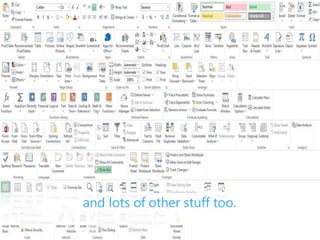
and lots of other stuff too.
What does this mean?
Easily keep track of personal and business finances,
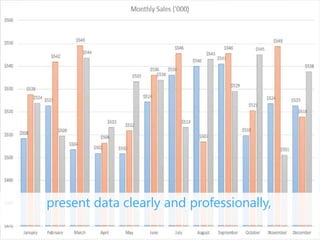
present data clearly and professionally,
save time on record keeping,
and improve productivity & efficiency at work.
Excel is a powerful application
for advanced users.
But it’s also simple and
intuitive for beginners.
Let’s start by introducing the
Excel program window.
SPREADSHEETTRAINER.COM
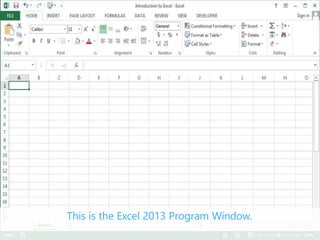
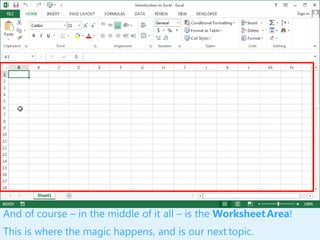
This is the Excel 2013 Program Window.
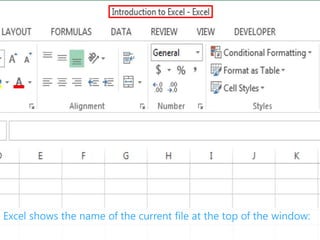
Excel shows the name of the current file at the top of the window:
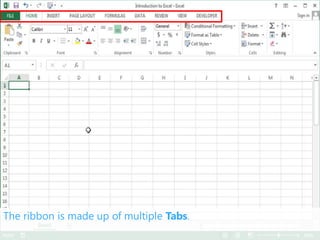
The ribbon is made up of multiple Tabs.
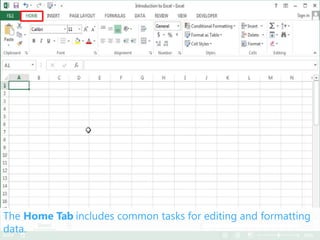
The Home Tab includes common tasks for editing and formatting
data.
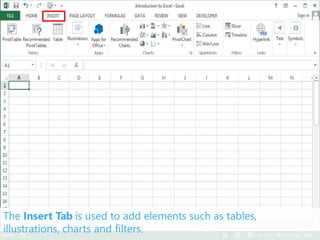
The Insert Tab is used to add elements such as tables,
illustrations, charts and filters.
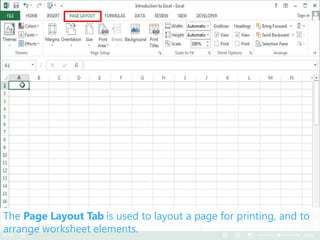
The Page Layout Tab is used to layout a page for printing, and to
arrange worksheet elements.
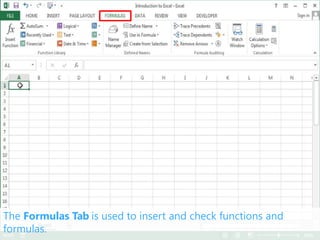
The Formulas Tab is used to insert and check functions and
formulas.
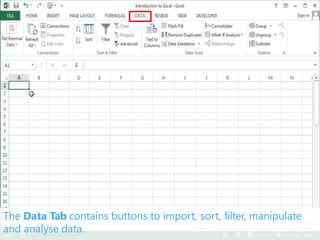
The Data Tab contains buttons to import, sort, filter, manipulate
and analyse data.
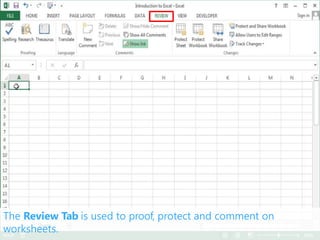
The Review Tab is used to proof, protect and comment on
worksheets.
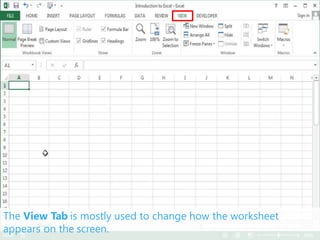
The View Tab is mostly used to change how the worksheet
appears on the screen.
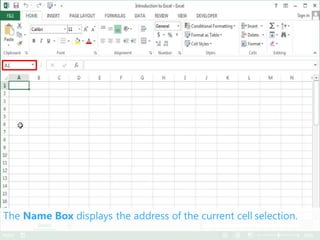
The Name Box displays the address of the current cell selection.
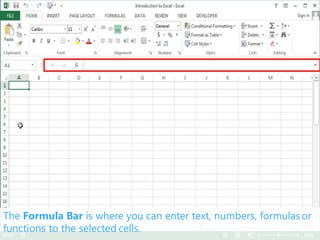
The Formula Bar is where you can enter text, numbers, formulasor
functions to the selected cells.
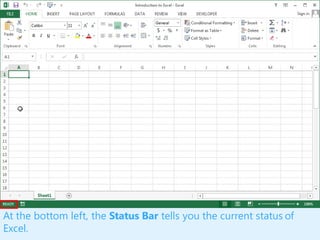
At the bottom left, the Status Bar tells you the current status of
Excel.
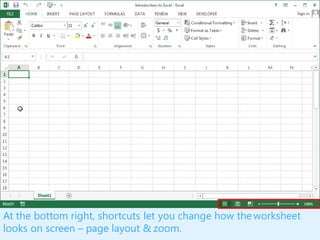
At the bottom right, shortcuts let you change how the worksheet
looks on screen – page layout & zoom.
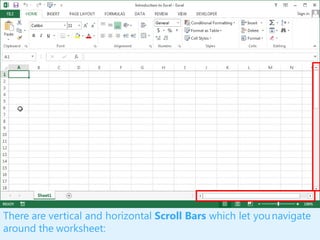
There are vertical and horizontal Scroll Bars which let younavigate
around the worksheet:
And of course – in the middle of it all – is the WorksheetArea!
This is where the magic happens, and is our next topic.
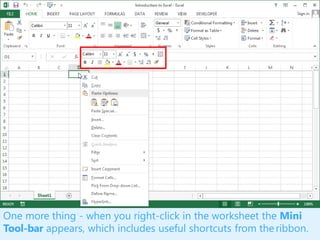
One more thing - when you right-click in the worksheet the Mini
Tool-bar appears, which includes useful shortcuts from theribbon.
Pivot Table
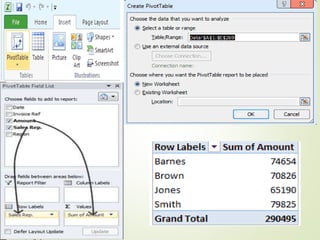
A Pivot Table gathers all the data in an Excel
spreadsheet (or range of a spreadsheet) and
presents a summary of this data in a table.
Information such as:
The number of items of each type;
The sum of a data column, broken down
into data types;
The average of a data column, broken
down into data types.
Create a basic Pivot Table
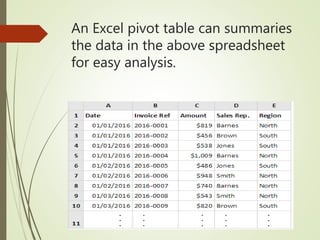
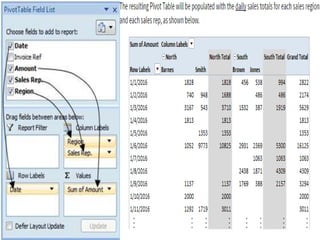
Every sale that was made by a company
during the first quarter of 2016. The
spreadsheet records the sale date, the
invoice reference, the invoice total, the
name of the sales representative, and the
sales region.
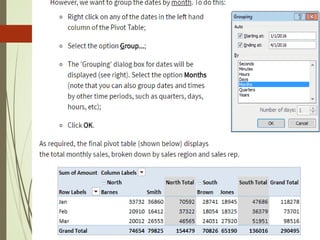
An Excel pivot table can summaries
the data in the above spreadsheet
for easy analysis.
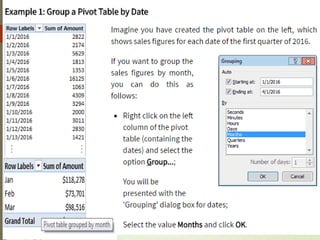
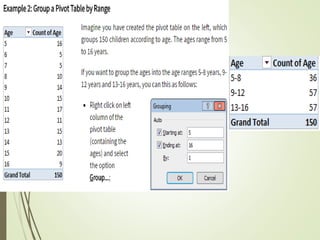
Advanced Pivot Table
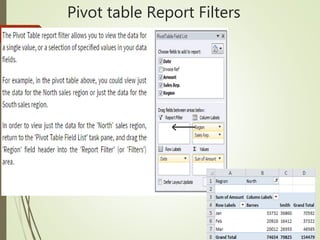
Pivot table Report Filters
Scopes
 Excel For HR.
 Excel For Marketing.
 Excel For Finance.
 Excel For BPO’s/KPO’s
 Excel For MIS.
 Excel For top executives.
 Excel as Audit Tool.
 Excel For management Professionals(CA’s, MBA’s
etc.)
 Excel For Entrepreneurs.
Job Profiles
 MIS Executive/Analyst/coordinator/Officer.
 Finance Executive/Associates/Payroll
Executive
 VBA Developer
 Application service Desk Executive
 Reporting Analyst
 Practice Lead Analytics in IIM/IIT/NIT
Top Companies
 Dell EMC
 Infosys BPO/KPO
 Flip Kart
 Amazon
 Accenture
 AppsTech ERP Solution
 And many More………………
Required Skills
 In this advanced course students learn how
to automate information based on the skills
they have developed in the basic and
intermediate module.
Fee Structure

Advanced Excel Demo

  • 2.
  • 3.
    Do you wantto learn Advance Excel?
  • 4.
  • 5.
    By the endof this presentation, you can:  identify the major features of the Excel window  recognise the purpose of each tab in the Excel Ribbon  Understand pivot table concept and significance.
  • 6.
    Now What isAdvanced Excel??
  • 7.
    In your trainingperiod you learn many complex functions such as  cells formatting,  macro, using graphical representations in spreadsheets,  financial formulas, logical complex formulas,  uses of advanced filters and the list keeps on going.
  • 8.
    An expert professionalin advanced excel is good at organizing and analyzing data.
  • 9.
    Excel is theindustry standard spreadsheet application in government and business.
  • 10.
    It’s widely usedfor home and personal use as well.
  • 11.
    Excel helps youstore, organize and manipulate data,
  • 12.
  • 13.
    present results withgraphical & statistical tools,
  • 14.
    and lots ofother stuff too.
  • 15.
  • 16.
    Easily keep trackof personal and business finances,
  • 17.
    present data clearlyand professionally,
  • 18.
    save time onrecord keeping,
  • 19.
    and improve productivity& efficiency at work.
  • 20.
    Excel is apowerful application for advanced users.
  • 21.
    But it’s alsosimple and intuitive for beginners.
  • 22.
    Let’s start byintroducing the Excel program window.
  • 23.
    SPREADSHEETTRAINER.COM This is theExcel 2013 Program Window. This is the Excel 2013 Program Window.
  • 24.
    Excel shows thename of the current file at the top of the window:
  • 25.
    The ribbon ismade up of multiple Tabs.
  • 26.
    The Home Tabincludes common tasks for editing and formatting data.
  • 27.
    The Insert Tabis used to add elements such as tables, illustrations, charts and filters.
  • 28.
    The Page LayoutTab is used to layout a page for printing, and to arrange worksheet elements.
  • 29.
    The Formulas Tabis used to insert and check functions and formulas.
  • 30.
    The Data Tabcontains buttons to import, sort, filter, manipulate and analyse data.
  • 31.
    The Review Tabis used to proof, protect and comment on worksheets.
  • 32.
    The View Tabis mostly used to change how the worksheet appears on the screen.
  • 33.
    The Name Boxdisplays the address of the current cell selection.
  • 34.
    The Formula Baris where you can enter text, numbers, formulasor functions to the selected cells.
  • 35.
    At the bottomleft, the Status Bar tells you the current status of Excel.
  • 36.
    At the bottomright, shortcuts let you change how the worksheet looks on screen – page layout & zoom.
  • 37.
    There are verticaland horizontal Scroll Bars which let younavigate around the worksheet:
  • 38.
    And of course– in the middle of it all – is the WorksheetArea! This is where the magic happens, and is our next topic.
  • 39.
    One more thing- when you right-click in the worksheet the Mini Tool-bar appears, which includes useful shortcuts from theribbon.
  • 40.
    Pivot Table A PivotTable gathers all the data in an Excel spreadsheet (or range of a spreadsheet) and presents a summary of this data in a table. Information such as: The number of items of each type; The sum of a data column, broken down into data types; The average of a data column, broken down into data types.
  • 41.
    Create a basicPivot Table Every sale that was made by a company during the first quarter of 2016. The spreadsheet records the sale date, the invoice reference, the invoice total, the name of the sales representative, and the sales region.
  • 42.
    An Excel pivottable can summaries the data in the above spreadsheet for easy analysis.
  • 46.
  • 48.
  • 49.
    Scopes  Excel ForHR.  Excel For Marketing.  Excel For Finance.  Excel For BPO’s/KPO’s  Excel For MIS.  Excel For top executives.  Excel as Audit Tool.  Excel For management Professionals(CA’s, MBA’s etc.)  Excel For Entrepreneurs.
  • 50.
    Job Profiles  MISExecutive/Analyst/coordinator/Officer.  Finance Executive/Associates/Payroll Executive  VBA Developer  Application service Desk Executive  Reporting Analyst  Practice Lead Analytics in IIM/IIT/NIT
  • 51.
    Top Companies  DellEMC  Infosys BPO/KPO  Flip Kart  Amazon  Accenture  AppsTech ERP Solution  And many More………………
  • 52.
    Required Skills  Inthis advanced course students learn how to automate information based on the skills they have developed in the basic and intermediate module.
  • 53.