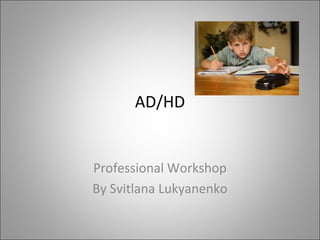
AD/HD 
Professional Workshop 
By Svitlana Lukyanenko
Objectives: 
1. To find out what AD/HD is; 
2. To increase the awareness of the problems 
children with ADHD face; 
3. To offer possible solutions.
Mario’s Story 
Mario is 10 years old. When he was 7, his 
family learned he had AD/HD. At the time, he 
was driving everyone crazy. At school, he 
couldn’t stay in his seat or keep quiet. At 
home, he didn’t finish his homework or his 
chores. He did scary things, too, like climb out 
of his window onto the roof and run across 
the street without looking.
Mario’s Story 
Things are much better now. Mario was tested by 
a trained professional to find out what he does 
well and what gives him trouble. His parents and 
teachers came up with ways to help him at 
school. Mario has trouble sitting still, so now he 
does some of his work standing up. He’s also the 
student who tidies up the room and washes the 
chalkboard. His teachers break down his lessons 
into several parts. Then they have him do each 
part one at a time. This helps Mario keep his 
attention on his work.
Mario’s Story 
At home, things have changed, too. Now his 
parents know why he’s so active. They are 
careful to praise him when he does something 
well. They even have a reward program to 
encourage good behavior. He earns “good job 
points” that they post on a wall chart. After 
earning 10 points he gets to choose 
something fun he’d like to do. Having a child 
with AD/HD is still a challenge, but things are 
looking better.
What is AD/HD? 
AD/HD stands for 
Attention-Deficit /Hyperactivity Disorder . 
As many as 5 out of every 100 children in 
school may have AD/HD. Boys are three times 
more likely than girls to have AD/HD.
The Signs of AD/HD 
There are three main signs, or symptoms, of 
AD/HD. These are: 
• problems with paying attention, 
• being very active (called hyperactivity), and 
• acting before thinking (called impulsivity).
Three Types of AD/HD 
Based on these symptoms, three types of AD/HD 
have been found: 
• inattentive type, where the person can’t seem to 
get focused or stay focused on a task or activity; 
• hyperactive-impulsive type, where the person is 
very active and often acts without thinking; and 
• combined type, where the person is inattentive, 
impulsive, and too active
Inattentive type 
Children with the inattentive type of AD/HD 
often: 
• do not pay close attention to details; 
• can’t stay focused on play or school work; 
• don’t follow through on instructions or finish 
school work or chores 
• can’t seem to organize tasks and activities; 
• get distracted easily; and 
• lose things such as toys, school work, and books.
Hyperactive-impulsive type 
Children with the hyperactive-impulsive type of AD/HD 
often may: 
• fidget and squirm; 
• get out of their chairs when they’re not supposed to; 
• run around or climb constantly; 
• have trouble playing quietly; 
• talk too much; 
• blurt out answers before questions have been completed; 
• have trouble waiting their turn; 
• interrupt others when they’re talking; and 
• butt in on the games others are playing
Combined type 
Children with the combined type of AD/HD 
have symptoms of both of the types described 
above. They have problems with paying 
attention, with hyperactivity, and with 
controlling their impulses.
How Can a Teacher Identify AD/HD 
• Of course, from time to time, all children are 
inattentive, impulsive, and too active. With 
children who have AD/HD, these behaviors are 
the rule, not the exception. 
• These behaviors can cause a child to have real 
problems at home, at school, and with friends. As 
a result, many children with AD/HD will feel 
anxious, unsure of themselves, and depressed. 
These feelings are not symptoms of AD/HD. They 
come from having problems again and again at 
home and in school.
How Can Teachers Help Students With 
AD/HD 
• Figure out what specific things are hard for the student. For 
example, one student with AD/HD may have trouble starting a task, 
while another may have trouble ending one task and starting the 
next. Each student needs different help. 
• Post rules, schedules, and assignments. Clear rules and routines will 
help a student with AD/HD. Have set times for specific tasks. Call 
attention to changes in the schedule. 
• Show the student how to use an assignment book and a daily 
schedule. Also teach study skills and learning strategies, and 
reinforce these regularly. 
• Help the student channel his or her physical activity (e.g., let the 
student do some work standing up or at the board). Provide 
regularly scheduled breaks.
How Can Teachers Help Students With 
AD/HD 
• Make sure directions are given step by step, and that the 
student is following the directions. Give directions both 
verbally and in writing. Many students with AD/HD also 
benefit from doing the steps as separate tasks. 
• Let the student do work on a computer. 
• Work together with the student’s parents to create and 
implement an educational plan tailored to meet the 
student’s needs. Regularly share information about how 
the student is doing at home and at school. 
• Have high expectations for the student, but be willing to try 
new ways of doing things. Be patient. Maximize the 
student’s chances for success.
Resources 
• How can teachers help students with AD/HD? 
http://www.educationworld.com/a_issues/issues148c.shtml 
• Helping children with AD/HD succeed at school. 
http://helpguide.org/mental/adhd_add_teaching_strategies.htm 
• AD/HD instructional strategies and practices. 
http://www2.ed.gov/rschstat/research/pubs/adhd/adhd-teaching- 
2006.pdf 
• How to help and support impulsive students. 
http://specialed.about.com/od/behavioremotiona1/p/impulsive.ht 
m 
• Attention-deficit/hyperactivity disorder: What should you know? 
http://www.cdc.gov/ncbddd/adhd/

Adhd

  • 1.
    AD/HD Professional Workshop By Svitlana Lukyanenko
  • 2.
    Objectives: 1. Tofind out what AD/HD is; 2. To increase the awareness of the problems children with ADHD face; 3. To offer possible solutions.
  • 3.
    Mario’s Story Mariois 10 years old. When he was 7, his family learned he had AD/HD. At the time, he was driving everyone crazy. At school, he couldn’t stay in his seat or keep quiet. At home, he didn’t finish his homework or his chores. He did scary things, too, like climb out of his window onto the roof and run across the street without looking.
  • 4.
    Mario’s Story Thingsare much better now. Mario was tested by a trained professional to find out what he does well and what gives him trouble. His parents and teachers came up with ways to help him at school. Mario has trouble sitting still, so now he does some of his work standing up. He’s also the student who tidies up the room and washes the chalkboard. His teachers break down his lessons into several parts. Then they have him do each part one at a time. This helps Mario keep his attention on his work.
  • 5.
    Mario’s Story Athome, things have changed, too. Now his parents know why he’s so active. They are careful to praise him when he does something well. They even have a reward program to encourage good behavior. He earns “good job points” that they post on a wall chart. After earning 10 points he gets to choose something fun he’d like to do. Having a child with AD/HD is still a challenge, but things are looking better.
  • 6.
    What is AD/HD? AD/HD stands for Attention-Deficit /Hyperactivity Disorder . As many as 5 out of every 100 children in school may have AD/HD. Boys are three times more likely than girls to have AD/HD.
  • 7.
    The Signs ofAD/HD There are three main signs, or symptoms, of AD/HD. These are: • problems with paying attention, • being very active (called hyperactivity), and • acting before thinking (called impulsivity).
  • 8.
    Three Types ofAD/HD Based on these symptoms, three types of AD/HD have been found: • inattentive type, where the person can’t seem to get focused or stay focused on a task or activity; • hyperactive-impulsive type, where the person is very active and often acts without thinking; and • combined type, where the person is inattentive, impulsive, and too active
  • 9.
    Inattentive type Childrenwith the inattentive type of AD/HD often: • do not pay close attention to details; • can’t stay focused on play or school work; • don’t follow through on instructions or finish school work or chores • can’t seem to organize tasks and activities; • get distracted easily; and • lose things such as toys, school work, and books.
  • 10.
    Hyperactive-impulsive type Childrenwith the hyperactive-impulsive type of AD/HD often may: • fidget and squirm; • get out of their chairs when they’re not supposed to; • run around or climb constantly; • have trouble playing quietly; • talk too much; • blurt out answers before questions have been completed; • have trouble waiting their turn; • interrupt others when they’re talking; and • butt in on the games others are playing
  • 11.
    Combined type Childrenwith the combined type of AD/HD have symptoms of both of the types described above. They have problems with paying attention, with hyperactivity, and with controlling their impulses.
  • 12.
    How Can aTeacher Identify AD/HD • Of course, from time to time, all children are inattentive, impulsive, and too active. With children who have AD/HD, these behaviors are the rule, not the exception. • These behaviors can cause a child to have real problems at home, at school, and with friends. As a result, many children with AD/HD will feel anxious, unsure of themselves, and depressed. These feelings are not symptoms of AD/HD. They come from having problems again and again at home and in school.
  • 13.
    How Can TeachersHelp Students With AD/HD • Figure out what specific things are hard for the student. For example, one student with AD/HD may have trouble starting a task, while another may have trouble ending one task and starting the next. Each student needs different help. • Post rules, schedules, and assignments. Clear rules and routines will help a student with AD/HD. Have set times for specific tasks. Call attention to changes in the schedule. • Show the student how to use an assignment book and a daily schedule. Also teach study skills and learning strategies, and reinforce these regularly. • Help the student channel his or her physical activity (e.g., let the student do some work standing up or at the board). Provide regularly scheduled breaks.
  • 14.
    How Can TeachersHelp Students With AD/HD • Make sure directions are given step by step, and that the student is following the directions. Give directions both verbally and in writing. Many students with AD/HD also benefit from doing the steps as separate tasks. • Let the student do work on a computer. • Work together with the student’s parents to create and implement an educational plan tailored to meet the student’s needs. Regularly share information about how the student is doing at home and at school. • Have high expectations for the student, but be willing to try new ways of doing things. Be patient. Maximize the student’s chances for success.
  • 15.
    Resources • Howcan teachers help students with AD/HD? http://www.educationworld.com/a_issues/issues148c.shtml • Helping children with AD/HD succeed at school. http://helpguide.org/mental/adhd_add_teaching_strategies.htm • AD/HD instructional strategies and practices. http://www2.ed.gov/rschstat/research/pubs/adhd/adhd-teaching- 2006.pdf • How to help and support impulsive students. http://specialed.about.com/od/behavioremotiona1/p/impulsive.ht m • Attention-deficit/hyperactivity disorder: What should you know? http://www.cdc.gov/ncbddd/adhd/

Editor's Notes

  • #8 Attention-Deficit/Hyperactivity Disorder (AD/HD) is a condition that can make it hard for a person to sit still, control behavior, and pay attention. These difficulties usually begin before the person is 7 years old. However, these behaviors may not be noticed until the child is older. Doctors do not know just what causes AD/HD. However, researchers who study the brain are coming closer to understanding what may cause AD/HD. They believe that some people with AD/HD do not have enough of certain chemicals (called neurotransmitters) in their brain. These chemicals help the brain control behavior. Parents and teachers do not cause AD/HD. Still, there are many things that both parents and teachers can do to help a child with AD/HD.
  • #11 Being too active is probably the most visible sign of AD/HD. The hyperactive child is “always on the go.” (As he or she gets older, the level of activity may go down.) These children also act before thinking (called impulsivity). For example, they may run across the road without looking or climb to the top of very tall trees. They may be surprised to find themselves in a dangerous situation. They may have no idea of how to get out of the situation. Hyperactivity and impulsivity tend to go together.
  • #14 School can be hard for children with AD/HD. Success in school often means being able to pay attention and control behavior and impulse. These are the areas where children with AD/HD have trouble.
  • #15 There is no quick treatment for AD/HD. However, the symptoms of AD/HD can be managed. It’s important that the child’s family and teachers: find out more about AD/HD; learn how to help the child manage his or her behavior; create an educational program that fits the child’s individual needs; and provide medication, if parents and the doctor feel that this would help the child.