Develop good study habits. Proper
study habits and preparation are the
keys to cutting out exam fear,
according to Kids Health. Avoid last-
minute "cramming" for exams and
actively listen while in class. Know
when the tests are coming up and
prepare in advance; do not study all
night or otherwise procrastinate.
STEP -1
STEP - 2
Keep your mind and body healthy by
getting enough sleep, eating well and
exercising. Healthier people who are well-
rested often do better on exams, and
sacrificing the basics even in the short
term can have negative consequences on
performance.
STEP - 3
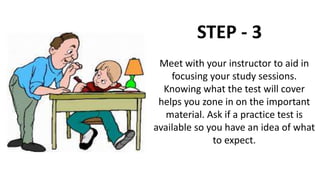
Meet with your instructor to aid in
focusing your study sessions.
Knowing what the test will cover
helps you zone in on the important
material. Ask if a practice test is
available so you have an idea of what
to expect.
STEP - 4
Practice positive self-talk as you prepare
for the test. Create a mantra to help you
calm your test anxiety. Repeat a phrase,
such as, "I just need to do my best," or "I
will be prepared for this test." Push back
against negative thoughts that creep into
your mind. If you tell yourself you're going
to fail, remind yourself that you
participated actively in class and studied
so you won't fail. Often, people who
suffer from exam anxiety cannot shut out
negative thoughts or emotions about the
test, and this can contribute to feeling
more anxiety than is normal.
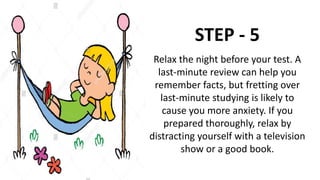
STEP - 5
Relax the night before your test. A
last-minute review can help you
remember facts, but fretting over
last-minute studying is likely to
cause you more anxiety. If you
prepared thoroughly, relax by
distracting yourself with a television
show or a good book.
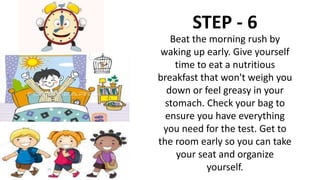
STEP - 6
Beat the morning rush by
waking up early. Give yourself
time to eat a nutritious
breakfast that won't weigh you
down or feel greasy in your
stomach. Check your bag to
ensure you have everything
you need for the test. Get to
the room early so you can take
your seat and organize
yourself.
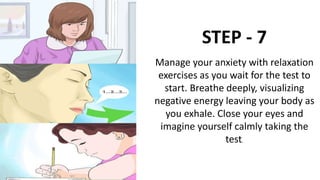
STEP - 7
Manage your anxiety with relaxation
exercises as you wait for the test to
start. Breathe deeply, visualizing
negative energy leaving your body as
you exhale. Close your eyes and
imagine yourself calmly taking the
test.
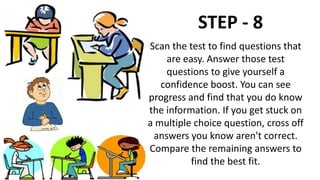
STEP - 8
Scan the test to find questions that
are easy. Answer those test
questions to give yourself a
confidence boost. You can see
progress and find that you do know
the information. If you get stuck on
a multiple choice question, cross off
answers you know aren't correct.
Compare the remaining answers to
find the best fit.
STEP - 9
Understand that you are not alone
and ask for help as necessary. Exam
fear is normal. When that anxiety
severely interferes with your ability
to take the test, however, outside
help might be needed. Ask your
teachers and family for support and
help. Special testing
accommodations may be available
that can reduce the stress.
STEP - 10
Reward yourself after the test is over.
The reward gives you the break you
deserve after all of your studying.
Treating yourself also helps you stop
thinking about the test and analyzing
every little mistake you may have
made.
By
Mithun Narayanan

How can we overcome exam fear

  • 2.
    Develop good studyhabits. Proper study habits and preparation are the keys to cutting out exam fear, according to Kids Health. Avoid last- minute "cramming" for exams and actively listen while in class. Know when the tests are coming up and prepare in advance; do not study all night or otherwise procrastinate. STEP -1
  • 3.
    STEP - 2 Keepyour mind and body healthy by getting enough sleep, eating well and exercising. Healthier people who are well- rested often do better on exams, and sacrificing the basics even in the short term can have negative consequences on performance.
  • 4.
    STEP - 3 Meetwith your instructor to aid in focusing your study sessions. Knowing what the test will cover helps you zone in on the important material. Ask if a practice test is available so you have an idea of what to expect.
  • 5.
    STEP - 4 Practicepositive self-talk as you prepare for the test. Create a mantra to help you calm your test anxiety. Repeat a phrase, such as, "I just need to do my best," or "I will be prepared for this test." Push back against negative thoughts that creep into your mind. If you tell yourself you're going to fail, remind yourself that you participated actively in class and studied so you won't fail. Often, people who suffer from exam anxiety cannot shut out negative thoughts or emotions about the test, and this can contribute to feeling more anxiety than is normal.
  • 6.
    STEP - 5 Relaxthe night before your test. A last-minute review can help you remember facts, but fretting over last-minute studying is likely to cause you more anxiety. If you prepared thoroughly, relax by distracting yourself with a television show or a good book.
  • 7.
    STEP - 6 Beatthe morning rush by waking up early. Give yourself time to eat a nutritious breakfast that won't weigh you down or feel greasy in your stomach. Check your bag to ensure you have everything you need for the test. Get to the room early so you can take your seat and organize yourself.
  • 8.
    STEP - 7 Manageyour anxiety with relaxation exercises as you wait for the test to start. Breathe deeply, visualizing negative energy leaving your body as you exhale. Close your eyes and imagine yourself calmly taking the test.
  • 9.
    STEP - 8 Scanthe test to find questions that are easy. Answer those test questions to give yourself a confidence boost. You can see progress and find that you do know the information. If you get stuck on a multiple choice question, cross off answers you know aren't correct. Compare the remaining answers to find the best fit.
  • 10.
    STEP - 9 Understandthat you are not alone and ask for help as necessary. Exam fear is normal. When that anxiety severely interferes with your ability to take the test, however, outside help might be needed. Ask your teachers and family for support and help. Special testing accommodations may be available that can reduce the stress.
  • 11.
    STEP - 10 Rewardyourself after the test is over. The reward gives you the break you deserve after all of your studying. Treating yourself also helps you stop thinking about the test and analyzing every little mistake you may have made.
  • 12.