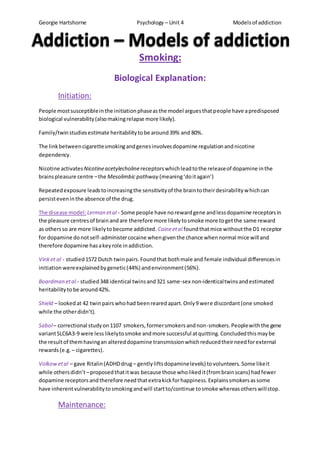
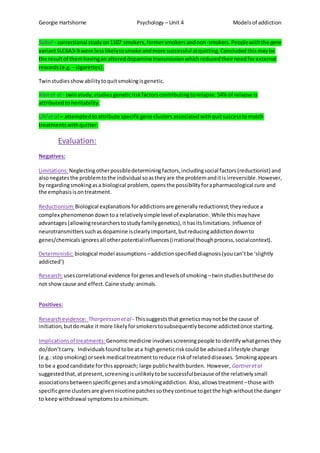
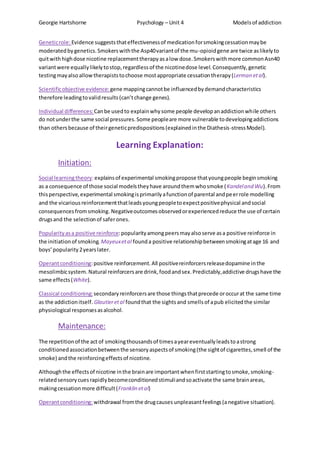
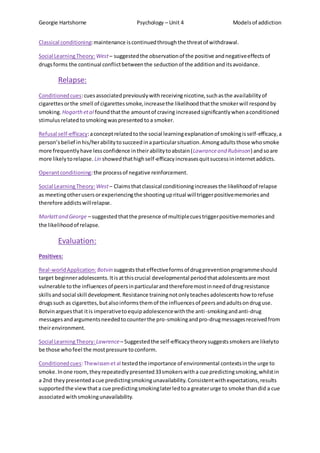
This document summarizes several biological, learning, and cognitive models of smoking addiction. The biological models focus on genetic factors that influence susceptibility to initiation and maintenance of smoking through dopamine regulation and nicotine dependency. Learning models emphasize social learning and conditioning processes like classical conditioning of cues and operant conditioning of withdrawal symptoms that promote maintenance and relapse. Cognitive models suggest positive expectations of smoking's effects on mood influence initiation, and these expectations become reinforced through actual drug effects.