1
UNIVERSIDAD TECNICA DE MACHALA
ACADEMIC UNIT OF CHEMICAL
SCIENCES AND HEALTH
MEDICINE SCHOOL
ENGLISH
PANCREATITIS
STUDENTS
William Cruz
Kevin Herrera
TEACHER:
Mgs. Barreto Huilcapi Lina Maribel
CLASS:
EIGHTH SEMESTER ‘’A’’
Machala, El Oro
2018
2
Pancreatitis
Definition
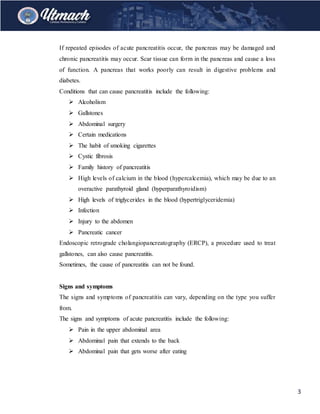
Pancreatitis is inflammation of the pancreas. The pancreas is a long, flat gland that is
located behind the stomach, in the upper abdomen. The pancreas produces enzymes
that help with digestion and hormones that help regulate how the body processes
sugar (glucose).
Pancreatitis can appear in its acute form, that is, it appears suddenly and lasts a few
days. Or, it may appear in its chronic form, which lasts for many years.
Mild cases of pancreatitis can go away without treatment, but severe cases can cause
life-threatening complications.
Etiology
Pancreatitis occurs when digestive enzymes are activated while in the pancreas,
which irritates the cells of the pancreas and causes inflammation.
3
If repeated episodes of acute pancreatitis occur, the pancreas may be damaged and
chronic pancreatitis may occur. Scar tissue can form in the pancreas and cause a loss
of function. A pancreas that works poorly can result in digestive problems and
diabetes.
Conditions that can cause pancreatitis include the following:
 Alcoholism
 Gallstones
 Abdominal surgery
 Certain medications
 The habit of smoking cigarettes
 Cystic fibrosis
 Family history of pancreatitis
 High levels of calcium in the blood (hypercalcemia), which may be due to an
overactive parathyroid gland (hyperparathyroidism)
 High levels of triglycerides in the blood (hypertriglyceridemia)
 Infection
 Injury to the abdomen
 Pancreatic cancer
Endoscopic retrograde cholangiopancreatography (ERCP), a procedure used to treat
gallstones, can also cause pancreatitis.
Sometimes, the cause of pancreatitis can not be found.
Signs and symptoms
The signs and symptoms of pancreatitis can vary, depending on the type you suffer
from.
The signs and symptoms of acute pancreatitis include the following:
 Pain in the upper abdominal area
 Abdominal pain that extends to the back
 Abdominal pain that gets worse after eating
4
 Fever
 Tachycardia
 Sickness
 Vomiting
 Pain with palpation when touching the abdomen
The signs and symptoms of chronic pancreatitis include the following:
 Pain in the upper abdominal area
 Unintentional weight loss
 Stool oily appearance and bad smell (steatorrhea)
Diagnosis
The tests and procedures used to diagnose pancreatitis include the following:
 Blood tests to detect high levels of pancreatic enzymes
 Stool analysis in chronic pancreatitis to measure fat levels that might suggest
that your digestive system is not properly absorbing nutrients
 Computed tomography (CT) to detect gallstones and evaluate inflammation of
the pancreas
 Abdominal ultrasound to detect gallstones and inflammation of the pancreas
 Endoscopic ultrasound to detect inflammation and blockages in the pancreatic
duct or bile ducts
 Magnetic resonance imaging (MRI) to detect abnormalities in the gallbladder,
pancreas, and ducts
The doctor may indicate other tests, depending on your particular situation.
Treatment
Initial treatments at the hospital may include:
 Fast. You will stop eating for a couple of days in the hospital so that your
pancreas can recover.
5
 Once the inflammation of the pancreas is controlled, you can start drinking
clear liquids and eating soft foods. Over time, you can go back to your usual
diet.
 If the pancreatitis persists and you still have pain when eating, the doctor may
recommend a tube (feeding tube) so you can nourish yourself.
 Medications for pain. Pancreatitis can cause severe pain. Your health care
team will give you medicines to control pain.
 Intravenous fluids. When your body devotes energy and fluids to repair the
pancreas, it is possible that you dehydrate. For this reason, you will receive
extra fluid through a vein in your arm during your hospital stay.
Once pancreatitis is controlled, your care team can treat the underlying cause of
pancreatitis. Depending on the cause of pancreatitis, treatment may include the
following:
Procedures to relieve obstructions of the bile ducts. Pancreatitis caused by narrowing
or obstruction of the bile ducts may require procedures to open or widen the bile duct.
A procedure called endoscopic retrograde cholangiopancreatography uses a long tube
with a camera on the end to examine the pancreas and bile ducts. The tube is inserted
through the throat and the camera sends images of the digestive system to a monitor.
Endoscopic retrograde cholangiopancreatography can facilitate the diagnosis of
problems in the bile duct and pancreatic duct, and their repair. In some people,
particularly in the elderly, endoscopic retrograde cholangiopancreatography can also
cause acute pancreatitis.
Surgery of the gallbladder. If the cause of your pancreatitis is gallstones, your doctor
may recommend removing the gallbladder (cholecystectomy).
Pancreatic surgery You may need surgery to drain fluid from the pancreas or to
remove diseased tissue.
Treatment for alcoholism. Taking several drinks a day for many years can cause
pancreatitis. If this is the cause of your pancreatitis, the doctor may recommend you
6
to enter a treatment program for alcohol addiction. Continuing to drink can worsen
your pancreatitis and cause serious complications.
Additional treatments for chronic pancreatitis
Depending on your situation, chronic pancreatitis may require additional treatments,
such as:
 Pain treatment. Chronic pancreatitis can cause persistent abdominal pain.
Your doctor can recommend medications to control pain and refer you to a
pain specialist.
 Severe pain can be relieved by options, such as endoscopic ultrasound or
surgery, to block nerves that send pain signals from the pancreas to the brain.
 Enzymes to improve digestion. Pancreatic enzyme supplements can help the
body break down and process the nutrients in the food you eat. Pancreatic
enzymes are taken with all meals.
 Changes in your diet Your doctor can refer you to a dietitian, who can help
you plan meals that are low in fat and high in nutrients.
Prevention
Although any healthy person can suffer an episode of acute pancreatitis, there are a
number of factors that favor its appearance, and an avoidable risk factor is the
consumption of alcohol.
Those with biliary colic and gallstones in the gallbladder should consider an
operation to remove the gallbladder and avoid a pancreatitis in the future. A diet low
in fat will also decrease the incidence of gallstones. The evolution of acute
pancreatitis is very variable, and can range from very mild to fatal.
About 25% of patients with the disease have serious complications. The presence of
large amounts of fluid in the peri pancreatic space and hemorrhage can lead to
hypotension. 20% of those affected present acute respiratory distress syndrome, and
between 10 and 15% of patients have pseudocysts associated with hemorrhage.
Pancreatic infection is associated with mortality greater than 50%.
7
To reduce the chances of suffering from chronic pancreatitis, the main risk factor,
which is the habitual consumption of alcohol (responsible for 90% of cases), should
be avoided. It is also advisable to follow a balanced diet and not abuse fat. When the
disease is due to alcohol intake, eradicating the habit significantly improves
symptoms and long-term prognosis.
Bibliography
 Bradley EL, III. A clinically based classification system for acute pancreatitis.
Summary of the International Symposium on Acute Pancreatitis. Arch Surg
1993; 128: 586-90.
 Bollen TL, van Santvoort HC, Besselink MG et al. The Atlanta Classification
of acute pancreatitis revisited. Br J Surg 2008; 95: 6-21.
 Everhart JE, Ruhl CE. Burden of digestive diseases in the United States Part
III: Liver, biliary tract, and pancreas. Gastroenterology 2009; 136: 1134-44.

Pancreatitis

  • 1.
    1 UNIVERSIDAD TECNICA DEMACHALA ACADEMIC UNIT OF CHEMICAL SCIENCES AND HEALTH MEDICINE SCHOOL ENGLISH PANCREATITIS STUDENTS William Cruz Kevin Herrera TEACHER: Mgs. Barreto Huilcapi Lina Maribel CLASS: EIGHTH SEMESTER ‘’A’’ Machala, El Oro 2018
  • 2.
    2 Pancreatitis Definition Pancreatitis is inflammationof the pancreas. The pancreas is a long, flat gland that is located behind the stomach, in the upper abdomen. The pancreas produces enzymes that help with digestion and hormones that help regulate how the body processes sugar (glucose). Pancreatitis can appear in its acute form, that is, it appears suddenly and lasts a few days. Or, it may appear in its chronic form, which lasts for many years. Mild cases of pancreatitis can go away without treatment, but severe cases can cause life-threatening complications. Etiology Pancreatitis occurs when digestive enzymes are activated while in the pancreas, which irritates the cells of the pancreas and causes inflammation.
  • 3.
    3 If repeated episodesof acute pancreatitis occur, the pancreas may be damaged and chronic pancreatitis may occur. Scar tissue can form in the pancreas and cause a loss of function. A pancreas that works poorly can result in digestive problems and diabetes. Conditions that can cause pancreatitis include the following:  Alcoholism  Gallstones  Abdominal surgery  Certain medications  The habit of smoking cigarettes  Cystic fibrosis  Family history of pancreatitis  High levels of calcium in the blood (hypercalcemia), which may be due to an overactive parathyroid gland (hyperparathyroidism)  High levels of triglycerides in the blood (hypertriglyceridemia)  Infection  Injury to the abdomen  Pancreatic cancer Endoscopic retrograde cholangiopancreatography (ERCP), a procedure used to treat gallstones, can also cause pancreatitis. Sometimes, the cause of pancreatitis can not be found. Signs and symptoms The signs and symptoms of pancreatitis can vary, depending on the type you suffer from. The signs and symptoms of acute pancreatitis include the following:  Pain in the upper abdominal area  Abdominal pain that extends to the back  Abdominal pain that gets worse after eating
  • 4.
    4  Fever  Tachycardia Sickness  Vomiting  Pain with palpation when touching the abdomen The signs and symptoms of chronic pancreatitis include the following:  Pain in the upper abdominal area  Unintentional weight loss  Stool oily appearance and bad smell (steatorrhea) Diagnosis The tests and procedures used to diagnose pancreatitis include the following:  Blood tests to detect high levels of pancreatic enzymes  Stool analysis in chronic pancreatitis to measure fat levels that might suggest that your digestive system is not properly absorbing nutrients  Computed tomography (CT) to detect gallstones and evaluate inflammation of the pancreas  Abdominal ultrasound to detect gallstones and inflammation of the pancreas  Endoscopic ultrasound to detect inflammation and blockages in the pancreatic duct or bile ducts  Magnetic resonance imaging (MRI) to detect abnormalities in the gallbladder, pancreas, and ducts The doctor may indicate other tests, depending on your particular situation. Treatment Initial treatments at the hospital may include:  Fast. You will stop eating for a couple of days in the hospital so that your pancreas can recover.
  • 5.
    5  Once theinflammation of the pancreas is controlled, you can start drinking clear liquids and eating soft foods. Over time, you can go back to your usual diet.  If the pancreatitis persists and you still have pain when eating, the doctor may recommend a tube (feeding tube) so you can nourish yourself.  Medications for pain. Pancreatitis can cause severe pain. Your health care team will give you medicines to control pain.  Intravenous fluids. When your body devotes energy and fluids to repair the pancreas, it is possible that you dehydrate. For this reason, you will receive extra fluid through a vein in your arm during your hospital stay. Once pancreatitis is controlled, your care team can treat the underlying cause of pancreatitis. Depending on the cause of pancreatitis, treatment may include the following: Procedures to relieve obstructions of the bile ducts. Pancreatitis caused by narrowing or obstruction of the bile ducts may require procedures to open or widen the bile duct. A procedure called endoscopic retrograde cholangiopancreatography uses a long tube with a camera on the end to examine the pancreas and bile ducts. The tube is inserted through the throat and the camera sends images of the digestive system to a monitor. Endoscopic retrograde cholangiopancreatography can facilitate the diagnosis of problems in the bile duct and pancreatic duct, and their repair. In some people, particularly in the elderly, endoscopic retrograde cholangiopancreatography can also cause acute pancreatitis. Surgery of the gallbladder. If the cause of your pancreatitis is gallstones, your doctor may recommend removing the gallbladder (cholecystectomy). Pancreatic surgery You may need surgery to drain fluid from the pancreas or to remove diseased tissue. Treatment for alcoholism. Taking several drinks a day for many years can cause pancreatitis. If this is the cause of your pancreatitis, the doctor may recommend you
  • 6.
    6 to enter atreatment program for alcohol addiction. Continuing to drink can worsen your pancreatitis and cause serious complications. Additional treatments for chronic pancreatitis Depending on your situation, chronic pancreatitis may require additional treatments, such as:  Pain treatment. Chronic pancreatitis can cause persistent abdominal pain. Your doctor can recommend medications to control pain and refer you to a pain specialist.  Severe pain can be relieved by options, such as endoscopic ultrasound or surgery, to block nerves that send pain signals from the pancreas to the brain.  Enzymes to improve digestion. Pancreatic enzyme supplements can help the body break down and process the nutrients in the food you eat. Pancreatic enzymes are taken with all meals.  Changes in your diet Your doctor can refer you to a dietitian, who can help you plan meals that are low in fat and high in nutrients. Prevention Although any healthy person can suffer an episode of acute pancreatitis, there are a number of factors that favor its appearance, and an avoidable risk factor is the consumption of alcohol. Those with biliary colic and gallstones in the gallbladder should consider an operation to remove the gallbladder and avoid a pancreatitis in the future. A diet low in fat will also decrease the incidence of gallstones. The evolution of acute pancreatitis is very variable, and can range from very mild to fatal. About 25% of patients with the disease have serious complications. The presence of large amounts of fluid in the peri pancreatic space and hemorrhage can lead to hypotension. 20% of those affected present acute respiratory distress syndrome, and between 10 and 15% of patients have pseudocysts associated with hemorrhage. Pancreatic infection is associated with mortality greater than 50%.
  • 7.
    7 To reduce thechances of suffering from chronic pancreatitis, the main risk factor, which is the habitual consumption of alcohol (responsible for 90% of cases), should be avoided. It is also advisable to follow a balanced diet and not abuse fat. When the disease is due to alcohol intake, eradicating the habit significantly improves symptoms and long-term prognosis. Bibliography  Bradley EL, III. A clinically based classification system for acute pancreatitis. Summary of the International Symposium on Acute Pancreatitis. Arch Surg 1993; 128: 586-90.  Bollen TL, van Santvoort HC, Besselink MG et al. The Atlanta Classification of acute pancreatitis revisited. Br J Surg 2008; 95: 6-21.  Everhart JE, Ruhl CE. Burden of digestive diseases in the United States Part III: Liver, biliary tract, and pancreas. Gastroenterology 2009; 136: 1134-44.