UNIT 1AUNIT 1A
ACTION AND NON-ACTION AND NON-
ACTION VERBSACTION VERBS
Also called DYNAMICAlso called DYNAMIC andand
STATIVE verbsSTATIVE verbs
NON -ACTION VERBS:NON -ACTION VERBS:
STATESTATE
 A state is when something stays the same.A state is when something stays the same.
 Non-action verbs areNon-action verbs are normallynormally not used innot used in
the continuous formthe continuous form
ACTION VERBSACTION VERBS
An action is when something happensAn action is when something happens
NON-ACTION VERBSNON-ACTION VERBS
1. VERBS OF THE SENSES1. VERBS OF THE SENSES
AppearAppear
HearHear
Look likeLook like
SeeSee
TasteTaste
NON-ACTION VERBSNON-ACTION VERBS
2. VERBS OF THE FEELINGS2. VERBS OF THE FEELINGS
LikeLike
HateHate
LoveLove
PreferPrefer
WantWant
WishWish
NON-ACTION VERBSNON-ACTION VERBS
3. VERBS OF THINKING3. VERBS OF THINKING
AgreeAgree
BelieveBelieve
ForgetForget
KnowKnow
ThinkThink
UnderstandUnderstand
NON-ACTION VERBSNON-ACTION VERBS
4. VERBS OF POSSESSION4. VERBS OF POSSESSION
Belong toBelong to
ContainContain
HaveHave
OwnOwn
NON-ACTION VERBSNON-ACTION VERBS
5. VERBS OF BEING5. VERBS OF BEING
BeBe
ExistExist
NON-ACTION VERBSNON-ACTION VERBS
6. OTHER VERBS6. OTHER VERBS
CostCost
Depend onDepend on
MeanMean
NeedNeed
NON-ACTION VERBS IN THENON-ACTION VERBS IN THE
CONTINUOUS FORM???CONTINUOUS FORM???
It’s OK to use a state verb in the continuous formIt’s OK to use a state verb in the continuous form
if it expresses a temporary feelingif it expresses a temporary feeling
““-How are you getting on in your-How are you getting on in your
new school?new school?
-I’M LOVING IT !”-I’M LOVING IT !”
VERBS THAT CAN EXPRESSVERBS THAT CAN EXPRESS
ACTION AND NON- ACTIONACTION AND NON- ACTION
It is possible for some verbs toIt is possible for some verbs to
express state and actionexpress state and action IF THEYIF THEY
HAVE TWO DIFFERENT MEANINGSHAVE TWO DIFFERENT MEANINGS
VERBS THAT CAN EXPRESSVERBS THAT CAN EXPRESS
STATE AND ACTIONSTATE AND ACTION
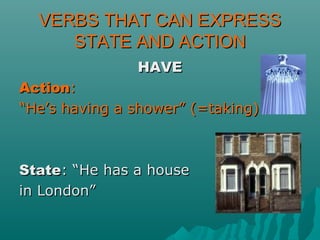
HAVEHAVE
ActionAction::
““He’s having a shower” (=taking)He’s having a shower” (=taking)
StateState: “He has a house: “He has a house
in London”in London”
VERBS THAT CAN EXPRESSVERBS THAT CAN EXPRESS
STATE AND ACTIONSTATE AND ACTION
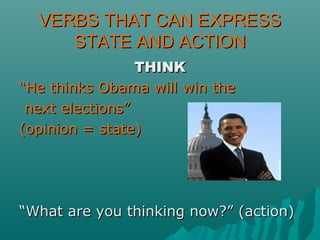
THINKTHINK
““He thinks Obama will win theHe thinks Obama will win the
next elections”next elections”
(opinion = state)(opinion = state)
““What are you thinking now?” (action)What are you thinking now?” (action)
VERBS THAT CAN EXPRESSVERBS THAT CAN EXPRESS
STATE AND ACTIONSTATE AND ACTION
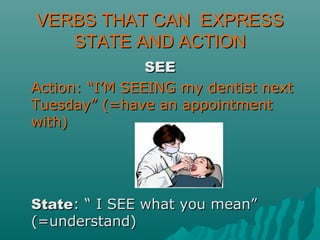
SEESEE
Action: “I’M SEEING my dentist nextAction: “I’M SEEING my dentist next
Tuesday” (=have an appointmentTuesday” (=have an appointment
with)with)
StateState: “ I SEE what you mean”: “ I SEE what you mean”
(=understand)(=understand)
Are the followingAre the following
correct?correct?
IMAGINE YOU MEET AIMAGINE YOU MEET A
VISITOR. ARE THESEVISITOR. ARE THESE
QUESTIONS OK?QUESTIONS OK?
FIRST QUESTIONFIRST QUESTION
ARE YOU ENJOYINGARE YOU ENJOYING
YOUR VISIT HERE?YOUR VISIT HERE?
It´s OKIt´s OK
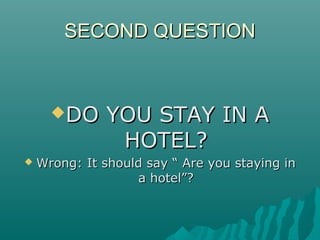
SECOND QUESTIONSECOND QUESTION
DO YOU STAY IN ADO YOU STAY IN A
HOTEL?HOTEL?
 Wrong: It should say “ Are you staying inWrong: It should say “ Are you staying in
a hotel”?a hotel”?
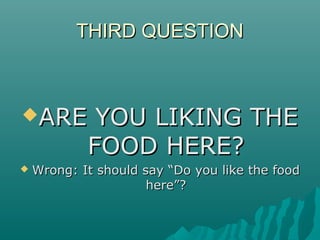
THIRD QUESTIONTHIRD QUESTION
ARE YOU LIKING THEARE YOU LIKING THE
FOOD HERE?FOOD HERE?
 Wrong: It should say “Do you like the foodWrong: It should say “Do you like the food
here”?here”?
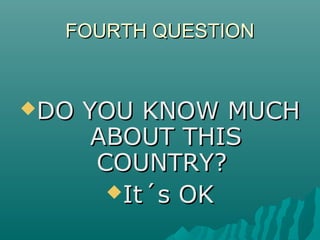
FOURTH QUESTIONFOURTH QUESTION
DO YOU KNOW MUCHDO YOU KNOW MUCH
ABOUT THISABOUT THIS
COUNTRY?COUNTRY?
It´s OKIt´s OK
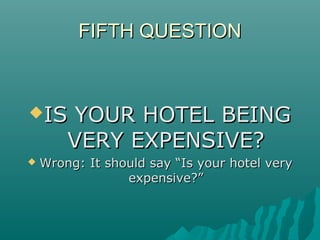
FIFTH QUESTIONFIFTH QUESTION
IS YOUR HOTEL BEINGIS YOUR HOTEL BEING
VERY EXPENSIVE?VERY EXPENSIVE?
 Wrong: It should say “Is your hotel veryWrong: It should say “Is your hotel very
expensive?”expensive?”
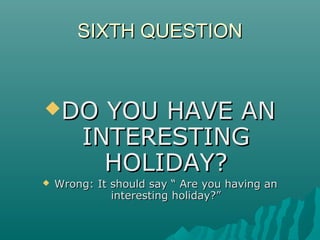
SIXTH QUESTIONSIXTH QUESTION
DO YOU HAVE ANDO YOU HAVE AN
INTERESTINGINTERESTING
HOLIDAY?HOLIDAY?
 Wrong: It should say “ Are you having anWrong: It should say “ Are you having an
interesting holiday?”interesting holiday?”
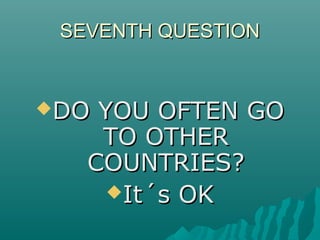
SEVENTH QUESTIONSEVENTH QUESTION
DO YOU OFTEN GODO YOU OFTEN GO
TO OTHERTO OTHER
COUNTRIES?COUNTRIES?
It´s OKIt´s OK
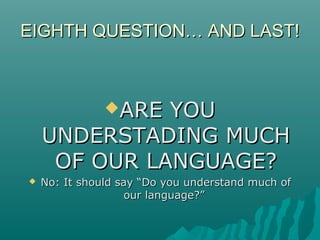
EIGHTH QUESTION… AND LAST!EIGHTH QUESTION… AND LAST!
ARE YOUARE YOU
UNDERSTADING MUCHUNDERSTADING MUCH
OF OUR LANGUAGE?OF OUR LANGUAGE?
 No: It should say “Do you understand much ofNo: It should say “Do you understand much of
our language?”our language?”

action and non action verbs

  • 1.
    UNIT 1AUNIT 1A ACTIONAND NON-ACTION AND NON- ACTION VERBSACTION VERBS Also called DYNAMICAlso called DYNAMIC andand STATIVE verbsSTATIVE verbs
  • 2.
    NON -ACTION VERBS:NON-ACTION VERBS: STATESTATE  A state is when something stays the same.A state is when something stays the same.  Non-action verbs areNon-action verbs are normallynormally not used innot used in the continuous formthe continuous form
  • 3.
    ACTION VERBSACTION VERBS Anaction is when something happensAn action is when something happens
  • 4.
    NON-ACTION VERBSNON-ACTION VERBS 1.VERBS OF THE SENSES1. VERBS OF THE SENSES AppearAppear HearHear Look likeLook like SeeSee TasteTaste
  • 5.
    NON-ACTION VERBSNON-ACTION VERBS 2.VERBS OF THE FEELINGS2. VERBS OF THE FEELINGS LikeLike HateHate LoveLove PreferPrefer WantWant WishWish
  • 6.
    NON-ACTION VERBSNON-ACTION VERBS 3.VERBS OF THINKING3. VERBS OF THINKING AgreeAgree BelieveBelieve ForgetForget KnowKnow ThinkThink UnderstandUnderstand
  • 7.
    NON-ACTION VERBSNON-ACTION VERBS 4.VERBS OF POSSESSION4. VERBS OF POSSESSION Belong toBelong to ContainContain HaveHave OwnOwn
  • 8.
    NON-ACTION VERBSNON-ACTION VERBS 5.VERBS OF BEING5. VERBS OF BEING BeBe ExistExist
  • 9.
    NON-ACTION VERBSNON-ACTION VERBS 6.OTHER VERBS6. OTHER VERBS CostCost Depend onDepend on MeanMean NeedNeed
  • 10.
    NON-ACTION VERBS INTHENON-ACTION VERBS IN THE CONTINUOUS FORM???CONTINUOUS FORM??? It’s OK to use a state verb in the continuous formIt’s OK to use a state verb in the continuous form if it expresses a temporary feelingif it expresses a temporary feeling ““-How are you getting on in your-How are you getting on in your new school?new school? -I’M LOVING IT !”-I’M LOVING IT !”
  • 11.
    VERBS THAT CANEXPRESSVERBS THAT CAN EXPRESS ACTION AND NON- ACTIONACTION AND NON- ACTION It is possible for some verbs toIt is possible for some verbs to express state and actionexpress state and action IF THEYIF THEY HAVE TWO DIFFERENT MEANINGSHAVE TWO DIFFERENT MEANINGS
  • 12.
    VERBS THAT CANEXPRESSVERBS THAT CAN EXPRESS STATE AND ACTIONSTATE AND ACTION HAVEHAVE ActionAction:: ““He’s having a shower” (=taking)He’s having a shower” (=taking) StateState: “He has a house: “He has a house in London”in London”
  • 13.
    VERBS THAT CANEXPRESSVERBS THAT CAN EXPRESS STATE AND ACTIONSTATE AND ACTION THINKTHINK ““He thinks Obama will win theHe thinks Obama will win the next elections”next elections” (opinion = state)(opinion = state) ““What are you thinking now?” (action)What are you thinking now?” (action)
  • 14.
    VERBS THAT CANEXPRESSVERBS THAT CAN EXPRESS STATE AND ACTIONSTATE AND ACTION SEESEE Action: “I’M SEEING my dentist nextAction: “I’M SEEING my dentist next Tuesday” (=have an appointmentTuesday” (=have an appointment with)with) StateState: “ I SEE what you mean”: “ I SEE what you mean” (=understand)(=understand)
  • 15.
    Are the followingArethe following correct?correct? IMAGINE YOU MEET AIMAGINE YOU MEET A VISITOR. ARE THESEVISITOR. ARE THESE QUESTIONS OK?QUESTIONS OK?
  • 16.
    FIRST QUESTIONFIRST QUESTION AREYOU ENJOYINGARE YOU ENJOYING YOUR VISIT HERE?YOUR VISIT HERE? It´s OKIt´s OK
  • 17.
    SECOND QUESTIONSECOND QUESTION DOYOU STAY IN ADO YOU STAY IN A HOTEL?HOTEL?  Wrong: It should say “ Are you staying inWrong: It should say “ Are you staying in a hotel”?a hotel”?
  • 18.
    THIRD QUESTIONTHIRD QUESTION AREYOU LIKING THEARE YOU LIKING THE FOOD HERE?FOOD HERE?  Wrong: It should say “Do you like the foodWrong: It should say “Do you like the food here”?here”?
  • 19.
    FOURTH QUESTIONFOURTH QUESTION DOYOU KNOW MUCHDO YOU KNOW MUCH ABOUT THISABOUT THIS COUNTRY?COUNTRY? It´s OKIt´s OK
  • 20.
    FIFTH QUESTIONFIFTH QUESTION ISYOUR HOTEL BEINGIS YOUR HOTEL BEING VERY EXPENSIVE?VERY EXPENSIVE?  Wrong: It should say “Is your hotel veryWrong: It should say “Is your hotel very expensive?”expensive?”
  • 21.
    SIXTH QUESTIONSIXTH QUESTION DOYOU HAVE ANDO YOU HAVE AN INTERESTINGINTERESTING HOLIDAY?HOLIDAY?  Wrong: It should say “ Are you having anWrong: It should say “ Are you having an interesting holiday?”interesting holiday?”
  • 22.
    SEVENTH QUESTIONSEVENTH QUESTION DOYOU OFTEN GODO YOU OFTEN GO TO OTHERTO OTHER COUNTRIES?COUNTRIES? It´s OKIt´s OK
  • 23.
    EIGHTH QUESTION… ANDLAST!EIGHTH QUESTION… AND LAST! ARE YOUARE YOU UNDERSTADING MUCHUNDERSTADING MUCH OF OUR LANGUAGE?OF OUR LANGUAGE?  No: It should say “Do you understand much ofNo: It should say “Do you understand much of our language?”our language?”