STATE and ACTION
Verbs.
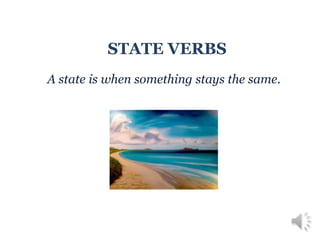
STATE VERBS
A state is when something stays the same.
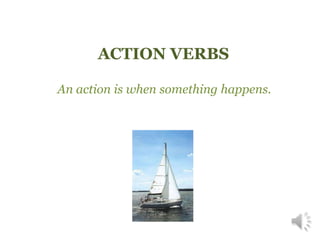
ACTION VERBS
An action is when something happens.
STATE VERBS
They are Not used in the present continuous
when they describe states.
For example:
*I have a book. ( not I’m having a book)
*This soup tastes of garlic. ( not this soup is tasting of
garlic…)
STATE VERBS ARE:
1. Verbs related to senses

• hear
• see
• smell
• taste
• sound
• seem
• appear
2. Verbs related to sentiments and desires

•
•
•
•
•
•

Like
love
hate
need
want
wish
3. Verbs which express possession.

• have got
• own
• belong to
• possess
4. Verbs which indicate price and
measurement.

• cost
• measure
• weigh
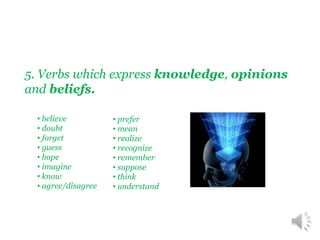
5. Verbs which express knowledge, opinions
and beliefs.
• believe
• doubt
• forget
• guess
• hope
• imagine
• know
• agree/disagree

• prefer
• mean
• realize
• recognize
• remember
• suppose
• think
• understand
Note:
Some of them may be used in the continuous
when they express an action (not a state)

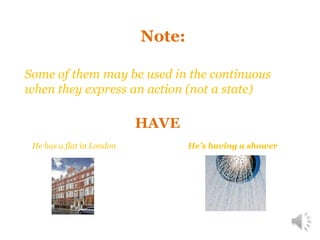
HAVE
He has a flat in London

He’s having a shower
Examples.

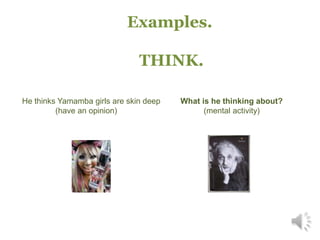
THINK.
He thinks Yamamba girls are skin deep
(have an opinion)

What is he thinking about?
(mental activity)
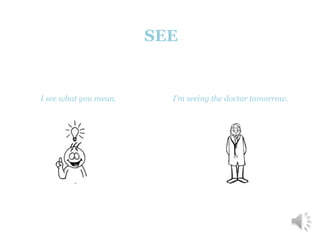
SEE

I see what you mean.

I’m seeing the doctor tomorrow.
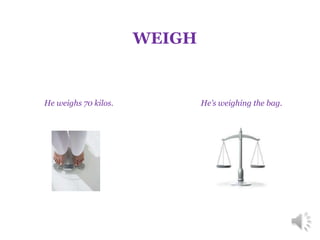
WEIGH

He weighs 70 kilos.

He’s weighing the bag.
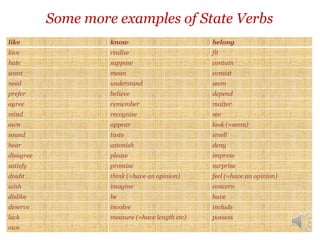
Some more examples of State Verbs
like

know

belong

love

realise

fit

hate

suppose

contain

want

mean

consist

need

understand

seem

prefer

believe

depend

agree

remember

matter

mind

recognise

see

own

appear

look (=seem)

sound

taste

smell

hear

astonish

deny

disagree

please

impress

satisfy

promise

surprise

doubt

think (=have an opinion)

feel (=have an opinion)

wish

imagine

concern

dislike

be

have

deserve

involve

include

lack

measure (=have length etc)

possess

owe

State and action verbs.

  • 1.
  • 2.
    STATE VERBS A stateis when something stays the same.
  • 3.
    ACTION VERBS An actionis when something happens.
  • 4.
    STATE VERBS They areNot used in the present continuous when they describe states. For example: *I have a book. ( not I’m having a book) *This soup tastes of garlic. ( not this soup is tasting of garlic…)
  • 5.
    STATE VERBS ARE: 1.Verbs related to senses • hear • see • smell • taste • sound • seem • appear
  • 6.
    2. Verbs relatedto sentiments and desires • • • • • • Like love hate need want wish
  • 7.
    3. Verbs whichexpress possession. • have got • own • belong to • possess
  • 8.
    4. Verbs whichindicate price and measurement. • cost • measure • weigh
  • 9.
    5. Verbs whichexpress knowledge, opinions and beliefs. • believe • doubt • forget • guess • hope • imagine • know • agree/disagree • prefer • mean • realize • recognize • remember • suppose • think • understand
  • 10.
    Note: Some of themmay be used in the continuous when they express an action (not a state) HAVE He has a flat in London He’s having a shower
  • 11.
    Examples. THINK. He thinks Yamambagirls are skin deep (have an opinion) What is he thinking about? (mental activity)
  • 12.
    SEE I see whatyou mean. I’m seeing the doctor tomorrow.
  • 13.
    WEIGH He weighs 70kilos. He’s weighing the bag.
  • 14.
    Some more examplesof State Verbs like know belong love realise fit hate suppose contain want mean consist need understand seem prefer believe depend agree remember matter mind recognise see own appear look (=seem) sound taste smell hear astonish deny disagree please impress satisfy promise surprise doubt think (=have an opinion) feel (=have an opinion) wish imagine concern dislike be have deserve involve include lack measure (=have length etc) possess owe