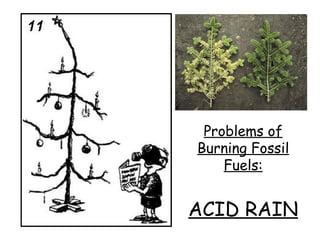
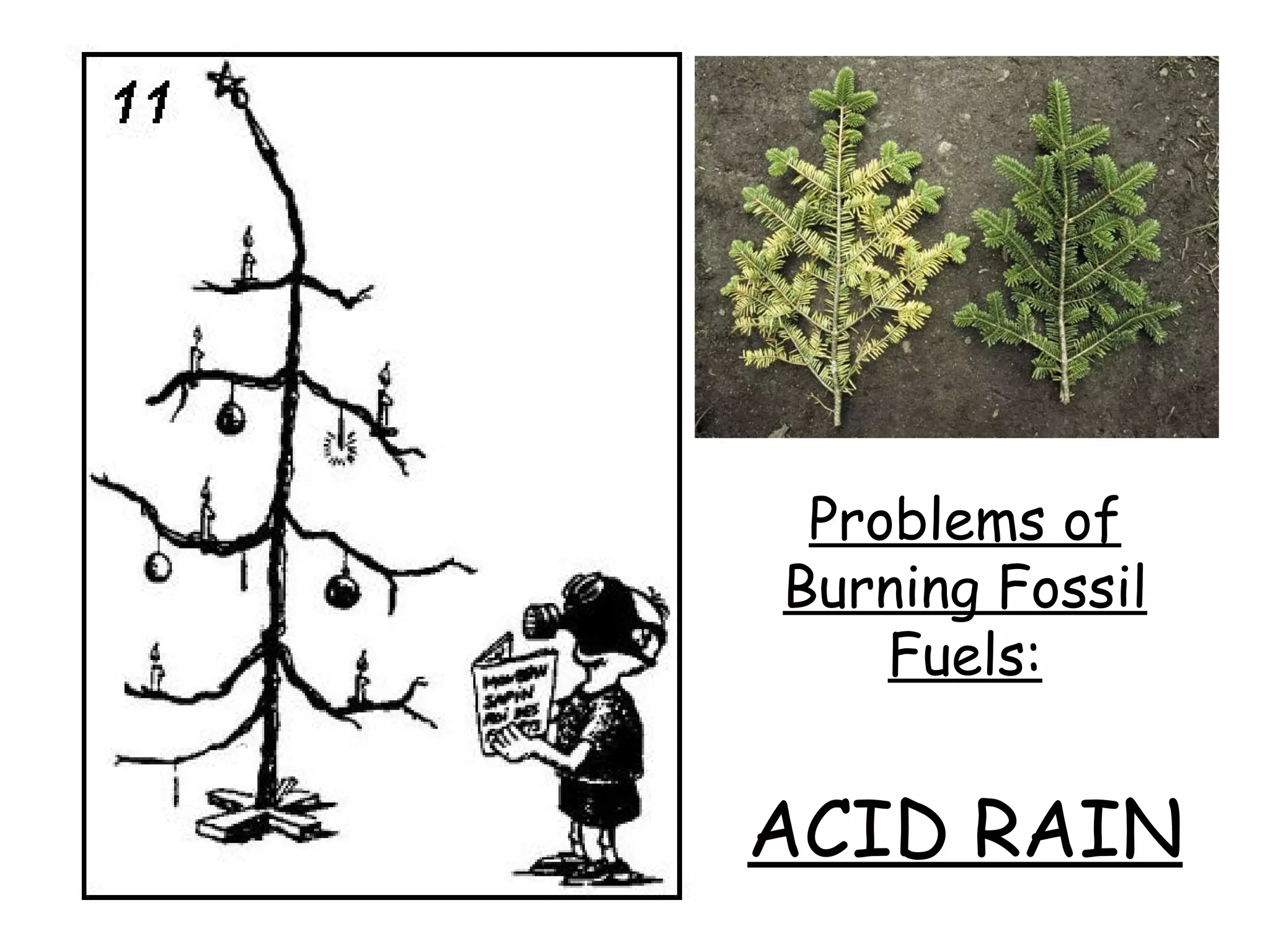
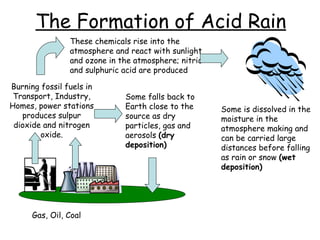
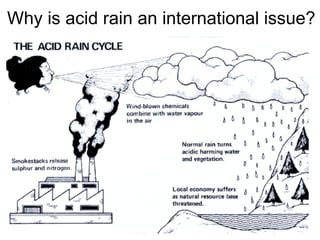
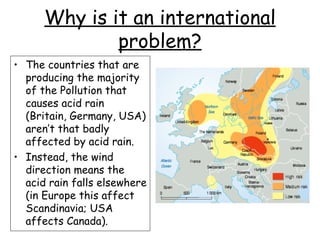
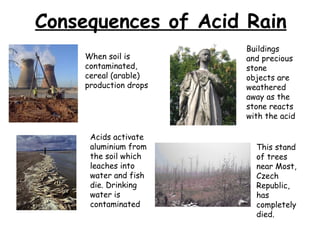
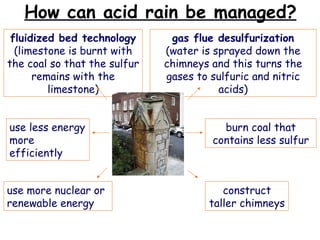
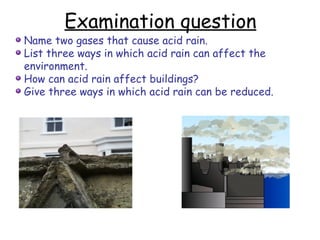
Acid rain is formed when sulfur dioxide and nitrogen oxide gases released from burning fossil fuels react with water and oxygen in the atmosphere. These acids can be transported long distances and affect areas far from where the emissions originated. Acid rain damages forests and fish populations by making soils and waterways too acidic. It also erodes buildings by accelerating the chemical breakdown of stone. Methods to reduce acid rain include installing flue gas desulfurization systems in power plants, increasing the height of smokestacks, improving energy efficiency, using cleaner-burning fuels, and developing renewable energy sources.


![Chemisty project _9_F_100383_Acid Rain [Autosaved].pptx](https://cdn.slidesharecdn.com/ss_thumbnails/chemistyproject9f100383acidrainautosaved-221105001449-a68f39ef-thumbnail.jpg?width=640&height=640&fit=bounds)


