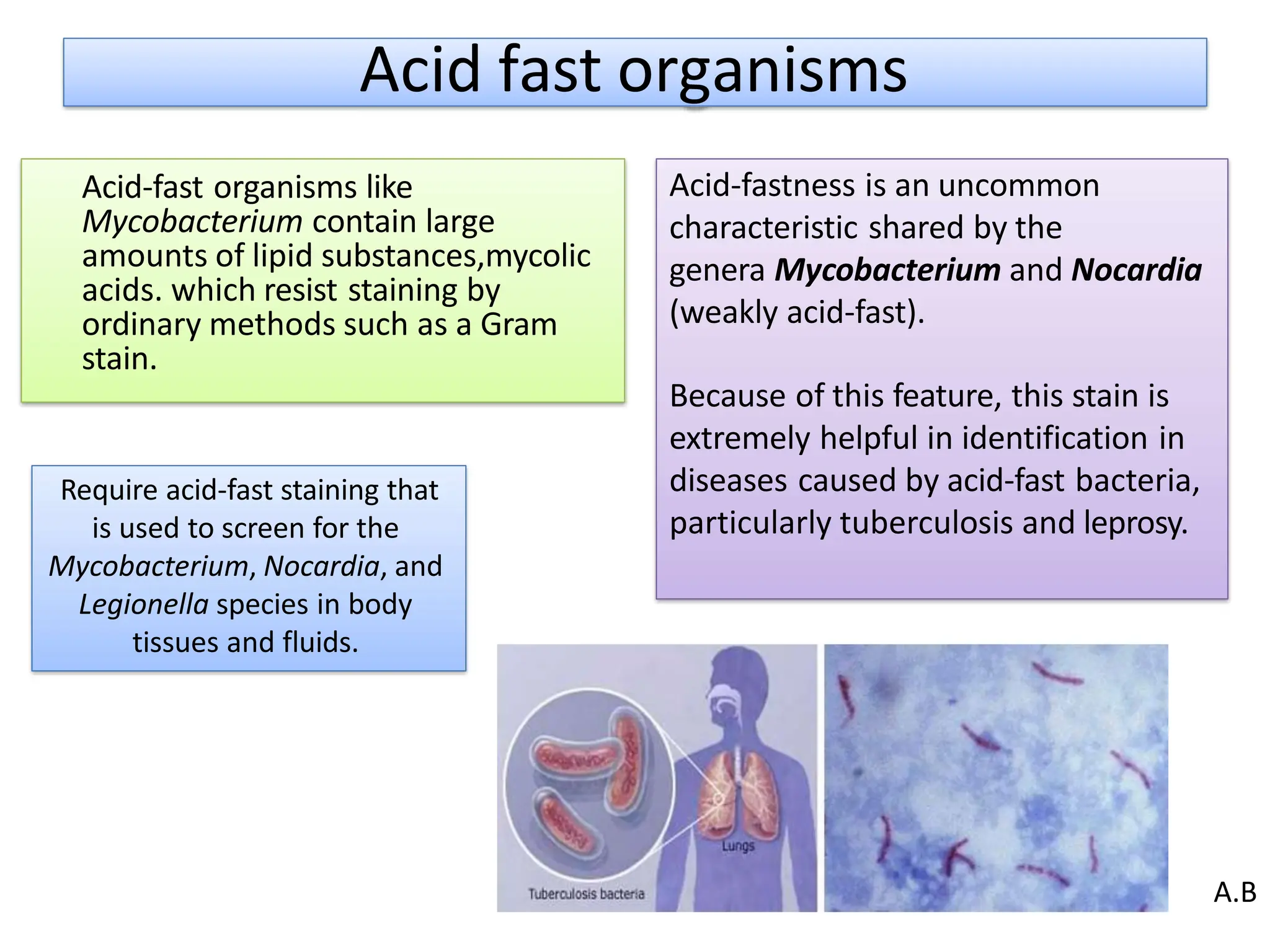
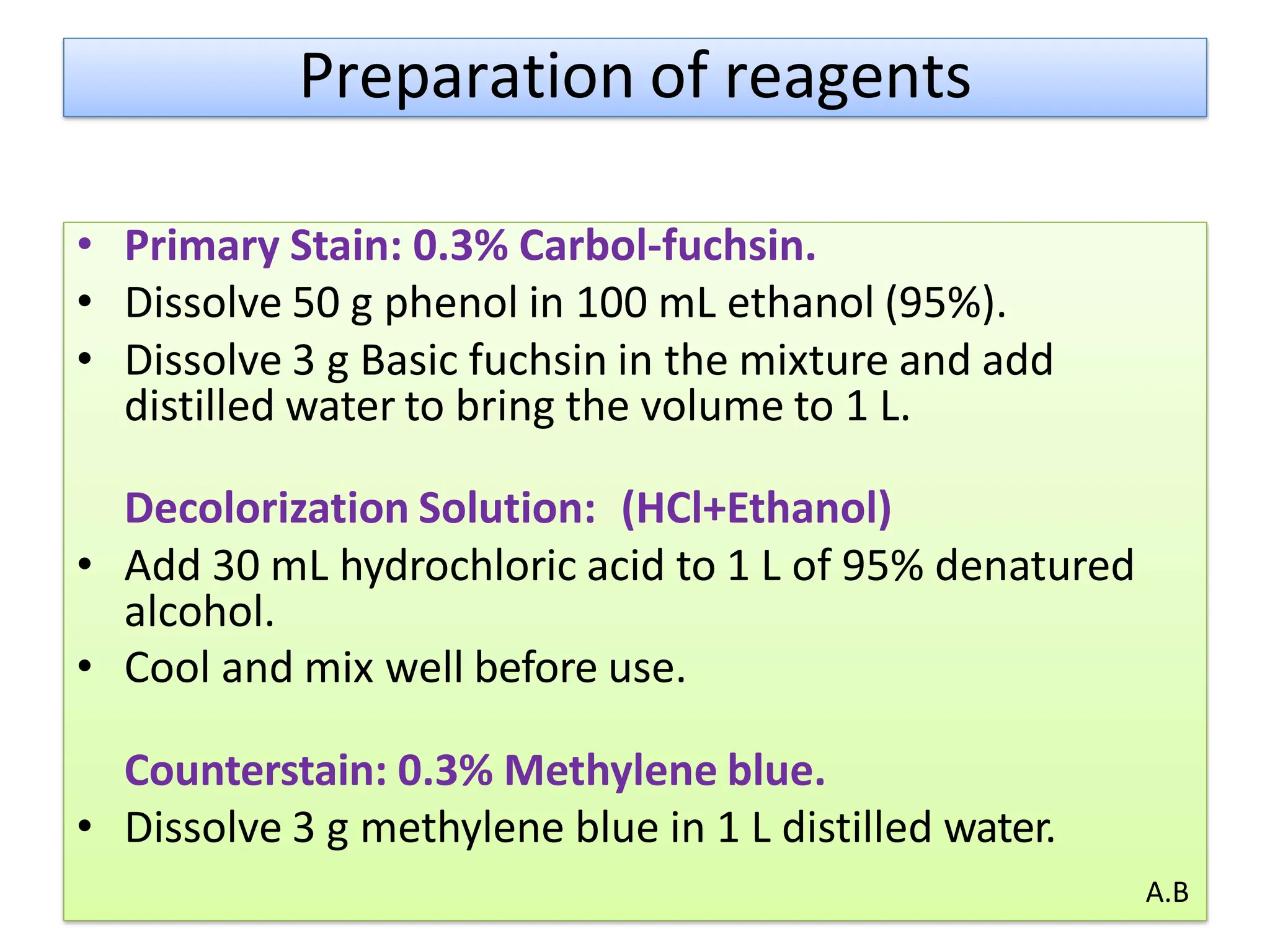
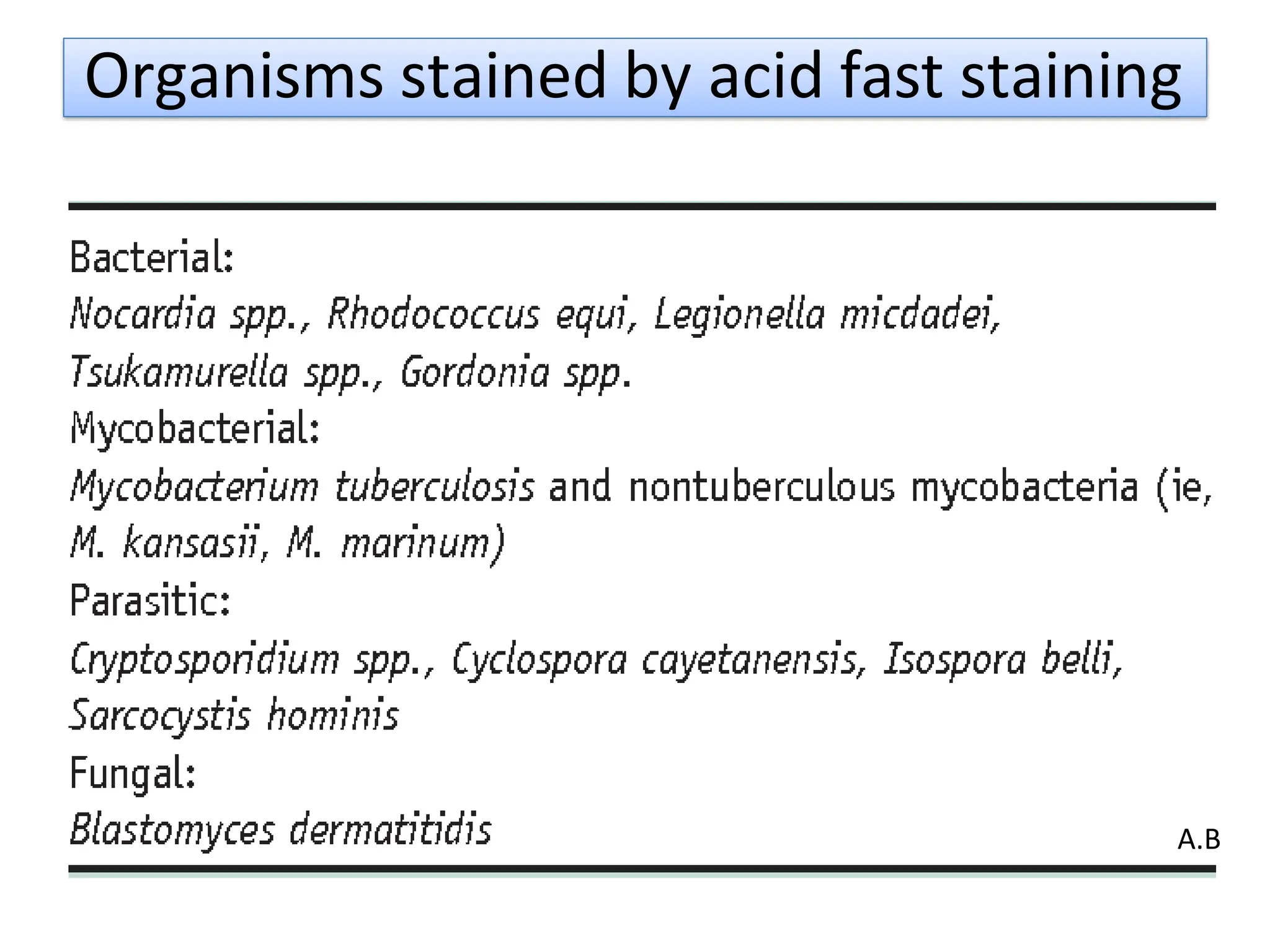
Acid-fast staining is a differential technique used to identify acid-fast bacteria, such as those in the genus Mycobacterium, by employing a primary stain (carbol fuchsin) that penetrates their waxy cell walls. The process involves heat, decolorization with acid-alcohol, and counterstaining with methylene blue, resulting in acid-fast organisms appearing red while non-acid-fast ones appear green or blue. This staining method is crucial for diagnosing diseases like tuberculosis and leprosy caused by these resistant bacteria.