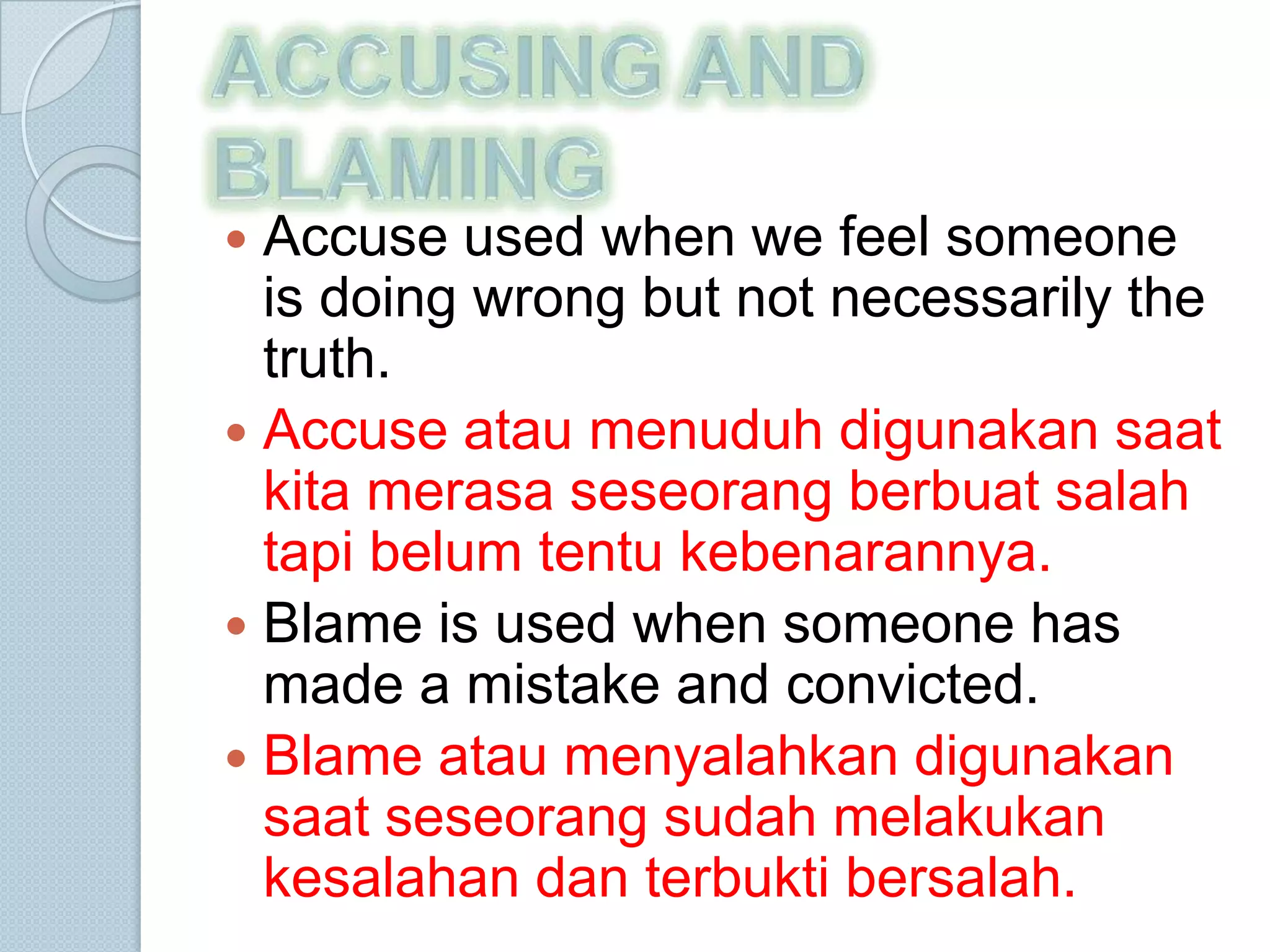
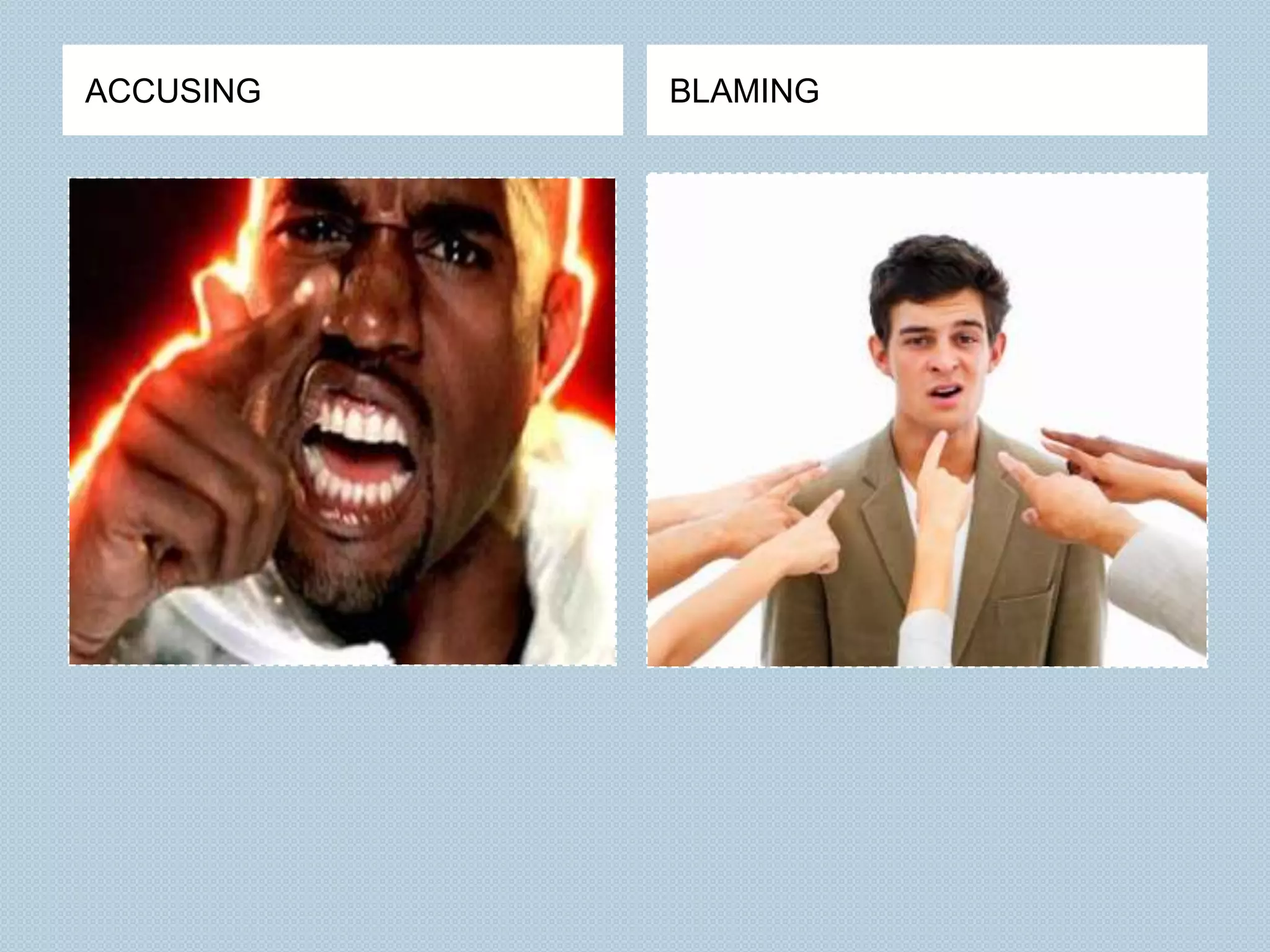
 Accuse used when we feel someone
  is doing wrong but not necessarily the
  truth.
 Accuse atau menuduh digunakan saat
  kita merasa seseorang berbuat salah
  tapi belum tentu kebenarannya.
 Blame is used when someone has
  made ​a mistake and convicted.
 Blame atau menyalahkan digunakan
  saat seseorang sudah melakukan
  kesalahan dan terbukti bersalah.
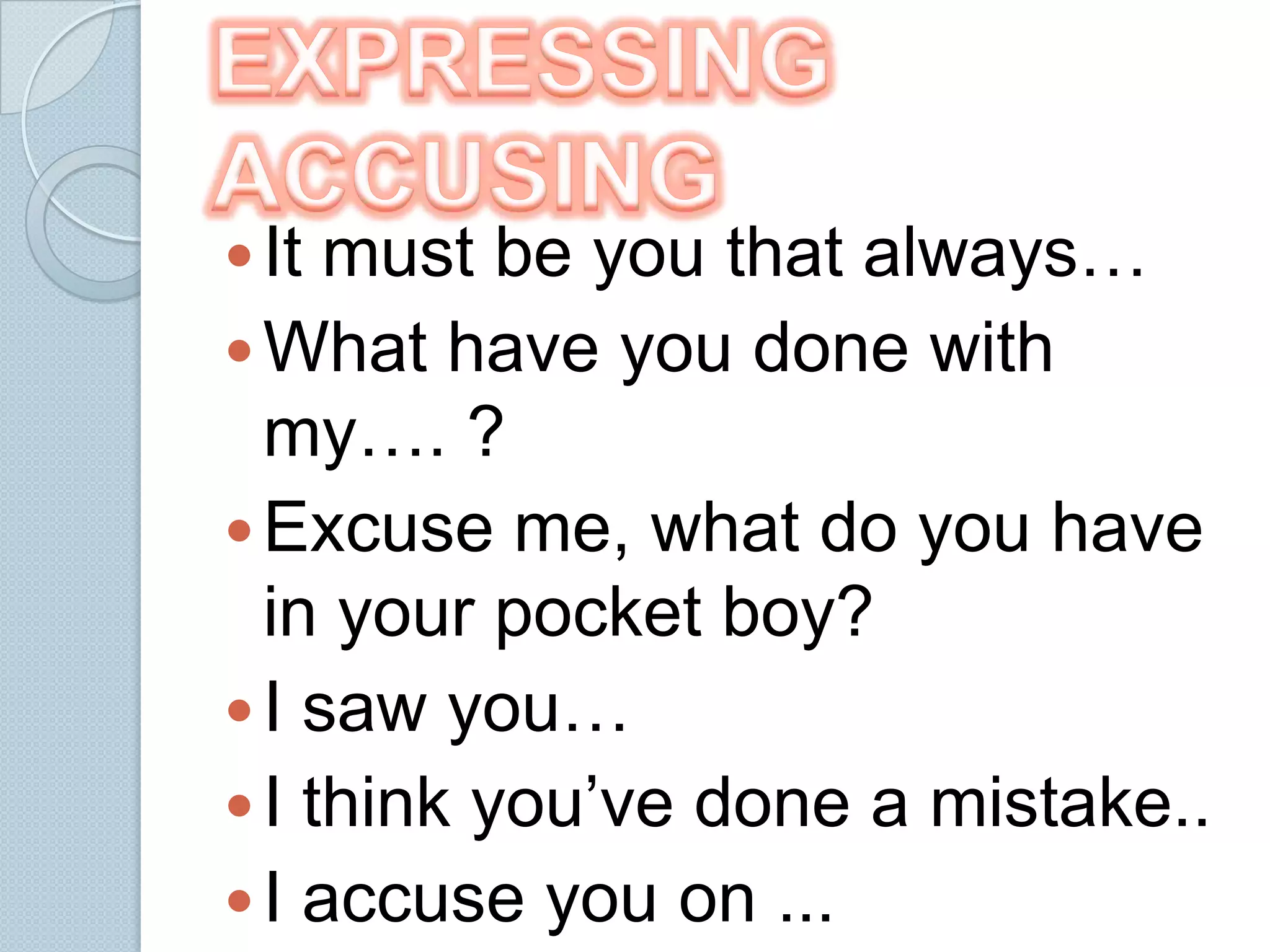
 It must be you that always…
 What have you done with
  my…. ?
 Excuse me, what do you have
  in your pocket boy?
 I saw you…
 I think you’ve done a mistake..
 I accuse you on ...
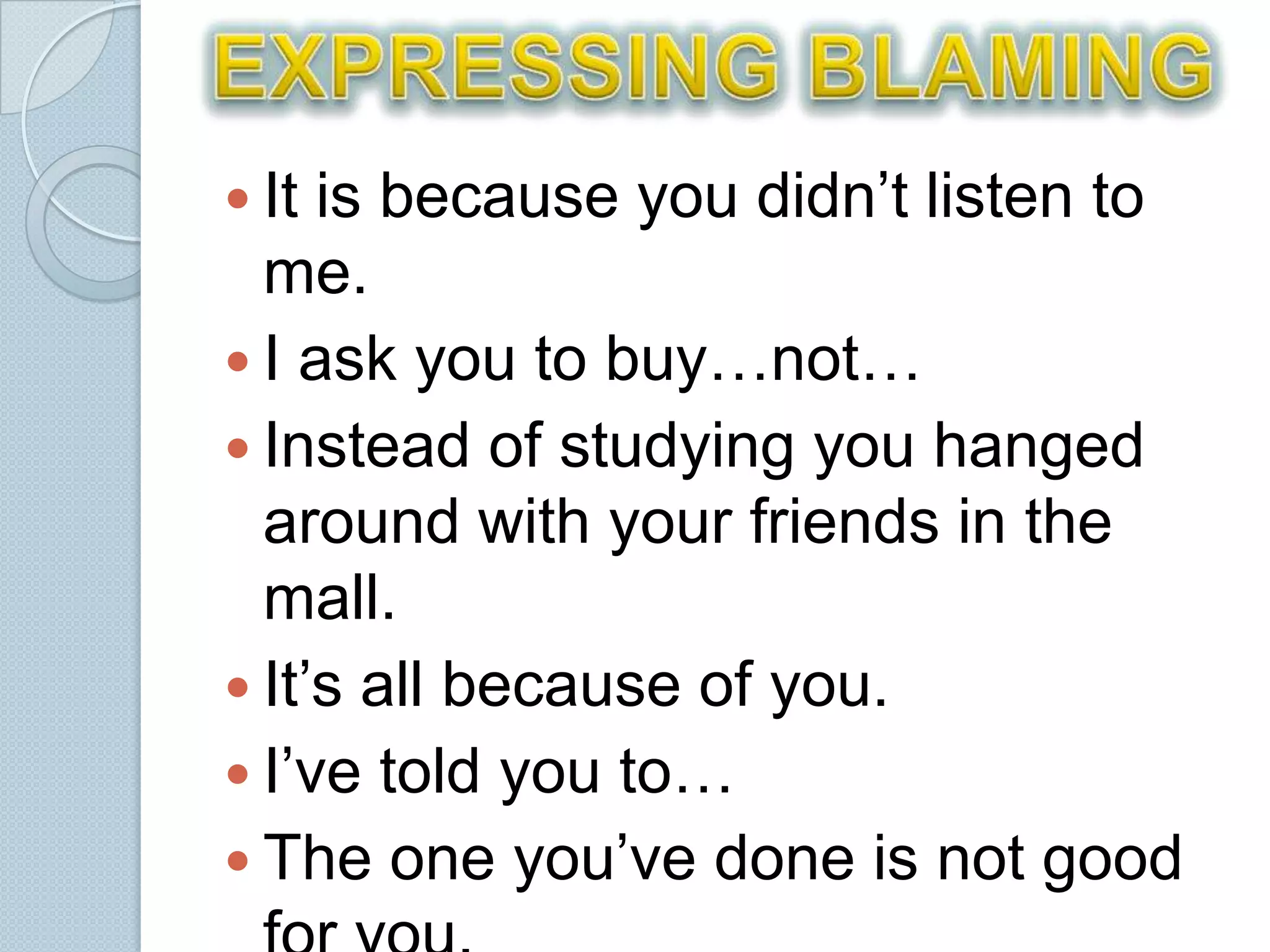
 It is because you didn’t listen to
  me.
 I ask you to buy…not…
 Instead of studying you hanged
  around with your friends in the
  mall.
 It’s all because of you.
 I’ve told you to…
 The one you’ve done is not good
  I'm sorry. It's my fault.
 Sorry for my fault.
 I'm sorry fro the things I've
  done .
 It's my responsibility. I'm sorry
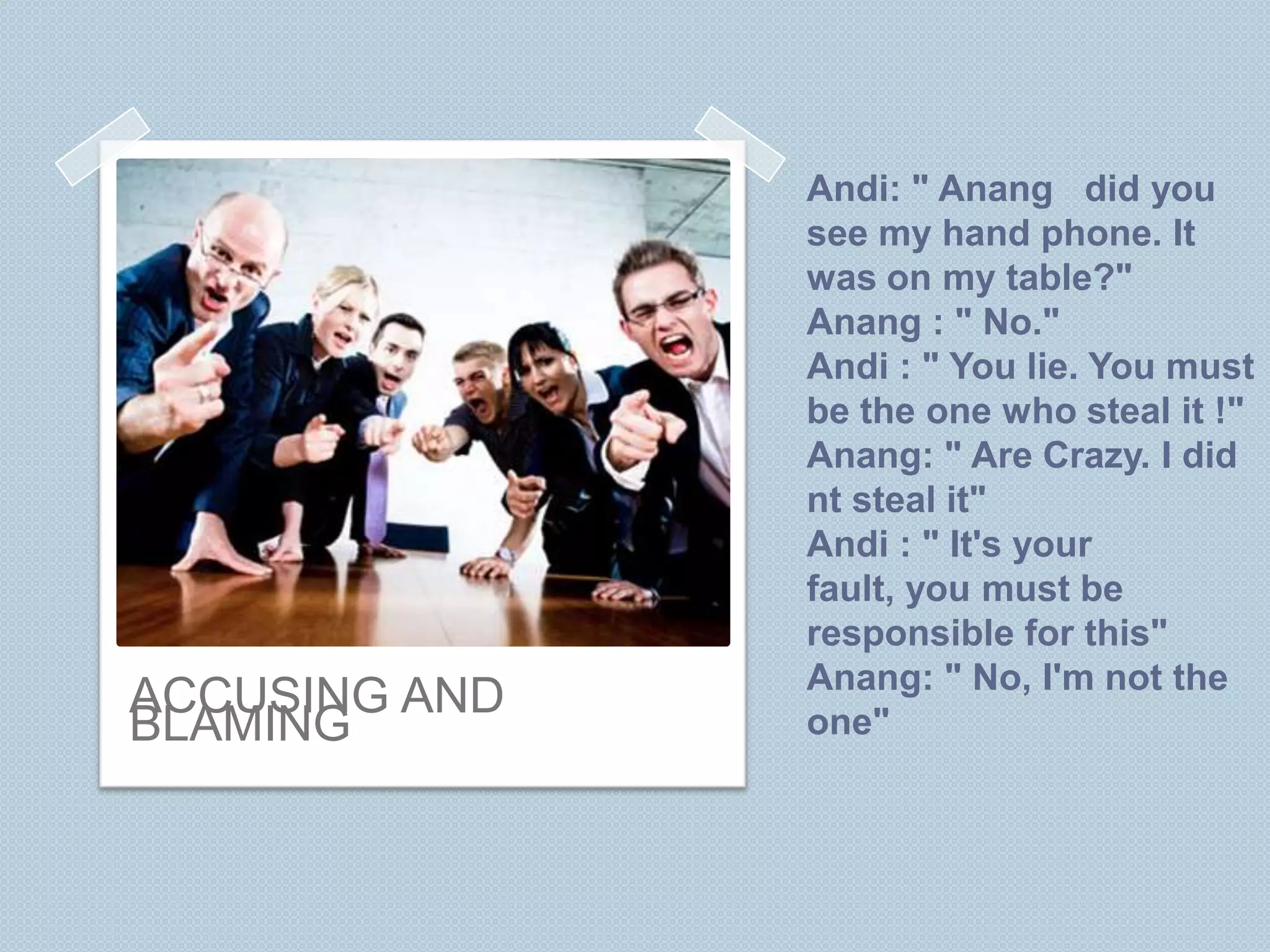
Andi: " Anang did you
               see my hand phone. It
               was on my table?"
               Anang : " No."
               Andi : " You lie. You must
               be the one who steal it !"
               Anang: " Are Crazy. I did
               nt steal it"
               Andi : " It's your
               fault, you must be
               responsible for this"
               Anang: " No, I'm not the
ACCUSING AND
BLAMING        one"
ACCUSING   BLAMING
A  relative clause tells us which
  person or thing (or what kind of
  person or thing) the speaker means.
 As the name suggests, these clauses
  give essential information to define
  or identify the person or thing we are
  talking about. Obviously, this is only
  necessary if there is more than one
  person or thing involved.
 1. We use who in a Relative Clause when we are
  talking about people. We use who instead of
  he/she/they. For example :
 The man is very friendly. He lives next door.
 =>The man who lives next door is very friendly.
 An architect is someone who designs buildings.


 2. We use that/which when we are talking about
  things. We use that isntead of it/they. For example:
 I don’t like stories that have unhappy endings.
 Gerry works for a company that makes typewriters.
 Where are the eggs which were in the fridge?
 3. Whom is possible instead of who (people)
  when it is the object of the verb in the
  relative clause. For example:
     -The man whom I wanted to see was away
      on holiday.
     -The girl whom he fell in love left him
      after a few weeks.
     -The woman whom you talked in the party
      is my aunt.
 4. We use whose in relative clause instead of
  his/her/their and mostly for people. For
  example :
     -Over there is the man whose daughter
      I’m dating.
     -There is the professor whose course I’m
      taking.
     -The man whose car was stolen called the
      police.

accusing and blaming - relative clause

  • 2.
     Accuse usedwhen we feel someone is doing wrong but not necessarily the truth.  Accuse atau menuduh digunakan saat kita merasa seseorang berbuat salah tapi belum tentu kebenarannya.  Blame is used when someone has made ​a mistake and convicted.  Blame atau menyalahkan digunakan saat seseorang sudah melakukan kesalahan dan terbukti bersalah.
  • 3.
     It mustbe you that always…  What have you done with my…. ?  Excuse me, what do you have in your pocket boy?  I saw you…  I think you’ve done a mistake..  I accuse you on ...
  • 4.
     It isbecause you didn’t listen to me.  I ask you to buy…not…  Instead of studying you hanged around with your friends in the mall.  It’s all because of you.  I’ve told you to…  The one you’ve done is not good
  • 5.
     I'msorry. It's my fault.  Sorry for my fault.  I'm sorry fro the things I've done .  It's my responsibility. I'm sorry
  • 6.
    Andi: " Anangdid you see my hand phone. It was on my table?" Anang : " No." Andi : " You lie. You must be the one who steal it !" Anang: " Are Crazy. I did nt steal it" Andi : " It's your fault, you must be responsible for this" Anang: " No, I'm not the ACCUSING AND BLAMING one"
  • 7.
    ACCUSING BLAMING
  • 8.
    A relativeclause tells us which person or thing (or what kind of person or thing) the speaker means.  As the name suggests, these clauses give essential information to define or identify the person or thing we are talking about. Obviously, this is only necessary if there is more than one person or thing involved.
  • 9.
     1. Weuse who in a Relative Clause when we are talking about people. We use who instead of he/she/they. For example :  The man is very friendly. He lives next door.  =>The man who lives next door is very friendly.  An architect is someone who designs buildings.  2. We use that/which when we are talking about things. We use that isntead of it/they. For example:  I don’t like stories that have unhappy endings.  Gerry works for a company that makes typewriters.  Where are the eggs which were in the fridge?
  • 10.
     3. Whomis possible instead of who (people) when it is the object of the verb in the relative clause. For example:  -The man whom I wanted to see was away on holiday.  -The girl whom he fell in love left him after a few weeks.  -The woman whom you talked in the party is my aunt.
  • 11.
     4. Weuse whose in relative clause instead of his/her/their and mostly for people. For example :  -Over there is the man whose daughter I’m dating.  -There is the professor whose course I’m taking.  -The man whose car was stolen called the police.