Accounting in the public sector
Dr Alberto Asquer
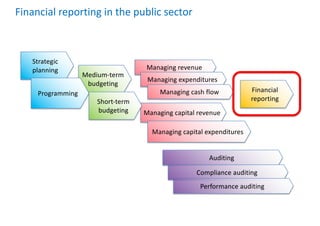
Financial reporting in the public sector
Managing revenue
Managing expenditures
Managing cash flow
Managing capital revenue
Managing capital expenditures
Medium-term
budgeting
Short-term
budgeting
Strategic
planning
Programming Financial
reporting
Auditing
Compliance auditing
Performance auditing
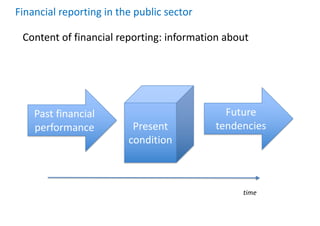
Financial reporting in the public sector
Content of financial reporting: information about
time
Present
condition
Past financial
performance
Future
tendencies
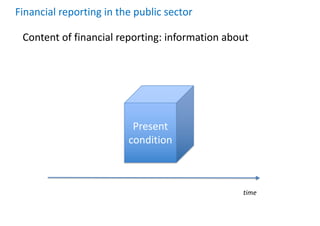
Financial reporting in the public sector
Content of financial reporting: information about
time
Present
condition
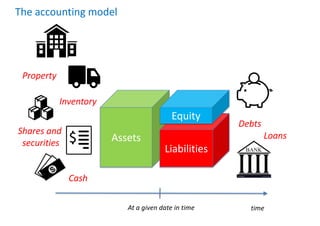
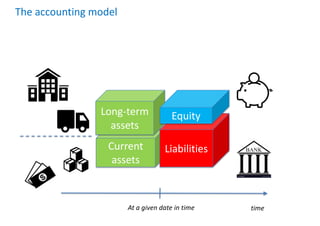
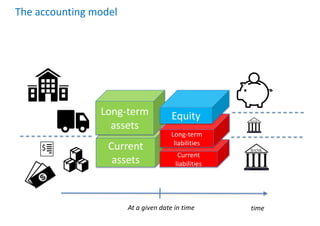
Assets are ‘Rights or other access to future economic
benefits controlled by an entity as a result of past
transactions or events’ (Weetman, 2011). Examples include
a building or motor vehicle.
Liabilities are ‘Obligations of an entity to transfer economic
benefits as a result of past transactions or events’
(Weetman, 2011). Examples include a bank overdraft or
loan.
Net assets or equity is the residual interest in the assets of
the entity after deducing all its liabilities.
The accounting model
Assets
Liabilities
Equity
time
At a given date in time
Debts
Loans
Cash
Property
Shares and
securities
Inventory
The accounting model
Assets
Liabilities
Equity
time
At a given date in time
Debts
Loans
Cash
Property
Shares and
securities
Inventory
Current
assets
The accounting model
Long-term
assets
Liabilities
Equity
time
At a given date in time
Current
assets
The accounting model
Long-term
assets
time
At a given date in time
Current
liabilities
Long-term
liabilities
Equity
Current
assets
The accounting model
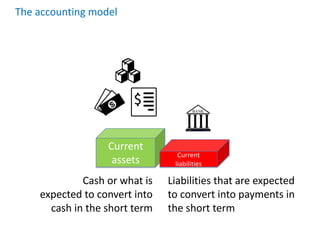
Current
liabilities
Cash or what is
expected to convert into
cash in the short term
Liabilities that are expected
to convert into payments in
the short term
Current
assets
The accounting model
Current
liabilities
Cash or what is
expected to convert into
cash in the short term
Liabilities that are expected
to convert into payments in
the short term
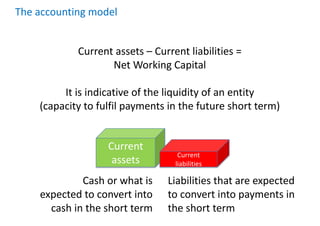
Current assets – Current liabilities =
Net Working Capital
It is indicative of the liquidity of an entity
(capacity to fulfil payments in the future short term)
Current
assets
The accounting model
Current
liabilities
Cash or what is
expected to convert into
cash in the short term
Liabilities that are expected
to convert into payments in
the short term
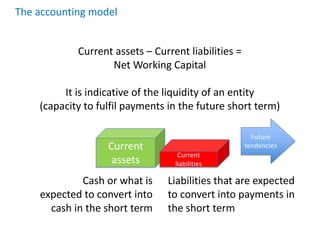
Current assets – Current liabilities =
Net Working Capital
It is indicative of the liquidity of an entity
(capacity to fulfil payments in the future short term)
Future
tendencies
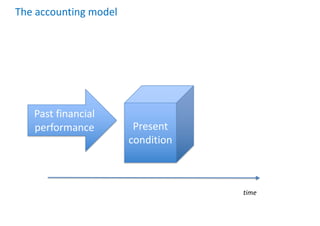
The accounting model
time
Present
condition
Past financial
performance
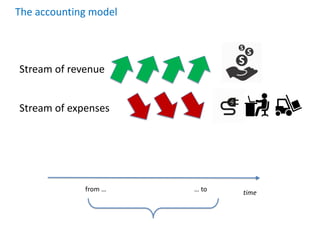
The accounting model
time
from … … to
Stream of revenue
Stream of expenses
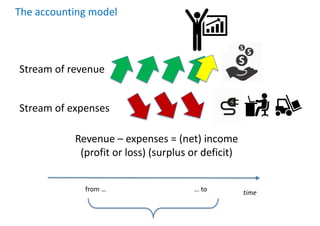
The accounting model
time
from … … to
Stream of revenue
Stream of expenses
Revenue – expenses = (net) income
(profit or loss) (surplus or deficit)
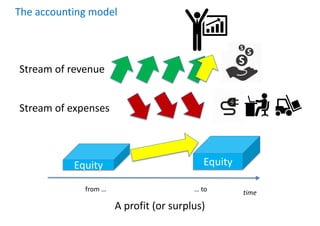
The accounting model
time
from … … to
Stream of revenue
Stream of expenses
Equity
Equity
A profit (or surplus)
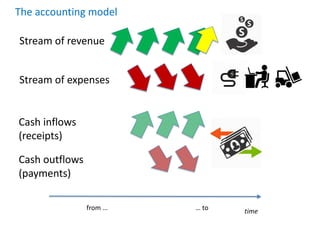
The accounting model
time
from … … to
Stream of revenue
Stream of expenses
Cash inflows
(receipts)
Cash outflows
(payments)
The accounting model
time
from … … to
Cash inflows
(receipts)
Cash outflows
(payments)
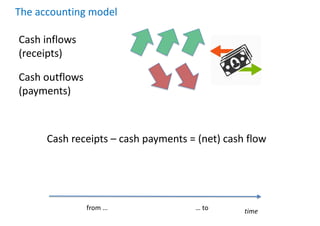
Cash receipts – cash payments = (net) cash flow
The accounting model
time
from … … to
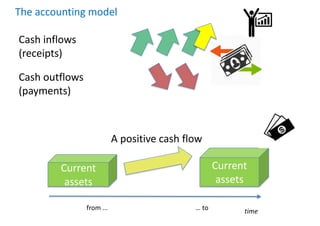
Cash inflows
(receipts)
Cash outflows
(payments)
Current
assets
Current
assets
A positive cash flow
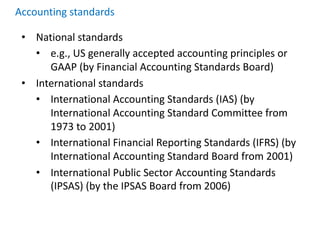
Accounting standards
• National standards
• e.g., US generally accepted accounting principles or
GAAP (by Financial Accounting Standards Board)
• International standards
• International Accounting Standards (IAS) (by
International Accounting Standard Committee from
1973 to 2001)
• International Financial Reporting Standards (IFRS) (by
International Accounting Standard Board from 2001)
• International Public Sector Accounting Standards
(IPSAS) (by the IPSAS Board from 2006)
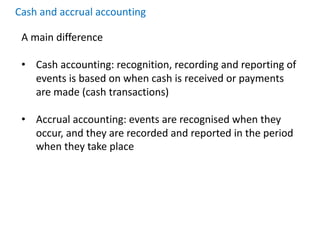
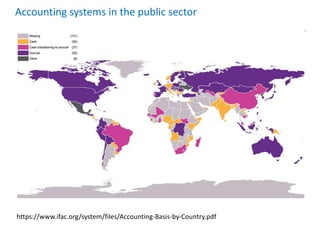
Cash and accrual accounting
A main difference
• Cash accounting: recognition, recording and reporting of
events is based on when cash is received or payments
are made (cash transactions)
• Accrual accounting: events are recognised when they
occur, and they are recorded and reported in the period
when they take place
Accounting systems in the public sector
https://www.ifac.org/system/files/Accounting-Basis-by-Country.pdf
The end

Accounting in the public sector

  • 1.
    Accounting in thepublic sector Dr Alberto Asquer
  • 2.
    Financial reporting inthe public sector Managing revenue Managing expenditures Managing cash flow Managing capital revenue Managing capital expenditures Medium-term budgeting Short-term budgeting Strategic planning Programming Financial reporting Auditing Compliance auditing Performance auditing
  • 3.
    Financial reporting inthe public sector Content of financial reporting: information about time Present condition Past financial performance Future tendencies
  • 4.
    Financial reporting inthe public sector Content of financial reporting: information about time Present condition
  • 5.
    Assets are ‘Rightsor other access to future economic benefits controlled by an entity as a result of past transactions or events’ (Weetman, 2011). Examples include a building or motor vehicle. Liabilities are ‘Obligations of an entity to transfer economic benefits as a result of past transactions or events’ (Weetman, 2011). Examples include a bank overdraft or loan. Net assets or equity is the residual interest in the assets of the entity after deducing all its liabilities. The accounting model
  • 6.
    The accounting model Assets Liabilities Equity time Ata given date in time Debts Loans Cash Property Shares and securities Inventory
  • 7.
    The accounting model Assets Liabilities Equity time Ata given date in time Debts Loans Cash Property Shares and securities Inventory
  • 8.
  • 9.
    Current assets The accounting model Long-term assets time Ata given date in time Current liabilities Long-term liabilities Equity
  • 10.
    Current assets The accounting model Current liabilities Cashor what is expected to convert into cash in the short term Liabilities that are expected to convert into payments in the short term
  • 11.
    Current assets The accounting model Current liabilities Cashor what is expected to convert into cash in the short term Liabilities that are expected to convert into payments in the short term Current assets – Current liabilities = Net Working Capital It is indicative of the liquidity of an entity (capacity to fulfil payments in the future short term)
  • 12.
    Current assets The accounting model Current liabilities Cashor what is expected to convert into cash in the short term Liabilities that are expected to convert into payments in the short term Current assets – Current liabilities = Net Working Capital It is indicative of the liquidity of an entity (capacity to fulfil payments in the future short term) Future tendencies
  • 13.
  • 14.
    The accounting model time from… … to Stream of revenue Stream of expenses
  • 15.
    The accounting model time from… … to Stream of revenue Stream of expenses Revenue – expenses = (net) income (profit or loss) (surplus or deficit)
  • 16.
    The accounting model time from… … to Stream of revenue Stream of expenses Equity Equity A profit (or surplus)
  • 17.
    The accounting model time from… … to Stream of revenue Stream of expenses Cash inflows (receipts) Cash outflows (payments)
  • 18.
    The accounting model time from… … to Cash inflows (receipts) Cash outflows (payments) Cash receipts – cash payments = (net) cash flow
  • 19.
    The accounting model time from… … to Cash inflows (receipts) Cash outflows (payments) Current assets Current assets A positive cash flow
  • 20.
    Accounting standards • Nationalstandards • e.g., US generally accepted accounting principles or GAAP (by Financial Accounting Standards Board) • International standards • International Accounting Standards (IAS) (by International Accounting Standard Committee from 1973 to 2001) • International Financial Reporting Standards (IFRS) (by International Accounting Standard Board from 2001) • International Public Sector Accounting Standards (IPSAS) (by the IPSAS Board from 2006)
  • 21.
    Cash and accrualaccounting A main difference • Cash accounting: recognition, recording and reporting of events is based on when cash is received or payments are made (cash transactions) • Accrual accounting: events are recognised when they occur, and they are recorded and reported in the period when they take place
  • 22.
    Accounting systems inthe public sector https://www.ifac.org/system/files/Accounting-Basis-by-Country.pdf
  • 23.