GROUP MEMBERS
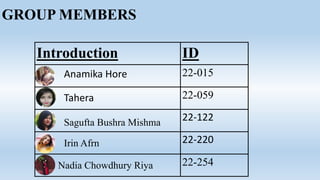
Introduction ID
22-015
22-059
22-122
22-220
22-254
Anamika Hore
Sagufta Bushra Mishma
Tahera
Irin Afrn
Nadia Chowdhury Riya
Conceptual Framework
What is conceptual framework?
A coherent system of interrelated objectives and fundamentals
that is expected to lead to consistent standards and that
prescribes the nature function and limits of financial accounting
and statement. (FASB)
Conceptual Framework attempts to provide a theory of
financial accounting to make it quite structured.
A system of ideas and objectives that lead to the creation of a
consistent set of rules and standards.
Necessity of Conceptual
Framework
To remove inconsistency
To have a basis for adaption of ne rules.
To remove to have a general theory
 accounting disputes .
To have a better understanding of financial
information
To enable third parties to take decision
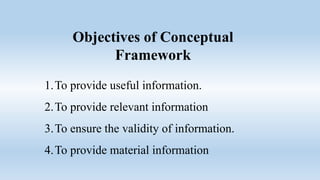
Objectives of Conceptual
Framework
1.To provide useful information.
2.To provide relevant information
3.To ensure the validity of information.
4.To provide material information
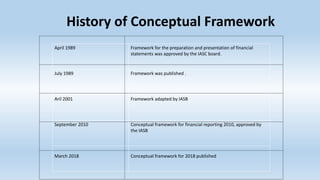
April 1989 Framework for the preparation and presentation of financial
statements was approved by the IASC board.
July 1989 Framework was published .
Aril 2001 Framework adapted by IASB
September 2010 Conceptual framework for financial reporting 2010, approved by
the IASB
March 2018 Conceptual framework for 2018 published
History of Conceptual Framework
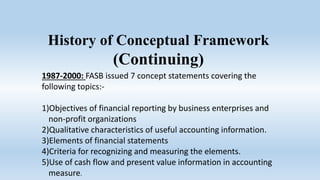
(Continuing)
1987-2000: FASB issued 7 concept statements covering the
following topics:-
1)Objectives of financial reporting by business enterprises and
non-profit organizations
2)Qualitative characteristics of useful accounting information.
3)Elements of financial statements
4)Criteria for recognizing and measuring the elements.
5)Use of cash flow and present value information in accounting
measure.
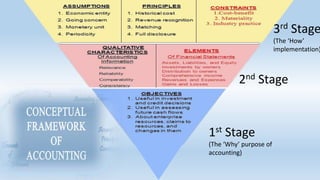
1st Stage
(The ‘Why’ purpose of
accounting)
2nd Stage
3rd Stage
(The ‘How’
implementation)
A reporting entity is an entity where it is reasonable to
expect that there are users dependent on a General Purpose
Financial Report (GPFR) to gain an understanding of the
financial position and performance of the entity, and to make
decisions based on this financial information and other
information contained in the financial report.
These users could be shareholders, members, employees,
creditors, lenders or potential investors.
The Definition Of Reporting Entity
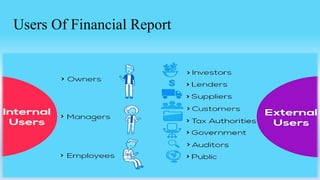
Users Of Financial Report
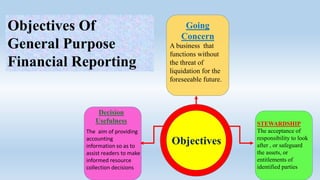
Objectives
STEWARDSHIP
The acceptance of
responsibility to look
after , or safeguard
the assets, or
entitlements of
identified parties
Decision
Usefulness
The aim of providing
accounting
information so as to
assist readers to make
informed resource
collection decisions
Going
Concern
A business that
functions without
the threat of
liquidation for the
foreseeable future.
Objectives Of
General Purpose
Financial Reporting
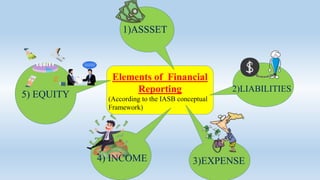
Elements of Financial
Reporting
(According to the IASB conceptual
Framework)
1)ASSSET
2)LIABILITIES
3)EXPENSE4) INCOME
5) EQUITY
Key Characteristics Of Assets:-
1) There must be a future economic benefit.
2) The reporting entity must control the future economic
benefits.
3) The transactions or other events giving rise to the reporting
entities control over the future economic benefits must have
occurred
Key Characteristics of Liabilities:-
1) There must be an expected future disposition of economic
benefits to other entities.
2) There must be a present obligation.
3) A past transactions or other events must have created the
obligation.
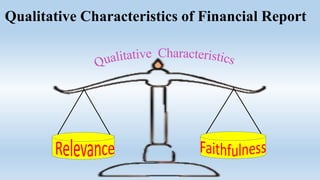
Qualitative Characteristics of Financial Report
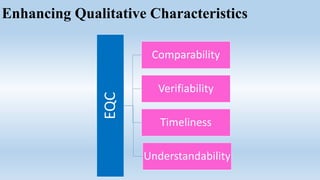
Enhancing Qualitative Characteristics
EQC
Comparability
Verifiability
Timeliness
Understandability
Presentation on Conceptual Framework

Presentation on Conceptual Framework

  • 3.
    GROUP MEMBERS Introduction ID 22-015 22-059 22-122 22-220 22-254 AnamikaHore Sagufta Bushra Mishma Tahera Irin Afrn Nadia Chowdhury Riya
  • 4.
  • 5.
    What is conceptualframework? A coherent system of interrelated objectives and fundamentals that is expected to lead to consistent standards and that prescribes the nature function and limits of financial accounting and statement. (FASB) Conceptual Framework attempts to provide a theory of financial accounting to make it quite structured. A system of ideas and objectives that lead to the creation of a consistent set of rules and standards.
  • 6.
    Necessity of Conceptual Framework Toremove inconsistency To have a basis for adaption of ne rules. To remove to have a general theory  accounting disputes . To have a better understanding of financial information To enable third parties to take decision
  • 7.
    Objectives of Conceptual Framework 1.Toprovide useful information. 2.To provide relevant information 3.To ensure the validity of information. 4.To provide material information
  • 8.
    April 1989 Frameworkfor the preparation and presentation of financial statements was approved by the IASC board. July 1989 Framework was published . Aril 2001 Framework adapted by IASB September 2010 Conceptual framework for financial reporting 2010, approved by the IASB March 2018 Conceptual framework for 2018 published History of Conceptual Framework
  • 9.
    History of ConceptualFramework (Continuing) 1987-2000: FASB issued 7 concept statements covering the following topics:- 1)Objectives of financial reporting by business enterprises and non-profit organizations 2)Qualitative characteristics of useful accounting information. 3)Elements of financial statements 4)Criteria for recognizing and measuring the elements. 5)Use of cash flow and present value information in accounting measure.
  • 10.
    1st Stage (The ‘Why’purpose of accounting) 2nd Stage 3rd Stage (The ‘How’ implementation)
  • 11.
    A reporting entityis an entity where it is reasonable to expect that there are users dependent on a General Purpose Financial Report (GPFR) to gain an understanding of the financial position and performance of the entity, and to make decisions based on this financial information and other information contained in the financial report. These users could be shareholders, members, employees, creditors, lenders or potential investors. The Definition Of Reporting Entity
  • 12.
  • 13.
    Objectives STEWARDSHIP The acceptance of responsibilityto look after , or safeguard the assets, or entitlements of identified parties Decision Usefulness The aim of providing accounting information so as to assist readers to make informed resource collection decisions Going Concern A business that functions without the threat of liquidation for the foreseeable future. Objectives Of General Purpose Financial Reporting
  • 14.
    Elements of Financial Reporting (Accordingto the IASB conceptual Framework) 1)ASSSET 2)LIABILITIES 3)EXPENSE4) INCOME 5) EQUITY
  • 15.
    Key Characteristics OfAssets:- 1) There must be a future economic benefit. 2) The reporting entity must control the future economic benefits. 3) The transactions or other events giving rise to the reporting entities control over the future economic benefits must have occurred
  • 16.
    Key Characteristics ofLiabilities:- 1) There must be an expected future disposition of economic benefits to other entities. 2) There must be a present obligation. 3) A past transactions or other events must have created the obligation.
  • 17.
  • 18.