New Physician/Patient Paradigms in Heart Failure ManagementWilliam T. Abraham, MD
BackgroundDespite current therapies and disease management approaches, the rate of heart failure hospitalization remains unacceptably high> 1.1 million heart failure hospitalizations annually> 25% readmission rate at 1 month; 50% at 6 months> $18 billion in annual direct costsCurrent methods for monitoring heart failure patients have not adequately addressed this issue
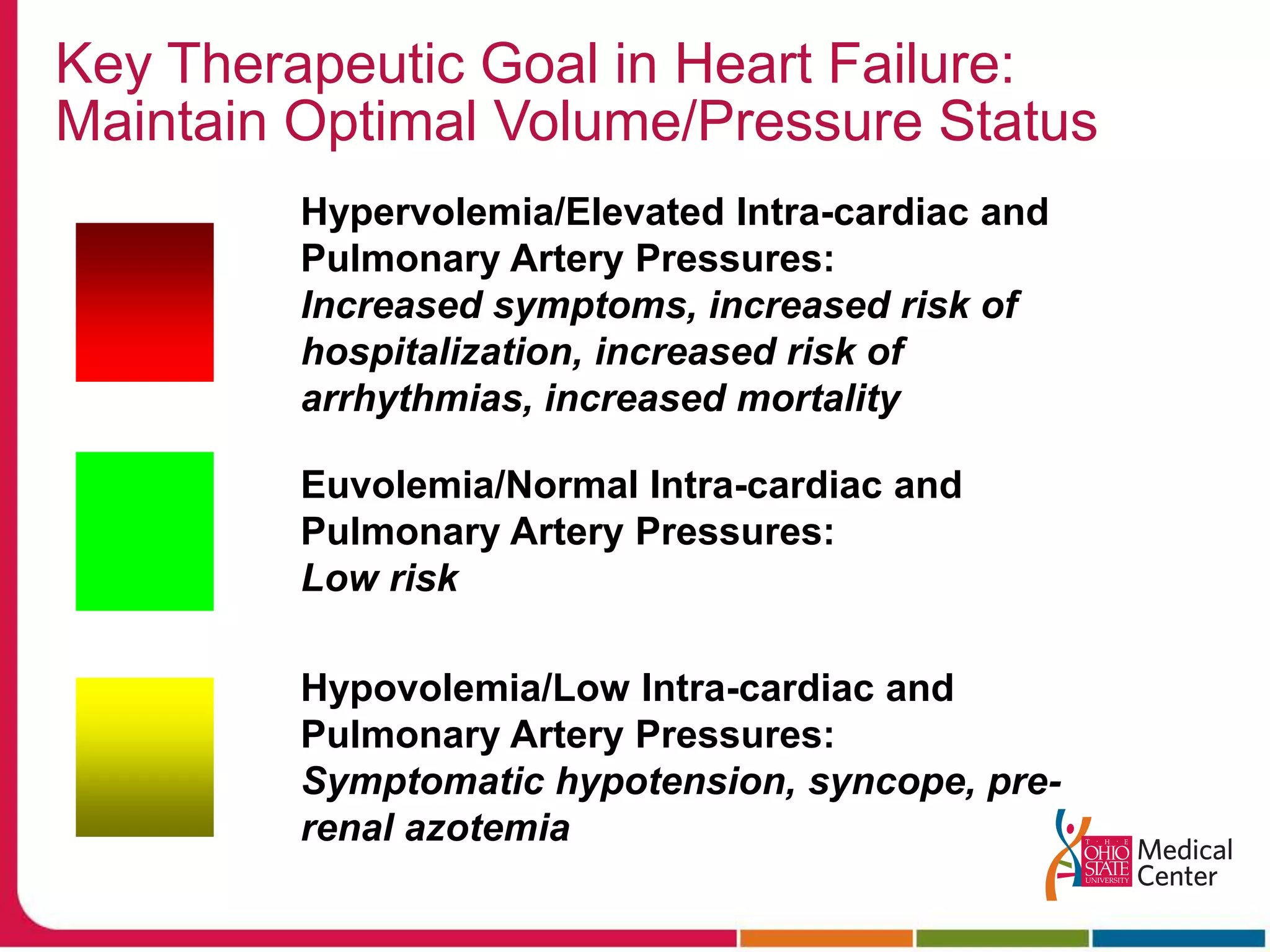
Key Therapeutic Goal in Heart Failure:Maintain Optimal Volume/Pressure StatusHypervolemia/Elevated Intra-cardiac and Pulmonary Artery Pressures:Increased symptoms, increased risk of hospitalization, increased risk of arrhythmias, increased mortalityEuvolemia/Normal Intra-cardiac and Pulmonary Artery Pressures:Low riskHypovolemia/Low Intra-cardiac and Pulmonary Artery Pressures:Symptomatic hypotension, syncope, pre-renal azotemia
What Do We Really Need To Monitor?What do we really want to know?Pulmonary congestion / left ventricular filling pressure (LVFP)How do we currently assess these in patients with chronic heart failure?SymptomsDaily weightsPhysical examinationBiomarkersHow well do these assessments perform?Not very well
Limitations of Available Monitoring SystemsWeight and Symptoms – Recent large, landmark clinical studies (Tele-HF, TIM-HF) investigating the effectiveness of telemonitoring demonstrated no benefit in reducing HF hospitalizationsBNP - PRIMA and other studies guided identification of patients at risk for HF events, but showed no significant reduction in HF-related admissionsDevice-Based Diagnostics - May be useful for identifying patients that may be at higher risk for a HF hospitalization(PARTNERS-HF Study), but have not demonstrated a reduction in HF-related hospitalizationsTele-HF: Yale Heart Failure Telemonitoring Study; NEJM, 2010TIM-HF: Telemonitoring Intervention in Heart Failure, Eur J. Heart Failure, 2010PRIMA: Can Pro-BNP guided heart failure therapy improve morbidity and mortality? J Am Coll Card, 2010PARTNERS-HF:  Combined Heart Failure Device Diagnostics Identify Patients at Higher  Risk of Subsequent Heart Failure Hospitalizations. J Am Coll Card, 2010
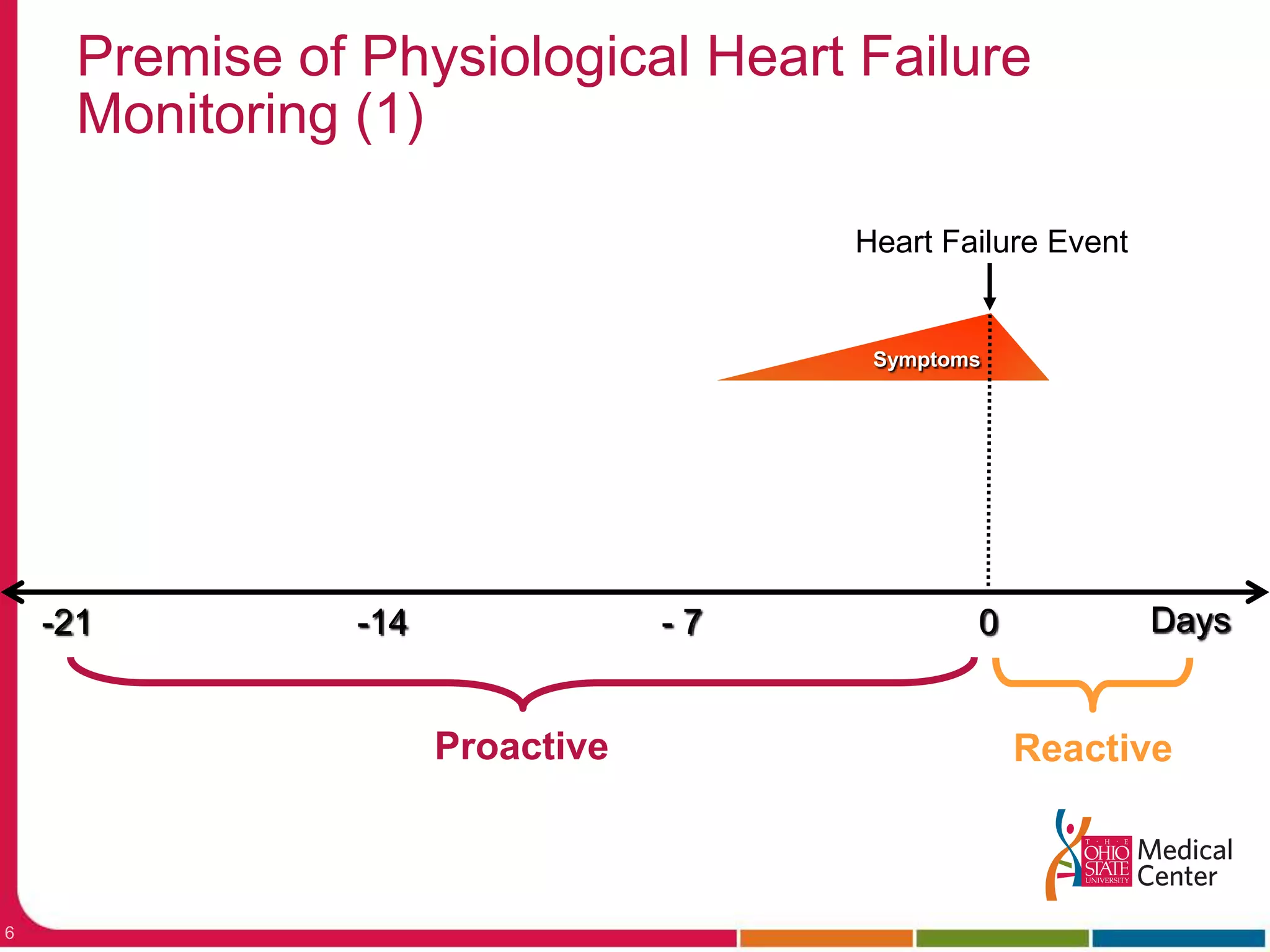
Premise of Physiological Heart Failure Monitoring (1)Heart Failure EventSymptomsHemodynamicChangesDays-21-14- 7 0 ProactiveReactive
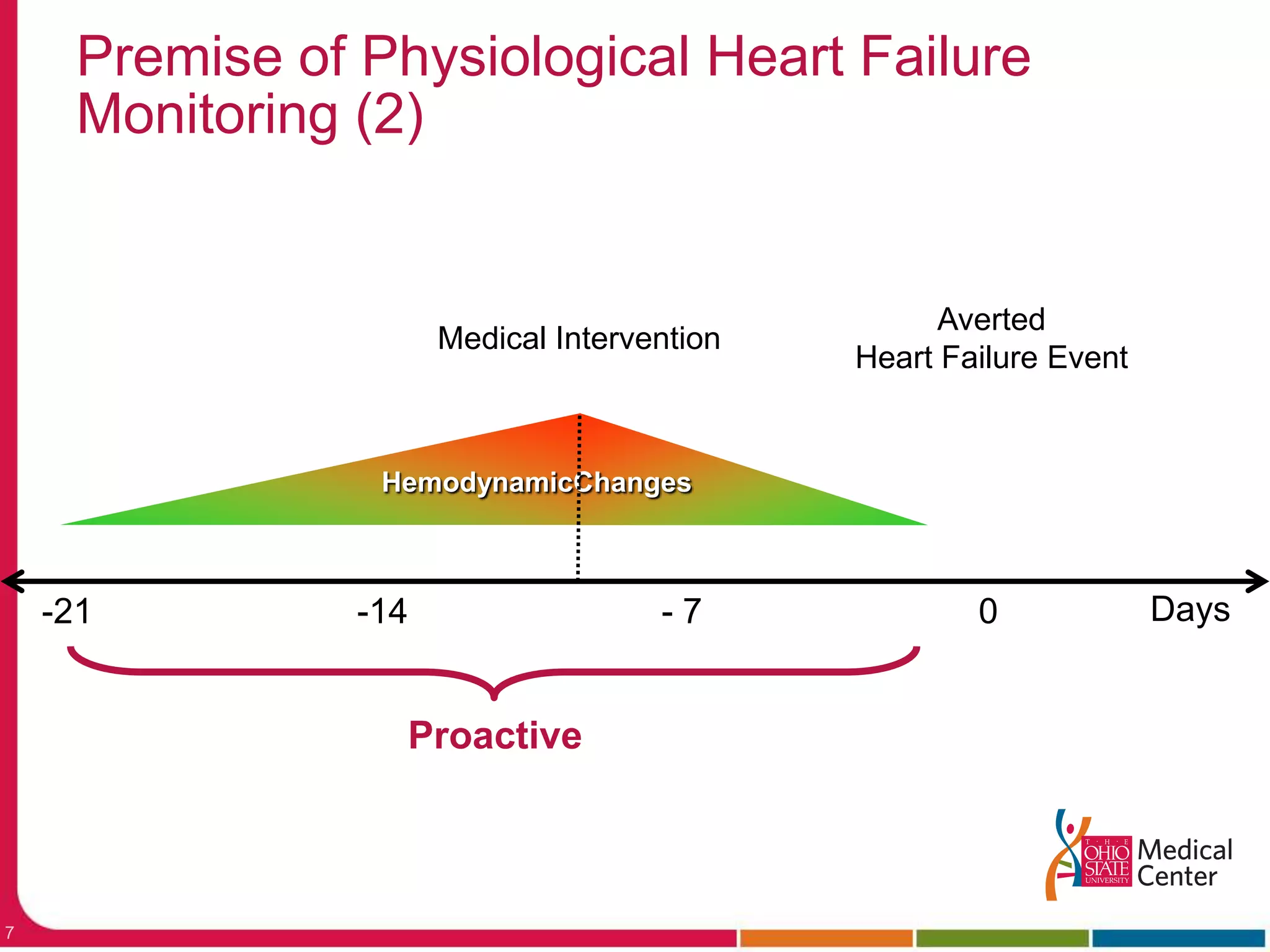
Premise of Physiological Heart Failure Monitoring (2)AvertedHeart Failure EventMedical InterventionHemodynamicChangesDays-21-14- 7 0 Proactive
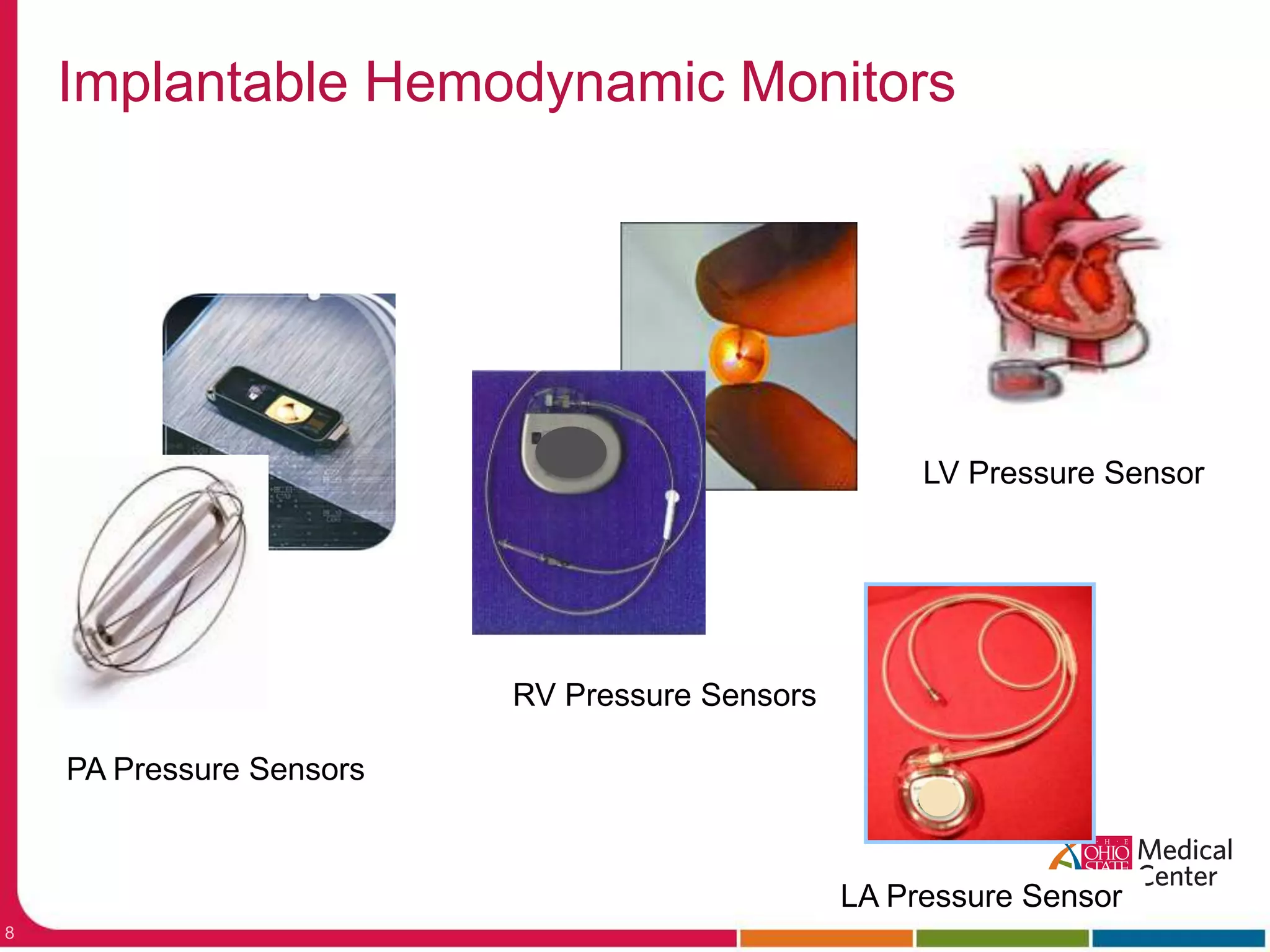
LV Pressure SensorRV Pressure SensorsPA Pressure SensorsLA Pressure SensorImplantable Hemodynamic Monitors
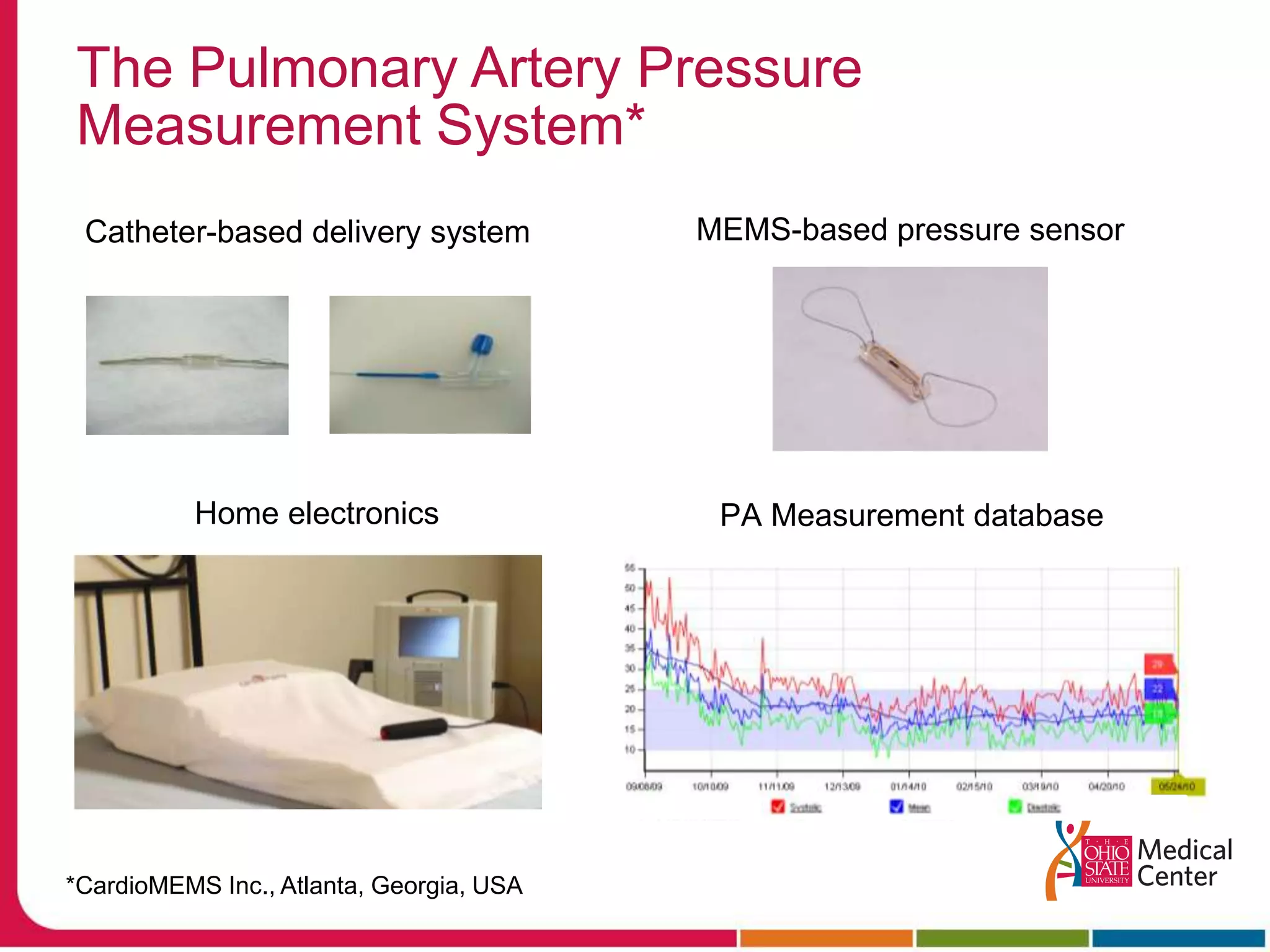
MEMS-based pressure sensorHome electronicsPA Measurement databaseThe Pulmonary Artery Pressure Measurement System*Catheter-based delivery system*CardioMEMS Inc., Atlanta, Georgia, USA
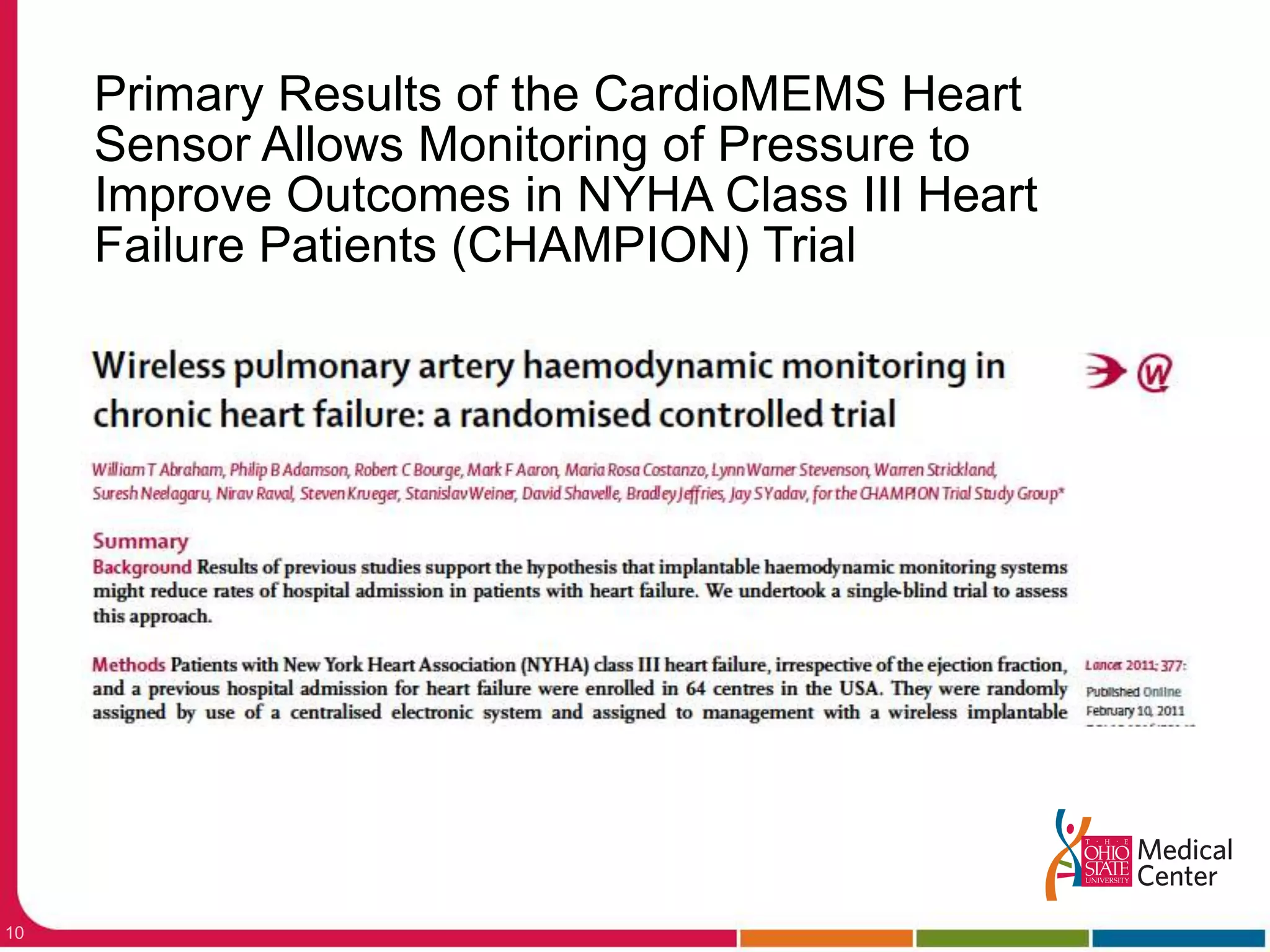
Primary Results of the CardioMEMS Heart Sensor Allows Monitoring of Pressure to Improve Outcomes in NYHA Class III Heart Failure Patients (CHAMPION) Trial
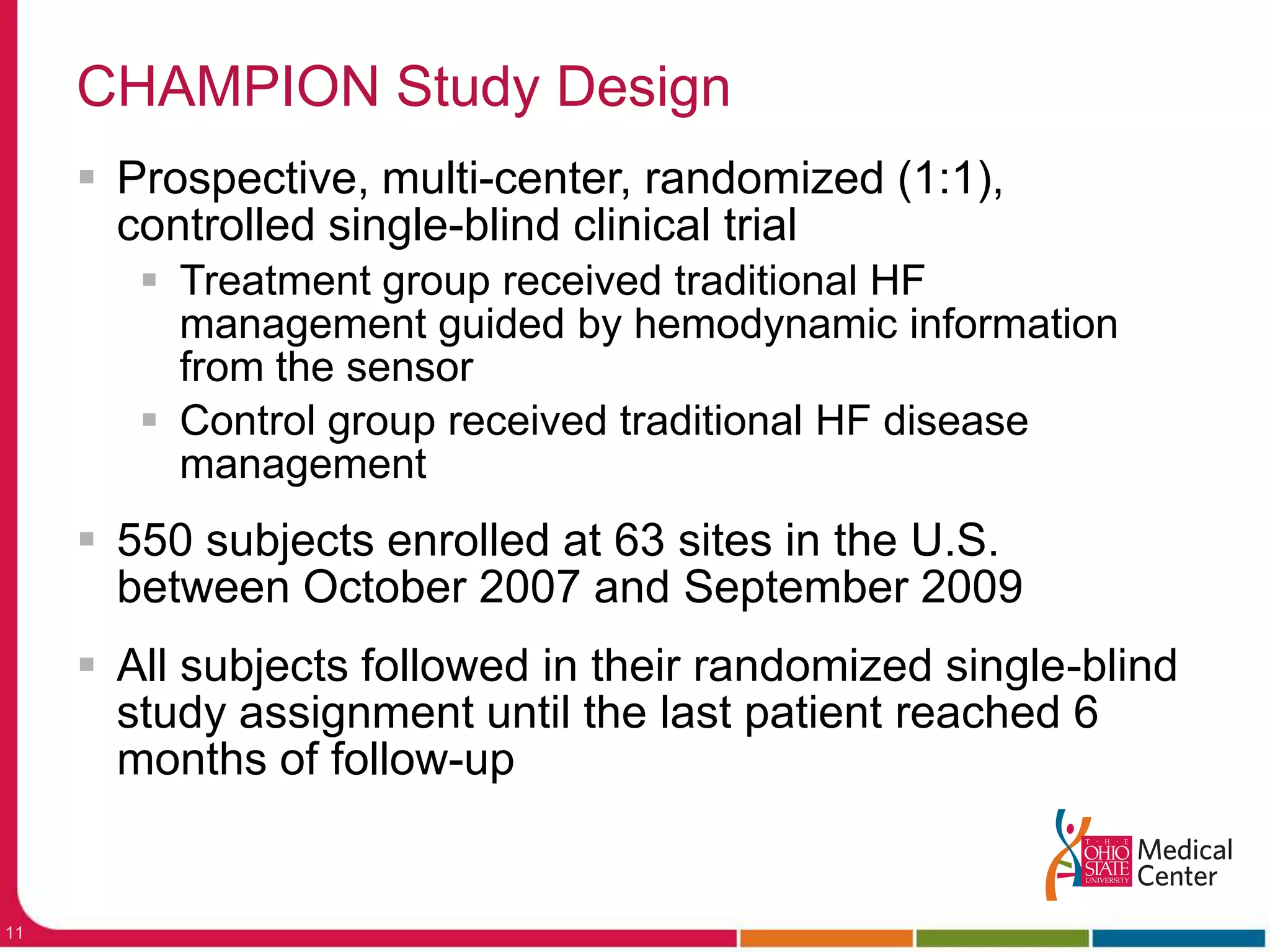
CHAMPION Study DesignProspective, multi-center, randomized (1:1), controlled single-blind clinical trialTreatment group received traditional HF management guided by hemodynamic information from the sensorControl group received traditional HF disease management550 subjects enrolled at 63 sites in the U.S. between October 2007 and September 2009All subjects followed in their randomized single-blind study assignment until the last patient reached 6 months of follow-up
Cumulative HF Hospitalizations Over Entire Randomized Follow-Up Period p < 0.001, based on Negative Binomial RegressionCumulative Number of HF HospitalizationsDays from Implant
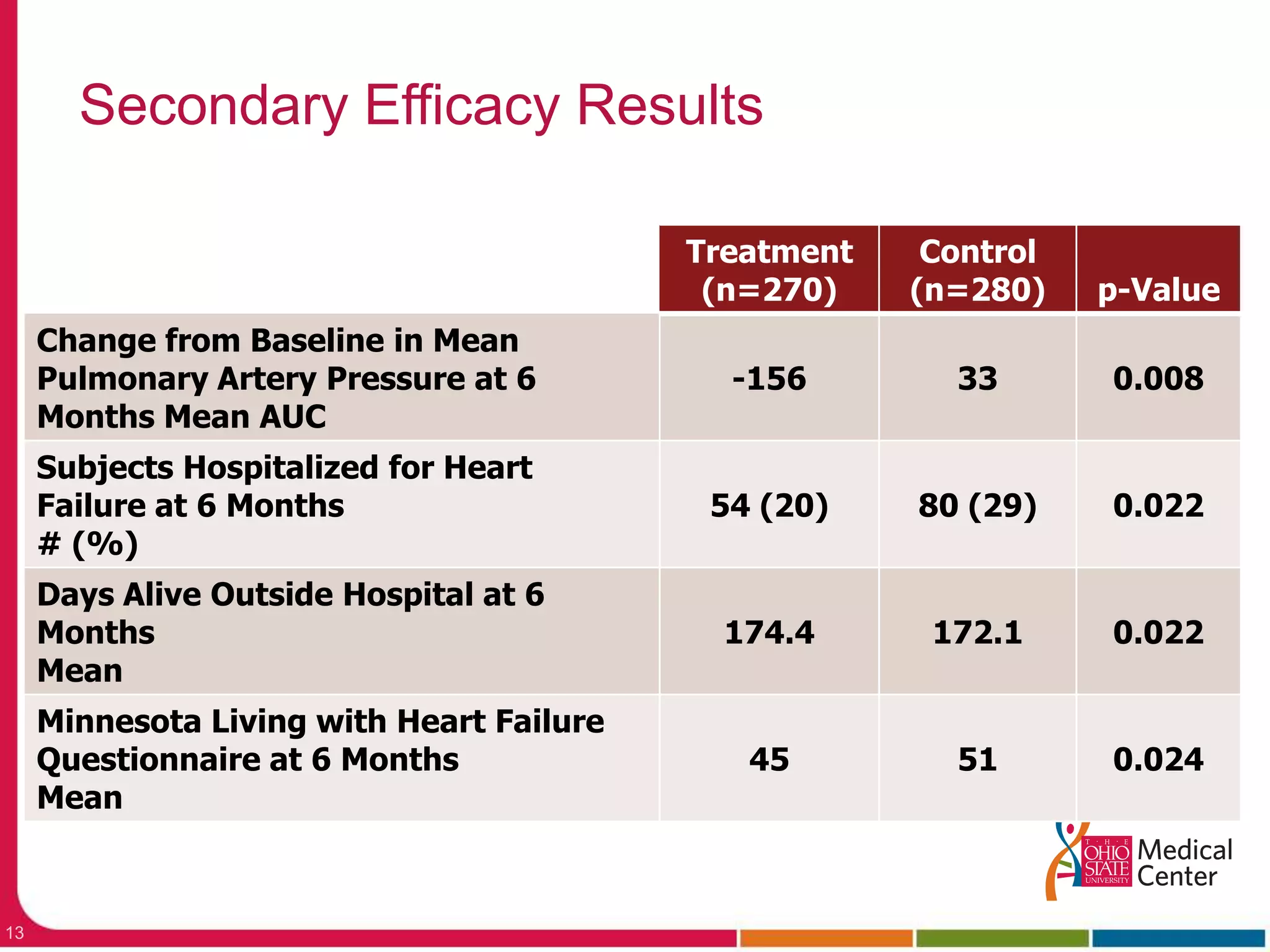
Secondary Efficacy Results
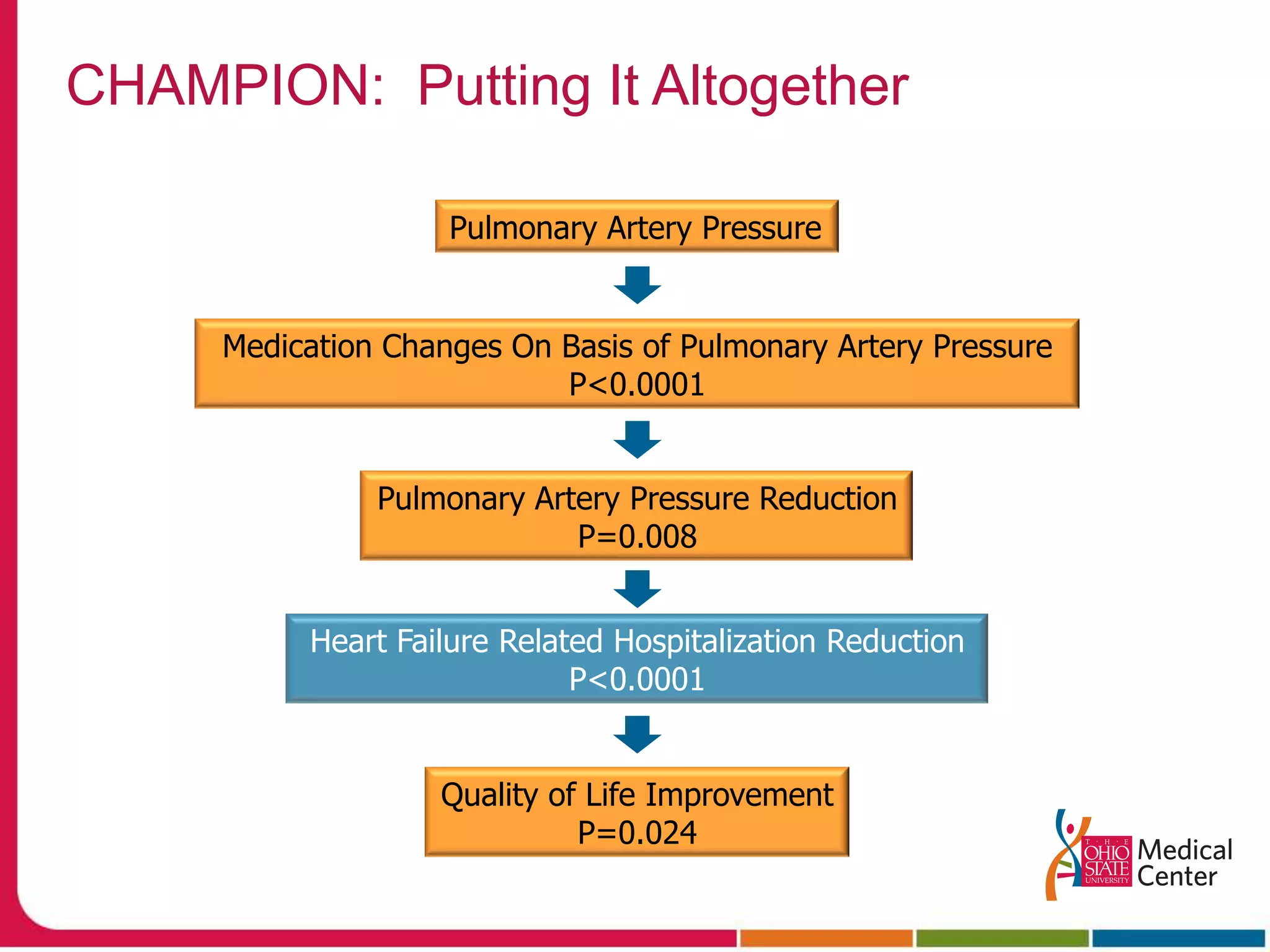
CHAMPION:  Putting It AltogetherPulmonary Artery PressureMedication Changes On Basis of Pulmonary Artery PressureP<0.0001Pulmonary Artery Pressure ReductionP=0.008Heart Failure Related Hospitalization ReductionP<0.0001Quality of Life ImprovementP=0.024P values for Treatment Vs Control Group
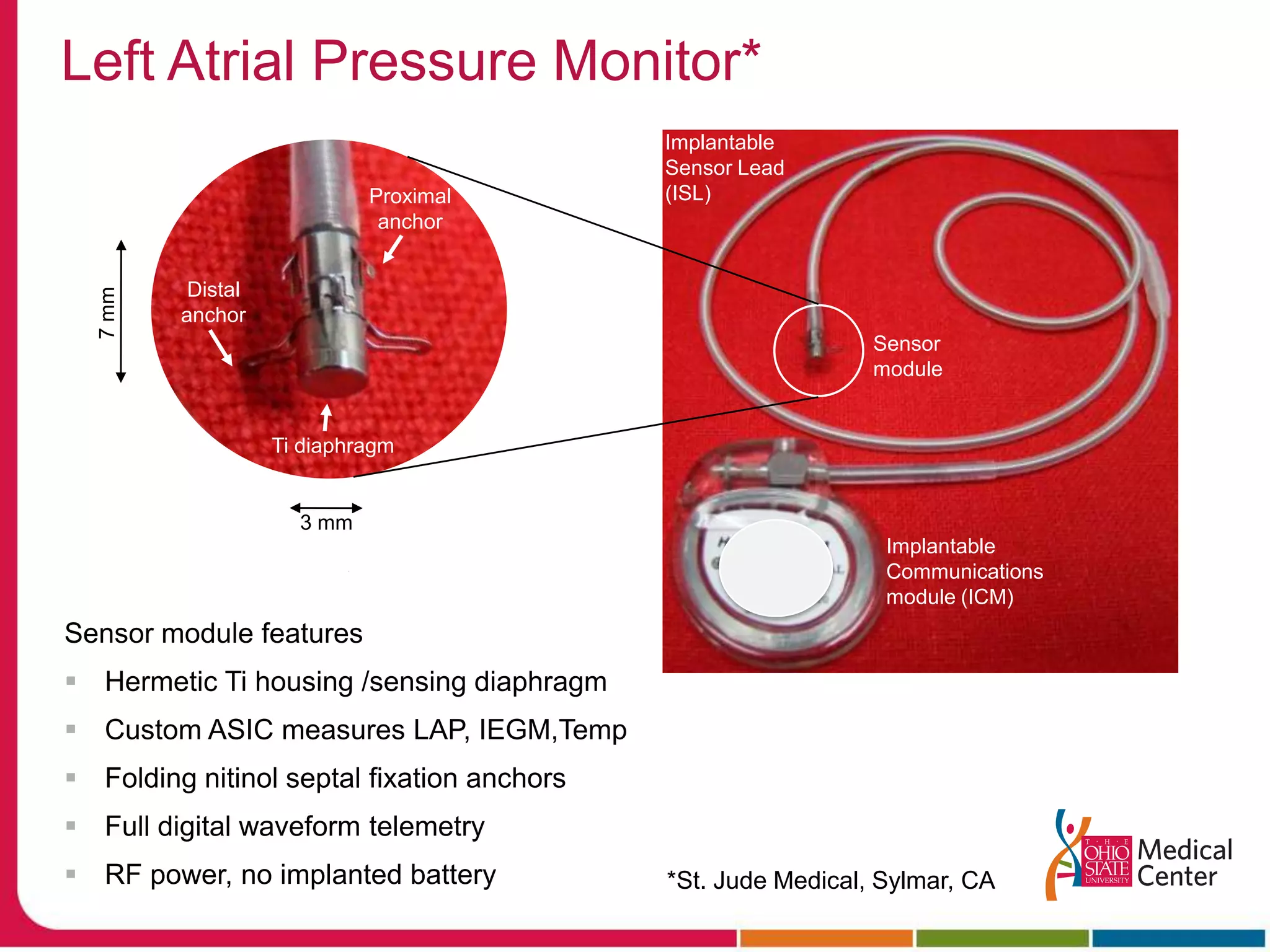
Proximal anchor7 mmDistal anchorTi diaphragm 3 mmLeft Atrial Pressure Monitor*Implantable Sensor Lead(ISL)Sensor moduleImplantable Communications module (ICM)Sensor module featuresHermetic Ti housing /sensing diaphragmCustom ASIC measures LAP, IEGM,TempFolding nitinol septal fixation anchorsFull digital waveform telemetryRF power, no implanted battery*St. Jude Medical, Sylmar, CA
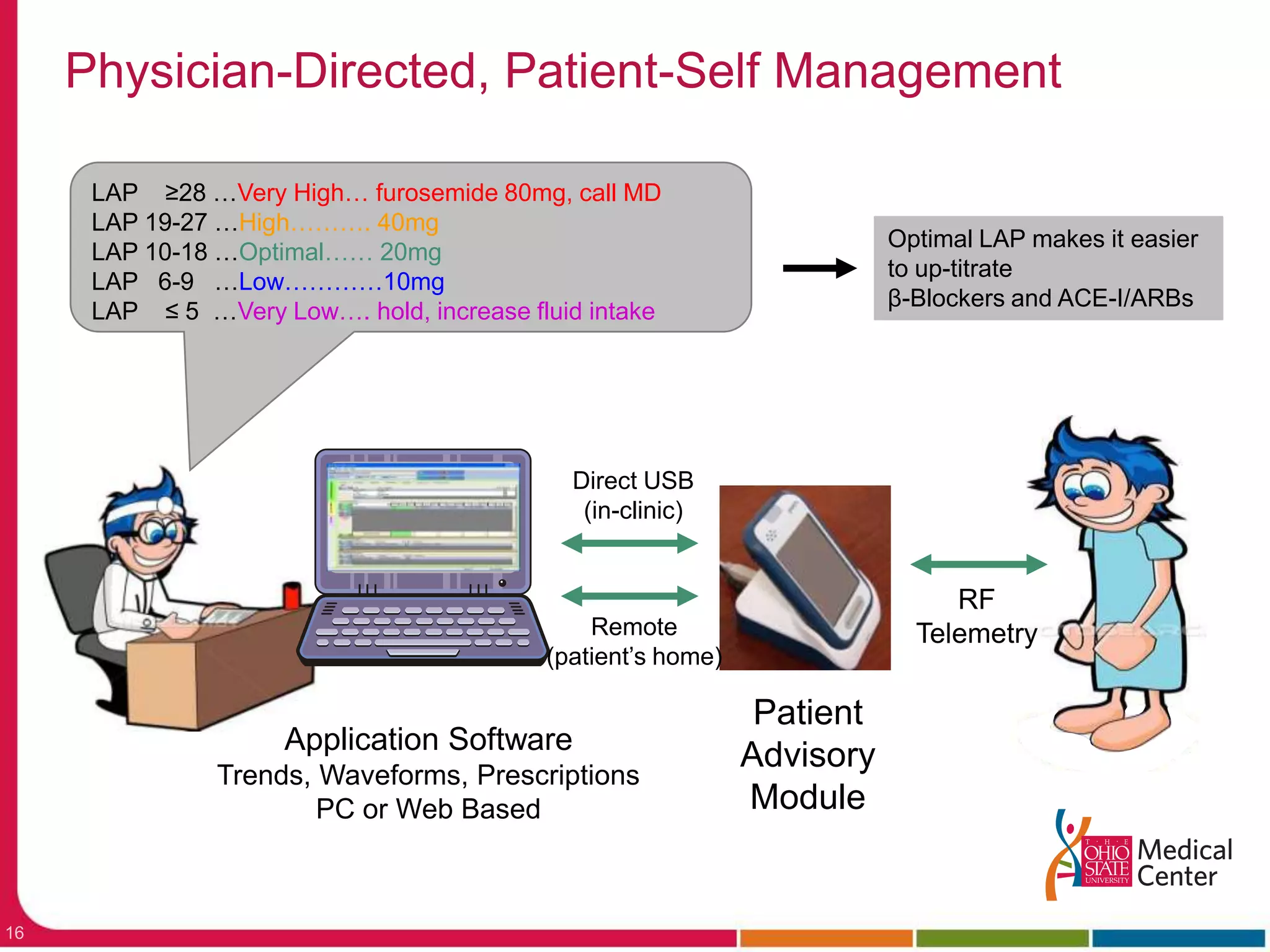
Physician-Directed, Patient-Self ManagementLAP    ≥28 …Very High… furosemide 80mg, call MDLAP 19-27 …High………. 40mgLAP 10-18 …Optimal…… 20mgLAP   6-9   …Low…………10mgLAP    ≤ 5  …Very Low…. hold, increase fluid intakeOptimal LAP makes it easier to up-titrate β-Blockers and ACE-I/ARBsDirect USB (in-clinic)RF TelemetryRemote(patient’s home)Patient Advisory ModuleApplication SoftwareTrends, Waveforms, PrescriptionsPC or Web Based
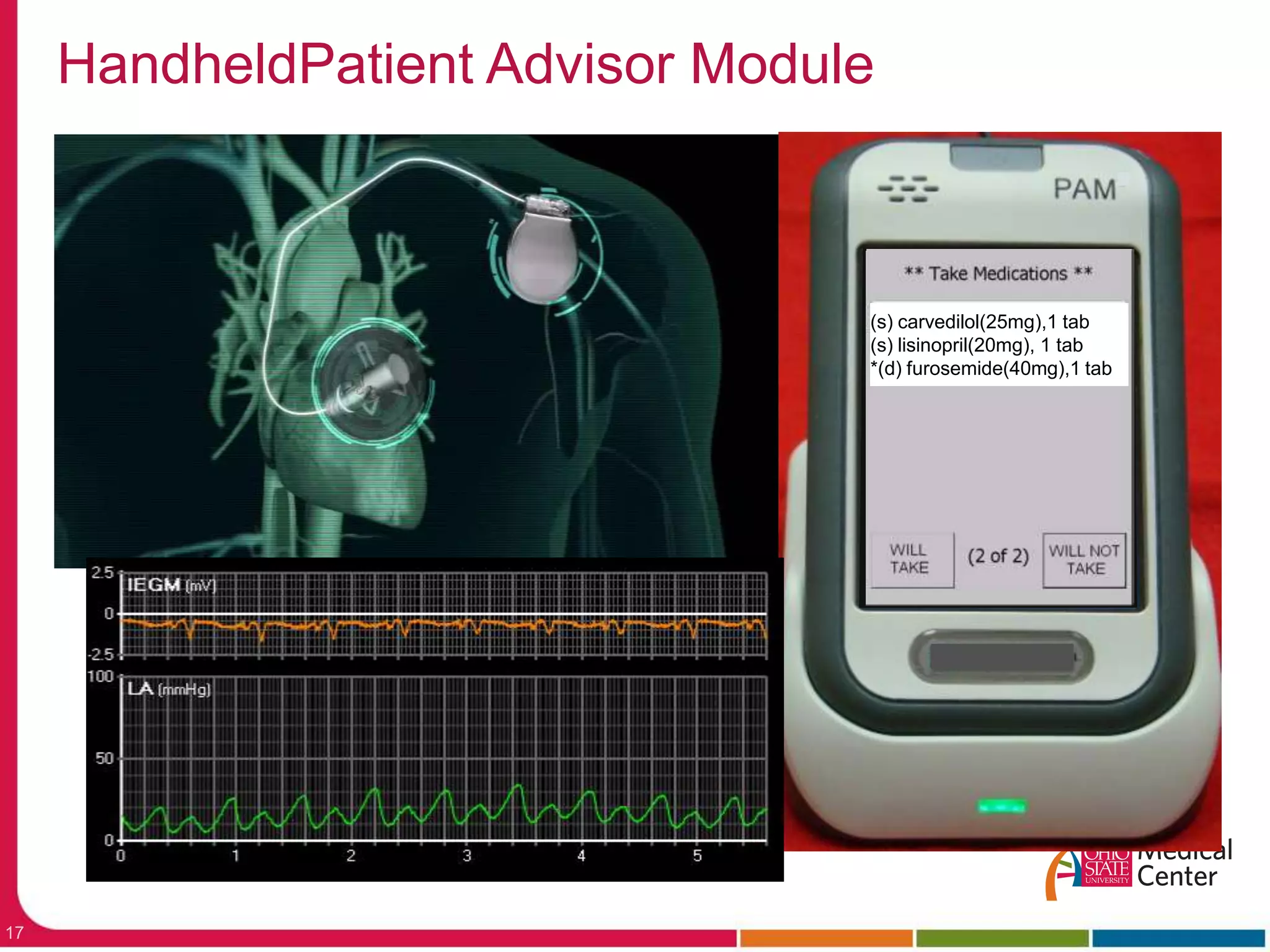
(s) carvedilol(25mg),1 tab(s) lisinopril(20mg), 1 tab*(d) furosemide(40mg),1 tabHandheldPatient Advisor ModulePAMPowers implant by RF
Atmospheric reference
Stores telemetry
Alerts patient to monitor

Abraham

  • 1.
    New Physician/Patient Paradigmsin Heart Failure ManagementWilliam T. Abraham, MD
  • 2.
    BackgroundDespite current therapiesand disease management approaches, the rate of heart failure hospitalization remains unacceptably high> 1.1 million heart failure hospitalizations annually> 25% readmission rate at 1 month; 50% at 6 months> $18 billion in annual direct costsCurrent methods for monitoring heart failure patients have not adequately addressed this issue
  • 3.
    Key Therapeutic Goalin Heart Failure:Maintain Optimal Volume/Pressure StatusHypervolemia/Elevated Intra-cardiac and Pulmonary Artery Pressures:Increased symptoms, increased risk of hospitalization, increased risk of arrhythmias, increased mortalityEuvolemia/Normal Intra-cardiac and Pulmonary Artery Pressures:Low riskHypovolemia/Low Intra-cardiac and Pulmonary Artery Pressures:Symptomatic hypotension, syncope, pre-renal azotemia
  • 4.
    What Do WeReally Need To Monitor?What do we really want to know?Pulmonary congestion / left ventricular filling pressure (LVFP)How do we currently assess these in patients with chronic heart failure?SymptomsDaily weightsPhysical examinationBiomarkersHow well do these assessments perform?Not very well
  • 5.
    Limitations of AvailableMonitoring SystemsWeight and Symptoms – Recent large, landmark clinical studies (Tele-HF, TIM-HF) investigating the effectiveness of telemonitoring demonstrated no benefit in reducing HF hospitalizationsBNP - PRIMA and other studies guided identification of patients at risk for HF events, but showed no significant reduction in HF-related admissionsDevice-Based Diagnostics - May be useful for identifying patients that may be at higher risk for a HF hospitalization(PARTNERS-HF Study), but have not demonstrated a reduction in HF-related hospitalizationsTele-HF: Yale Heart Failure Telemonitoring Study; NEJM, 2010TIM-HF: Telemonitoring Intervention in Heart Failure, Eur J. Heart Failure, 2010PRIMA: Can Pro-BNP guided heart failure therapy improve morbidity and mortality? J Am Coll Card, 2010PARTNERS-HF: Combined Heart Failure Device Diagnostics Identify Patients at Higher Risk of Subsequent Heart Failure Hospitalizations. J Am Coll Card, 2010
  • 6.
    Premise of PhysiologicalHeart Failure Monitoring (1)Heart Failure EventSymptomsHemodynamicChangesDays-21-14- 7 0 ProactiveReactive
  • 7.
    Premise of PhysiologicalHeart Failure Monitoring (2)AvertedHeart Failure EventMedical InterventionHemodynamicChangesDays-21-14- 7 0 Proactive
  • 8.
    LV Pressure SensorRVPressure SensorsPA Pressure SensorsLA Pressure SensorImplantable Hemodynamic Monitors
  • 9.
    MEMS-based pressure sensorHomeelectronicsPA Measurement databaseThe Pulmonary Artery Pressure Measurement System*Catheter-based delivery system*CardioMEMS Inc., Atlanta, Georgia, USA
  • 10.
    Primary Results ofthe CardioMEMS Heart Sensor Allows Monitoring of Pressure to Improve Outcomes in NYHA Class III Heart Failure Patients (CHAMPION) Trial
  • 11.
    CHAMPION Study DesignProspective,multi-center, randomized (1:1), controlled single-blind clinical trialTreatment group received traditional HF management guided by hemodynamic information from the sensorControl group received traditional HF disease management550 subjects enrolled at 63 sites in the U.S. between October 2007 and September 2009All subjects followed in their randomized single-blind study assignment until the last patient reached 6 months of follow-up
  • 12.
    Cumulative HF HospitalizationsOver Entire Randomized Follow-Up Period p < 0.001, based on Negative Binomial RegressionCumulative Number of HF HospitalizationsDays from Implant
  • 13.
  • 14.
    CHAMPION: PuttingIt AltogetherPulmonary Artery PressureMedication Changes On Basis of Pulmonary Artery PressureP<0.0001Pulmonary Artery Pressure ReductionP=0.008Heart Failure Related Hospitalization ReductionP<0.0001Quality of Life ImprovementP=0.024P values for Treatment Vs Control Group
  • 15.
    Proximal anchor7 mmDistalanchorTi diaphragm 3 mmLeft Atrial Pressure Monitor*Implantable Sensor Lead(ISL)Sensor moduleImplantable Communications module (ICM)Sensor module featuresHermetic Ti housing /sensing diaphragmCustom ASIC measures LAP, IEGM,TempFolding nitinol septal fixation anchorsFull digital waveform telemetryRF power, no implanted battery*St. Jude Medical, Sylmar, CA
  • 16.
    Physician-Directed, Patient-Self ManagementLAP ≥28 …Very High… furosemide 80mg, call MDLAP 19-27 …High………. 40mgLAP 10-18 …Optimal…… 20mgLAP 6-9 …Low…………10mgLAP ≤ 5 …Very Low…. hold, increase fluid intakeOptimal LAP makes it easier to up-titrate β-Blockers and ACE-I/ARBsDirect USB (in-clinic)RF TelemetryRemote(patient’s home)Patient Advisory ModuleApplication SoftwareTrends, Waveforms, PrescriptionsPC or Web Based
  • 17.
    (s) carvedilol(25mg),1 tab(s)lisinopril(20mg), 1 tab*(d) furosemide(40mg),1 tabHandheldPatient Advisor ModulePAMPowers implant by RF
  • 18.
  • 19.
  • 20.
  • 21.
  • 22.
    Meds, activity, MDcontactCirculation 2010; 121:1086-1095
  • 23.
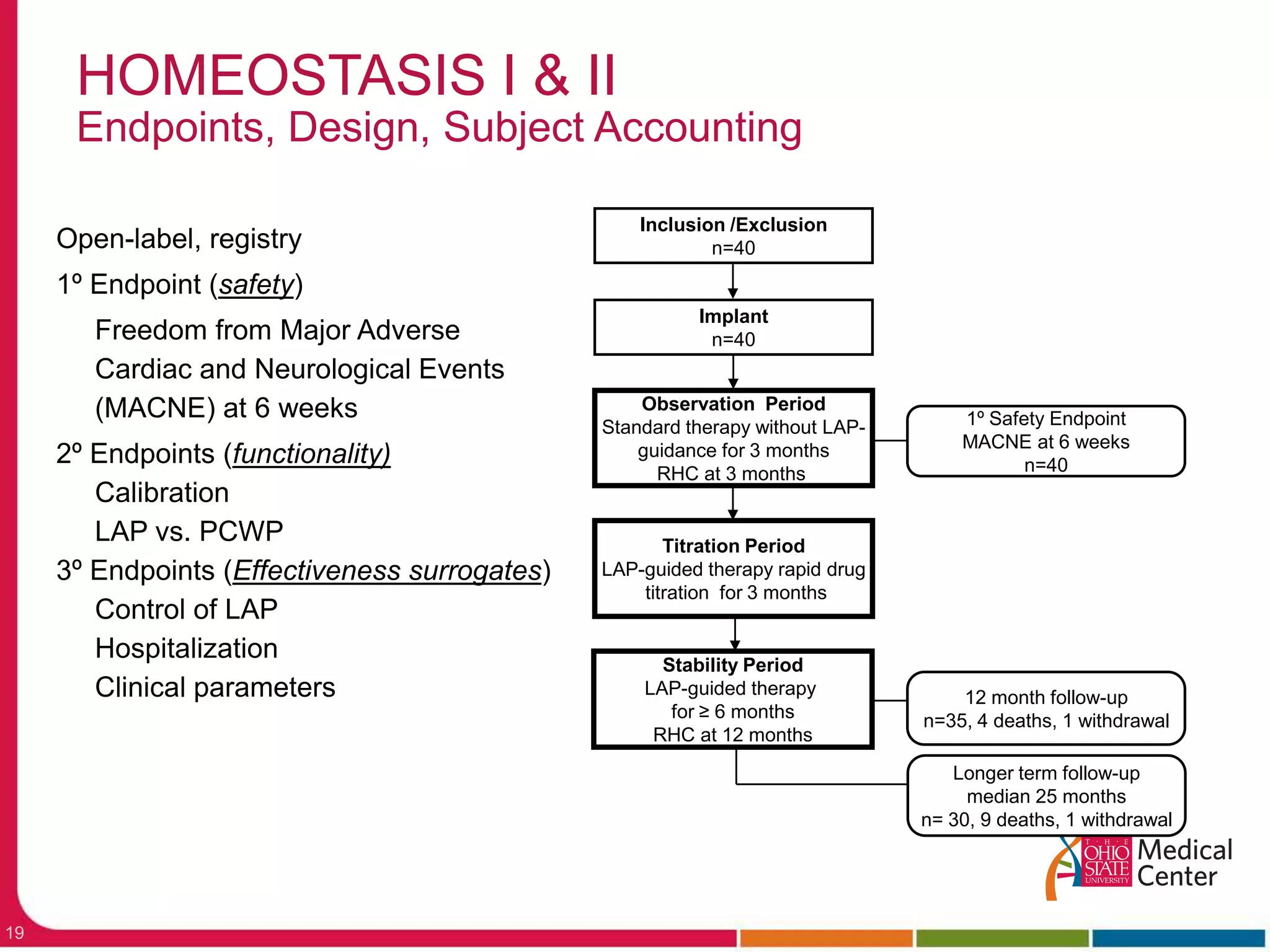
    Inclusion /Exclusionn=40Implantn=40Observation PeriodStandard therapy without LAP-guidance for 3 monthsRHC at 3 months 1º Safety EndpointMACNE at 6 weeksn=40Titration PeriodLAP-guided therapy rapid drug titration for 3 monthsStability PeriodLAP-guided therapy for ≥ 6 monthsRHC at 12 months12 month follow-upn=35, 4 deaths, 1 withdrawalLonger term follow-upmedian 25 monthsn= 30, 9 deaths, 1 withdrawalHOMEOSTASIS I & IIEndpoints, Design, Subject AccountingOpen-label, registry1º Endpoint (safety)Freedom from Major Adverse Cardiac and Neurological Events (MACNE) at 6 weeks2º Endpoints (functionality)CalibrationLAP vs. PCWP3º Endpoints (Effectiveness surrogates)Control of LAPHospitalizationClinical parameters
  • 24.
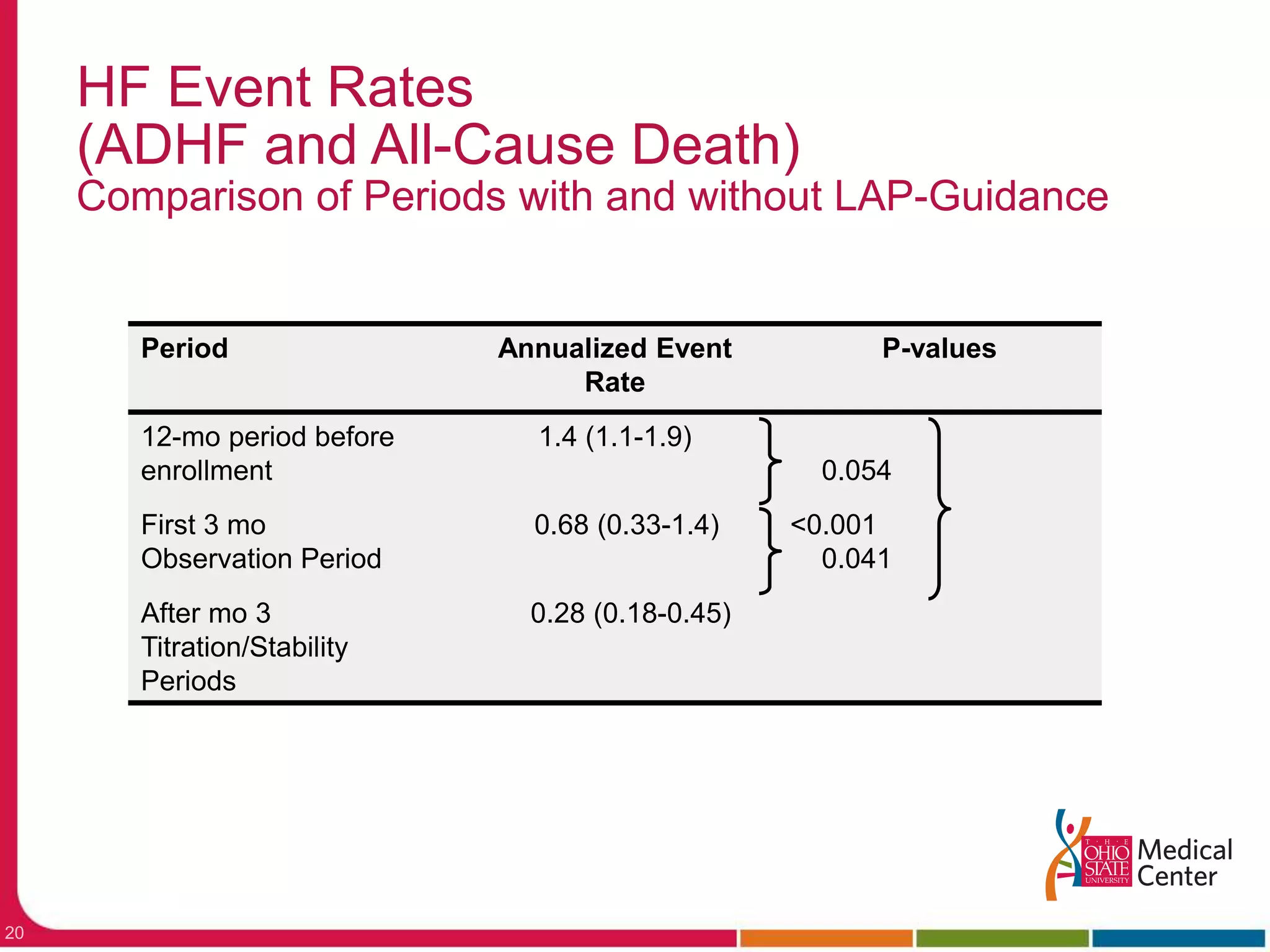
    HF Event Rates(ADHFand All-Cause Death)Comparison of Periods with and without LAP-Guidance

Editor's Notes

  • #2 The clinical template should be used for presentation to a clinical audience and focused on clinical topics. Examples include clinical grand rounds, clinical conferences and seminars and internal clinical meetings.