Download as PDF, PPTX


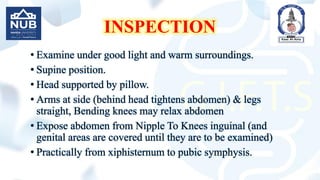
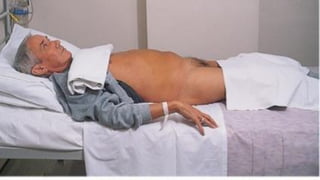
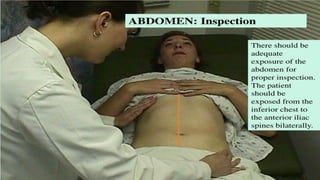
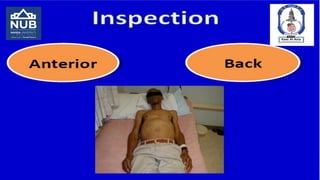

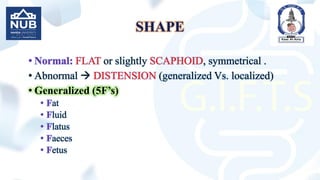
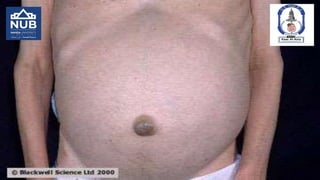
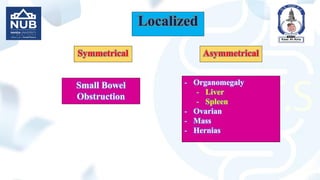
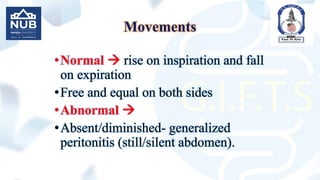
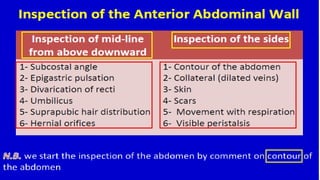
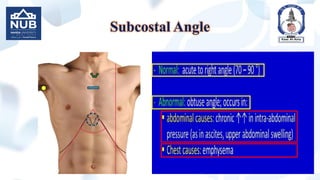
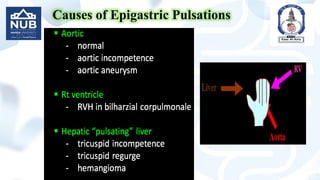
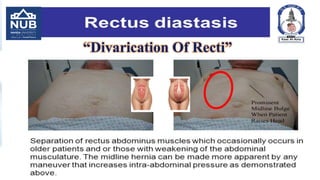
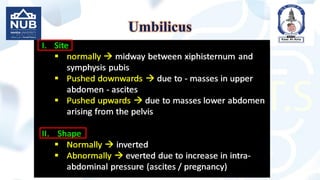
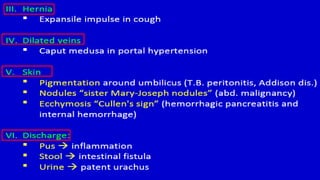
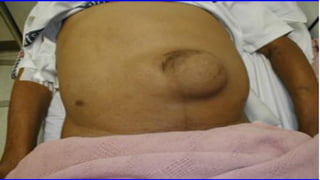
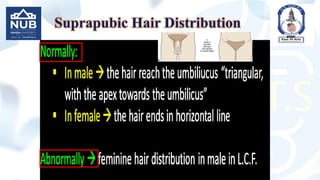
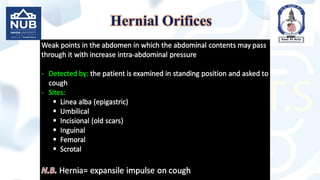
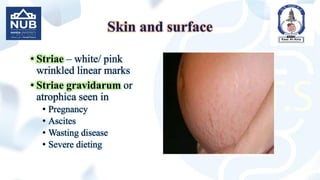
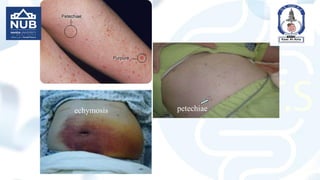
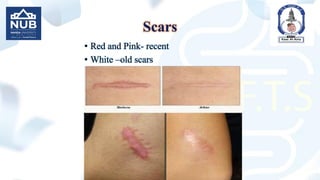
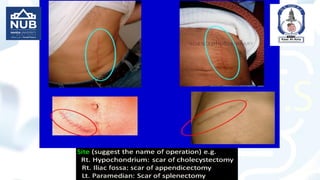
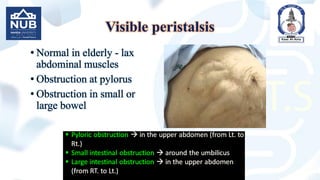
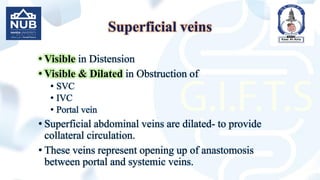
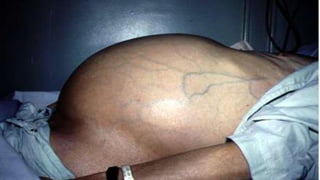
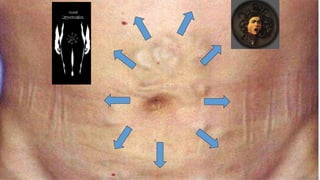
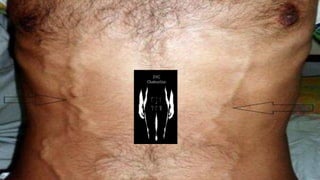
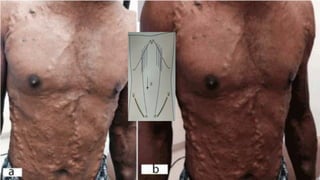
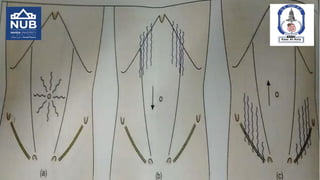
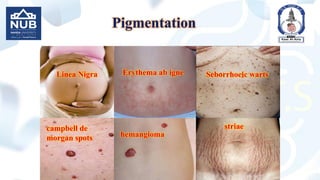





This document provides guidance on inspecting the abdomen during a clinical examination. It describes examining the abdomen in good light with the patient in a supine position and exposed from the nipples to knees. Key aspects to observe include the shape, movements, pulsations, scars, skin changes, hernial openings, and visible peristalsis or veins. Abnormal findings may indicate conditions like distension, organomegaly, obstruction, or skin changes. A thorough abdominal inspection is an important first step in the clinical examination process.


![PERI-PROSTHETIC FRACTURE NAIL-PLATE CONSTRUCT [NPC].pptx](https://cdn.slidesharecdn.com/ss_thumbnails/drarunkumardrmohamedashrafperiprostheticfrasturenail-plateconstructnpc-260209164459-7e9d15a1-thumbnail.jpg?width=640&height=640&fit=bounds)


![ONFH[AVN HIP] -TRIPLE REGIME -A NOVAL SURGICAL CONCEPT .pptx](https://cdn.slidesharecdn.com/ss_thumbnails/onfhavnhip2026koaconcalicutdrgokuldevdrmashraf-260210064517-213ec005-thumbnail.jpg?width=640&height=640&fit=bounds)