GIT medicine
By Musungu V
03/10/2017 Bachelor of Clinical Medicine 1
Introduction
•Course outline
•Disorders of the alimentary
canal
•Disorders of the hebatobilliary
system
•Disorders of the pancrease
03/10/2017 Bachelor of Clinical Medicine 2
• Take full history, examine and investigate
• To do this you need to appreciate few aspects
• Anatomic considerations; (GI) tract extends from the mouth
to the anus and is composed of several organs with distinct
functions
• The GI tract serves two main functions—assimilating
nutrients and eliminating waste.
• GI function is modified by influences outside of the gut.
• Unlike other organ systems, the gut is in continuity with the
outside environment.
• protective mechanisms are vigilant against deleterious effects
of foods, medications, toxins, and infectious organisms
Disorders of Alimentary canal
Approach to the pt
03/10/2017 Bachelor of Clinical Medicine 3
Classification of GI diseases
• GI diseases are manifestations of alterations in
nutrient assimilation or waste evacuation or in the
activities supporting these main functions.
• Thus classified as
• Impaired Digestion and Absorption
• Altered Secretion
• Altered Gut Transit
• Immune Dysregulation
• Impaired Gut Blood Flow
• Neoplastic Degeneration
• Disorders Without Obvious Organic Abnormalities
• Genetic disorders
03/10/2017 Bachelor of Clinical Medicine 4
GI symptoms
03/10/2017 Bachelor of Clinical Medicine 5
•NB:
• Abd. Pain: Visceral pain generally is
midline in location and vague in
character, while parietal pain is localized
and precisely described.
• upper GI bleeding presents with melena
or hematemesis, whereas lower GI
bleeding produces passage of bright red
or maroon stools.
• Chronic slow GI bleeding may present
with iron deficiency anemia
03/10/2017 Bachelor of Clinical Medicine 6
Evaluation of Pt with GI Disease
• begins with a careful history and exam
• Subsequent investigation with a variety of tools
designed to test gut structure or function are
indicated in selected cases.
• Some patients exhibit normal findings on diagnostic
testing. (functional bowel disorder.)
• Tools for patient evaluation in GI disease
• Laboratory,
• radiographic,
• functional tests
• All above can assist in diagnosis of suspected GI
disease
03/10/2017 Bachelor of Clinical Medicine 7
Laboratory
• Iron-deficiency anemia suggests mucosal blood
loss,
• vitamin B12 deficiency results from small-intestinal,
gastric, or pancreatic disease
• All above can result from inadequate oral intake
• Leukocytosis and increased ESR and CRP are found
in inflammatory conditions,
• leukopenia is seen in viremic illness
• TFT, cortisol, and calcium levels are obtained to
exclude endocrinologic causes of GI symptoms.
• PDT considered for women with unexplained
nausea
03/10/2017 Bachelor of Clinical Medicine 8
Luminal contents
• Luminal contents are examined for diagnostic clues.
• Stool samples are cultured for bacterial pathogens,
and also examined for leukocytes and parasites, or
tested for Giardia antigen among other parasites
• Fecal fat is indicate possible malabsorption.
• Gastric acid is quantified to rule out Zollinger-
Ellison syndrome
03/10/2017 Bachelor of Clinical Medicine 9
Endoscopy
03/10/2017 Bachelor of Clinical Medicine 10
Diseases of the esophagus
• Symptoms
• Heartburn (pyrosis),
• MOST common esophageal symptom,
• characterized by a discomfort or burning sensation
behind the sternum
• arises from the epigastrium and may radiate toward the
neck
• Regurgitation
• the effortless return of food or fluid into the pharynx without nausea
or retching.
• Patients report a sour or burning fluid in the throat or
mouth that may also contain undigested food particles.
• Bending, belching, or maneuvers that increase
intraabdominal pressure can provoke regurgitation
03/10/2017 Bachelor of Clinical Medicine 11
• Vomiting is preceded by nausea and accompanied
by retching.
• Rumination is a behavior in which recently
swallowed food is regurgitated and then
reswallowed repetitively for up to an hour
• There is linkage between rumination and mental
deficiency
03/10/2017 Bachelor of Clinical Medicine 12
• Chest pain
• a common esophageal symptom with
characteristics similar to cardiac pain, making this
distinction difficult
• Esophageal pain is usually experienced as a
pressure type sensation in the mid chest, radiating
to the mid back, arms, or jaws
• The similarity to cardiac pain is likely because the
two organs share a nerve plexus and the nerve
endings in the esophageal wall have poor
discriminative ability among stimuli.
• Gastroesophageal reflux is the most common cause
of esophageal chest pain.
03/10/2017 Bachelor of Clinical Medicine 13
• Esophageal dysphagia
• is often described as a feeling of food "sticking" or even
lodging in the chest
• Odynophagia
• Defined as pain either caused by or worsened by swallowing.
• When odynophagia occur in GERD, it is likely related to an
esophageal ulcer or deep erosion.
• Globus sensation,
• aka "globus hystericus," is the perception of a lump or
fullness in the throat that is felt irrespective of swallowing
• often occurs in the setting of anxiety or obsessive-compulsive
disorders
• Water brash
• Defined as excessive salivation resulting from a vagal reflex
triggered by acidification of the esophageal mucosa.
• This is not a common symptom.
03/10/2017 Bachelor of Clinical Medicine 14
Classification of oesophageal disorders
• Structural e.g Hiatal hernia, Rings and web, Diverticula, Tumors
• Congenital e.g Esophageal atresia
• Esophageal Motality Disorders e.g Achalasia, Diffuse
esophageal spasms (Des)
• Gastroesophageal Reflux Disease (GERD)
• Eosinophillic esophagitis
• Infectious esophagitis e.g candida, herpes, CMV
• Mechanical Trauma and Iatrogenic Injury e.g
perforation, Mallory Weiss tear, radiation esophagitis,
corrosive esophagitis, pill esophagitis, FB
• Esophageal Manifestations of Systemic Disease e.g
Scleroderma and Collagen Vascular Diseases,
Dermatologic Diseases
03/10/2017 Bachelor of Clinical Medicine 15
Structural disorders
• Hiatal hernia
• herniation of viscera, commonly the stomach, into the
mediastinum through the esophageal hiatus of the
diaphragm
• There are two main types of hiatal hernia
• Sliding hiatus hernia (common 95%)
• Paraesophaeal hernia (further subdivided) read
• Rings and Webs
• A lower esophageal mucosal ring, (B ring), is a thin
membranous narrowing at the squamocolumnar
mucosal junction
• Its origin is unknown.15% of people asymptomatic
• If lumen diameter <13 mm, distal rings produce episodic
solid food dysphagia (Schatzki rings)
03/10/2017 Bachelor of Clinical Medicine 16
• Web-like constrictions higher in the esophagus can
be congenital or inflammatory origin.
• When circumferential, they can cause intermittent
dysphagia to solids similar to Schatzki rings (treated
with dilatation)
• The combination of symptomatic proximal
esophageal webs and iron-deficiency anemia in
middle-aged women constitutes Plummer-Vinson
syndrome.
03/10/2017 Bachelor of Clinical Medicine 17
Diverticula
• Categorized by location.
• most common are:
• epiphrenic,
• hypopharyngeal (Zenker's),
• mid esophageal
• Epiphrenic and Zenker's diverticula are false diverticula
involving herniation of the mucosa and submucosa
through the muscular layer of the esophagus
• In Zenker's, the obstruction is a stenotic
cricopharyngeus muscle (upper esophageal sphincter)
• In hypopharyngeal herniation most commonly occurs in
an area of natural weakness known as Killian's triangle
03/10/2017 Bachelor of Clinical Medicine 18
• NB:
• Killian's dehiscence (also known as
Killian's triangle, Laimer triangle, Laimer-
Killian triangle, or Laimer-Haeckermann
area) is a triangular area in the wall of the
pharynx between the thyropharyngeal
and cricopharyngeus of the inferior
constrictor of the pharynx.
03/10/2017 Bachelor of Clinical Medicine 19
• Epiphrenic diverticula are associated with
achalasia or a distal esophageal stricture.
• Mid-esophageal diverticula may be caused
by traction from adjacent inflammation
(classically tuberculosis)
• Mid-esophageal and epiphrenic diverticula
are usually asymptomatic until they enlarge
sufficiently to retain food and cause
dysphagia and regurgitation
03/10/2017 Bachelor of Clinical Medicine 20
Tumors
• The typical presentation of oesophageal cancer is
of progressive solid food dysphagia and weight loss.
• Associated symptoms may include odynophagia,
iron deficiency, and, with mid-esophageal tumours,
hoarseness from left recurrent laryngeal nerve
injury.
• Benign esophageal tumors are uncommon
03/10/2017 Bachelor of Clinical Medicine 21
Congenital Anomalies
• The most common congenital esophageal anomaly
is esophageal atresia.
• Dysphagia can also result from congenital
abnormalities that cause extrinsic compression of
the esophagus
• In dysphagia lusoria, the esophagus is compressed
by an aberrant right subclavian artery arising from
the descending aorta and passing behind the
esophagus
03/10/2017 Bachelor of Clinical Medicine 22
Oesophageal Motility Disorders
• Are diseases attributable to esophageal
neuromuscular dysfunction commonly associated
with dysphagia, chest pain, or heartburn.
• They are:
• achalasia,
• diffuse esophageal spasm (DES),
• GERD
• Motility disorders can also be secondary to broader
disease processes as is the case with pseudoachalasia,
Chagas' disease, and scleroderma.
03/10/2017 Bachelor of Clinical Medicine 23
Achalasia
• A rare disease caused by loss of ganglion cells within
the esophageal myenteric plexus.
• Long-standing achalasia is characterized by progressive
dilatation and sigmoid deformity of the esophagus with
hypertrophy of the LES.
• Clinical manifestations may include
• dysphagia,
• regurgitation,
• chest pain,
• weight loss.
• Most patients report solid and liquid food dysphagia.
• Regurgitation occurs when food, fluid, and secretions
are retained in the dilated esophagus
03/10/2017 Bachelor of Clinical Medicine 24
• Patients with advanced achalasia are at risk for
• bronchitis,
• pneumonia,
• lung abscess from chronic regurgitation and aspiration.
• Chest pain is common early in the course of achalasia, due to
esophageal spasm.
• Patients describe a squeezing, pressure-like retrosternal pain,
sometimes radiating to the neck, arms, jaw, and back.
• Achalasia is diagnosed by barium swallow x-ray and/or
esophageal manometry
• The barium swallow x-ray appearance is of a dilated esophagus
with poor emptying, an air-fluid level, and tapering at the LES
giving it a beak-like appearance
03/10/2017 Bachelor of Clinical Medicine 25
Tx
• There is no known way of preventing or reversing
achalasia.
• Therapy is directed at reducing LES pressure so that
gravity and esophageal pressurization promote
esophageal emptying.
• Peristalsis rarely, if ever, returns.
• LES pressure can be reduced by:
• pharmacological therapy,
• forceful dilatation,
• surgical myotomy
• Botulinum toxin, injected into the LES under
endoscopic guidance, inhibits acetylcholine release
from nerve endings and improves dysphagia
03/10/2017 Bachelor of Clinical Medicine 26
• Inadequately treated achalasia, esophageal
dilatation predisposes to stasis esophagitis.
• Prolonged stasis esophagitis explains association
between achalasia and esophageal squamous cell
cancer.
03/10/2017 Bachelor of Clinical Medicine 27
Diffuse Esophageal Spasm (Des)
• Manifested by episodes of dysphagia and chest
pain attributable to abnormal esophageal
contractions with normal deglutitive LES relaxation
• Radiographically, DES has been characterized by
tertiary contractions or a "corkscrew esophagus
• in many instances these abnormalities are actually
indicative of achalasia
03/10/2017 Bachelor of Clinical Medicine 28
DES
03/10/2017 Bachelor of Clinical Medicine 29
•Esophageal chest pain closely
mimics angina pectoris.
•Features suggesting esophageal
pain include
•pain that is nonexertional,
prolonged, interrupts sleep, is meal-
related, is relieved with antacids,
and is accompanied by heartburn,
dysphagia, or regurgitation.
03/10/2017 Bachelor of Clinical Medicine 30
Gastroesophageal Reflux Disease (GERD)
• Gastroesophageal reflux is the return of the
stomach's contents back up into the esophagus.
• In normal digestion, the lower esophageal
sphincter (LES) opens to allow food to pass into
the stomach and closes to prevent food and
acidic stomach juices from flowing back into the
esophagus.
• Gastroesophageal reflux occurs when the LES is
weak or relaxes inappropriately, allowing the
stomach's contents to flow up into the
esophagus.
03/10/2017 Bachelor of Clinical Medicine 31
Pathophysiology
•Most pts with GERD have
esophagitis.
•Esophagitis occurs when refluxed
gastric acid and pepsin cause
necrosis of the esophageal mucosa
causing erosions and ulcers.
•esophagitis results from excessive
reflux, often accompanied by
impaired clearance of the refluxed
gastric juice.
03/10/2017 Bachelor of Clinical Medicine 32
• Three dominant mechanisms of
esophagogastric junction incompetence are
recognized
• transient LES relaxations (a vagovagal reflex
in which LES relaxation is elicited by gastric
distention),
• LES hypotension,
• anatomic distortion of the esophagogastric
junction inclusive of hiatus hernia.
• Transient LES relaxations account for 90% of
reflux in normal subjects or GERD patients
without hiatus hernia.
03/10/2017 Bachelor of Clinical Medicine 33
• Factors worsening reflux include
i. abdominal obesity,
ii. pregnancy,
iii. gastric hypersecretory states,
iv. delayed gastric emptying,
v. disruption of esophageal peristalsis,
vi. gluttony.
• After acid reflux, peristalsis returns the
refluxed fluid to the stomach and acid
clearance is completed by titration of the
residual acid by bicarbonate contained in
swallowed saliva.
03/10/2017 Bachelor of Clinical Medicine 34
• two causes of prolonged acid clearance are:
• impaired peristalsis
• reduced salivation.
• Impaired peristaltic emptying can be
attributable to disrupted peristalsis or
superimposed reflux associated with a hiatal
hernia.
• With superimposed reflux, fluid retained within
a sliding hiatal hernia refluxes back into the
esophagus during swallow-related LES
relaxation.
03/10/2017 Bachelor of Clinical Medicine 35
•Pepsin, bile, and pancreatic
enzymes within gastric
secretions can also injure the
esophageal epithelium, but
their noxious properties are
either lessened in an acidic
environment or dependent on
acidity for activation
03/10/2017 Bachelor of Clinical Medicine 36
Symptoms of GERD
•Heart burn
•Dysphagia
•Chest pains
•Extraesophageal syndromes with an
established association to GERD
include
• chronic cough,
• laryngitis,
• asthma,
• dental erosions
03/10/2017 Bachelor of Clinical Medicine 37
•Ddx (read)
•Complications
•Bleeding
•Stricture
•Esophageal
adenocarcinoma
03/10/2017 Bachelor of Clinical Medicine 38
Tx
•Lifestyle modification
•these fall into three categories:
• avoidance of foods that reduce lower
esophageal sphincter pressure, making
them "refluxogenic" (these commonly
include fatty foods, alcohol, spearmint,
peppermint, tomato-based foods, possibly
coffee and tea);
• avoidance of acidic foods that are
inherently irritating;
• adoption of behaviors to minimize reflux
and/or heartburn.
03/10/2017 Bachelor of Clinical Medicine 39
• The dominant pharmacologic approach to GERD
management is with inhibitors of gastric acid
secretion.
• Pharmacologically reducing the acidity of gastric
juice does not prevent reflux, but it ameliorates
reflux symptoms and allows esophagitis to heal.
• Proton pump inhibitors (PPIs) are more
efficacious than histamine2 receptor antagonists
(H2RAs),
• No major differences exist among PPIs and only
modest gain is achieved by increased dosage.
03/10/2017 Bachelor of Clinical Medicine 40
•Vitamin B12, calcium, and iron absorption
may be compromised and susceptibility to
enteric infections, particularly Clostridium
difficile colitis increased with treatment
using PPIs.
•Read and make notes on: (assignment 1)
• Eosinophillic esophagitis
• Infectious esophagitis
• Esophageal Manifestations of Systemic
Disease
03/10/2017 Bachelor of Clinical Medicine 41
Mechanical Trauma and Iatrogenic Injury
•These include;
i. Esophageal Perforation
ii. Mallory-Weiss Tear
iii. Radiation Esophagitis
iv. Corrosive Esophagitis
v. Pill Esophagitis
03/10/2017 Bachelor of Clinical Medicine 42
Esophageal Perforation
• Most cases of esophageal perforation are from
instrumentation of the esophagus or trauma.
• forceful vomiting or retching can lead to
spontaneous rupture at the gastroesophageal
junction (Boerhaave's syndrome)
• corrosive esophagitis or neoplasms can lead to
perforation
• Esophageal perforation causes pleuritic
retrosternal pain that can be associated with
pneumomediastinum and subcutaneous
emphysema.
• Mediastinitis is a major complication of esophageal
perforation
03/10/2017 Bachelor of Clinical Medicine 43
•CT of the chest is most sensitive in
detecting mediastinal air
•Treatment includes nasogastric suction
and parenteral broad-spectrum
antibiotics with prompt surgical
drainage and repair in noncontained
leaks.
•Conservative therapy with NPO status
and antibiotics without surgery may be
appropriate
03/10/2017 Bachelor of Clinical Medicine 44
Mallory-Weiss Tear
• Vomiting, retching, or vigorous coughing can
cause a nontransmural tear at the
gastroesophageal junction that is a common
cause of upper gastrointestinal bleeding.
• Most patients present with hematemesis.
• Bleeding usually abates spontaneously, but
protracted bleeding may respond to local
epinephrine or cauterization therapy,
endoscopic clipping, or angiographic
embolization.
• Surgery is rarely needed.
03/10/2017 Bachelor of Clinical Medicine 45
Radiation Esophagitis
• can complicate treatment for thoracic cancers,
especially breast and lung, with the risk
proportional to radiation dosage.
• Radiosensitizing drugs such as doxorubicin,
bleomycin, cyclophosphamide, and cisplatin also
increase the risk.
• Dysphagia and odynophagia may last weeks to
months after therapy
• Radiation exposure in excess of 5000 cGY has been
associated with increased risk of esophageal
stricture
03/10/2017 Bachelor of Clinical Medicine 46
Corrosive Esophagitis
• Caustic esophageal injury from ingestion of alkali or,
acid can be accidental or from attempted suicide
• Absence of oral injury does not exclude possible
esophageal involvement.
• early endoscopic evaluation is recommended to assess
and grade the injury to the esophageal mucosa
• Severe corrosive injury may lead to esophageal
perforation, bleeding, stricture, and death
• Healing of more severe grades of caustic injury is
commonly associated with severe stricture formation
and often requires repeated dilatation.
03/10/2017 Bachelor of Clinical Medicine 47
Pill Esophagitis
• occurs when a swallowed pill fails to traverses the
entire esophagus and lodges within the lumen
• attributed to poor "pill taking habits": inadequate
liquid with the pill, or lying down immediately after
taking a pill
• The most common location for the pill to lodge is in
the mid-esophagus near the crossing of the aorta
or carina
• Typical symptoms of pill esophagitis are the sudden
onset of chest pain and odynophagia
03/10/2017 Bachelor of Clinical Medicine 48
Peptic Ulcer Disease
• An ulcer is defined as disruption of the mucosal
integrity of the stomach and/or duodenum leading
to a local defect or excavation due to active
inflammation
• Ulcers occur within the stomach and/or duodenum
and are often chronic in nature
03/10/2017 Bachelor of Clinical Medicine 49
Pathophysiologic Basis of Peptic Ulcer Disease
• PUD encompasses both gastric and duodenal
ulcers.
• Ulcers are defined as breaks in the mucosal surface
>5 mm in size, with depth to the submucosa.
• Duodenal ulcers (DUs) and gastric ulcers (GUs);
share many common features in terms of
pathogenesis, diagnosis, and treatment, but several
factors distinguish them from one another.
03/10/2017 Bachelor of Clinical Medicine 50
Epidemiology
• DU
• The death rates, need for surgery, and physician visits
have decreased by >50% over the past 30 years.
• The reason for the reduction in the frequency of DUs is
due to decreasing frequency of Helicobacter pylori.
• Before the discovery of H. pylori, the natural history of
DUs was typified by frequent recurrences after initial
therapy.
• Eradication of H. pylori has greatly reduced these
recurrence rates.
03/10/2017 Bachelor of Clinical Medicine 51
• Gastric Ulcers
• occur later in life than duodenal lesions, with a peak
incidence reported in the sixth decade.
• >50% of GUs occur in males
• less common than DUs, due to the higher likelihood of
GUs being silent and presenting only after a
complication develops.
• similar incidence of DUs and GUs.
03/10/2017 Bachelor of Clinical Medicine 52
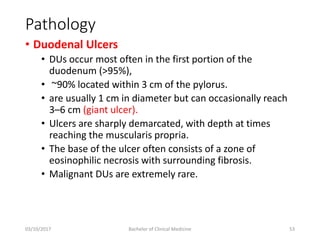
Pathology
• Duodenal Ulcers
• DUs occur most often in the first portion of the
duodenum (>95%),
• ~90% located within 3 cm of the pylorus.
• are usually 1 cm in diameter but can occasionally reach
3–6 cm (giant ulcer).
• Ulcers are sharply demarcated, with depth at times
reaching the muscularis propria.
• The base of the ulcer often consists of a zone of
eosinophilic necrosis with surrounding fibrosis.
• Malignant DUs are extremely rare.
03/10/2017 Bachelor of Clinical Medicine 53
• Gastric Ulcers
• In contrast to DUs, GUs can represent a malignancy and
should be biopsied upon discovery.
• Benign GUs are most often found distal to the junction
between the antrum and the acid secretory mucosa.
• Benign GUs are quite rare in the gastric fundus
• are histologically similar to DUs.
• Benign GUs associated with H. pylori are also associated
with antral gastritis.
03/10/2017 Bachelor of Clinical Medicine 54
• In contrast, NSAID-related GUs are not
accompanied by chronic active gastritis
• may have evidence of a chemical gastropathy,
typified by foveolar hyperplasia, edema of the
lamina propria, and epithelial regeneration in the
absence of H. pylori.
03/10/2017 Bachelor of Clinical Medicine 55
Pathophysiology
• Duodenal Ulcers
• H. pylori and NSAID-induced injury account for the
majority of DUs.
• average basal and nocturnal gastric acid secretion
appears to be increased in DU patients
• Gastric Ulcers
• As in DUs, the majority of GUs can be attributed to
either H. pylori or NSAID-induced mucosal damage.
• GUs that occur in the prepyloric area or those in the
body associated with a DU or a duodenal scar are similar
in pathogenesis to DUs.
03/10/2017 Bachelor of Clinical Medicine 56
H. Pylori and Acid Peptic Disorders
• Gastric infection with the bacterium H. pylori
accounts for the majority of PUD .
• plays a role in the development of gastric mucosa-
associated lymphoid tissue (MALT) lymphoma and
gastric adenocarcinoma.
• it is still not clear how H pylori, causes ulceration in
the duodenum, or whether its eradication will lead
to a decrease in gastric cancer.
03/10/2017 Bachelor of Clinical Medicine 57
NSAID-Induced Disease
•Prostaglandins play a critical role in
maintaining gastroduodenal mucosal
integrity and repair.
•interruption of prostaglandin synthesis
can impair mucosal defense and repair,
thus facilitating mucosal injury via a
systemic mechanism.
•to the gastric microcirculation plays an
essential role in the initiation of NSAID-
induced mucosal injury.
03/10/2017 Bachelor of Clinical Medicine 58
• Injury to the mucosa also occurs as a result of the
topical encounter with NSAIDs
• The interplay between H. pylori and NSAIDs in the
pathogenesis of PUD is complex
• each of these aggressive factors is independent and
synergistic risk factors for PUD and its
complications such as GI bleeding.
• eradication of H. pylori reduces the likelihood of GI
complications.
03/10/2017 Bachelor of Clinical Medicine 59
Clinical features
• Abdominal pain is common to many GI disorders,
including DU and GU; Epigastric pain described as a
burning or gnawing discomfort can be present in
both DU and GU
• Up to 10% of patients with NSAID-induced mucosal
disease can present with a complication (bleeding,
perforation, and obstruction) without antecedent
symptoms.
• The typical pain pattern in DU occurs 90 minutes to
3 hours after a meal and is frequently relieved by
antacids or food
03/10/2017 Bachelor of Clinical Medicine 60
• Pain that awakes the patient from sleep (between
midnight and 3 A.M.) is the most discriminating
symptom, is 66% due to DU
• Nausea and weight loss occur more commonly in
GU patients.
• Endoscopy detects ulcers in <30% of patients who
have dyspepsia.
03/10/2017 Bachelor of Clinical Medicine 61
Physical Examination
• Epigastric tenderness is the most frequent finding
in patients with GU or DU.
• Pain may be found to the right of the midline in
20% of patients
• Tachycardia and orthostasis suggest dehydration
secondary to vomiting or active GI blood loss.
• A severely tender, board like abdomen suggests a
perforation.
• Presence of a succussion splash indicates retained
fluid in the stomach, suggesting gastric outlet
obstruction.
03/10/2017 Bachelor of Clinical Medicine 62
PUD-Related Complications
• Gastrointestinal Bleeding
• Perforation
• Gastric Outlet Obstruction
03/10/2017 Bachelor of Clinical Medicine 63
Diagnostic Evaluation of PUD
• Documentation of an ulcer requires either a
radiographic (barium study) or an endoscopic
procedure.
• However, a large percentage of patients with
symptoms suggestive of an ulcer have NUD;
• empirical therapy is appropriate for individuals who
are otherwise healthy and <45 years of age, before
embarking on a diagnostic evaluation
03/10/2017 Bachelor of Clinical Medicine 64
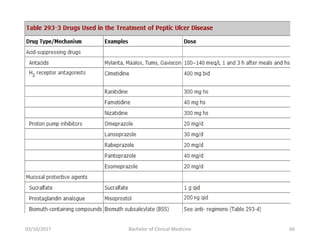
03/10/2017 Bachelor of Clinical Medicine 65
03/10/2017 Bachelor of Clinical Medicine 66
Therapy of H. Pylori
03/10/2017 Bachelor of Clinical Medicine 67
• Failure of H. pylori eradication with triple therapy in
a compliant patient is usually due to infection with
a resistant organism.
• Quadruple therapy, where clarithromycin is
substituted for metronidazole (or vice versa),
should be the next step
• The combination of pantoprazole, amoxicillin, and
rifabutin for 10 days has also been used
successfully (86% cure rate) in patients infected
with resistant strains
03/10/2017 Bachelor of Clinical Medicine 68
•Additional regimens considered for
second-line therapy include
•levofloxacin-based triple therapy
(levofloxacin, amoxicillin, PPI) for 10
days
•furazolidone-based triple therapy
(furazolidone, amoxicillin, PPI) for 14
days
03/10/2017 Bachelor of Clinical Medicine 69
Therapy of NSAID-Related Gastric
or Duodenal Injury
03/10/2017 Bachelor of Clinical Medicine 70
Approach and Therapy
• if a patient <50 years of age present with dyspepsia
and without alarming signs or symptoms suggestive
of an ulcer complication or malignancy, an
empirical therapeutic trial with acid suppression is
recommended
• Once an ulcer (GU or DU) is documented, the main
issue at stake is whether H. pylori or an NSAID is
involved.
• With H. pylori present, independent of the NSAID
status, triple therapy is recommended for 14 days,
followed by continued acid-suppressing drugs (H2
receptor antagonist or PPIs) for a total of 4–6
weeks
03/10/2017 Bachelor of Clinical Medicine 71
• A GU that fails to heal after 12 weeks and a DU that
does not heal after 8 weeks of therapy should be
considered refractory.
• In relation to PUD
• Read
• Surgical management of PUD (Indications and
precautions)
• Afferent loop syndrome
• Dumping syndrome
03/10/2017 Bachelor of Clinical Medicine 72
Zollinger Ellison Syndrome (ZES)
• Severe peptic ulcer diathesis secondary to gastric
acid hypersecretion due to unregulated gastrin
release from a non- cell endocrine tumor
(gastrinoma) defines the components of ZES.
• it can be cured by surgical resection in up to 30% of
patients.
03/10/2017 Bachelor of Clinical Medicine 73
Epidemiology
• incidence of ZES varies from 0.1–1% of
individuals presenting with PUD.
• Males are more commonly affected than
females, and the majority of patients are
diagnosed between ages 30 and 50.
• Gastrinomas are classified into sporadic
tumors (more common) and those
associated with multiple endocrine neoplasia
(MEN) type I
03/10/2017 Bachelor of Clinical Medicine 74
• Availability and use of PPIs has led to a decreased
patient referral for gastrinoma evaluation, delay in
diagnosis, and an increase in false-positive
diagnoses of ZES.
03/10/2017 Bachelor of Clinical Medicine 75
Pathophysiology
•Hypergastrinemia originating from an
autonomous neoplasm is the driving
force responsible for the clinical
manifestations in ZES.
•Gastrin stimulates acid secretion
through gastrin receptors on parietal
cells and by inducing histamine release
from ECL cells.
•Gastrin also has a trophic action on
gastric epithelial cells.
03/10/2017 Bachelor of Clinical Medicine 76
•Long-standing hypergastrinemia leads
to markedly increased gastric acid
secretion through both parietal cell
stimulation and increased parietal cell
mass.
•The increased gastric acid output leads
to peptic ulcer diathesis, erosive
esophagitis, and diarrhea.
03/10/2017 Bachelor of Clinical Medicine 77
CFs
• Gastric acid hypersecretion is responsible for S&S
• Peptic ulcer is the most common clinical
manifestation, occurring in >90% of gastrinoma
patients.
• Initial presentation and ulcer location (duodenal
bulb) may be indistinguishable from common PUD.
03/10/2017 Bachelor of Clinical Medicine 78
• Clinical situations that should create
suspicion of gastrinoma:
• ulcers in unusual locations (second part of the
duodenum and beyond),
• ulcers refractory to standard medical therapy,
• ulcer recurrence after acid-reducing surgery,
• ulcers presenting with frank complications
(bleeding, obstruction, and perforation),
• ulcers in the absence of H. pylori or NSAID
ingestion.
03/10/2017 Bachelor of Clinical Medicine 79
• Diarrhea, common clinical manifestation in ZES, is
found in up to 50% of patients
03/10/2017 Bachelor of Clinical Medicine 80
Diarrhea in ZES, WHY?
• Etiology of the diarrhea is multifactorial, resulting
from
• marked volume overload to the small bowel,
• pancreatic enzyme inactivation by acid,
• damage of the intestinal epithelial surface by acid.
• The epithelial damage can lead to a mild degree of
maldigestion and malabsorption of nutrients.
03/10/2017 Bachelor of Clinical Medicine 81
•The diarrhea may also have a secretory
component
•This is due to
• the direct stimulatory effect of gastrin on
enterocytes
• the co-secretion of additional hormones
from the tumor e.g vasoactive intestinal
peptide (VIP)
03/10/2017 Bachelor of Clinical Medicine 82
Dx of ZES
• The first step in the evaluation of a patient
suspected of having ZES is to obtain a fasting
gastrin level.
• Fasting gastrin levels are usually <150 pg/mL
• all gastrinoma patients will have a gastrin
level >150–200 pg/mL.
• Measurement of fasting gastrin should be
repeated to confirm the clinical suspicion.
03/10/2017 Bachelor of Clinical Medicine 83
03/10/2017 Bachelor of Clinical Medicine 84
Causes of elevated fasting Gastrin levels
• gastric hypochlorhydria or achlorhydria (the most
frequent), with or without pernicious anemia;
• retained gastric antrum;
• G cell hyperplasia;
• gastric outlet obstruction;
• renal insufficiency;
• massive small-bowel obstruction;
• Others conditions e.g rheumatoid arthritis, vitiligo,
diabetes mellitus, and pheochromocytoma.
• in patients using antisecretory agents for the treatment
of acid peptic disorders and dyspepsia
03/10/2017 Bachelor of Clinical Medicine 85
Point to NOTE
• Fasting gastrin >10 times normal is highly
suggestive of ZES,
• two-thirds of patients will have fasting gastrin
levels that overlap with levels found in the
more common disorders outlined above.
• A BAO/MAO ratio >0.6 is highly suggestive of
ZES
• If the technology for measuring gastric acid
secretion is not available, a basal gastric pH 3
virtually excludes a gastrinoma.
03/10/2017 Bachelor of Clinical Medicine 86
• Once the biochemical diagnosis of gastrinoma has
been confirmed, the tumor must be located (Using
CT scan, ultra sound, MRI)
03/10/2017 Bachelor of Clinical Medicine 87
Tx of ZES
•AIMS
• ameliorating the signs and symptoms
related to hormone overproduction,
• curative resection of the neoplasm,
• control tumor growth in metastatic
disease.
03/10/2017 Bachelor of Clinical Medicine 88
• PPIs are the treatment of choice and have
decreased the need for total gastrectomy.
• Initial PPI doses tend to be higher than those used
for treatment of GERD or PUD.
• The initial dose of omeprazole, lansoprazole,
rabeprazole or esomeprazole should be in the
range of 60 mg in divided doses in a 24-hour period
• Surgery (Definitive tx)
03/10/2017 Bachelor of Clinical Medicine 89
Stress related mucosal injury
•Patients suffering from shock, sepsis,
massive burns, severe trauma, or head
injury can develop acute erosive gastric
mucosal changes or frank ulceration
with bleeding.
•Classified as stress-induced gastritis or
ulcers, injury is most commonly
observed in the acid-producing (fundus
and body) portions of the stomach.
03/10/2017 Bachelor of Clinical Medicine 90
•elevated gastric acid secretion may be
noted in patients with stress ulceration
after head trauma (Cushing's ulcer)
•Gastric secretion can also be noted in
severe burns (Curling's ulcer),
•Mucosal ischemia and breakdown of the
normal protective barriers of the
stomach also play an important role in
the pathogenesis.
03/10/2017 Bachelor of Clinical Medicine 91
Gastritis
• The term gastritis should be reserved for
histologically documented inflammation of the
gastric mucosa.
• Gastritis is not the mucosal erythema seen during
endoscopy and is not interchangeable with
"dyspepsia."
• The correlation between the histologic findings of
gastritis, the clinical picture of abdominal pain or
dyspepsia, and endoscopic findings noted on gross
inspection of the gastric mucosa is poor.
• Therefore, there is no typical clinical manifestation
of gastritis.
03/10/2017 Bachelor of Clinical Medicine 92
03/10/2017 Bachelor of Clinical Medicine 93
Acute Gastritis
• most common causes of acute gastritis are
infectious.
• Acute infection with H. pylori induces gastritis
• present with sudden onset of epigastric pain,
nausea, vomiting,
• limited mucosal histologic studies demonstrate a
marked infiltrate of neutrophils with edema and
hyperemia.
• If not treated, this picture will evolve into chronic
gastritis.
• Hypochlorhydria lasting for up to 1 year may follow
acute H. pylori infection.
03/10/2017 Bachelor of Clinical Medicine 94
• Bacterial infection of the stomach or phlegmonous
gastritis is a rare, potentially life-threatening
disorder characterized by marked and diffuse acute
inflammatory infiltrates of the entire gastric wall,
xterised by necrosis.
• Elderly individuals, alcoholics, and AIDS patients
may be affected by phlegmonous gastritis
03/10/2017 Bachelor of Clinical Medicine 95
Chronic Gastritis
• identified histologically by an inflammatory cell
infiltrate consisting primarily of lymphocytes and
plasma cells, with very scant neutrophil
involvement
• Chronic gastritis has been classified according to
histologic characteristics.
• These include
• superficial atrophic changes
• gastric atrophy.
03/10/2017 Bachelor of Clinical Medicine 96
Stages of chronic gastritis
• The early phase of chronic gastritis is superficial
gastritis
• inflammatory changes are limited to the lamina propria of the
surface mucosa, with edema and cellular infiltrates separating
intact gastric glands
• The next stage is atrophic gastritis. In this case the
inflammatory infiltrate extends deeper into the
mucosa, with progressive distortion and destruction of
the glands.
• The final stage of chronic gastritis is gastric atrophy. In
this case, glandular structures are lost, and there is
inflammatory infiltrates.
• Endoscopically, the mucosa may be substantially thin,
permitting clear visualization of the underlying blood vessels.
03/10/2017 Bachelor of Clinical Medicine 97
•Chronic gastritis is also classified
according to the predominant site of
involvement.
• Type A refers to the body-predominant
form (autoimmune)
• Type B is the antral-predominant form (H.
pylori–related).
• AB gastritis has been used to refer to a
mixed antral/body picture.
03/10/2017 Bachelor of Clinical Medicine 98
Tx of chronic gastritis
•Treatment in chronic gastritis is aimed
at the sequelae and not the underlying
inflammation.
•Patients with pernicious anemia will
require parenteral vitamin B12
supplementation on a long-term basis.
•Eradication of H. pylori is not routinely
recommended unless PUD or a low-
grade MALT lymphoma is present.
03/10/2017 Bachelor of Clinical Medicine 99
• HOME WORK
• MéNéTrier's Disease and TX
• Lymphocytic gastritis
03/10/2017 Bachelor of Clinical Medicine 100
Disorders of Absorption
• Constitute a broad spectrum of conditions with
multiple etiologies and varied clinical
manifestations.
• All of these clinical problems are associated with
diminished intestinal absorption of one or more
dietary nutrients and are often referred to as the
malabsorption syndrome.
• Malabsorption syndromes are associated with
steatorrhea which is:
• an increase in stool fat excretion of >6% of dietary fat
intake
03/10/2017 Bachelor of Clinical Medicine 101
• Disorders of absorption must be included in the
differential diagnosis of diarrhea .
• diarrhea is frequently associated with and/or is a
consequence of the diminished absorption of one
or more dietary nutrients.
• Diarrhea as a symptom (i.e., when used by patients
to describe their bowel movement pattern) may
mean;
• a decrease in stool consistency,
• an increase in stool volume,
• an increase in number of bowel movements,
• any combination of the above.
03/10/2017 Bachelor of Clinical Medicine 102
• In contrast, diarrhea as a sign is a quantitative
increase in stool water or weight of >200–225 mL
or gram per 24 h.
03/10/2017 Bachelor of Clinical Medicine 103
• Celiac Disease
• Tropical Sprue
• Short Bowel Syndrome
• Whipple's Disease
• Protein-Losing Enteropathy
03/10/2017 Bachelor of Clinical Medicine 104
Celiac Disease
• Common cause of malabsorption of one or more
nutrients.
• Celiac disease has had several other names,
including nontropical sprue, celiac sprue, adult
celiac disease, and gluten-sensitive enteropathy.
• The etiology of celiac disease is not known, but
environmental, immunologic, and genetic factors
are important.
• Individuals have manifestations that are not
obviously related to intestinal malabsorption, e.g.,
anemia, osteopenia, infertility, neurologic
symptoms
03/10/2017 Bachelor of Clinical Medicine 105
• The hallmark of celiac disease is the presence of an
abnormal small-intestinal biopsy and the response
of the condition—symptoms and the histologic
changes on the small-intestinal biopsy—to the
elimination of gluten from the diet.
• symptoms of celiac disease may appear with the
introduction of cereals in an infant's diet
• spontaneous remissions often occur during the
second decade of life that may be either
permanent or followed by the reappearance of
symptoms over several years.
03/10/2017 Bachelor of Clinical Medicine 106
Symptoms
• malabsorption of multiple nutrients,
• diarrhea,
• steatorrhea,
• weight loss,
• the consequences of nutrient depletion (i.e., anemia
and metabolic bone disease),
• absence of any gastrointestinal symptoms but with
evidence of the depletion of a single nutrient (e.g.,
iron or folate deficiency,
• osteomalacia,
• edema from protein loss).
03/10/2017 Bachelor of Clinical Medicine 107
Etiology
• The etiology of celiac disease is not known,
• but environmental, immunologic, and genetic
factors contribute to the disease.
• Environmental
• association of the disease with gliadin, a component of
gluten that is present in wheat, barley, and rye
• immunologic
• the pathogenesis of celiac disease is critical and involves
both adaptive and innate immune responses.
• Serum antibodies—IgA antigliadin, IgA antiendomysial,
and IgA anti-tTG antibodies—are present
03/10/2017 Bachelor of Clinical Medicine 108
• Genetic factor
• The incidence of symptomatic celiac disease varies
widely in different population groups (high in whites,
low in blacks and Asians) and is 10% in first-degree
relatives of celiac disease patients
03/10/2017 Bachelor of Clinical Medicine 109
Dx
• A small-intestinal biopsy
• A biopsy should be performed in patients with
symptoms and laboratory findings suggestive of
nutrient malabsorption and/or deficiency and
with a positive endomysial antibody test
• Diagnosis of celiac disease requires the
presence of characteristic histologic changes
on small-intestinal biopsy together with a
prompt clinical and histologic response
following the institution of a gluten-free diet
03/10/2017 Bachelor of Clinical Medicine 110
Failure to respond
• most common cause of persistent symptoms in
a patient who fulfills all the criteria for the
diagnosis of celiac disease is continued intake of
gluten.
• Use of rice in place of wheat flour is very helpful
• several support groups provide important aid to
patients with celiac disease and to their families.
• More than 90% of patients will respond to
complete dietary gluten restriction.
03/10/2017 Bachelor of Clinical Medicine 111
Mechanism of diarrhea in celiac
disease
• steatorrhea, which is primarily a result of the
changes in jejunal mucosal function
• steatorrhea, which is primarily a result of the
changes in jejunal mucosal function
• bile acid malabsorption resulting in bile acid–
induced fluid secretion in the colon,
• endogenous fluid secretion resulting from crypt
hyperplasia
03/10/2017 Bachelor of Clinical Medicine 112
• most important complication of celiac disease is
the development of cancer
03/10/2017 Bachelor of Clinical Medicine 113
Tropical Sprue
• a poorly understood syndrome that affects both
expatriates and natives in certain but not all
tropical areas
• is manifested by
• chronic diarrhea,
• steatorrhea,
• weight loss,
• nutritional deficiencies, including those of both folate
and cobalamin.
• This disease affects 5–10% of the population in
some tropical areas.
03/10/2017 Bachelor of Clinical Medicine 114
• Chronic diarrhea in a tropical environment is
caused by infectious agents
• G. lamblia,
• Yersinia enterocolitica,
• C. difficile,
• Cryptosporidium parvum,
• Cyclospora cayetanensis
03/10/2017 Bachelor of Clinical Medicine 115
dx
•best made by the presence of an
abnormal small-intestinal
mucosal biopsy in an individual
with chronic diarrhea and
evidence of malabsorption who is
either residing or has recently
lived in a tropical country
03/10/2017 Bachelor of Clinical Medicine 116
•Small-intestinal biopsy in
tropical sprue does not
have pathognomonic
features but resembles,
and can often be
indistinguishable from,
that seen in celiac disease
03/10/2017 Bachelor of Clinical Medicine 117
tx
•Broad-spectrum antibiotics and folic
acid are most often curative,
especially if the patient leaves the
tropical area and does not return.
•Tetracycline should be used for up to
6 months and may be associated
with improvement within 1–2 weeks.
03/10/2017 Bachelor of Clinical Medicine 118
•Folic acid alone will induce a
hematologic remission as well as
improvement in appetite, weight gain,
and some morphologic changes in small
intestinal biopsy.
•Because of the presence of marked
folate deficiency, folic acid is most often
given together with antibiotics.
03/10/2017 Bachelor of Clinical Medicine 119
Short Bowel Syndrome
•Represents myriad clinical
problems that occur following
resection of varying lengths of
small intestine;
•may be congenital, e.g.,
microvillous inclusion disease.
03/10/2017 Bachelor of Clinical Medicine 120
Factors that determine symptoms
• the specific segment (jejunum vs. ileum) resected,
• the length of the resected segment,
• the integrity of the ileocecal valve,
• whether any large intestine has also been removed,
• residual disease in the remaining small and/or large
intestine (e.g., Crohn's disease, mesenteric artery
disease),
• the degree of adaptation in the remaining intestine
03/10/2017 Bachelor of Clinical Medicine 121
• Short bowel syndrome can occur at any age from
neonates through the elderly.
• Intestinal failure is the inability to maintain
nutrition without parenteral support.
03/10/2017 Bachelor of Clinical Medicine 122
Tx
• Depends on the severity of symptoms
• Also dependes on whether the individual is able to
maintain caloric and electrolyte balance with oral
intake alone.
• Initial treatment includes judicious use of opiates
(including codeine) to reduce stool output and to
establish an effective diet.
• An initial diet should be low-fat and high-
carbohydrate to minimize the diarrhea from fatty
acid stimulation of colonic fluid secretion
03/10/2017 Bachelor of Clinical Medicine 123
Bacterial Overgrowth Syndrome
• comprises a group of disorders with
• diarrhea,
• steatorrhea,
• macrocytic anemia
• Common feature is the proliferation of colonic-type
bacteria within the small intestine
• bacterial proliferation is due to stasis caused by
impaired peristalsis (functional stasis),
changes in intestinal anatomy (anatomic stasis),
direct communication between the small and large
intestine.
03/10/2017 Bachelor of Clinical Medicine 124
•These conditions have also
been referred to as
stagnant bowel syndrome
or blind loop syndrome.
03/10/2017 Bachelor of Clinical Medicine 125
dX
•The diagnosis may be suspected
from the combination of a low
serum cobalamin level and an
elevated serum folate level, as
enteric bacteria frequently produce
folate compounds that will be
absorbed in the duodenum.
03/10/2017 Bachelor of Clinical Medicine 126
tX
• Surgical correction of an anatomic blind loop
• For functional stasis of scleroderma or certain
anatomic stasis states (e.g., multiple jejunal
diverticula) be treated with broad-spectrum
antibiotics.
• Tetracycline challenged with high resistance, other
antibiotics such as metronidazole,
amoxicillin/clavulanic acid, and cephalosporins
have been employed.
• The antibiotic should be given for approximately 3
weeks or until symptoms remit
03/10/2017 Bachelor of Clinical Medicine 127
Whipple's Disease
•Its a chronic multisystem
disease associated with
diarrhea, steatorrhea, weight
loss, arthralgia, and central
nervous system (CNS) and
cardiac problems; it is caused
by the bacteria Tropheryma
whipple03/10/2017 Bachelor of Clinical Medicine 128
Cfs
•diarrhea,
•steatorrhea,
•abdominal pain,
•weight loss,
•migratory large-joint arthropathy,
•fever
•ophthalmologic and CNS symptoms.
03/10/2017 Bachelor of Clinical Medicine 129
Dx
• History
• tissue biopsies from the small intestine and/or
other organs that may be involved (e.g., liver,
lymph nodes, heart, eyes, CNS, or synovial
membranes), based on the patient's symptoms, is
the primary approach to establish the diagnosis of
Whipple's disease.
03/10/2017 Bachelor of Clinical Medicine 130
Tx
•prolonged use of antibiotics.
•The current drug of choice is
double-strength
trimethoprim/sulfamethoxaz
ole for approximately 1 year.
03/10/2017 Bachelor of Clinical Medicine 131
•Read PLE (Protein Loosing
enteropathy)
•Presentation
•Dx
•management
03/10/2017 Bachelor of Clinical Medicine 132
The Schilling Test
•Performed to determine the cause for
cobalamin malabsorption
•Cobalamin absorption may be
abnormal in the following:
•Pernicious anemia,
•Chronic pancreatitis
•Achlorhydria, .
•Bacterial overgrowth syndromes,
•Ileal dysfunction
03/10/2017 Bachelor of Clinical Medicine 133
• The Schilling test is performed by
administering cobalamin orally and collecting
urine for 24 h,
• it is dependent on normal renal and bladder
function.
• Urinary excretion of cobalamin will reflect
cobalamin absorption provided that
intrahepatic binding sites for cobalamin are
fully occupied.
03/10/2017 Bachelor of Clinical Medicine 134
•The Schilling test may be
abnormal (usually defined as
<10% excretion in 24 h) in
•pernicious anemia,
•chronic pancreatitis,
•blind loop syndrome,
•ileal disease
03/10/2017 Bachelor of Clinical Medicine 135
Inflammatory Bowel Disease
•Inflammatory bowel disease
(IBD) is an immune-mediated
chronic intestinal condition.
•Types
•Ulcerative colitis (UC)
•Crohn's disease (CD).
03/10/2017 Bachelor of Clinical Medicine 136
Ulcerative colitis
•The major symptoms of UC
are:
diarrhea,
rectal bleeding,
tenesmus,
passage of mucus,
crampy abdominal pain
03/10/2017 Bachelor of Clinical Medicine 137
•Severity of symptoms correlates with the
extent of disease.
•UC can present acutely,
•symptoms usually have been present for
weeks to months.
•Occasionally, diarrhea and bleeding are
so intermittent and mild that the patient
does not seek medical attention.
03/10/2017 Bachelor of Clinical Medicine 138
Laboratory, Endoscopic, and
Radiographic Features
• rise in
• acute-phase reactants [C-reactive protein (CRP)],
• platelet count,
• erythrocyte sedimentation rate (ESR),
• a decrease in hemoglobin.
• Fecal lactoferrin is a highly sensitive and specific
marker for detecting intestinal inflammation.
• Fecal calprotectin levels correlate well with
histologic inflammation, predict relapses, and
detect pouchitis
03/10/2017 Bachelor of Clinical Medicine 139
• Sigmoidoscopy is used to assess disease activity
and is usually performed before treatment
• The earliest radiologic change of UC seen on
single-contrast barium enema is a fine mucosal
granularity.
• With increasing severity, the mucosa becomes
thickened, and superficial ulcers are seen.
• Deep ulcerations can appear as "collar-button"
ulcers, which indicate that the ulceration has
penetrated the mucosa
03/10/2017 Bachelor of Clinical Medicine 140
Complications
• Massive haemorrhage
• Toxic megacolon
• defined as a transverse or right colon with a diameter of
>6 cm, with loss of haustration in patients with severe
attacks of UC
• toxic colitis (risk of perforation)
• Strictures
• Anal fissures
• perianal abscesses,
• hemorrhoids
03/10/2017 Bachelor of Clinical Medicine 141
Crohn's Disease
• Read and make notes
• Classification
• Dx
• Investigationd
• Management
• Prevention
• Nutrition
• drugs
03/10/2017 Bachelor of Clinical Medicine 142
Irritable Bowel Syndrome
•A functional bowel disorder
characterized by abdominal
pain or discomfort and
altered bowel habits in the
absence of detectable
structural abnormalities
03/10/2017 Bachelor of Clinical Medicine 143
03/10/2017 Bachelor of Clinical Medicine 144
Cfs
•Abdominal Pain
•Altered bowel habits
•Gas and Flatulence
•Upper Gastrointestinal
Symptoms
•Dyspepsia, heart burn, nausea,
vomitting
03/10/2017 Bachelor of Clinical Medicine 145
Approach to the Patient
•diagnosis relies on recognition of
positive clinical features and
elimination of other organic
diseases
•A careful history and physical
examination are frequently helpful
in establishing the diagnosis
03/10/2017 Bachelor of Clinical Medicine 146
•Clinical features suggestive of IBS
include the following:
• recurrence of lower abdominal pain with
altered bowel habits over a period of time
without progressive deterioration,
• onset of symptoms during periods of
stress or emotional upset,
• absence of other systemic symptoms such
as fever and weight l`oss, and small-
volume stool without any evidence of
blood
03/10/2017 Bachelor of Clinical Medicine 147
• Investigate to rule out common causes (ddx)
03/10/2017 Bachelor of Clinical Medicine 148
tx
•Reassurance and careful explanation of
the functional nature of the disorder
and of how to avoid obvious food
precipitants are important first steps in
patient counseling and dietary change.
•Dietary history may reveal substances
(such as coffee, disaccharides, legumes,
and cabbage) that aggravate symptoms.
03/10/2017 Bachelor of Clinical Medicine 149
Specific tx agents
• Stool-Bulking Agents
• High-fiber diets and bulking agents, such as bran or
hydrophilic colloid, are frequently used in treating IBS
• Antispasmodics
• anticholinergic drugs may provide temporary relief for
symptoms such as painful cramps related to intestinal
spasm (hyoscine butylbromide)
• Antidiarrheal Agents
• loperamide, 2–4 mg every 4–6 h up to a maximum of 12
g/d, can be prescribed
03/10/2017 Bachelor of Clinical Medicine 150
• Antidepressant Drugs
• antidepressant medications have several physiologic
effects that suggest they may be beneficial in IBS
• Antiflatulence Therapy
• Patients should be advised to eat slowly and not chew
gum or drink carbonated beverages
• Avoiding flatogenic foods, exercising, losing excess
weight, and taking activated charcoal
• Modulation of Gut Flora
• neomycin dosed at 500 mg twice daily for 10 days
• rifaximin 400 mg three times daily
03/10/2017 Bachelor of Clinical Medicine 151
• Chloride Channel Activators
• Oral lubiprostone
• Serotonin Receptor Agonist and Antagonists
03/10/2017 Bachelor of Clinical Medicine 152
LIVER AND BILLARY
TRACT DISEASES
Unit 2 of GI medicine
03/10/2017 Bachelor of Clinical Medicine 153
Approach to pt
•A diagnosis of liver disease
usually can be made
accurately via
•a careful history,
•physical examination,
•application of a few laboratory
tests
03/10/2017 Bachelor of Clinical Medicine 154
•In some circumstances, radiologic
examinations are helpful
•Liver biopsy is considered the
criterion standard in evaluation of
liver disease but is now needed less
for diagnosis than for grading and
staging of disease.
03/10/2017 Bachelor of Clinical Medicine 155
Liver structure and function
•liver is the largest organ of the body
•weighing 1–1.5 kg and representing 1.5–
2.5% of the lean body mass
•located in the right upper quadrant of the
abdomen under the right lower rib cage
against the diaphragm
•held in place by ligamentous attachments
to the diaphragm, peritoneum, great
vessels, and upper gastrointestinal organs
03/10/2017 Bachelor of Clinical Medicine 156
•majority of cells in the liver are
hepatocytes, which constitute 2/3 of
the mass of the liver
•The remaining cell types (1/3) are
• Kupffer cells (members of the
reticuloendothelial system),
• stellate (Ito or fat-storing) cells,
• endothelial cells and blood vessels,
• bile ductular cells,
• supporting structures
03/10/2017 Bachelor of Clinical Medicine 157
Function of hepatocytes
• synthesis of essential serum proteins (albumin,
carrier proteins, coagulation factors,hormonal
and growth factors),
• production of bile and its carriers (bile acids,
cholesterol, lecithin, phospholipids),
• regulation of nutrients (glucose, glycogen,
lipids, cholesterol, amino acids),
• metabolism and conjugation of lipophilic
compounds (bilirubin, anions, cations, drugs)
for excretion in the bile or urine.
03/10/2017 Bachelor of Clinical Medicine 158
• Liver function tests (LFTs) are based on these
functions
• The most commonly used liver "function"
tests are measurements of serum bilirubin,
albumin, and prothrombin time
• The serum bilirubin level is a measure of hepatic
conjugation and excretion,
• the serum albumin level and prothrombin time
are measures of protein synthesis.
• Abnormalities of bilirubin, albumin, and
prothrombin time are typical of hepatic
dysfunction
03/10/2017 Bachelor of Clinical Medicine 159
Liver Diseases
• Usually classified as
• hepatocellular,
• cholestatic (obstructive),
• mixed.
• In hepatocellular diseases (such as viral hepatitis or
alcoholic liver disease), features of liver injury,
inflammation, and necrosis predominate
• In cholestatic diseases (such as gallstone or
malignant obstruction, primary biliary cirrhosis,
some drug-induced liver diseases), features of
inhibition of bile flow predominate.
• In a mixed pattern, features of both hepatocellular
and cholestatic injury are present.03/10/2017 Bachelor of Clinical Medicine 160
NB:
•The pattern of onset and
prominence of symptoms can
rapidly suggest a diagnosis
•This is so if major risk factors are
considered such as the age and sex
of the patient and a history of
exposure or risk behaviors.
03/10/2017 Bachelor of Clinical Medicine 161
Symptoms of liver disease
•jaundice,
•fatigue,
•itching,
•right upper quadrant pain,
•nausea,
•poor appetite,
•abdominal distention,
•intestinal bleeding.
03/10/2017 Bachelor of Clinical Medicine 162
Evaluation of pt
• should be directed at
establishing the etiologic diagnosis,
estimating the disease severity (grading),
establishing the disease stage (staging).
• Diagnosis should focus on the category of disease such
as hepatocellular, cholestatic, or mixed injury, as well as
on the specific etiologic diagnosis
• Grading refers to assessing the severity or activity of
disease—active or inactive, and mild, moderate, or
severe
• Staging refers to estimating the place in the course of
the natural history of the disease, acute/chronic; early
or late; precirrhotic, cirrhotic, or end-stage
03/10/2017 Bachelor of Clinical Medicine 163
Clinical History
•should focus on the symptoms of liver
disease—their nature, patterns of onset, and
progression—and on potential risk factors
for liver disease
•The symptoms of liver disease are grouped
• Constitutional symptoms
• fatigue, weakness, nausea, poor appetite, and
malaise
• Liver-specific symptoms
• jaundice, dark urine, light stools, itching, abdominal
pain, and bloating
03/10/2017 Bachelor of Clinical Medicine 164
Fatigue
• most common and most characteristic symptom of
liver disease
• It is variously described as lethargy, weakness,
listlessness, malaise, increased need for sleep, lack
of stamina, and poor energy
• The fatigue of liver disease typically arises after
activity or exercise and is rarely present or severe in
the morning after adequate rest (afternoon versus
morning fatigue).
• Fatigue in liver disease is often intermittent and
variable in severity from hour to hour and day to
day
03/10/2017 Bachelor of Clinical Medicine 165
Nausea
• Occurs with more severe liver disease and may
accompany fatigue or be provoked by odors of food
or eating fatty foods.
• Vomiting can occur but is rarely persistent or
prominent.
• Poor appetite with weight loss occurs commonly in
acute liver diseases but is rare in chronic disease,
except when cirrhosis is present and advanced
• Diarrhea is uncommon in liver disease,
• except with severe jaundice, where lack of bile acids
reaching the intestine can lead to steatorrhea.
03/10/2017 Bachelor of Clinical Medicine 166
Right upper quadrant discomfort
• The pain arises from stretching or irritation of
Glisson's capsule, which surrounds the liver and is
rich in nerve endings
• Severe pain is most typical of
• gallbladder disease,
• liver abscess,
• severe venoocclusive
• acute hepatitis.
03/10/2017 Bachelor of Clinical Medicine 167

Git medicine

  • 1.
    GIT medicine By MusunguV 03/10/2017 Bachelor of Clinical Medicine 1
  • 2.
    Introduction •Course outline •Disorders ofthe alimentary canal •Disorders of the hebatobilliary system •Disorders of the pancrease 03/10/2017 Bachelor of Clinical Medicine 2
  • 3.
    • Take fullhistory, examine and investigate • To do this you need to appreciate few aspects • Anatomic considerations; (GI) tract extends from the mouth to the anus and is composed of several organs with distinct functions • The GI tract serves two main functions—assimilating nutrients and eliminating waste. • GI function is modified by influences outside of the gut. • Unlike other organ systems, the gut is in continuity with the outside environment. • protective mechanisms are vigilant against deleterious effects of foods, medications, toxins, and infectious organisms Disorders of Alimentary canal Approach to the pt 03/10/2017 Bachelor of Clinical Medicine 3
  • 4.
    Classification of GIdiseases • GI diseases are manifestations of alterations in nutrient assimilation or waste evacuation or in the activities supporting these main functions. • Thus classified as • Impaired Digestion and Absorption • Altered Secretion • Altered Gut Transit • Immune Dysregulation • Impaired Gut Blood Flow • Neoplastic Degeneration • Disorders Without Obvious Organic Abnormalities • Genetic disorders 03/10/2017 Bachelor of Clinical Medicine 4
  • 5.
    GI symptoms 03/10/2017 Bachelorof Clinical Medicine 5
  • 6.
    •NB: • Abd. Pain:Visceral pain generally is midline in location and vague in character, while parietal pain is localized and precisely described. • upper GI bleeding presents with melena or hematemesis, whereas lower GI bleeding produces passage of bright red or maroon stools. • Chronic slow GI bleeding may present with iron deficiency anemia 03/10/2017 Bachelor of Clinical Medicine 6
  • 7.
    Evaluation of Ptwith GI Disease • begins with a careful history and exam • Subsequent investigation with a variety of tools designed to test gut structure or function are indicated in selected cases. • Some patients exhibit normal findings on diagnostic testing. (functional bowel disorder.) • Tools for patient evaluation in GI disease • Laboratory, • radiographic, • functional tests • All above can assist in diagnosis of suspected GI disease 03/10/2017 Bachelor of Clinical Medicine 7
  • 8.
    Laboratory • Iron-deficiency anemiasuggests mucosal blood loss, • vitamin B12 deficiency results from small-intestinal, gastric, or pancreatic disease • All above can result from inadequate oral intake • Leukocytosis and increased ESR and CRP are found in inflammatory conditions, • leukopenia is seen in viremic illness • TFT, cortisol, and calcium levels are obtained to exclude endocrinologic causes of GI symptoms. • PDT considered for women with unexplained nausea 03/10/2017 Bachelor of Clinical Medicine 8
  • 9.
    Luminal contents • Luminalcontents are examined for diagnostic clues. • Stool samples are cultured for bacterial pathogens, and also examined for leukocytes and parasites, or tested for Giardia antigen among other parasites • Fecal fat is indicate possible malabsorption. • Gastric acid is quantified to rule out Zollinger- Ellison syndrome 03/10/2017 Bachelor of Clinical Medicine 9
  • 10.
  • 11.
    Diseases of theesophagus • Symptoms • Heartburn (pyrosis), • MOST common esophageal symptom, • characterized by a discomfort or burning sensation behind the sternum • arises from the epigastrium and may radiate toward the neck • Regurgitation • the effortless return of food or fluid into the pharynx without nausea or retching. • Patients report a sour or burning fluid in the throat or mouth that may also contain undigested food particles. • Bending, belching, or maneuvers that increase intraabdominal pressure can provoke regurgitation 03/10/2017 Bachelor of Clinical Medicine 11
  • 12.
    • Vomiting ispreceded by nausea and accompanied by retching. • Rumination is a behavior in which recently swallowed food is regurgitated and then reswallowed repetitively for up to an hour • There is linkage between rumination and mental deficiency 03/10/2017 Bachelor of Clinical Medicine 12
  • 13.
    • Chest pain •a common esophageal symptom with characteristics similar to cardiac pain, making this distinction difficult • Esophageal pain is usually experienced as a pressure type sensation in the mid chest, radiating to the mid back, arms, or jaws • The similarity to cardiac pain is likely because the two organs share a nerve plexus and the nerve endings in the esophageal wall have poor discriminative ability among stimuli. • Gastroesophageal reflux is the most common cause of esophageal chest pain. 03/10/2017 Bachelor of Clinical Medicine 13
  • 14.
    • Esophageal dysphagia •is often described as a feeling of food "sticking" or even lodging in the chest • Odynophagia • Defined as pain either caused by or worsened by swallowing. • When odynophagia occur in GERD, it is likely related to an esophageal ulcer or deep erosion. • Globus sensation, • aka "globus hystericus," is the perception of a lump or fullness in the throat that is felt irrespective of swallowing • often occurs in the setting of anxiety or obsessive-compulsive disorders • Water brash • Defined as excessive salivation resulting from a vagal reflex triggered by acidification of the esophageal mucosa. • This is not a common symptom. 03/10/2017 Bachelor of Clinical Medicine 14
  • 15.
    Classification of oesophagealdisorders • Structural e.g Hiatal hernia, Rings and web, Diverticula, Tumors • Congenital e.g Esophageal atresia • Esophageal Motality Disorders e.g Achalasia, Diffuse esophageal spasms (Des) • Gastroesophageal Reflux Disease (GERD) • Eosinophillic esophagitis • Infectious esophagitis e.g candida, herpes, CMV • Mechanical Trauma and Iatrogenic Injury e.g perforation, Mallory Weiss tear, radiation esophagitis, corrosive esophagitis, pill esophagitis, FB • Esophageal Manifestations of Systemic Disease e.g Scleroderma and Collagen Vascular Diseases, Dermatologic Diseases 03/10/2017 Bachelor of Clinical Medicine 15
  • 16.
    Structural disorders • Hiatalhernia • herniation of viscera, commonly the stomach, into the mediastinum through the esophageal hiatus of the diaphragm • There are two main types of hiatal hernia • Sliding hiatus hernia (common 95%) • Paraesophaeal hernia (further subdivided) read • Rings and Webs • A lower esophageal mucosal ring, (B ring), is a thin membranous narrowing at the squamocolumnar mucosal junction • Its origin is unknown.15% of people asymptomatic • If lumen diameter <13 mm, distal rings produce episodic solid food dysphagia (Schatzki rings) 03/10/2017 Bachelor of Clinical Medicine 16
  • 17.
    • Web-like constrictionshigher in the esophagus can be congenital or inflammatory origin. • When circumferential, they can cause intermittent dysphagia to solids similar to Schatzki rings (treated with dilatation) • The combination of symptomatic proximal esophageal webs and iron-deficiency anemia in middle-aged women constitutes Plummer-Vinson syndrome. 03/10/2017 Bachelor of Clinical Medicine 17
  • 18.
    Diverticula • Categorized bylocation. • most common are: • epiphrenic, • hypopharyngeal (Zenker's), • mid esophageal • Epiphrenic and Zenker's diverticula are false diverticula involving herniation of the mucosa and submucosa through the muscular layer of the esophagus • In Zenker's, the obstruction is a stenotic cricopharyngeus muscle (upper esophageal sphincter) • In hypopharyngeal herniation most commonly occurs in an area of natural weakness known as Killian's triangle 03/10/2017 Bachelor of Clinical Medicine 18
  • 19.
    • NB: • Killian'sdehiscence (also known as Killian's triangle, Laimer triangle, Laimer- Killian triangle, or Laimer-Haeckermann area) is a triangular area in the wall of the pharynx between the thyropharyngeal and cricopharyngeus of the inferior constrictor of the pharynx. 03/10/2017 Bachelor of Clinical Medicine 19
  • 20.
    • Epiphrenic diverticulaare associated with achalasia or a distal esophageal stricture. • Mid-esophageal diverticula may be caused by traction from adjacent inflammation (classically tuberculosis) • Mid-esophageal and epiphrenic diverticula are usually asymptomatic until they enlarge sufficiently to retain food and cause dysphagia and regurgitation 03/10/2017 Bachelor of Clinical Medicine 20
  • 21.
    Tumors • The typicalpresentation of oesophageal cancer is of progressive solid food dysphagia and weight loss. • Associated symptoms may include odynophagia, iron deficiency, and, with mid-esophageal tumours, hoarseness from left recurrent laryngeal nerve injury. • Benign esophageal tumors are uncommon 03/10/2017 Bachelor of Clinical Medicine 21
  • 22.
    Congenital Anomalies • Themost common congenital esophageal anomaly is esophageal atresia. • Dysphagia can also result from congenital abnormalities that cause extrinsic compression of the esophagus • In dysphagia lusoria, the esophagus is compressed by an aberrant right subclavian artery arising from the descending aorta and passing behind the esophagus 03/10/2017 Bachelor of Clinical Medicine 22
  • 23.
    Oesophageal Motility Disorders •Are diseases attributable to esophageal neuromuscular dysfunction commonly associated with dysphagia, chest pain, or heartburn. • They are: • achalasia, • diffuse esophageal spasm (DES), • GERD • Motility disorders can also be secondary to broader disease processes as is the case with pseudoachalasia, Chagas' disease, and scleroderma. 03/10/2017 Bachelor of Clinical Medicine 23
  • 24.
    Achalasia • A raredisease caused by loss of ganglion cells within the esophageal myenteric plexus. • Long-standing achalasia is characterized by progressive dilatation and sigmoid deformity of the esophagus with hypertrophy of the LES. • Clinical manifestations may include • dysphagia, • regurgitation, • chest pain, • weight loss. • Most patients report solid and liquid food dysphagia. • Regurgitation occurs when food, fluid, and secretions are retained in the dilated esophagus 03/10/2017 Bachelor of Clinical Medicine 24
  • 25.
    • Patients withadvanced achalasia are at risk for • bronchitis, • pneumonia, • lung abscess from chronic regurgitation and aspiration. • Chest pain is common early in the course of achalasia, due to esophageal spasm. • Patients describe a squeezing, pressure-like retrosternal pain, sometimes radiating to the neck, arms, jaw, and back. • Achalasia is diagnosed by barium swallow x-ray and/or esophageal manometry • The barium swallow x-ray appearance is of a dilated esophagus with poor emptying, an air-fluid level, and tapering at the LES giving it a beak-like appearance 03/10/2017 Bachelor of Clinical Medicine 25
  • 26.
    Tx • There isno known way of preventing or reversing achalasia. • Therapy is directed at reducing LES pressure so that gravity and esophageal pressurization promote esophageal emptying. • Peristalsis rarely, if ever, returns. • LES pressure can be reduced by: • pharmacological therapy, • forceful dilatation, • surgical myotomy • Botulinum toxin, injected into the LES under endoscopic guidance, inhibits acetylcholine release from nerve endings and improves dysphagia 03/10/2017 Bachelor of Clinical Medicine 26
  • 27.
    • Inadequately treatedachalasia, esophageal dilatation predisposes to stasis esophagitis. • Prolonged stasis esophagitis explains association between achalasia and esophageal squamous cell cancer. 03/10/2017 Bachelor of Clinical Medicine 27
  • 28.
    Diffuse Esophageal Spasm(Des) • Manifested by episodes of dysphagia and chest pain attributable to abnormal esophageal contractions with normal deglutitive LES relaxation • Radiographically, DES has been characterized by tertiary contractions or a "corkscrew esophagus • in many instances these abnormalities are actually indicative of achalasia 03/10/2017 Bachelor of Clinical Medicine 28
  • 29.
    DES 03/10/2017 Bachelor ofClinical Medicine 29
  • 30.
    •Esophageal chest painclosely mimics angina pectoris. •Features suggesting esophageal pain include •pain that is nonexertional, prolonged, interrupts sleep, is meal- related, is relieved with antacids, and is accompanied by heartburn, dysphagia, or regurgitation. 03/10/2017 Bachelor of Clinical Medicine 30
  • 31.
    Gastroesophageal Reflux Disease(GERD) • Gastroesophageal reflux is the return of the stomach's contents back up into the esophagus. • In normal digestion, the lower esophageal sphincter (LES) opens to allow food to pass into the stomach and closes to prevent food and acidic stomach juices from flowing back into the esophagus. • Gastroesophageal reflux occurs when the LES is weak or relaxes inappropriately, allowing the stomach's contents to flow up into the esophagus. 03/10/2017 Bachelor of Clinical Medicine 31
  • 32.
    Pathophysiology •Most pts withGERD have esophagitis. •Esophagitis occurs when refluxed gastric acid and pepsin cause necrosis of the esophageal mucosa causing erosions and ulcers. •esophagitis results from excessive reflux, often accompanied by impaired clearance of the refluxed gastric juice. 03/10/2017 Bachelor of Clinical Medicine 32
  • 33.
    • Three dominantmechanisms of esophagogastric junction incompetence are recognized • transient LES relaxations (a vagovagal reflex in which LES relaxation is elicited by gastric distention), • LES hypotension, • anatomic distortion of the esophagogastric junction inclusive of hiatus hernia. • Transient LES relaxations account for 90% of reflux in normal subjects or GERD patients without hiatus hernia. 03/10/2017 Bachelor of Clinical Medicine 33
  • 34.
    • Factors worseningreflux include i. abdominal obesity, ii. pregnancy, iii. gastric hypersecretory states, iv. delayed gastric emptying, v. disruption of esophageal peristalsis, vi. gluttony. • After acid reflux, peristalsis returns the refluxed fluid to the stomach and acid clearance is completed by titration of the residual acid by bicarbonate contained in swallowed saliva. 03/10/2017 Bachelor of Clinical Medicine 34
  • 35.
    • two causesof prolonged acid clearance are: • impaired peristalsis • reduced salivation. • Impaired peristaltic emptying can be attributable to disrupted peristalsis or superimposed reflux associated with a hiatal hernia. • With superimposed reflux, fluid retained within a sliding hiatal hernia refluxes back into the esophagus during swallow-related LES relaxation. 03/10/2017 Bachelor of Clinical Medicine 35
  • 36.
    •Pepsin, bile, andpancreatic enzymes within gastric secretions can also injure the esophageal epithelium, but their noxious properties are either lessened in an acidic environment or dependent on acidity for activation 03/10/2017 Bachelor of Clinical Medicine 36
  • 37.
    Symptoms of GERD •Heartburn •Dysphagia •Chest pains •Extraesophageal syndromes with an established association to GERD include • chronic cough, • laryngitis, • asthma, • dental erosions 03/10/2017 Bachelor of Clinical Medicine 37
  • 38.
  • 39.
    Tx •Lifestyle modification •these fallinto three categories: • avoidance of foods that reduce lower esophageal sphincter pressure, making them "refluxogenic" (these commonly include fatty foods, alcohol, spearmint, peppermint, tomato-based foods, possibly coffee and tea); • avoidance of acidic foods that are inherently irritating; • adoption of behaviors to minimize reflux and/or heartburn. 03/10/2017 Bachelor of Clinical Medicine 39
  • 40.
    • The dominantpharmacologic approach to GERD management is with inhibitors of gastric acid secretion. • Pharmacologically reducing the acidity of gastric juice does not prevent reflux, but it ameliorates reflux symptoms and allows esophagitis to heal. • Proton pump inhibitors (PPIs) are more efficacious than histamine2 receptor antagonists (H2RAs), • No major differences exist among PPIs and only modest gain is achieved by increased dosage. 03/10/2017 Bachelor of Clinical Medicine 40
  • 41.
    •Vitamin B12, calcium,and iron absorption may be compromised and susceptibility to enteric infections, particularly Clostridium difficile colitis increased with treatment using PPIs. •Read and make notes on: (assignment 1) • Eosinophillic esophagitis • Infectious esophagitis • Esophageal Manifestations of Systemic Disease 03/10/2017 Bachelor of Clinical Medicine 41
  • 42.
    Mechanical Trauma andIatrogenic Injury •These include; i. Esophageal Perforation ii. Mallory-Weiss Tear iii. Radiation Esophagitis iv. Corrosive Esophagitis v. Pill Esophagitis 03/10/2017 Bachelor of Clinical Medicine 42
  • 43.
    Esophageal Perforation • Mostcases of esophageal perforation are from instrumentation of the esophagus or trauma. • forceful vomiting or retching can lead to spontaneous rupture at the gastroesophageal junction (Boerhaave's syndrome) • corrosive esophagitis or neoplasms can lead to perforation • Esophageal perforation causes pleuritic retrosternal pain that can be associated with pneumomediastinum and subcutaneous emphysema. • Mediastinitis is a major complication of esophageal perforation 03/10/2017 Bachelor of Clinical Medicine 43
  • 44.
    •CT of thechest is most sensitive in detecting mediastinal air •Treatment includes nasogastric suction and parenteral broad-spectrum antibiotics with prompt surgical drainage and repair in noncontained leaks. •Conservative therapy with NPO status and antibiotics without surgery may be appropriate 03/10/2017 Bachelor of Clinical Medicine 44
  • 45.
    Mallory-Weiss Tear • Vomiting,retching, or vigorous coughing can cause a nontransmural tear at the gastroesophageal junction that is a common cause of upper gastrointestinal bleeding. • Most patients present with hematemesis. • Bleeding usually abates spontaneously, but protracted bleeding may respond to local epinephrine or cauterization therapy, endoscopic clipping, or angiographic embolization. • Surgery is rarely needed. 03/10/2017 Bachelor of Clinical Medicine 45
  • 46.
    Radiation Esophagitis • cancomplicate treatment for thoracic cancers, especially breast and lung, with the risk proportional to radiation dosage. • Radiosensitizing drugs such as doxorubicin, bleomycin, cyclophosphamide, and cisplatin also increase the risk. • Dysphagia and odynophagia may last weeks to months after therapy • Radiation exposure in excess of 5000 cGY has been associated with increased risk of esophageal stricture 03/10/2017 Bachelor of Clinical Medicine 46
  • 47.
    Corrosive Esophagitis • Causticesophageal injury from ingestion of alkali or, acid can be accidental or from attempted suicide • Absence of oral injury does not exclude possible esophageal involvement. • early endoscopic evaluation is recommended to assess and grade the injury to the esophageal mucosa • Severe corrosive injury may lead to esophageal perforation, bleeding, stricture, and death • Healing of more severe grades of caustic injury is commonly associated with severe stricture formation and often requires repeated dilatation. 03/10/2017 Bachelor of Clinical Medicine 47
  • 48.
    Pill Esophagitis • occurswhen a swallowed pill fails to traverses the entire esophagus and lodges within the lumen • attributed to poor "pill taking habits": inadequate liquid with the pill, or lying down immediately after taking a pill • The most common location for the pill to lodge is in the mid-esophagus near the crossing of the aorta or carina • Typical symptoms of pill esophagitis are the sudden onset of chest pain and odynophagia 03/10/2017 Bachelor of Clinical Medicine 48
  • 49.
    Peptic Ulcer Disease •An ulcer is defined as disruption of the mucosal integrity of the stomach and/or duodenum leading to a local defect or excavation due to active inflammation • Ulcers occur within the stomach and/or duodenum and are often chronic in nature 03/10/2017 Bachelor of Clinical Medicine 49
  • 50.
    Pathophysiologic Basis ofPeptic Ulcer Disease • PUD encompasses both gastric and duodenal ulcers. • Ulcers are defined as breaks in the mucosal surface >5 mm in size, with depth to the submucosa. • Duodenal ulcers (DUs) and gastric ulcers (GUs); share many common features in terms of pathogenesis, diagnosis, and treatment, but several factors distinguish them from one another. 03/10/2017 Bachelor of Clinical Medicine 50
  • 51.
    Epidemiology • DU • Thedeath rates, need for surgery, and physician visits have decreased by >50% over the past 30 years. • The reason for the reduction in the frequency of DUs is due to decreasing frequency of Helicobacter pylori. • Before the discovery of H. pylori, the natural history of DUs was typified by frequent recurrences after initial therapy. • Eradication of H. pylori has greatly reduced these recurrence rates. 03/10/2017 Bachelor of Clinical Medicine 51
  • 52.
    • Gastric Ulcers •occur later in life than duodenal lesions, with a peak incidence reported in the sixth decade. • >50% of GUs occur in males • less common than DUs, due to the higher likelihood of GUs being silent and presenting only after a complication develops. • similar incidence of DUs and GUs. 03/10/2017 Bachelor of Clinical Medicine 52
  • 53.
    Pathology • Duodenal Ulcers •DUs occur most often in the first portion of the duodenum (>95%), • ~90% located within 3 cm of the pylorus. • are usually 1 cm in diameter but can occasionally reach 3–6 cm (giant ulcer). • Ulcers are sharply demarcated, with depth at times reaching the muscularis propria. • The base of the ulcer often consists of a zone of eosinophilic necrosis with surrounding fibrosis. • Malignant DUs are extremely rare. 03/10/2017 Bachelor of Clinical Medicine 53
  • 54.
    • Gastric Ulcers •In contrast to DUs, GUs can represent a malignancy and should be biopsied upon discovery. • Benign GUs are most often found distal to the junction between the antrum and the acid secretory mucosa. • Benign GUs are quite rare in the gastric fundus • are histologically similar to DUs. • Benign GUs associated with H. pylori are also associated with antral gastritis. 03/10/2017 Bachelor of Clinical Medicine 54
  • 55.
    • In contrast,NSAID-related GUs are not accompanied by chronic active gastritis • may have evidence of a chemical gastropathy, typified by foveolar hyperplasia, edema of the lamina propria, and epithelial regeneration in the absence of H. pylori. 03/10/2017 Bachelor of Clinical Medicine 55
  • 56.
    Pathophysiology • Duodenal Ulcers •H. pylori and NSAID-induced injury account for the majority of DUs. • average basal and nocturnal gastric acid secretion appears to be increased in DU patients • Gastric Ulcers • As in DUs, the majority of GUs can be attributed to either H. pylori or NSAID-induced mucosal damage. • GUs that occur in the prepyloric area or those in the body associated with a DU or a duodenal scar are similar in pathogenesis to DUs. 03/10/2017 Bachelor of Clinical Medicine 56
  • 57.
    H. Pylori andAcid Peptic Disorders • Gastric infection with the bacterium H. pylori accounts for the majority of PUD . • plays a role in the development of gastric mucosa- associated lymphoid tissue (MALT) lymphoma and gastric adenocarcinoma. • it is still not clear how H pylori, causes ulceration in the duodenum, or whether its eradication will lead to a decrease in gastric cancer. 03/10/2017 Bachelor of Clinical Medicine 57
  • 58.
    NSAID-Induced Disease •Prostaglandins playa critical role in maintaining gastroduodenal mucosal integrity and repair. •interruption of prostaglandin synthesis can impair mucosal defense and repair, thus facilitating mucosal injury via a systemic mechanism. •to the gastric microcirculation plays an essential role in the initiation of NSAID- induced mucosal injury. 03/10/2017 Bachelor of Clinical Medicine 58
  • 59.
    • Injury tothe mucosa also occurs as a result of the topical encounter with NSAIDs • The interplay between H. pylori and NSAIDs in the pathogenesis of PUD is complex • each of these aggressive factors is independent and synergistic risk factors for PUD and its complications such as GI bleeding. • eradication of H. pylori reduces the likelihood of GI complications. 03/10/2017 Bachelor of Clinical Medicine 59
  • 60.
    Clinical features • Abdominalpain is common to many GI disorders, including DU and GU; Epigastric pain described as a burning or gnawing discomfort can be present in both DU and GU • Up to 10% of patients with NSAID-induced mucosal disease can present with a complication (bleeding, perforation, and obstruction) without antecedent symptoms. • The typical pain pattern in DU occurs 90 minutes to 3 hours after a meal and is frequently relieved by antacids or food 03/10/2017 Bachelor of Clinical Medicine 60
  • 61.
    • Pain thatawakes the patient from sleep (between midnight and 3 A.M.) is the most discriminating symptom, is 66% due to DU • Nausea and weight loss occur more commonly in GU patients. • Endoscopy detects ulcers in <30% of patients who have dyspepsia. 03/10/2017 Bachelor of Clinical Medicine 61
  • 62.
    Physical Examination • Epigastrictenderness is the most frequent finding in patients with GU or DU. • Pain may be found to the right of the midline in 20% of patients • Tachycardia and orthostasis suggest dehydration secondary to vomiting or active GI blood loss. • A severely tender, board like abdomen suggests a perforation. • Presence of a succussion splash indicates retained fluid in the stomach, suggesting gastric outlet obstruction. 03/10/2017 Bachelor of Clinical Medicine 62
  • 63.
    PUD-Related Complications • GastrointestinalBleeding • Perforation • Gastric Outlet Obstruction 03/10/2017 Bachelor of Clinical Medicine 63
  • 64.
    Diagnostic Evaluation ofPUD • Documentation of an ulcer requires either a radiographic (barium study) or an endoscopic procedure. • However, a large percentage of patients with symptoms suggestive of an ulcer have NUD; • empirical therapy is appropriate for individuals who are otherwise healthy and <45 years of age, before embarking on a diagnostic evaluation 03/10/2017 Bachelor of Clinical Medicine 64
  • 65.
    03/10/2017 Bachelor ofClinical Medicine 65
  • 66.
    03/10/2017 Bachelor ofClinical Medicine 66
  • 67.
    Therapy of H.Pylori 03/10/2017 Bachelor of Clinical Medicine 67
  • 68.
    • Failure ofH. pylori eradication with triple therapy in a compliant patient is usually due to infection with a resistant organism. • Quadruple therapy, where clarithromycin is substituted for metronidazole (or vice versa), should be the next step • The combination of pantoprazole, amoxicillin, and rifabutin for 10 days has also been used successfully (86% cure rate) in patients infected with resistant strains 03/10/2017 Bachelor of Clinical Medicine 68
  • 69.
    •Additional regimens consideredfor second-line therapy include •levofloxacin-based triple therapy (levofloxacin, amoxicillin, PPI) for 10 days •furazolidone-based triple therapy (furazolidone, amoxicillin, PPI) for 14 days 03/10/2017 Bachelor of Clinical Medicine 69
  • 70.
    Therapy of NSAID-RelatedGastric or Duodenal Injury 03/10/2017 Bachelor of Clinical Medicine 70
  • 71.
    Approach and Therapy •if a patient <50 years of age present with dyspepsia and without alarming signs or symptoms suggestive of an ulcer complication or malignancy, an empirical therapeutic trial with acid suppression is recommended • Once an ulcer (GU or DU) is documented, the main issue at stake is whether H. pylori or an NSAID is involved. • With H. pylori present, independent of the NSAID status, triple therapy is recommended for 14 days, followed by continued acid-suppressing drugs (H2 receptor antagonist or PPIs) for a total of 4–6 weeks 03/10/2017 Bachelor of Clinical Medicine 71
  • 72.
    • A GUthat fails to heal after 12 weeks and a DU that does not heal after 8 weeks of therapy should be considered refractory. • In relation to PUD • Read • Surgical management of PUD (Indications and precautions) • Afferent loop syndrome • Dumping syndrome 03/10/2017 Bachelor of Clinical Medicine 72
  • 73.
    Zollinger Ellison Syndrome(ZES) • Severe peptic ulcer diathesis secondary to gastric acid hypersecretion due to unregulated gastrin release from a non- cell endocrine tumor (gastrinoma) defines the components of ZES. • it can be cured by surgical resection in up to 30% of patients. 03/10/2017 Bachelor of Clinical Medicine 73
  • 74.
    Epidemiology • incidence ofZES varies from 0.1–1% of individuals presenting with PUD. • Males are more commonly affected than females, and the majority of patients are diagnosed between ages 30 and 50. • Gastrinomas are classified into sporadic tumors (more common) and those associated with multiple endocrine neoplasia (MEN) type I 03/10/2017 Bachelor of Clinical Medicine 74
  • 75.
    • Availability anduse of PPIs has led to a decreased patient referral for gastrinoma evaluation, delay in diagnosis, and an increase in false-positive diagnoses of ZES. 03/10/2017 Bachelor of Clinical Medicine 75
  • 76.
    Pathophysiology •Hypergastrinemia originating froman autonomous neoplasm is the driving force responsible for the clinical manifestations in ZES. •Gastrin stimulates acid secretion through gastrin receptors on parietal cells and by inducing histamine release from ECL cells. •Gastrin also has a trophic action on gastric epithelial cells. 03/10/2017 Bachelor of Clinical Medicine 76
  • 77.
    •Long-standing hypergastrinemia leads tomarkedly increased gastric acid secretion through both parietal cell stimulation and increased parietal cell mass. •The increased gastric acid output leads to peptic ulcer diathesis, erosive esophagitis, and diarrhea. 03/10/2017 Bachelor of Clinical Medicine 77
  • 78.
    CFs • Gastric acidhypersecretion is responsible for S&S • Peptic ulcer is the most common clinical manifestation, occurring in >90% of gastrinoma patients. • Initial presentation and ulcer location (duodenal bulb) may be indistinguishable from common PUD. 03/10/2017 Bachelor of Clinical Medicine 78
  • 79.
    • Clinical situationsthat should create suspicion of gastrinoma: • ulcers in unusual locations (second part of the duodenum and beyond), • ulcers refractory to standard medical therapy, • ulcer recurrence after acid-reducing surgery, • ulcers presenting with frank complications (bleeding, obstruction, and perforation), • ulcers in the absence of H. pylori or NSAID ingestion. 03/10/2017 Bachelor of Clinical Medicine 79
  • 80.
    • Diarrhea, commonclinical manifestation in ZES, is found in up to 50% of patients 03/10/2017 Bachelor of Clinical Medicine 80
  • 81.
    Diarrhea in ZES,WHY? • Etiology of the diarrhea is multifactorial, resulting from • marked volume overload to the small bowel, • pancreatic enzyme inactivation by acid, • damage of the intestinal epithelial surface by acid. • The epithelial damage can lead to a mild degree of maldigestion and malabsorption of nutrients. 03/10/2017 Bachelor of Clinical Medicine 81
  • 82.
    •The diarrhea mayalso have a secretory component •This is due to • the direct stimulatory effect of gastrin on enterocytes • the co-secretion of additional hormones from the tumor e.g vasoactive intestinal peptide (VIP) 03/10/2017 Bachelor of Clinical Medicine 82
  • 83.
    Dx of ZES •The first step in the evaluation of a patient suspected of having ZES is to obtain a fasting gastrin level. • Fasting gastrin levels are usually <150 pg/mL • all gastrinoma patients will have a gastrin level >150–200 pg/mL. • Measurement of fasting gastrin should be repeated to confirm the clinical suspicion. 03/10/2017 Bachelor of Clinical Medicine 83
  • 84.
    03/10/2017 Bachelor ofClinical Medicine 84
  • 85.
    Causes of elevatedfasting Gastrin levels • gastric hypochlorhydria or achlorhydria (the most frequent), with or without pernicious anemia; • retained gastric antrum; • G cell hyperplasia; • gastric outlet obstruction; • renal insufficiency; • massive small-bowel obstruction; • Others conditions e.g rheumatoid arthritis, vitiligo, diabetes mellitus, and pheochromocytoma. • in patients using antisecretory agents for the treatment of acid peptic disorders and dyspepsia 03/10/2017 Bachelor of Clinical Medicine 85
  • 86.
    Point to NOTE •Fasting gastrin >10 times normal is highly suggestive of ZES, • two-thirds of patients will have fasting gastrin levels that overlap with levels found in the more common disorders outlined above. • A BAO/MAO ratio >0.6 is highly suggestive of ZES • If the technology for measuring gastric acid secretion is not available, a basal gastric pH 3 virtually excludes a gastrinoma. 03/10/2017 Bachelor of Clinical Medicine 86
  • 87.
    • Once thebiochemical diagnosis of gastrinoma has been confirmed, the tumor must be located (Using CT scan, ultra sound, MRI) 03/10/2017 Bachelor of Clinical Medicine 87
  • 88.
    Tx of ZES •AIMS •ameliorating the signs and symptoms related to hormone overproduction, • curative resection of the neoplasm, • control tumor growth in metastatic disease. 03/10/2017 Bachelor of Clinical Medicine 88
  • 89.
    • PPIs arethe treatment of choice and have decreased the need for total gastrectomy. • Initial PPI doses tend to be higher than those used for treatment of GERD or PUD. • The initial dose of omeprazole, lansoprazole, rabeprazole or esomeprazole should be in the range of 60 mg in divided doses in a 24-hour period • Surgery (Definitive tx) 03/10/2017 Bachelor of Clinical Medicine 89
  • 90.
    Stress related mucosalinjury •Patients suffering from shock, sepsis, massive burns, severe trauma, or head injury can develop acute erosive gastric mucosal changes or frank ulceration with bleeding. •Classified as stress-induced gastritis or ulcers, injury is most commonly observed in the acid-producing (fundus and body) portions of the stomach. 03/10/2017 Bachelor of Clinical Medicine 90
  • 91.
    •elevated gastric acidsecretion may be noted in patients with stress ulceration after head trauma (Cushing's ulcer) •Gastric secretion can also be noted in severe burns (Curling's ulcer), •Mucosal ischemia and breakdown of the normal protective barriers of the stomach also play an important role in the pathogenesis. 03/10/2017 Bachelor of Clinical Medicine 91
  • 92.
    Gastritis • The termgastritis should be reserved for histologically documented inflammation of the gastric mucosa. • Gastritis is not the mucosal erythema seen during endoscopy and is not interchangeable with "dyspepsia." • The correlation between the histologic findings of gastritis, the clinical picture of abdominal pain or dyspepsia, and endoscopic findings noted on gross inspection of the gastric mucosa is poor. • Therefore, there is no typical clinical manifestation of gastritis. 03/10/2017 Bachelor of Clinical Medicine 92
  • 93.
    03/10/2017 Bachelor ofClinical Medicine 93
  • 94.
    Acute Gastritis • mostcommon causes of acute gastritis are infectious. • Acute infection with H. pylori induces gastritis • present with sudden onset of epigastric pain, nausea, vomiting, • limited mucosal histologic studies demonstrate a marked infiltrate of neutrophils with edema and hyperemia. • If not treated, this picture will evolve into chronic gastritis. • Hypochlorhydria lasting for up to 1 year may follow acute H. pylori infection. 03/10/2017 Bachelor of Clinical Medicine 94
  • 95.
    • Bacterial infectionof the stomach or phlegmonous gastritis is a rare, potentially life-threatening disorder characterized by marked and diffuse acute inflammatory infiltrates of the entire gastric wall, xterised by necrosis. • Elderly individuals, alcoholics, and AIDS patients may be affected by phlegmonous gastritis 03/10/2017 Bachelor of Clinical Medicine 95
  • 96.
    Chronic Gastritis • identifiedhistologically by an inflammatory cell infiltrate consisting primarily of lymphocytes and plasma cells, with very scant neutrophil involvement • Chronic gastritis has been classified according to histologic characteristics. • These include • superficial atrophic changes • gastric atrophy. 03/10/2017 Bachelor of Clinical Medicine 96
  • 97.
    Stages of chronicgastritis • The early phase of chronic gastritis is superficial gastritis • inflammatory changes are limited to the lamina propria of the surface mucosa, with edema and cellular infiltrates separating intact gastric glands • The next stage is atrophic gastritis. In this case the inflammatory infiltrate extends deeper into the mucosa, with progressive distortion and destruction of the glands. • The final stage of chronic gastritis is gastric atrophy. In this case, glandular structures are lost, and there is inflammatory infiltrates. • Endoscopically, the mucosa may be substantially thin, permitting clear visualization of the underlying blood vessels. 03/10/2017 Bachelor of Clinical Medicine 97
  • 98.
    •Chronic gastritis isalso classified according to the predominant site of involvement. • Type A refers to the body-predominant form (autoimmune) • Type B is the antral-predominant form (H. pylori–related). • AB gastritis has been used to refer to a mixed antral/body picture. 03/10/2017 Bachelor of Clinical Medicine 98
  • 99.
    Tx of chronicgastritis •Treatment in chronic gastritis is aimed at the sequelae and not the underlying inflammation. •Patients with pernicious anemia will require parenteral vitamin B12 supplementation on a long-term basis. •Eradication of H. pylori is not routinely recommended unless PUD or a low- grade MALT lymphoma is present. 03/10/2017 Bachelor of Clinical Medicine 99
  • 100.
    • HOME WORK •MéNéTrier's Disease and TX • Lymphocytic gastritis 03/10/2017 Bachelor of Clinical Medicine 100
  • 101.
    Disorders of Absorption •Constitute a broad spectrum of conditions with multiple etiologies and varied clinical manifestations. • All of these clinical problems are associated with diminished intestinal absorption of one or more dietary nutrients and are often referred to as the malabsorption syndrome. • Malabsorption syndromes are associated with steatorrhea which is: • an increase in stool fat excretion of >6% of dietary fat intake 03/10/2017 Bachelor of Clinical Medicine 101
  • 102.
    • Disorders ofabsorption must be included in the differential diagnosis of diarrhea . • diarrhea is frequently associated with and/or is a consequence of the diminished absorption of one or more dietary nutrients. • Diarrhea as a symptom (i.e., when used by patients to describe their bowel movement pattern) may mean; • a decrease in stool consistency, • an increase in stool volume, • an increase in number of bowel movements, • any combination of the above. 03/10/2017 Bachelor of Clinical Medicine 102
  • 103.
    • In contrast,diarrhea as a sign is a quantitative increase in stool water or weight of >200–225 mL or gram per 24 h. 03/10/2017 Bachelor of Clinical Medicine 103
  • 104.
    • Celiac Disease •Tropical Sprue • Short Bowel Syndrome • Whipple's Disease • Protein-Losing Enteropathy 03/10/2017 Bachelor of Clinical Medicine 104
  • 105.
    Celiac Disease • Commoncause of malabsorption of one or more nutrients. • Celiac disease has had several other names, including nontropical sprue, celiac sprue, adult celiac disease, and gluten-sensitive enteropathy. • The etiology of celiac disease is not known, but environmental, immunologic, and genetic factors are important. • Individuals have manifestations that are not obviously related to intestinal malabsorption, e.g., anemia, osteopenia, infertility, neurologic symptoms 03/10/2017 Bachelor of Clinical Medicine 105
  • 106.
    • The hallmarkof celiac disease is the presence of an abnormal small-intestinal biopsy and the response of the condition—symptoms and the histologic changes on the small-intestinal biopsy—to the elimination of gluten from the diet. • symptoms of celiac disease may appear with the introduction of cereals in an infant's diet • spontaneous remissions often occur during the second decade of life that may be either permanent or followed by the reappearance of symptoms over several years. 03/10/2017 Bachelor of Clinical Medicine 106
  • 107.
    Symptoms • malabsorption ofmultiple nutrients, • diarrhea, • steatorrhea, • weight loss, • the consequences of nutrient depletion (i.e., anemia and metabolic bone disease), • absence of any gastrointestinal symptoms but with evidence of the depletion of a single nutrient (e.g., iron or folate deficiency, • osteomalacia, • edema from protein loss). 03/10/2017 Bachelor of Clinical Medicine 107
  • 108.
    Etiology • The etiologyof celiac disease is not known, • but environmental, immunologic, and genetic factors contribute to the disease. • Environmental • association of the disease with gliadin, a component of gluten that is present in wheat, barley, and rye • immunologic • the pathogenesis of celiac disease is critical and involves both adaptive and innate immune responses. • Serum antibodies—IgA antigliadin, IgA antiendomysial, and IgA anti-tTG antibodies—are present 03/10/2017 Bachelor of Clinical Medicine 108
  • 109.
    • Genetic factor •The incidence of symptomatic celiac disease varies widely in different population groups (high in whites, low in blacks and Asians) and is 10% in first-degree relatives of celiac disease patients 03/10/2017 Bachelor of Clinical Medicine 109
  • 110.
    Dx • A small-intestinalbiopsy • A biopsy should be performed in patients with symptoms and laboratory findings suggestive of nutrient malabsorption and/or deficiency and with a positive endomysial antibody test • Diagnosis of celiac disease requires the presence of characteristic histologic changes on small-intestinal biopsy together with a prompt clinical and histologic response following the institution of a gluten-free diet 03/10/2017 Bachelor of Clinical Medicine 110
  • 111.
    Failure to respond •most common cause of persistent symptoms in a patient who fulfills all the criteria for the diagnosis of celiac disease is continued intake of gluten. • Use of rice in place of wheat flour is very helpful • several support groups provide important aid to patients with celiac disease and to their families. • More than 90% of patients will respond to complete dietary gluten restriction. 03/10/2017 Bachelor of Clinical Medicine 111
  • 112.
    Mechanism of diarrheain celiac disease • steatorrhea, which is primarily a result of the changes in jejunal mucosal function • steatorrhea, which is primarily a result of the changes in jejunal mucosal function • bile acid malabsorption resulting in bile acid– induced fluid secretion in the colon, • endogenous fluid secretion resulting from crypt hyperplasia 03/10/2017 Bachelor of Clinical Medicine 112
  • 113.
    • most importantcomplication of celiac disease is the development of cancer 03/10/2017 Bachelor of Clinical Medicine 113
  • 114.
    Tropical Sprue • apoorly understood syndrome that affects both expatriates and natives in certain but not all tropical areas • is manifested by • chronic diarrhea, • steatorrhea, • weight loss, • nutritional deficiencies, including those of both folate and cobalamin. • This disease affects 5–10% of the population in some tropical areas. 03/10/2017 Bachelor of Clinical Medicine 114
  • 115.
    • Chronic diarrheain a tropical environment is caused by infectious agents • G. lamblia, • Yersinia enterocolitica, • C. difficile, • Cryptosporidium parvum, • Cyclospora cayetanensis 03/10/2017 Bachelor of Clinical Medicine 115
  • 116.
    dx •best made bythe presence of an abnormal small-intestinal mucosal biopsy in an individual with chronic diarrhea and evidence of malabsorption who is either residing or has recently lived in a tropical country 03/10/2017 Bachelor of Clinical Medicine 116
  • 117.
    •Small-intestinal biopsy in tropicalsprue does not have pathognomonic features but resembles, and can often be indistinguishable from, that seen in celiac disease 03/10/2017 Bachelor of Clinical Medicine 117
  • 118.
    tx •Broad-spectrum antibiotics andfolic acid are most often curative, especially if the patient leaves the tropical area and does not return. •Tetracycline should be used for up to 6 months and may be associated with improvement within 1–2 weeks. 03/10/2017 Bachelor of Clinical Medicine 118
  • 119.
    •Folic acid alonewill induce a hematologic remission as well as improvement in appetite, weight gain, and some morphologic changes in small intestinal biopsy. •Because of the presence of marked folate deficiency, folic acid is most often given together with antibiotics. 03/10/2017 Bachelor of Clinical Medicine 119
  • 120.
    Short Bowel Syndrome •Representsmyriad clinical problems that occur following resection of varying lengths of small intestine; •may be congenital, e.g., microvillous inclusion disease. 03/10/2017 Bachelor of Clinical Medicine 120
  • 121.
    Factors that determinesymptoms • the specific segment (jejunum vs. ileum) resected, • the length of the resected segment, • the integrity of the ileocecal valve, • whether any large intestine has also been removed, • residual disease in the remaining small and/or large intestine (e.g., Crohn's disease, mesenteric artery disease), • the degree of adaptation in the remaining intestine 03/10/2017 Bachelor of Clinical Medicine 121
  • 122.
    • Short bowelsyndrome can occur at any age from neonates through the elderly. • Intestinal failure is the inability to maintain nutrition without parenteral support. 03/10/2017 Bachelor of Clinical Medicine 122
  • 123.
    Tx • Depends onthe severity of symptoms • Also dependes on whether the individual is able to maintain caloric and electrolyte balance with oral intake alone. • Initial treatment includes judicious use of opiates (including codeine) to reduce stool output and to establish an effective diet. • An initial diet should be low-fat and high- carbohydrate to minimize the diarrhea from fatty acid stimulation of colonic fluid secretion 03/10/2017 Bachelor of Clinical Medicine 123
  • 124.
    Bacterial Overgrowth Syndrome •comprises a group of disorders with • diarrhea, • steatorrhea, • macrocytic anemia • Common feature is the proliferation of colonic-type bacteria within the small intestine • bacterial proliferation is due to stasis caused by impaired peristalsis (functional stasis), changes in intestinal anatomy (anatomic stasis), direct communication between the small and large intestine. 03/10/2017 Bachelor of Clinical Medicine 124
  • 125.
    •These conditions havealso been referred to as stagnant bowel syndrome or blind loop syndrome. 03/10/2017 Bachelor of Clinical Medicine 125
  • 126.
    dX •The diagnosis maybe suspected from the combination of a low serum cobalamin level and an elevated serum folate level, as enteric bacteria frequently produce folate compounds that will be absorbed in the duodenum. 03/10/2017 Bachelor of Clinical Medicine 126
  • 127.
    tX • Surgical correctionof an anatomic blind loop • For functional stasis of scleroderma or certain anatomic stasis states (e.g., multiple jejunal diverticula) be treated with broad-spectrum antibiotics. • Tetracycline challenged with high resistance, other antibiotics such as metronidazole, amoxicillin/clavulanic acid, and cephalosporins have been employed. • The antibiotic should be given for approximately 3 weeks or until symptoms remit 03/10/2017 Bachelor of Clinical Medicine 127
  • 128.
    Whipple's Disease •Its achronic multisystem disease associated with diarrhea, steatorrhea, weight loss, arthralgia, and central nervous system (CNS) and cardiac problems; it is caused by the bacteria Tropheryma whipple03/10/2017 Bachelor of Clinical Medicine 128
  • 129.
    Cfs •diarrhea, •steatorrhea, •abdominal pain, •weight loss, •migratorylarge-joint arthropathy, •fever •ophthalmologic and CNS symptoms. 03/10/2017 Bachelor of Clinical Medicine 129
  • 130.
    Dx • History • tissuebiopsies from the small intestine and/or other organs that may be involved (e.g., liver, lymph nodes, heart, eyes, CNS, or synovial membranes), based on the patient's symptoms, is the primary approach to establish the diagnosis of Whipple's disease. 03/10/2017 Bachelor of Clinical Medicine 130
  • 131.
    Tx •prolonged use ofantibiotics. •The current drug of choice is double-strength trimethoprim/sulfamethoxaz ole for approximately 1 year. 03/10/2017 Bachelor of Clinical Medicine 131
  • 132.
    •Read PLE (ProteinLoosing enteropathy) •Presentation •Dx •management 03/10/2017 Bachelor of Clinical Medicine 132
  • 133.
    The Schilling Test •Performedto determine the cause for cobalamin malabsorption •Cobalamin absorption may be abnormal in the following: •Pernicious anemia, •Chronic pancreatitis •Achlorhydria, . •Bacterial overgrowth syndromes, •Ileal dysfunction 03/10/2017 Bachelor of Clinical Medicine 133
  • 134.
    • The Schillingtest is performed by administering cobalamin orally and collecting urine for 24 h, • it is dependent on normal renal and bladder function. • Urinary excretion of cobalamin will reflect cobalamin absorption provided that intrahepatic binding sites for cobalamin are fully occupied. 03/10/2017 Bachelor of Clinical Medicine 134
  • 135.
    •The Schilling testmay be abnormal (usually defined as <10% excretion in 24 h) in •pernicious anemia, •chronic pancreatitis, •blind loop syndrome, •ileal disease 03/10/2017 Bachelor of Clinical Medicine 135
  • 136.
    Inflammatory Bowel Disease •Inflammatorybowel disease (IBD) is an immune-mediated chronic intestinal condition. •Types •Ulcerative colitis (UC) •Crohn's disease (CD). 03/10/2017 Bachelor of Clinical Medicine 136
  • 137.
    Ulcerative colitis •The majorsymptoms of UC are: diarrhea, rectal bleeding, tenesmus, passage of mucus, crampy abdominal pain 03/10/2017 Bachelor of Clinical Medicine 137
  • 138.
    •Severity of symptomscorrelates with the extent of disease. •UC can present acutely, •symptoms usually have been present for weeks to months. •Occasionally, diarrhea and bleeding are so intermittent and mild that the patient does not seek medical attention. 03/10/2017 Bachelor of Clinical Medicine 138
  • 139.
    Laboratory, Endoscopic, and RadiographicFeatures • rise in • acute-phase reactants [C-reactive protein (CRP)], • platelet count, • erythrocyte sedimentation rate (ESR), • a decrease in hemoglobin. • Fecal lactoferrin is a highly sensitive and specific marker for detecting intestinal inflammation. • Fecal calprotectin levels correlate well with histologic inflammation, predict relapses, and detect pouchitis 03/10/2017 Bachelor of Clinical Medicine 139
  • 140.
    • Sigmoidoscopy isused to assess disease activity and is usually performed before treatment • The earliest radiologic change of UC seen on single-contrast barium enema is a fine mucosal granularity. • With increasing severity, the mucosa becomes thickened, and superficial ulcers are seen. • Deep ulcerations can appear as "collar-button" ulcers, which indicate that the ulceration has penetrated the mucosa 03/10/2017 Bachelor of Clinical Medicine 140
  • 141.
    Complications • Massive haemorrhage •Toxic megacolon • defined as a transverse or right colon with a diameter of >6 cm, with loss of haustration in patients with severe attacks of UC • toxic colitis (risk of perforation) • Strictures • Anal fissures • perianal abscesses, • hemorrhoids 03/10/2017 Bachelor of Clinical Medicine 141
  • 142.
    Crohn's Disease • Readand make notes • Classification • Dx • Investigationd • Management • Prevention • Nutrition • drugs 03/10/2017 Bachelor of Clinical Medicine 142
  • 143.
    Irritable Bowel Syndrome •Afunctional bowel disorder characterized by abdominal pain or discomfort and altered bowel habits in the absence of detectable structural abnormalities 03/10/2017 Bachelor of Clinical Medicine 143
  • 144.
    03/10/2017 Bachelor ofClinical Medicine 144
  • 145.
    Cfs •Abdominal Pain •Altered bowelhabits •Gas and Flatulence •Upper Gastrointestinal Symptoms •Dyspepsia, heart burn, nausea, vomitting 03/10/2017 Bachelor of Clinical Medicine 145
  • 146.
    Approach to thePatient •diagnosis relies on recognition of positive clinical features and elimination of other organic diseases •A careful history and physical examination are frequently helpful in establishing the diagnosis 03/10/2017 Bachelor of Clinical Medicine 146
  • 147.
    •Clinical features suggestiveof IBS include the following: • recurrence of lower abdominal pain with altered bowel habits over a period of time without progressive deterioration, • onset of symptoms during periods of stress or emotional upset, • absence of other systemic symptoms such as fever and weight l`oss, and small- volume stool without any evidence of blood 03/10/2017 Bachelor of Clinical Medicine 147
  • 148.
    • Investigate torule out common causes (ddx) 03/10/2017 Bachelor of Clinical Medicine 148
  • 149.
    tx •Reassurance and carefulexplanation of the functional nature of the disorder and of how to avoid obvious food precipitants are important first steps in patient counseling and dietary change. •Dietary history may reveal substances (such as coffee, disaccharides, legumes, and cabbage) that aggravate symptoms. 03/10/2017 Bachelor of Clinical Medicine 149
  • 150.
    Specific tx agents •Stool-Bulking Agents • High-fiber diets and bulking agents, such as bran or hydrophilic colloid, are frequently used in treating IBS • Antispasmodics • anticholinergic drugs may provide temporary relief for symptoms such as painful cramps related to intestinal spasm (hyoscine butylbromide) • Antidiarrheal Agents • loperamide, 2–4 mg every 4–6 h up to a maximum of 12 g/d, can be prescribed 03/10/2017 Bachelor of Clinical Medicine 150
  • 151.
    • Antidepressant Drugs •antidepressant medications have several physiologic effects that suggest they may be beneficial in IBS • Antiflatulence Therapy • Patients should be advised to eat slowly and not chew gum or drink carbonated beverages • Avoiding flatogenic foods, exercising, losing excess weight, and taking activated charcoal • Modulation of Gut Flora • neomycin dosed at 500 mg twice daily for 10 days • rifaximin 400 mg three times daily 03/10/2017 Bachelor of Clinical Medicine 151
  • 152.
    • Chloride ChannelActivators • Oral lubiprostone • Serotonin Receptor Agonist and Antagonists 03/10/2017 Bachelor of Clinical Medicine 152
  • 153.
    LIVER AND BILLARY TRACTDISEASES Unit 2 of GI medicine 03/10/2017 Bachelor of Clinical Medicine 153
  • 154.
    Approach to pt •Adiagnosis of liver disease usually can be made accurately via •a careful history, •physical examination, •application of a few laboratory tests 03/10/2017 Bachelor of Clinical Medicine 154
  • 155.
    •In some circumstances,radiologic examinations are helpful •Liver biopsy is considered the criterion standard in evaluation of liver disease but is now needed less for diagnosis than for grading and staging of disease. 03/10/2017 Bachelor of Clinical Medicine 155
  • 156.
    Liver structure andfunction •liver is the largest organ of the body •weighing 1–1.5 kg and representing 1.5– 2.5% of the lean body mass •located in the right upper quadrant of the abdomen under the right lower rib cage against the diaphragm •held in place by ligamentous attachments to the diaphragm, peritoneum, great vessels, and upper gastrointestinal organs 03/10/2017 Bachelor of Clinical Medicine 156
  • 157.
    •majority of cellsin the liver are hepatocytes, which constitute 2/3 of the mass of the liver •The remaining cell types (1/3) are • Kupffer cells (members of the reticuloendothelial system), • stellate (Ito or fat-storing) cells, • endothelial cells and blood vessels, • bile ductular cells, • supporting structures 03/10/2017 Bachelor of Clinical Medicine 157
  • 158.
    Function of hepatocytes •synthesis of essential serum proteins (albumin, carrier proteins, coagulation factors,hormonal and growth factors), • production of bile and its carriers (bile acids, cholesterol, lecithin, phospholipids), • regulation of nutrients (glucose, glycogen, lipids, cholesterol, amino acids), • metabolism and conjugation of lipophilic compounds (bilirubin, anions, cations, drugs) for excretion in the bile or urine. 03/10/2017 Bachelor of Clinical Medicine 158
  • 159.
    • Liver functiontests (LFTs) are based on these functions • The most commonly used liver "function" tests are measurements of serum bilirubin, albumin, and prothrombin time • The serum bilirubin level is a measure of hepatic conjugation and excretion, • the serum albumin level and prothrombin time are measures of protein synthesis. • Abnormalities of bilirubin, albumin, and prothrombin time are typical of hepatic dysfunction 03/10/2017 Bachelor of Clinical Medicine 159
  • 160.
    Liver Diseases • Usuallyclassified as • hepatocellular, • cholestatic (obstructive), • mixed. • In hepatocellular diseases (such as viral hepatitis or alcoholic liver disease), features of liver injury, inflammation, and necrosis predominate • In cholestatic diseases (such as gallstone or malignant obstruction, primary biliary cirrhosis, some drug-induced liver diseases), features of inhibition of bile flow predominate. • In a mixed pattern, features of both hepatocellular and cholestatic injury are present.03/10/2017 Bachelor of Clinical Medicine 160
  • 161.
    NB: •The pattern ofonset and prominence of symptoms can rapidly suggest a diagnosis •This is so if major risk factors are considered such as the age and sex of the patient and a history of exposure or risk behaviors. 03/10/2017 Bachelor of Clinical Medicine 161
  • 162.
    Symptoms of liverdisease •jaundice, •fatigue, •itching, •right upper quadrant pain, •nausea, •poor appetite, •abdominal distention, •intestinal bleeding. 03/10/2017 Bachelor of Clinical Medicine 162
  • 163.
    Evaluation of pt •should be directed at establishing the etiologic diagnosis, estimating the disease severity (grading), establishing the disease stage (staging). • Diagnosis should focus on the category of disease such as hepatocellular, cholestatic, or mixed injury, as well as on the specific etiologic diagnosis • Grading refers to assessing the severity or activity of disease—active or inactive, and mild, moderate, or severe • Staging refers to estimating the place in the course of the natural history of the disease, acute/chronic; early or late; precirrhotic, cirrhotic, or end-stage 03/10/2017 Bachelor of Clinical Medicine 163
  • 164.
    Clinical History •should focuson the symptoms of liver disease—their nature, patterns of onset, and progression—and on potential risk factors for liver disease •The symptoms of liver disease are grouped • Constitutional symptoms • fatigue, weakness, nausea, poor appetite, and malaise • Liver-specific symptoms • jaundice, dark urine, light stools, itching, abdominal pain, and bloating 03/10/2017 Bachelor of Clinical Medicine 164
  • 165.
    Fatigue • most commonand most characteristic symptom of liver disease • It is variously described as lethargy, weakness, listlessness, malaise, increased need for sleep, lack of stamina, and poor energy • The fatigue of liver disease typically arises after activity or exercise and is rarely present or severe in the morning after adequate rest (afternoon versus morning fatigue). • Fatigue in liver disease is often intermittent and variable in severity from hour to hour and day to day 03/10/2017 Bachelor of Clinical Medicine 165
  • 166.
    Nausea • Occurs withmore severe liver disease and may accompany fatigue or be provoked by odors of food or eating fatty foods. • Vomiting can occur but is rarely persistent or prominent. • Poor appetite with weight loss occurs commonly in acute liver diseases but is rare in chronic disease, except when cirrhosis is present and advanced • Diarrhea is uncommon in liver disease, • except with severe jaundice, where lack of bile acids reaching the intestine can lead to steatorrhea. 03/10/2017 Bachelor of Clinical Medicine 166
  • 167.
    Right upper quadrantdiscomfort • The pain arises from stretching or irritation of Glisson's capsule, which surrounds the liver and is rich in nerve endings • Severe pain is most typical of • gallbladder disease, • liver abscess, • severe venoocclusive • acute hepatitis. 03/10/2017 Bachelor of Clinical Medicine 167

Editor's Notes

  • #134 Pernicious anemia, a disease in which immunologically mediated atrophy of gastric parietal cells leads to an absence of both gastric acid and intrinsic factor secretion. Chronic pancreatitis as a result of deficiency of pancreatic proteases to split the cobalamin–R binder complex. Although 50% of patients with chronic pancreatitis have been reported to have an abnormal Schilling test that was corrected by pancreatic enzyme replacement, the presence of a cobalamin-responsive macrocytic anemia in chronic pancreatitis is extremely rare. Although this probably reflects a difference in the digestion/absorption of cobalamin in food versus that in a crystalline form, the Schilling test still can be used to assess pancreatic exocrine function. Achlorhydria, or absence of another factor secreted with acid that is responsible for splitting cobalamin away from the proteins in food to which it is bound. Up to one-third of individuals>60 years of age have marginal vitamin B12 absorption because of the inability to release cobalamin from food; these people have no defects in absorbing crystalline vitamin B12. Bacterial overgrowth syndromes, which are most often secondary to stasis in the small intestine, leading to bacterial utilization of cobalamin (often referred to as stagnant bowel syndrome; see below). Ileal dysfunction (as a result of either inflammation or prior intestinal resection) due to impaired function of the mechanism of cobalamin–intrinsic factor uptake by ileal intestinal epithelial cells.