A vision on knowledge management “it’s all about knowledge processes” Mark Geljon
Myths about Knowledge Management #1. KM is all about structures and procedures
Myths about Knowledge Management #2. KM is an individual task
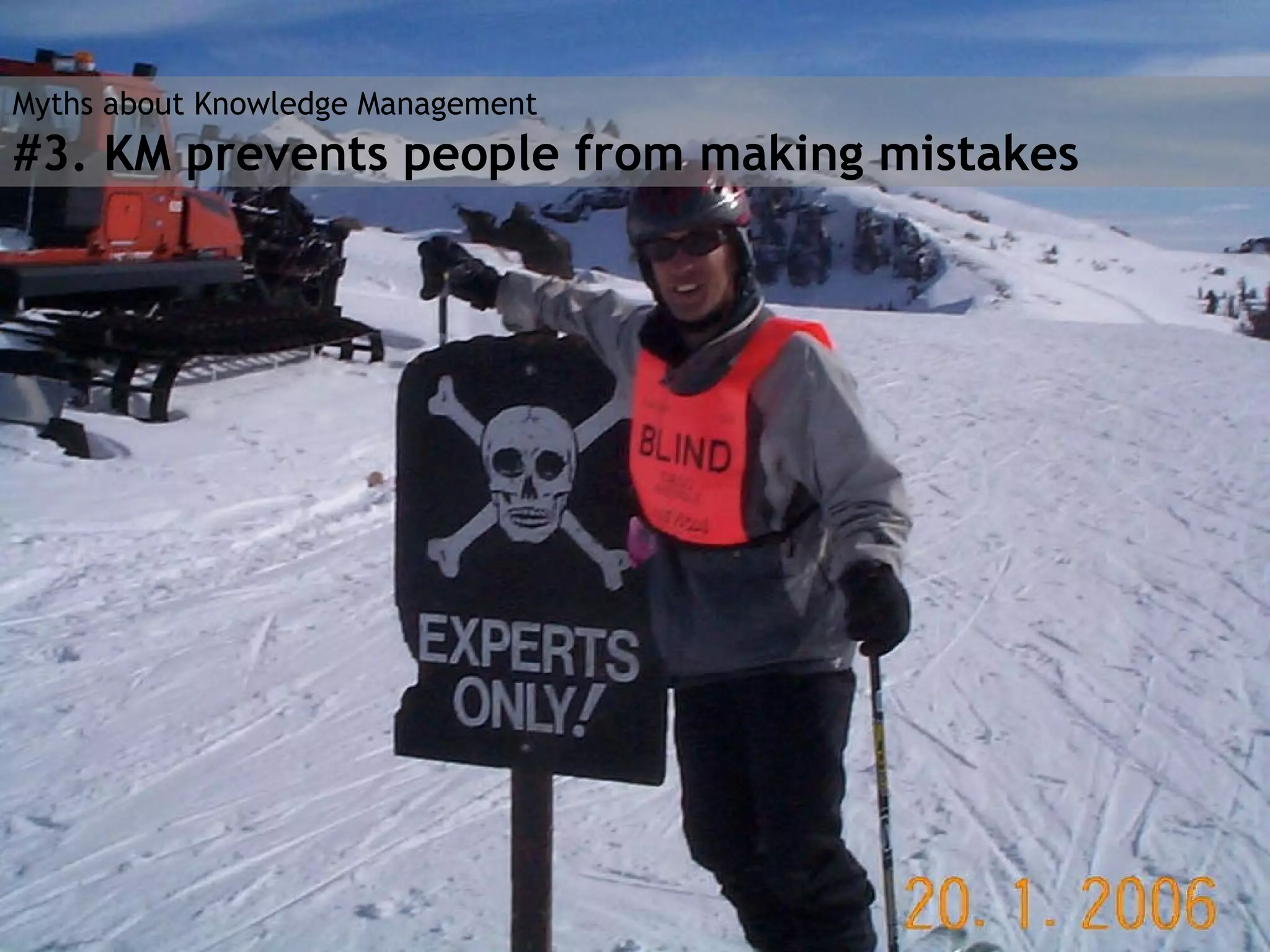
Myths about Knowledge Management #3. KM prevents people from making mistakes
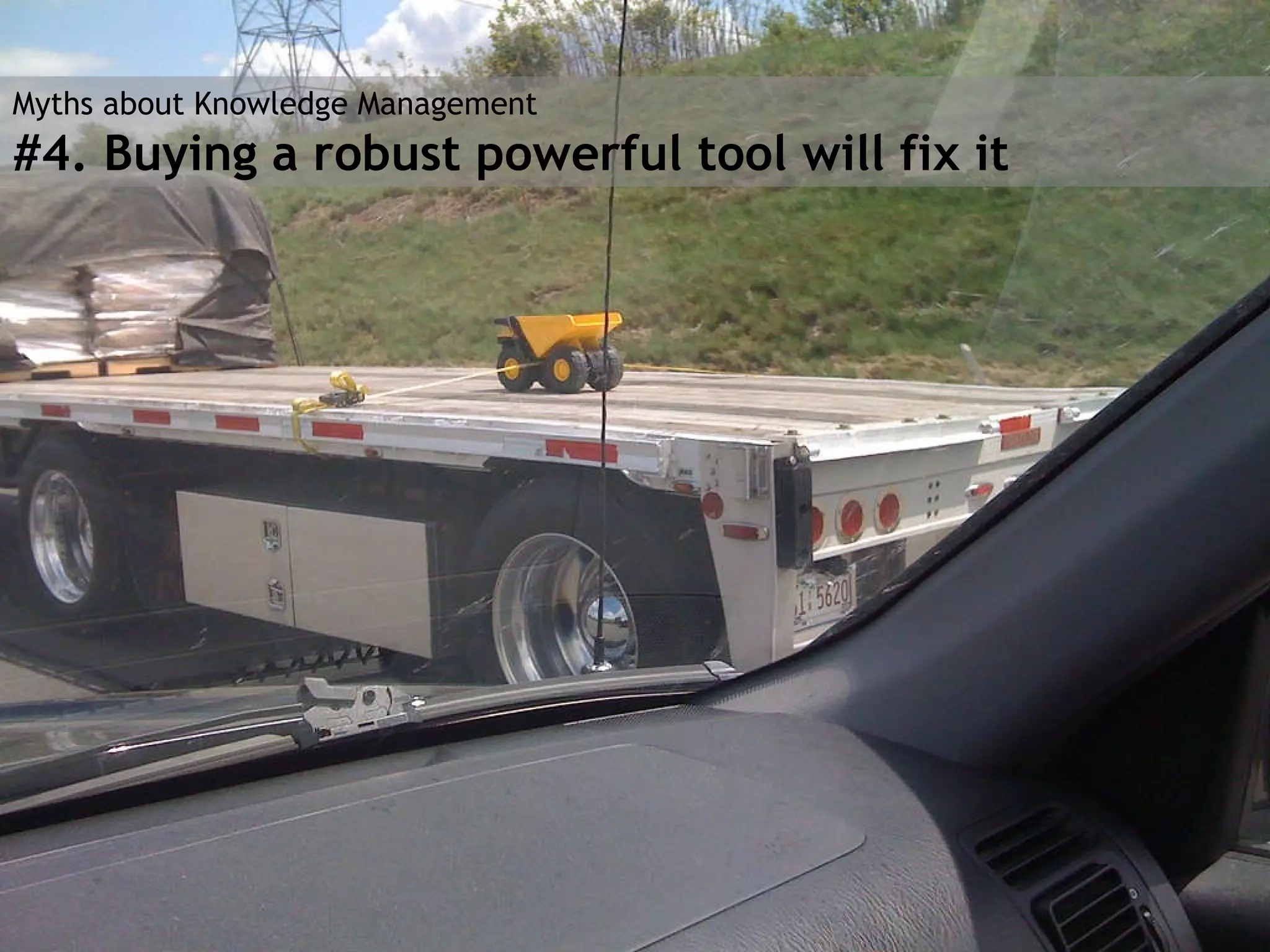
Vision Myths about Knowledge Management #4. Buying a robust powerful tool will fix it
Myths about Knowledge Management #5. If we measure, we know…
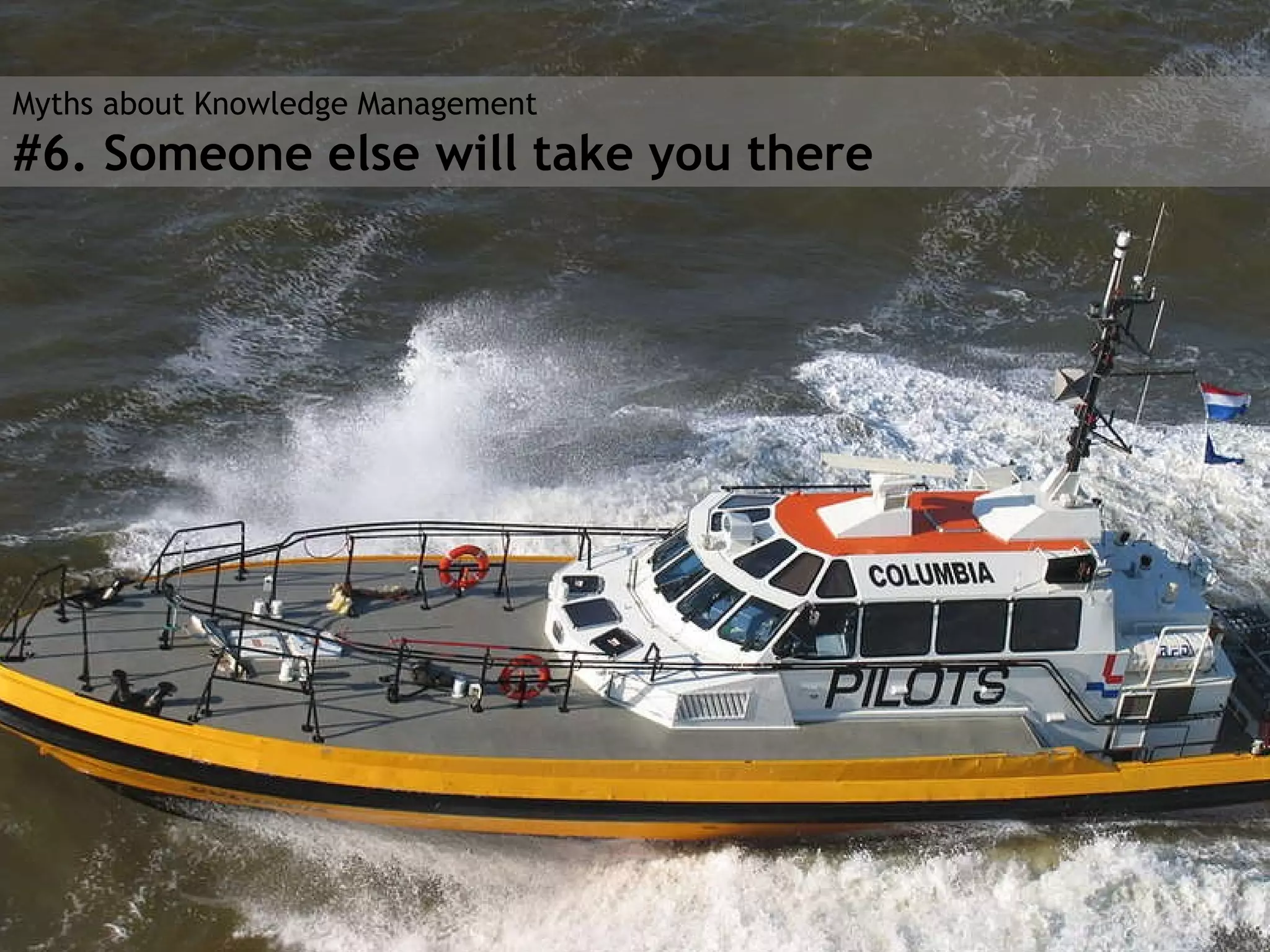
Myths about Knowledge Management #6. Someone else will take you there
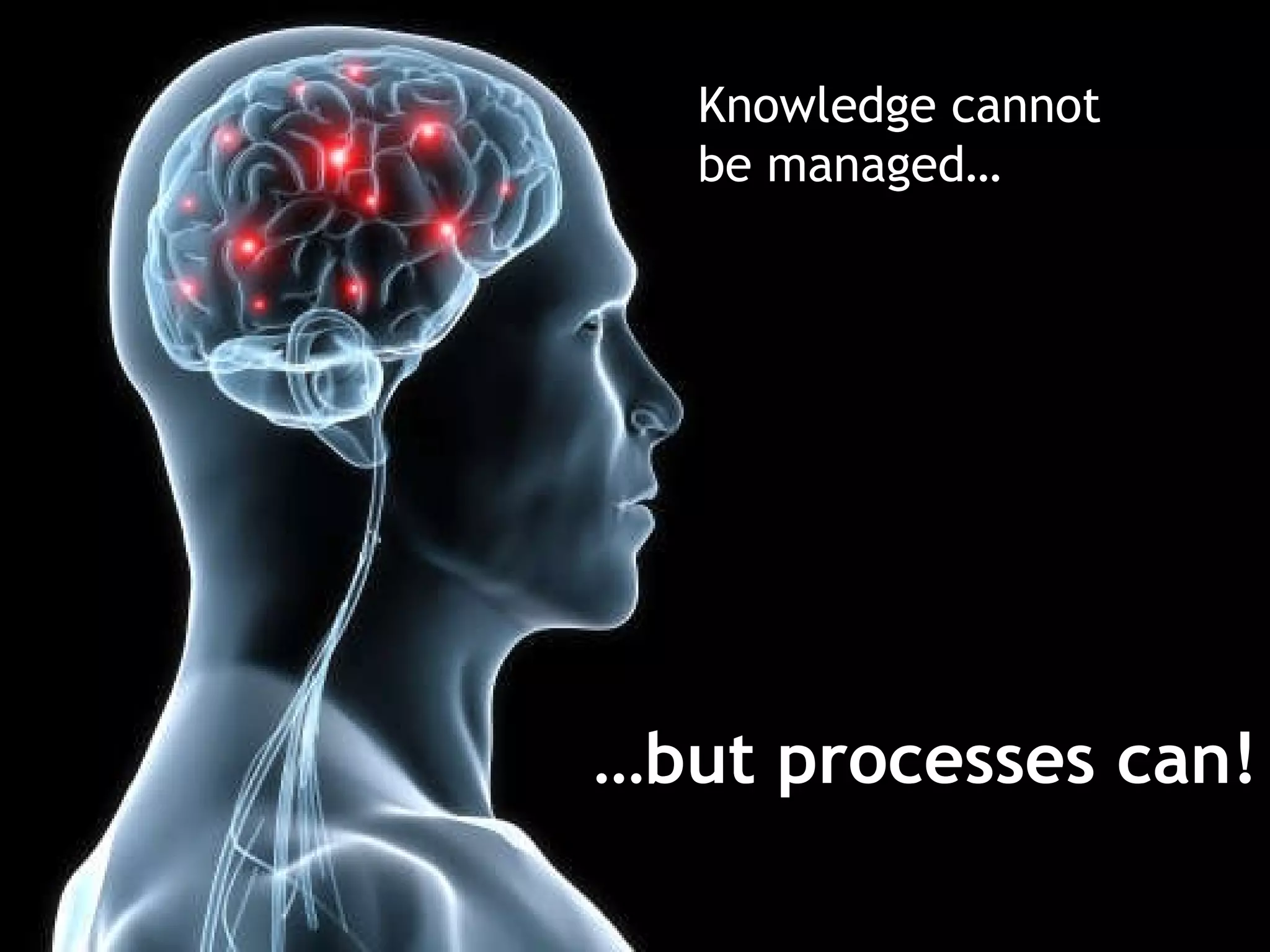
Knowledge cannot be managed… … but processes can!
Identify, initiate, stimulate, manage and report on Knowledge Processes
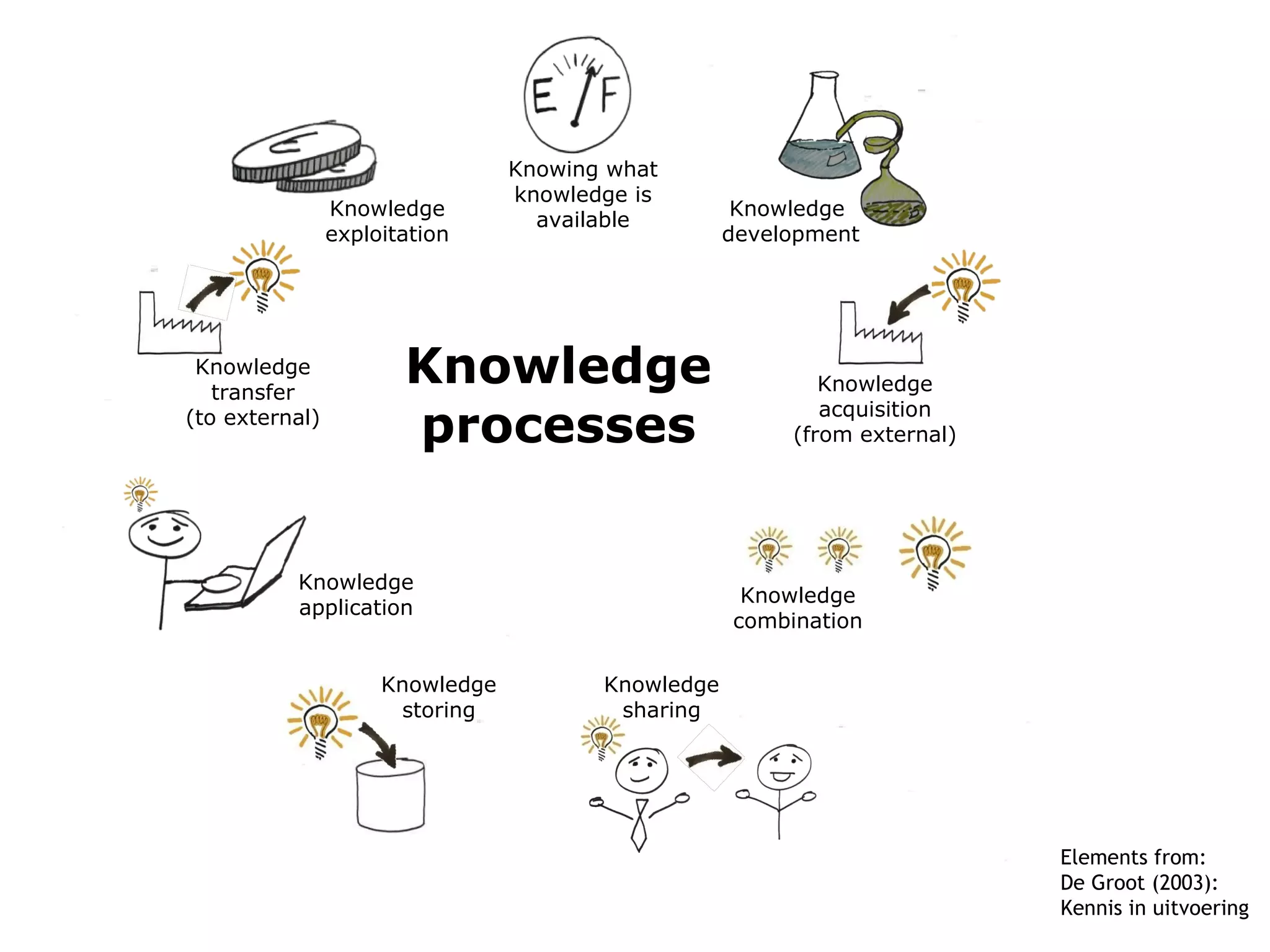
Knowing what knowledge is available Knowledge processes Knowledge  development Knowledge application Knowledge storing Knowledge transfer (to external) Knowledge exploitation Knowledge acquisition (from external) Knowledge combination + = Knowledge sharing Elements from: De Groot (2003): Kennis in uitvoering
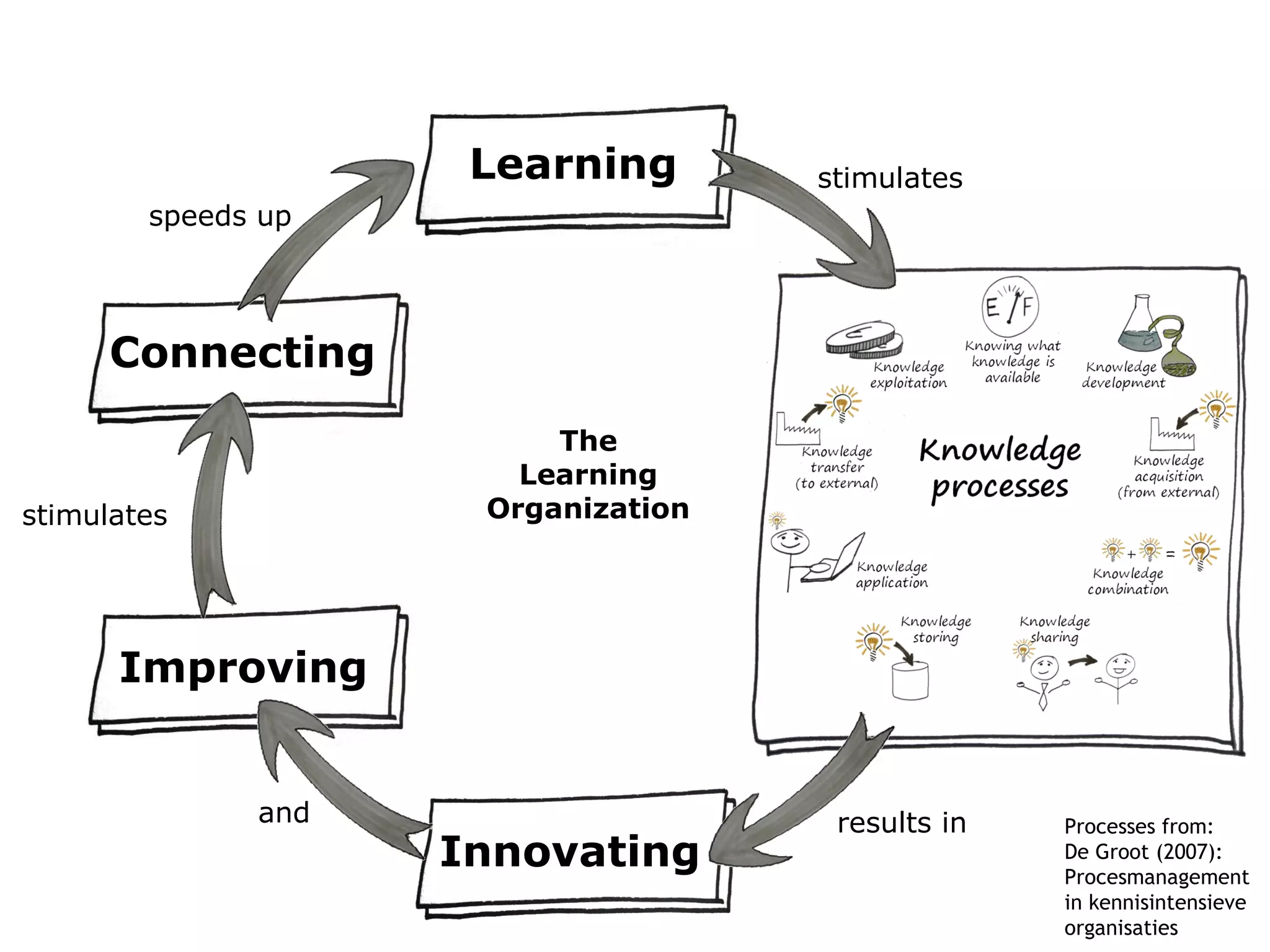
Learning Innovating Improving Connecting stimulates stimulates results in and speeds up Processes from: De Groot (2007): Procesmanagement in kennisintensieve organisaties The Learning Organization
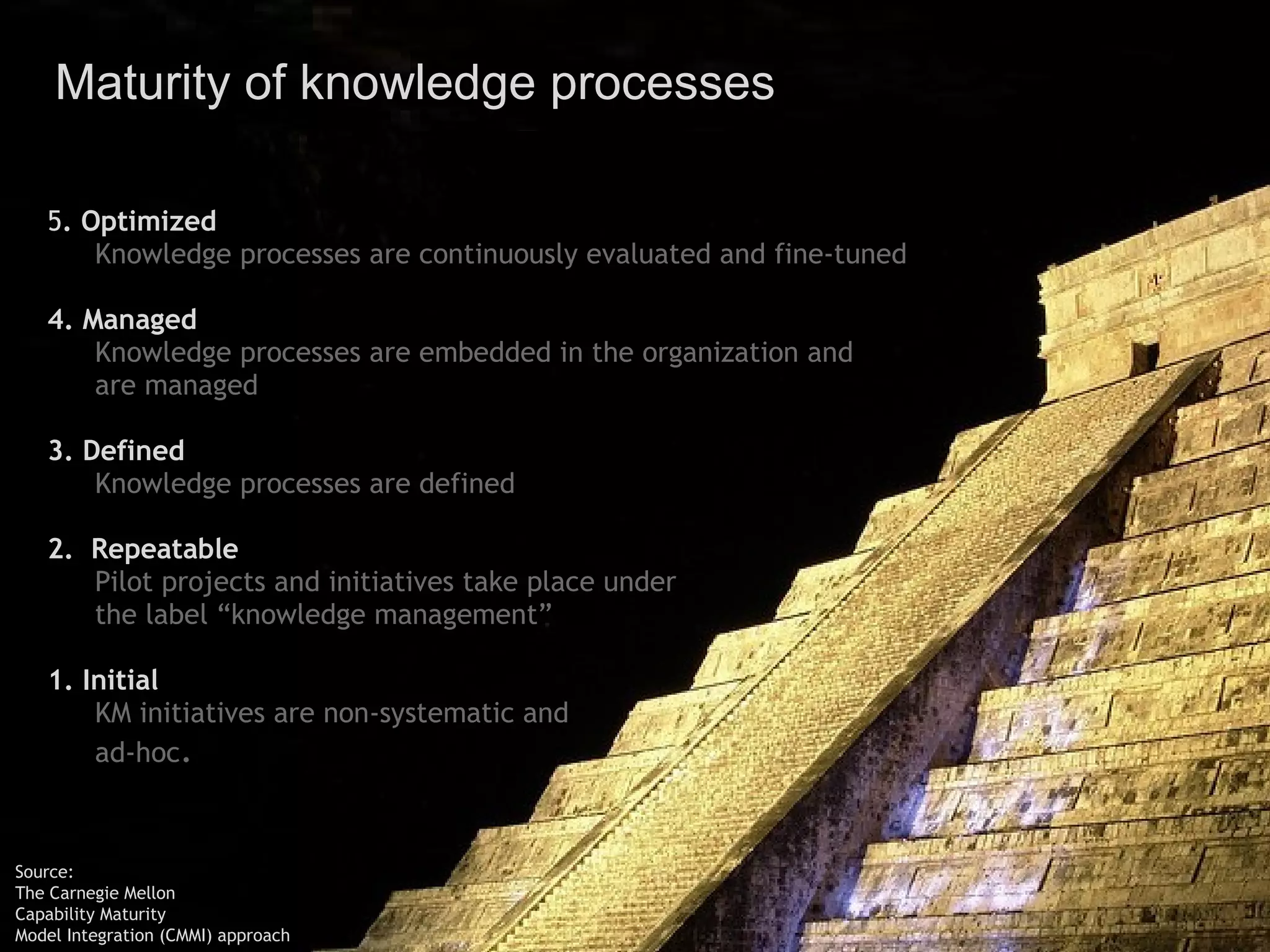
5 . Optimized Knowledge processes are continuously evaluated and fine-tuned 4. Managed Knowledge processes are embedded in the organization and  are managed 3. Defined Knowledge processes are defined 2.  Repeatable Pilot projects and initiatives take place under  the label “knowledge management”  1. Initial KM initiatives are non-systematic and  ad-hoc . Maturity of knowledge processes Source: The Carnegie Mellon Capability Maturity Model Integration (CMMI) approach
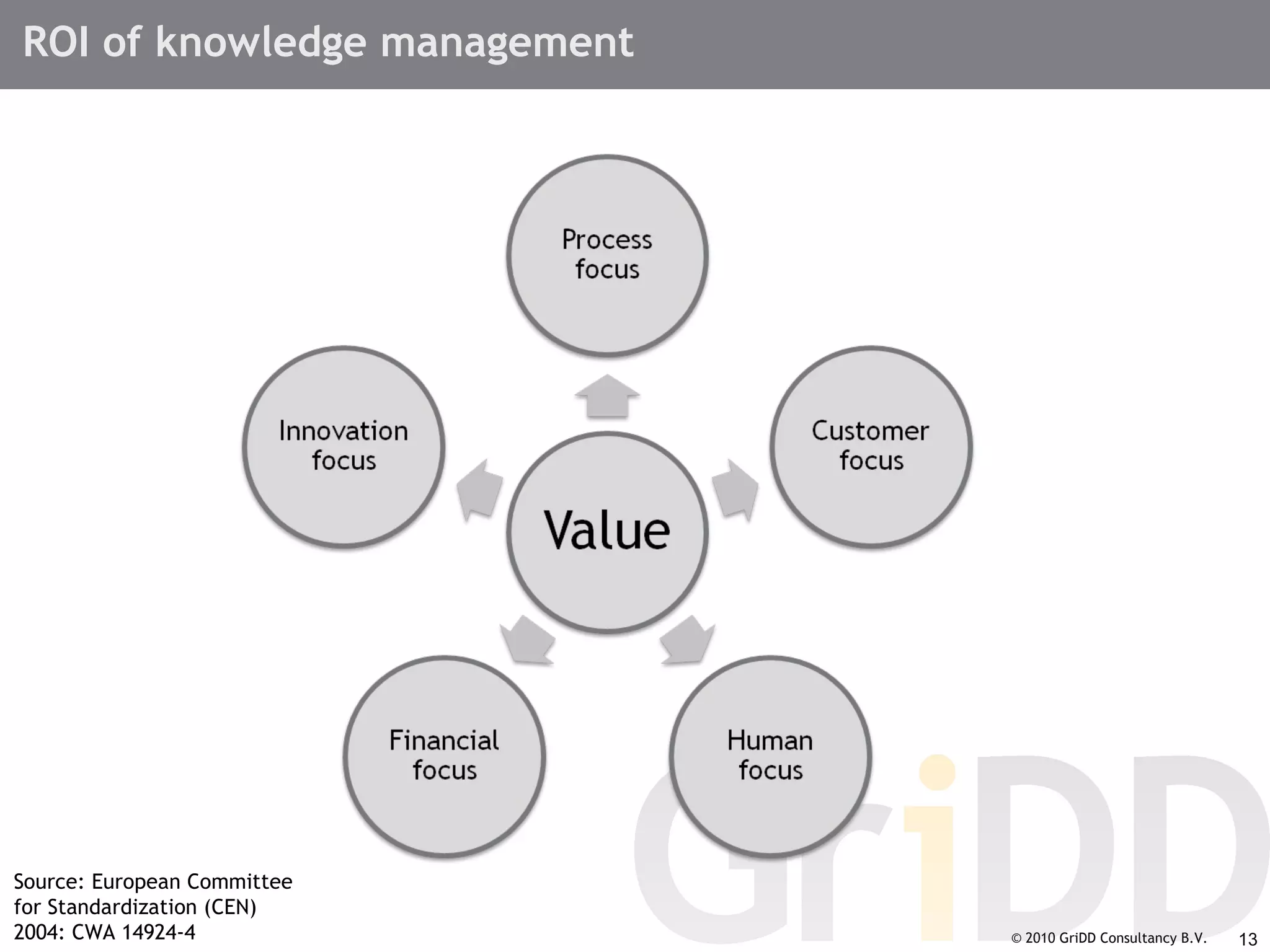
ROI of knowledge management © 2010 GriDD Consultancy B.V. Source: European Committee for Standardization (CEN) 2004: CWA 14924-4
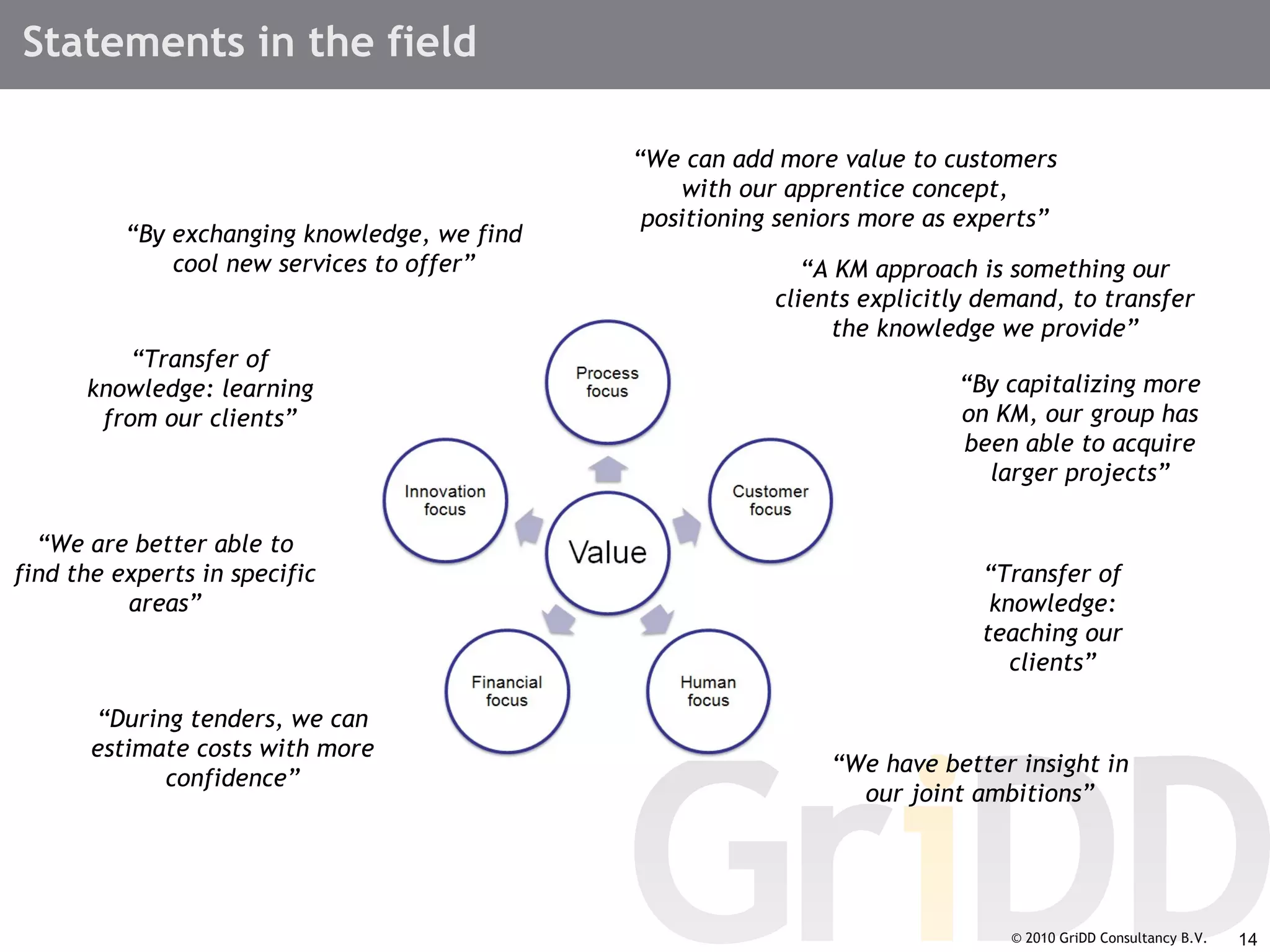
Statements in the field © 2010 GriDD Consultancy B.V. “ We are better able to find the experts in specific areas” “ By capitalizing more on KM, our group has been able to acquire larger projects” “ During tenders, we can estimate costs with more confidence” “ By exchanging knowledge, we find cool new services to offer” “ Transfer of knowledge: learning from our clients” “ Transfer of knowledge: teaching our clients” “ We have better insight in our joint ambitions” “ We can add more value to customers with our apprentice concept, positioning seniors more as experts” “ A KM approach is something our clients explicitly demand, to transfer the knowledge we provide”
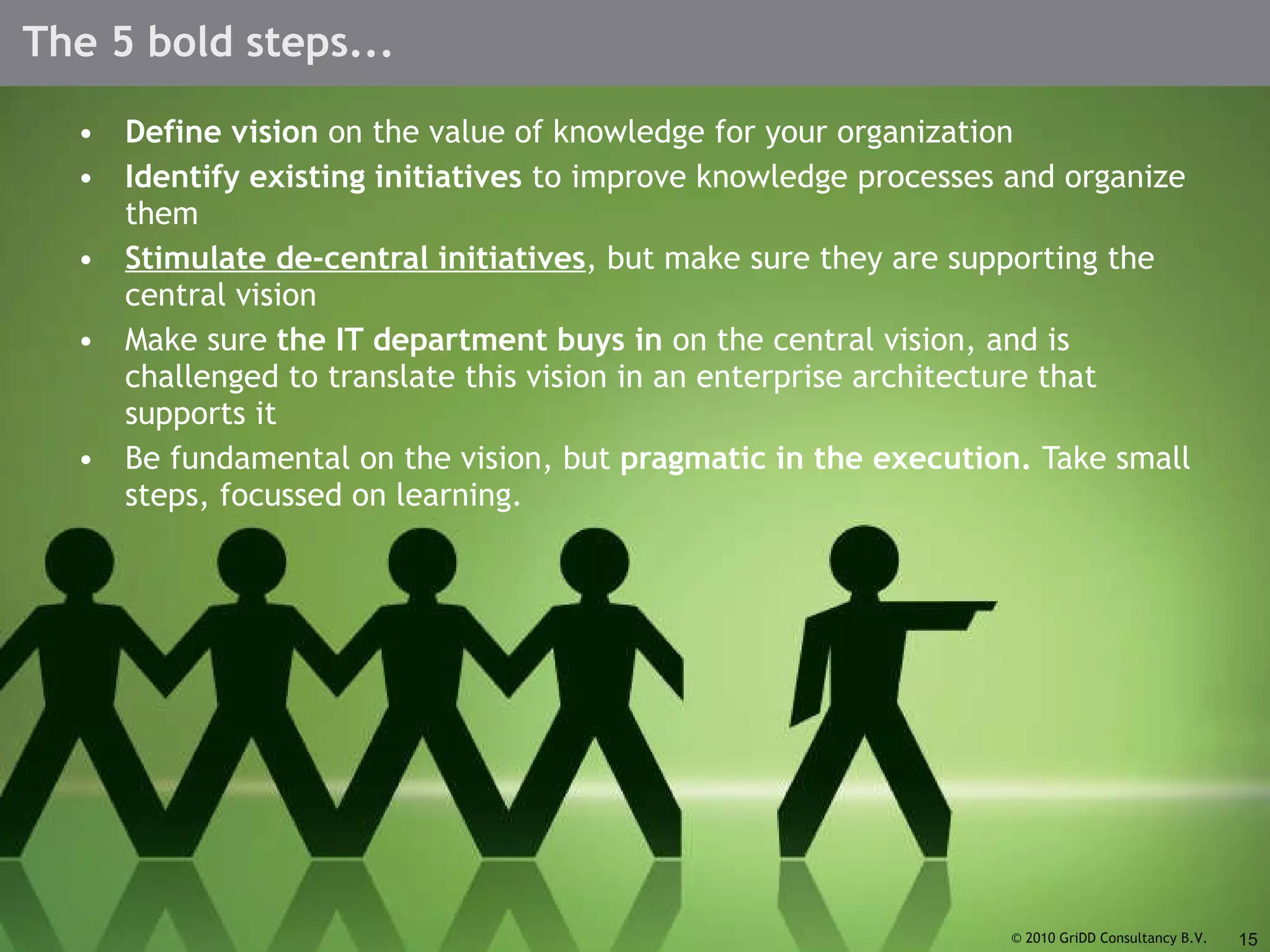
Define vision  on the value of knowledge for your organization Identify existing initiatives  to improve knowledge processes and organize them Stimulate de-central initiatives , but make sure they are supporting the central vision Make sure  the IT department buys in  on the central vision, and is challenged to translate this vision in an enterprise architecture that supports it Be fundamental on the vision, but  pragmatic in the execution.  Take small steps, focussed on learning. The 5 bold steps... © 2010 GriDD Consultancy B.V.
Contact GriDD consultancy Moutlaan 25 7523MC Enschede 053-4800499  Ir. Mark Geljon [email_address] Disclaimer Most images in this presentation are from iStockphoto.com. Some are collected online over the years and we are not sure where the rights are. If you feel that they should not be in this presentation, let us know.

A vision on knowledge management

  • 1.
    A vision onknowledge management “it’s all about knowledge processes” Mark Geljon
  • 2.
    Myths about KnowledgeManagement #1. KM is all about structures and procedures
  • 3.
    Myths about KnowledgeManagement #2. KM is an individual task
  • 4.
    Myths about KnowledgeManagement #3. KM prevents people from making mistakes
  • 5.
    Vision Myths aboutKnowledge Management #4. Buying a robust powerful tool will fix it
  • 6.
    Myths about KnowledgeManagement #5. If we measure, we know…
  • 7.
    Myths about KnowledgeManagement #6. Someone else will take you there
  • 8.
    Knowledge cannot bemanaged… … but processes can!
  • 9.
    Identify, initiate, stimulate,manage and report on Knowledge Processes
  • 10.
    Knowing what knowledgeis available Knowledge processes Knowledge development Knowledge application Knowledge storing Knowledge transfer (to external) Knowledge exploitation Knowledge acquisition (from external) Knowledge combination + = Knowledge sharing Elements from: De Groot (2003): Kennis in uitvoering
  • 11.
    Learning Innovating ImprovingConnecting stimulates stimulates results in and speeds up Processes from: De Groot (2007): Procesmanagement in kennisintensieve organisaties The Learning Organization
  • 12.
    5 . OptimizedKnowledge processes are continuously evaluated and fine-tuned 4. Managed Knowledge processes are embedded in the organization and are managed 3. Defined Knowledge processes are defined 2. Repeatable Pilot projects and initiatives take place under the label “knowledge management” 1. Initial KM initiatives are non-systematic and ad-hoc . Maturity of knowledge processes Source: The Carnegie Mellon Capability Maturity Model Integration (CMMI) approach
  • 13.
    ROI of knowledgemanagement © 2010 GriDD Consultancy B.V. Source: European Committee for Standardization (CEN) 2004: CWA 14924-4
  • 14.
    Statements in thefield © 2010 GriDD Consultancy B.V. “ We are better able to find the experts in specific areas” “ By capitalizing more on KM, our group has been able to acquire larger projects” “ During tenders, we can estimate costs with more confidence” “ By exchanging knowledge, we find cool new services to offer” “ Transfer of knowledge: learning from our clients” “ Transfer of knowledge: teaching our clients” “ We have better insight in our joint ambitions” “ We can add more value to customers with our apprentice concept, positioning seniors more as experts” “ A KM approach is something our clients explicitly demand, to transfer the knowledge we provide”
  • 15.
    Define vision on the value of knowledge for your organization Identify existing initiatives to improve knowledge processes and organize them Stimulate de-central initiatives , but make sure they are supporting the central vision Make sure the IT department buys in on the central vision, and is challenged to translate this vision in an enterprise architecture that supports it Be fundamental on the vision, but pragmatic in the execution. Take small steps, focussed on learning. The 5 bold steps... © 2010 GriDD Consultancy B.V.
  • 16.
    Contact GriDD consultancyMoutlaan 25 7523MC Enschede 053-4800499 Ir. Mark Geljon [email_address] Disclaimer Most images in this presentation are from iStockphoto.com. Some are collected online over the years and we are not sure where the rights are. If you feel that they should not be in this presentation, let us know.

Editor's Notes

  • #2 social media > persoonlijk en in mijn werk
  • #3 Succesful KM is about connecting vision and day-to-day activities. Structures and procedures are important, but in the end it is about people and their work, in their workplace with their objectives for this moment. KM isn’t about tomorrow, but about today.
  • #4 KM often is labelled as something people should do because they are professionals. Individuals should of course have a minimum level of managing their knowledge, but the real benefits lay in the exchanging, creating and enhancing of knowledge together
  • #5 KM is often positioned as something that can be managed as a project. Institutionalized and implemented, the world will be a better place. But in practice, we see that in the end, it is all about people and their own contexts, limitations and ambitions. Focussing only on top down structures is ‘dangerous’
  • #6 KM may well be focussing on tooling. Often tooling is the easy part, it should be integrally part of organizational and conceptual improvements at the same time.
  • #7 KM can be institutionalized as hard KPI driven process, where measurement of indivual tasks and performance are driving the activities. But the more interesting question is: how are people motivated, and what facilites synergetic and …
  • #8 Letting others (like me ;o) help you set direction and take the first steps is fine, but in the end everybody should take his own responsibility of direction, vision and implementation.