International journal of scientific and technical research in engineering (IJSTRE)
www.ijstre.com Volume 1 Issue 9 ǁ December 2016.
Manuscript id. 102664181 www.ijstre.com Page 25
A Study on the Security Warning Algorithmfor Copyright
Protectionin Network Environments
Youngju Cho1
, Hyesuk Kim2*
, Jinhyuk Kim3
and Ahhyun Lee4
1,3,4
(Department of Computer Engineering /ChosunUniversity, 309, Pilmun-daero, Dong-gu, Gwangju, Republic
of Korea)
2*
(Department of Electronics and Computer Engineering /Chonnam National University, 77, Yongbong-ro, Buk-
gu, Gwangju, Republic of Korea)
2*
Corresponding Author: idishskim@naver.com
ABSTRACT : Recently, with the infinite power that media contents possess, actions of illegal digital content
copying are highlighted as a critical social problem. Therefore, we need DRM technology to protect and
promote fair use of copyrighted items. But there is no way to stop illegal copying fundamentally, even though we
possess tracking technologies such as digital watermarking, digital fingerprinting, and content recognition
technology to find unauthorized replicas. In this paper we discuss about a problem caused when print screen
key is used to capture the screen, causing illegal copying. For this case, we wish to solve such problems by
implementing algorithm in which opens a window warning about DRM and illegal screen capturing. In overall,
we wish to suggest the expected outcomes of such security warning algorithm, along with the formation of such
algorithm.
KEYWORDS :Piracy Deployment, Illegal reproduction of digital contents, Copyright protection technique,
Screen capture for print screen key, Watermarking
I. INTRODUCTION
Recently, web users exchange and share information about their hobbies or interests. Also, they collect
information for educational and social purposes as well. However, during the process of doing such, web users
tend to use illegal methods, such as using capture tool, print screen and drag&save. This causes a huge social
problem of copy rightness, which may eventually lead to lawsuits. As internet network holds great influence in
current society, one should know that one‟s small action not only can cause violation of law, but social
confusion as well.
In modern network environment, digital watermarking, digital fingerprinting and content recognition
exists as a form of digital copyright protection technology.
Since 1995, a year in which concept of digital watermarking was introduced; lots of its uses were
introduced. For example, to check copy rightness, to track illegal distribution, to monitor broadcasts, and to
control accessibility[1].
Among such actions taken for protection, technologies already adopted by image contents are:
prevention technology such as prohibiting screen capturing and tracking technology such as watermarking or
key point.
However, technologies to prevent screen capturing come to no use, when URL source has already been
exposed. Additionally, tracking technology works after acts of illegal copying has been discovered. Thus, it has
a huge drawback, in which: It is unable to solve the root problem [2].
Like how the current situation is, there are no absolute solutions to perfectly protect online contents and
copyrighted data. Thus, this paper suggests an algorithm to alert the web users and to remedy their behavior on
using the internet network, thus solving the root cause of the problem. Thus, we are suggesting the use of
existing technology called „Watermarking‟ to actualize the pop-up warning to prevent the acts of illegal. For
that, we present the generation method of the algorithm, and the expected outcomes of it.
A study on the security warning algorithm for copyright protection in network environments
Manuscript id. 102664181 www.ijstre.com Page 26
II. EXPERIMENT DIRECTION
As the digital communication systems vitalizes, issue of protecting multimedia contents is being
highlighted. With just one click, a digital content can be reproduced infinitely and be spread over the web, with
its quality unaffected. Therefore, if projects to prevent illegal replicating of digital contents are not carried out
efficiently, it will be difficult for markets related to multimedia contents to be invigorated. [3]
With the development of digital networking society, both internal and external markets for watermark
technology have been increasing. For the case of internal market (Korean market in this case), the digital content
industry showed superb growth of average 50% per year, since 2000.In 2005 alone, the estimated total
production output was about 3.3 Billon USD. [4]
With this under consideration, pop up warning that cautions the user when one‟s use of print screen key
is detected is required, alongside with watermarking. Therefore, in this paper we suggest that if print screen key
was utilized in the communication network system, followed by watermark being detected, “SW security
dialog” which was handled in this paper would be activated. By such, the users will be notified and warned
about their wrong actions of illegal copying. Additionally, copyrighted digital contents will be protected
2.1. protect digital copyrights in watermarking
Watermarking technology represents a device in which records the copyrighted data of the copyrighted
contents. Watermarking technology is indistinguishable to a human eye. By inserting data to the original item of
certain contents, it is used to distinguish the originality of the images or text. It is a technology in which aims to
protect the copyrighted claims. They do so by comparing the inserted data of the original item with its replicas.
The characteristic watermark should possess is that: Watermark inserted to the contents should be
absolutely invisible. Also, as it is a form of general contentmodification, its effect should not be faded with the
content undergoing filtration, modification and rotation. For watermark to be utilized effectively, it must have
characteristics of invisibility, tenacity andclarity. By invisibility, after inserting watermark, no clear and
observable changes should be made to the original data, thus hiding the presence of it to the web users.By
tenacity, watermark is to be inserted to the important area of the signal, so that in any case ofmodification or
attack, the watermark will not be damaged, and be available for extraction. By clarity, it means that the
extracted watermark provides an absolute proof to pursue one‟s ownership of the data. [5]
2.2. Associated with watermarking algorithm
What we discuss in this paper is that linking algorithm should be adopted for the items with
watermarks, to prevent it being illegally replicated through abuse of “printscreen” in keyboard.Images and
contents especially, require watermarking technology that uses pixels,with space areas.
Fig1. Watermark example
Like figure 1, if insertion of watermarking or detection algorithm are inserted to given original video I
through encoding process E, video I‟=E(I,S) with watermark will be obtained. The process to decide on the
ownership of the test video J, is through receiving entry of J or I, followed by the decoding process D, to extract
label S=D.[6]
A study on the security warning algorithm for copyright protection in network environments
Manuscript id. 102664181 www.ijstre.com Page 27
At this periodof time, if the use of “print screen” has been detected and the capture has been
successfully made, label S and label S‟ will undergo comparison to detect whether it is copyrighted. In a case
where it seems to be a copyrighted item, “SW Security dialog” warning system will pop up on the user‟s
window. Even though it is a simple warning using dialog resource, by such warning, it would make the users to
think about protection of rights.
2.3. How to create
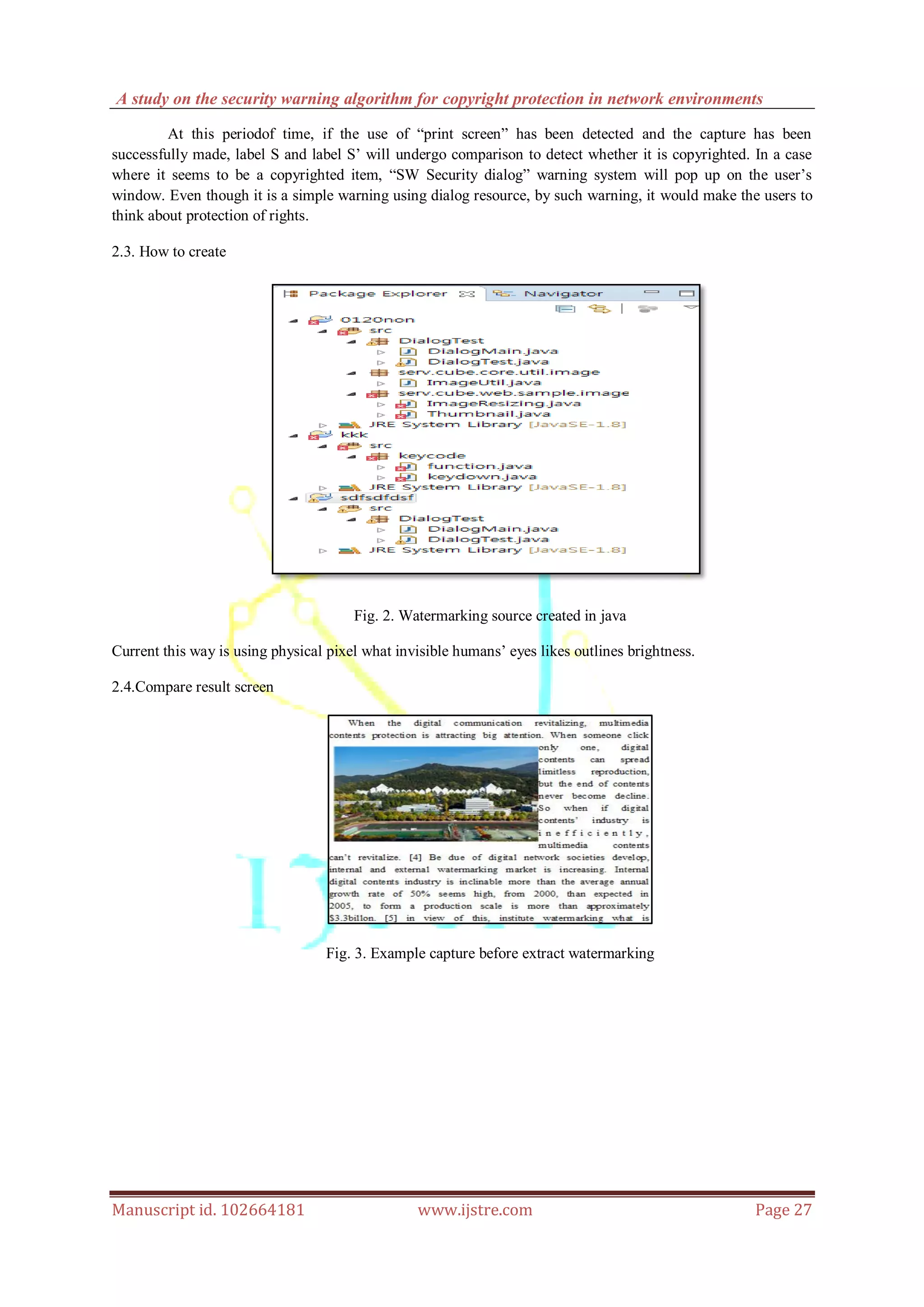
Fig. 2. Watermarking source created in java
Current this way is using physical pixel what invisible humans‟ eyes likes outlines brightness.
2.4.Compare result screen
Fig. 3. Example capture before extract watermarking
A study on the security warning algorithm for copyright protection in network environments
Manuscript id. 102664181 www.ijstre.com Page 28
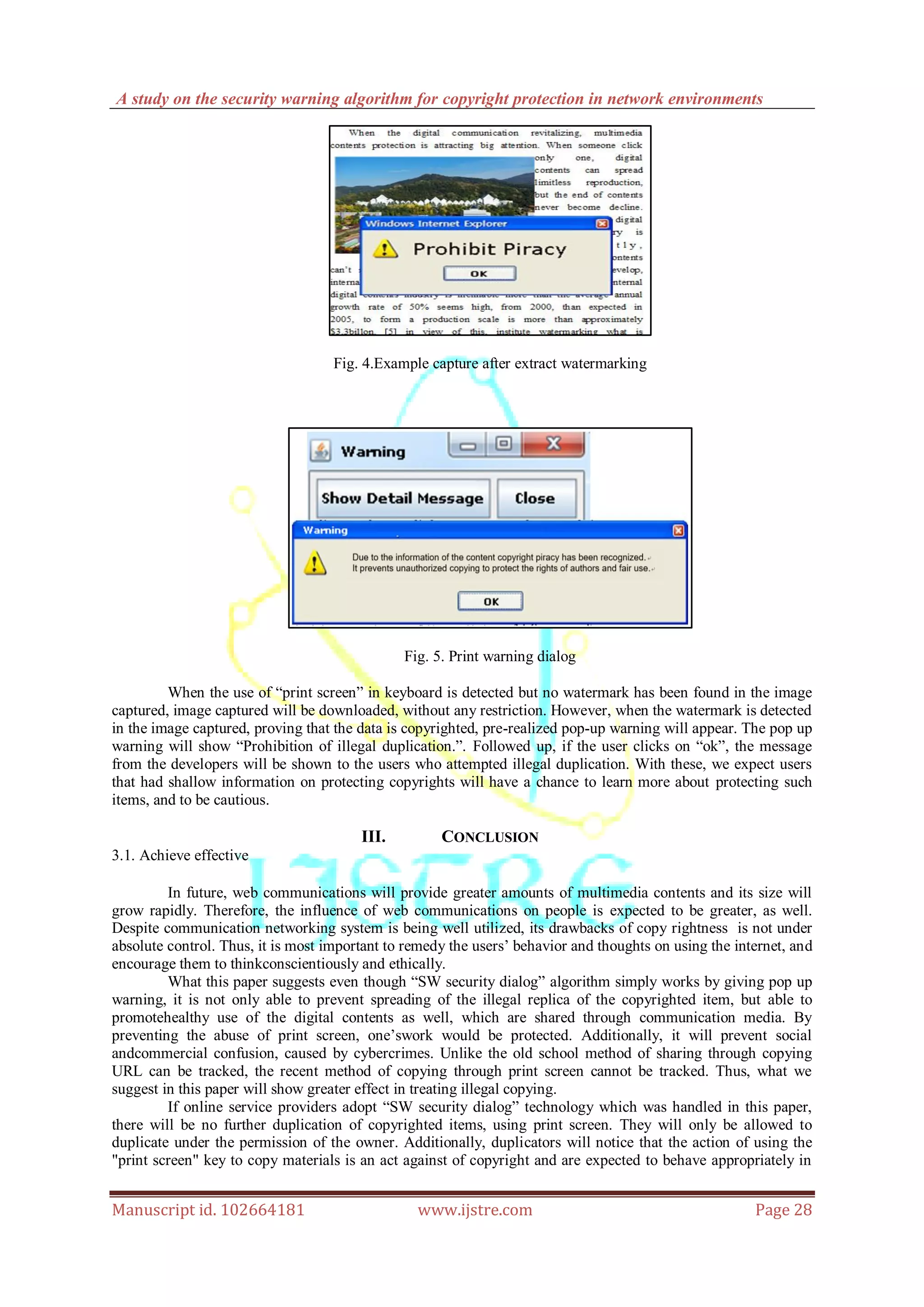
Fig. 4.Example capture after extract watermarking
Fig. 5. Print warning dialog
When the use of “print screen” in keyboard is detected but no watermark has been found in the image
captured, image captured will be downloaded, without any restriction. However, when the watermark is detected
in the image captured, proving that the data is copyrighted, pre-realized pop-up warning will appear. The pop up
warning will show “Prohibition of illegal duplication.”. Followed up, if the user clicks on “ok”, the message
from the developers will be shown to the users who attempted illegal duplication. With these, we expect users
that had shallow information on protecting copyrights will have a chance to learn more about protecting such
items, and to be cautious.
III. CONCLUSION
3.1. Achieve effective
In future, web communications will provide greater amounts of multimedia contents and its size will
grow rapidly. Therefore, the influence of web communications on people is expected to be greater, as well.
Despite communication networking system is being well utilized, its drawbacks of copy rightness is not under
absolute control. Thus, it is most important to remedy the users‟ behavior and thoughts on using the internet, and
encourage them to thinkconscientiously and ethically.
What this paper suggests even though “SW security dialog” algorithm simply works by giving pop up
warning, it is not only able to prevent spreading of the illegal replica of the copyrighted item, but able to
promotehealthy use of the digital contents as well, which are shared through communication media. By
preventing the abuse of print screen, one‟swork would be protected. Additionally, it will prevent social
andcommercial confusion, caused by cybercrimes. Unlike the old school method of sharing through copying
URL can be tracked, the recent method of copying through print screen cannot be tracked. Thus, what we
suggest in this paper will show greater effect in treating illegal copying.
If online service providers adopt “SW security dialog” technology which was handled in this paper,
there will be no further duplication of copyrighted items, using print screen. They will only be allowed to
duplicate under the permission of the owner. Additionally, duplicators will notice that the action of using the
"print screen" key to copy materials is an act against of copyright and are expected to behave appropriately in
A study on the security warning algorithm for copyright protection in network environments
Manuscript id. 102664181 www.ijstre.com Page 29
future. Furthermore, we expect to see some improvements being made in the quality of contents, as content
creators‟ will to produce new contents increases.
3.2.Future Direction.
There is a greater need to prevent the circulation of the illegally replicated material, before, handling
the problem of thoughtless replication of the materials. Also, to handle the explosively increasing the number of
copyrighted items, government‟s firm support and consistent research is required. Beside the support from the
government we think that it is most important to naturally lead the users to think more ethically.
By adopting network ethics in the school curriculum, not only the abuse of print screen key or other
forms of capturing tool will be reduced, but, users will fully understand the copyright laws, and will be
encouraged to share contents in a rightful way.
To add on, if the online contents providers adopt the watermarking technology one by one as a from to
prevent illegal duplication, by domino effect, it will provide a pathway for watermarking technology to be
generally adopted. in the whole networking system. Doing such, web users will find the pop up warning more
applicable to their situation, rectifying the unsound usage of network.
To end off, if “SW security dialog” isgenerally adopted by all digital gadgets such as smartphones, we
expect to see a clean society in which every user having clear information in handling the data online and to
behave ethically in daily life.
REFERENCES
[1] Ho-gab Kang, Seong-Hwan Cho, “A Study on the interoperable Rights Control Information between Heterogeneous
Broadcasting DRM Schemes in Digital Home Domain”, The Journal of The Institute of Internet, Broadcasting and
Communication, Vol. 8, No.5, pp.81-93, Oct, 2008
[2] Yeong-Hun Yi, Man-Gi Cho, Seong-Hwan Cho, “A Study on Copyright Protection Method of Web Image Contents”, The
Journal of The Institute of Internet, Broadcasting and Communication, Vol 15, NO.1, pp.37-43, Feb, 28, 2015
[3] Syscop, http://www.crcg.edu/syscop/
[4] http://www.software.or.kr/index/html Korea It Industry Promotion Agency
[5] Yong-Soon Im, Eun-Young Kang, “Watermarking and QR Code in Digital Image Coding”, The Journal of The Institute of
Internet, Broadcasing and Communication, Vol 12, No 6, pp.99-104, Dec, 2012
[6] Yong Kim, Hwang NamKoong, “A Study on Systems to Protect Copyright of Digital Contents”, Journal of the Korean Biblia
Society Ffor Library And Information Science, Vol 11, No 2, pp.49-64, Dec, 2000

A Study on the Security Warning Algorithmfor Copyright Protectionin Network Environments

  • 1.
    International journal ofscientific and technical research in engineering (IJSTRE) www.ijstre.com Volume 1 Issue 9 ǁ December 2016. Manuscript id. 102664181 www.ijstre.com Page 25 A Study on the Security Warning Algorithmfor Copyright Protectionin Network Environments Youngju Cho1 , Hyesuk Kim2* , Jinhyuk Kim3 and Ahhyun Lee4 1,3,4 (Department of Computer Engineering /ChosunUniversity, 309, Pilmun-daero, Dong-gu, Gwangju, Republic of Korea) 2* (Department of Electronics and Computer Engineering /Chonnam National University, 77, Yongbong-ro, Buk- gu, Gwangju, Republic of Korea) 2* Corresponding Author: idishskim@naver.com ABSTRACT : Recently, with the infinite power that media contents possess, actions of illegal digital content copying are highlighted as a critical social problem. Therefore, we need DRM technology to protect and promote fair use of copyrighted items. But there is no way to stop illegal copying fundamentally, even though we possess tracking technologies such as digital watermarking, digital fingerprinting, and content recognition technology to find unauthorized replicas. In this paper we discuss about a problem caused when print screen key is used to capture the screen, causing illegal copying. For this case, we wish to solve such problems by implementing algorithm in which opens a window warning about DRM and illegal screen capturing. In overall, we wish to suggest the expected outcomes of such security warning algorithm, along with the formation of such algorithm. KEYWORDS :Piracy Deployment, Illegal reproduction of digital contents, Copyright protection technique, Screen capture for print screen key, Watermarking I. INTRODUCTION Recently, web users exchange and share information about their hobbies or interests. Also, they collect information for educational and social purposes as well. However, during the process of doing such, web users tend to use illegal methods, such as using capture tool, print screen and drag&save. This causes a huge social problem of copy rightness, which may eventually lead to lawsuits. As internet network holds great influence in current society, one should know that one‟s small action not only can cause violation of law, but social confusion as well. In modern network environment, digital watermarking, digital fingerprinting and content recognition exists as a form of digital copyright protection technology. Since 1995, a year in which concept of digital watermarking was introduced; lots of its uses were introduced. For example, to check copy rightness, to track illegal distribution, to monitor broadcasts, and to control accessibility[1]. Among such actions taken for protection, technologies already adopted by image contents are: prevention technology such as prohibiting screen capturing and tracking technology such as watermarking or key point. However, technologies to prevent screen capturing come to no use, when URL source has already been exposed. Additionally, tracking technology works after acts of illegal copying has been discovered. Thus, it has a huge drawback, in which: It is unable to solve the root problem [2]. Like how the current situation is, there are no absolute solutions to perfectly protect online contents and copyrighted data. Thus, this paper suggests an algorithm to alert the web users and to remedy their behavior on using the internet network, thus solving the root cause of the problem. Thus, we are suggesting the use of existing technology called „Watermarking‟ to actualize the pop-up warning to prevent the acts of illegal. For that, we present the generation method of the algorithm, and the expected outcomes of it.
  • 2.
    A study onthe security warning algorithm for copyright protection in network environments Manuscript id. 102664181 www.ijstre.com Page 26 II. EXPERIMENT DIRECTION As the digital communication systems vitalizes, issue of protecting multimedia contents is being highlighted. With just one click, a digital content can be reproduced infinitely and be spread over the web, with its quality unaffected. Therefore, if projects to prevent illegal replicating of digital contents are not carried out efficiently, it will be difficult for markets related to multimedia contents to be invigorated. [3] With the development of digital networking society, both internal and external markets for watermark technology have been increasing. For the case of internal market (Korean market in this case), the digital content industry showed superb growth of average 50% per year, since 2000.In 2005 alone, the estimated total production output was about 3.3 Billon USD. [4] With this under consideration, pop up warning that cautions the user when one‟s use of print screen key is detected is required, alongside with watermarking. Therefore, in this paper we suggest that if print screen key was utilized in the communication network system, followed by watermark being detected, “SW security dialog” which was handled in this paper would be activated. By such, the users will be notified and warned about their wrong actions of illegal copying. Additionally, copyrighted digital contents will be protected 2.1. protect digital copyrights in watermarking Watermarking technology represents a device in which records the copyrighted data of the copyrighted contents. Watermarking technology is indistinguishable to a human eye. By inserting data to the original item of certain contents, it is used to distinguish the originality of the images or text. It is a technology in which aims to protect the copyrighted claims. They do so by comparing the inserted data of the original item with its replicas. The characteristic watermark should possess is that: Watermark inserted to the contents should be absolutely invisible. Also, as it is a form of general contentmodification, its effect should not be faded with the content undergoing filtration, modification and rotation. For watermark to be utilized effectively, it must have characteristics of invisibility, tenacity andclarity. By invisibility, after inserting watermark, no clear and observable changes should be made to the original data, thus hiding the presence of it to the web users.By tenacity, watermark is to be inserted to the important area of the signal, so that in any case ofmodification or attack, the watermark will not be damaged, and be available for extraction. By clarity, it means that the extracted watermark provides an absolute proof to pursue one‟s ownership of the data. [5] 2.2. Associated with watermarking algorithm What we discuss in this paper is that linking algorithm should be adopted for the items with watermarks, to prevent it being illegally replicated through abuse of “printscreen” in keyboard.Images and contents especially, require watermarking technology that uses pixels,with space areas. Fig1. Watermark example Like figure 1, if insertion of watermarking or detection algorithm are inserted to given original video I through encoding process E, video I‟=E(I,S) with watermark will be obtained. The process to decide on the ownership of the test video J, is through receiving entry of J or I, followed by the decoding process D, to extract label S=D.[6]
  • 3.
    A study onthe security warning algorithm for copyright protection in network environments Manuscript id. 102664181 www.ijstre.com Page 27 At this periodof time, if the use of “print screen” has been detected and the capture has been successfully made, label S and label S‟ will undergo comparison to detect whether it is copyrighted. In a case where it seems to be a copyrighted item, “SW Security dialog” warning system will pop up on the user‟s window. Even though it is a simple warning using dialog resource, by such warning, it would make the users to think about protection of rights. 2.3. How to create Fig. 2. Watermarking source created in java Current this way is using physical pixel what invisible humans‟ eyes likes outlines brightness. 2.4.Compare result screen Fig. 3. Example capture before extract watermarking
  • 4.
    A study onthe security warning algorithm for copyright protection in network environments Manuscript id. 102664181 www.ijstre.com Page 28 Fig. 4.Example capture after extract watermarking Fig. 5. Print warning dialog When the use of “print screen” in keyboard is detected but no watermark has been found in the image captured, image captured will be downloaded, without any restriction. However, when the watermark is detected in the image captured, proving that the data is copyrighted, pre-realized pop-up warning will appear. The pop up warning will show “Prohibition of illegal duplication.”. Followed up, if the user clicks on “ok”, the message from the developers will be shown to the users who attempted illegal duplication. With these, we expect users that had shallow information on protecting copyrights will have a chance to learn more about protecting such items, and to be cautious. III. CONCLUSION 3.1. Achieve effective In future, web communications will provide greater amounts of multimedia contents and its size will grow rapidly. Therefore, the influence of web communications on people is expected to be greater, as well. Despite communication networking system is being well utilized, its drawbacks of copy rightness is not under absolute control. Thus, it is most important to remedy the users‟ behavior and thoughts on using the internet, and encourage them to thinkconscientiously and ethically. What this paper suggests even though “SW security dialog” algorithm simply works by giving pop up warning, it is not only able to prevent spreading of the illegal replica of the copyrighted item, but able to promotehealthy use of the digital contents as well, which are shared through communication media. By preventing the abuse of print screen, one‟swork would be protected. Additionally, it will prevent social andcommercial confusion, caused by cybercrimes. Unlike the old school method of sharing through copying URL can be tracked, the recent method of copying through print screen cannot be tracked. Thus, what we suggest in this paper will show greater effect in treating illegal copying. If online service providers adopt “SW security dialog” technology which was handled in this paper, there will be no further duplication of copyrighted items, using print screen. They will only be allowed to duplicate under the permission of the owner. Additionally, duplicators will notice that the action of using the "print screen" key to copy materials is an act against of copyright and are expected to behave appropriately in
  • 5.
    A study onthe security warning algorithm for copyright protection in network environments Manuscript id. 102664181 www.ijstre.com Page 29 future. Furthermore, we expect to see some improvements being made in the quality of contents, as content creators‟ will to produce new contents increases. 3.2.Future Direction. There is a greater need to prevent the circulation of the illegally replicated material, before, handling the problem of thoughtless replication of the materials. Also, to handle the explosively increasing the number of copyrighted items, government‟s firm support and consistent research is required. Beside the support from the government we think that it is most important to naturally lead the users to think more ethically. By adopting network ethics in the school curriculum, not only the abuse of print screen key or other forms of capturing tool will be reduced, but, users will fully understand the copyright laws, and will be encouraged to share contents in a rightful way. To add on, if the online contents providers adopt the watermarking technology one by one as a from to prevent illegal duplication, by domino effect, it will provide a pathway for watermarking technology to be generally adopted. in the whole networking system. Doing such, web users will find the pop up warning more applicable to their situation, rectifying the unsound usage of network. To end off, if “SW security dialog” isgenerally adopted by all digital gadgets such as smartphones, we expect to see a clean society in which every user having clear information in handling the data online and to behave ethically in daily life. REFERENCES [1] Ho-gab Kang, Seong-Hwan Cho, “A Study on the interoperable Rights Control Information between Heterogeneous Broadcasting DRM Schemes in Digital Home Domain”, The Journal of The Institute of Internet, Broadcasting and Communication, Vol. 8, No.5, pp.81-93, Oct, 2008 [2] Yeong-Hun Yi, Man-Gi Cho, Seong-Hwan Cho, “A Study on Copyright Protection Method of Web Image Contents”, The Journal of The Institute of Internet, Broadcasting and Communication, Vol 15, NO.1, pp.37-43, Feb, 28, 2015 [3] Syscop, http://www.crcg.edu/syscop/ [4] http://www.software.or.kr/index/html Korea It Industry Promotion Agency [5] Yong-Soon Im, Eun-Young Kang, “Watermarking and QR Code in Digital Image Coding”, The Journal of The Institute of Internet, Broadcasing and Communication, Vol 12, No 6, pp.99-104, Dec, 2012 [6] Yong Kim, Hwang NamKoong, “A Study on Systems to Protect Copyright of Digital Contents”, Journal of the Korean Biblia Society Ffor Library And Information Science, Vol 11, No 2, pp.49-64, Dec, 2000