The Secret Lives of Project Managers… 31Jul2009 Ryan Endres, PMP
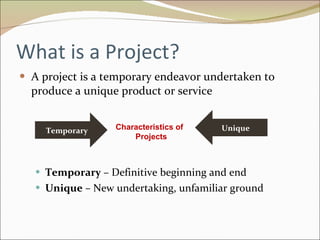
What is a Project? A project is a temporary endeavor undertaken to produce a unique product or service Temporary  – Definitive beginning and end Unique  – New undertaking, unfamiliar ground Temporary Unique Characteristics of  Projects
What is Project Management Project Management is the application of skills, knowledge, tools and techniques to meet the needs and expectations of stakeholders for a project. The purpose of project management is  prediction  and  prevention , NOT  recognition  and  reaction
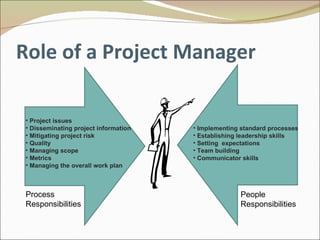
Role of a Project Manager Process Responsibilities People Responsibilities Project issues  Disseminating project information Mitigating project risk  Quality  Managing scope  Metrics  Managing the overall work plan Implementing standard processes Establishing leadership skills Setting  expectations Team building Communicator skills
Triple Contraint Scope Time Cost Quality
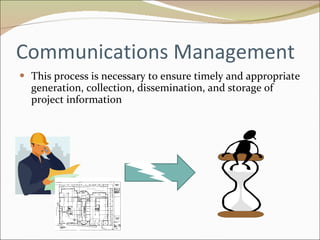
Communications Management This process is necessary to ensure timely and appropriate generation, collection, dissemination, and storage of project information
Communications SDLC process http://www.youtube.com/watch?v=OfgfnZZdMlI
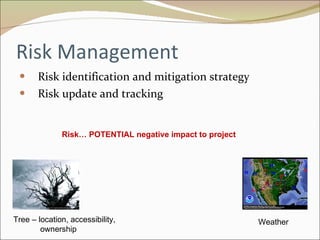
Risk Management Risk identification and mitigation strategy Risk update and tracking Tree – location, accessibility,  ownership  Weather Risk… POTENTIAL negative impact to project
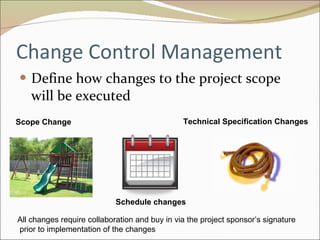
Change Control Management Define how changes to the project scope will be executed Scope Change Schedule changes Technical Specification Changes All changes require collaboration and buy in via the project sponsor’s signature prior to implementation of the changes
Project Life Cycle Initiation Planning Executing Monitoring & Controlling Closing
Initiation Phase Define the need Select the PM Document business need Develop project charter
Planning Phase Determine goals, scope and project constraints Identify members and their roles Define communication channels, methods, frequency and content Risk management planning Create WBS and timeline
Executing Phase Execute project plan and accomplish project goals Send and receive information Implement approved changes Continuous improvement Team building Lessons learned (surveys)
Monitoring & Controlling Scope verification Measure according to your plan Risk Audits Use issue logs Measure Team member performance Create forecasts
Closing Phase Contractual Closeout Confirm the work is done to requirements Lessons Learned (Survey)
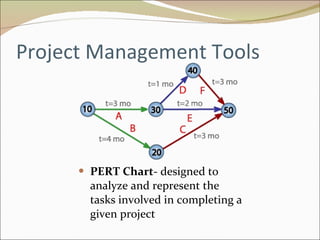
Project Management Tools PERT Chart - designed to analyze and represent the tasks involved in completing a given project
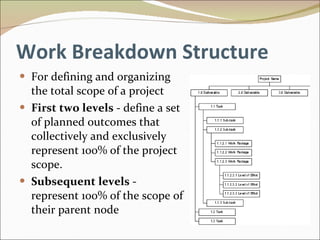
Work Breakdown Structure For defining and organizing the total scope of a project First two levels  - define a set of planned outcomes that collectively and exclusively represent 100% of the project scope.  Subsequent levels  -  represent 100% of the scope of their parent node
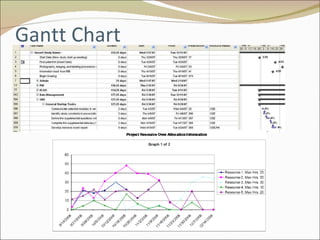
Gantt Chart
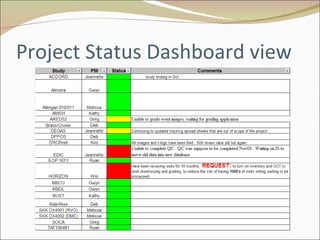
Project Status Dashboard view
 
How long does it take to build a house? http://www.youtube.com/watch?v=vVcjMXhpfQw&feature=related
Project Success Customer Requirements satisfied/exceeded Completed within allocated time frame Completed within allocated budget Accepted by the customer
Project Failure Scope Creep Poor Requirements Gathering Unrealistic planning and scheduling Lack of resources
What is a PMO?
All PMO’s must have: Templates Policies and Procedures Common areas for project information A person in the PMO that is an expert user of your PM  process, including any applications you plan to use All PMO’s do not necessarily need to have: Microsoft Project,  or Project Server  (it is not a PMO in a box) Microsoft SharePoint
New Project sign-off Scope of the project? Do we have the resources (people and money) Estimate of the timeline? ROI Sign off on the project
Project Charter (you must have) Who is the PM Scope?  Out of scope? Milestones Who is on the project? Project assumptions/constraints Communication Strategy Risk Management Plan/are there any known Risks? Project Team Sign off http://www.pma.doit.wisc.edu/templates.html
WBS  (must have)
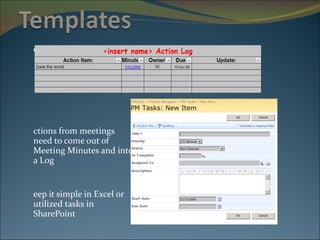
Action Logs: Actions from meetings need to come out of Meeting Minutes and into a Log Keep it simple in Excel or utilized tasks in SharePoint
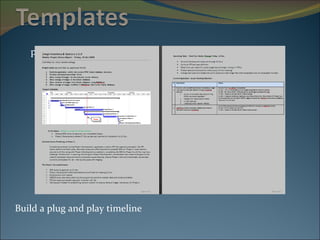
Updates Build a plug and play timeline
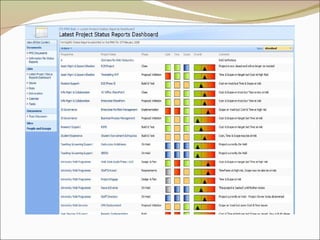
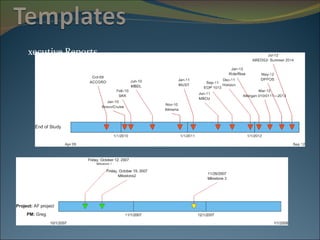
Executive Reports
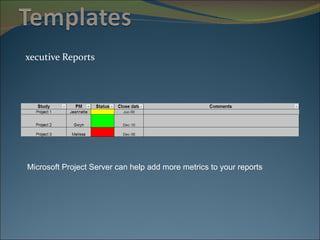
Executive Reports Microsoft Project Server can help add more metrics to your reports
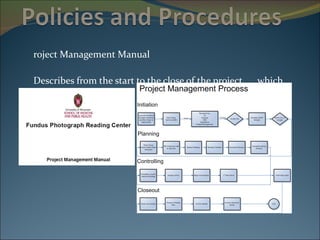
Project Management Manual Describes from the start to the close of the project  which templates and processes to follow
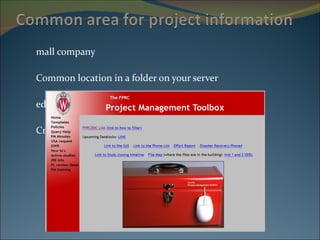
Small company Common location in a folder on your server Medium Company Create your own website with project information
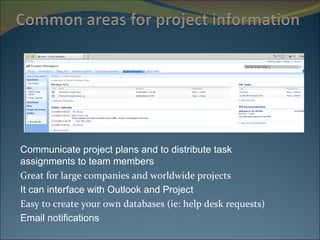
SharePoint Communicate project plans and to distribute task assignments to team members Great for large companies and worldwide projects It can interface with Outlook and Project Easy to create your own databases (ie: help desk requests) Email notifications
Processes take away problems With Processes you will spend less time fire-fighting problems With Processes you will have fewer things that slip through the cracks
Process improvement: Review  your program performance against established baselines, identify significant variances in program results, and recommends corrective actions. Take one of your PM processes and review all of your organizations projects to make sure the PM is compiling with your policies. Review  the lessons learned from projects (lessons learned are done throughout the lifecycle of a project not just at the end).
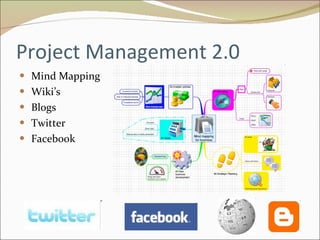
Project Management 2.0 Mind Mapping Wiki’s Blogs Twitter Facebook
More about Ryan 2.0…. Questions???

Introduction To Project Management

  • 1.
    The Secret Livesof Project Managers… 31Jul2009 Ryan Endres, PMP
  • 2.
    What is aProject? A project is a temporary endeavor undertaken to produce a unique product or service Temporary – Definitive beginning and end Unique – New undertaking, unfamiliar ground Temporary Unique Characteristics of Projects
  • 3.
    What is ProjectManagement Project Management is the application of skills, knowledge, tools and techniques to meet the needs and expectations of stakeholders for a project. The purpose of project management is prediction and prevention , NOT recognition and reaction
  • 4.
    Role of aProject Manager Process Responsibilities People Responsibilities Project issues Disseminating project information Mitigating project risk Quality Managing scope Metrics Managing the overall work plan Implementing standard processes Establishing leadership skills Setting expectations Team building Communicator skills
  • 5.
    Triple Contraint ScopeTime Cost Quality
  • 6.
    Communications Management Thisprocess is necessary to ensure timely and appropriate generation, collection, dissemination, and storage of project information
  • 7.
    Communications SDLC processhttp://www.youtube.com/watch?v=OfgfnZZdMlI
  • 8.
    Risk Management Riskidentification and mitigation strategy Risk update and tracking Tree – location, accessibility, ownership Weather Risk… POTENTIAL negative impact to project
  • 9.
    Change Control ManagementDefine how changes to the project scope will be executed Scope Change Schedule changes Technical Specification Changes All changes require collaboration and buy in via the project sponsor’s signature prior to implementation of the changes
  • 10.
    Project Life CycleInitiation Planning Executing Monitoring & Controlling Closing
  • 11.
    Initiation Phase Definethe need Select the PM Document business need Develop project charter
  • 12.
    Planning Phase Determinegoals, scope and project constraints Identify members and their roles Define communication channels, methods, frequency and content Risk management planning Create WBS and timeline
  • 13.
    Executing Phase Executeproject plan and accomplish project goals Send and receive information Implement approved changes Continuous improvement Team building Lessons learned (surveys)
  • 14.
    Monitoring & ControllingScope verification Measure according to your plan Risk Audits Use issue logs Measure Team member performance Create forecasts
  • 15.
    Closing Phase ContractualCloseout Confirm the work is done to requirements Lessons Learned (Survey)
  • 16.
    Project Management ToolsPERT Chart - designed to analyze and represent the tasks involved in completing a given project
  • 17.
    Work Breakdown StructureFor defining and organizing the total scope of a project First two levels - define a set of planned outcomes that collectively and exclusively represent 100% of the project scope. Subsequent levels - represent 100% of the scope of their parent node
  • 18.
  • 19.
  • 20.
  • 21.
    How long doesit take to build a house? http://www.youtube.com/watch?v=vVcjMXhpfQw&feature=related
  • 22.
    Project Success CustomerRequirements satisfied/exceeded Completed within allocated time frame Completed within allocated budget Accepted by the customer
  • 23.
    Project Failure ScopeCreep Poor Requirements Gathering Unrealistic planning and scheduling Lack of resources
  • 24.
  • 25.
    All PMO’s musthave: Templates Policies and Procedures Common areas for project information A person in the PMO that is an expert user of your PM process, including any applications you plan to use All PMO’s do not necessarily need to have: Microsoft Project, or Project Server (it is not a PMO in a box) Microsoft SharePoint
  • 26.
    New Project sign-offScope of the project? Do we have the resources (people and money) Estimate of the timeline? ROI Sign off on the project
  • 27.
    Project Charter (youmust have) Who is the PM Scope? Out of scope? Milestones Who is on the project? Project assumptions/constraints Communication Strategy Risk Management Plan/are there any known Risks? Project Team Sign off http://www.pma.doit.wisc.edu/templates.html
  • 28.
    WBS (musthave)
  • 29.
    Action Logs: Actionsfrom meetings need to come out of Meeting Minutes and into a Log Keep it simple in Excel or utilized tasks in SharePoint
  • 30.
    Updates Build aplug and play timeline
  • 31.
  • 32.
    Executive Reports MicrosoftProject Server can help add more metrics to your reports
  • 33.
    Project Management ManualDescribes from the start to the close of the project which templates and processes to follow
  • 34.
    Small company Commonlocation in a folder on your server Medium Company Create your own website with project information
  • 35.
    SharePoint Communicate projectplans and to distribute task assignments to team members Great for large companies and worldwide projects It can interface with Outlook and Project Easy to create your own databases (ie: help desk requests) Email notifications
  • 36.
    Processes take awayproblems With Processes you will spend less time fire-fighting problems With Processes you will have fewer things that slip through the cracks
  • 37.
    Process improvement: Review your program performance against established baselines, identify significant variances in program results, and recommends corrective actions. Take one of your PM processes and review all of your organizations projects to make sure the PM is compiling with your policies. Review the lessons learned from projects (lessons learned are done throughout the lifecycle of a project not just at the end).
  • 38.
    Project Management 2.0Mind Mapping Wiki’s Blogs Twitter Facebook
  • 39.
    More about Ryan2.0…. Questions???

Editor's Notes

  • #5 Process Responsibilities The project manager normally is responsible for defining and planning the project. This results in the completion of a Project Definition and a project workplan. Once the project starts, the project manager must successfully manage and control the work, including: Identifying, tracking managing and resolving project issues Proactively disseminating project information to all stakeholders Identifying, managing and mitigating project risk Ensuring that the solution is of acceptable quality Proactively managing scope to ensure that only what was agreed to is delivered, unless changes are approved through scope management Defining and collecting metrics to give a sense for how the project is progressing and whether the deliverables produced are acceptable Managing the overall workplan to ensure work is assigned and completed on time and within budget To manage the project management processes, a person should be well organized, have great follow-up skills, be process oriented, be able to multi-task, have a logical thought process, be able to determine root causes, have good analytical ability, be a good estimator and budget manager, and have good self-discipline. People Responsibilities In addition to process skills, a project manager must have good people management skills. This includes: Having the discipline and general management skills to make sure that people follow the standard processes and procedures Establishing leadership skills to get the team to willingly follow your direction. Leadership is about communicating a vision and getting the team to accept it and strive to get there with you. Setting reasonable, challenging and clear expectations for people, and holding them accountable for meeting the expectations. This includes providing good performance feedback to team members Team building skills so that the people work together well, and feel motivated to work hard for the sake of the project and their other team members. The larger your team and the longer the project, the more important it is to have good team-building skills. Proactive verbal and written communicator skills, including good, active listening skills.  Multiple Roles Depending on the size and complexity of the project, the project manager may take on other responsibilities in addition to managing the work. For instance, the project manager may assist with gathering business requirements. Or they may help design a database management system or they may write some of the project documentation. Project management is a particular role that a person fills, even if the person who is the project manager is working in other roles as well. 
  • #7 Communications planning: Determining the needs (who needs what information, when they need it, and how it will be delivered) Information Distribution: Defining who and how information will flow to the project stakeholders and the frequency Performance Reporting: Providing project performance updates via status reporting. Communications planning Information Distribution Performance Reporting Define the schedule for the Project Meetings (Team, OSC, ESC), Status Meetings and Issues Meetings to be implemented
  • #10 Formal change control is required for all of the following Scope Change Schedule changes Technical Specification Changes Training Changes All changes require collaboration and buy in via the project sponsor’s signature prior to implementation of the changes
  • #25 Issues not easily resolved are escalated for resolution.
  • #39 This component is used to communicate How the scope was defined How the project scope will be managed Who will manage the scope (e.g., PM, QA) Change Control