1. CRACKS 
2. SETTLEMENT 
3. DEMOLITION 
4. REBARING 
TECHNIQUES
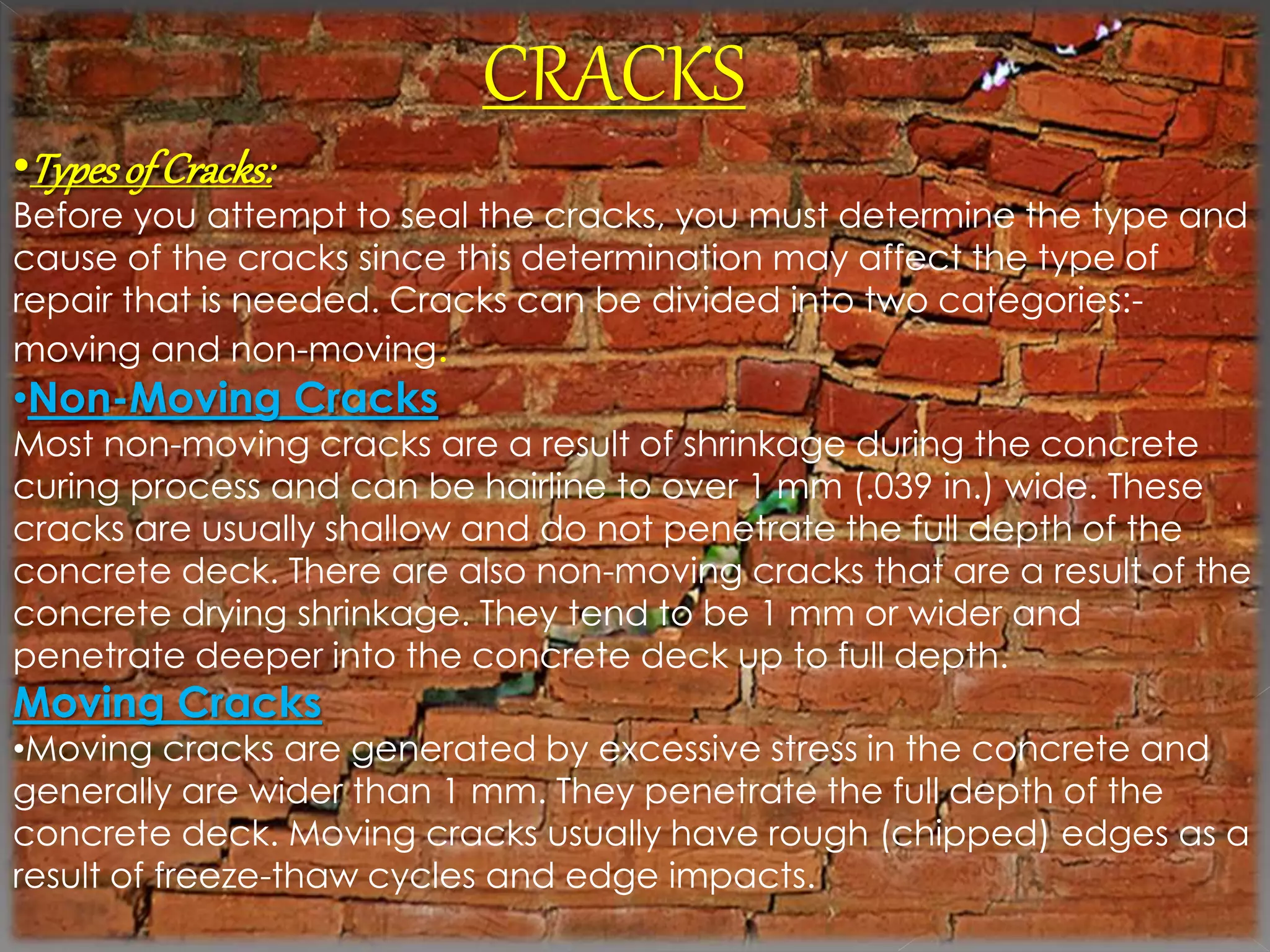
CRACKS 
•Types of Cracks: 
Before you attempt to seal the cracks, you must determine the type and 
cause of the cracks since this determination may affect the type of 
repair that is needed. Cracks can be divided into two categories:- 
moving and non-moving. 
•Non-Moving Cracks 
Most non-moving cracks are a result of shrinkage during the concrete 
curing process and can be hairline to over 1 mm (.039 in.) wide. These 
cracks are usually shallow and do not penetrate the full depth of the 
concrete deck. There are also non-moving cracks that are a result of the 
concrete drying shrinkage. They tend to be 1 mm or wider and 
penetrate deeper into the concrete deck up to full depth. 
Moving Cracks 
•Moving cracks are generated by excessive stress in the concrete and 
generally are wider than 1 mm. They penetrate the full depth of the 
concrete deck. Moving cracks usually have rough (chipped) edges as a 
result of freeze-thaw cycles and edge impacts.
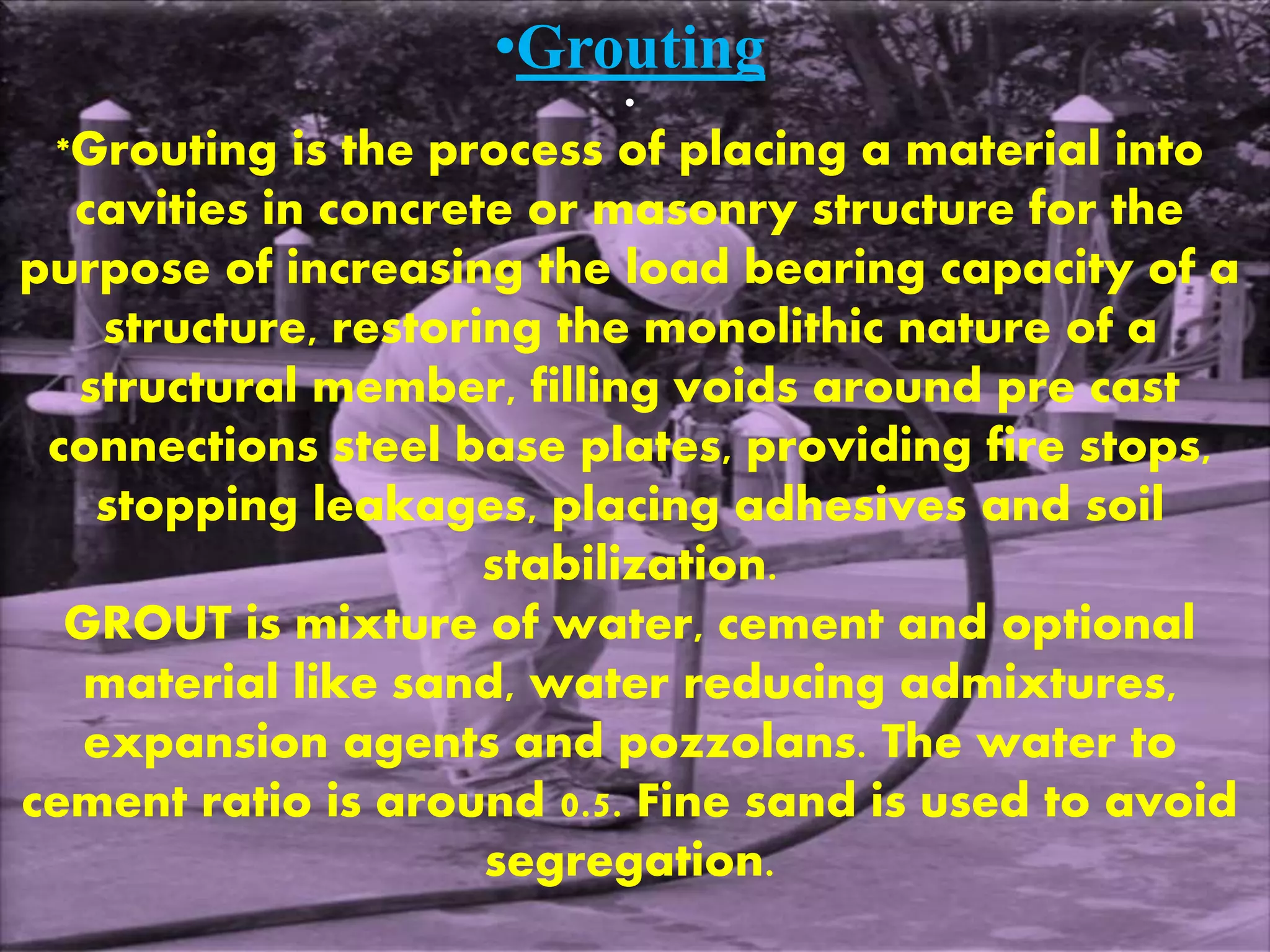
•Grouting 
• 
*Grouting is the process of placing a material into 
cavities in concrete or masonry structure for the 
purpose of increasing the load bearing capacity of a 
structure, restoring the monolithic nature of a 
structural member, filling voids around pre cast 
connections steel base plates, providing fire stops, 
stopping leakages, placing adhesives and soil 
stabilization. 
GROUT is mixture of water, cement and optional 
material like sand, water reducing admixtures, 
expansion agents and pozzolans. The water to 
cement ratio is around 0.5. Fine sand is used to avoid 
segregation.
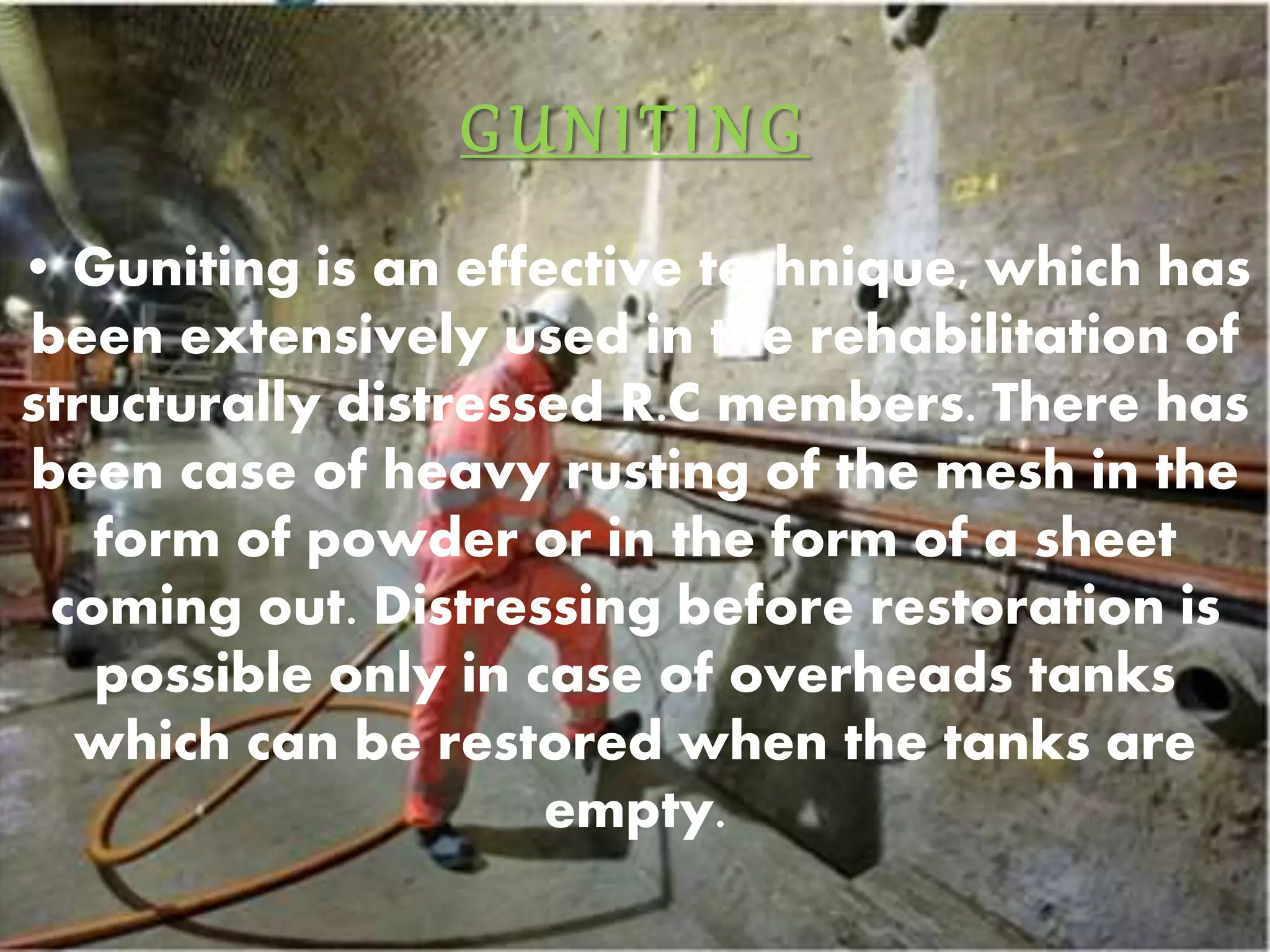
GUNI T ING 
• Guniting is an effective technique, which has 
been extensively used in the rehabilitation of 
structurally distressed R.C members. There has 
been case of heavy rusting of the mesh in the 
form of powder or in the form of a sheet 
coming out. Distressing before restoration is 
possible only in case of overheads tanks 
which can be restored when the tanks are 
empty.
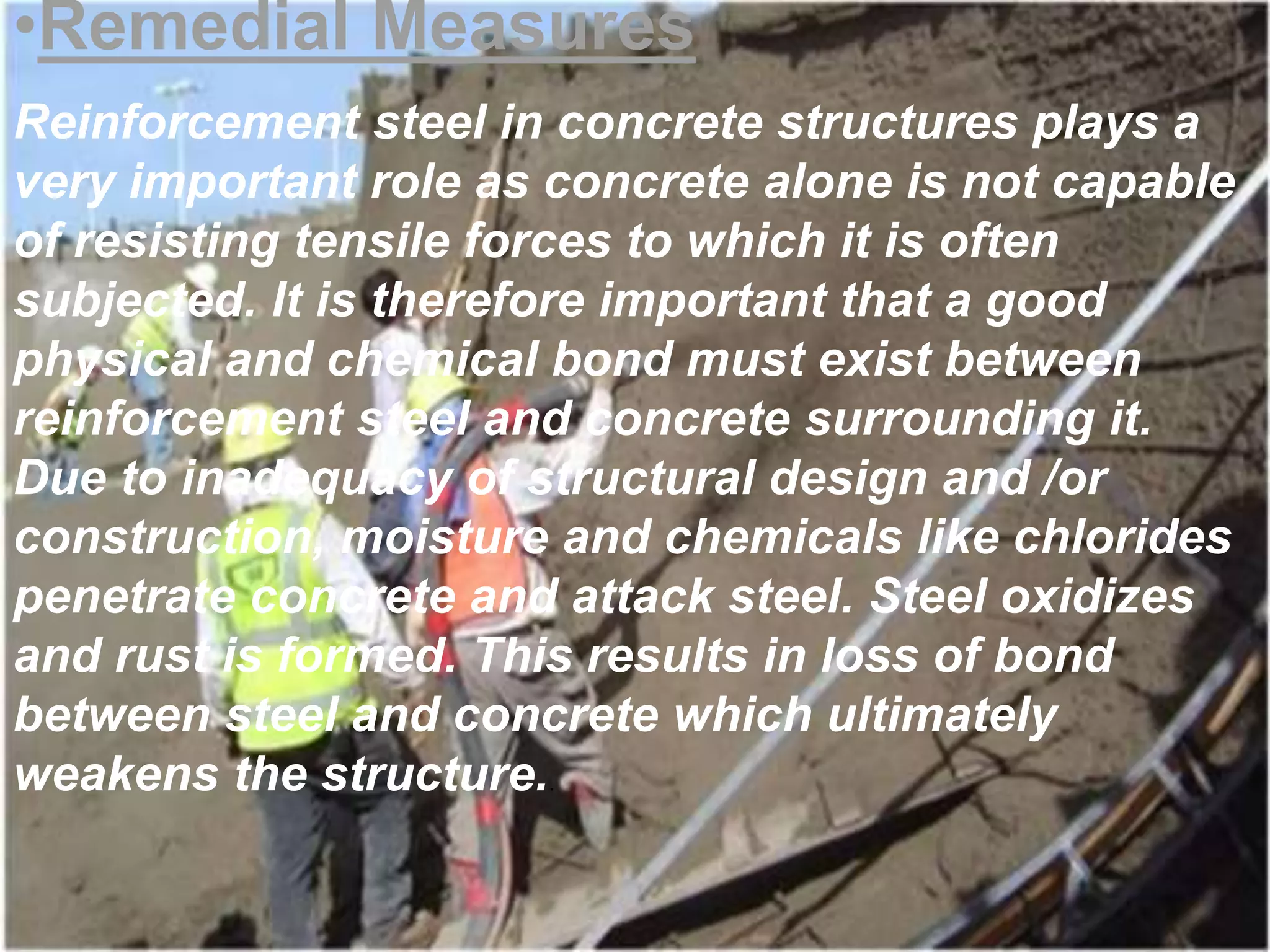
•Remedial Measures 
Reinforcement steel in concrete structures plays a 
very important role as concrete alone is not capable 
of resisting tensile forces to which it is often 
subjected. It is therefore important that a good 
physical and chemical bond must exist between 
reinforcement steel and concrete surrounding it. 
Due to inadequacy of structural design and /or 
construction, moisture and chemicals like chlorides 
penetrate concrete and attack steel. Steel oxidizes 
and rust is formed. This results in loss of bond 
between steel and concrete which ultimately 
weakens the structure..
SETTLEMENT 
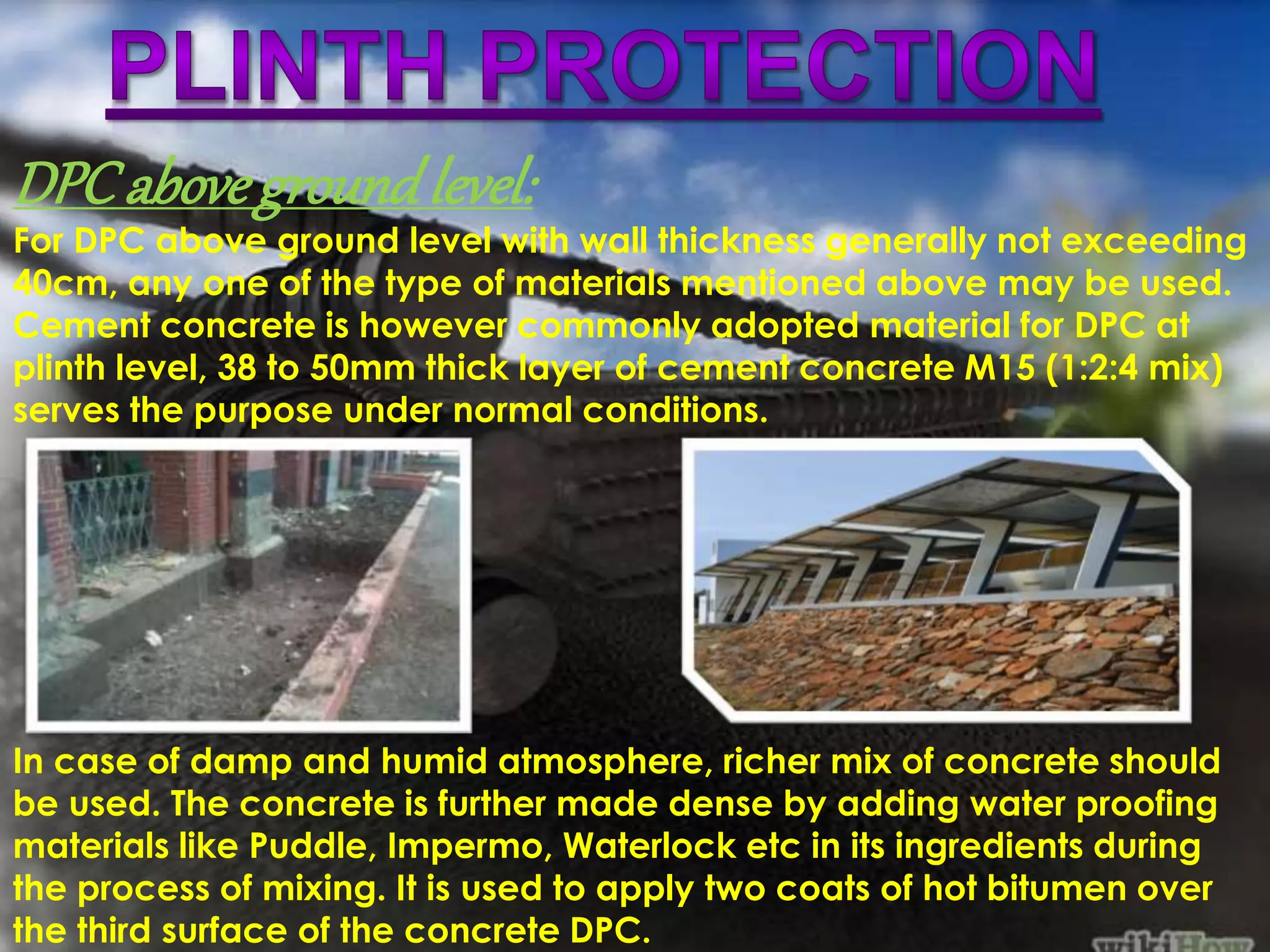
DPC above ground level: 
For DPC above ground level with wall thickness generally not exceeding 
40cm, any one of the type of materials mentioned above may be used. 
Cement concrete is however commonly adopted material for DPC at 
plinth level, 38 to 50mm thick layer of cement concrete M15 (1:2:4 mix) 
serves the purpose under normal conditions. 
In case of damp and humid atmosphere, richer mix of concrete should 
be used. The concrete is further made dense by adding water proofing 
materials like Puddle, Impermo, Waterlock etc in its ingredients during 
the process of mixing. It is used to apply two coats of hot bitumen over 
the third surface of the concrete DPC.
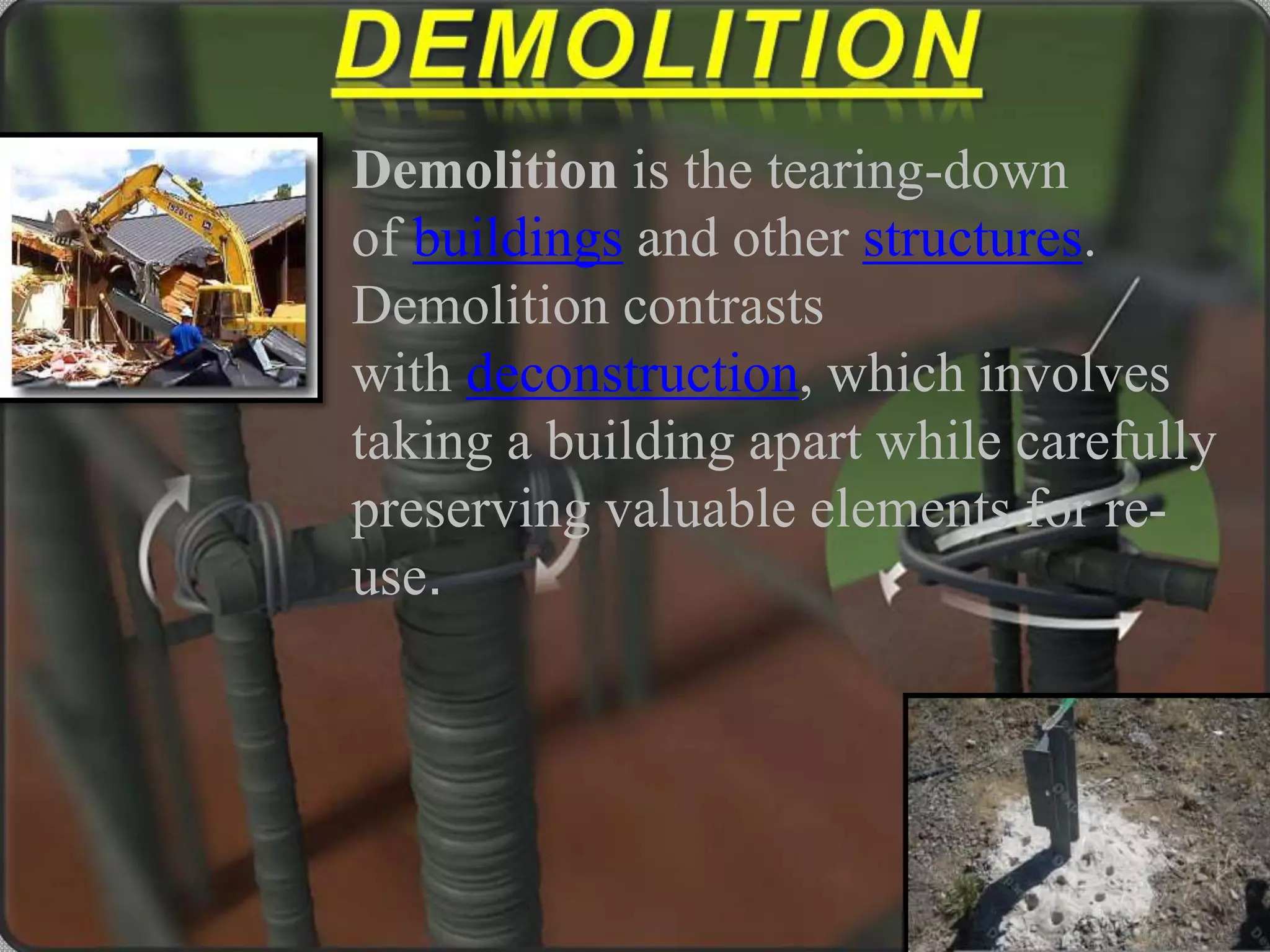
Demolition is the tearing-down 
of buildings and other structures. 
Demolition contrasts 
with deconstruction, which involves 
taking a building apart while carefully 
preserving valuable elements for re-use.
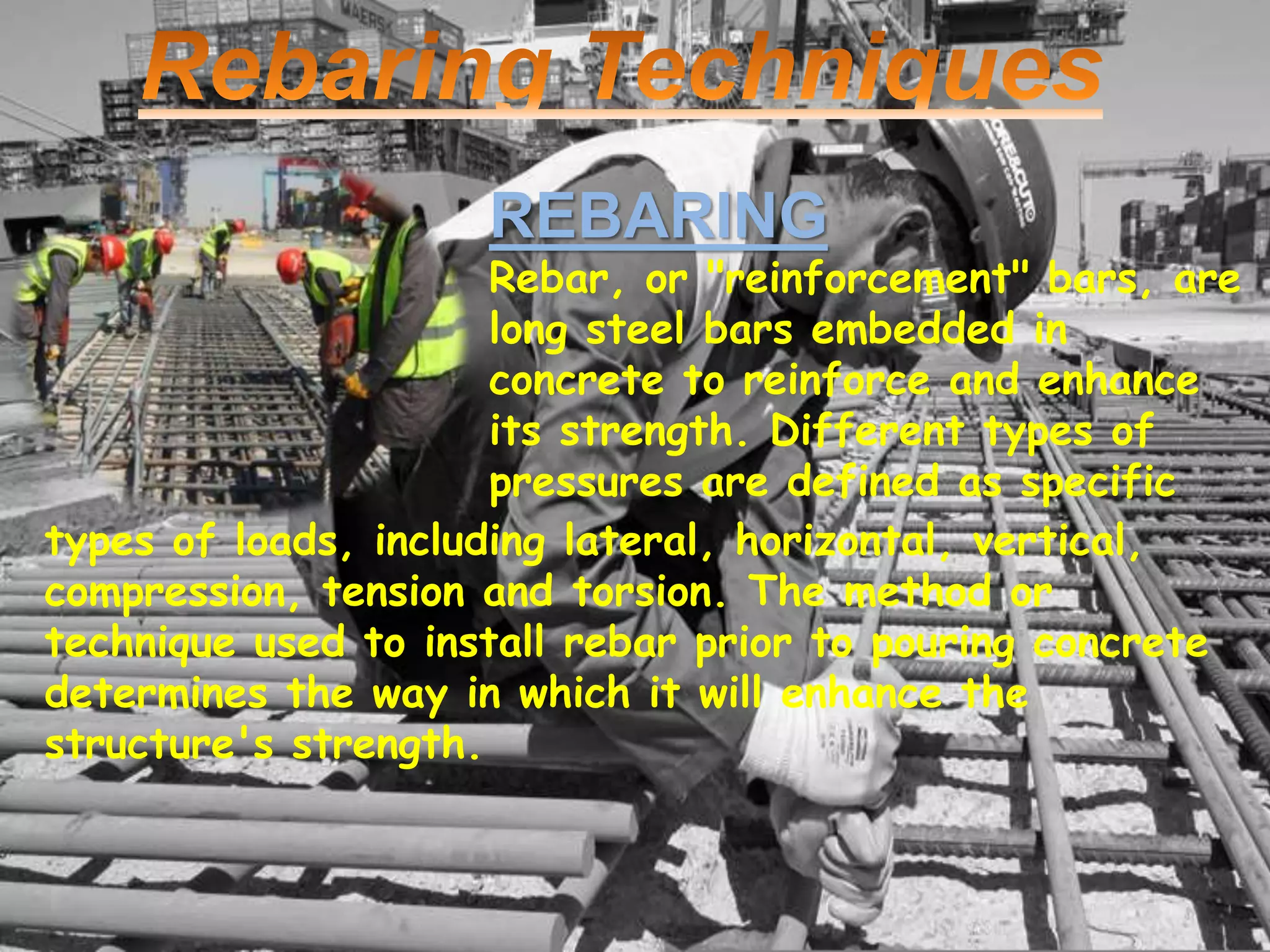
REBARING 
Rebar, or "reinforcement" bars, are 
long steel bars embedded in 
concrete to reinforce and enhance 
its strength. Different types of 
pressures are defined as specific 
types of loads, including lateral, horizontal, vertical, 
compression, tension and torsion. The method or 
technique used to install rebar prior to pouring concrete 
determines the way in which it will enhance the 
structure's strength.

A powerpoint presentation on Building maintanance

  • 2.
    1. CRACKS 2.SETTLEMENT 3. DEMOLITION 4. REBARING TECHNIQUES
  • 3.
    CRACKS •Types ofCracks: Before you attempt to seal the cracks, you must determine the type and cause of the cracks since this determination may affect the type of repair that is needed. Cracks can be divided into two categories:- moving and non-moving. •Non-Moving Cracks Most non-moving cracks are a result of shrinkage during the concrete curing process and can be hairline to over 1 mm (.039 in.) wide. These cracks are usually shallow and do not penetrate the full depth of the concrete deck. There are also non-moving cracks that are a result of the concrete drying shrinkage. They tend to be 1 mm or wider and penetrate deeper into the concrete deck up to full depth. Moving Cracks •Moving cracks are generated by excessive stress in the concrete and generally are wider than 1 mm. They penetrate the full depth of the concrete deck. Moving cracks usually have rough (chipped) edges as a result of freeze-thaw cycles and edge impacts.
  • 4.
    •Grouting • *Groutingis the process of placing a material into cavities in concrete or masonry structure for the purpose of increasing the load bearing capacity of a structure, restoring the monolithic nature of a structural member, filling voids around pre cast connections steel base plates, providing fire stops, stopping leakages, placing adhesives and soil stabilization. GROUT is mixture of water, cement and optional material like sand, water reducing admixtures, expansion agents and pozzolans. The water to cement ratio is around 0.5. Fine sand is used to avoid segregation.
  • 5.
    GUNI T ING • Guniting is an effective technique, which has been extensively used in the rehabilitation of structurally distressed R.C members. There has been case of heavy rusting of the mesh in the form of powder or in the form of a sheet coming out. Distressing before restoration is possible only in case of overheads tanks which can be restored when the tanks are empty.
  • 6.
    •Remedial Measures Reinforcementsteel in concrete structures plays a very important role as concrete alone is not capable of resisting tensile forces to which it is often subjected. It is therefore important that a good physical and chemical bond must exist between reinforcement steel and concrete surrounding it. Due to inadequacy of structural design and /or construction, moisture and chemicals like chlorides penetrate concrete and attack steel. Steel oxidizes and rust is formed. This results in loss of bond between steel and concrete which ultimately weakens the structure..
  • 7.
    SETTLEMENT DPC aboveground level: For DPC above ground level with wall thickness generally not exceeding 40cm, any one of the type of materials mentioned above may be used. Cement concrete is however commonly adopted material for DPC at plinth level, 38 to 50mm thick layer of cement concrete M15 (1:2:4 mix) serves the purpose under normal conditions. In case of damp and humid atmosphere, richer mix of concrete should be used. The concrete is further made dense by adding water proofing materials like Puddle, Impermo, Waterlock etc in its ingredients during the process of mixing. It is used to apply two coats of hot bitumen over the third surface of the concrete DPC.
  • 8.
    Demolition is thetearing-down of buildings and other structures. Demolition contrasts with deconstruction, which involves taking a building apart while carefully preserving valuable elements for re-use.
  • 9.
    REBARING Rebar, or"reinforcement" bars, are long steel bars embedded in concrete to reinforce and enhance its strength. Different types of pressures are defined as specific types of loads, including lateral, horizontal, vertical, compression, tension and torsion. The method or technique used to install rebar prior to pouring concrete determines the way in which it will enhance the structure's strength.