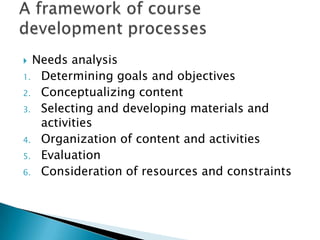


 Needs analysis
1. Determining goals and objectives
2. Conceptualizing content
3. Selecting and developing materials and
   activities
4. Organization of content and activities
5. Evaluation
6. Consideration of resources and constraints
   The term needs is not as straightforward as it
    might appear, and hence the term is
    sometimes used to refer to wants, desires,
    demands, expectations, motivations, lacks,
    constraints and requirements.
1.    top find out what language skills a learner needs in
     order t perform a particular role, such as sales
     manager, tour guide, or university student.
2.    to help determine if an existing course adequately
     addresses the needs of potential students
3.    to determine which students from a group are most
     in need of training in particular language skills
4.    to identify a change of direction that people in a
     reference group feel is important
5.   to identify a gap between what students are able to
     do and what they need to be able to do
6.   to collect information a bout a particular problem
     learners are experiencing
   The target population in a need analysis refers to the
    people about whom information will be collected.
    These may include:
   Policy makers
   Ministry of education officers
   Teachers
   Students
   Academics
   Employers
   Vocational training specialists
   Parents
   Influential individuals and pressure groups
   Academic specialists community agencies
   A variety of procedures can be used in conducting needs
    analysis and the kind of information obtained is often
    dependent on the type of procedure selected.
   Example of students’ writing problems enrolled in
    American universities:
   Samples of students writing
   Test data on students performance
   Reports by teachers on typical problems students face
   Opinions of experts
   Information from students via interviews and questionnaires
   Analysis of textbooks teaching academic writing
   Survey of related literature
   Examples of writing programs from other institutions
   Examples of writing assignments given to first year university students
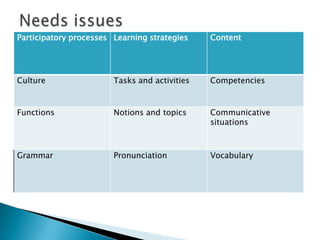
Participatory processes Learning strategies    Content


Culture                 Tasks and activities   Competencies


Functions               Notions and topics     Communicative
                                               situations


Grammar                 Pronunciation          Vocabulary

A framework of course development processes

  • 1.
     Needs analysis 1.Determining goals and objectives 2. Conceptualizing content 3. Selecting and developing materials and activities 4. Organization of content and activities 5. Evaluation 6. Consideration of resources and constraints
  • 3.
    The term needs is not as straightforward as it might appear, and hence the term is sometimes used to refer to wants, desires, demands, expectations, motivations, lacks, constraints and requirements.
  • 5.
    1. top find out what language skills a learner needs in order t perform a particular role, such as sales manager, tour guide, or university student. 2. to help determine if an existing course adequately addresses the needs of potential students 3. to determine which students from a group are most in need of training in particular language skills 4. to identify a change of direction that people in a reference group feel is important 5. to identify a gap between what students are able to do and what they need to be able to do 6. to collect information a bout a particular problem learners are experiencing
  • 6.
    The target population in a need analysis refers to the people about whom information will be collected. These may include:  Policy makers  Ministry of education officers  Teachers  Students  Academics  Employers  Vocational training specialists  Parents  Influential individuals and pressure groups  Academic specialists community agencies
  • 7.
    A variety of procedures can be used in conducting needs analysis and the kind of information obtained is often dependent on the type of procedure selected.  Example of students’ writing problems enrolled in American universities:  Samples of students writing  Test data on students performance  Reports by teachers on typical problems students face  Opinions of experts  Information from students via interviews and questionnaires  Analysis of textbooks teaching academic writing  Survey of related literature  Examples of writing programs from other institutions  Examples of writing assignments given to first year university students
  • 8.
    Participatory processes Learningstrategies Content Culture Tasks and activities Competencies Functions Notions and topics Communicative situations Grammar Pronunciation Vocabulary