AN OVERVIEW OF
PHOTOVOLTAIC SYSTEM
DESIGN FOR THE BEGINNER
OR
HOW TO INSTALL SOLAR PANELS
PURPOSE
TO PROVIDE AN EASY TO DIGEST RESOURCE TO
HELP INTRODUCTORY STUDENTS UNDERSTAND
PHOTOVOLTAIC SYSTEM DESIGN.
EXPLAIN/DEFIN
E
Explain what a
photovoltaic
system and
identifying its key
components.
Defining the crucial
terms needed to
understand a basic
system

DEMONSTRATE
Demonstrate the
crucial equations
needed for the
design process.
Demonstrate how
to turn the answers
to the equations
into the basic plan
of a system
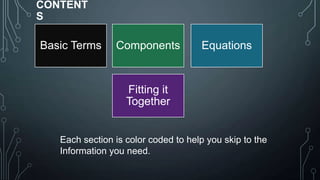
CONTENT
S

Basic Terms

Components

Equations

Fitting it
Together

Each section is color coded to help you skip to the
Information you need.
BASIC
TERMS
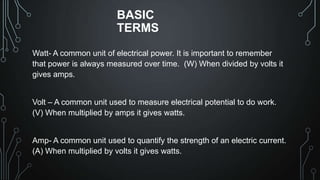
Watt- A common unit of electrical power. It is important to remember
that power is always measured over time. (W) When divided by volts it
gives amps.

Volt – A common unit used to measure electrical potential to do work.
(V) When multiplied by amps it gives watts.

Amp- A common unit used to quantify the strength of an electric current.
(A) When multiplied by volts it gives watts.
BASIC TERMS
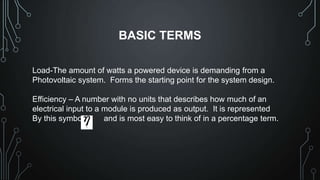
Load-The amount of watts a powered device is demanding from a
Photovoltaic system. Forms the starting point for the system design.

Efficiency – A number with no units that describes how much of an
electrical input to a module is produced as output. It is represented
By this symbol
and is most easy to think of in a percentage term.
COMPONENT
S

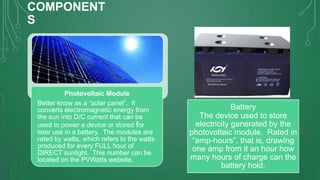
Photovoltaic Module
Better know as a “solar panel”. It
converts electromagnetic energy from
the sun into D/C current that can be
used to power a device or stored for
later use in a battery. The modules are
rated by watts, which refers to the watts
produced for every FULL hour of
DIRECT sunlight. This number can be
located on the PVWatts website.

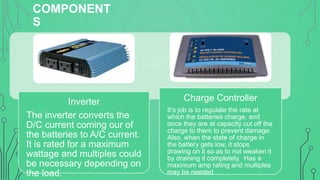
Battery
The device used to store
electricity generated by the
photovoltaic module. Rated in
“amp-hours”, that is, drawing
one amp from it an hour how
many hours of charge can the
battery hold.
COMPONENT
S
Inverter – Converts D/C current to A/C
current. Rated by maximum wattage

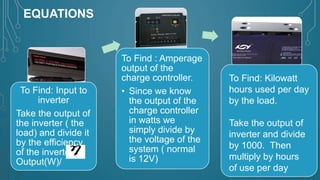
Inverter
The inverter converts the
D/C current coming our of
the batteries to A/C current.
It is rated for a maximum
wattage and multiples could
be necessary depending on
the load.

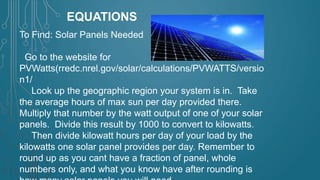
Charge Controller
It’s job is to regulate the rate at
which the batteries charge, and
once they are at capacity cut off the
charge to them to prevent damage.
Also, when the state of charge in
the battery gets low, it stops
drawing on it so as to not weaken it
by draining it completely. Has a
maximum amp rating and multiples
may be needed
EQUATIONS

To Find: Input to
inverter
Take the output of
the inverter ( the
load) and divide it
by the efficiency
of the inverter.
Output(W)/

To Find : Amperage
output of the
charge controller.
• Since we know
the output of the
charge controller
in watts we
simply divide by
the voltage of the
system ( normal
is 12V)

To Find: Kilowatt
hours used per day
by the load.
Take the output of
inverter and divide
by 1000. Then
multiply by hours
of use per day
EQUATIONS
To Find: Solar Panels Needed
Go to the website for
PVWatts(rredc.nrel.gov/solar/calculations/PVWATTS/versio
n1/
Look up the geographic region your system is in. Take
the average hours of max sun per day provided there.
Multiply that number by the watt output of one of your solar
panels. Divide this result by 1000 to convert to kilowatts.
Then divide kilowatt hours per day of your load by the
kilowatts one solar panel provides per day. Remember to
round up as you cant have a fraction of panel, whole
numbers only, and what you know have after rounding is
EQUATION
S
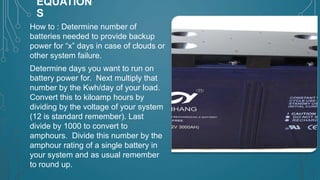
How to : Determine number of
batteries needed to provide backup
power for “x” days in case of clouds or
other system failure.
Determine days you want to run on
battery power for. Next multiply that
number by the Kwh/day of your load.
Convert this to kiloamp hours by
dividing by the voltage of your system
(12 is standard remember). Last
divide by 1000 to convert to
amphours. Divide this number by the
amphour rating of a single battery in
your system and as usual remember
to round up.
Fitting it togethe
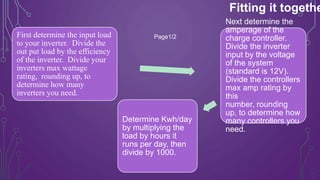
First determine the input load
to your inverter. Divide the
out put load by the efficiency
of the inverter. Divide your
inverters max wattage
rating, rounding up, to
determine how many
inverters you need.

Page1/2

Determine Kwh/day
by multiplying the
load by hours it
runs per day, then
divide by 1000.

Next determine the
amperage of the
charge controller.
Divide the inverter
input by the voltage
of the system
(standard is 12V).
Divide the controllers
max amp rating by
this
number, rounding
up, to determine how
many controllers you
need.
Fitting it together
Page2/2

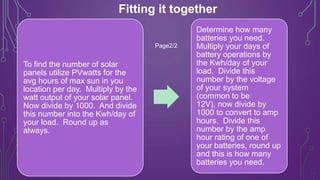
To find the number of solar
panels utilize PVwatts for the
avg hours of max sun in you
location per day. Multiply by the
watt output of your solar panel.
Now divide by 1000. And divide
this number into the Kwh/day of
your load. Round up as
always.

Determine how many
batteries you need.
Multiply your days of
battery operations by
the Kwh/day of your
load. Divide this
number by the voltage
of your system
(common to be
12V), now divide by
1000 to convert to amp
hours. Divide this
number by the amp
hour rating of one of
your batteries, round up
and this is how many
batteries you need.

A class assignment

  • 1.
    AN OVERVIEW OF PHOTOVOLTAICSYSTEM DESIGN FOR THE BEGINNER OR HOW TO INSTALL SOLAR PANELS
  • 2.
    PURPOSE TO PROVIDE ANEASY TO DIGEST RESOURCE TO HELP INTRODUCTORY STUDENTS UNDERSTAND PHOTOVOLTAIC SYSTEM DESIGN. EXPLAIN/DEFIN E Explain what a photovoltaic system and identifying its key components. Defining the crucial terms needed to understand a basic system DEMONSTRATE Demonstrate the crucial equations needed for the design process. Demonstrate how to turn the answers to the equations into the basic plan of a system
  • 3.
    CONTENT S Basic Terms Components Equations Fitting it Together Eachsection is color coded to help you skip to the Information you need.
  • 4.
    BASIC TERMS Watt- A commonunit of electrical power. It is important to remember that power is always measured over time. (W) When divided by volts it gives amps. Volt – A common unit used to measure electrical potential to do work. (V) When multiplied by amps it gives watts. Amp- A common unit used to quantify the strength of an electric current. (A) When multiplied by volts it gives watts.
  • 5.
    BASIC TERMS Load-The amountof watts a powered device is demanding from a Photovoltaic system. Forms the starting point for the system design. Efficiency – A number with no units that describes how much of an electrical input to a module is produced as output. It is represented By this symbol and is most easy to think of in a percentage term.
  • 6.
    COMPONENT S Photovoltaic Module Better knowas a “solar panel”. It converts electromagnetic energy from the sun into D/C current that can be used to power a device or stored for later use in a battery. The modules are rated by watts, which refers to the watts produced for every FULL hour of DIRECT sunlight. This number can be located on the PVWatts website. Battery The device used to store electricity generated by the photovoltaic module. Rated in “amp-hours”, that is, drawing one amp from it an hour how many hours of charge can the battery hold.
  • 7.
    COMPONENT S Inverter – ConvertsD/C current to A/C current. Rated by maximum wattage Inverter The inverter converts the D/C current coming our of the batteries to A/C current. It is rated for a maximum wattage and multiples could be necessary depending on the load. Charge Controller It’s job is to regulate the rate at which the batteries charge, and once they are at capacity cut off the charge to them to prevent damage. Also, when the state of charge in the battery gets low, it stops drawing on it so as to not weaken it by draining it completely. Has a maximum amp rating and multiples may be needed
  • 8.
    EQUATIONS To Find: Inputto inverter Take the output of the inverter ( the load) and divide it by the efficiency of the inverter. Output(W)/ To Find : Amperage output of the charge controller. • Since we know the output of the charge controller in watts we simply divide by the voltage of the system ( normal is 12V) To Find: Kilowatt hours used per day by the load. Take the output of inverter and divide by 1000. Then multiply by hours of use per day
  • 9.
    EQUATIONS To Find: SolarPanels Needed Go to the website for PVWatts(rredc.nrel.gov/solar/calculations/PVWATTS/versio n1/ Look up the geographic region your system is in. Take the average hours of max sun per day provided there. Multiply that number by the watt output of one of your solar panels. Divide this result by 1000 to convert to kilowatts. Then divide kilowatt hours per day of your load by the kilowatts one solar panel provides per day. Remember to round up as you cant have a fraction of panel, whole numbers only, and what you know have after rounding is
  • 10.
    EQUATION S How to :Determine number of batteries needed to provide backup power for “x” days in case of clouds or other system failure. Determine days you want to run on battery power for. Next multiply that number by the Kwh/day of your load. Convert this to kiloamp hours by dividing by the voltage of your system (12 is standard remember). Last divide by 1000 to convert to amphours. Divide this number by the amphour rating of a single battery in your system and as usual remember to round up.
  • 11.
    Fitting it togethe Firstdetermine the input load to your inverter. Divide the out put load by the efficiency of the inverter. Divide your inverters max wattage rating, rounding up, to determine how many inverters you need. Page1/2 Determine Kwh/day by multiplying the load by hours it runs per day, then divide by 1000. Next determine the amperage of the charge controller. Divide the inverter input by the voltage of the system (standard is 12V). Divide the controllers max amp rating by this number, rounding up, to determine how many controllers you need.
  • 12.
    Fitting it together Page2/2 Tofind the number of solar panels utilize PVwatts for the avg hours of max sun in you location per day. Multiply by the watt output of your solar panel. Now divide by 1000. And divide this number into the Kwh/day of your load. Round up as always. Determine how many batteries you need. Multiply your days of battery operations by the Kwh/day of your load. Divide this number by the voltage of your system (common to be 12V), now divide by 1000 to convert to amp hours. Divide this number by the amp hour rating of one of your batteries, round up and this is how many batteries you need.