A BRIEF HISTORY OF THE
  ENGLISH LANGUAGE
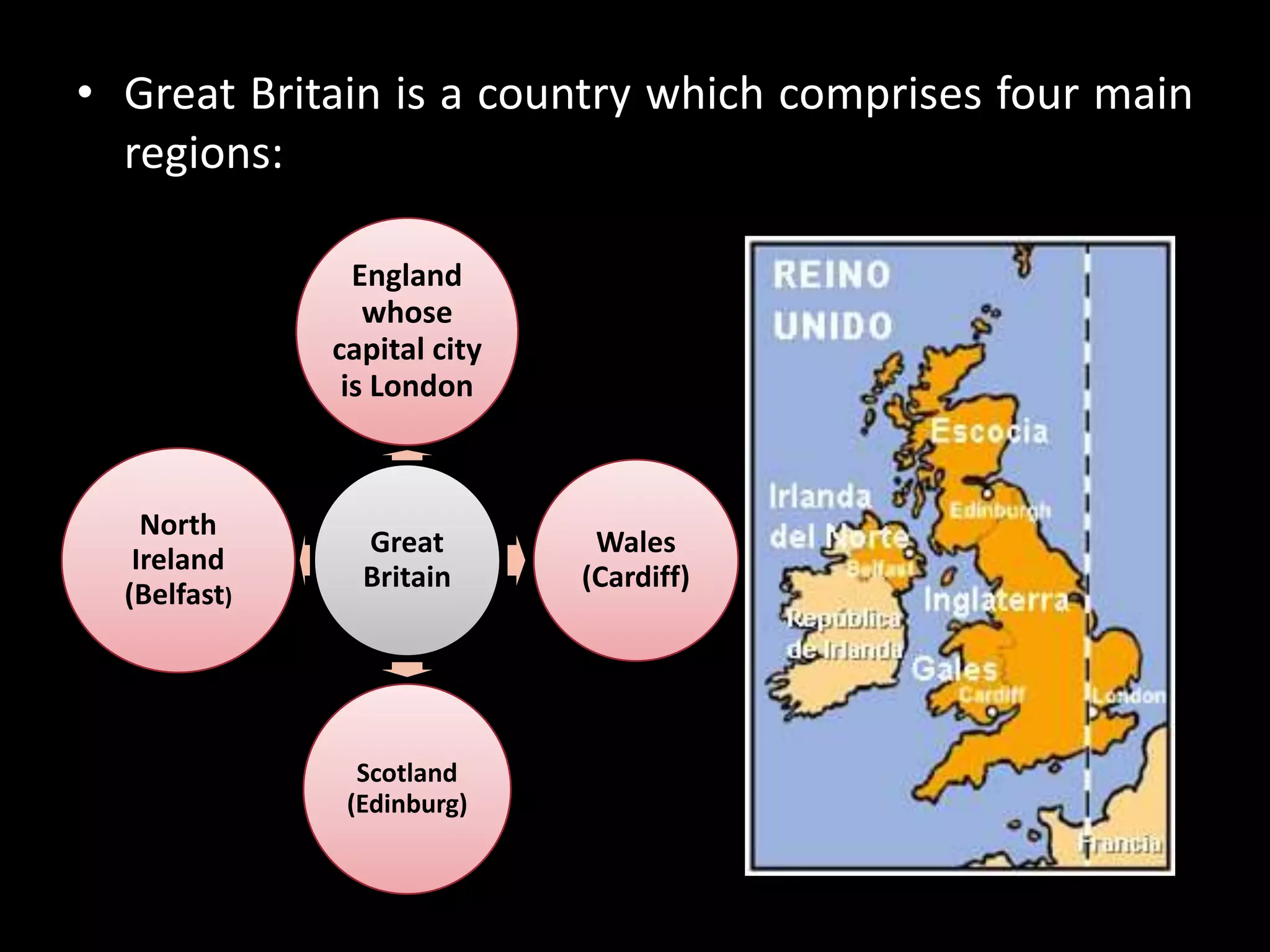
• Great Britain is a country which comprises four main
  regions:

                England
                 whose
              capital city
               is London


    North
                Great         Wales
   Ireland
                Britain      (Cardiff)
  (Belfast)


                Scotland
               (Edinburg)
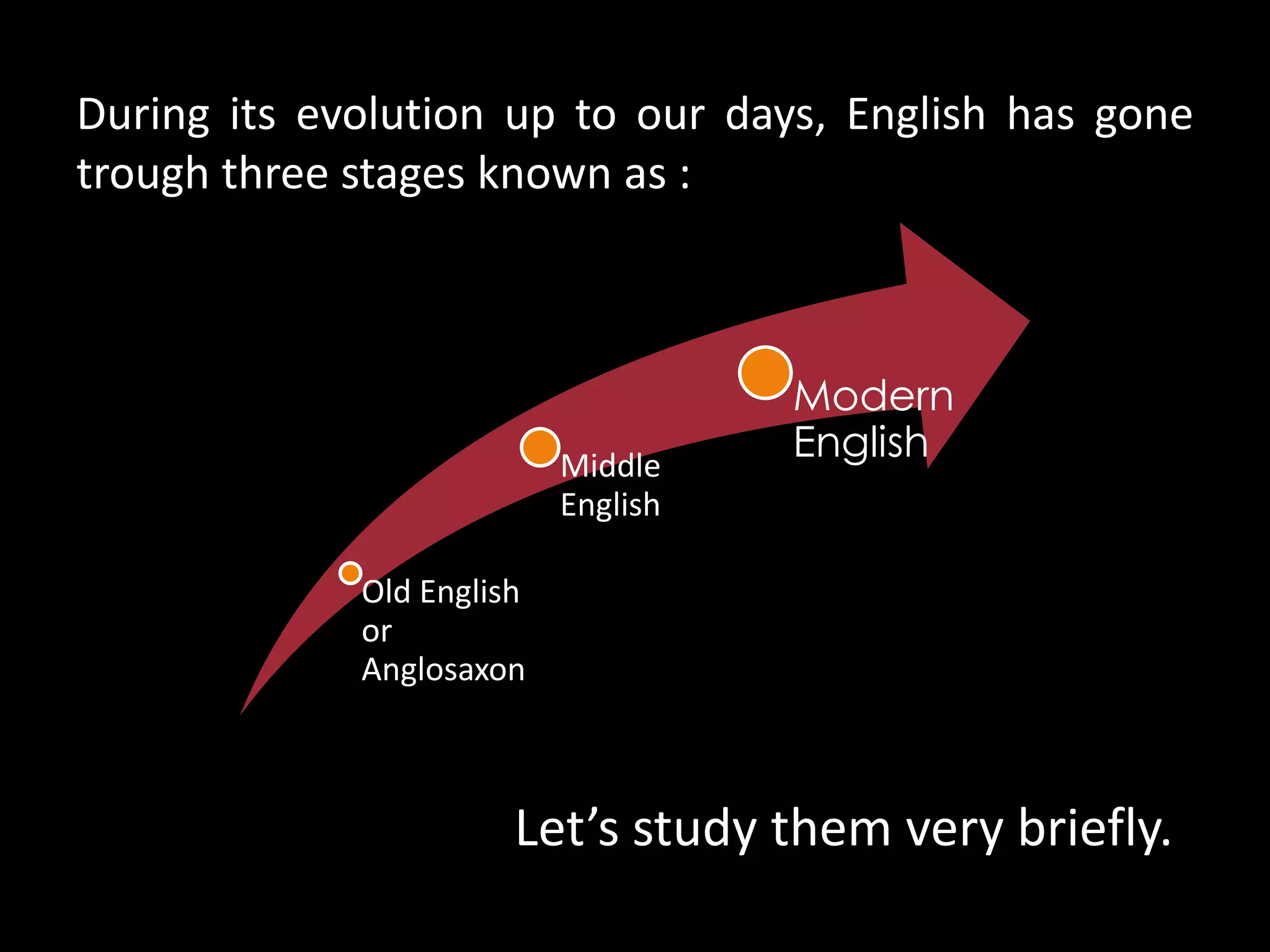
During its evolution up to our days, English has gone
trough three stages known as :


                                     Modern
                           Middle
                                     English
                           English

             Old English
             or
             Anglosaxon


                       Let’s study them very briefly.
• OLD ENGLISH “THE BABY”
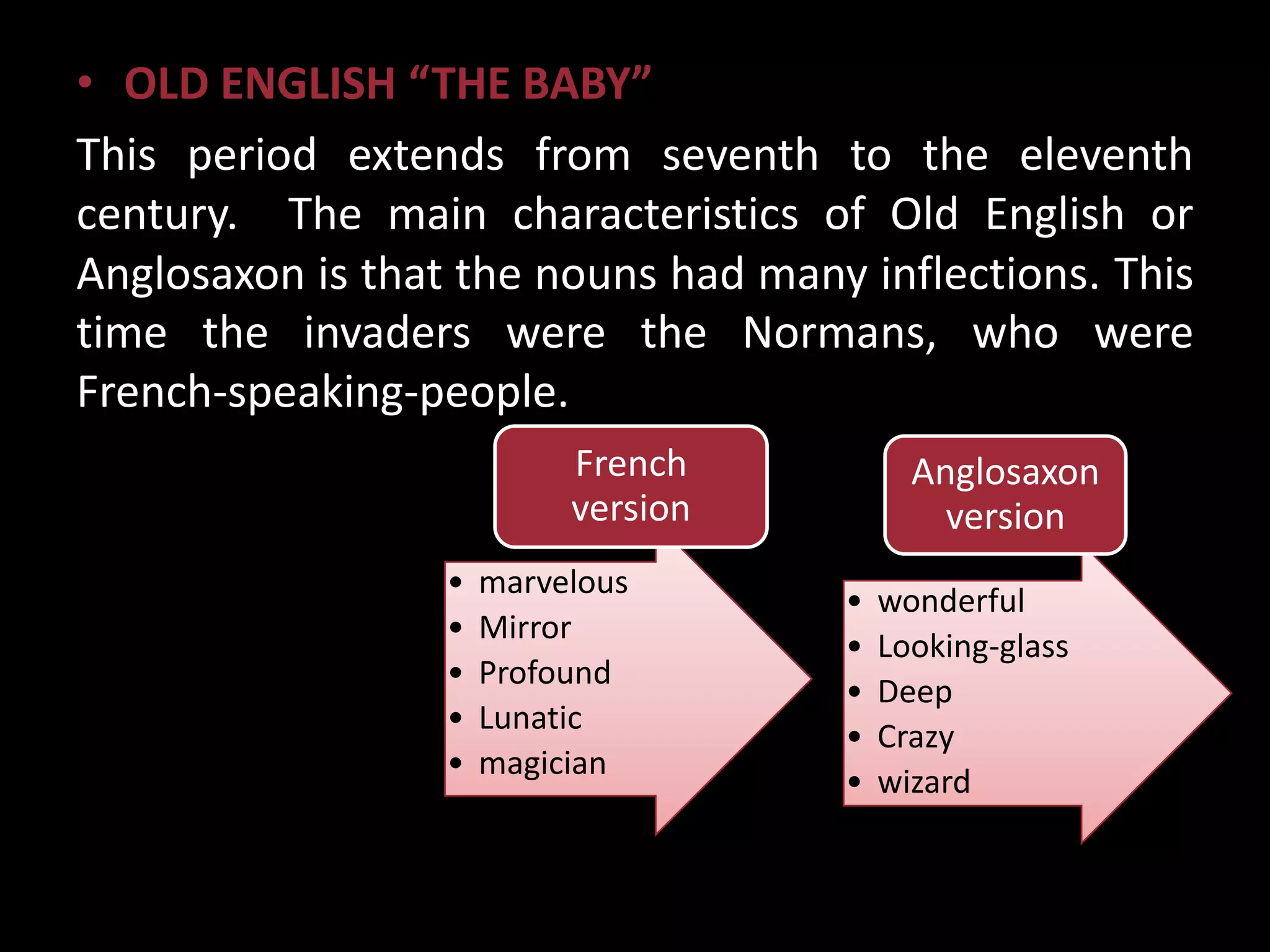
This period extends from seventh to the eleventh
century. The main characteristics of Old English or
Anglosaxon is that the nouns had many inflections. This
time the invaders were the Normans, who were
French-speaking-people.
                           French          Anglosaxon
                           version           version
                  •   marvelous
                                     •   wonderful
                  •   Mirror
                                     •   Looking-glass
                  •   Profound
                                     •   Deep
                  •   Lunatic
                                     •   Crazy
                  •   magician
                                     •   wizard
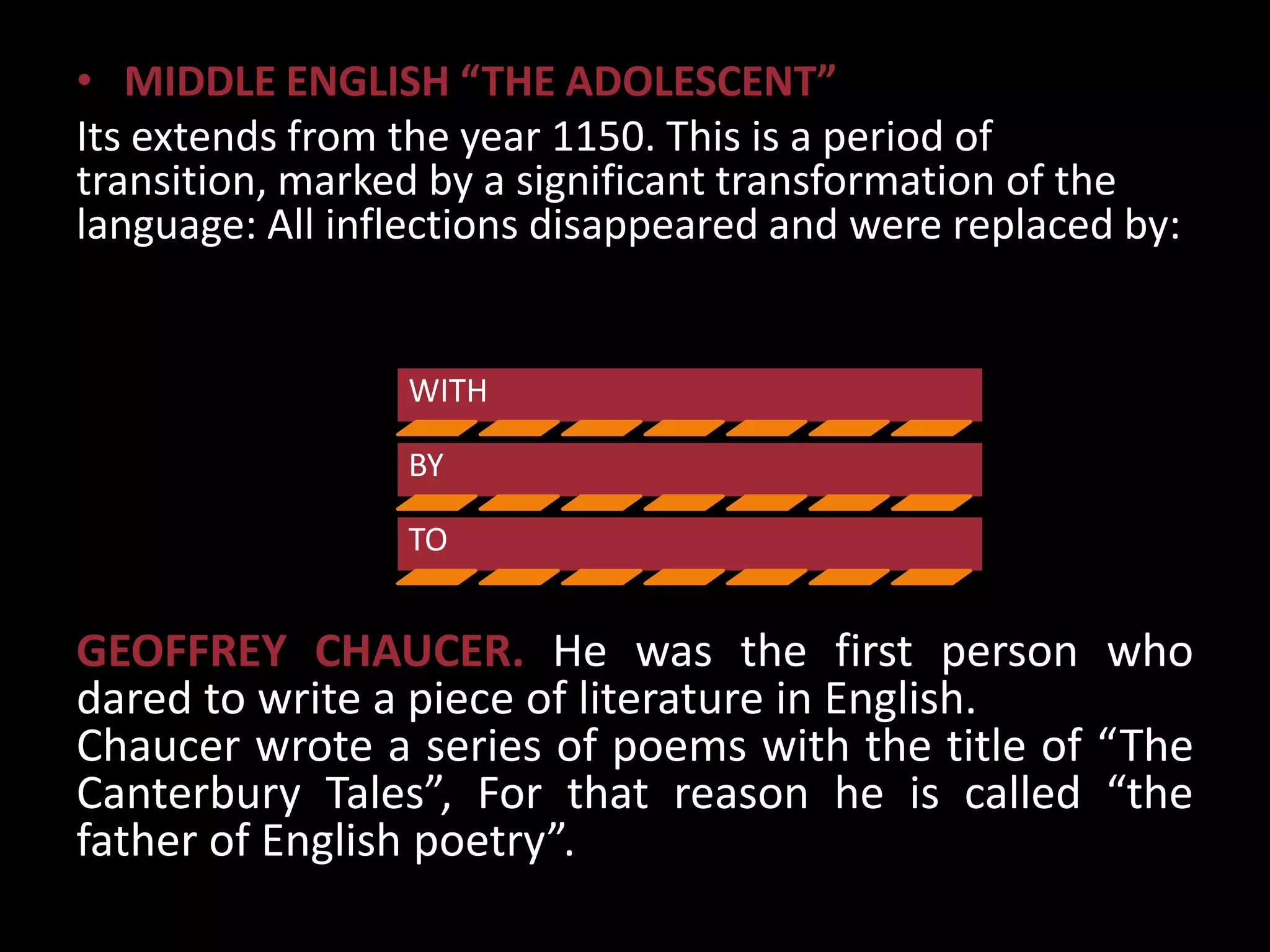
• MIDDLE ENGLISH “THE ADOLESCENT”
Its extends from the year 1150. This is a period of
transition, marked by a significant transformation of the
language: All inflections disappeared and were replaced by:


                 WITH

                 BY

                 TO


GEOFFREY CHAUCER. He was the first person who
dared to write a piece of literature in English.
Chaucer wrote a series of poems with the title of “The
Canterbury Tales”, For that reason he is called “the
father of English poetry”.
• OLD ENGLISH “THE ADULT”
It extends from the year 1500 up to the present days.
The English of today is a little different from Middle
English and absolutely different from Old English.
Remember our simile, comparing the evolution of the
language with the growing of a person: The adults looks
more or less like the adolescent, but completely
different from the baby.
One important characteristic of Modern English is the
dissimilarity between form of the words and their
pronunciation of the words from their graphic
appearance.
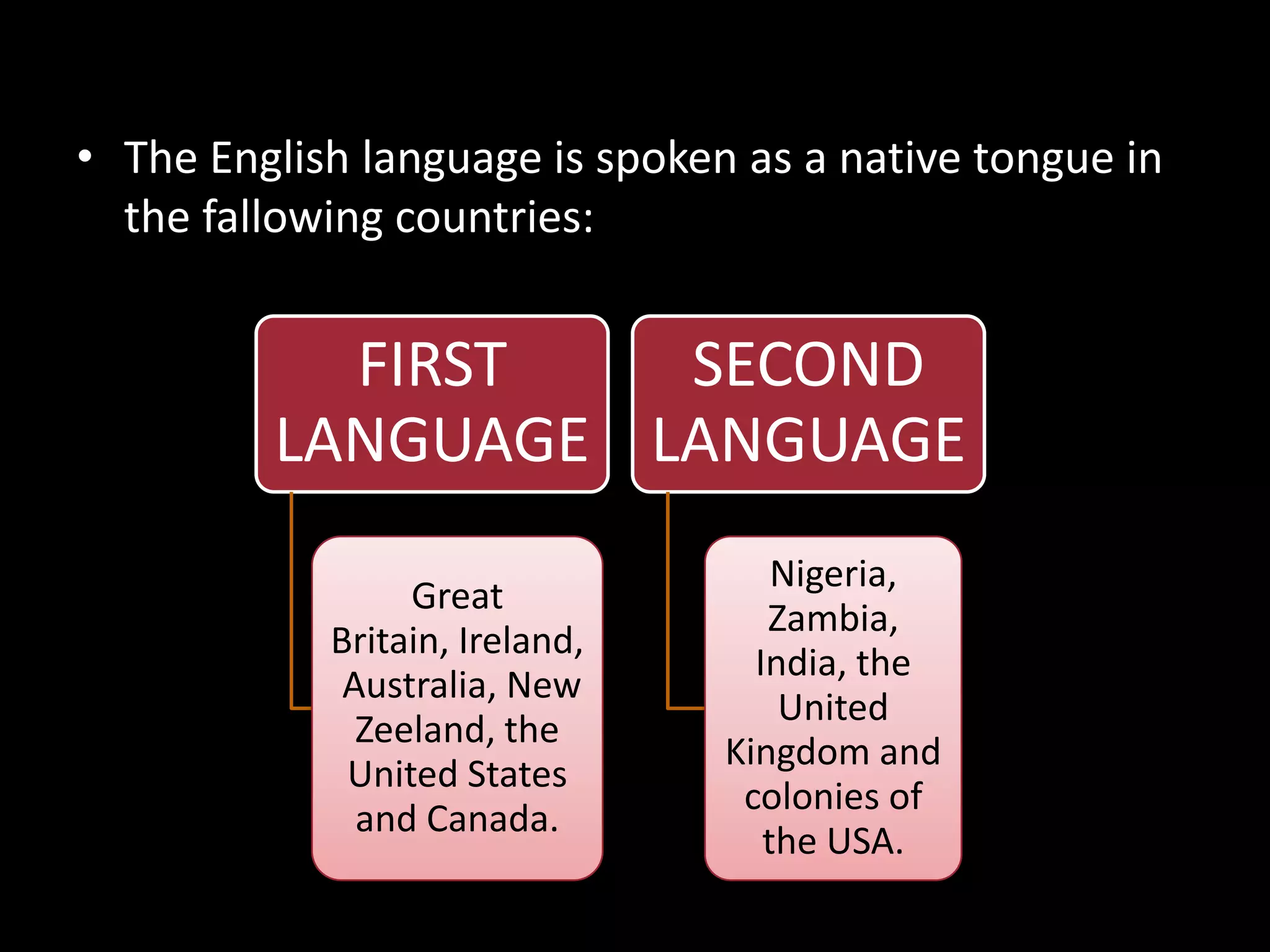
• The English language is spoken as a native tongue in
  the fallowing countries:


           FIRST   SECOND
         LANGUAGE LANGUAGE
                                    Nigeria,
                 Great
                                   Zambia,
            Britain, Ireland,
                                  India, the
             Australia, New
                                    United
              Zeeland, the
                                Kingdom and
             United States
                                 colonies of
              and Canada.
                                   the USA.
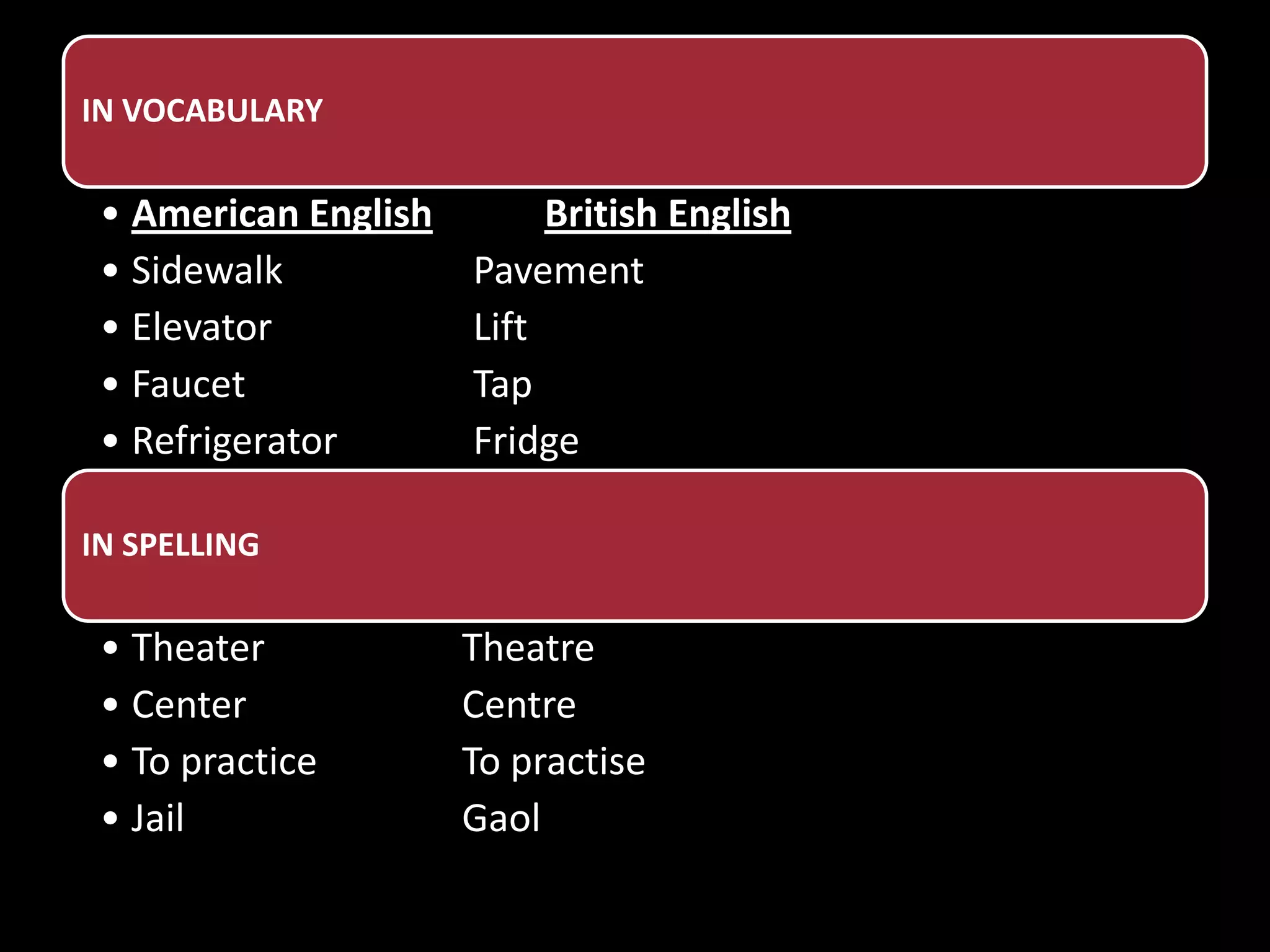
• At present, there are two mains varieties of
 the language in the world: British English and
 American     English.   There   are    certain
 differences between the two in the accent,
 the levels of pronunciation, spelling and
 vocabulary. Let’s see some examples:
IN VOCABULARY

 • American English        British English
 • Sidewalk           Pavement
 • Elevator           Lift
 • Faucet             Tap
 • Refrigerator       Fridge

IN SPELLING

 • Theater            Theatre
 • Center             Centre
 • To practice        To practise
 • Jail               Gaol
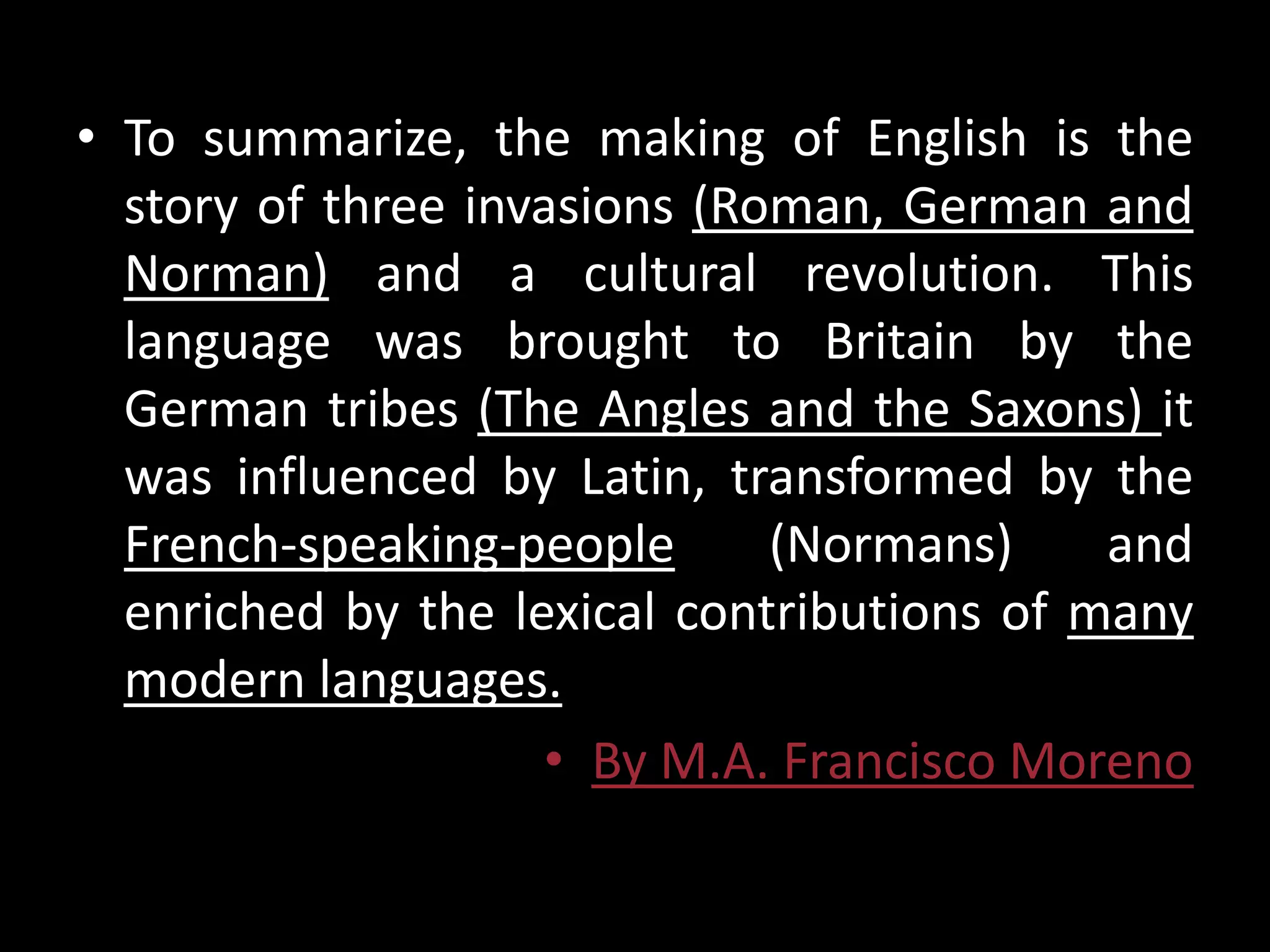
• To summarize, the making of English is the
  story of three invasions (Roman, German and
  Norman) and a cultural revolution. This
  language was brought to Britain by the
  German tribes (The Angles and the Saxons) it
  was influenced by Latin, transformed by the
  French-speaking-people      (Normans)     and
  enriched by the lexical contributions of many
  modern languages.
                    • By M.A. Francisco Moreno
A brief history of English Language

A brief history of English Language

  • 1.
    A BRIEF HISTORYOF THE ENGLISH LANGUAGE
  • 2.
    • Great Britainis a country which comprises four main regions: England whose capital city is London North Great Wales Ireland Britain (Cardiff) (Belfast) Scotland (Edinburg)
  • 3.
    During its evolutionup to our days, English has gone trough three stages known as : Modern Middle English English Old English or Anglosaxon Let’s study them very briefly.
  • 4.
    • OLD ENGLISH“THE BABY” This period extends from seventh to the eleventh century. The main characteristics of Old English or Anglosaxon is that the nouns had many inflections. This time the invaders were the Normans, who were French-speaking-people. French Anglosaxon version version • marvelous • wonderful • Mirror • Looking-glass • Profound • Deep • Lunatic • Crazy • magician • wizard
  • 5.
    • MIDDLE ENGLISH“THE ADOLESCENT” Its extends from the year 1150. This is a period of transition, marked by a significant transformation of the language: All inflections disappeared and were replaced by: WITH BY TO GEOFFREY CHAUCER. He was the first person who dared to write a piece of literature in English. Chaucer wrote a series of poems with the title of “The Canterbury Tales”, For that reason he is called “the father of English poetry”.
  • 6.
    • OLD ENGLISH“THE ADULT” It extends from the year 1500 up to the present days. The English of today is a little different from Middle English and absolutely different from Old English. Remember our simile, comparing the evolution of the language with the growing of a person: The adults looks more or less like the adolescent, but completely different from the baby. One important characteristic of Modern English is the dissimilarity between form of the words and their pronunciation of the words from their graphic appearance.
  • 7.
    • The Englishlanguage is spoken as a native tongue in the fallowing countries: FIRST SECOND LANGUAGE LANGUAGE Nigeria, Great Zambia, Britain, Ireland, India, the Australia, New United Zeeland, the Kingdom and United States colonies of and Canada. the USA.
  • 8.
    • At present,there are two mains varieties of the language in the world: British English and American English. There are certain differences between the two in the accent, the levels of pronunciation, spelling and vocabulary. Let’s see some examples:
  • 9.
    IN VOCABULARY •American English British English • Sidewalk Pavement • Elevator Lift • Faucet Tap • Refrigerator Fridge IN SPELLING • Theater Theatre • Center Centre • To practice To practise • Jail Gaol
  • 10.
    • To summarize,the making of English is the story of three invasions (Roman, German and Norman) and a cultural revolution. This language was brought to Britain by the German tribes (The Angles and the Saxons) it was influenced by Latin, transformed by the French-speaking-people (Normans) and enriched by the lexical contributions of many modern languages. • By M.A. Francisco Moreno