Occupational Safety and Health
for Emergency Services
Fourth Edition
Chapter 12 — Information Management
Objectives
At the conclusion of this chapter you will be able to:
‣ Describe the purpose of data collection and reporting.
‣ Identify the data that should be collected within the
organization.
‣ Identify the data that should be collected for outside
organizations.
‣ Describe the purpose and process for publishing an
internal safety and health report.
‣ Describe the use of the Internet as a safety and health
information source.
Introduction
‣ Data collection and analysis
‣ Development of program goals and objectives
‣ Evaluation of the program and its components
‣ Internal data
‣ Collected and analyzed
‣ Report should be published
‣ Internet
‣ Policies from other similar departments
Internal Data Collection (1 of 2)
‣ Common data types
‣ Injury reports
‣ Accident reports
‣ Individual medical histories
‣ Drug-free workplace test results
‣ Reports dealing with an employee killed in the line of
duty
‣ Exposure records
Internal Data Collection (2 of 2)
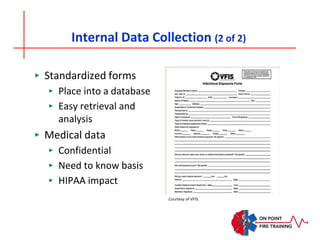
‣ Standardized forms
‣ Place into a database
‣ Easy retrieval and
analysis
‣ Medical data
‣ Confidential
‣ Need to know basis
‣ HIPAA impact
Courtesy of VFIS.
External Data Collection
‣ Collected internally and used by another agency
‣ State or national database
‣ Workers’ compensation carrier
‣ Insurance company
‣ Reporting forms
‣ Adequate background information
‣ External reporting requirements
Workers’ Compensation
‣ Rules and laws
‣ Specific time frames
‣ Injury or potential claim
‣ Carrier
‣ Provide a summary of claims
‣ Useful tool for program evaluation
Occupational Safety and Health Administration
‣ OSHA 1904 regulation
‣ OSHA 300 and 301
‣ Completed in seven calendar days
‣ Recordable injury
‣ Death
‣ Days away from work
‣ Restricted work or transfer to another job
‣ Medical treatment beyond first aid
‣ Loss of consciousness
National Fire Protection Association
‣ Annual injury report
‣ Annual fire fighter fatality report
‣ Injury portion
‣ Sampling
‣ Designed to predict national experience
‣ Organizations are asked to participate
U.S. Fire Administration
‣ Collects safety and health data
‣ National Fire Incident Reporting System (NFIRS)
‣ Voluntary
‣ Components for reporting fatalities and injuries
‣ Annual nationwide report
International Association of Fire Fighters
‣ Collects data
‣ Annual injury, exposure, and fatality reports
‣ Only from paid fire departments with IAFF affiliation
‣ United States and Canada
‣ Published report
‣ Activities relating to EMS
National Institute for Occupational Safety and
Health
‣ NIOSH began a project in 1997
‣ Investigates fire fighter line-of-duty deaths
‣ Program objectives
‣ Better identify and define the characteristics of line-
of-duty deaths
‣ Develop recommendations for the prevention of
deaths and injuries
‣ Disseminate prevention strategies to the fire service
Publishing the Safety and Health Report (1 of 4)
‣ Annual safety and health report
‣ Number of required sections
‣ Questions
‣ Where were we?
‣ Where are we now?
‣ Where are we going?
‣ How can we get there?
‣ Should be distributed to all levels of an organization
Publishing the Safety and Health Report (2 of 4)
‣ Should contain the following information
‣ Introduction
‣ Description of the general state of the organization
‣ List of accomplishments/improvements/benchmarks
‣ Goals and objectives for the next reporting period
‣ Analysis of the injuries and fatalities for the reporting
year
‣ Comparison of the department’s experience to that
of the national experience
Publishing the Safety and Health Report (3 of 4)
‣ Comparison of the department’s experience to that
of similar departments
‣ Report of significant incidents
‣ Summary of the organization’s compliance
‣ Other plans for improvement and requested
resources
‣ Summary of the report
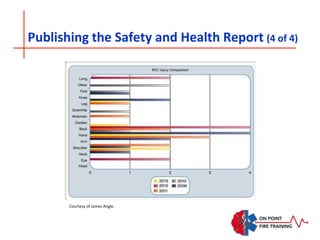
‣ Specific graphics relating to the presentation of the
information
Publishing the Safety and Health Report (4 of 4)
Courtesy of James Angle.
Accessing Safety and Health Information
Using the Internet (1 of 2)
‣ Computer technology
‣ Access to a great deal of information
‣ E-mail
‣ Reports can be filed
‣ Policy changes can be distributed
‣ Internet search engines
‣ Validity of the information
‣ Credibility of the source
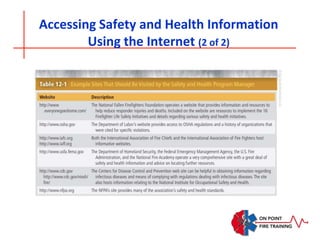
Accessing Safety and Health Information
Using the Internet (2 of 2)

6741 Ch 12 PowerPoint.pptx

  • 1.
    Occupational Safety andHealth for Emergency Services Fourth Edition Chapter 12 — Information Management
  • 2.
    Objectives At the conclusionof this chapter you will be able to: ‣ Describe the purpose of data collection and reporting. ‣ Identify the data that should be collected within the organization. ‣ Identify the data that should be collected for outside organizations. ‣ Describe the purpose and process for publishing an internal safety and health report. ‣ Describe the use of the Internet as a safety and health information source.
  • 3.
    Introduction ‣ Data collectionand analysis ‣ Development of program goals and objectives ‣ Evaluation of the program and its components ‣ Internal data ‣ Collected and analyzed ‣ Report should be published ‣ Internet ‣ Policies from other similar departments
  • 4.
    Internal Data Collection(1 of 2) ‣ Common data types ‣ Injury reports ‣ Accident reports ‣ Individual medical histories ‣ Drug-free workplace test results ‣ Reports dealing with an employee killed in the line of duty ‣ Exposure records
  • 5.
    Internal Data Collection(2 of 2) ‣ Standardized forms ‣ Place into a database ‣ Easy retrieval and analysis ‣ Medical data ‣ Confidential ‣ Need to know basis ‣ HIPAA impact Courtesy of VFIS.
  • 6.
    External Data Collection ‣Collected internally and used by another agency ‣ State or national database ‣ Workers’ compensation carrier ‣ Insurance company ‣ Reporting forms ‣ Adequate background information ‣ External reporting requirements
  • 7.
    Workers’ Compensation ‣ Rulesand laws ‣ Specific time frames ‣ Injury or potential claim ‣ Carrier ‣ Provide a summary of claims ‣ Useful tool for program evaluation
  • 8.
    Occupational Safety andHealth Administration ‣ OSHA 1904 regulation ‣ OSHA 300 and 301 ‣ Completed in seven calendar days ‣ Recordable injury ‣ Death ‣ Days away from work ‣ Restricted work or transfer to another job ‣ Medical treatment beyond first aid ‣ Loss of consciousness
  • 9.
    National Fire ProtectionAssociation ‣ Annual injury report ‣ Annual fire fighter fatality report ‣ Injury portion ‣ Sampling ‣ Designed to predict national experience ‣ Organizations are asked to participate
  • 10.
    U.S. Fire Administration ‣Collects safety and health data ‣ National Fire Incident Reporting System (NFIRS) ‣ Voluntary ‣ Components for reporting fatalities and injuries ‣ Annual nationwide report
  • 11.
    International Association ofFire Fighters ‣ Collects data ‣ Annual injury, exposure, and fatality reports ‣ Only from paid fire departments with IAFF affiliation ‣ United States and Canada ‣ Published report ‣ Activities relating to EMS
  • 12.
    National Institute forOccupational Safety and Health ‣ NIOSH began a project in 1997 ‣ Investigates fire fighter line-of-duty deaths ‣ Program objectives ‣ Better identify and define the characteristics of line- of-duty deaths ‣ Develop recommendations for the prevention of deaths and injuries ‣ Disseminate prevention strategies to the fire service
  • 13.
    Publishing the Safetyand Health Report (1 of 4) ‣ Annual safety and health report ‣ Number of required sections ‣ Questions ‣ Where were we? ‣ Where are we now? ‣ Where are we going? ‣ How can we get there? ‣ Should be distributed to all levels of an organization
  • 14.
    Publishing the Safetyand Health Report (2 of 4) ‣ Should contain the following information ‣ Introduction ‣ Description of the general state of the organization ‣ List of accomplishments/improvements/benchmarks ‣ Goals and objectives for the next reporting period ‣ Analysis of the injuries and fatalities for the reporting year ‣ Comparison of the department’s experience to that of the national experience
  • 15.
    Publishing the Safetyand Health Report (3 of 4) ‣ Comparison of the department’s experience to that of similar departments ‣ Report of significant incidents ‣ Summary of the organization’s compliance ‣ Other plans for improvement and requested resources ‣ Summary of the report ‣ Specific graphics relating to the presentation of the information
  • 16.
    Publishing the Safetyand Health Report (4 of 4) Courtesy of James Angle.
  • 17.
    Accessing Safety andHealth Information Using the Internet (1 of 2) ‣ Computer technology ‣ Access to a great deal of information ‣ E-mail ‣ Reports can be filed ‣ Policy changes can be distributed ‣ Internet search engines ‣ Validity of the information ‣ Credibility of the source
  • 18.
    Accessing Safety andHealth Information Using the Internet (2 of 2)