Occupational Safety and Health
for Emergency Services
Fourth Edition
Chapter 11 — Safety Program Evaluation
Objectives
At the conclusion of this chapter you will be able to:
‣ Describe the purpose of evaluating the safety and
health program.
‣ Compare the two types of evaluations—process and
outcome.
‣ Explain who is responsible for evaluating the safety
and health program.
‣ Describe the recommended frequency of evaluation
and the factors that affect the frequency.
Introduction
‣ Chapter 4 of NFPA 1500
‣ Requires risk management plan to be monitored
annually
‣ Evaluated every 3 years by an independent source
‣ New safety and health program
‣ Evaluate its effectiveness
‣ Measuring of results is necessary
‣ Compare where the organization is now to where it
was before
The Evaluation Process
‣ Three reasons to evaluate
‣ See if the program is effective
‣ Determine the response from the members’
perspectives
‣ Facilitate program changes
‣ Compare outcomes
‣ Analyze statistics
‣ Changes should be considered
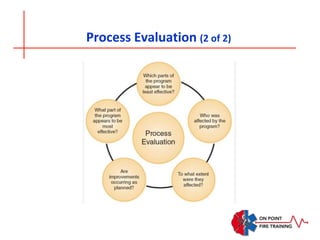
Process Evaluation (1 of 2)
‣ Analysis of the procedures of the program
‣ Questions that must be answered:
‣ Who was affected by the program?
‣ To what extent were they affected?
‣ Are improvements occurring as planned?
‣ Which parts of the program appear to be most
effective?
‣ Which parts of the program appear to be least
effective?
Process Evaluation (2 of 2)
Outcome Evaluation (1 of 2)
‣ Compares the result of the program to the goal
‣ After the program has been in effect for a while
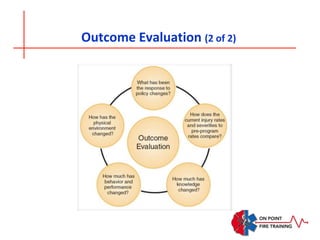
‣ Several areas should be analyzed
‣ Current compared to prior injury rates
‣ Changes in knowledge, behavior, and performance
‣ Changes in the physical environment
‣ Responses to policy changes
Outcome Evaluation (2 of 2)
Responsibility for Evaluation (1 of 2)
‣ Fire chief, EMS director, or safety and health
manager may oversee evaluation
‣ Evaluation accomplished through
‣ Safety committee
‣ Incident safety officers
‣ Senior staff members
‣ First-line supervisors
‣ Responders
Responsibility for Evaluation (2 of 2)
‣ NFPA 1500 recommendations
‣ Externally evaluated
‣ Every three years
‣ External evaluation
‣ Highly recommended
‣ Demonstrates a positive effort
‣ Find areas for improvement
Evaluation Frequency (1 of 2)
‣ Program evaluation
‣ Required component
‣ Occurs before the program even starts
‣ Process evaluation can be an almost continuous
process
‣ Outcome evaluation
‣ The end of a specific period of time
‣ Usually one year
‣ Measured time frame
Evaluation Frequency (2 of 2)
‣ Frequency should be considered dynamic
‣ Evaluate if one of the following occurs
‣ A serious injury, near miss, or death occurs:
‣ Findings during a postincident analysis require
evaluation
‣ New technology is introduced
‣ Changes are made to applicable regulations or
standards

6741 Ch 11 PowerPoint.pptx

  • 1.
    Occupational Safety andHealth for Emergency Services Fourth Edition Chapter 11 — Safety Program Evaluation
  • 2.
    Objectives At the conclusionof this chapter you will be able to: ‣ Describe the purpose of evaluating the safety and health program. ‣ Compare the two types of evaluations—process and outcome. ‣ Explain who is responsible for evaluating the safety and health program. ‣ Describe the recommended frequency of evaluation and the factors that affect the frequency.
  • 3.
    Introduction ‣ Chapter 4of NFPA 1500 ‣ Requires risk management plan to be monitored annually ‣ Evaluated every 3 years by an independent source ‣ New safety and health program ‣ Evaluate its effectiveness ‣ Measuring of results is necessary ‣ Compare where the organization is now to where it was before
  • 4.
    The Evaluation Process ‣Three reasons to evaluate ‣ See if the program is effective ‣ Determine the response from the members’ perspectives ‣ Facilitate program changes ‣ Compare outcomes ‣ Analyze statistics ‣ Changes should be considered
  • 5.
    Process Evaluation (1of 2) ‣ Analysis of the procedures of the program ‣ Questions that must be answered: ‣ Who was affected by the program? ‣ To what extent were they affected? ‣ Are improvements occurring as planned? ‣ Which parts of the program appear to be most effective? ‣ Which parts of the program appear to be least effective?
  • 6.
  • 7.
    Outcome Evaluation (1of 2) ‣ Compares the result of the program to the goal ‣ After the program has been in effect for a while ‣ Several areas should be analyzed ‣ Current compared to prior injury rates ‣ Changes in knowledge, behavior, and performance ‣ Changes in the physical environment ‣ Responses to policy changes
  • 8.
  • 9.
    Responsibility for Evaluation(1 of 2) ‣ Fire chief, EMS director, or safety and health manager may oversee evaluation ‣ Evaluation accomplished through ‣ Safety committee ‣ Incident safety officers ‣ Senior staff members ‣ First-line supervisors ‣ Responders
  • 10.
    Responsibility for Evaluation(2 of 2) ‣ NFPA 1500 recommendations ‣ Externally evaluated ‣ Every three years ‣ External evaluation ‣ Highly recommended ‣ Demonstrates a positive effort ‣ Find areas for improvement
  • 11.
    Evaluation Frequency (1of 2) ‣ Program evaluation ‣ Required component ‣ Occurs before the program even starts ‣ Process evaluation can be an almost continuous process ‣ Outcome evaluation ‣ The end of a specific period of time ‣ Usually one year ‣ Measured time frame
  • 12.
    Evaluation Frequency (2of 2) ‣ Frequency should be considered dynamic ‣ Evaluate if one of the following occurs ‣ A serious injury, near miss, or death occurs: ‣ Findings during a postincident analysis require evaluation ‣ New technology is introduced ‣ Changes are made to applicable regulations or standards