+ 
Edward de Bono’s 
Six Thinking Hats 
A tool for 
decision 
making & 
problem 
solving 
FREDERICK MARS UNTALAN MD
+ 
Creative 
Problem 
Solving
+ “Traditional” CPS 
Mess-finding 
Data-finding 
Problem-finding 
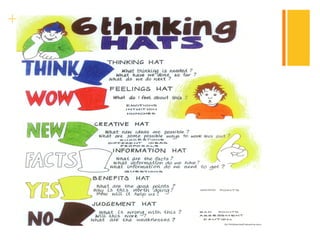
Idea-finding 
Solution-finding 
Acceptance-finding
+ 
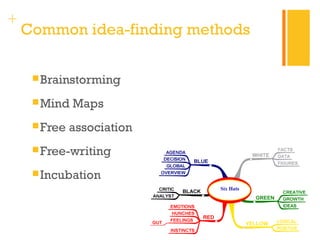
Common idea-finding methods 
Brainstorming 
Mind Maps 
Free association 
Free-writing 
Incubation
+ 
Six hats & problem solving 
A more deliberate process than CPS 
Like CPS, uses creativity (green hat) 
Unlike CPS, provides a mechanism for 
evaluating ideas & making decisions
+ 
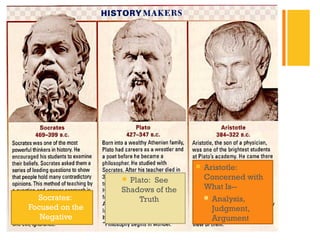
 Plato: See 
Shadows of the 
Truth 
 Aristotle: 
Concerned with 
What Is-- 
 Analysis, 
Judgment, 
Argument 
 Socrates: 
Focused on the 
Negative
+ 
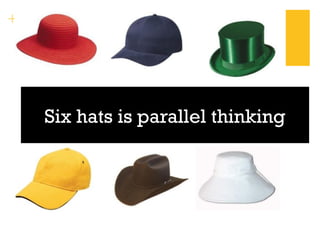
Six hats is parallel thinking
+ 
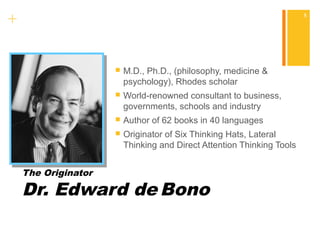
 M.D., Ph.D., (philosophy, medicine & 
psychology), Rhodes scholar 
 World-renowned consultant to business, 
governments, schools and industry 
 Author of 62 books in 40 languages 
 Originator of Six Thinking Hats, Lateral 
Thinking and Direct Attention Thinking Tools 
The Originator 
Dr. Edward de Bono 
8
+ 
THINKING 
“The Ultimate Human Resource” 
We can always improve our thinking skills. 
Confused thinking arises from trying to do too 
much at once. 
We should emphasize what can be, & not 
what is.
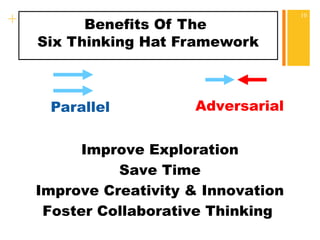
+ Benefits Of The 
Six Thinking Hat Framework 
Parallel 
10 
Adversarial 
Improve Exploration 
Save Time 
Improve Creativity & Innovation 
Foster Collaborative Thinking
+ Results Around The 
Wor ld 
Since 1993 over 200,000 trained 
In use by many of the largest & most 
successful organizations worldwide 
Works well in different cultures 
Applies at all levels & across 
disciplines 
11
+ The Basics 
12 
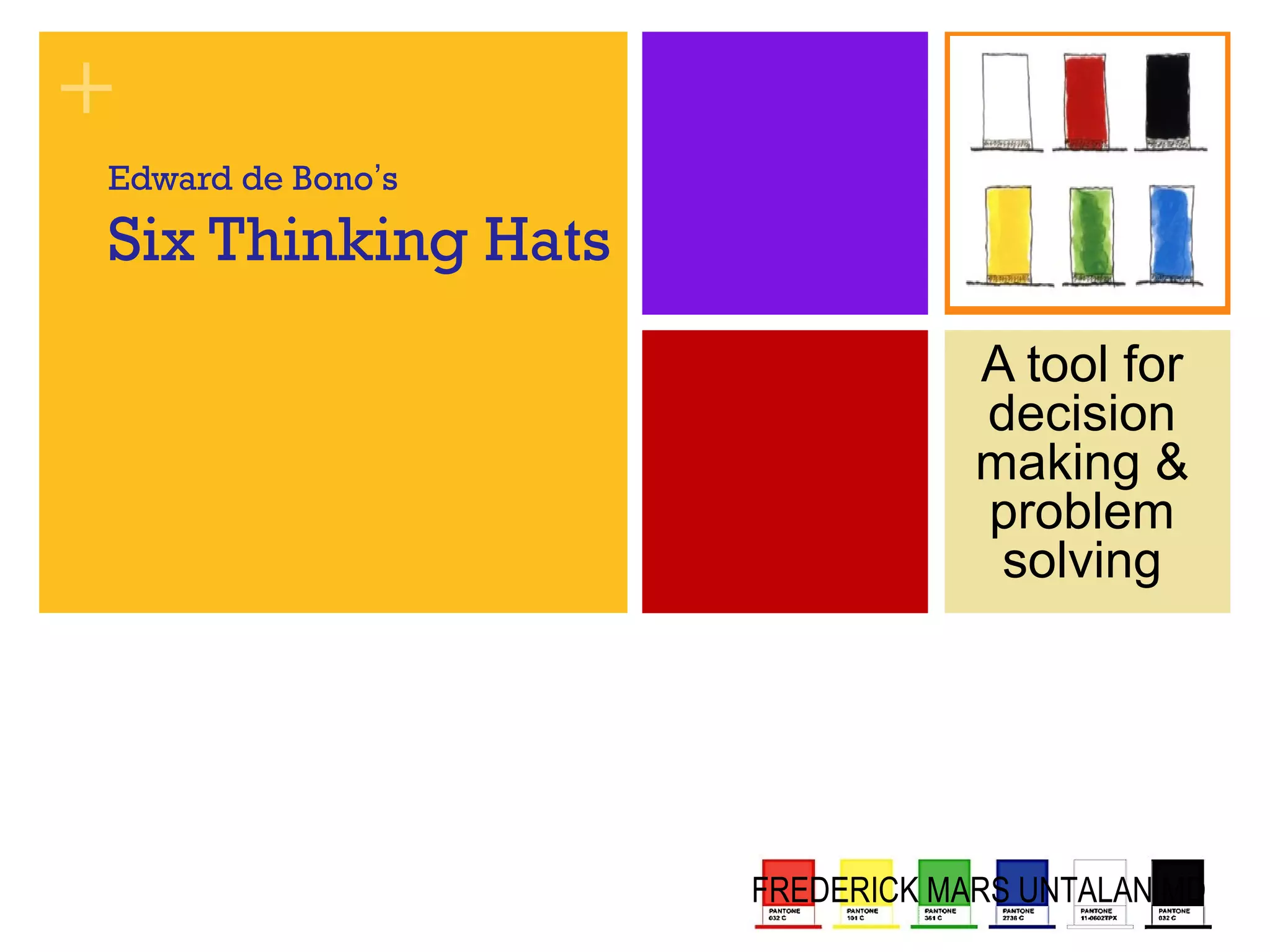
There are six different imaginary hats that you can put 
on or take off. 
Think of the “hats” as thinking icons. 
Each hat is a different color and represents a different 
type or mode of thinking. 
We all wear the same hat (do the same type of 
thinking) at the same time. 
When we change hats - we change our thinking.
+ 
So the six hats are…? 
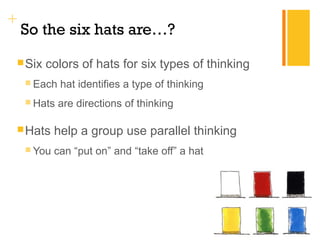
Six colors of hats for six types of thinking 
 Each hat identifies a type of thinking 
Hats are directions of thinking 
Hats help a group use parallel thinking 
 You can “put on” and “take off” a hat
+ 
Uses for Six Hats 
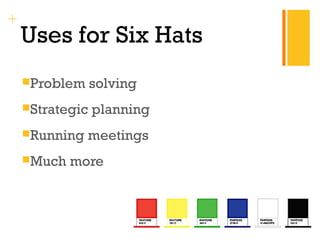
Problem solving 
Strategic planning 
Running meetings 
Much more
+ 
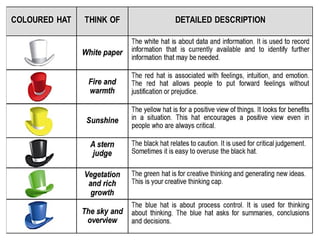
Six colors… 
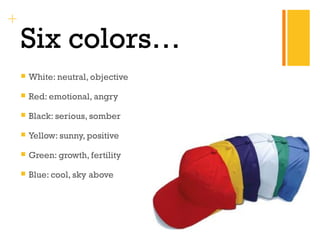
 White: neutral, objective 
 Red: emotional, angry 
 Black: serious, somber 
 Yellow: sunny, positive 
 Green: growth, fertility 
 Blue: cool, sky above
+ 
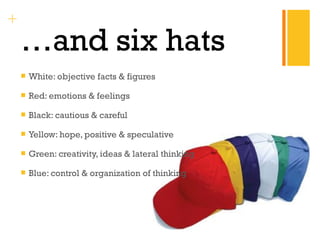
…and six hats 
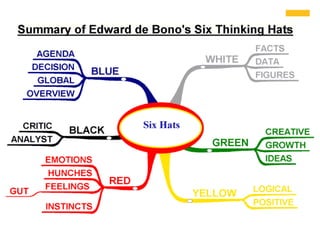
 White: objective facts & figures 
 Red: emotions & feelings 
 Black: cautious & careful 
 Yellow: hope, positive & speculative 
 Green: creativity, ideas & lateral thinking 
 Blue: control & organization of thinking
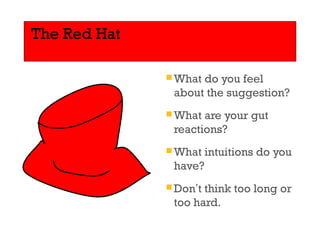
The Red Hat 
What do you feel 
about the suggestion? 
What are your gut 
reactions? 
What intuitions do you 
have? 
Don’t think too long or 
too hard.
The White Hat 
The information 
seeking hat. 
What are the facts? 
What information is 
available? What is 
relevant? 
When wearing the 
white hat we are 
neutral in our 
thinking.
The Yellow Hat 
The sunshine hat. 
It is positive and 
constructive. 
It is about 
effectiveness and 
getting a job done. 
What are the benefits, 
the advantages?
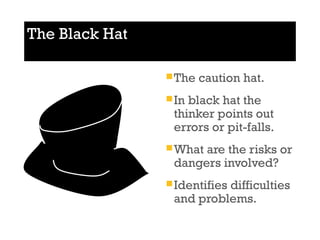
The Black Hat 
The caution hat. 
In black hat the 
thinker points out 
errors or pit-falls. 
What are the risks or 
dangers involved? 
Identifies difficulties 
and problems.
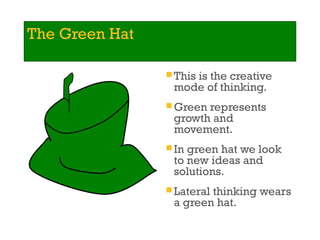
The Green Hat 
This is the creative 
mode of thinking. 
Green represents 
growth and 
movement. 
In green hat we look 
to new ideas and 
solutions. 
Lateral thinking wears 
a green hat.
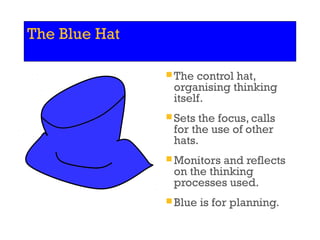
The Blue Hat 
The control hat, 
organising thinking 
itself. 
Sets the focus, calls 
for the use of other 
hats. 
Monitors and reflects 
on the thinking 
processes used. 
Blue is for planning.
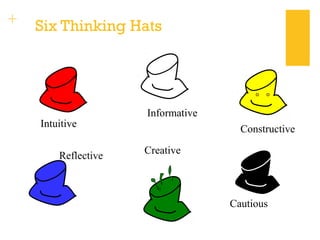
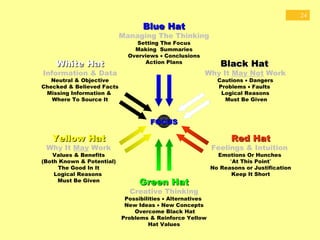
+ Six Thinking Hats 
Intuitive 
Informative 
Constructive 
Cautious 
Reflective Creative
24 
BBlluuee HHaatt 
Managing The Thinking 
Setting The Focus 
Making Summaries 
Overviews · Conclusions 
Action Plans 
GGrreeeenn HHaatt 
Creative Thinking 
Possibilities · Alternatives 
New Ideas · New Concepts 
Overcome Black Hat 
Problems & Reinforce Yellow 
Hat Values 
BBllaacckk HHaatt 
Why It May Not Work 
Cautions · Dangers 
Problems · Faults 
Logical Reasons 
Must Be Given 
YYeellllooww HHaatt 
Why It May Work 
Values & Benefits 
(Both Known & Potential) 
The Good In It 
Logical Reasons 
Must Be Given 
RReedd HHaatt 
Feelings & Intuition 
Emotions Or Hunches 
“At This Point” 
No Reasons or Justification 
Keep It Short 
WWhhiittee HHaatt 
Information & Data 
Neutral & Objective 
Checked & Believed Facts 
Missing Information & 
Where To Source It 
FFOOCCUUSS
+ 
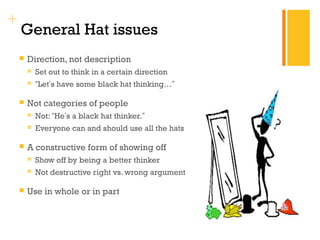
General Hat issues 
 Direction, not description 
 Set out to think in a certain direction 
 “Let’s have some black hat thinking…” 
 Not categories of people 
 Not: “He’s a black hat thinker.” 
 Everyone can and should use all the hats 
 A constructive form of showing off 
 Show off by being a better thinker 
 Not destructive right vs. wrong argument 
 Use in whole or in part
+ 
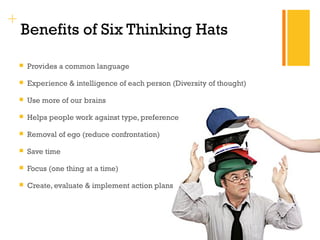
Benefits of Six Thinking Hats 
 Provides a common language 
 Experience & intelligence of each person (Diversity of thought) 
 Use more of our brains 
 Helps people work against type, preference 
 Removal of ego (reduce confrontation) 
 Save time 
 Focus (one thing at a time) 
 Create, evaluate & implement action plans
+ 
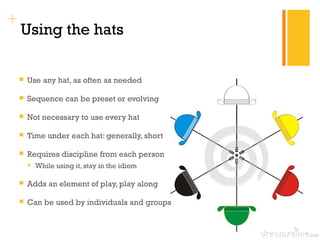
Using the hats 
 Use any hat, as often as needed 
 Sequence can be preset or evolving 
 Not necessary to use every hat 
 Time under each hat: generally, short 
 Requires discipline from each person 
 While using it, stay in the idiom 
 Adds an element of play, play along 
 Can be used by individuals and groups
+ 
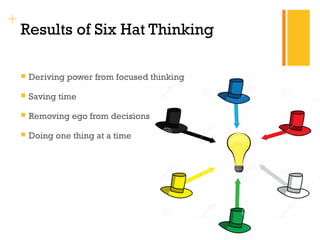
Results of Six Hat Thinking 
 Deriving power from focused thinking 
 Saving time 
 Removing ego from decisions 
 Doing one thing at a time
+ 
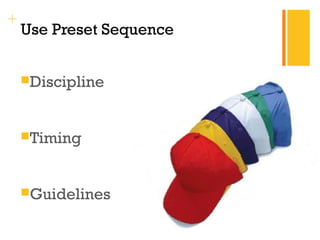
Use Preset Sequence 
Discipline 
Timing 
Guidelines
+ 
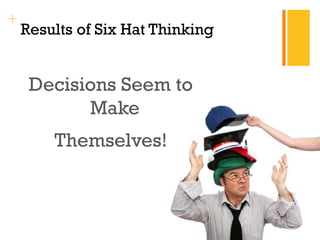
Results of Six Hat Thinking 
Decisions Seem to 
Make 
Themselves!
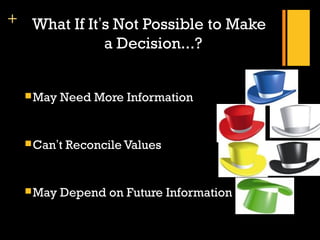
+ What If It’s Not Possible to Make 
a Decision...? 
May Need More Information 
Can’t Reconcile Values 
May Depend on Future Information
+
+
+ 
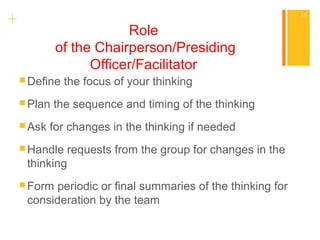
Role 
of the Chairperson/Presiding 
Officer/Facilitator 
Define the focus of your thinking 
Plan the sequence and timing of the thinking 
Ask for changes in the thinking if needed 
Handle requests from the group for changes in the 
thinking 
Form periodic or final summaries of the thinking for 
consideration by the team 
35 
x
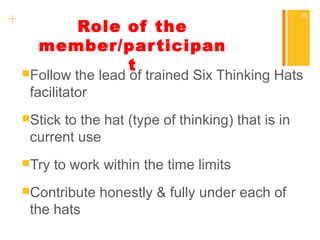
+ Role of the 
member/par ticipan 
36 
t Follow the lead of trained Six Thinking Hats 
facilitator 
Stick to the hat (type of thinking) that is in 
current use 
Try to work within the time limits 
Contribute honestly & fully under each of 
the hats
+ 
Edward de Bono’s 
Six Thinking Hats 
A tool for 
decision 
making & 
problem 
solving 
FREDERICK MARS UNTALAN MD

6 thinking hats

  • 1.
    + Edward deBono’s Six Thinking Hats A tool for decision making & problem solving FREDERICK MARS UNTALAN MD
  • 2.
  • 3.
    + “Traditional” CPS Mess-finding Data-finding Problem-finding Idea-finding Solution-finding Acceptance-finding
  • 4.
    + Common idea-findingmethods Brainstorming Mind Maps Free association Free-writing Incubation
  • 5.
    + Six hats& problem solving A more deliberate process than CPS Like CPS, uses creativity (green hat) Unlike CPS, provides a mechanism for evaluating ideas & making decisions
  • 6.
    +  Plato:See Shadows of the Truth  Aristotle: Concerned with What Is--  Analysis, Judgment, Argument  Socrates: Focused on the Negative
  • 7.
    + Six hatsis parallel thinking
  • 8.
    +  M.D.,Ph.D., (philosophy, medicine & psychology), Rhodes scholar  World-renowned consultant to business, governments, schools and industry  Author of 62 books in 40 languages  Originator of Six Thinking Hats, Lateral Thinking and Direct Attention Thinking Tools The Originator Dr. Edward de Bono 8
  • 9.
    + THINKING “TheUltimate Human Resource” We can always improve our thinking skills. Confused thinking arises from trying to do too much at once. We should emphasize what can be, & not what is.
  • 10.
    + Benefits OfThe Six Thinking Hat Framework Parallel 10 Adversarial Improve Exploration Save Time Improve Creativity & Innovation Foster Collaborative Thinking
  • 11.
    + Results AroundThe Wor ld Since 1993 over 200,000 trained In use by many of the largest & most successful organizations worldwide Works well in different cultures Applies at all levels & across disciplines 11
  • 12.
    + The Basics 12 There are six different imaginary hats that you can put on or take off. Think of the “hats” as thinking icons. Each hat is a different color and represents a different type or mode of thinking. We all wear the same hat (do the same type of thinking) at the same time. When we change hats - we change our thinking.
  • 13.
    + So thesix hats are…? Six colors of hats for six types of thinking  Each hat identifies a type of thinking Hats are directions of thinking Hats help a group use parallel thinking  You can “put on” and “take off” a hat
  • 14.
    + Uses forSix Hats Problem solving Strategic planning Running meetings Much more
  • 15.
    + Six colors…  White: neutral, objective  Red: emotional, angry  Black: serious, somber  Yellow: sunny, positive  Green: growth, fertility  Blue: cool, sky above
  • 16.
    + …and sixhats  White: objective facts & figures  Red: emotions & feelings  Black: cautious & careful  Yellow: hope, positive & speculative  Green: creativity, ideas & lateral thinking  Blue: control & organization of thinking
  • 17.
    The Red Hat What do you feel about the suggestion? What are your gut reactions? What intuitions do you have? Don’t think too long or too hard.
  • 18.
    The White Hat The information seeking hat. What are the facts? What information is available? What is relevant? When wearing the white hat we are neutral in our thinking.
  • 19.
    The Yellow Hat The sunshine hat. It is positive and constructive. It is about effectiveness and getting a job done. What are the benefits, the advantages?
  • 20.
    The Black Hat The caution hat. In black hat the thinker points out errors or pit-falls. What are the risks or dangers involved? Identifies difficulties and problems.
  • 21.
    The Green Hat This is the creative mode of thinking. Green represents growth and movement. In green hat we look to new ideas and solutions. Lateral thinking wears a green hat.
  • 22.
    The Blue Hat The control hat, organising thinking itself. Sets the focus, calls for the use of other hats. Monitors and reflects on the thinking processes used. Blue is for planning.
  • 23.
    + Six ThinkingHats Intuitive Informative Constructive Cautious Reflective Creative
  • 24.
    24 BBlluuee HHaatt Managing The Thinking Setting The Focus Making Summaries Overviews · Conclusions Action Plans GGrreeeenn HHaatt Creative Thinking Possibilities · Alternatives New Ideas · New Concepts Overcome Black Hat Problems & Reinforce Yellow Hat Values BBllaacckk HHaatt Why It May Not Work Cautions · Dangers Problems · Faults Logical Reasons Must Be Given YYeellllooww HHaatt Why It May Work Values & Benefits (Both Known & Potential) The Good In It Logical Reasons Must Be Given RReedd HHaatt Feelings & Intuition Emotions Or Hunches “At This Point” No Reasons or Justification Keep It Short WWhhiittee HHaatt Information & Data Neutral & Objective Checked & Believed Facts Missing Information & Where To Source It FFOOCCUUSS
  • 25.
    + General Hatissues  Direction, not description  Set out to think in a certain direction  “Let’s have some black hat thinking…”  Not categories of people  Not: “He’s a black hat thinker.”  Everyone can and should use all the hats  A constructive form of showing off  Show off by being a better thinker  Not destructive right vs. wrong argument  Use in whole or in part
  • 26.
    + Benefits ofSix Thinking Hats  Provides a common language  Experience & intelligence of each person (Diversity of thought)  Use more of our brains  Helps people work against type, preference  Removal of ego (reduce confrontation)  Save time  Focus (one thing at a time)  Create, evaluate & implement action plans
  • 27.
    + Using thehats  Use any hat, as often as needed  Sequence can be preset or evolving  Not necessary to use every hat  Time under each hat: generally, short  Requires discipline from each person  While using it, stay in the idiom  Adds an element of play, play along  Can be used by individuals and groups
  • 28.
    + Results ofSix Hat Thinking  Deriving power from focused thinking  Saving time  Removing ego from decisions  Doing one thing at a time
  • 29.
    + Use PresetSequence Discipline Timing Guidelines
  • 30.
    + Results ofSix Hat Thinking Decisions Seem to Make Themselves!
  • 31.
    + What IfIt’s Not Possible to Make a Decision...? May Need More Information Can’t Reconcile Values May Depend on Future Information
  • 33.
  • 34.
  • 35.
    + Role ofthe Chairperson/Presiding Officer/Facilitator Define the focus of your thinking Plan the sequence and timing of the thinking Ask for changes in the thinking if needed Handle requests from the group for changes in the thinking Form periodic or final summaries of the thinking for consideration by the team 35 x
  • 36.
    + Role ofthe member/par ticipan 36 t Follow the lead of trained Six Thinking Hats facilitator Stick to the hat (type of thinking) that is in current use Try to work within the time limits Contribute honestly & fully under each of the hats
  • 37.
    + Edward deBono’s Six Thinking Hats A tool for decision making & problem solving FREDERICK MARS UNTALAN MD

Editor's Notes

  • #2 'Six Thinking Hats' is an important and powerful technique. It is used to look at decisions from a number of important perspectives. This forces you to move outside your habitual thinking style, and helps you to get a more rounded view of a situation.
  • #3 Many successful people think from a very rational, positive viewpoint. This is part of the reason that they are successful.
  • #4 Often, though, they may fail to look at a problem from an emotional, intuitive, creative or negative viewpoint. This can mean that they underestimate resistance to plans, fail to make creative leaps and do not make essential contingency plans.
  • #5 Similarly, pessimists may be excessively defensive, and more emotional people may fail to look at decisions calmly and rationally.
  • #6 If you look at a problem with the 'Six Thinking Hats' technique, then you will solve it using all approaches. Your decisions and plans will mix ambition, skill in execution, public sensitivity, creativity and good contingency planning.
  • #8 At any moment everyone is looking in the same direction.
  • #12  Over 200,000 people have been trained to lead use of the Six Hat method.  This framework for parallel team thinking is now in use in hundreds of large and small organizations around the world.  The Six Hat method works well even when diverse cultures are involved. It also provides a common language across organizational levels and between different disciplines. With that background in mind let’s move on to the framework itself. 
  • #13 First we can quickly review the basics you will need to remember in order to participate in a Six Hat team thinking session.  First, there are six imaginary or metaphorical hats that can be worn - only one at a time. Relax…. no actual hats have to be used! This is a serious communication framework for serious issues and we don’t want to make its use seem trivial in any way.  Each hat is a different color, representing different types or modes of thinking.  Everyone on the team does the same type of thinking at the same time. That is, we all wear the same color hat.  When we change hats we change our thinking. The facilitator is an exception. The facilitator will always wear the control or facilitation hat (the blue hat), but he or she may also contribute in the content of the thinking if qualified and comfortable doing so. Although it may be uncomfortable at first, remember to use the hats and colors terminology. The artificiality of these symbols has proven to be a very powerful mental cue for producing a specific type of thinking at a specific time. Experience in many organizations has shown that in a very short time you will become unaware of the symbols themselves - the hats and colors. Instead you will key on the thinking being requested and automatically switch when necessary. 
  • #18 Emotions, Feelings, Hunches, Intuition Red Hat:
'Wearing' the red hat, you look at problems using intuition, gut reaction, and emotion. Also try to think how other people will react emotionally. Try to understand the responses of people who do not fully know your reasoning. How does everyone feel now that we have worked on the issue/problem? How does everyone feel about the problem?
  • #19 Deals with facts White Hat:
With this thinking hat you focus on the data available. Look at the information you have, and see what you can learn from it. Look for gaps in your knowledge, and either try to fill them or take account of them. This is where you analyze past trends, and try to extrapolate from historical data. What is the current information on the issue?
  • #20 Optimistic Hopeful Positive Thinking Constructive Effective Yellow Hat:
The yellow hat helps you to think positively. It is the optimistic viewpoint that helps you to see all the benefits of the decision and the value in it. Yellow Hat thinking helps you to keep going when everything looks gloomy and difficult. What are the positive aspects of the issue/problem?
  • #21 Serious, Cautious, Careful, Lays Out Risks Black Hat:
Using black hat thinking, look at all the bad points of the decision. Look at it cautiously and defensively. Try to see why it might not work. This is important because it highlights the weak points in a plan. It allows you to eliminate them, alter them, or prepare contingency plans to counter them. Black Hat thinking helps to make your plans 'tougher' and more resilient. It can also help you to spot fatal flaws and risks before you embark on a course of action. Black Hat thinking is one of the real benefits of this technique, as many successful people get so used to thinking positively that often they cannot see problems in advance. This leaves them under-prepared for difficulties. What are the negative aspects of the issue/problem?
  • #22 Creative, New Ideas and Concepts, Search for Alternatives Green Hat:
The Green Hat stands for creativity. This is where you can develop creative solutions to a problem. It is a freewheeling way of thinking, in which there is little criticism of ideas. What are new creative ideas or altenatives in solving the issues/problem?
  • #23 Control, Organization, Responsible for Conclusions, Sets the Focus, Use of All the Hats Blue Hat:
The Blue Hat stands for process control. This is the hat worn by people chairing meetings. When running into difficulties because ideas are running dry, they may direct activity into Green Hat thinking. When contingency plans are needed, they will ask for Black Hat thinking, etc. What conclusions or summaries can we make in moving forward on the issue/problem
  • #29 Two Main Purposes For Six Thinking Hats Simplifies thinking by having to deal with one thing at a time. Allows a switch in thinking without threatening ego.
  • #34 Six Thinking Hats is a good technique for looking at the effects of a decision from a number of different points of view. It allows necessary emotion and skepticism to be brought into what would otherwise be purely rational decisions. It opens up the opportunity for creativity within Decision Making.
  • #35 The technique also helps, for example, persistently pessimistic people to be positive and creative. Plans developed using the '6 Thinking Hats' technique will be sounder and more resilient than would otherwise be the case. It may also help you to avoid public relations mistakes, and spot good reasons not to follow a course of action before you have committed to it.
  • #37 Your responsibilities within your role as a participant include:  Following the lead of the facilitator.  Sticking to the hat in current use so that everyone is thinking in the same mode at the same time. This is the essence of parallel thinking. Remember exploration before decision.  Seeking to stay within the time limits that the leader has planned for each hat. Of course, he or she has the latitude to extend the times if necessary.  Finally, and perhaps most importantly, you should seek to contribute as completely and as honestly as possible in each thinking modes that is called for. Try to reserve your judgment until all exploration has been done. This is key to driving better exploration and better decisions. Now, with those basics in mind let’s do a quick practice session on a remote example before we try it out on one of our real issues. 
  • #38 'Six Thinking Hats' is an important and powerful technique. It is used to look at decisions from a number of important perspectives. This forces you to move outside your habitual thinking style, and helps you to get a more rounded view of a situation.