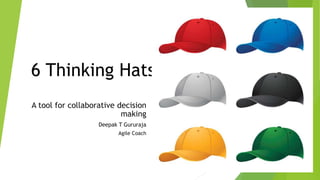

6 Thinking Hats
A tool for collaborative decision
making
Deepak T Gururaja
Agile Coach
Lets go back in Time
And see how challenges were handled,
and how decisions were being made
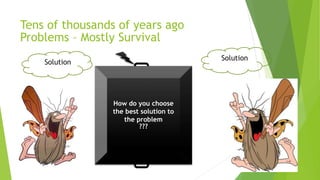
Tens of thousands of years ago
Problems – Mostly Survival
P
R
O
B
L
E
M
Solution
Solution
How do you choose
the best solution to
the problem
???
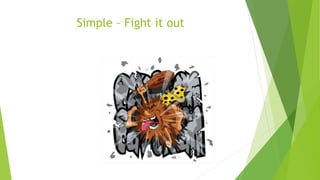
Simple – Fight it out
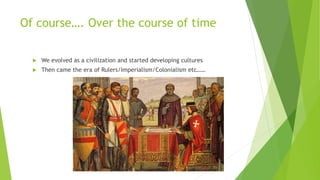
Of course…. Over the course of time
 We evolved as a civilization and started developing cultures
 Then came the era of Rulers/Imperialism/Colonialism etc……
Problems and How were they solved
Problem
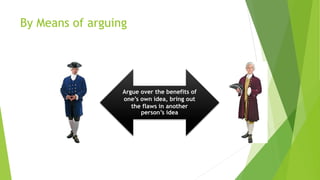
By Means of arguing
Argue over the benefits of
one’s own idea, bring out
the flaws in another
person’s idea
So….
 Each person would talk about how best their idea is, and
how bad the other person’s idea is
 Acceptance of an idea would purely depend on weather of
not the individual could present it flawlessly
 One party would talk about the merits of the idea, and
another party would talk about the demerits of the idea
Even today, this seems to be the preferred way of arriving at
the best solution to a given problem, or, to get mutual
agreement among people
Today….
 Most problems that we encounter today in out
professional lives are
 mostly intellectual
 Those which need collaboration
 Arguing over multiple solutions might not be the best
option
Argument v/s Parallel Thinking
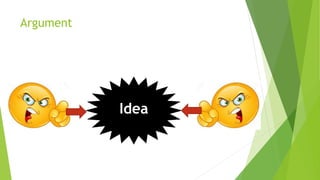
 While in Argument
 The focus is on “What Is”
 Each person talks out of their own silo
 Each person sees from his own direction, not from any other direction
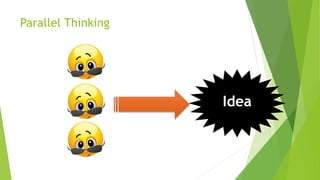
 While In Parallel Thinking
 The focus is on “What Can Be”
 Design the best way forward – together
 The Idea is put on the table and everyone looks at it in the same direction
Argument
Idea
Parallel Thinking
Idea
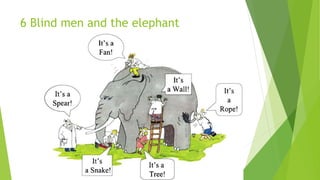
6 Blind men and the elephant
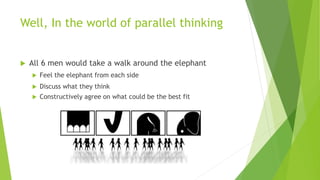
Well, In the world of parallel thinking
 All 6 men would take a walk around the elephant
 Feel the elephant from each side
 Discuss what they think
 Constructively agree on what could be the best fit
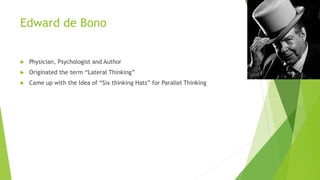
Edward de Bono
 Physician, Psychologist and Author
 Originated the term “Lateral Thinking”
 Came up with the Idea of “Six thinking Hats” for Parallel Thinking
6 Thinking Hats
 There are 6 coloured hats
 The group wears a same coloured hat at a time while considering a problem
 Colour of the hat is metaphorical for a way of thinking
 Each colour brings out a different perspective
 Note
 Different Colours bring out different perspectives of the idea
 All the people looking at the idea, look at it from one direction, for example, the
entire group, together, discuss on the benefits of the idea, then, move on to
discuss the pitfalls of the idea, and, so on…
 All this is done as a group
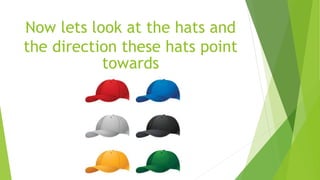
Now lets look at the hats and
the direction these hats point
towards
White Hat
 Neutral and Objective
 Facts and Figures
 Thinking Directions
 What Information do we have?
 What Information do we need?
 What Information is Missing?
 Do we have Enough Information to make a decision?
Red Hat
 Red as a colour suggests anger, rage
 Red is a sign of emotion and takes on the emotional direction of an idea
 Some of the directional questions for a Red hat
 My “Gut” feeling tells me that this is risky
 I “Feel” that the targets are aggressive
 Bring out the range of feelings – “Like” “Hate” “Unhappy” “Mixed” “Doubtful”
Black Hat
 Black is Serious
 This is where we exercise caution, try to be careful
 What are the weak links of an idea
 Some directional thoughts for Black Hats
 Why this might not work
 What are the pitfalls
 What should we be careful about
 What would be the difficulties in implementing this idea
Yellow Hat
 Sunny Side Up
 Brings out the positives of an idea
 Talks about hope
 Has an optimistic outlook
 Some Suggestive directions
 What are the possibilities
 What are the benefits
 Some the great things that could come out of this idea
 How can we “Make things Happen”
Green Hat
 Green as a colour represents abundance, fertility and growth
 Look at creativity
 Come up with new ideas
 Some Directives
 New and New ideas
 Alternative ideas
 Changes that will bring in benefits
 New approaches to problem solving
Blue Hat
 The colour of the Sky, which is above everything else
 It is concerned with structure and organizing
 Controls the other hats and the thinking process
 Could also be the hat worn by the facilitator
 Some Directions
 What would be the best order of hats, in order for us to achieve best results
 Thinking about thinking
 Instructions
 Summarizing
So, how does this work
 As a group, pick up a problem to be solved, or a solution to be analysed
 Wear the hats one at a time – speak your thoughts in the direction, as
indicated by the colour of the hat
 Bingo… You have consensus even before you know it
 It is not necessary to use all 6 hats, you can chose to use only the relevant
hats
But… How about the order of the hats
 It depends of the situation at hand
 The order differs if you would like to solve a problem v/s analyse the
feasibility of the solution
 The order could be pre-determined, or agreed upon, at the start of the
discussion – Do remember to wear a blue hat at this point
 It might be a good idea to start with a Blue Hat (Summary of the situation at
hand + set the context) then move to Red Hat (To understand how people feel
about the situation) then move on to other hats
 Its suggested to end with a Blue Hat
 You could switch hats multiple times, but, stick to the rules of the game
Some obvious benefits
 Of course, collaborative thinking
 Its easier to ask someone to “take off the black hat” than to “stop being
negative”
 Here, thinking is not used to put down idea or people, people are equally
compelled to wear a Yellow Hat
 Thinking will go beyond being “Personal thoughts”
 “Confusion is the biggest enemy of good thinking” Here, all thoughts are
channelized
The Book
So, what hat do you want to wear today?

6 thinkinghats

  • 1.
    6 Thinking Hats Atool for collaborative decision making Deepak T Gururaja Agile Coach
  • 2.
    Lets go backin Time And see how challenges were handled, and how decisions were being made
  • 3.
    Tens of thousandsof years ago Problems – Mostly Survival P R O B L E M Solution Solution How do you choose the best solution to the problem ???
  • 4.
  • 5.
    Of course…. Overthe course of time  We evolved as a civilization and started developing cultures  Then came the era of Rulers/Imperialism/Colonialism etc……
  • 6.
    Problems and Howwere they solved Problem
  • 7.
    By Means ofarguing Argue over the benefits of one’s own idea, bring out the flaws in another person’s idea
  • 8.
    So….  Each personwould talk about how best their idea is, and how bad the other person’s idea is  Acceptance of an idea would purely depend on weather of not the individual could present it flawlessly  One party would talk about the merits of the idea, and another party would talk about the demerits of the idea Even today, this seems to be the preferred way of arriving at the best solution to a given problem, or, to get mutual agreement among people
  • 9.
    Today….  Most problemsthat we encounter today in out professional lives are  mostly intellectual  Those which need collaboration  Arguing over multiple solutions might not be the best option
  • 10.
    Argument v/s ParallelThinking  While in Argument  The focus is on “What Is”  Each person talks out of their own silo  Each person sees from his own direction, not from any other direction  While In Parallel Thinking  The focus is on “What Can Be”  Design the best way forward – together  The Idea is put on the table and everyone looks at it in the same direction
  • 11.
  • 12.
  • 13.
    6 Blind menand the elephant
  • 14.
    Well, In theworld of parallel thinking  All 6 men would take a walk around the elephant  Feel the elephant from each side  Discuss what they think  Constructively agree on what could be the best fit
  • 15.
    Edward de Bono Physician, Psychologist and Author  Originated the term “Lateral Thinking”  Came up with the Idea of “Six thinking Hats” for Parallel Thinking
  • 16.
    6 Thinking Hats There are 6 coloured hats  The group wears a same coloured hat at a time while considering a problem  Colour of the hat is metaphorical for a way of thinking  Each colour brings out a different perspective  Note  Different Colours bring out different perspectives of the idea  All the people looking at the idea, look at it from one direction, for example, the entire group, together, discuss on the benefits of the idea, then, move on to discuss the pitfalls of the idea, and, so on…  All this is done as a group
  • 17.
    Now lets lookat the hats and the direction these hats point towards
  • 18.
    White Hat  Neutraland Objective  Facts and Figures  Thinking Directions  What Information do we have?  What Information do we need?  What Information is Missing?  Do we have Enough Information to make a decision?
  • 19.
    Red Hat  Redas a colour suggests anger, rage  Red is a sign of emotion and takes on the emotional direction of an idea  Some of the directional questions for a Red hat  My “Gut” feeling tells me that this is risky  I “Feel” that the targets are aggressive  Bring out the range of feelings – “Like” “Hate” “Unhappy” “Mixed” “Doubtful”
  • 20.
    Black Hat  Blackis Serious  This is where we exercise caution, try to be careful  What are the weak links of an idea  Some directional thoughts for Black Hats  Why this might not work  What are the pitfalls  What should we be careful about  What would be the difficulties in implementing this idea
  • 21.
    Yellow Hat  SunnySide Up  Brings out the positives of an idea  Talks about hope  Has an optimistic outlook  Some Suggestive directions  What are the possibilities  What are the benefits  Some the great things that could come out of this idea  How can we “Make things Happen”
  • 22.
    Green Hat  Greenas a colour represents abundance, fertility and growth  Look at creativity  Come up with new ideas  Some Directives  New and New ideas  Alternative ideas  Changes that will bring in benefits  New approaches to problem solving
  • 23.
    Blue Hat  Thecolour of the Sky, which is above everything else  It is concerned with structure and organizing  Controls the other hats and the thinking process  Could also be the hat worn by the facilitator  Some Directions  What would be the best order of hats, in order for us to achieve best results  Thinking about thinking  Instructions  Summarizing
  • 24.
    So, how doesthis work  As a group, pick up a problem to be solved, or a solution to be analysed  Wear the hats one at a time – speak your thoughts in the direction, as indicated by the colour of the hat  Bingo… You have consensus even before you know it  It is not necessary to use all 6 hats, you can chose to use only the relevant hats
  • 25.
    But… How aboutthe order of the hats  It depends of the situation at hand  The order differs if you would like to solve a problem v/s analyse the feasibility of the solution  The order could be pre-determined, or agreed upon, at the start of the discussion – Do remember to wear a blue hat at this point  It might be a good idea to start with a Blue Hat (Summary of the situation at hand + set the context) then move to Red Hat (To understand how people feel about the situation) then move on to other hats  Its suggested to end with a Blue Hat  You could switch hats multiple times, but, stick to the rules of the game
  • 26.
    Some obvious benefits Of course, collaborative thinking  Its easier to ask someone to “take off the black hat” than to “stop being negative”  Here, thinking is not used to put down idea or people, people are equally compelled to wear a Yellow Hat  Thinking will go beyond being “Personal thoughts”  “Confusion is the biggest enemy of good thinking” Here, all thoughts are channelized
  • 27.
  • 28.
    So, what hatdo you want to wear today?