P.C.Patil
 Monophasic dosage form refers to liquid preparation
containing two or more components in one phase
system, it is represent by true solution.
 A true solution is a clear homogenous mixture that is
prepared by dissolving solute in a suitable solvent.
 The component of the solution which is present in a
large quantity is known as “SOLVENT” where as the
component present in small quantity is termed as
“SOLUTE”.
 It is easier to swallow, therefore easier for children and
old age people.
 Facilitate absorption of drug faster than solid dosage
form as drug is already in solution form.
 It is homogenous therefore give uniform dose than
suspension or emulsion which need shaking.
 Simple and fast to formulate
 It can be administered by various routes :Oral,
Parenteral (injection),enema for rectal use, otic (ear),
nasal and ophthalmic preparation.
 They are bulky, so difficult to transport and store.
 Water is commonly use vehicle, which is prone to
microbial growth, So addition of preservative is
needed.
 When expose to direct sunlight it may undergo
hydrolysis, so need to store in cool and dark place.
 Drug stability reduce by hydrolysis or oxidation. So,
they have shorter expire date than solid dosage form.
 Other major sign of drug instability are color change,
Precipitation, microbial growth etc.
 Aqueous solutions containing antiseptics or antibiotics used to treat
throat infections.
 Available in concentrated form with direction for dilution with
warm water before use.
 Phenol or thymol is used as antibacterial agent in gargles & it is
present in low concentration which provides mild anesthetic effect.
 KCl is also present in gargles & it gives astringent effect &
stimulate flow of saliva, which release the drugs.
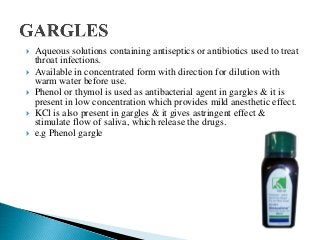
 e.g Phenol gargle
 e.g. Phenol Gargle
Phenol glycerin: 5ml
Amaranth Solution.: 1ml
Purified water: q.s up to 100ml
 Procedure: amaranth solution + a small qty. Of H2O +
Phenol glycerin to it. The solution is stirred & made up
the volume with purified H2O. Diluted with equal
volume with warm water.
 Aqueous solution with a pleasant taste and odor used to
clean and deodorize the buccal cavity.
 Have antiseptic and astringent activity.
 They may also contain alcohol, glycerin, surfactants,
synthetic sweeteners, flavouring & colouring agents.
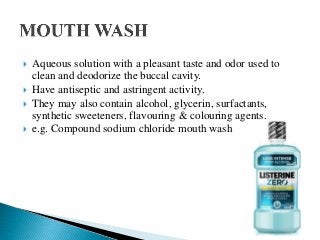
 e.g. Compound sodium chloride mouth wash
 Viscous liquid preparation used for mouth and throat
infections.
 Glycerin is commonly used as a base because it adheres to
mucous membrane for a long period.
 Glycerin provides prolong the action to the medicine.
 Glycerin also provides sweet taste to the preparation.
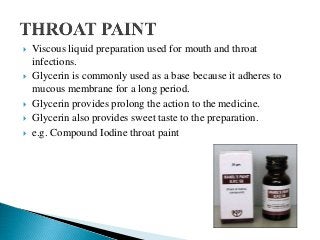
 e.g. Compound Iodine throat paint
E.g.:
Potassium iodide : 2.5 gm
Iodine : 1.25 gm
Alcohol : 4ml
Water : 2.5 ml
Peppermint oil : 0.4 ml
Glycerin : 100ml
 Procedure : potassium iodide dissolve in H2O + iodine
stir until completely dissolved. Dissolve Peppermint oil
in alcohol & transfer into iodine solution & make up
the volume with glycerin.
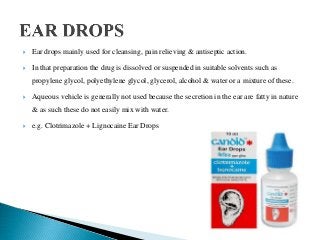
 Ear drops mainly used for cleansing, pain relieving & antiseptic action.
 In that preparation the drug is dissolved or suspended in suitable solvents such as
propylene glycol, polyethylene glycol, glycerol, alcohol & water or a mixture of these.
 Aqueous vehicle is generally not used because the secretion in the ear are fatty in nature
& as such these do not easily mix with water.
 e.g. Clotrimazole + Lignocaine Ear Drops
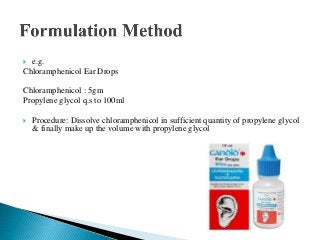
 e.g.
Chloramphenicol Ear Drops
Chloramphenicol : 5gm
Propylene glycol q.s to 100ml
 Procedure: Dissolve chloramphenicol in sufficient quantity of propylene glycol
& finally make up the volume with propylene glycol
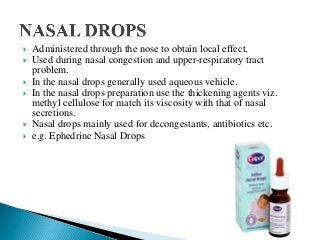
 Administered through the nose to obtain local effect.
 Used during nasal congestion and upper-respiratory tract
problem.
 In the nasal drops generally used aqueous vehicle.
 In the nasal drops preparation use the thickening agents viz.
methyl cellulose for match its viscosity with that of nasal
secretions.
 Nasal drops mainly used for decongestants, antibiotics etc.
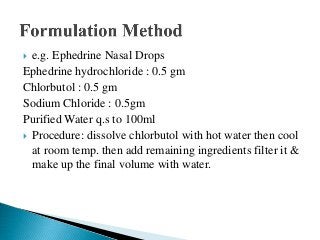
 e.g. Ephedrine Nasal Drops
Ephedrine hydrochloride : 0.5 gm
Chlorbutol : 0.5 gm
Sodium Chloride : 0.5gm
Purified Water q.s to 100ml
 Procedure: dissolve chlorbutol with hot water then cool
at room temp. then add remaining ingredients filter it &
make up the final volume with water.
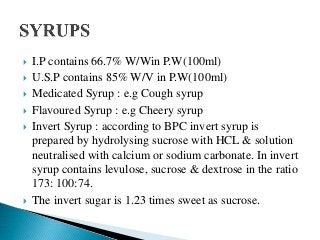
 I.P contains 66.7% W/Win P.W(100ml)
 U.S.P contains 85% W/V in P.W(100ml)
 Medicated Syrup : e.g Cough syrup
 Flavoured Syrup : e.g Cheery syrup
 Invert Syrup : according to BPC invert syrup is
prepared by hydrolysing sucrose with HCL & solution
neutralised with calcium or sodium carbonate. In invert
syrup contains levulose, sucrose & dextrose in the ratio
173: 100:74.
 The invert sugar is 1.23 times sweet as sucrose.
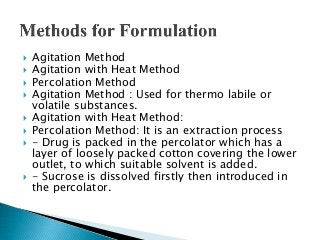
 Agitation Method
 Agitation with Heat Method
 Percolation Method
 Agitation Method : Used for thermo labile or
volatile substances.
 Agitation with Heat Method:
 Percolation Method: It is an extraction process
 - Drug is packed in the percolator which has a
layer of loosely packed cotton covering the lower
outlet, to which suitable solvent is added.
 - Sucrose is dissolved firstly then introduced in
the percolator.
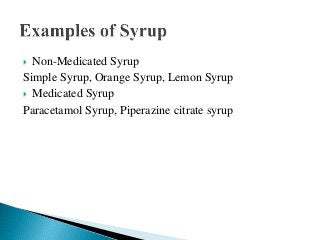
 Non-Medicated Syrup
Simple Syrup, Orange Syrup, Lemon Syrup
 Medicated Syrup
Paracetamol Syrup, Piperazine citrate syrup
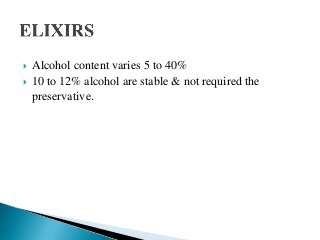
 Alcohol content varies 5 to 40%
 10 to 12% alcohol are stable & not required the
preservative.
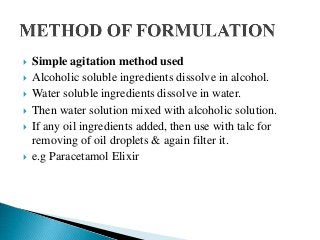
 Simple agitation method used
 Alcoholic soluble ingredients dissolve in alcohol.
 Water soluble ingredients dissolve in water.
 Then water solution mixed with alcoholic solution.
 If any oil ingredients added, then use with talc for
removing of oil droplets & again filter it.
 e.g Paracetamol Elixir
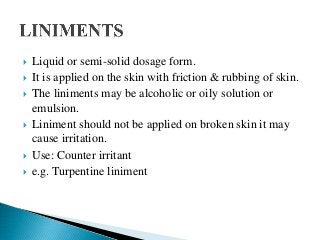
 Liquid or semi-solid dosage form.
 It is applied on the skin with friction & rubbing of skin.
 The liniments may be alcoholic or oily solution or
emulsion.
 Liniment should not be applied on broken skin it may
cause irritation.
 Use: Counter irritant
 e.g. Turpentine liniment
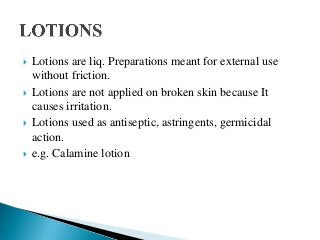
 Lotions are liq. Preparations meant for external use
without friction.
 Lotions are not applied on broken skin because It
causes irritation.
 Lotions used as antiseptic, astringents, germicidal
action.
 e.g. Calamine lotion
THANK YOU

6 monophasic liquid dosage form

  • 1.
  • 2.
     Monophasic dosageform refers to liquid preparation containing two or more components in one phase system, it is represent by true solution.  A true solution is a clear homogenous mixture that is prepared by dissolving solute in a suitable solvent.  The component of the solution which is present in a large quantity is known as “SOLVENT” where as the component present in small quantity is termed as “SOLUTE”.
  • 3.
     It iseasier to swallow, therefore easier for children and old age people.  Facilitate absorption of drug faster than solid dosage form as drug is already in solution form.  It is homogenous therefore give uniform dose than suspension or emulsion which need shaking.  Simple and fast to formulate  It can be administered by various routes :Oral, Parenteral (injection),enema for rectal use, otic (ear), nasal and ophthalmic preparation.
  • 4.
     They arebulky, so difficult to transport and store.  Water is commonly use vehicle, which is prone to microbial growth, So addition of preservative is needed.  When expose to direct sunlight it may undergo hydrolysis, so need to store in cool and dark place.  Drug stability reduce by hydrolysis or oxidation. So, they have shorter expire date than solid dosage form.  Other major sign of drug instability are color change, Precipitation, microbial growth etc.
  • 5.
     Aqueous solutionscontaining antiseptics or antibiotics used to treat throat infections.  Available in concentrated form with direction for dilution with warm water before use.  Phenol or thymol is used as antibacterial agent in gargles & it is present in low concentration which provides mild anesthetic effect.  KCl is also present in gargles & it gives astringent effect & stimulate flow of saliva, which release the drugs.  e.g Phenol gargle
  • 6.
     e.g. PhenolGargle Phenol glycerin: 5ml Amaranth Solution.: 1ml Purified water: q.s up to 100ml  Procedure: amaranth solution + a small qty. Of H2O + Phenol glycerin to it. The solution is stirred & made up the volume with purified H2O. Diluted with equal volume with warm water.
  • 7.
     Aqueous solutionwith a pleasant taste and odor used to clean and deodorize the buccal cavity.  Have antiseptic and astringent activity.  They may also contain alcohol, glycerin, surfactants, synthetic sweeteners, flavouring & colouring agents.  e.g. Compound sodium chloride mouth wash
  • 8.
     Viscous liquidpreparation used for mouth and throat infections.  Glycerin is commonly used as a base because it adheres to mucous membrane for a long period.  Glycerin provides prolong the action to the medicine.  Glycerin also provides sweet taste to the preparation.  e.g. Compound Iodine throat paint
  • 9.
    E.g.: Potassium iodide :2.5 gm Iodine : 1.25 gm Alcohol : 4ml Water : 2.5 ml Peppermint oil : 0.4 ml Glycerin : 100ml  Procedure : potassium iodide dissolve in H2O + iodine stir until completely dissolved. Dissolve Peppermint oil in alcohol & transfer into iodine solution & make up the volume with glycerin.
  • 10.
     Ear dropsmainly used for cleansing, pain relieving & antiseptic action.  In that preparation the drug is dissolved or suspended in suitable solvents such as propylene glycol, polyethylene glycol, glycerol, alcohol & water or a mixture of these.  Aqueous vehicle is generally not used because the secretion in the ear are fatty in nature & as such these do not easily mix with water.  e.g. Clotrimazole + Lignocaine Ear Drops
  • 11.
     e.g. Chloramphenicol EarDrops Chloramphenicol : 5gm Propylene glycol q.s to 100ml  Procedure: Dissolve chloramphenicol in sufficient quantity of propylene glycol & finally make up the volume with propylene glycol
  • 12.
     Administered throughthe nose to obtain local effect.  Used during nasal congestion and upper-respiratory tract problem.  In the nasal drops generally used aqueous vehicle.  In the nasal drops preparation use the thickening agents viz. methyl cellulose for match its viscosity with that of nasal secretions.  Nasal drops mainly used for decongestants, antibiotics etc.  e.g. Ephedrine Nasal Drops
  • 13.
     e.g. EphedrineNasal Drops Ephedrine hydrochloride : 0.5 gm Chlorbutol : 0.5 gm Sodium Chloride : 0.5gm Purified Water q.s to 100ml  Procedure: dissolve chlorbutol with hot water then cool at room temp. then add remaining ingredients filter it & make up the final volume with water.
  • 14.
     I.P contains66.7% W/Win P.W(100ml)  U.S.P contains 85% W/V in P.W(100ml)  Medicated Syrup : e.g Cough syrup  Flavoured Syrup : e.g Cheery syrup  Invert Syrup : according to BPC invert syrup is prepared by hydrolysing sucrose with HCL & solution neutralised with calcium or sodium carbonate. In invert syrup contains levulose, sucrose & dextrose in the ratio 173: 100:74.  The invert sugar is 1.23 times sweet as sucrose.
  • 15.
     Agitation Method Agitation with Heat Method  Percolation Method  Agitation Method : Used for thermo labile or volatile substances.  Agitation with Heat Method:  Percolation Method: It is an extraction process  - Drug is packed in the percolator which has a layer of loosely packed cotton covering the lower outlet, to which suitable solvent is added.  - Sucrose is dissolved firstly then introduced in the percolator.
  • 16.
     Non-Medicated Syrup SimpleSyrup, Orange Syrup, Lemon Syrup  Medicated Syrup Paracetamol Syrup, Piperazine citrate syrup
  • 17.
     Alcohol contentvaries 5 to 40%  10 to 12% alcohol are stable & not required the preservative.
  • 18.
     Simple agitationmethod used  Alcoholic soluble ingredients dissolve in alcohol.  Water soluble ingredients dissolve in water.  Then water solution mixed with alcoholic solution.  If any oil ingredients added, then use with talc for removing of oil droplets & again filter it.  e.g Paracetamol Elixir
  • 19.
     Liquid orsemi-solid dosage form.  It is applied on the skin with friction & rubbing of skin.  The liniments may be alcoholic or oily solution or emulsion.  Liniment should not be applied on broken skin it may cause irritation.  Use: Counter irritant  e.g. Turpentine liniment
  • 20.
     Lotions areliq. Preparations meant for external use without friction.  Lotions are not applied on broken skin because It causes irritation.  Lotions used as antiseptic, astringents, germicidal action.  e.g. Calamine lotion
  • 21.