Abnormal labor and Dystocia Dept. of Ob&Gyn, The first affiliated hospital He  Ke
Definition Difficult labor or childbirth Abnormal slow progress of labor
Incidence   The  most common  indication for primary  cesarean section
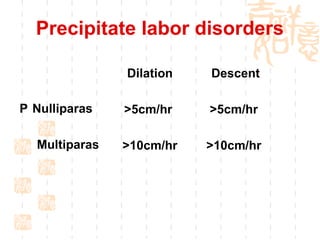
Abnormal patterns   Prolonged latent phase Protraction disorders (active phase) Arrest disorders (active phase) Precipitate labor disorders
Evaluation index Cervical dilation Descent of the fetal presentation
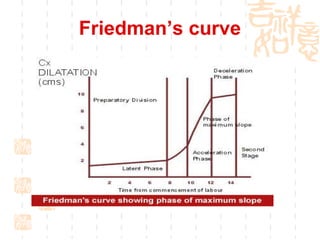
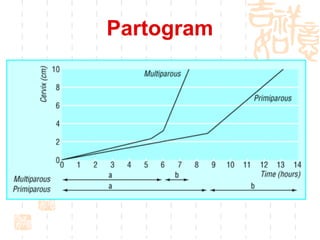
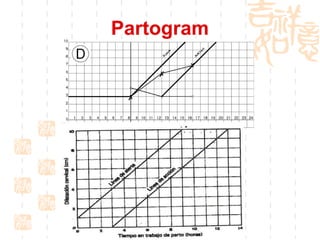
Friedman’s curve
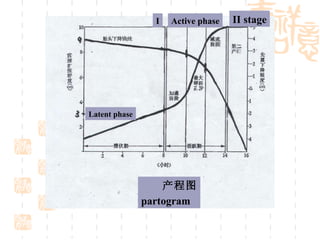
Latent phase Active phase I II stage 产程图 partogram
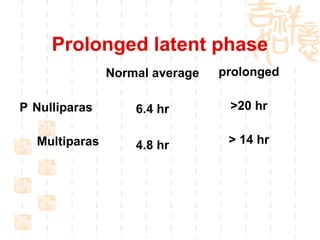
Prolonged latent phase 􀁺  Nulliparas Multiparas prolonged >20 hr > 14 hr Normal average 6.4 hr 4.8 hr
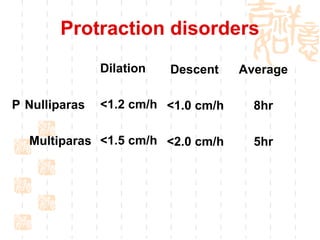
Protraction disorders 􀁺  Nulliparas Multiparas Descent <1.0 cm/h <2.0 cm/h Dilation <1.2 cm/h <1.5 cm/h Average 8hr 5hr
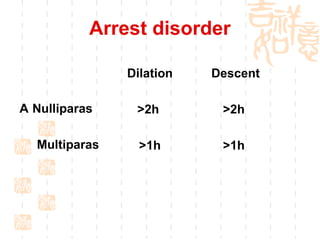
Arrest disorder 􀁺  Nulliparas Multiparas Descent >2h >1h Dilation >2h  >1h
Partogram
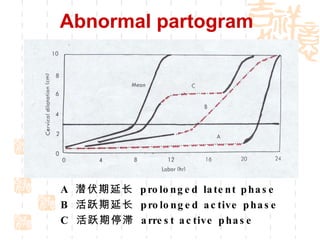
A  潜伏期延长  prolonged latent phase B  活跃期延长  prolonged active phase C  活跃期停滞  arrest active phase Abnormal partogram
Partogram
Precipitate labor disorders 􀁺  Nulliparas Multiparas Descent >5cm/hr >10cm/hr Dilation >5cm/hr  >10cm/hr
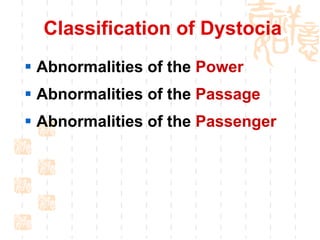
Classification of Dystocia Abnormalities of the  Power Abnormalities of the  Passage Abnormalities of the  Passenger
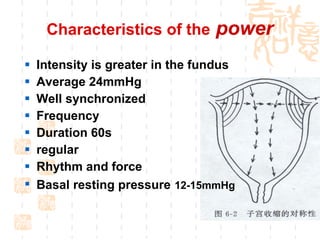
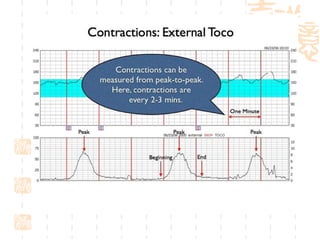
Characteristics of the   power Intensity is greater in the fundus Average 24mmHg Well synchronized  Frequency  Duration 60s regular Rhythm and force Basal resting pressure   12-15mmHg
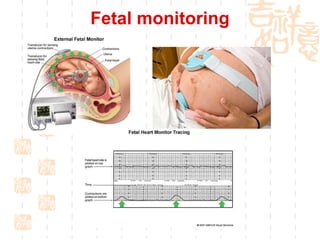
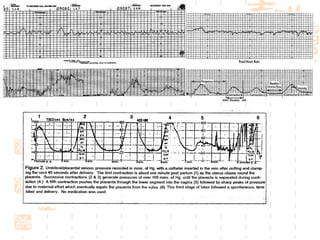
Fetal monitoring
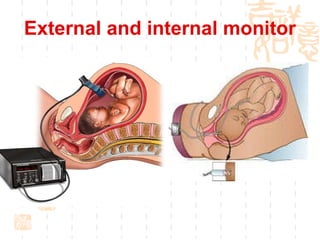
External and internal monitor
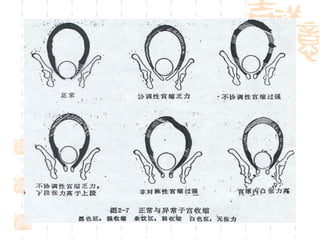
Uterine dysfunction Hypotonic Hypertonic Uncoordinated Inadequate expulsive efforts
Hypotonic dysfunction Insufficient  Irregular  Infrequent Response well to  oxytocin Most in primigravidas  in active phase
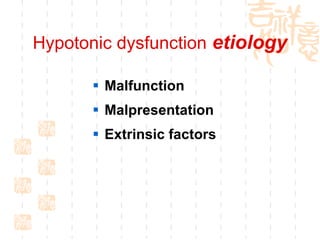
Hypotonic dysfunction   etiology Malfunction Malpresentation Extrinsic factors
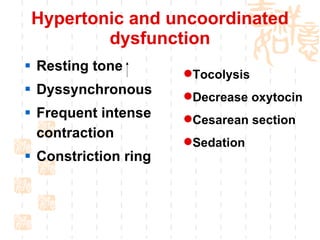
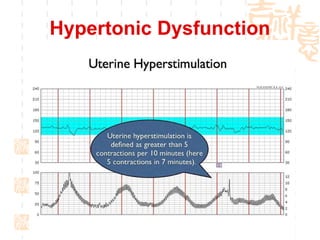
Hypertonic and uncoordinated dysfunction Resting tone  Dyssynchronous Frequent intense contraction Constriction ring Tocolysis   Decrease oxytocin  Cesarean section Sedation
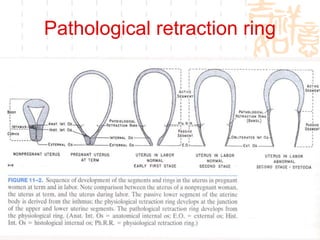
Pathological retraction ring
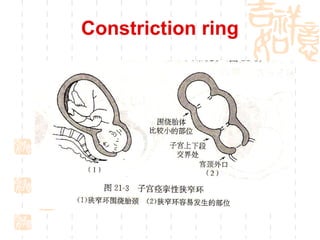
Constriction ring
 
 
Hypertonic Dysfunction
 
Inadequate expulsive efforts Second stage Assisted delivery might be needed Analgesic / anesthetic agents wear off
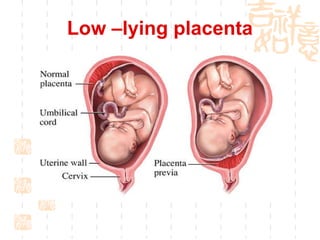
Abnormalities of the  Passage Bony pelvic (most common) Soft tissue obstruction Abnormal placenta location
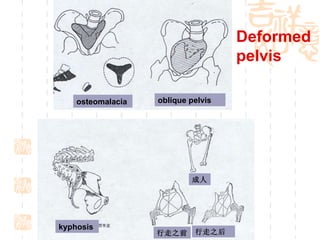
Bony pelvic abnormalities Inlet Midpelvic-outlet Generally contracted pelvic Deformed pelvic
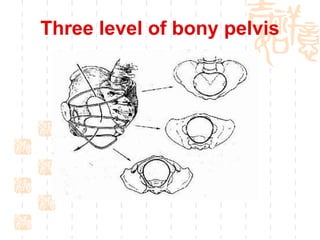
Three level of bony pelvis
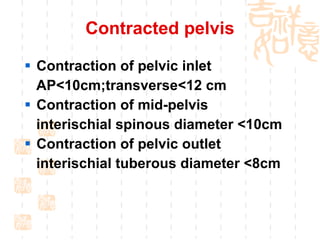
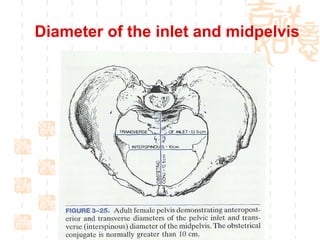
Contracted pelvis Contraction of pelvic inlet AP<10cm;transverse<12 cm Contraction of mid-pelvis interischial spinous diameter <10cm Contraction of pelvic outlet interischial tuberous diameter <8cm
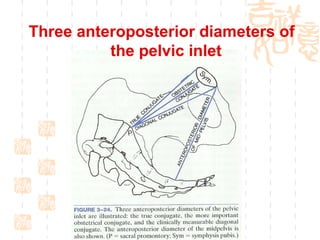
Three anteroposterior diameters of   the pelvic inlet
D iameter of the  inlet and  midpelvis
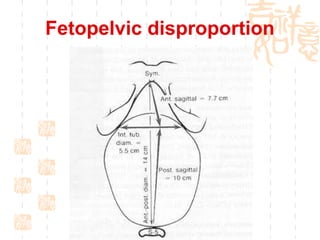
Fetopelvic disproportion
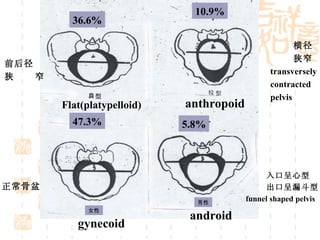
正常骨盆 入口呈心型 出口呈漏斗型 funnel shaped pelvis 47.3% 5.8% 36.6% 10.9% gynecoid android Flat(platypelloid) anthropoid 前后径 狭  窄 横径 狭窄 transversely contracted  pelvis 女性 男性
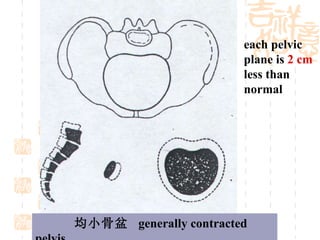
each pelvic plane is  2 cm  less than normal 均小骨盆  generally contracted pelvis
osteomalacia   oblique pelvis   kyphosis   成人 行走之前 行走之后 Deformed pelvis
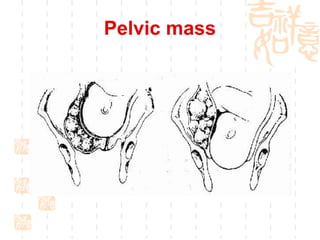
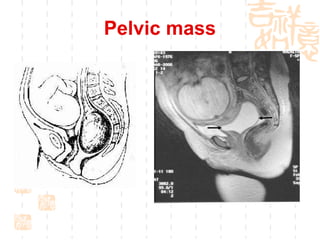
Soft tissue dystocia Congenital anomalies Scarring of birth canal Pelvic masses
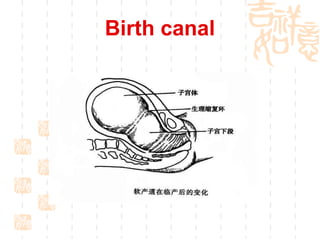
Birth canal
Pelvic mass
Pelvic mass
Low –lying placenta
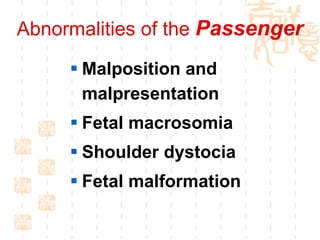
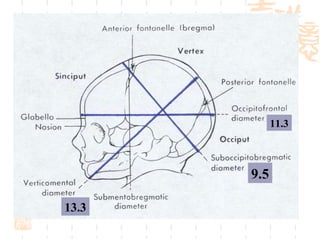
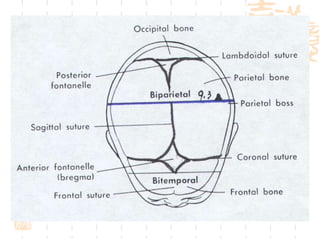
Abnormalities of the  Passenger Malposition and malpresentation Fetal macrosomia Shoulder dystocia Fetal malformation
13.3 9.5 11.3
 
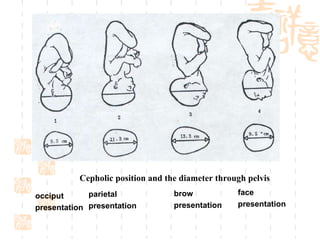
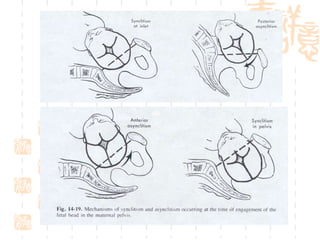
★ ★ Cepholic position and the diameter through pelvis occiput  presentation parietal  presentation   brow  presentation face  presentation
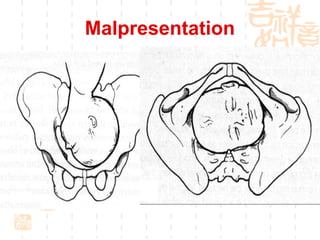
Malpresentation
 
Breech presentation
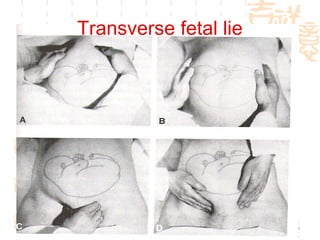
Transverse fetal lie
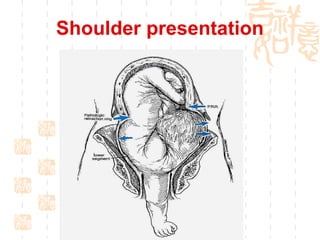
Shoulder presentation
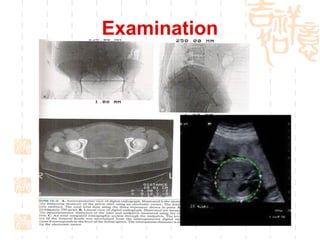
Examination
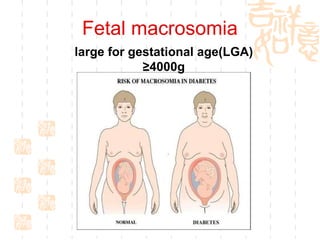
Fetal macrosomia large for gestational age(LGA) ≥4000g
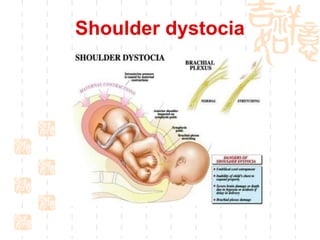
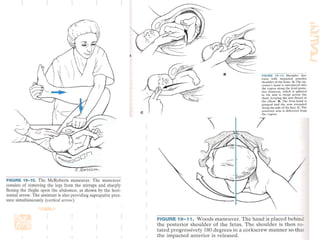
Shoulder dystocia
 
Brachial Plexus Injury
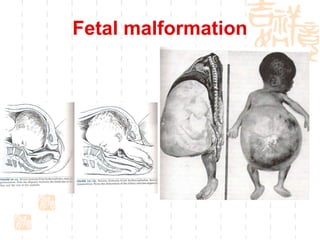
Fetal malformation
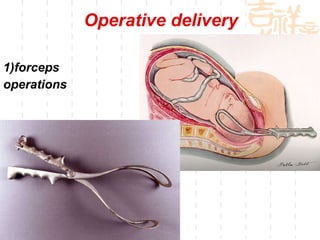
Operative delivery 1)forceps  operations
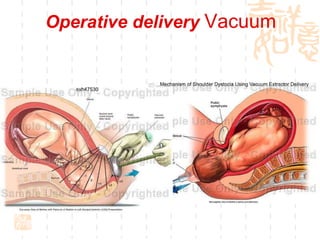
Operative delivery  Vacuum
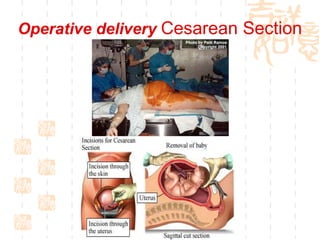
Operative delivery  Cesarean Section
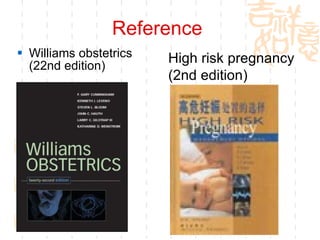
Reference  Williams obstetrics (22nd edition) High risk pregnancy (2nd edition)

6 abnormal labor and dystocia