Eigenvalues and Eigenvectors
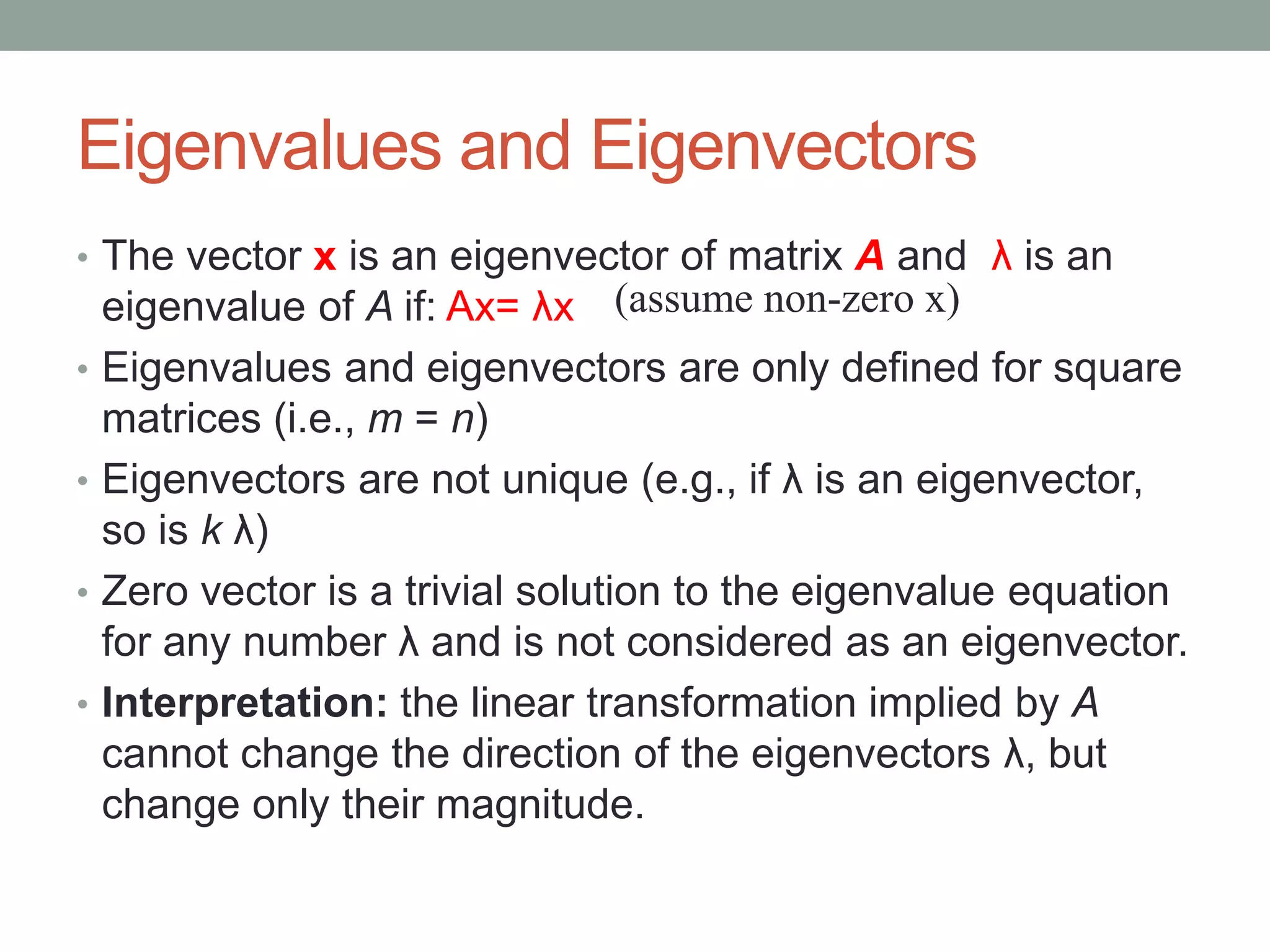
• The vector x is an eigenvector of matrix A and λ is an
eigenvalue of A if: Ax= λx
• Eigenvalues and eigenvectors are only defined for square
matrices (i.e., m = n)
• Eigenvectors are not unique (e.g., if λ is an eigenvector,
so is k λ)
• Zero vector is a trivial solution to the eigenvalue equation
for any number λ and is not considered as an eigenvector.
• Interpretation: the linear transformation implied by A
cannot change the direction of the eigenvectors λ, but
change only their magnitude.
(assume non-zero x)
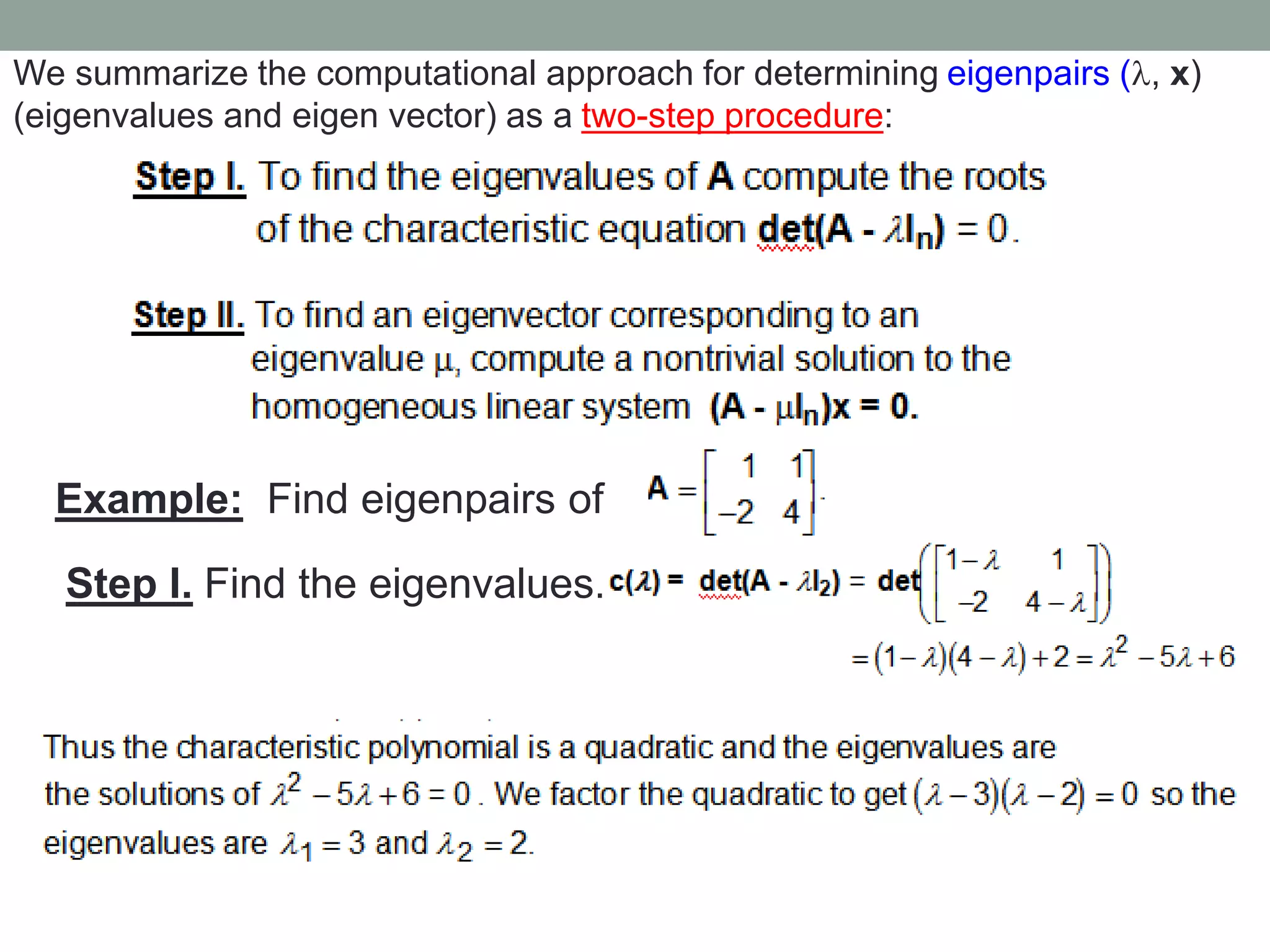
We summarize the computational approach for determining eigenpairs (, x)
(eigenvalues and eigen vector) as a two-step procedure:
Example: Find eigenpairs of
Step I. Find the eigenvalues.
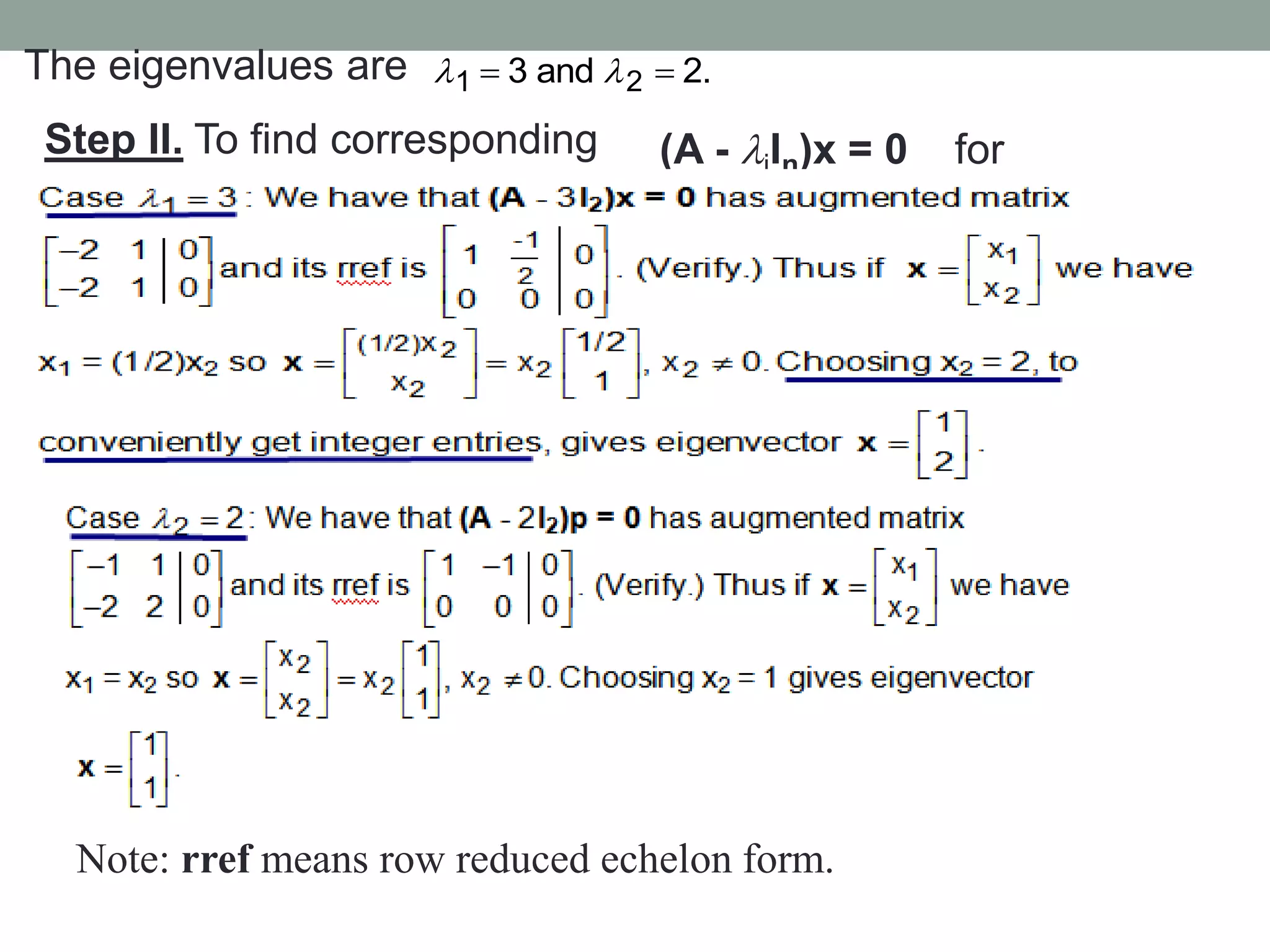
The eigenvalues are  
1 2
3 and 2.
 
Step II. To find corresponding
eigenvectors we solve
(A - iIn)x = 0 for
i = 1,2
Note: rref means row reduced echelon form.
Computing λ and v
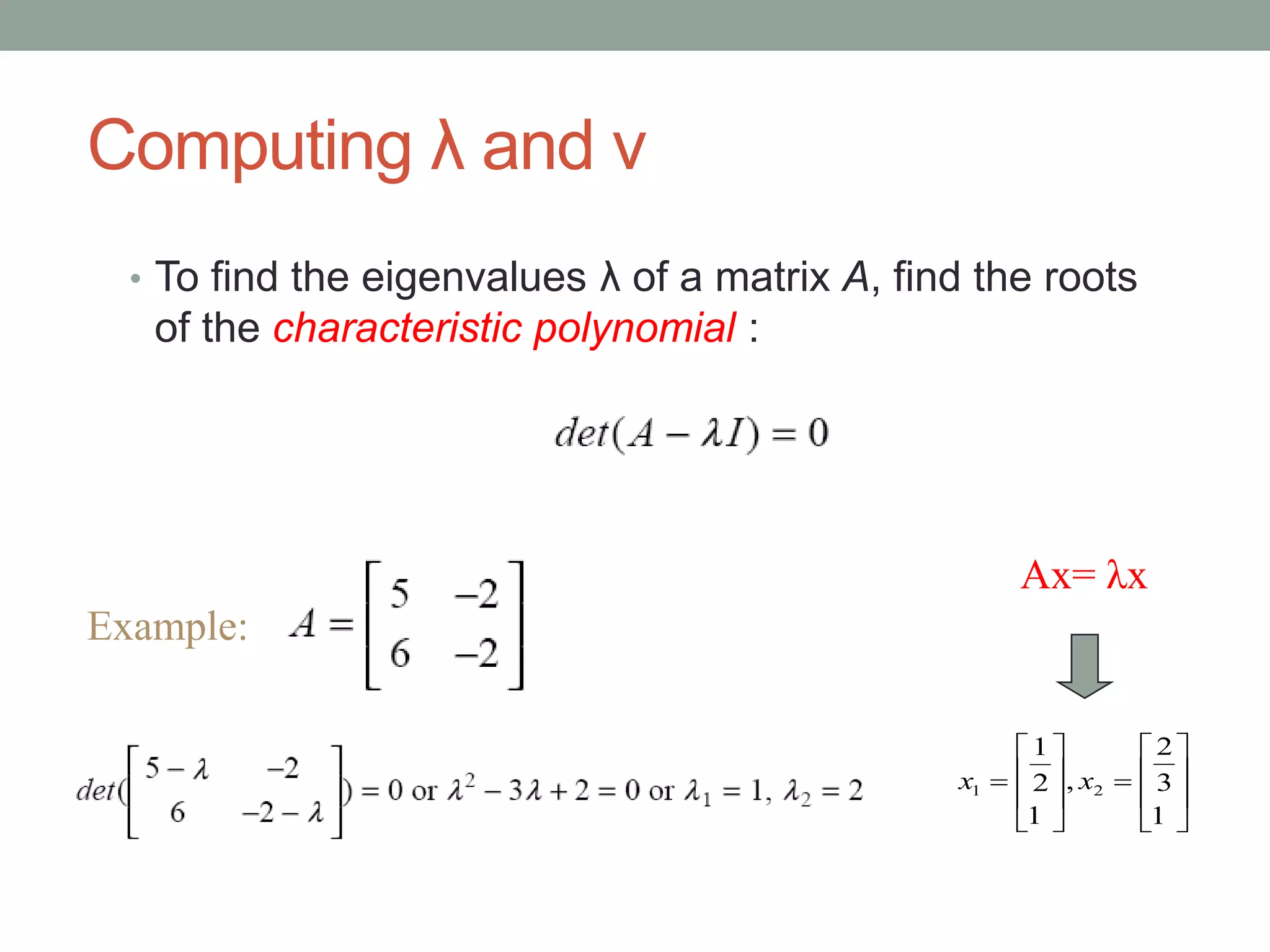
• To find the eigenvalues λ of a matrix A, find the roots
of the characteristic polynomial :
Example:
Ax= λx


















1
3
2
,
1
2
1
2
1 x
x
Example: Find eigenvalues and eigen vectors of 






0
1
1
0
A
The characteristic polynomial is
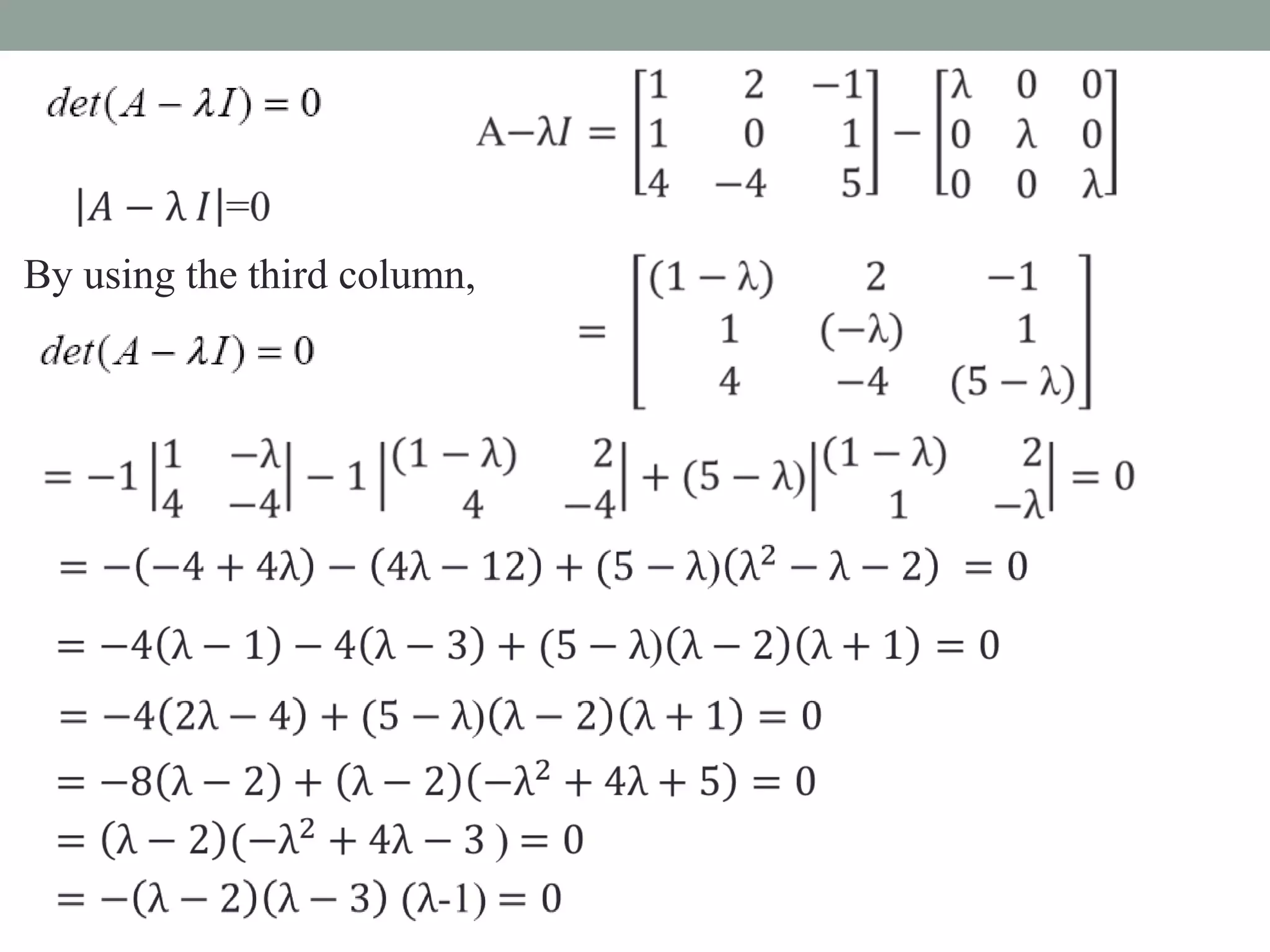
Example: Find the eigenvalues and corresponding
eigenvectors of
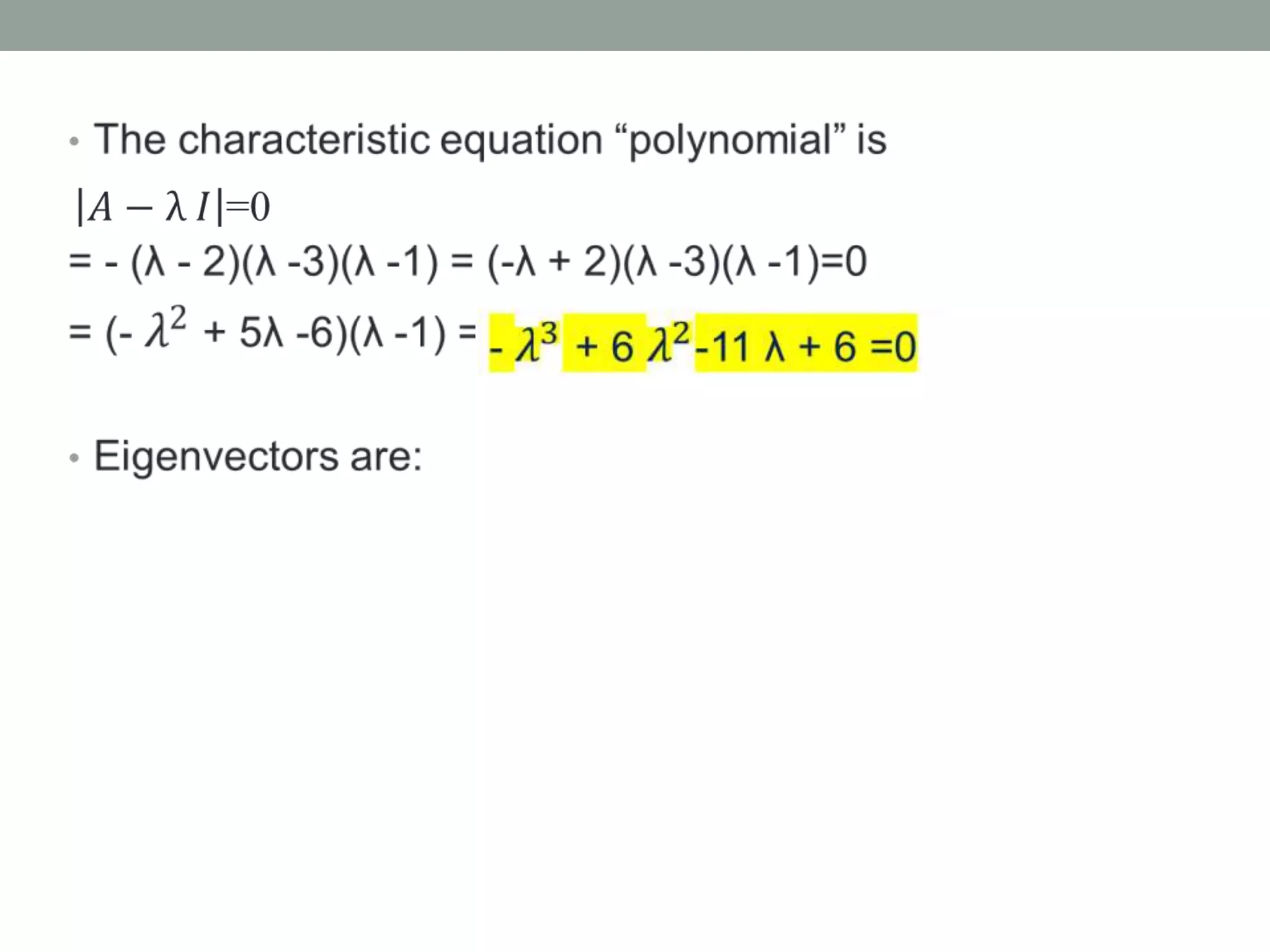
The characteristic polynomial is
Its factors are
So the eigenvalues are 1, 2, and 3.
Corresponding
eigenvectors are
By using the third column,
5-eigenvalues_and_eigenvectors.ppt

5-eigenvalues_and_eigenvectors.ppt

  • 1.
  • 2.
    Eigenvalues and Eigenvectors •The vector x is an eigenvector of matrix A and λ is an eigenvalue of A if: Ax= λx • Eigenvalues and eigenvectors are only defined for square matrices (i.e., m = n) • Eigenvectors are not unique (e.g., if λ is an eigenvector, so is k λ) • Zero vector is a trivial solution to the eigenvalue equation for any number λ and is not considered as an eigenvector. • Interpretation: the linear transformation implied by A cannot change the direction of the eigenvectors λ, but change only their magnitude. (assume non-zero x)
  • 3.
    We summarize thecomputational approach for determining eigenpairs (, x) (eigenvalues and eigen vector) as a two-step procedure: Example: Find eigenpairs of Step I. Find the eigenvalues.
  • 4.
    The eigenvalues are  1 2 3 and 2.   Step II. To find corresponding eigenvectors we solve (A - iIn)x = 0 for i = 1,2 Note: rref means row reduced echelon form.
  • 5.
    Computing λ andv • To find the eigenvalues λ of a matrix A, find the roots of the characteristic polynomial : Example: Ax= λx                   1 3 2 , 1 2 1 2 1 x x
  • 6.
    Example: Find eigenvaluesand eigen vectors of        0 1 1 0 A The characteristic polynomial is
  • 7.
    Example: Find theeigenvalues and corresponding eigenvectors of The characteristic polynomial is Its factors are So the eigenvalues are 1, 2, and 3. Corresponding eigenvectors are
  • 8.
    By using thethird column,