Rand Fishkin, Wizard of Moz | @randfish | rand@moz.com
Cracking the SEO Code for 2015:
Tactics to Love vs. Leave
Download this Slide Deck
bit.ly/seoloveleave
A brief look at how SEO has
evolved over the past five
years.
What Changed?
Ranking algorithms are far more
complex – more inputs, more
subtlety, more quality checks.
#1:
Advancements in User Data Signals
Via Eric Fischer
An UncannyAbility
to Spot Editorial VS.
Manipulative Links
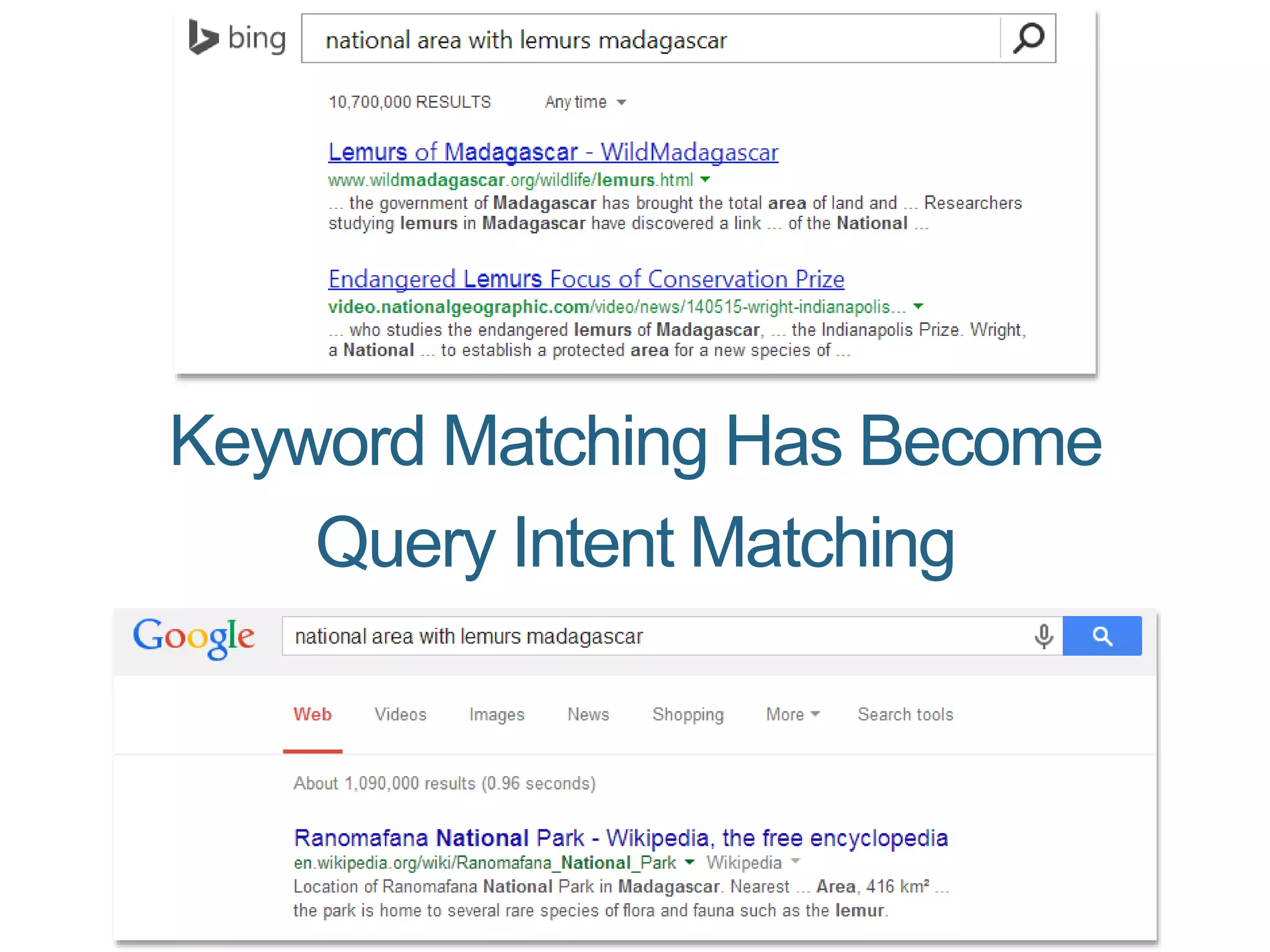
Keyword Matching Has Become
Query Intent Matching
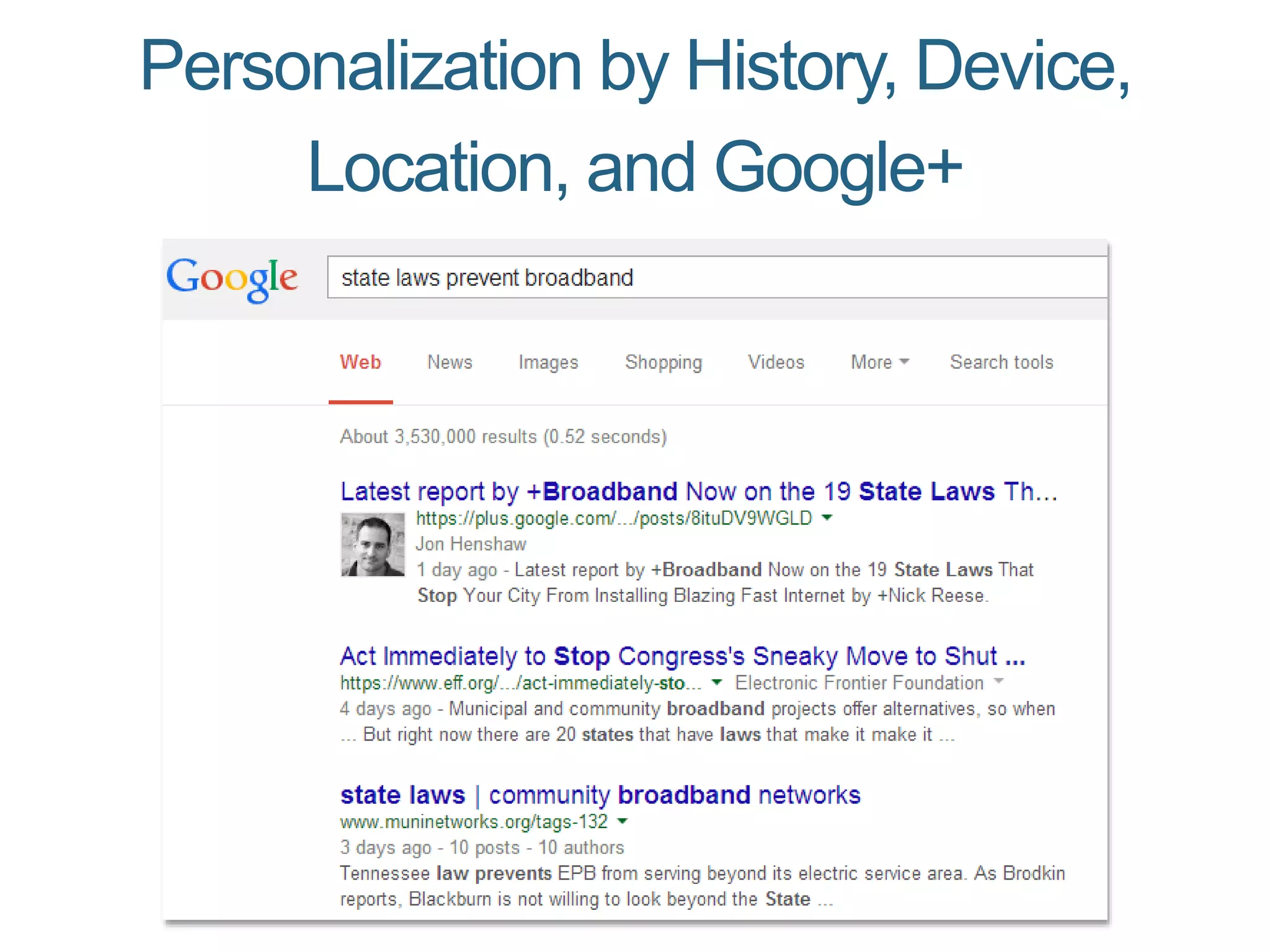
Personalization by History, Device,
Location, and Google+
SEO has become a job
description, not a job title.
#2:
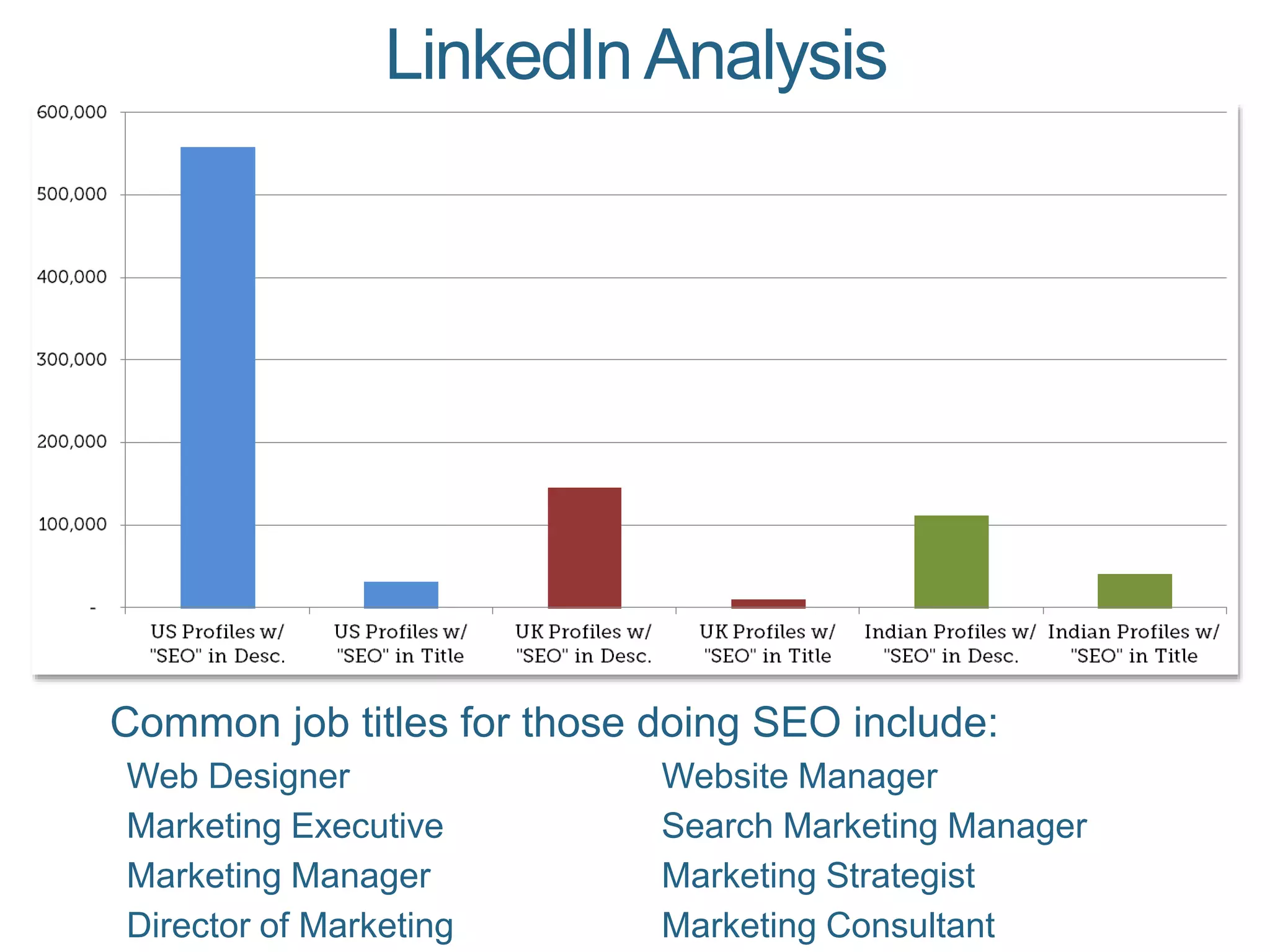
LinkedInAnalysis
Common job titles for those doing SEO include:
Marketing Executive
Marketing Manager
Web Designer
Search Marketing Manager
Marketing Strategist
Marketing ConsultantDirector of Marketing
Website Manager
SEOs Have Learned that Doing Their Jobs

Isn’t Good Enough
Policing of webspam is more
aggressive, more difficult to
recover from, and less evenly
applied.
#3:
Non-Editorial LinksAre More
Dangerous Than Ever
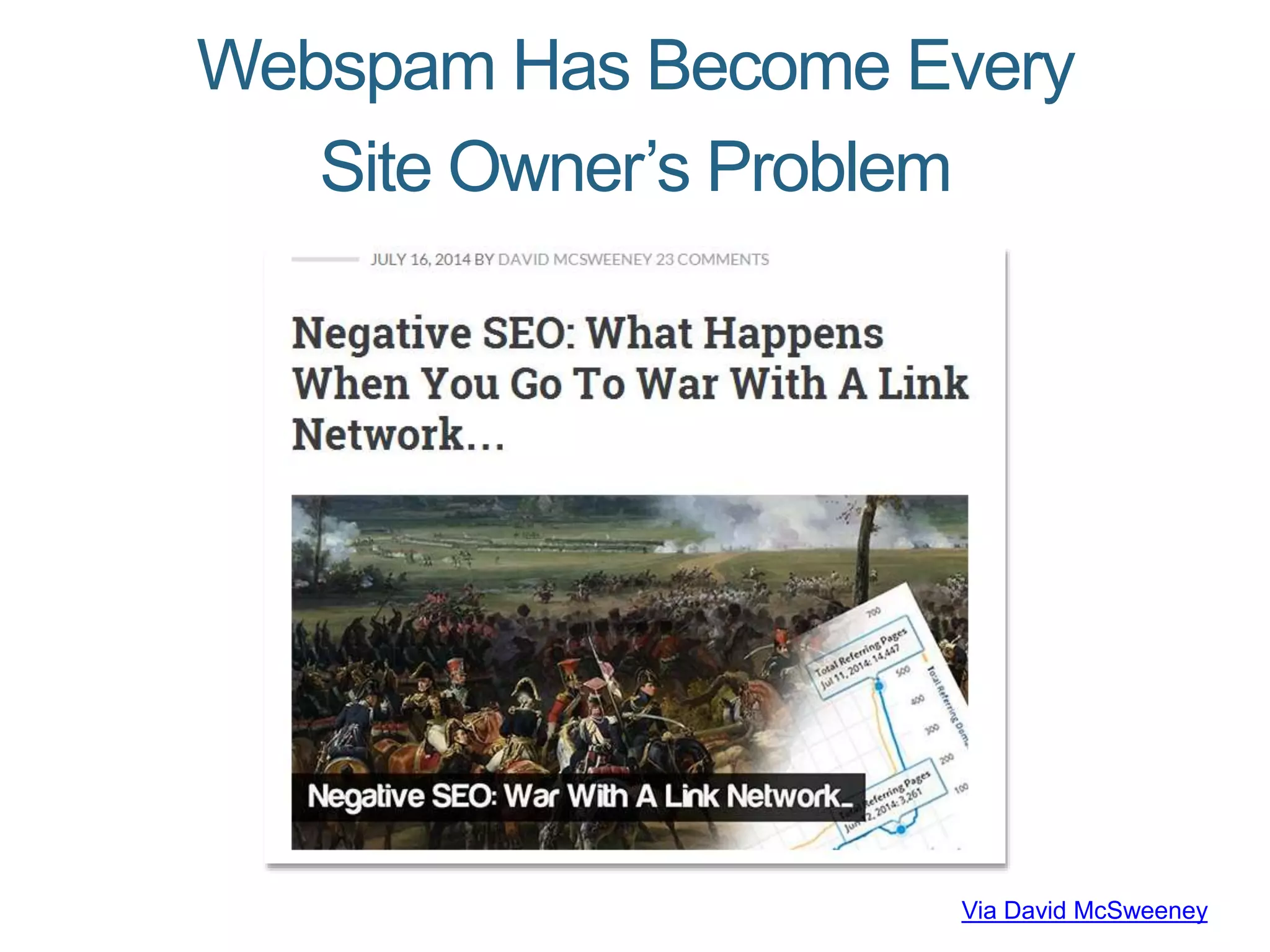
Webspam Has Become Every
Site Owner’s Problem
Via David McSweeney
Google is shortening the searcher’s
path and disintermediating content
creators.
#4:
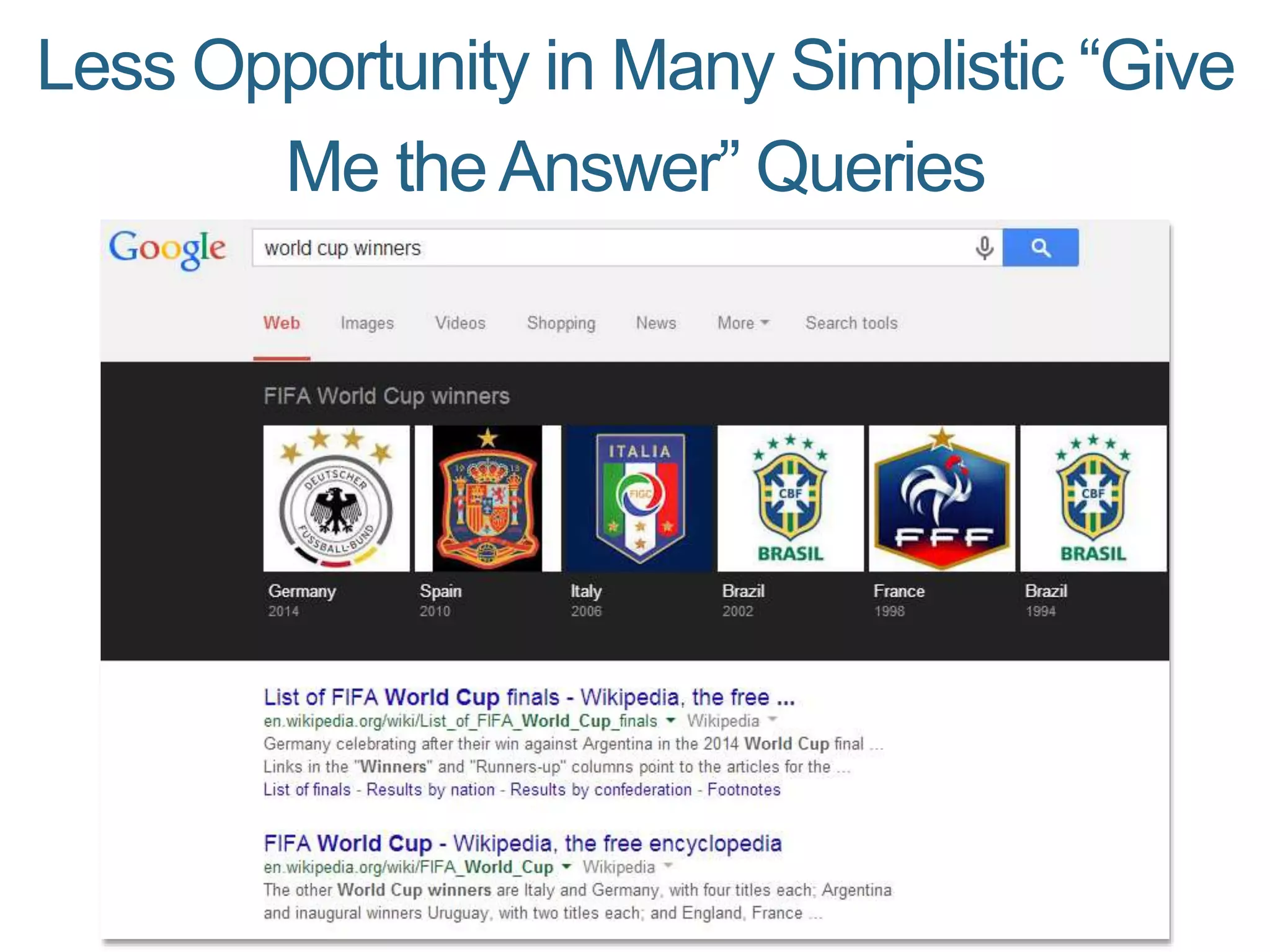
Less Opportunity in Many Simplistic “Give
Me theAnswer” Queries
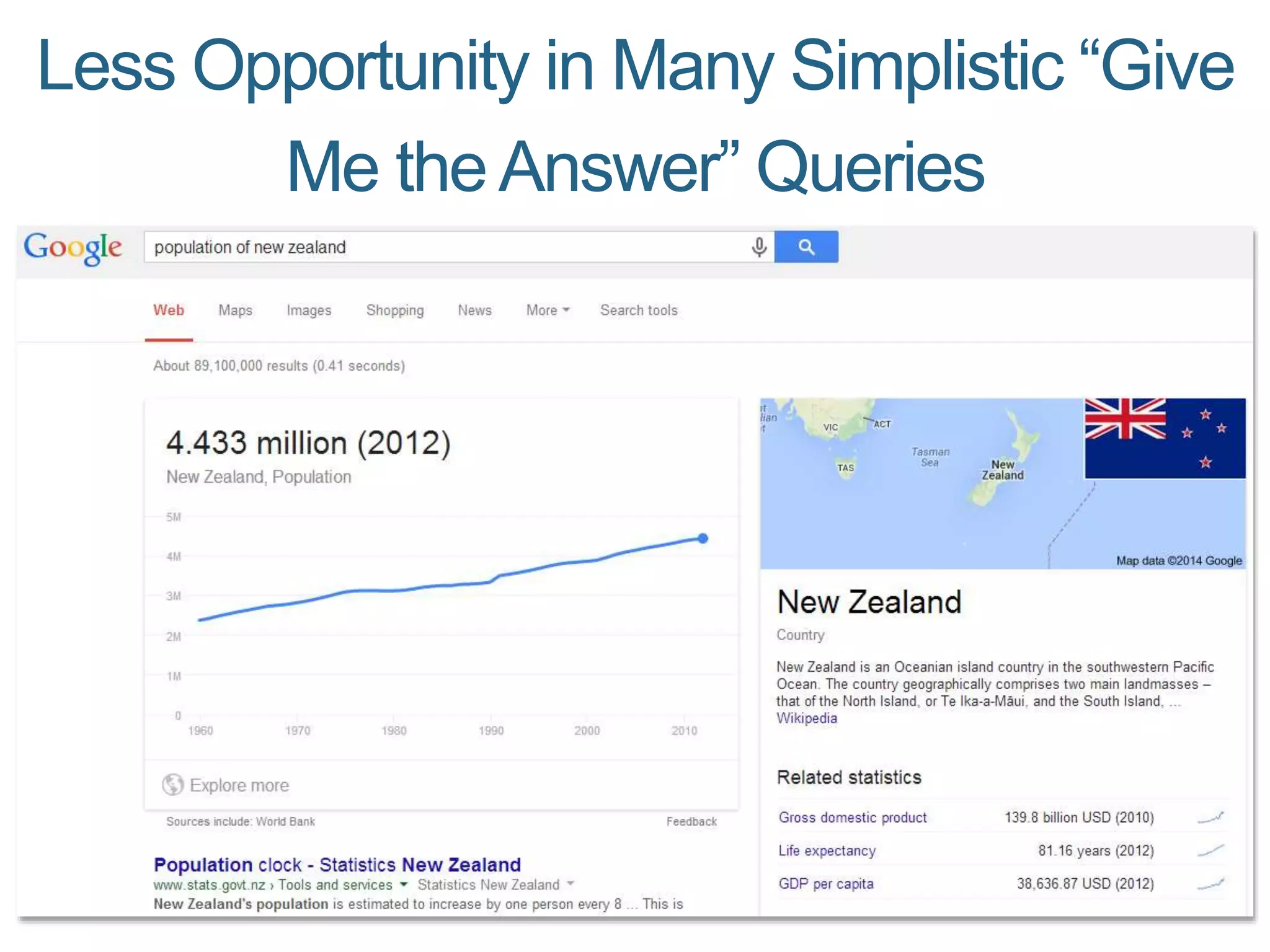
Less Opportunity in Many Simplistic “Give
Me theAnswer” Queries
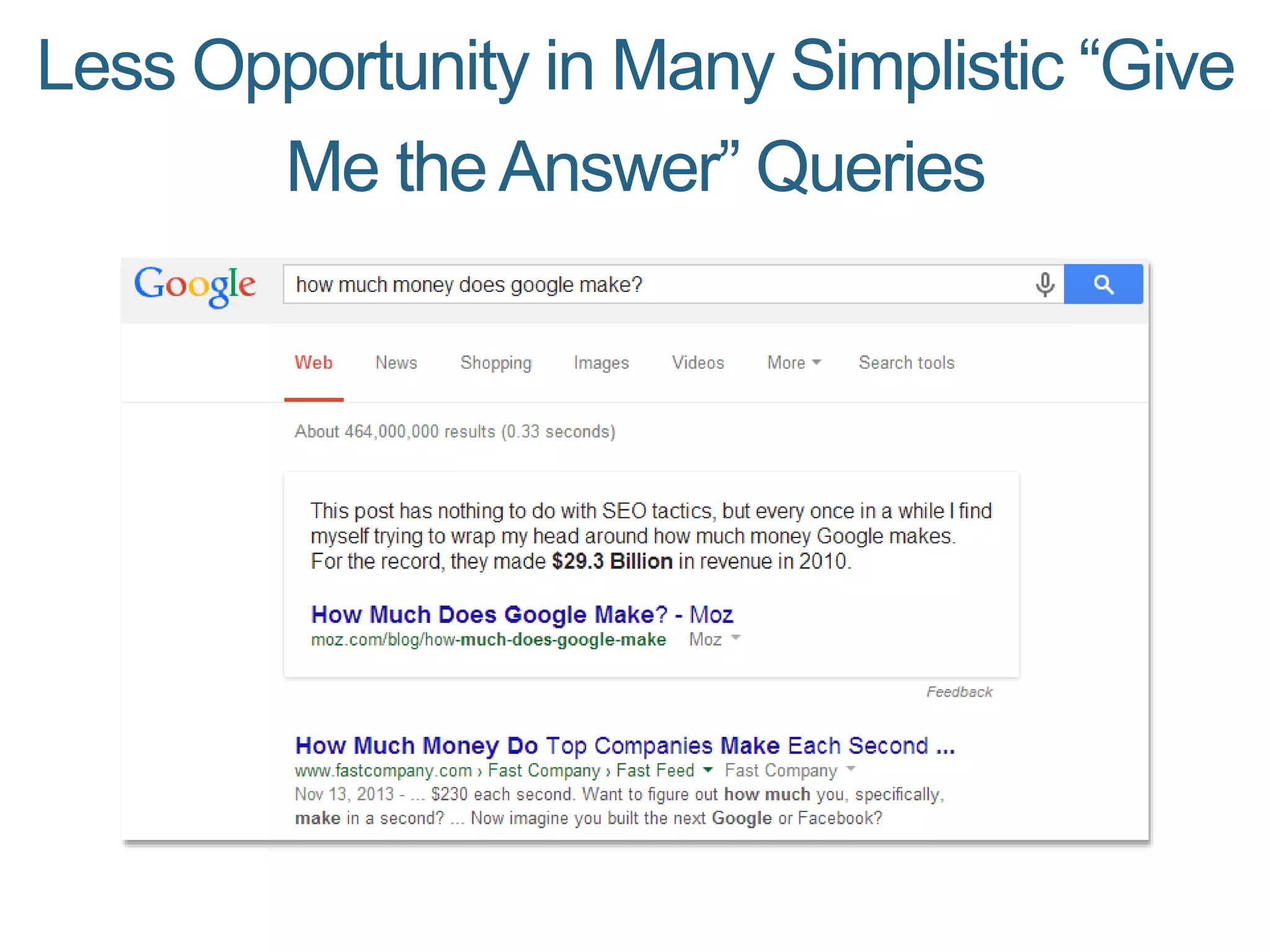
Less Opportunity in Many Simplistic “Give
Me theAnswer” Queries
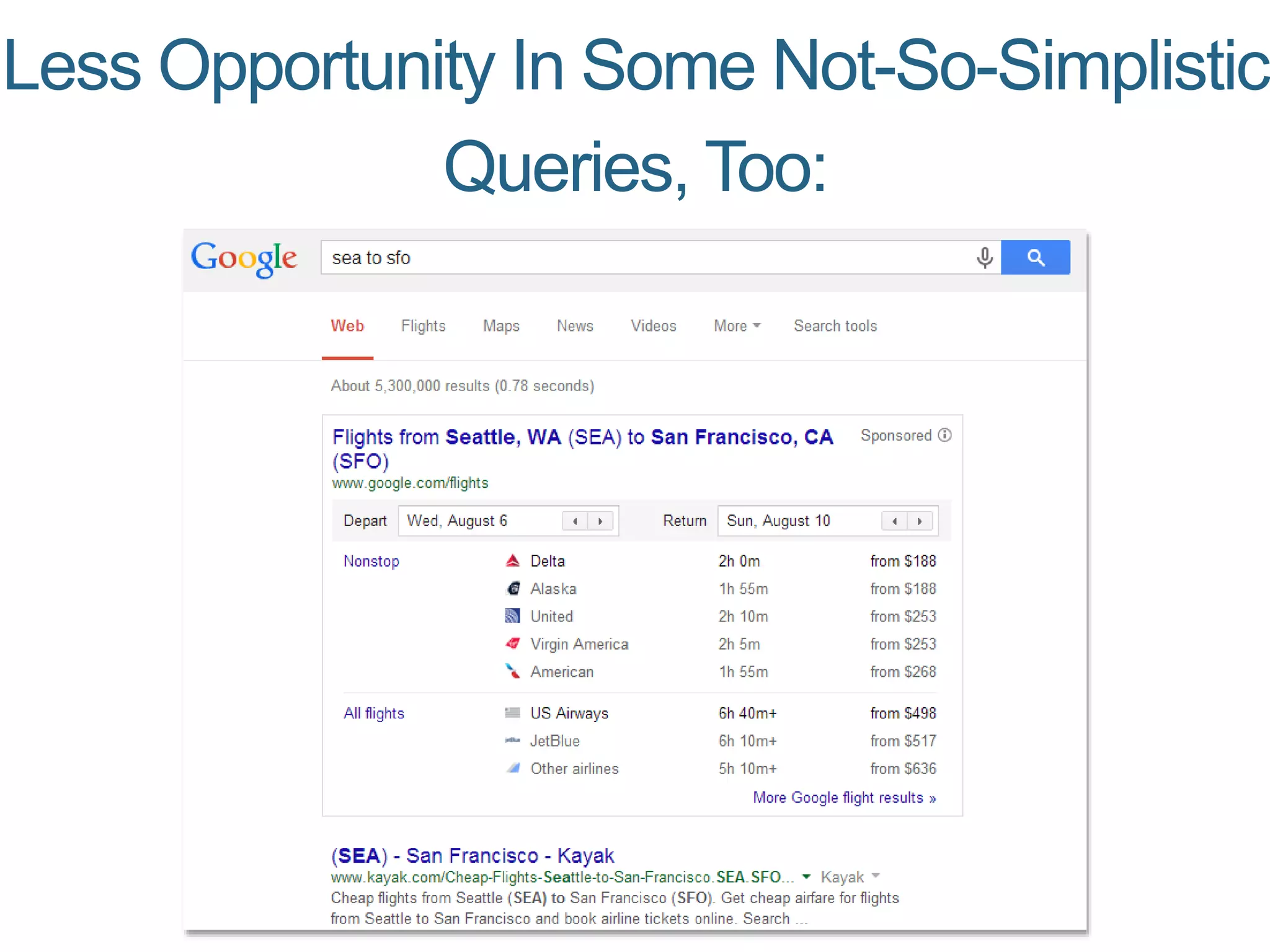
Less Opportunity In Some Not-So-Simplistic
Queries, Too:
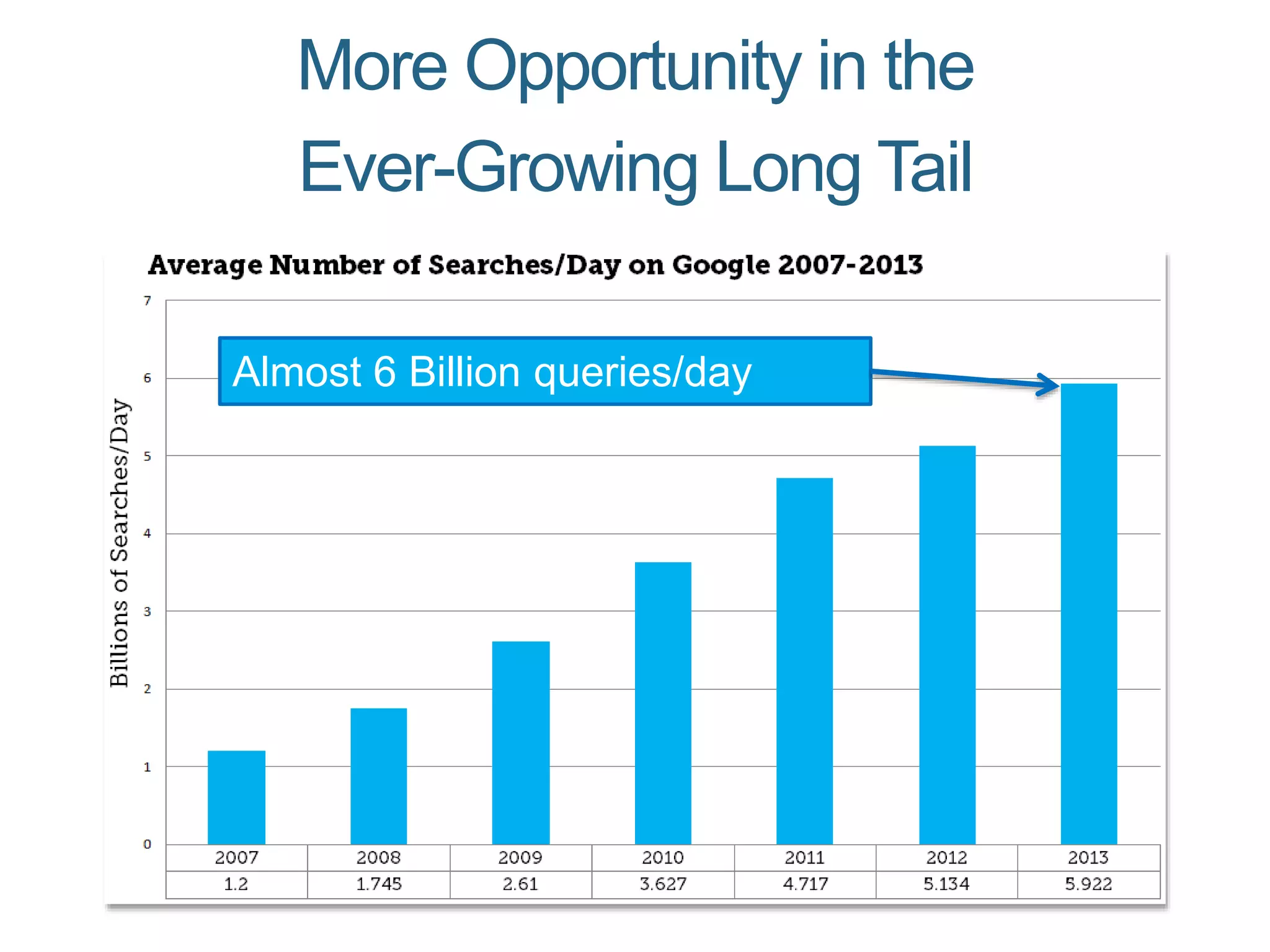
More Opportunity in the
Ever-Growing Long Tail
Almost 6 Billion queries/day
The ubiquity of social media has
broadened the field of
“influencers.”
#5:
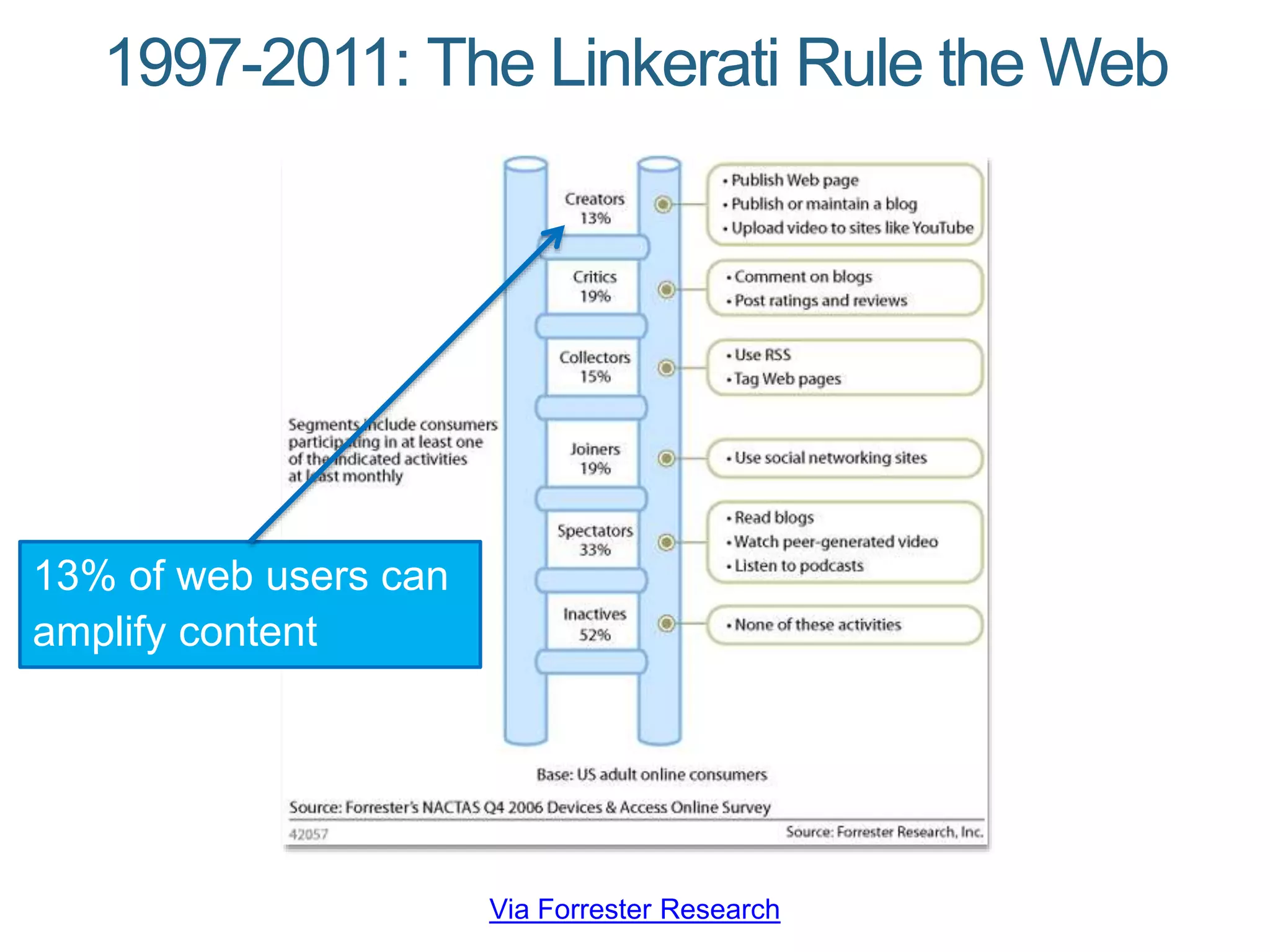
1997-2011: The Linkerati Rule the Web
Via Forrester Research
13% of web users can
amplify content
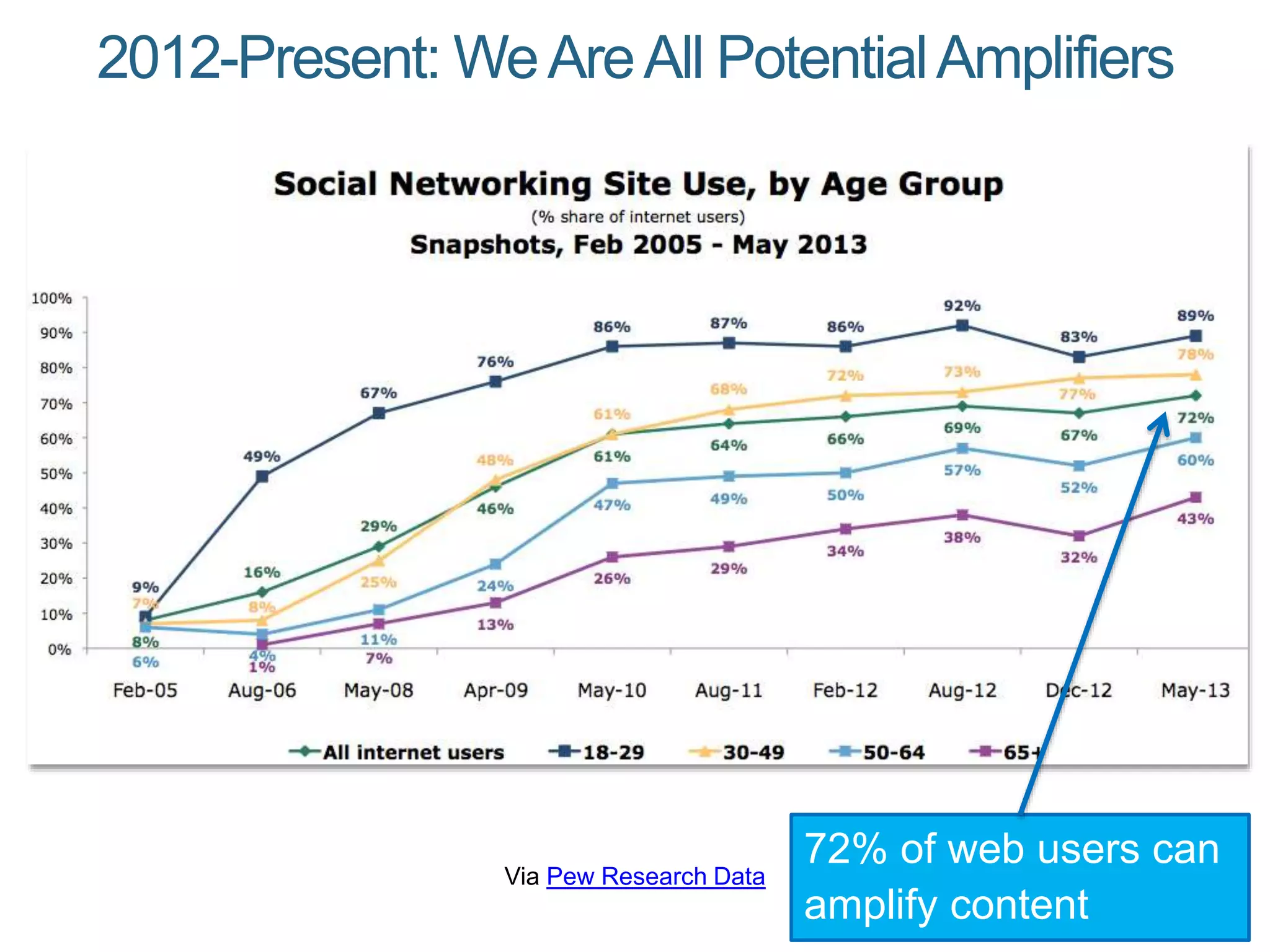
2012-Present: WeAreAll PotentialAmplifiers
Via Pew Research Data
72% of web users can
amplify content
Disappearing data makes SEO
more challenging to measure and
improve.
#6:
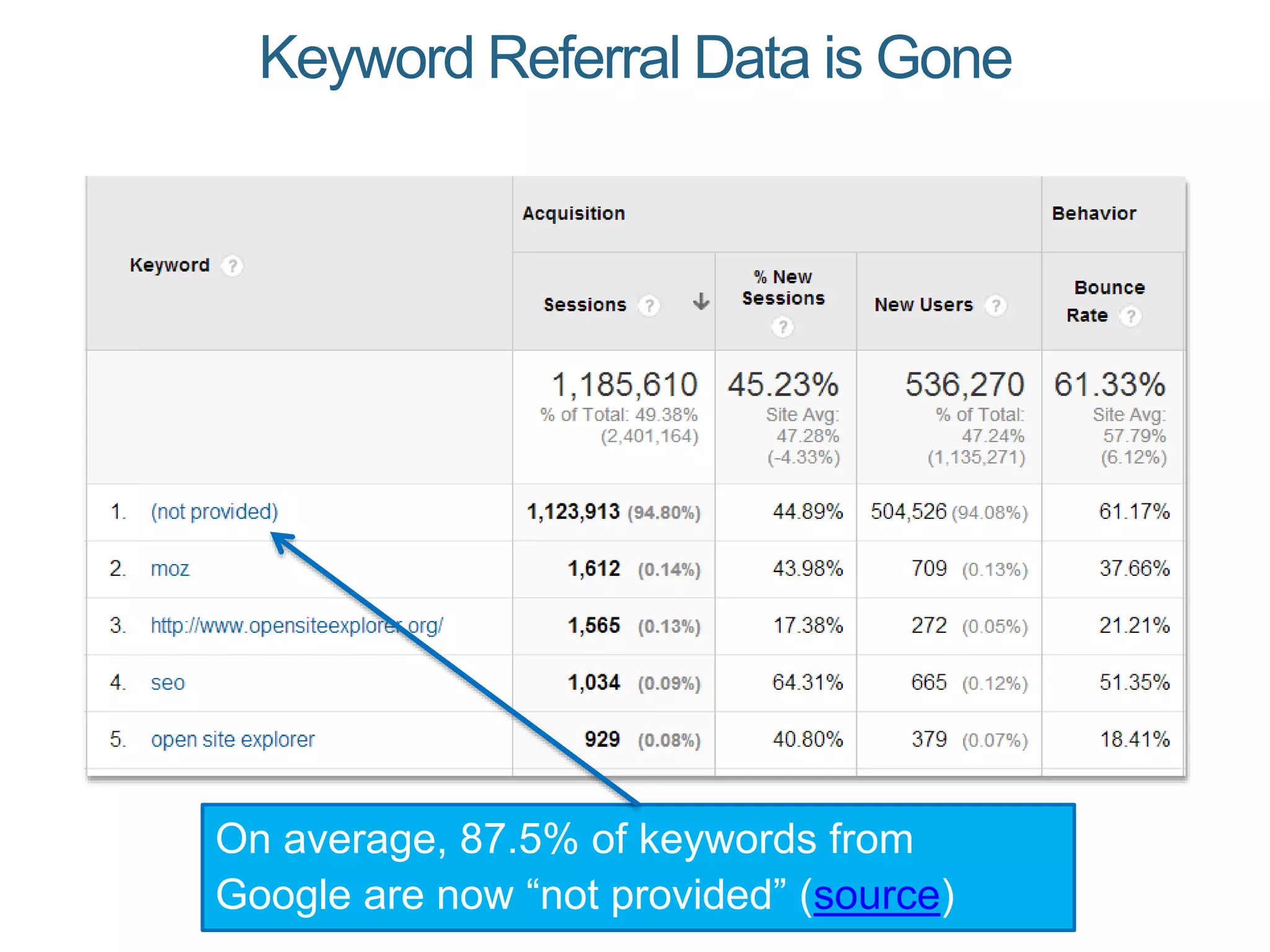
Keyword Referral Data is Gone
On average, 87.5% of keywords from
Google are now “not provided” (source)
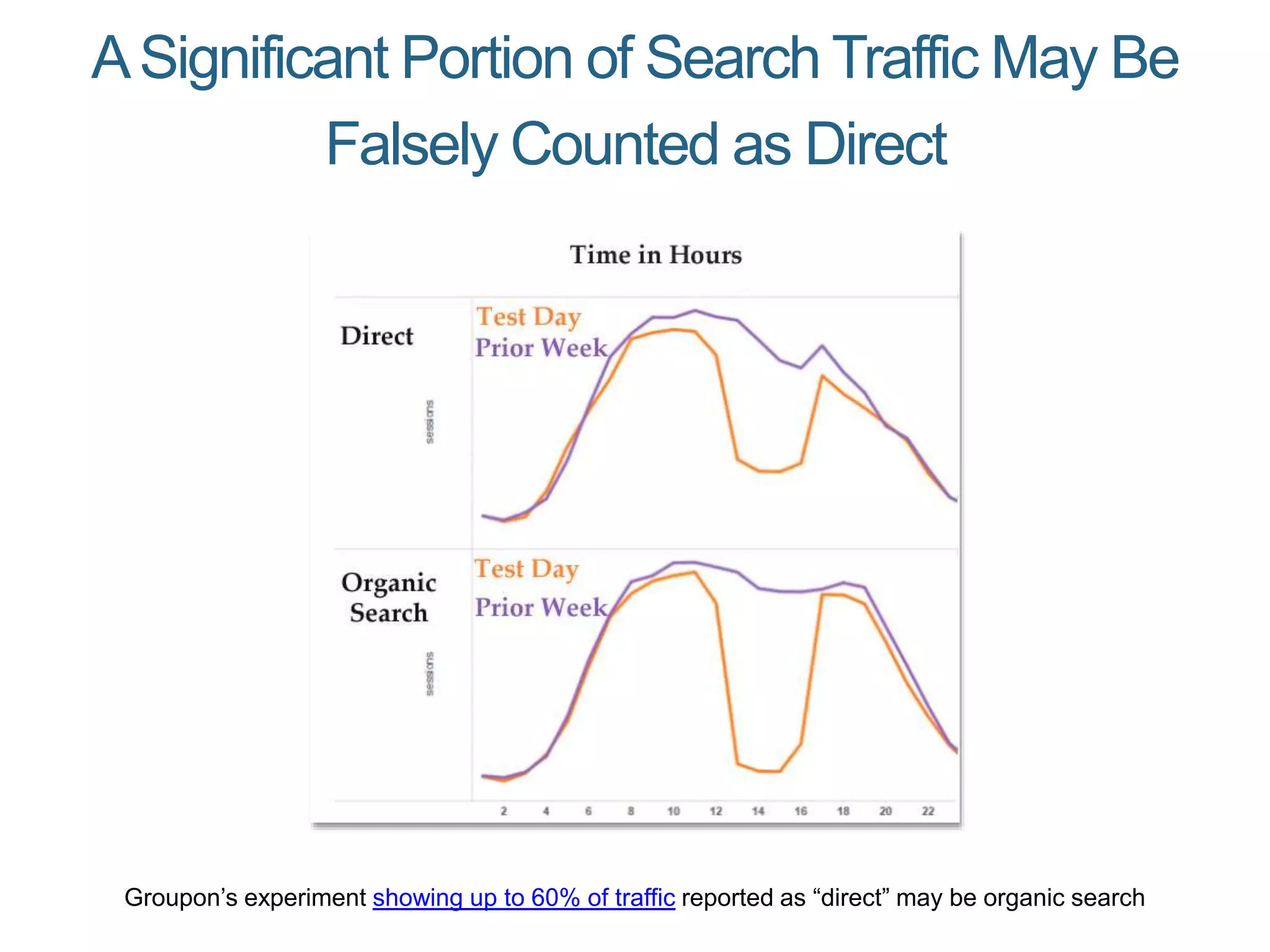
ASignificant Portion of Search Traffic May Be
Falsely Counted as Direct
Groupon’s experiment showing up to 60% of traffic reported as “direct” may be organic search
How do these changes affect which
tactics we can still pursue vs. those
we must leave behind?
So…
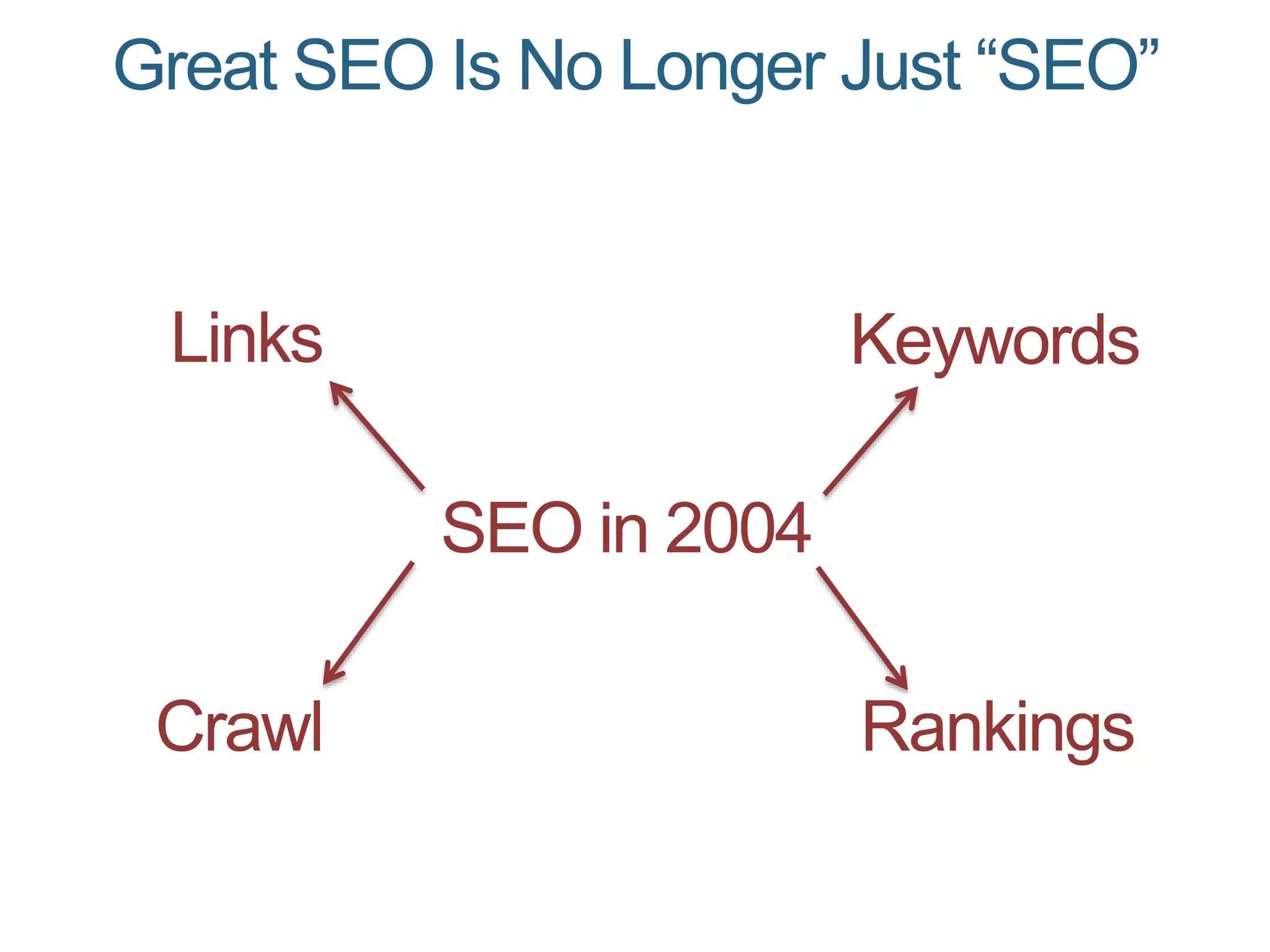
Great SEO Is No Longer Just “SEO”
KeywordsLinks
Crawl Rankings
SEO in 2004
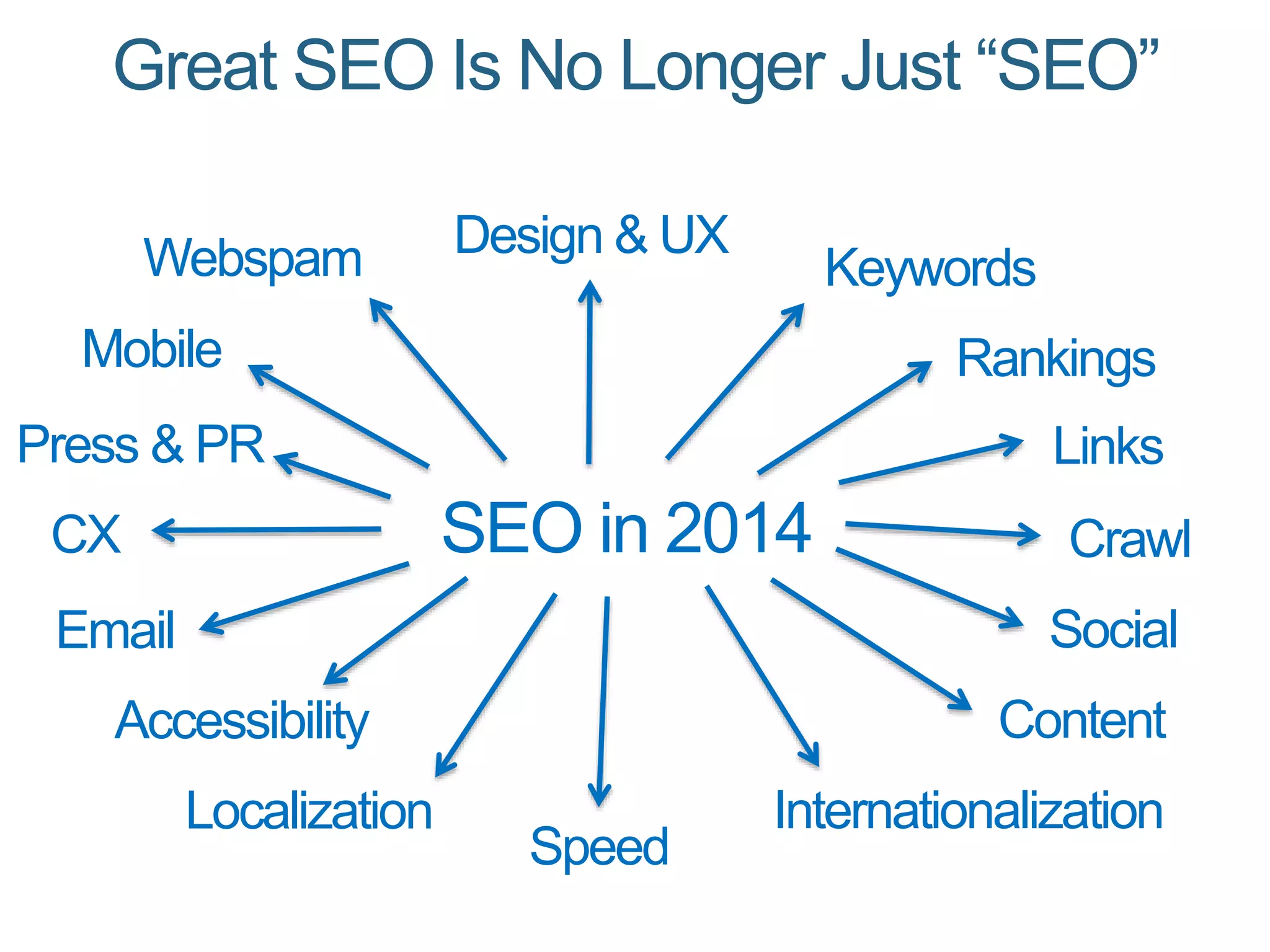
Great SEO Is No Longer Just “SEO”
Keywords
Links
Crawl
Rankings
SEO in 2014
Social
Content
Design & UX
Speed
Accessibility
Email
Press & PR
CX
Webspam
Mobile
InternationalizationLocalization
Our Job: Choose the Tactics that Marry
Our Strengths to Our Opportunities
No tactic will be right for
everyone.
But, awareness of our
potential arsenal is
essential.
Tactics to Leave Behind vs.
Tactics to
Embrace for the Future:
Keyword
Research
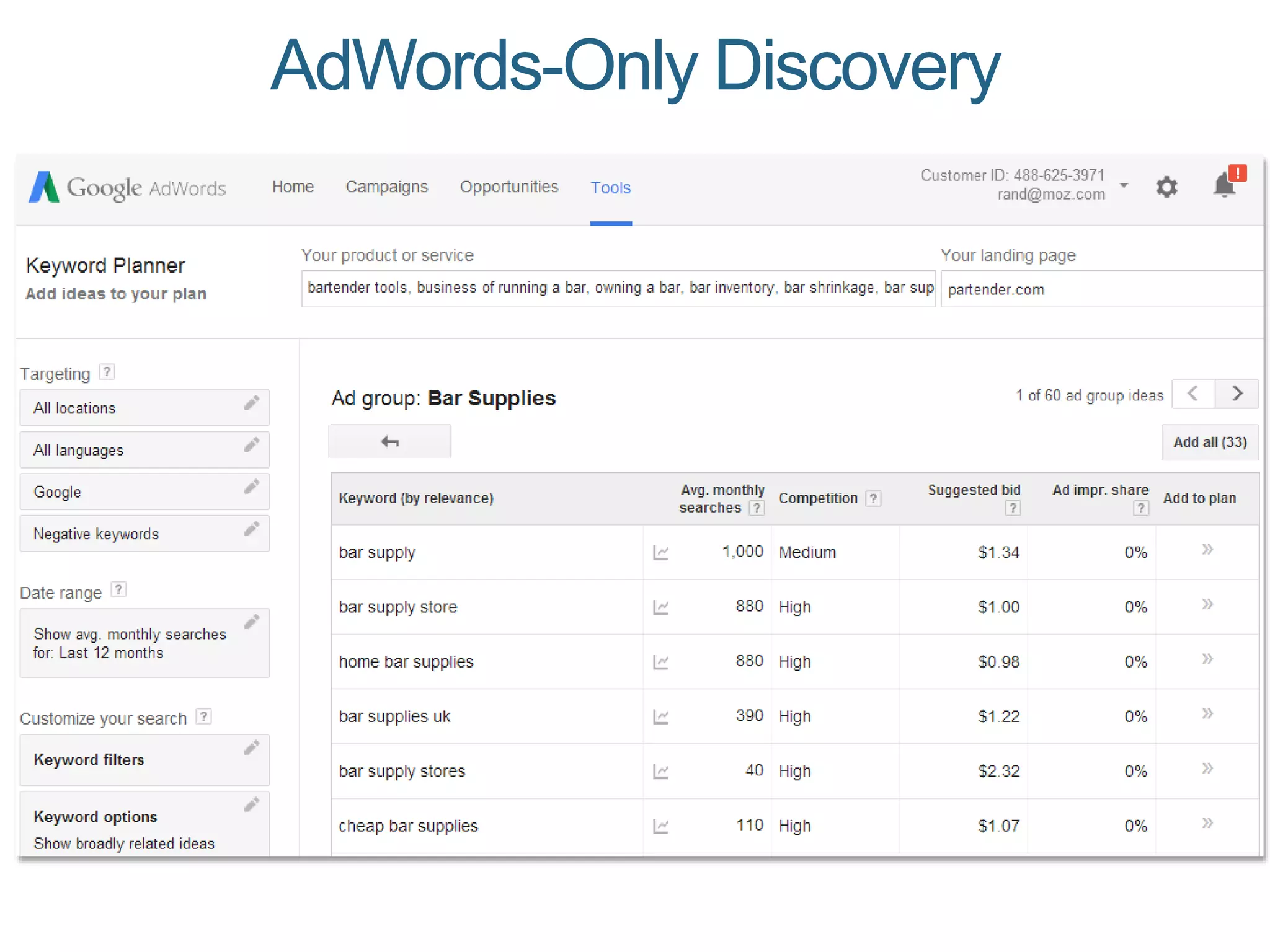
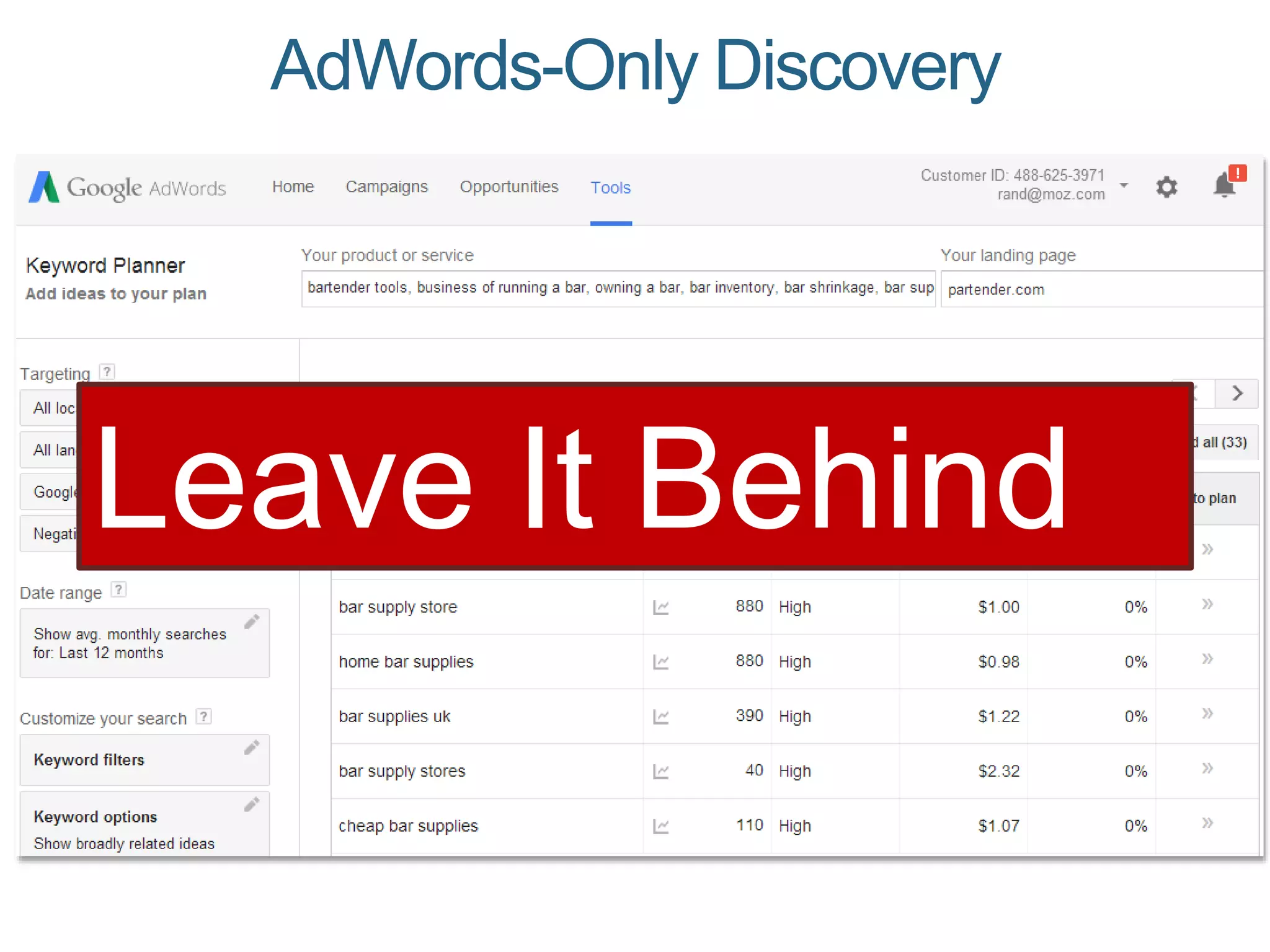
AdWords-Only Discovery
Leave It Behind
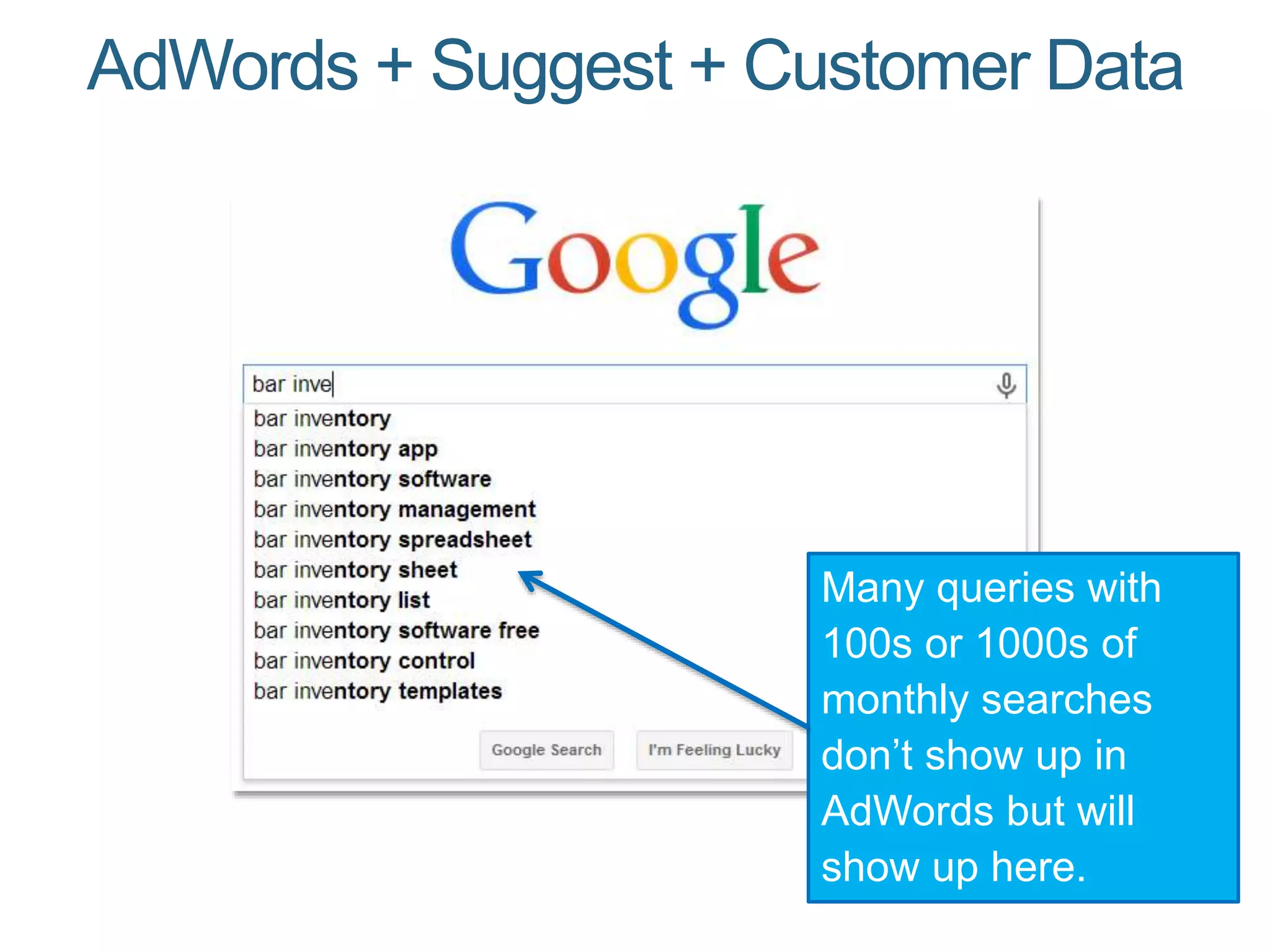
AdWords + Suggest + Customer Data
Many queries with
100s or 1000s of
monthly searches
don’t show up in
AdWords but will
show up here.
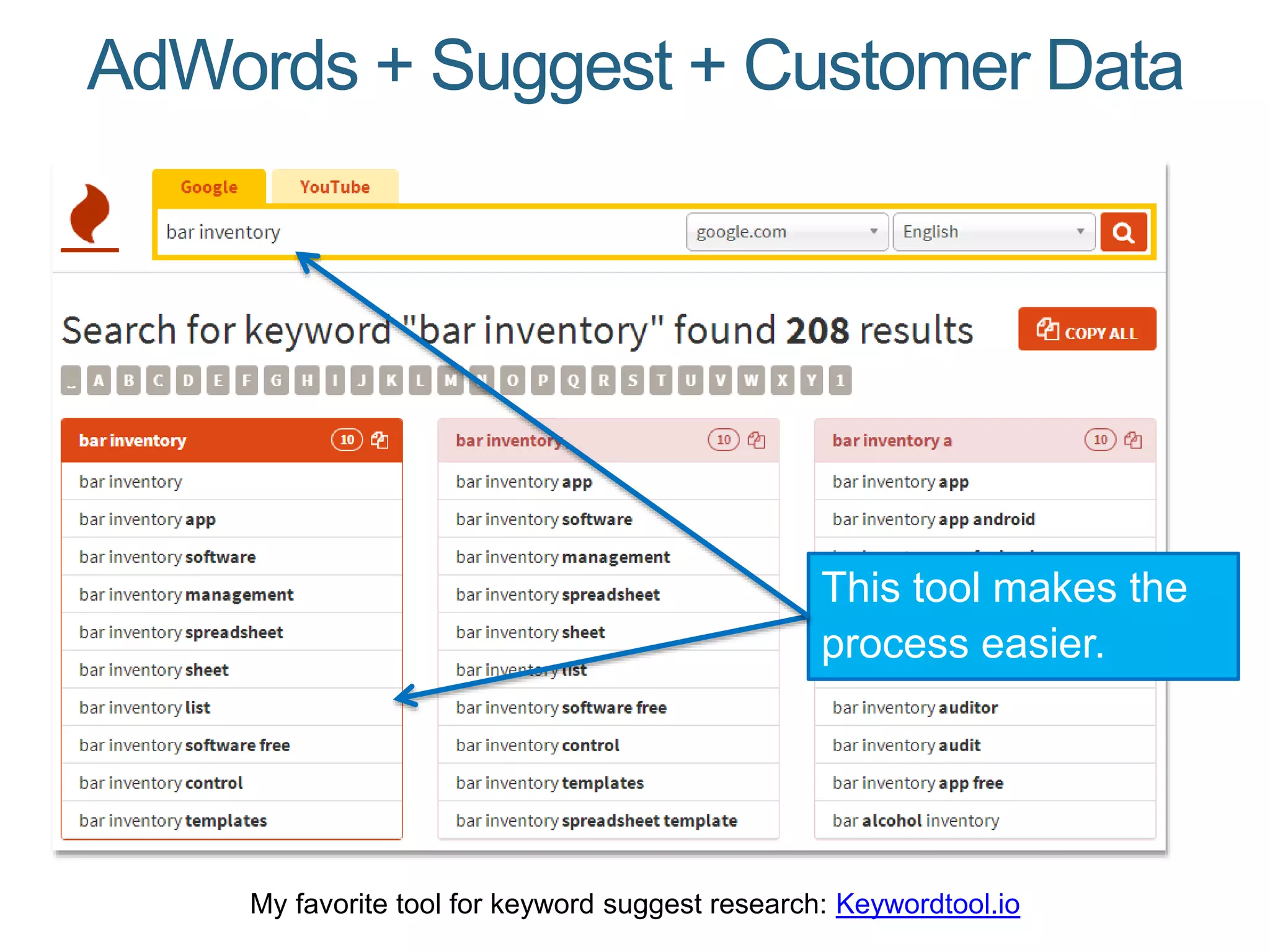
AdWords + Suggest + Customer Data
My favorite tool for keyword suggest research: Keywordtool.io
This tool makes the
process easier.
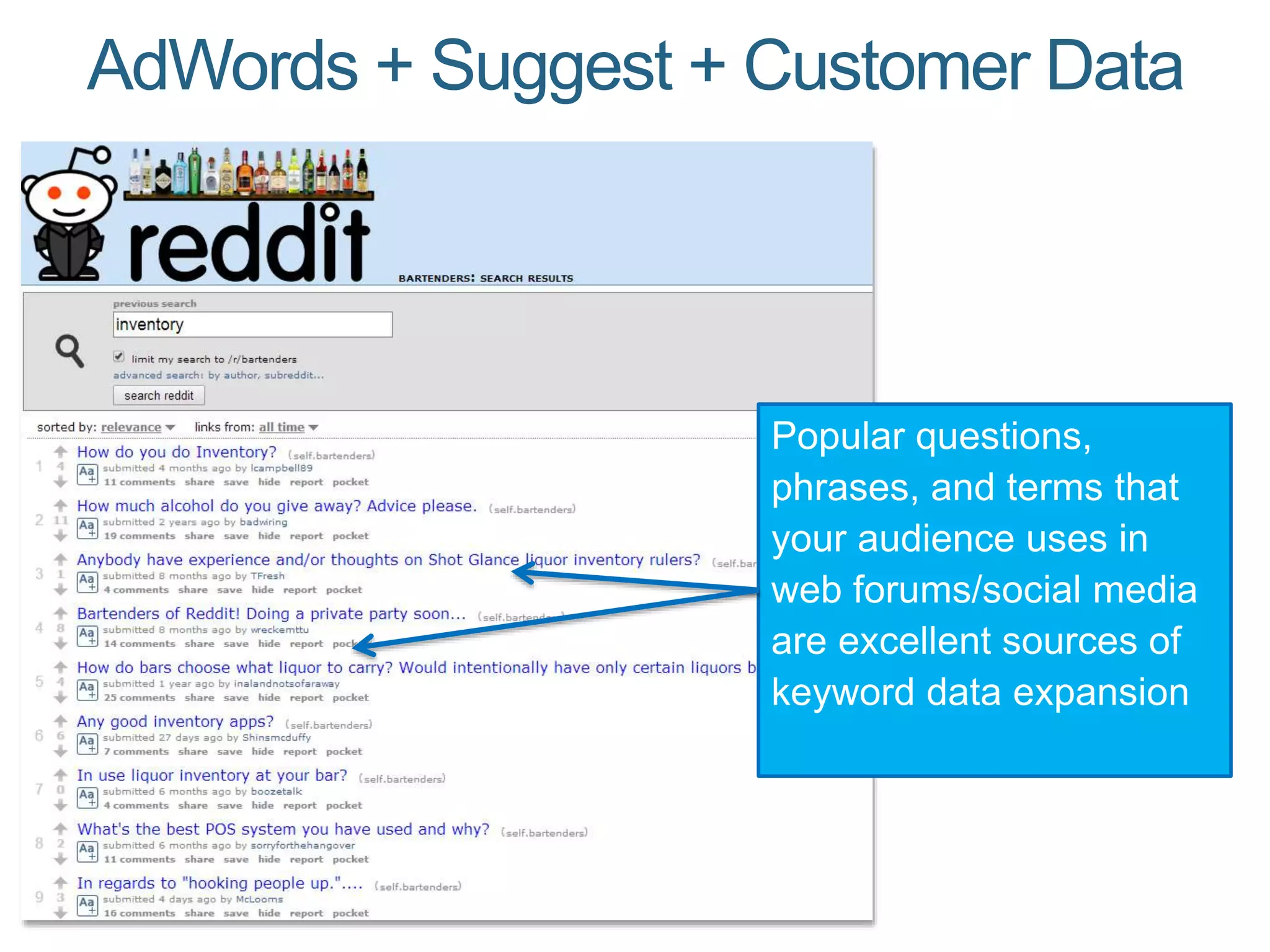
AdWords + Suggest + Customer Data
Popular questions,
phrases, and terms that
your audience uses in
web forums/social media
are excellent sources of
keyword data expansion
Content
Creation
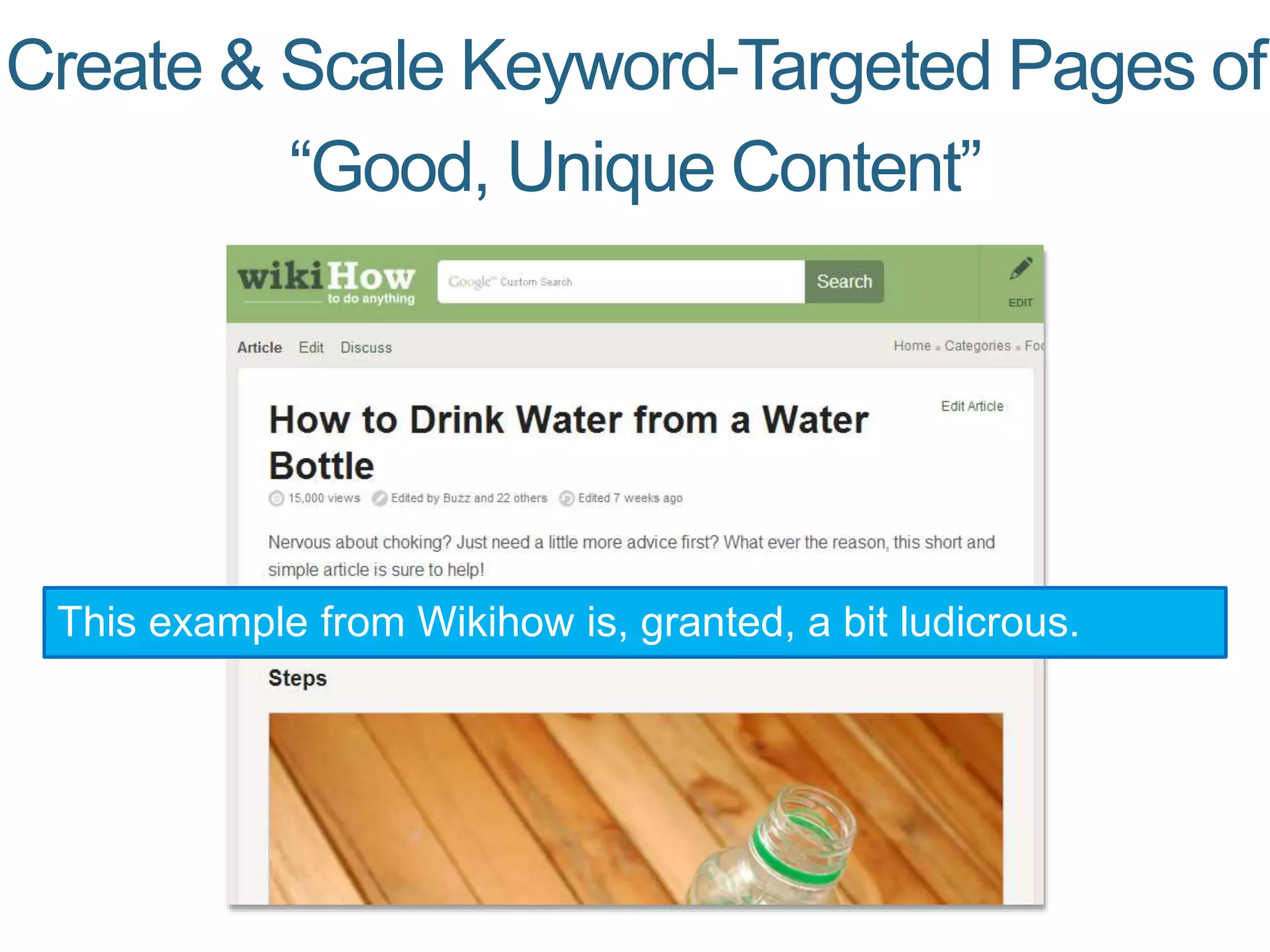
Create & Scale Keyword-Targeted Pages of
“Good, Unique Content”
This example from Wikihow is, granted, a bit ludicrous.
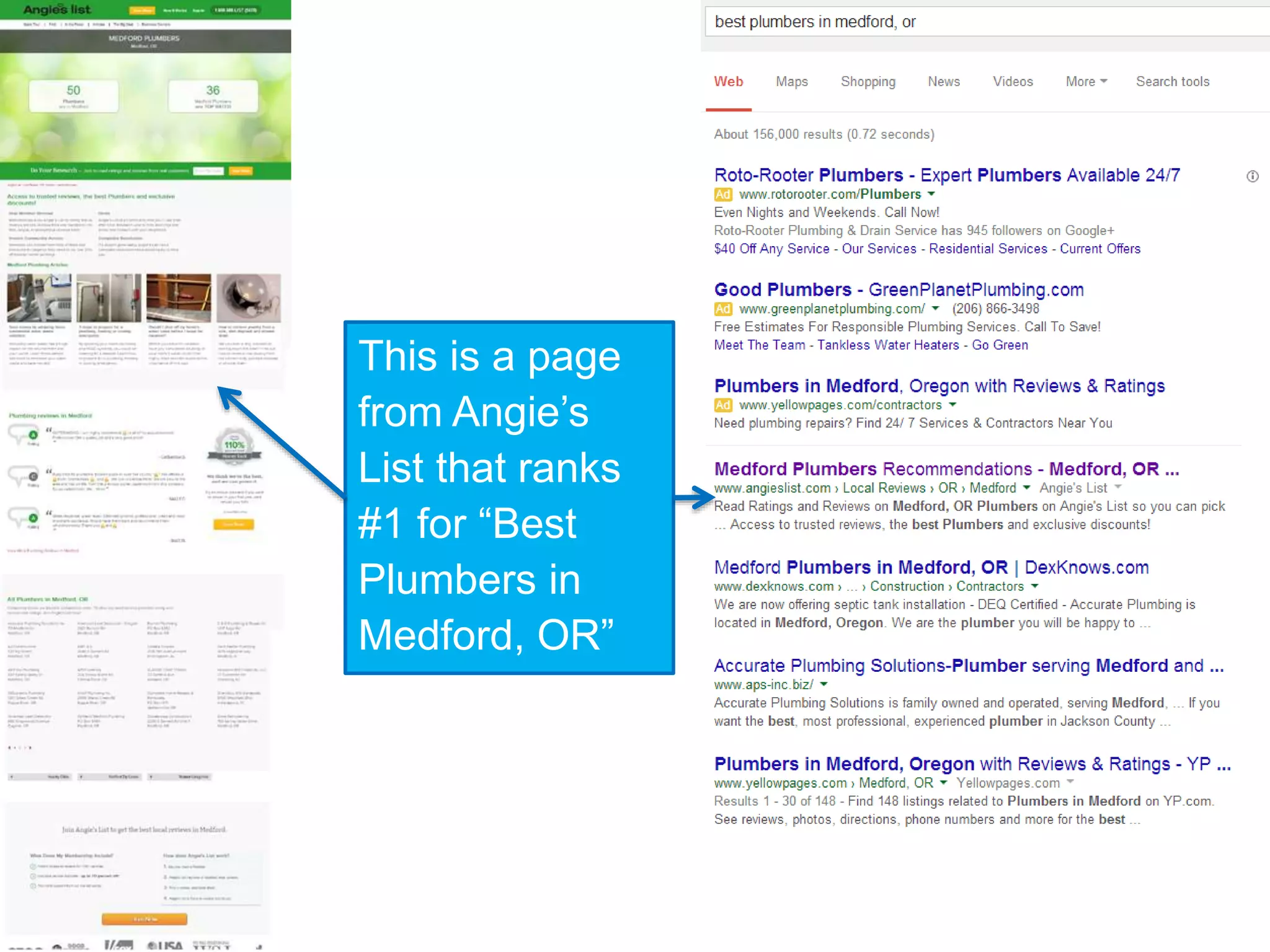
This is a page
from Angie’s
List that ranks
#1 for “Best
Plumbers in
Medford, OR”
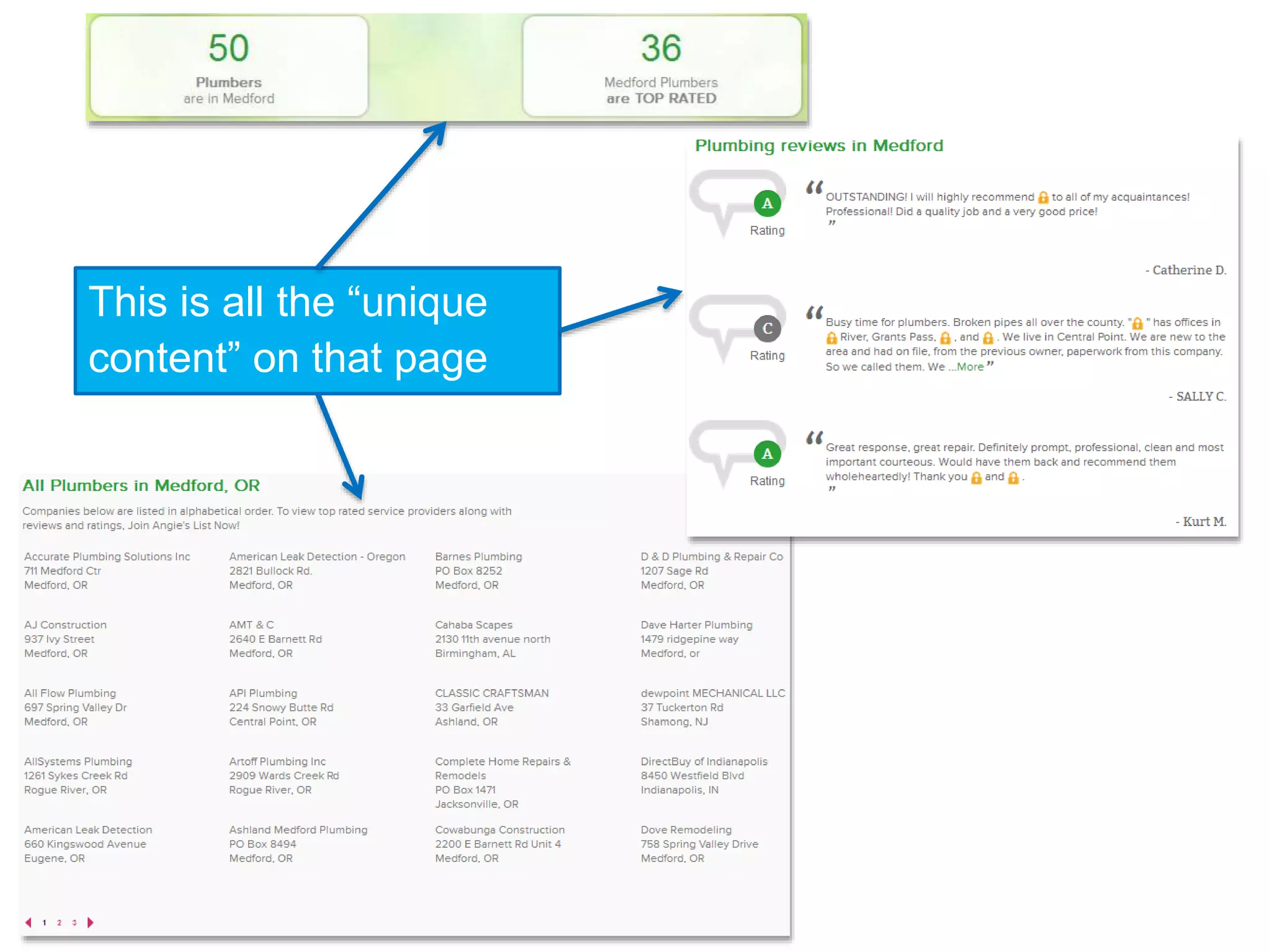
This is all the “unique
content” on that page
You’re dreaming!
Think you can build pages like
that and rank?
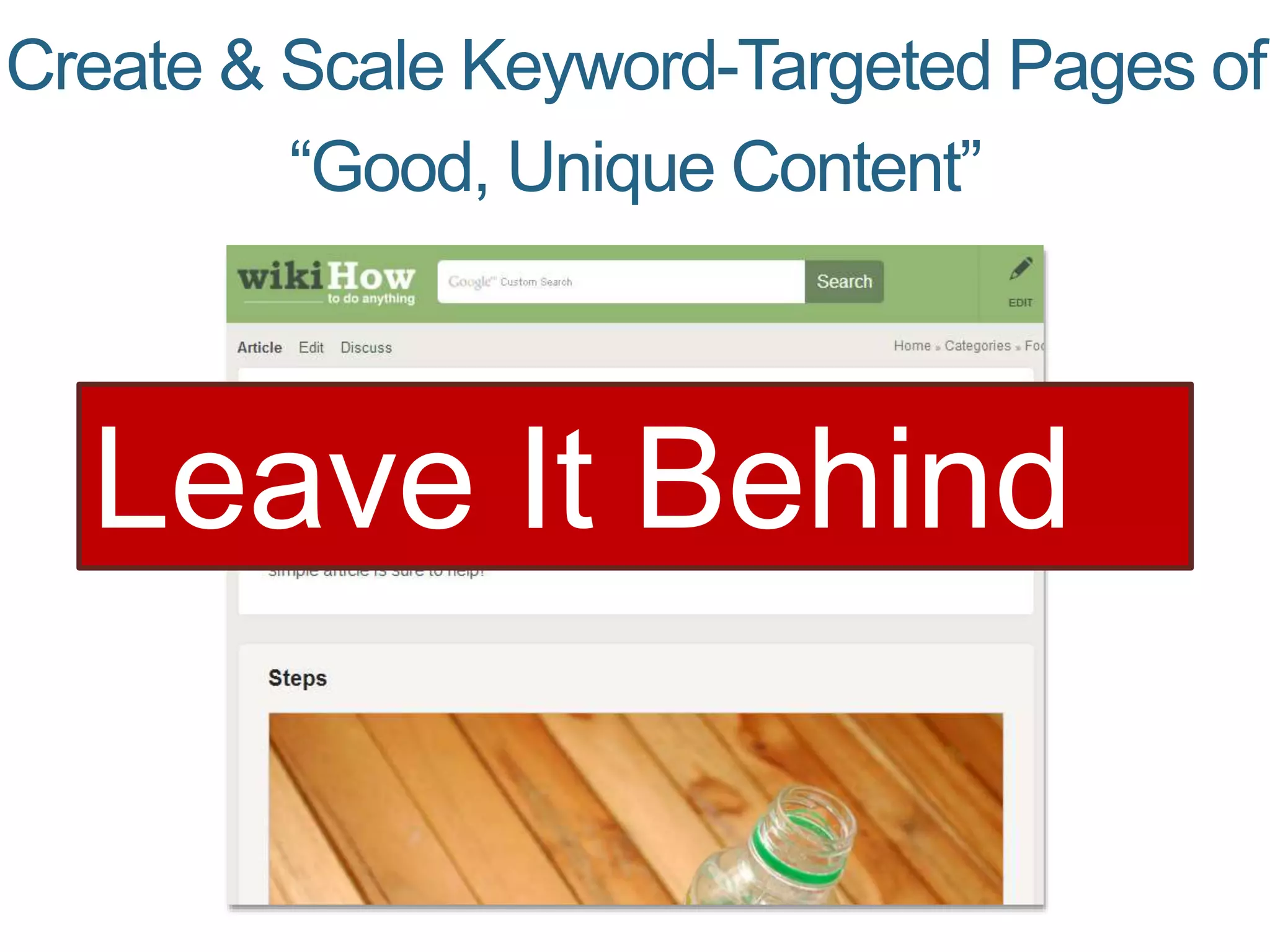
Create & Scale Keyword-Targeted Pages of
“Good, Unique Content”
Leave It Behind
Modern Criteria for Content:
Unique – does not appear elsewhere on the web in a
search-indexable format
Relevant – contains terms/phrases the engines can
interpret as on-topic
Helpful – resolves the searcher’s query (or queries) in a
useful, efficient manner
Uniquely Valuable – provides information that’s
unavailable (or hard to get) elsewhere on the web
Great UX– is easy and pleasurable to consume on any
device, even with slow connections
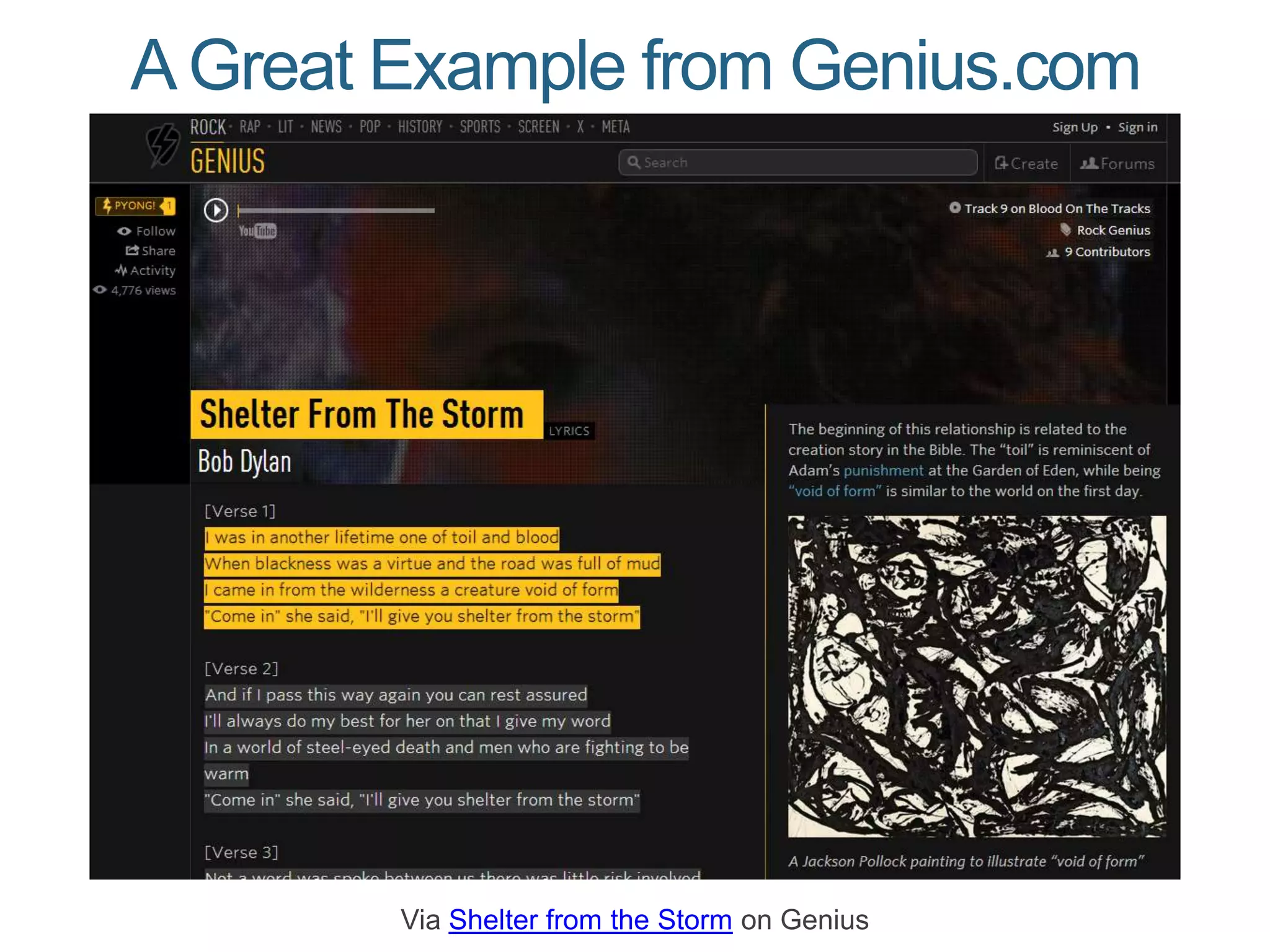
AGreat Example from Genius.com
Via Shelter from the Storm on Genius
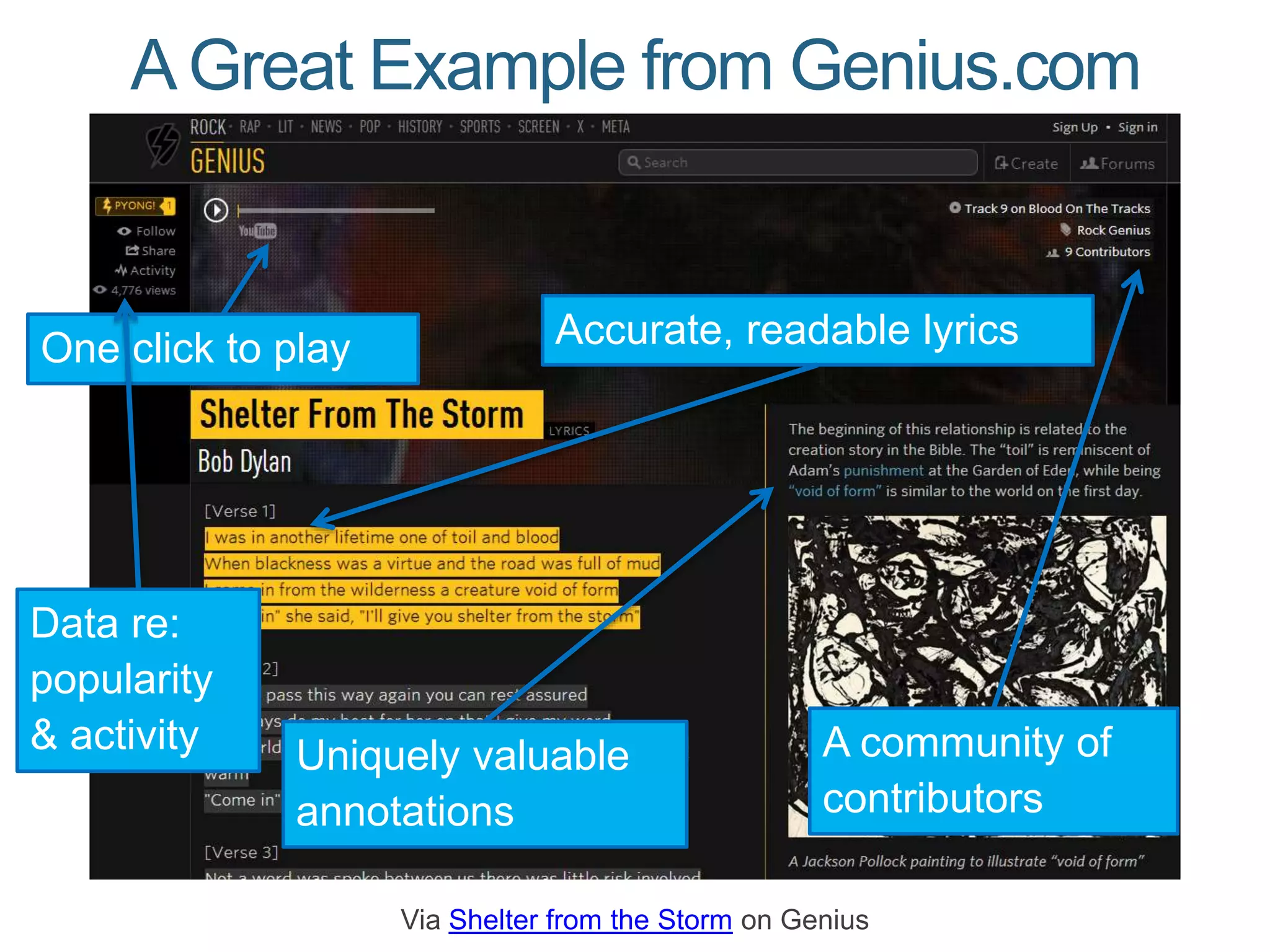
AGreat Example from Genius.com
Via Shelter from the Storm on Genius
Accurate, readable lyrics
Uniquely valuable
annotations
A community of
contributors
One click to play
Data re:
popularity
& activity
Link
Building
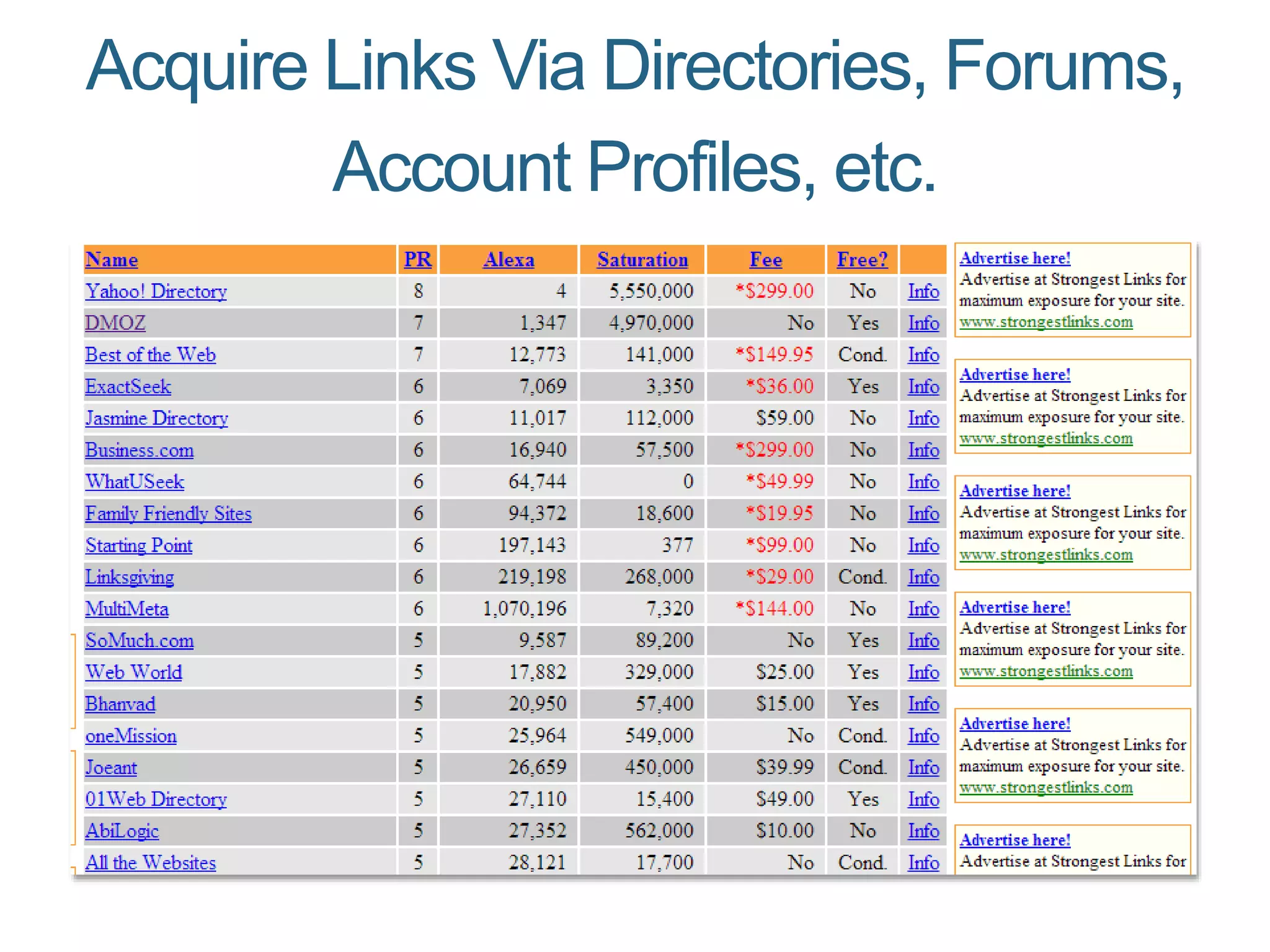
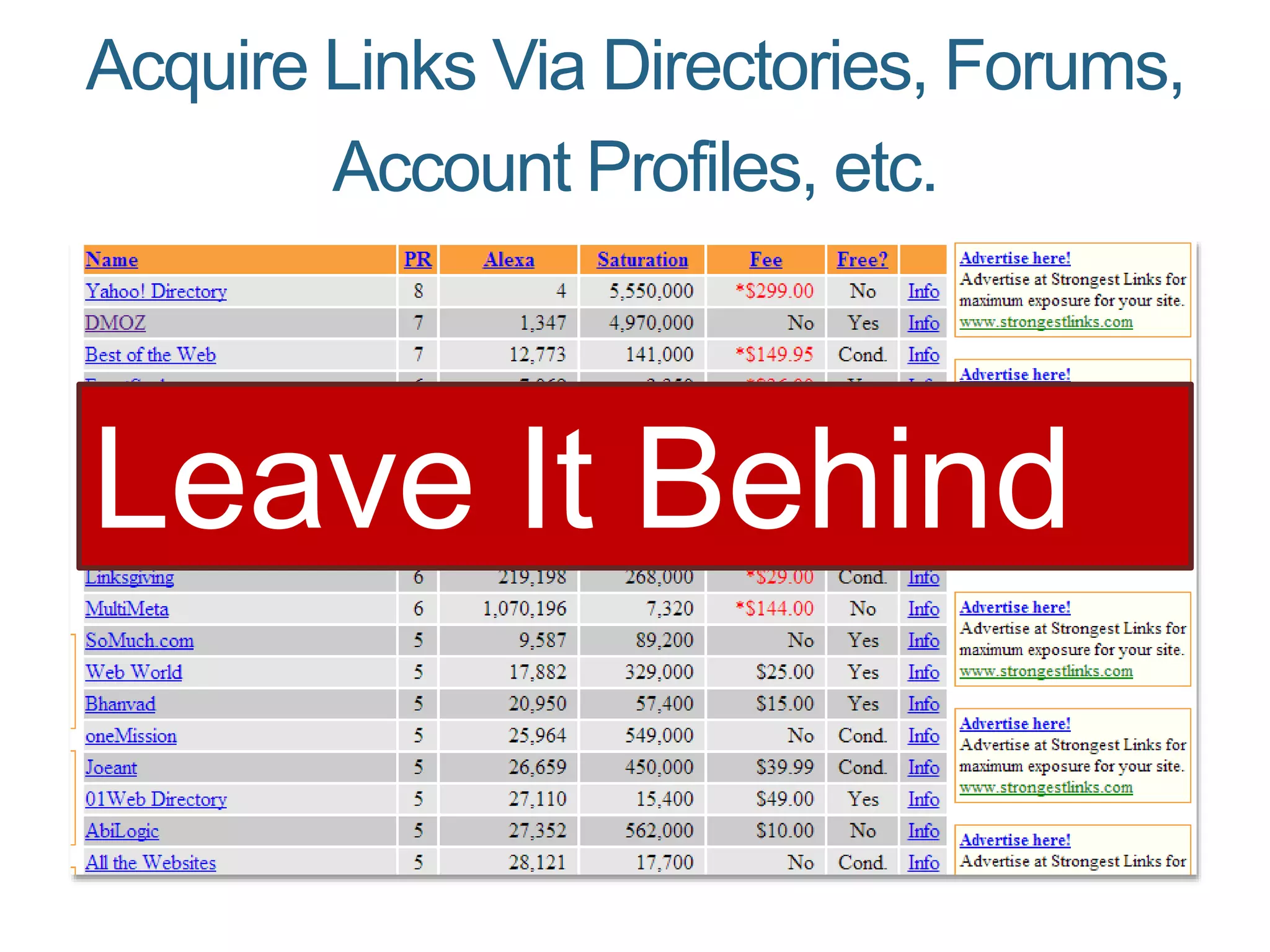
Acquire Links Via Directories, Forums,
Account Profiles, etc.
Acquire Links Via Directories, Forums,
Account Profiles, etc.
Leave It Behind
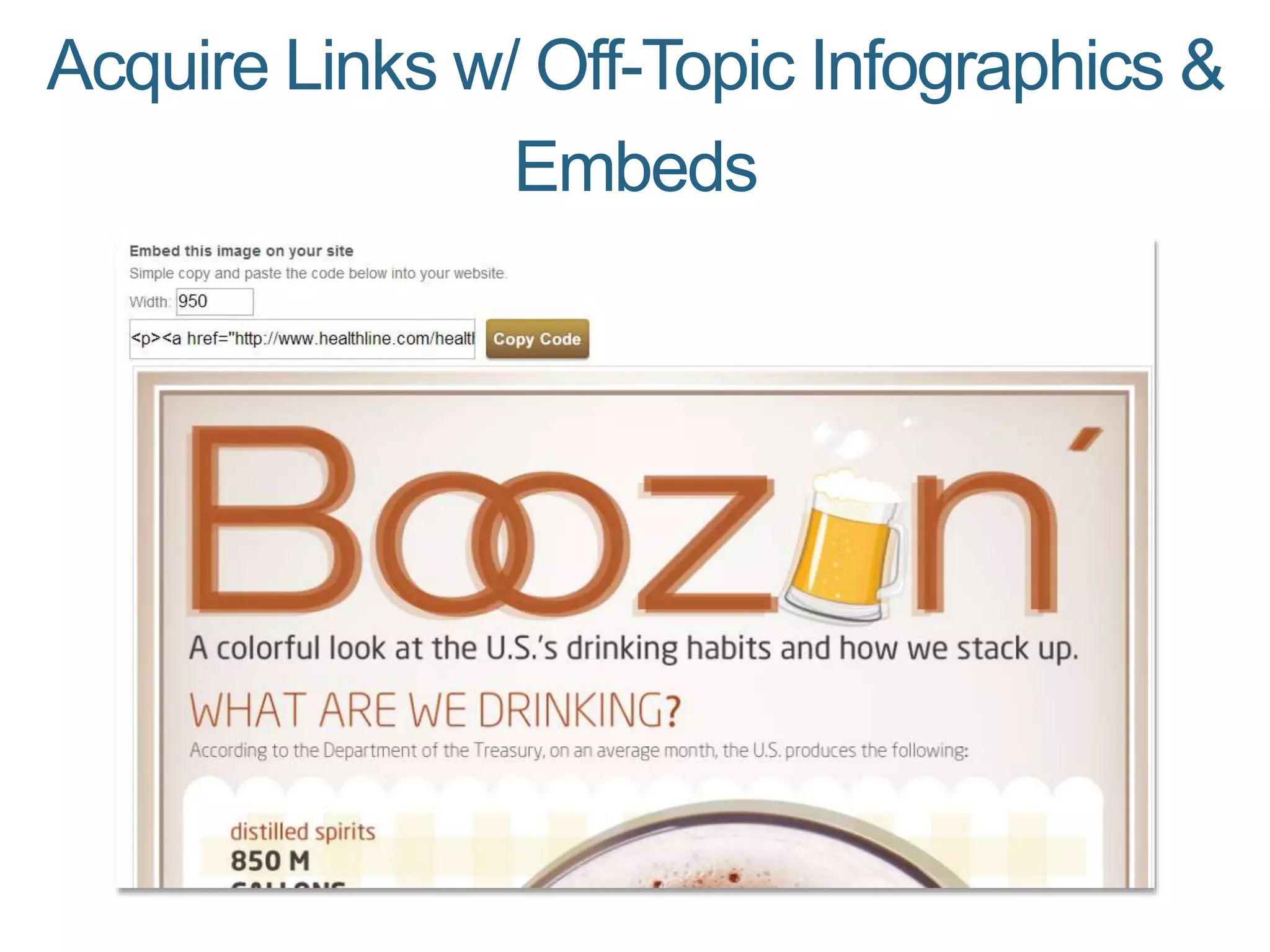
Acquire Links w/ Off-Topic Infographics &
Embeds
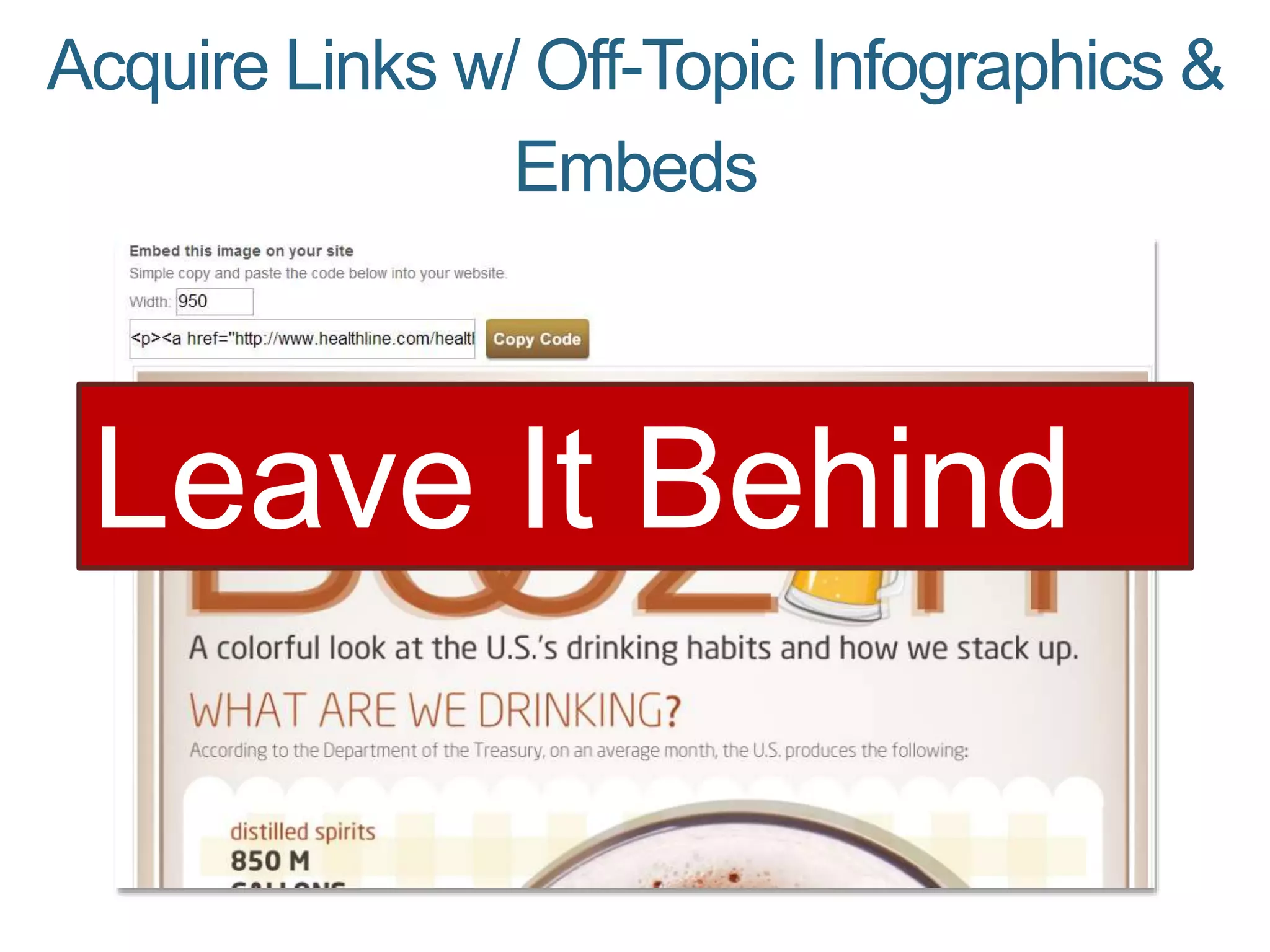
Acquire Links w/ Off-Topic Infographics &
Embeds
Leave It Behind
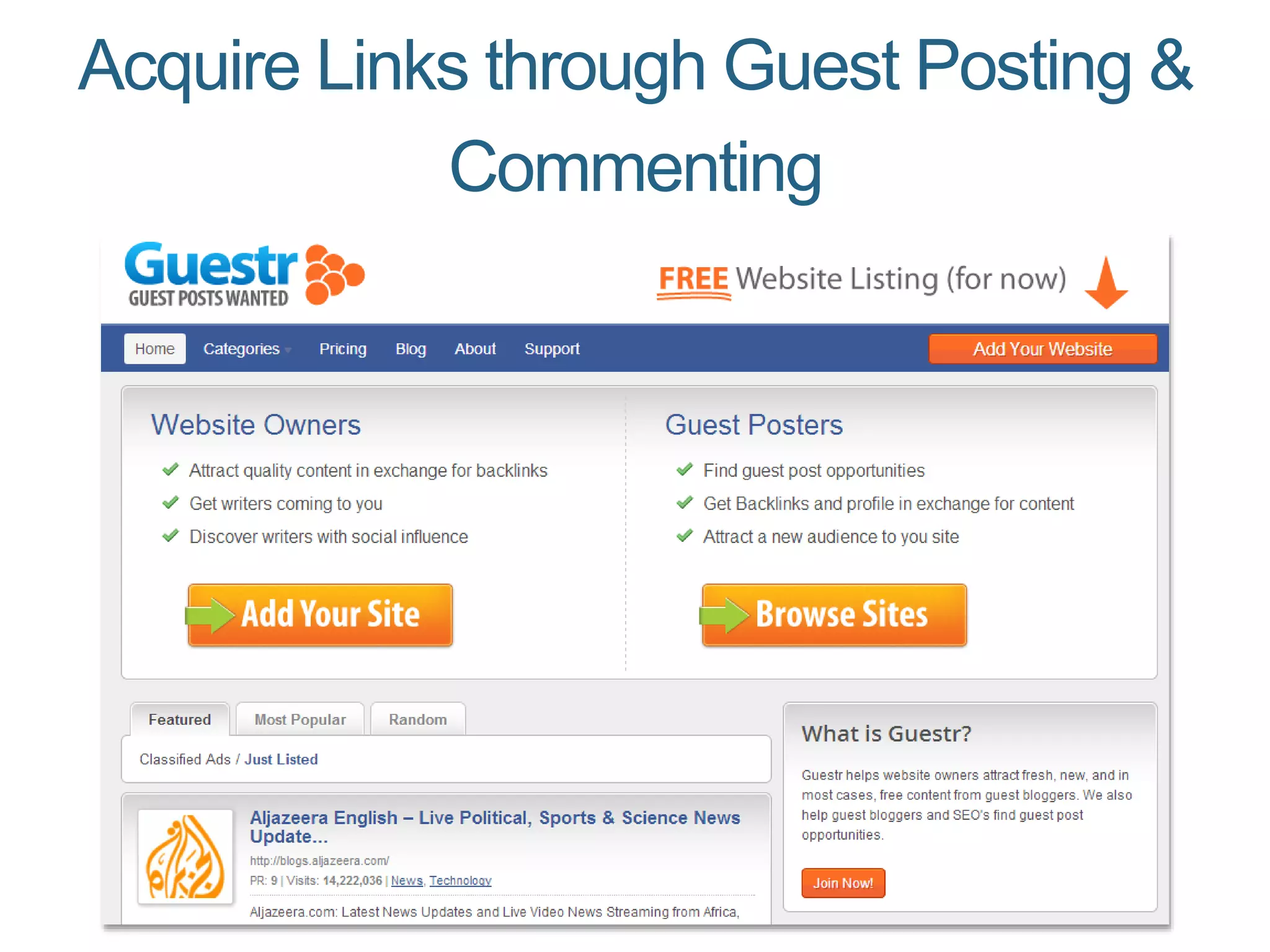
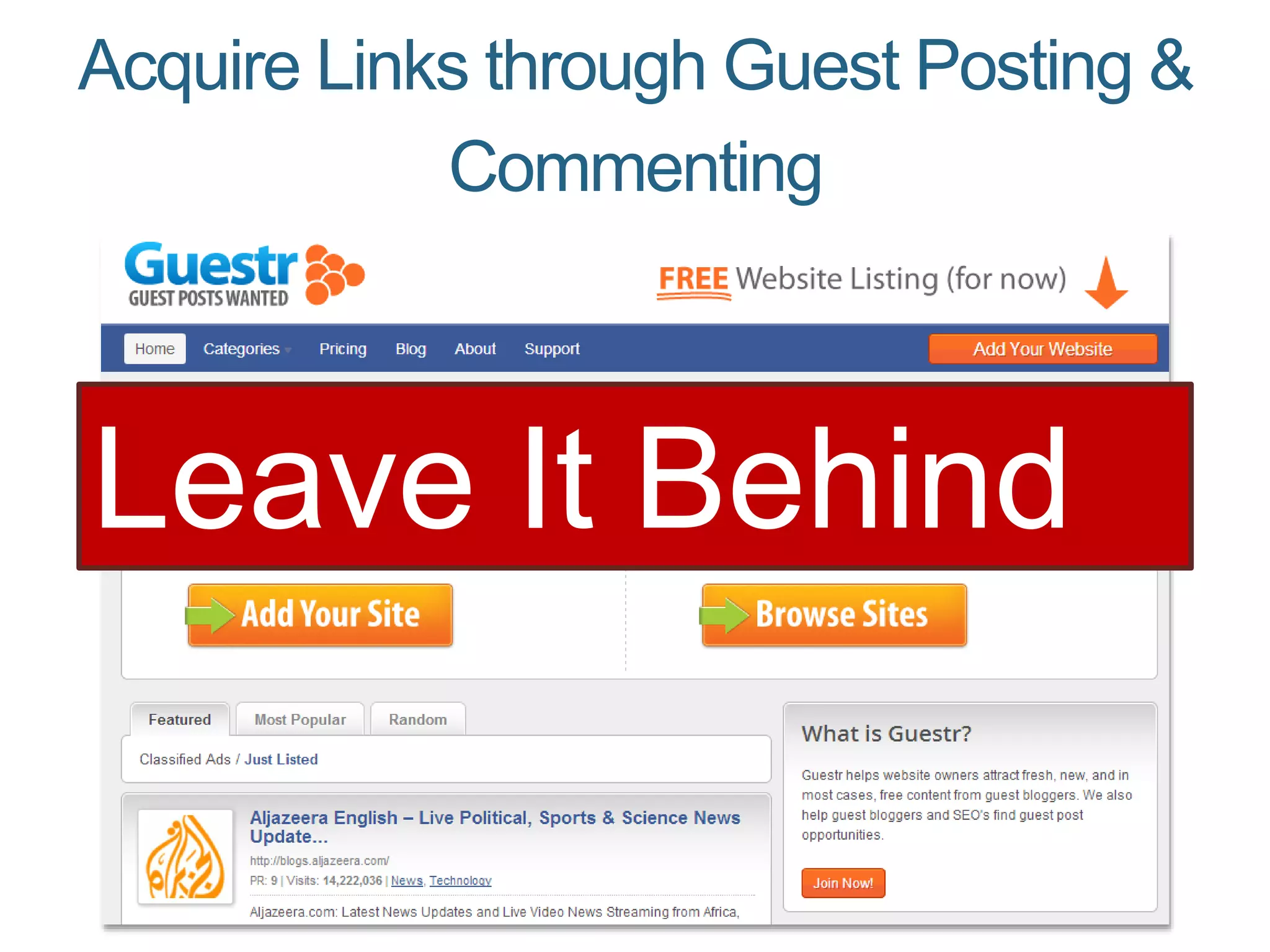
Acquire Links through Guest Posting &
Commenting
Acquire Links through Guest Posting &
Commenting
Leave It Behind
The Truth:
Google doesn’t want
to count links you can
“build.”
The Truth:
Google only wants to
count links you
editorially “earn.”
Sadly, there isn’t
enough time to go into
tactics, so check out
these resources:
Link Building from the Moz
Blog
Paddy Moogan’s Link Building
eBook
Experts’Favorite Link Building
Tactics
How to Leverage PR for
Link Building
The Future of
Link Building
Social Media
& SEO
Share Socially to Get Rankings
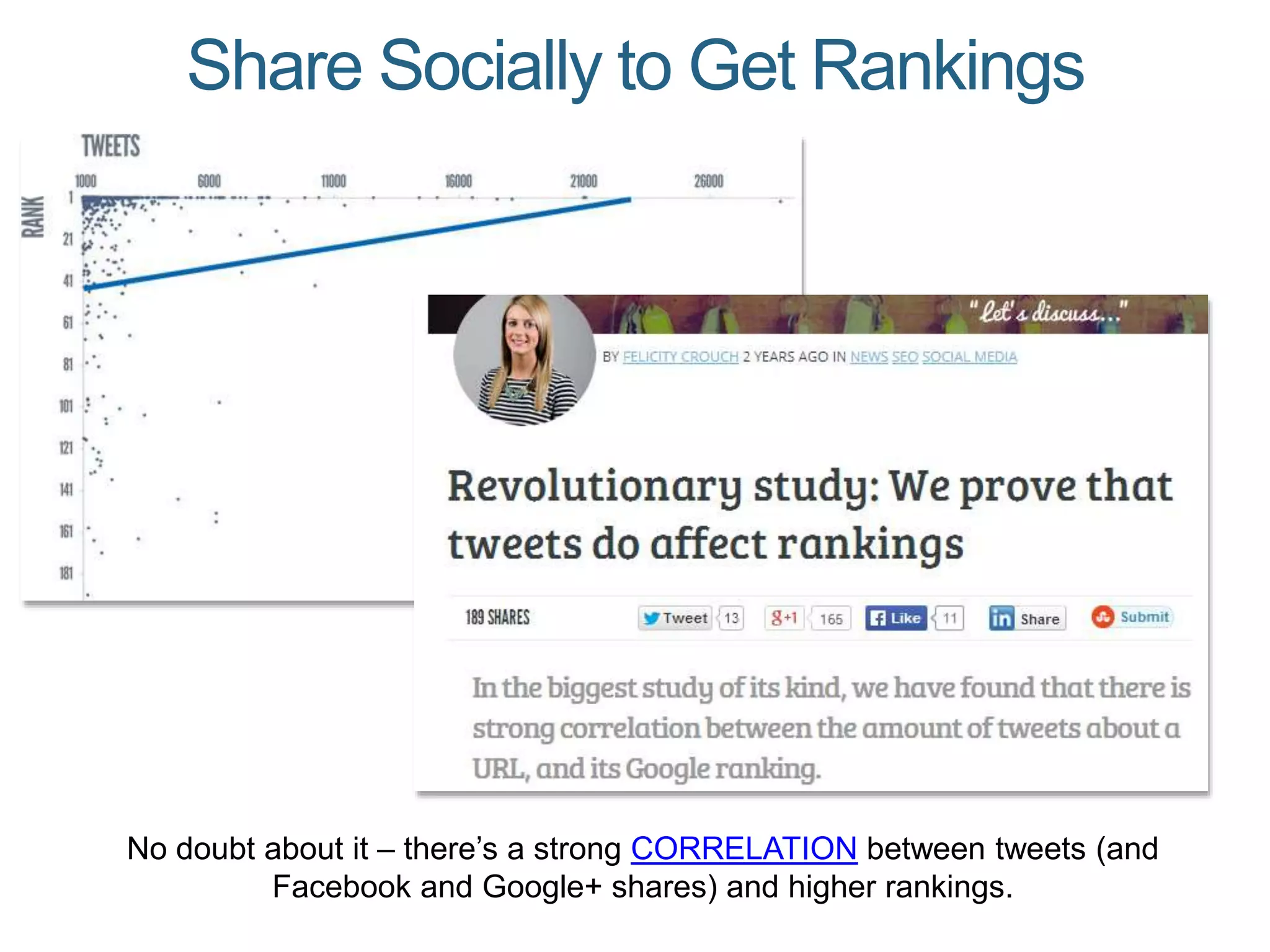
No doubt about it – there’s a strong CORRELATION between tweets (and
Facebook and Google+ shares) and higher rankings.
Share Socially to Get Rankings
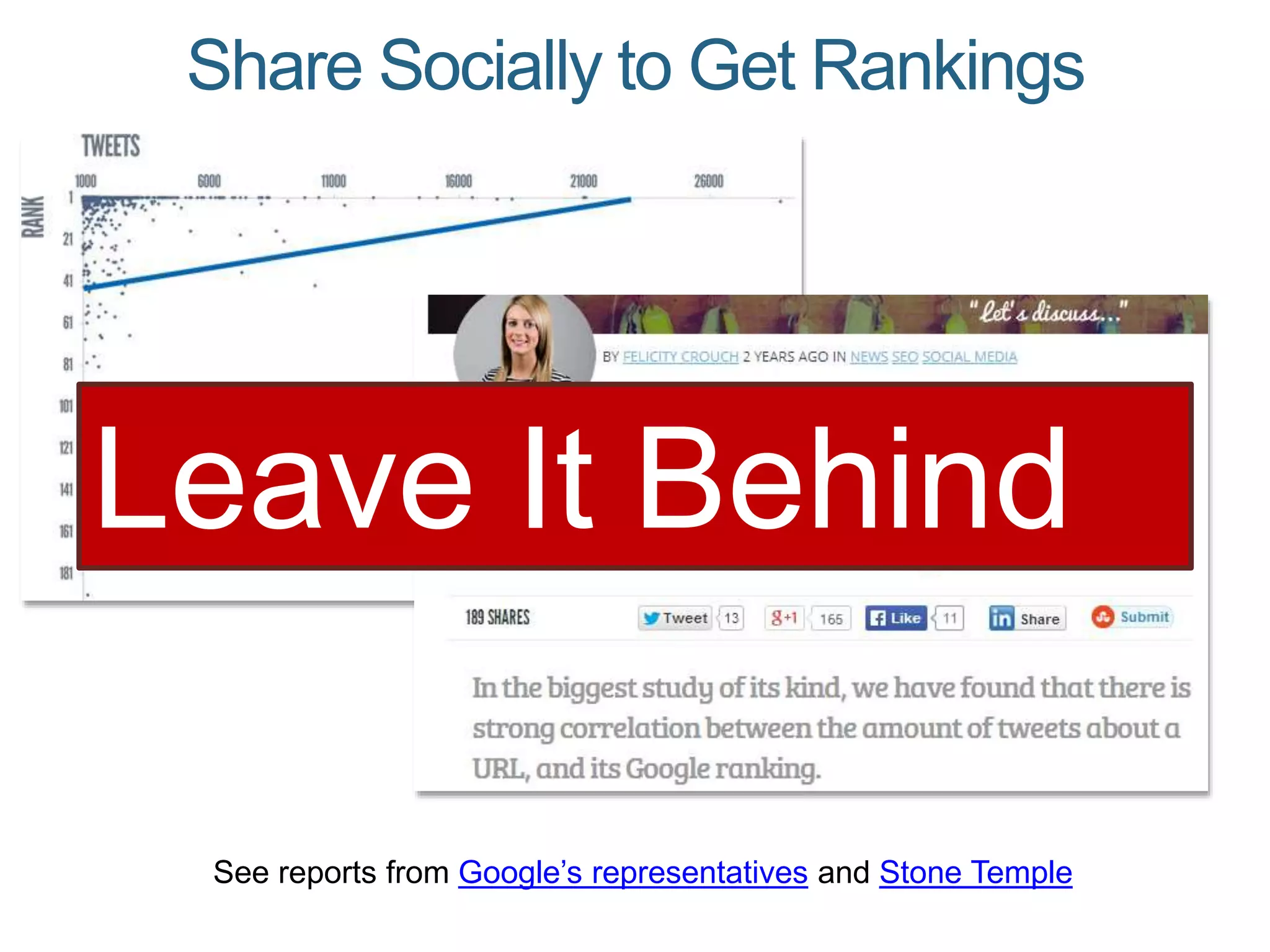
See reports from Google’s representatives and Stone Temple
Leave It Behind
Social Impacts SEO Indirectly
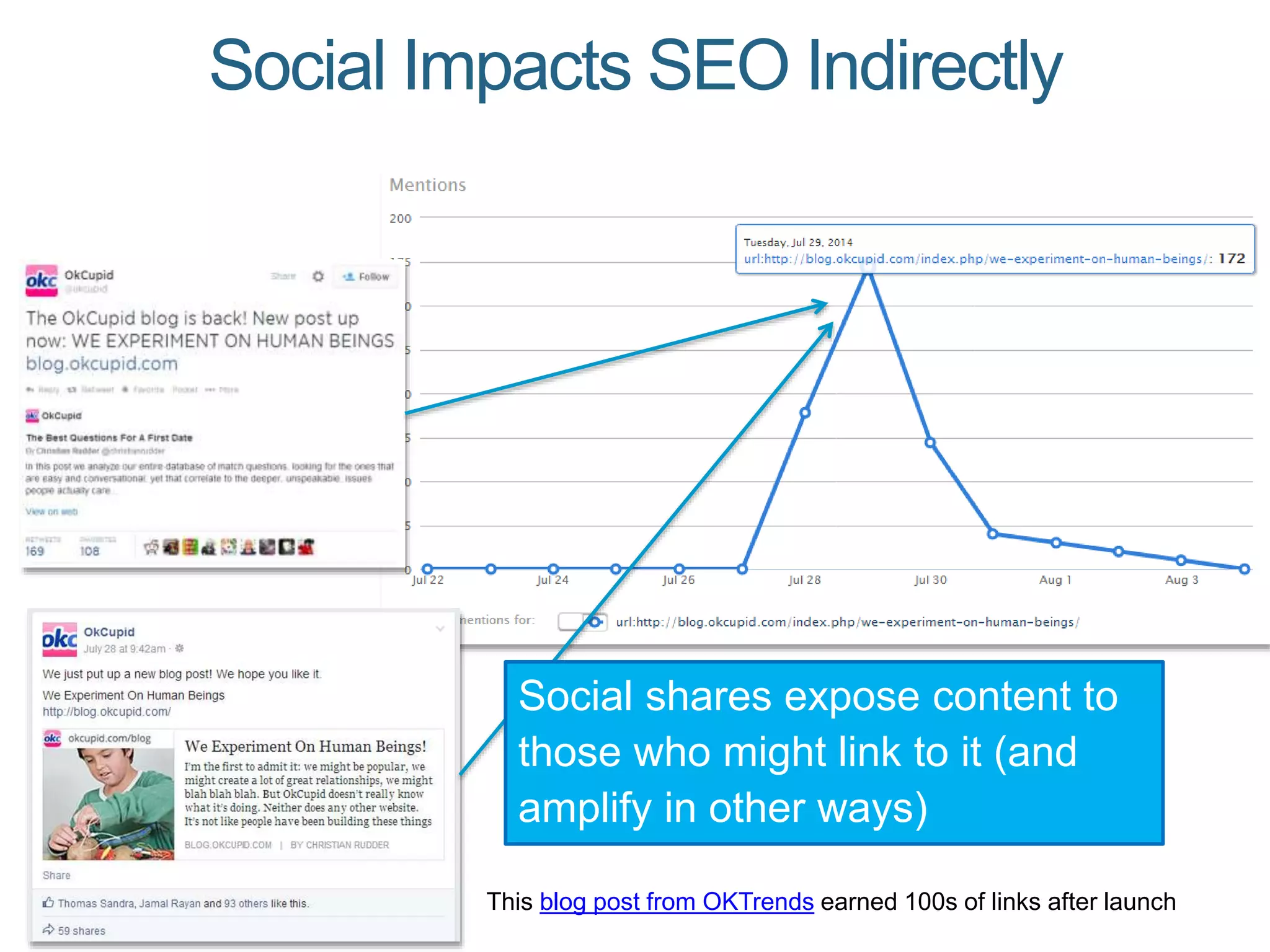
Social shares expose content to
those who might link to it (and
amplify in other ways)
This blog post from OKTrends earned 100s of links after launch
Google+ is the Exception for
Personalized/Logged-In Results
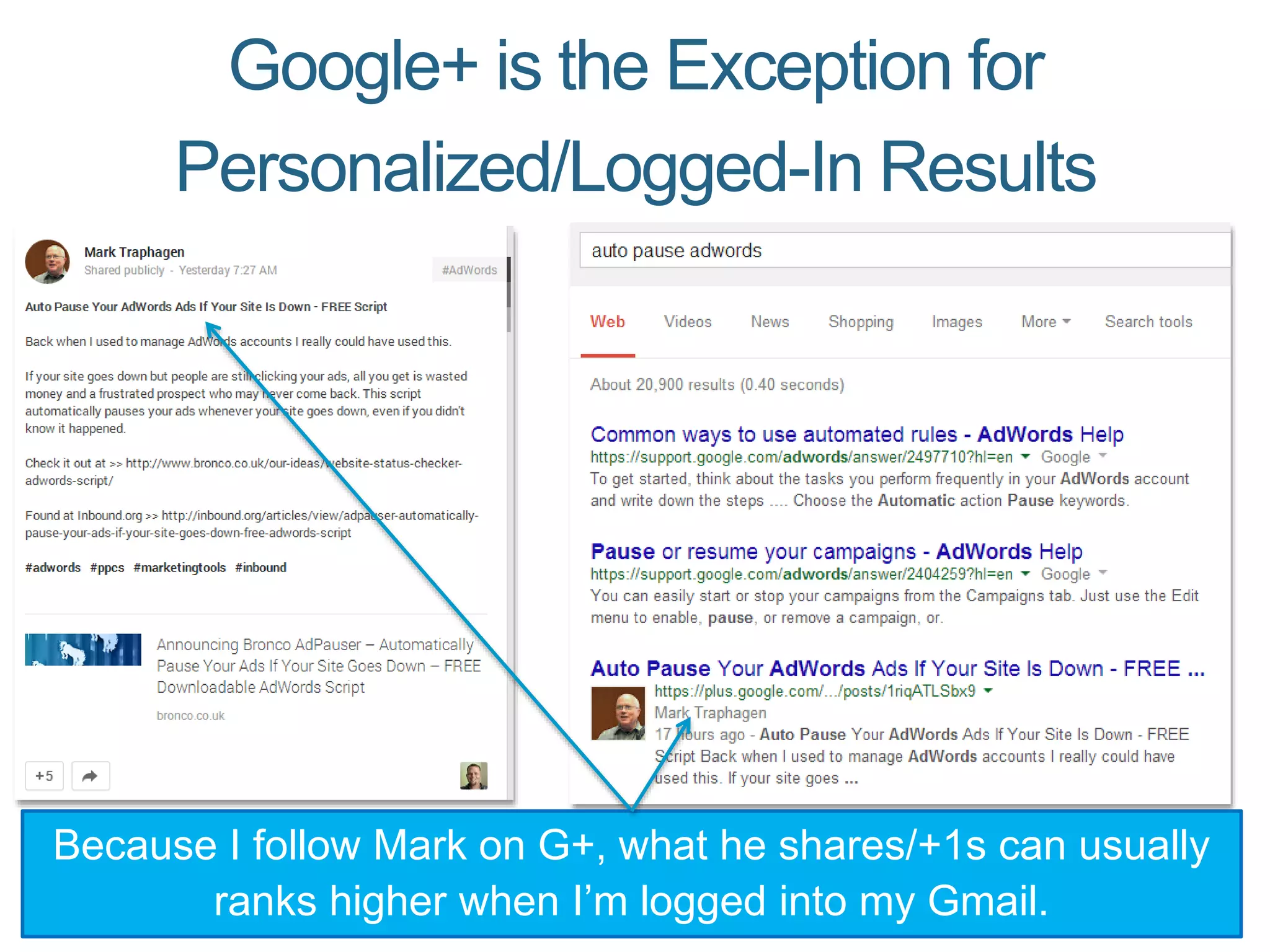
Because I follow Mark on G+, what he shares/+1s can usually
ranks higher when I’m logged into my Gmail.
Content
Marketing
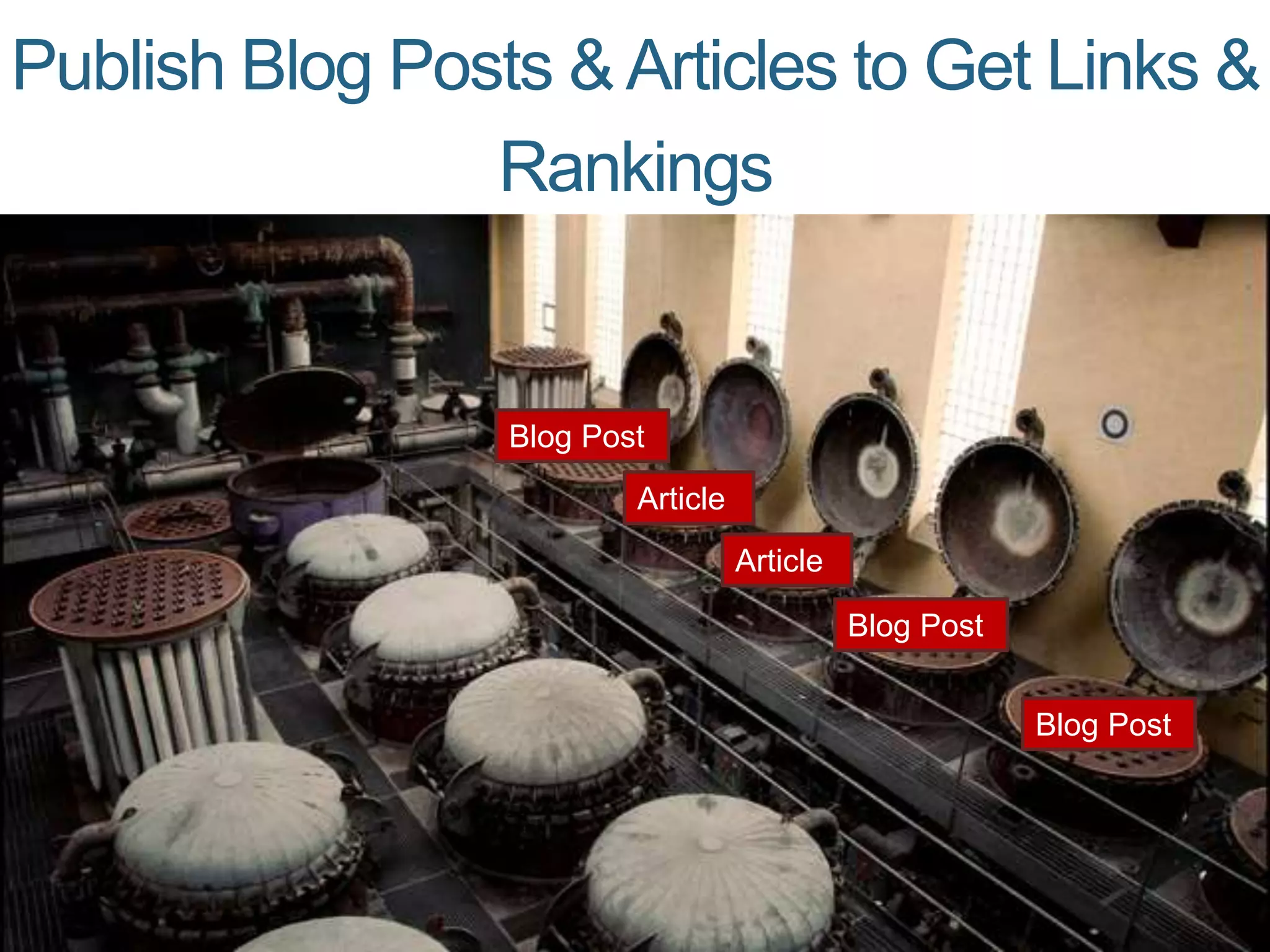
Publish Blog Posts &Articles to Get Links &
Rankings
Blog Post
Blog Post
Article
Article
Blog Post
Publish Blog Posts &Articles to Get Links &
Rankings
Blog Post
Blog Post
Article
Article
Blog Post
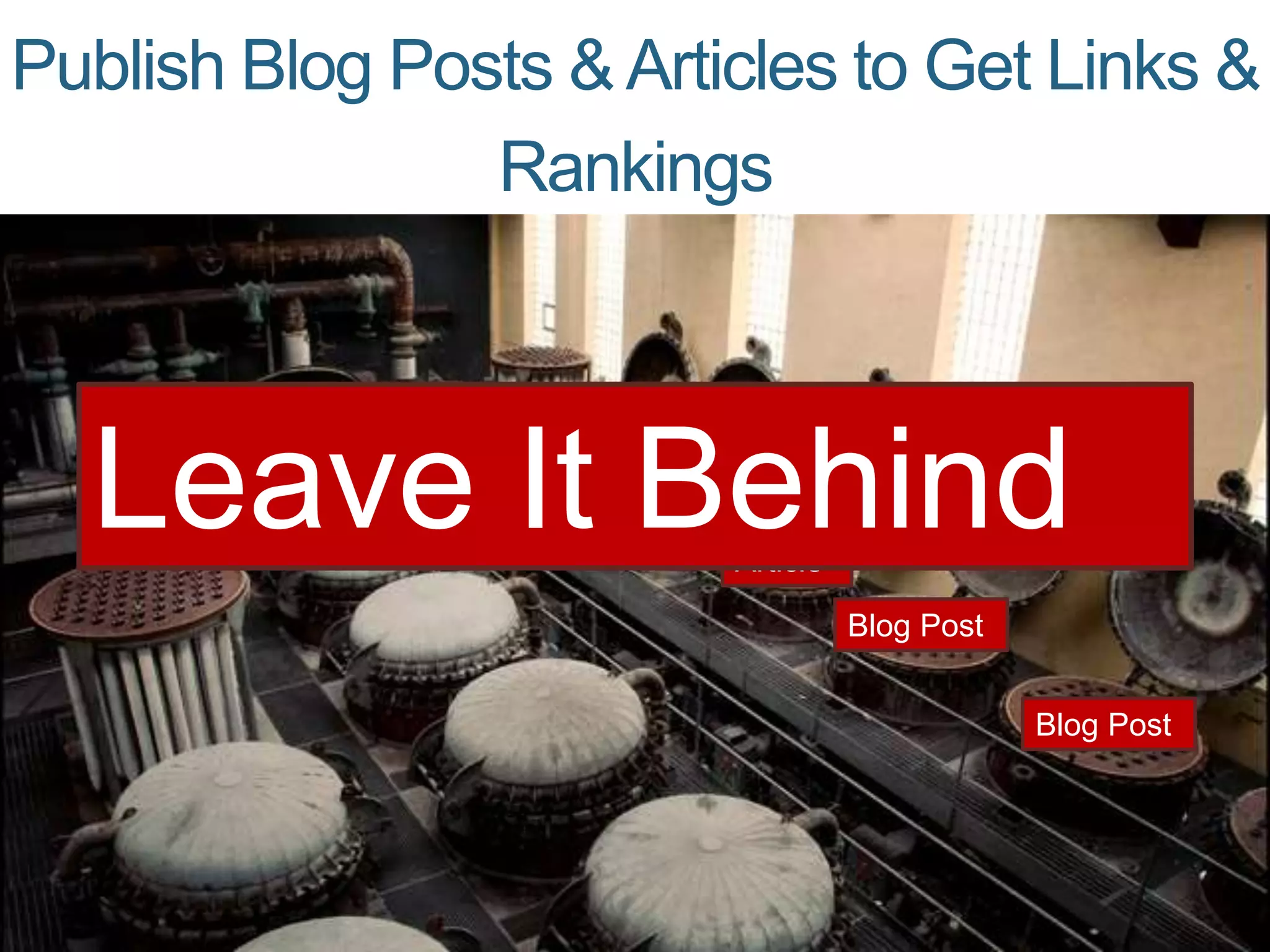
Leave It Behind
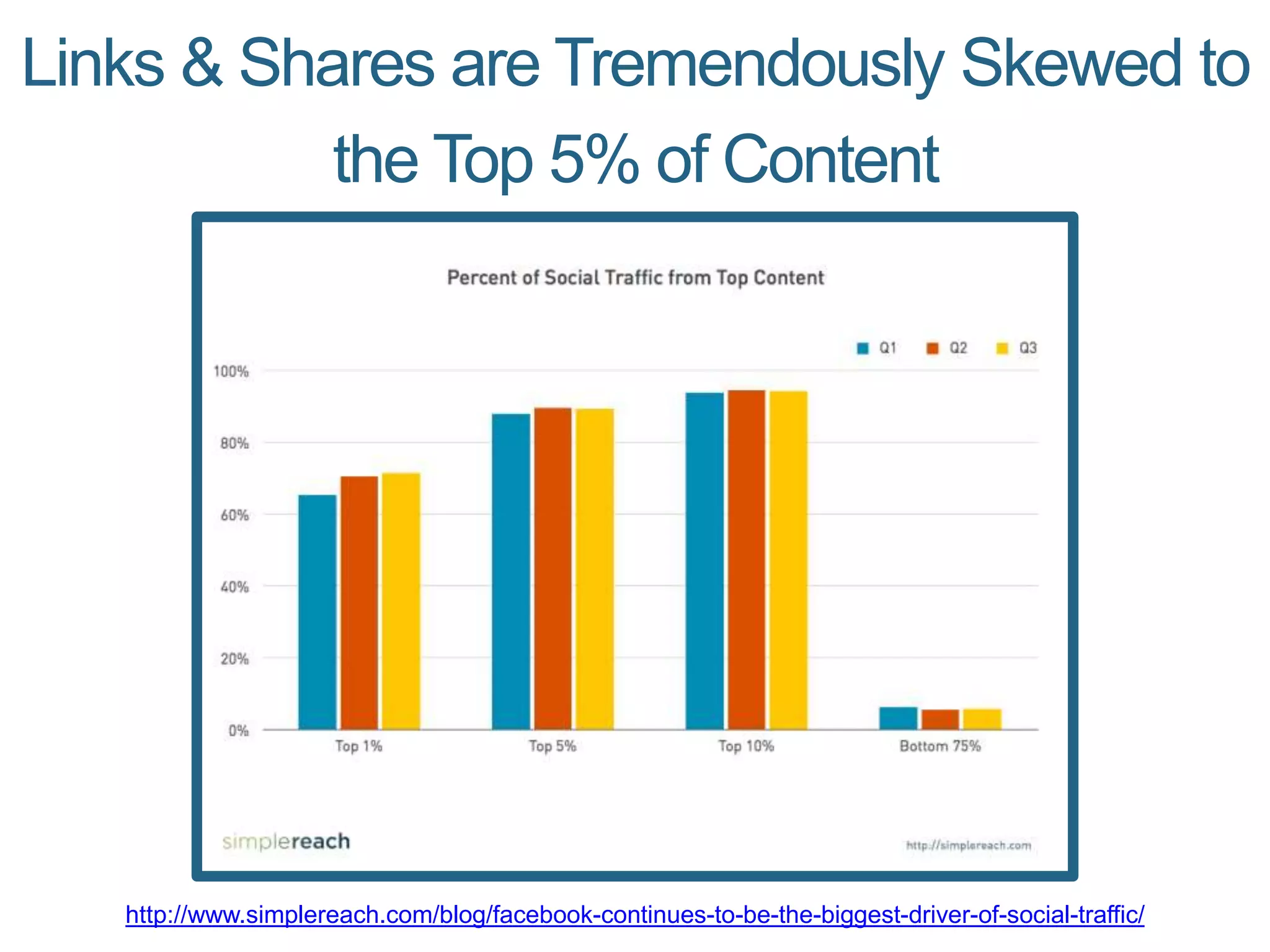
Links & Shares are Tremendously Skewed to
the Top 5% of Content
http://www.simplereach.com/blog/facebook-continues-to-be-the-biggest-driver-of-social-traffic/
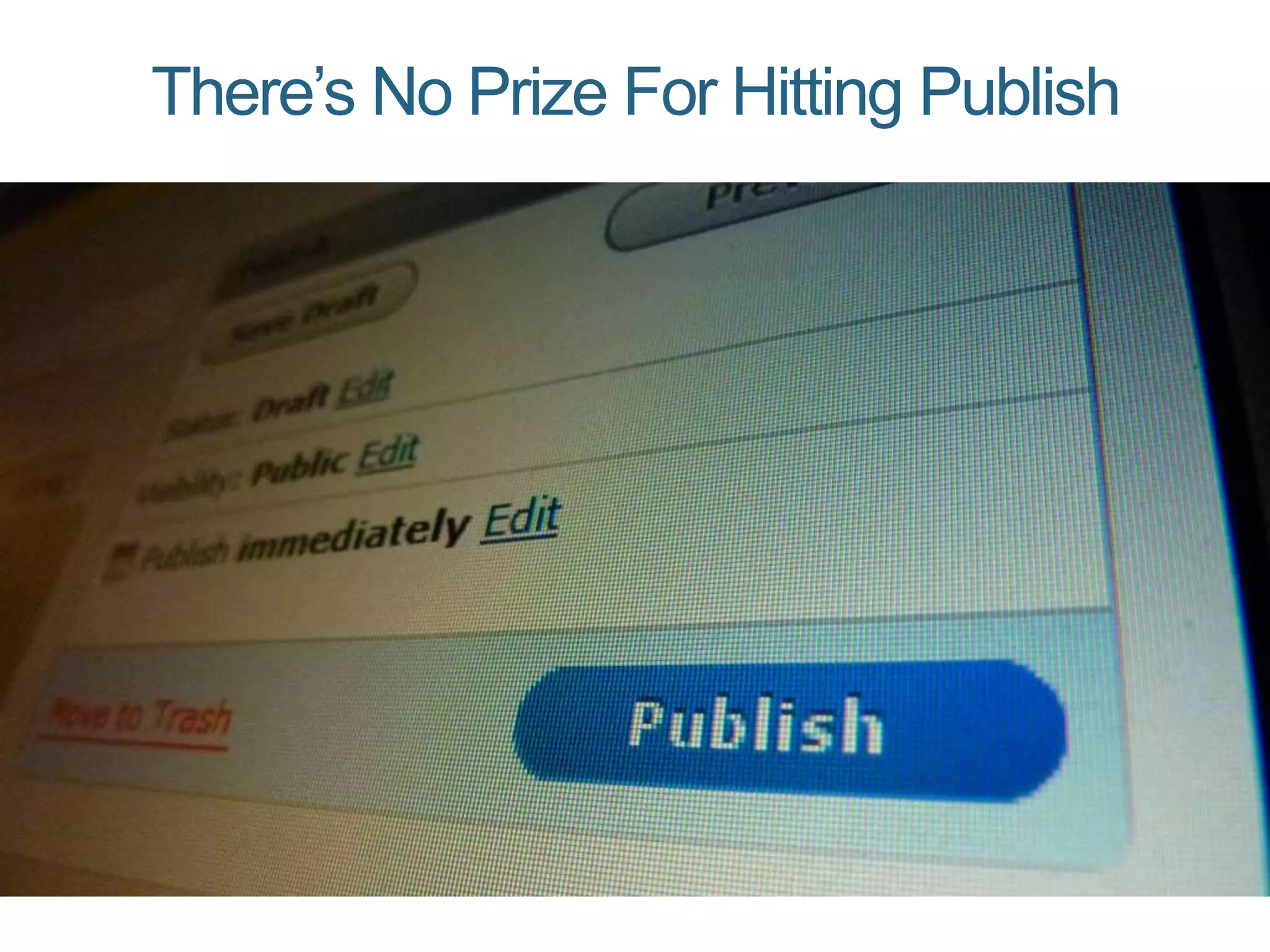
There’s No Prize For Hitting Publish
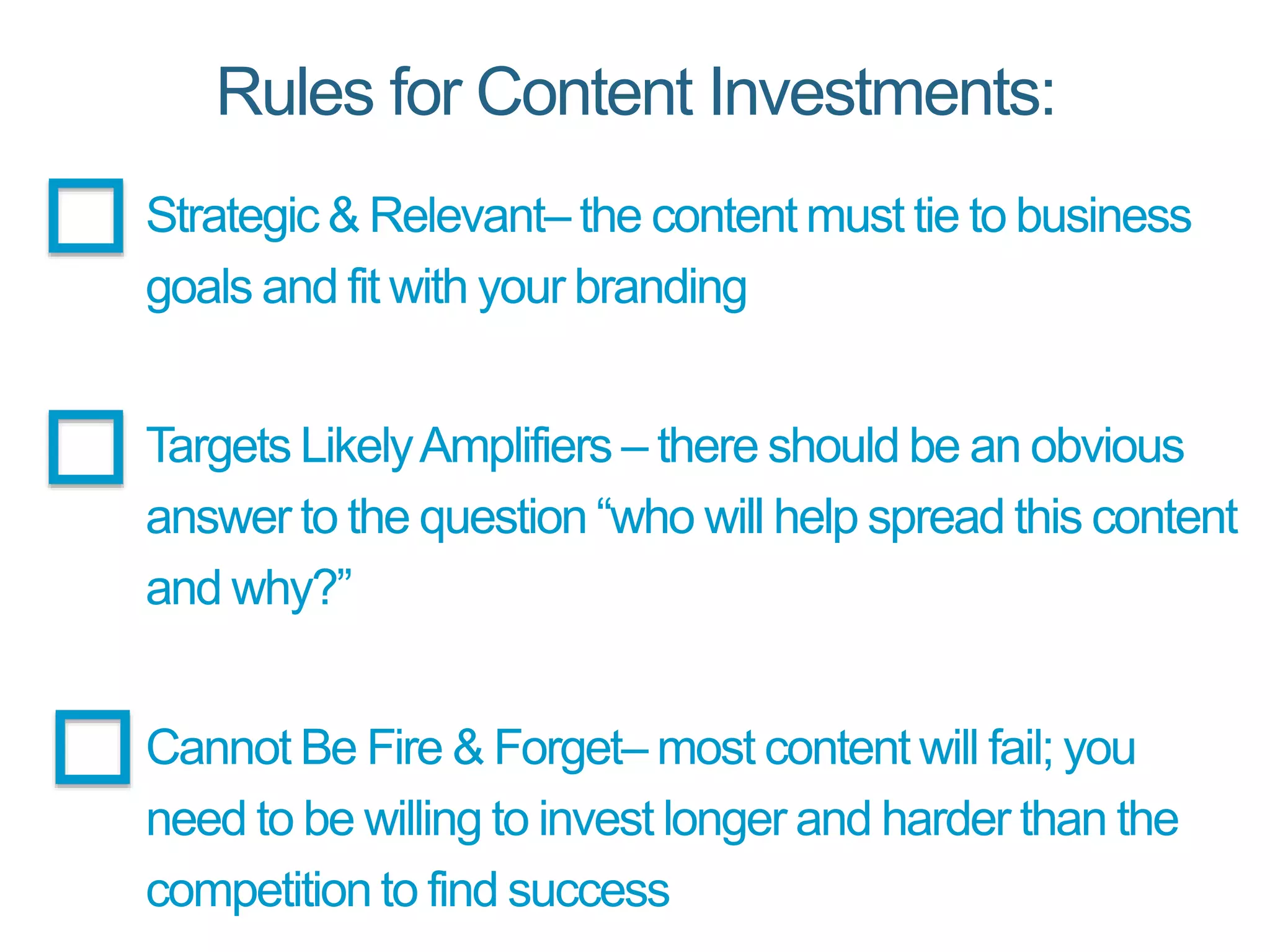
Rules for Content Investments:
Strategic & Relevant– the content must tie to business
goals and fit with your branding
Targets LikelyAmplifiers – there should be an obvious
answer to the question “who will help spread this content
and why?”
Cannot Be Fire & Forget– most content will fail; you
need to be willing to invest longer and harder than the
competition to find success
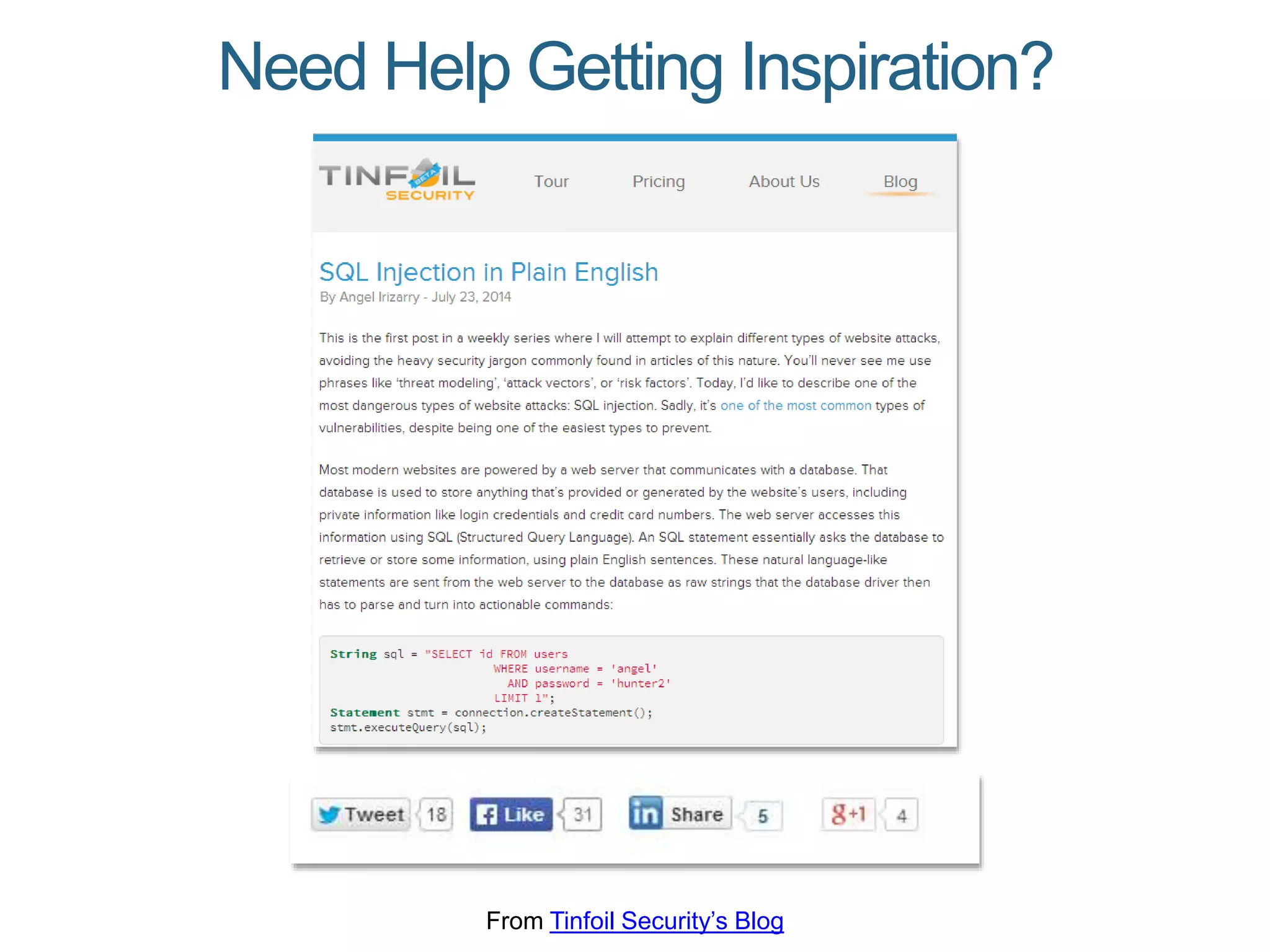
Need Help Getting Inspiration?
From Tinfoil Security’s Blog
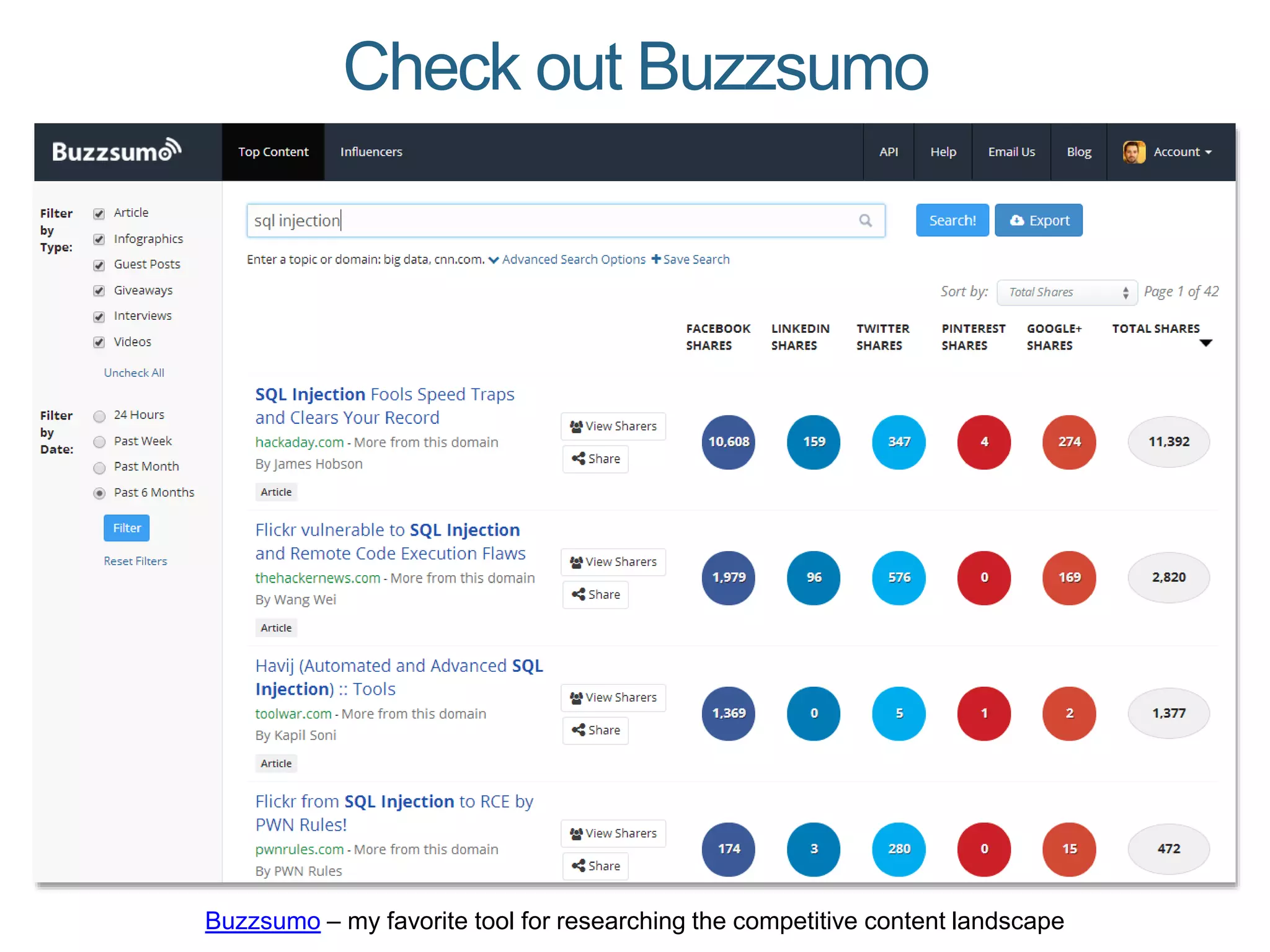
Check out Buzzsumo
Buzzsumo – my favorite tool for researching the competitive content landscape
Measuring
ROI
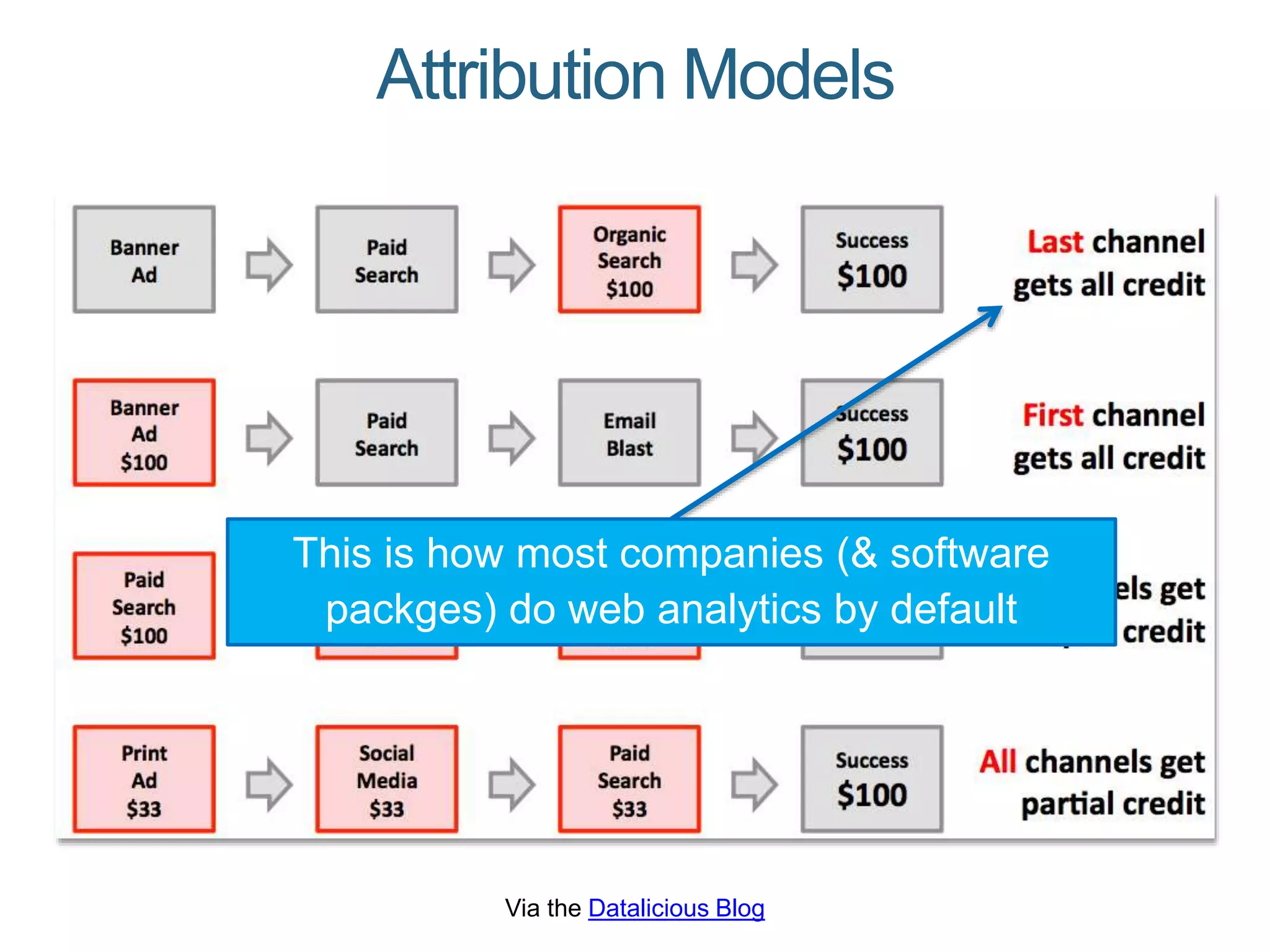
Attribution Models
Via the Datalicious Blog
This is how most companies (& software
packges) do web analytics by default
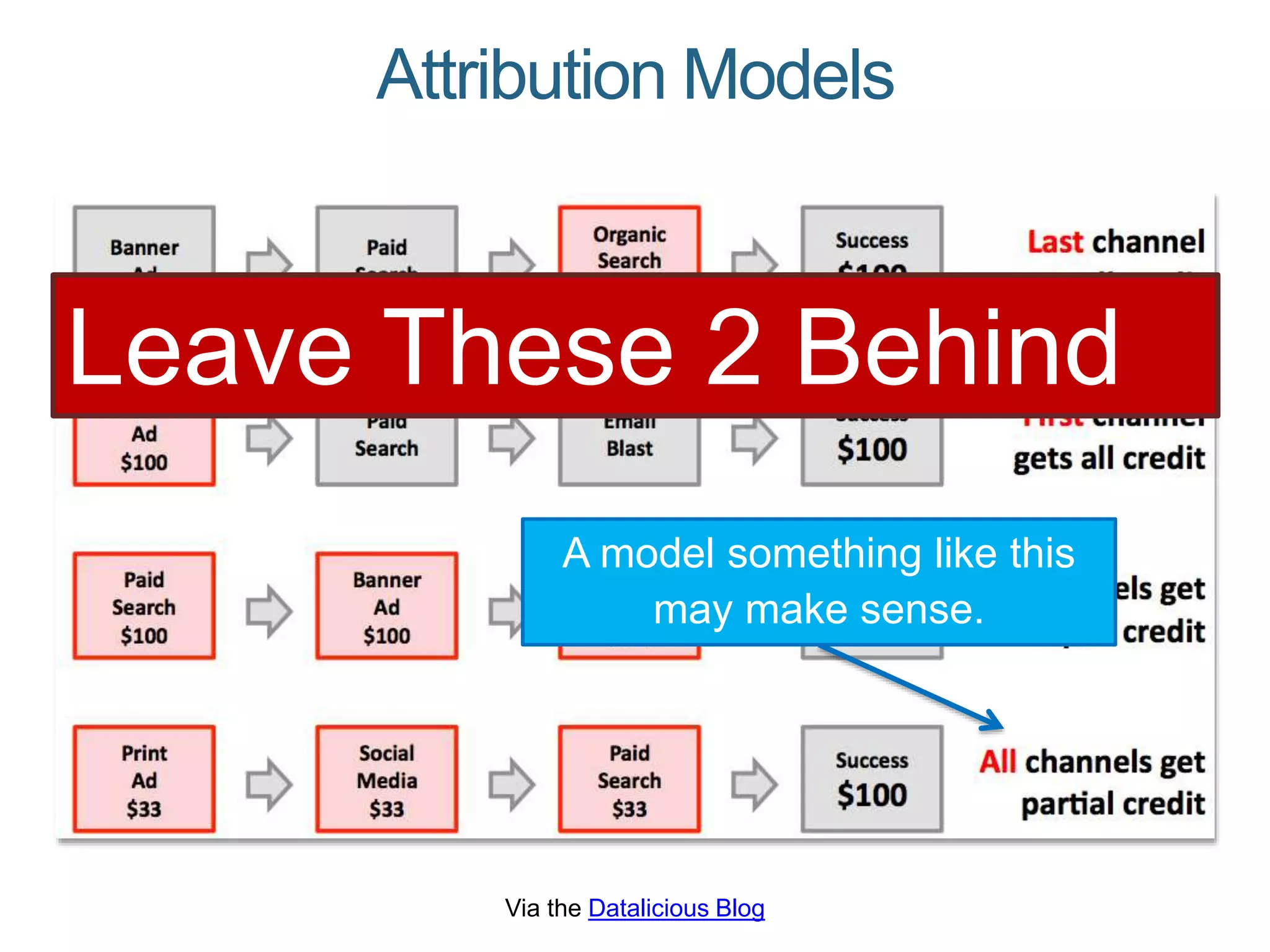
Attribution Models
Via the Datalicious Blog
Leave These 2 Behind
A model something like this
may make sense.
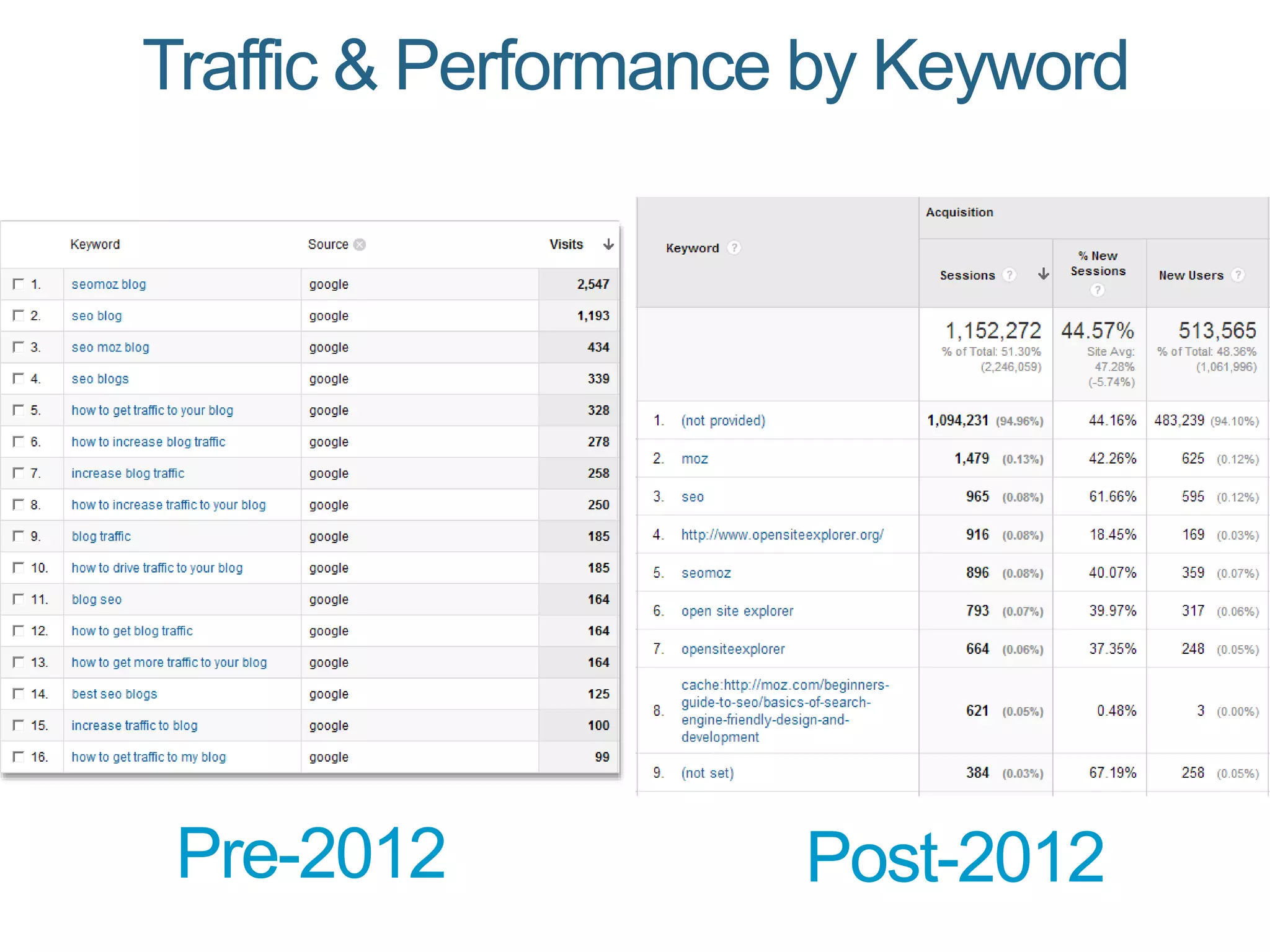
Traffic & Performance by Keyword
Pre-2012 Post-2012
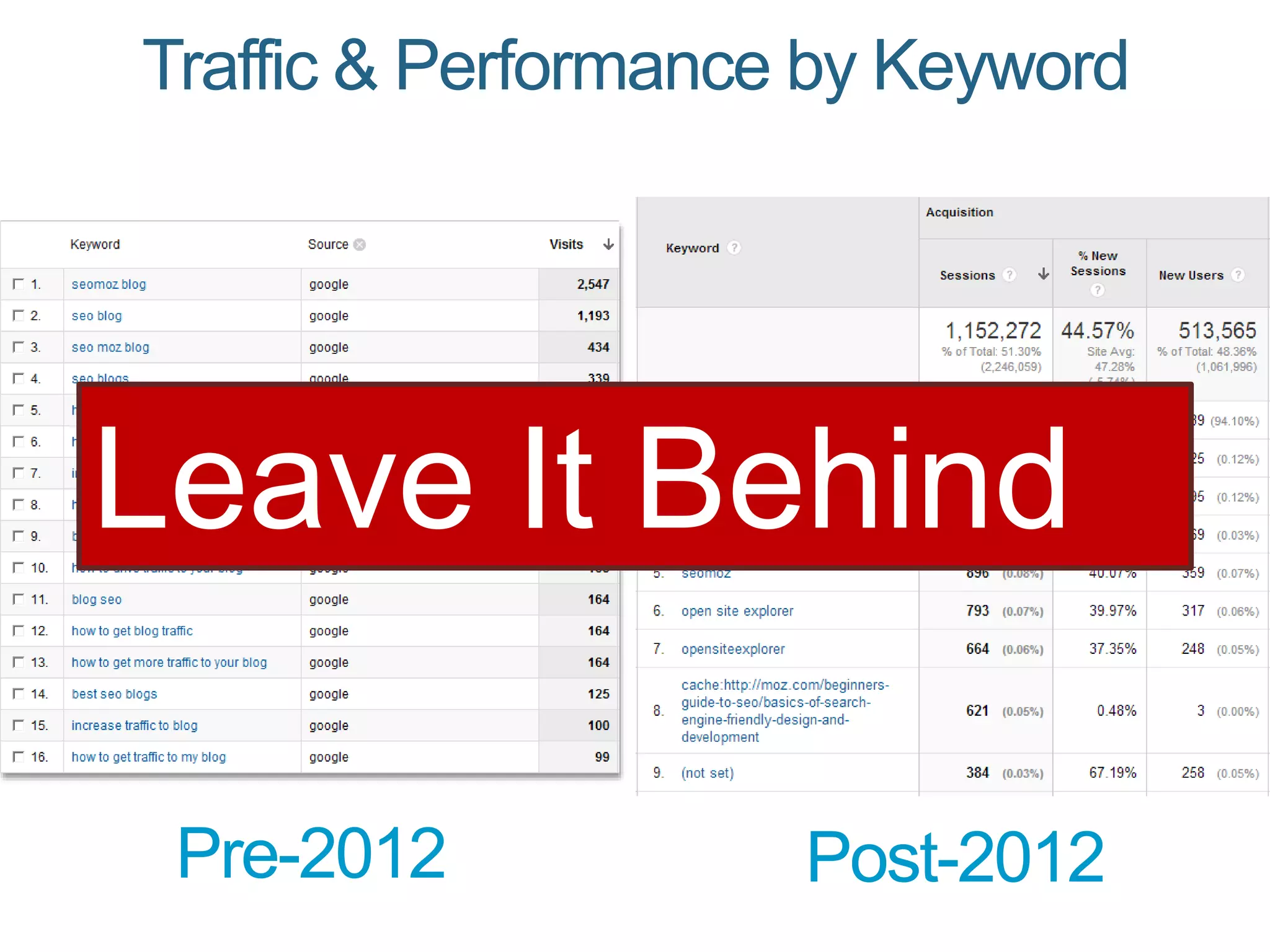
Traffic & Performance by Keyword
Pre-2012 Post-2012
Leave It Behind
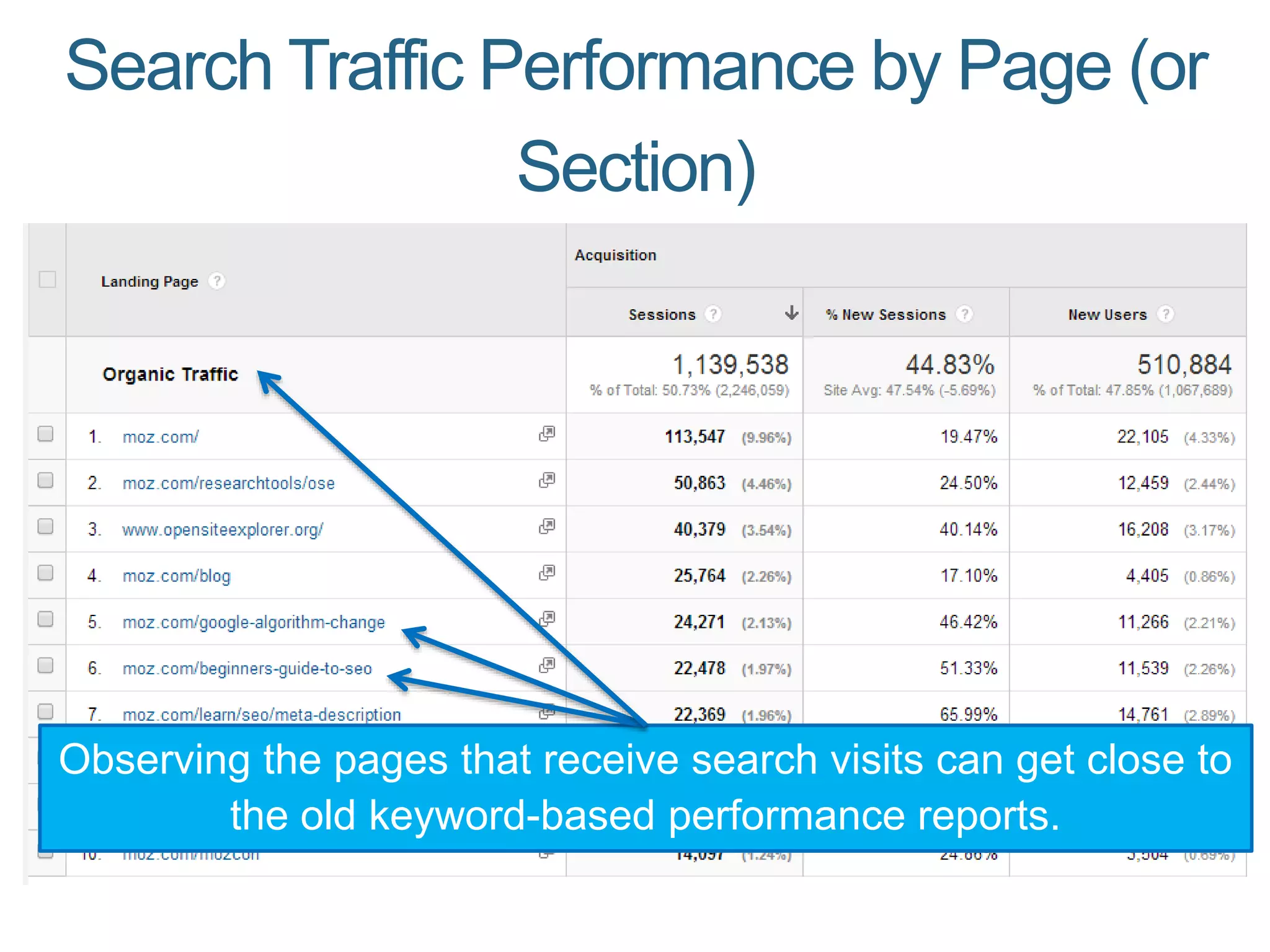
Search Traffic Performance by Page (or
Section)
Observing the pages that receive search visits can get close to
the old keyword-based performance reports.
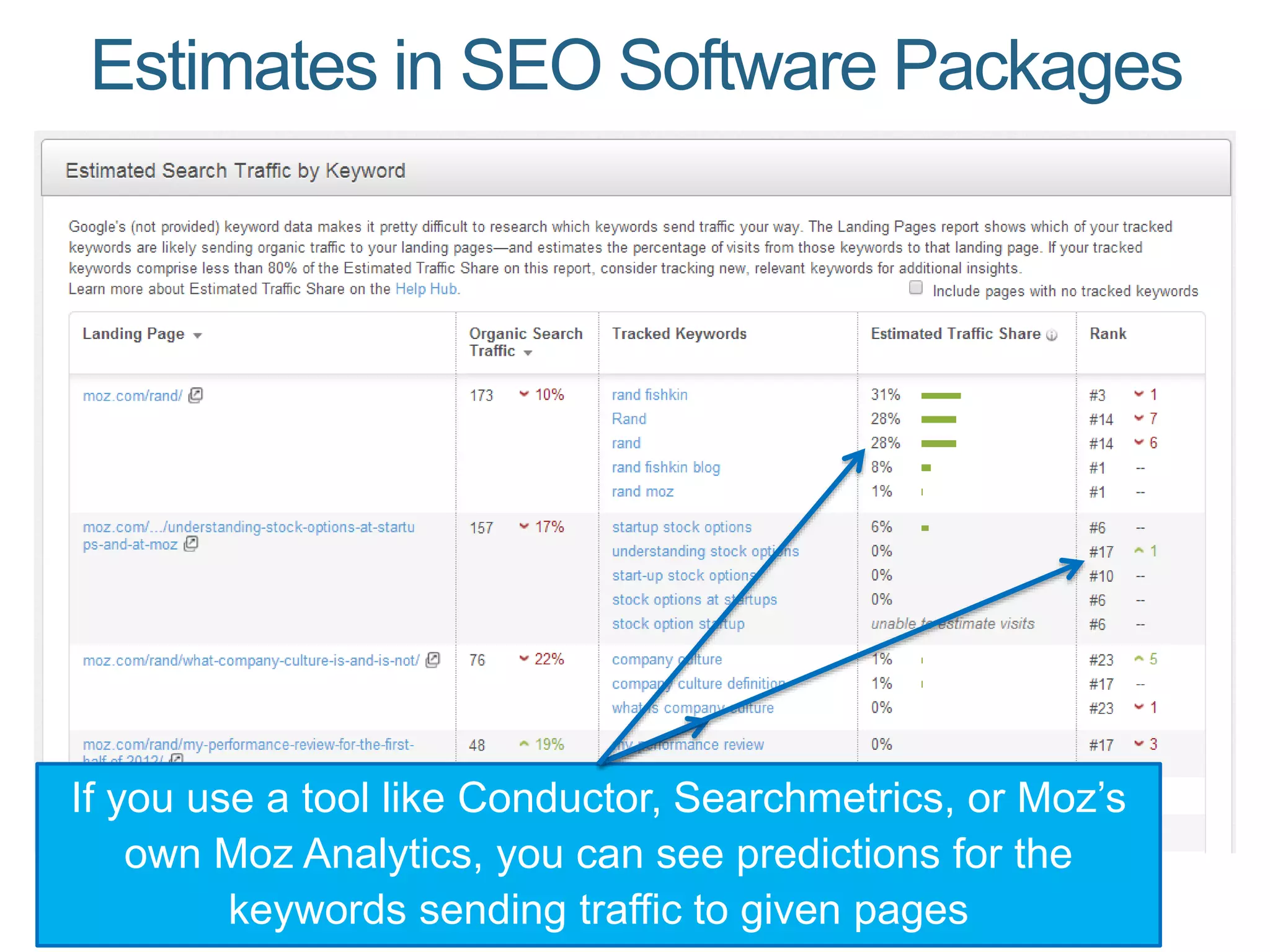
Estimates in SEO Software Packages
If you use a tool like Conductor, Searchmetrics, or Moz’s
own Moz Analytics, you can see predictions for the
keywords sending traffic to given pages
SEO is getting
harder
But that high barrier to entry
means greater opportunity
for those who succeed.
Cracking the SEO Code for 2015: Tactics to Love vs. Leave
Rand Fishkin, Wizard of Moz | @randfish | rand@moz.com
bit.ly/seoloveleave

[500DISTRO] Cracking the SEO Code: Tricks & Tactics To Magnify Search Visibility

  • 1.
    Rand Fishkin, Wizardof Moz | @randfish | rand@moz.com Cracking the SEO Code for 2015: Tactics to Love vs. Leave
  • 2.
    Download this SlideDeck bit.ly/seoloveleave
  • 3.
    A brief lookat how SEO has evolved over the past five years. What Changed?
  • 4.
    Ranking algorithms arefar more complex – more inputs, more subtlety, more quality checks. #1:
  • 5.
    Advancements in UserData Signals Via Eric Fischer
  • 6.
    An UncannyAbility to SpotEditorial VS. Manipulative Links
  • 7.
    Keyword Matching HasBecome Query Intent Matching
  • 8.
    Personalization by History,Device, Location, and Google+
  • 9.
    SEO has becomea job description, not a job title. #2:
  • 10.
    LinkedInAnalysis Common job titlesfor those doing SEO include: Marketing Executive Marketing Manager Web Designer Search Marketing Manager Marketing Strategist Marketing ConsultantDirector of Marketing Website Manager
  • 11.
    SEOs Have Learnedthat Doing Their Jobs Isn’t Good Enough
  • 12.
    Policing of webspamis more aggressive, more difficult to recover from, and less evenly applied. #3:
  • 13.
  • 14.
    Webspam Has BecomeEvery Site Owner’s Problem Via David McSweeney
  • 15.
    Google is shorteningthe searcher’s path and disintermediating content creators. #4:
  • 16.
    Less Opportunity inMany Simplistic “Give Me theAnswer” Queries
  • 17.
    Less Opportunity inMany Simplistic “Give Me theAnswer” Queries
  • 18.
    Less Opportunity inMany Simplistic “Give Me theAnswer” Queries
  • 19.
    Less Opportunity InSome Not-So-Simplistic Queries, Too:
  • 20.
    More Opportunity inthe Ever-Growing Long Tail Almost 6 Billion queries/day
  • 21.
    The ubiquity ofsocial media has broadened the field of “influencers.” #5:
  • 22.
    1997-2011: The LinkeratiRule the Web Via Forrester Research 13% of web users can amplify content
  • 23.
    2012-Present: WeAreAll PotentialAmplifiers ViaPew Research Data 72% of web users can amplify content
  • 24.
    Disappearing data makesSEO more challenging to measure and improve. #6:
  • 25.
    Keyword Referral Datais Gone On average, 87.5% of keywords from Google are now “not provided” (source)
  • 26.
    ASignificant Portion ofSearch Traffic May Be Falsely Counted as Direct Groupon’s experiment showing up to 60% of traffic reported as “direct” may be organic search
  • 27.
    How do thesechanges affect which tactics we can still pursue vs. those we must leave behind? So…
  • 28.
    Great SEO IsNo Longer Just “SEO” KeywordsLinks Crawl Rankings SEO in 2004
  • 29.
    Great SEO IsNo Longer Just “SEO” Keywords Links Crawl Rankings SEO in 2014 Social Content Design & UX Speed Accessibility Email Press & PR CX Webspam Mobile InternationalizationLocalization
  • 30.
    Our Job: Choosethe Tactics that Marry Our Strengths to Our Opportunities
  • 31.
    No tactic willbe right for everyone. But, awareness of our potential arsenal is essential.
  • 32.
    Tactics to LeaveBehind vs. Tactics to Embrace for the Future:
  • 33.
  • 34.
  • 35.
  • 36.
    AdWords + Suggest+ Customer Data Many queries with 100s or 1000s of monthly searches don’t show up in AdWords but will show up here.
  • 37.
    AdWords + Suggest+ Customer Data My favorite tool for keyword suggest research: Keywordtool.io This tool makes the process easier.
  • 38.
    AdWords + Suggest+ Customer Data Popular questions, phrases, and terms that your audience uses in web forums/social media are excellent sources of keyword data expansion
  • 39.
  • 40.
    Create & ScaleKeyword-Targeted Pages of “Good, Unique Content” This example from Wikihow is, granted, a bit ludicrous.
  • 41.
    This is apage from Angie’s List that ranks #1 for “Best Plumbers in Medford, OR”
  • 42.
    This is allthe “unique content” on that page
  • 43.
    You’re dreaming! Think youcan build pages like that and rank?
  • 44.
    Create & ScaleKeyword-Targeted Pages of “Good, Unique Content” Leave It Behind
  • 45.
    Modern Criteria forContent: Unique – does not appear elsewhere on the web in a search-indexable format Relevant – contains terms/phrases the engines can interpret as on-topic Helpful – resolves the searcher’s query (or queries) in a useful, efficient manner Uniquely Valuable – provides information that’s unavailable (or hard to get) elsewhere on the web Great UX– is easy and pleasurable to consume on any device, even with slow connections
  • 46.
    AGreat Example fromGenius.com Via Shelter from the Storm on Genius
  • 47.
    AGreat Example fromGenius.com Via Shelter from the Storm on Genius Accurate, readable lyrics Uniquely valuable annotations A community of contributors One click to play Data re: popularity & activity
  • 48.
  • 49.
    Acquire Links ViaDirectories, Forums, Account Profiles, etc.
  • 50.
    Acquire Links ViaDirectories, Forums, Account Profiles, etc. Leave It Behind
  • 51.
    Acquire Links w/Off-Topic Infographics & Embeds
  • 52.
    Acquire Links w/Off-Topic Infographics & Embeds Leave It Behind
  • 53.
    Acquire Links throughGuest Posting & Commenting
  • 54.
    Acquire Links throughGuest Posting & Commenting Leave It Behind
  • 55.
    The Truth: Google doesn’twant to count links you can “build.”
  • 56.
    The Truth: Google onlywants to count links you editorially “earn.”
  • 57.
    Sadly, there isn’t enoughtime to go into tactics, so check out these resources: Link Building from the Moz Blog Paddy Moogan’s Link Building eBook Experts’Favorite Link Building Tactics How to Leverage PR for Link Building The Future of Link Building
  • 58.
  • 59.
    Share Socially toGet Rankings No doubt about it – there’s a strong CORRELATION between tweets (and Facebook and Google+ shares) and higher rankings.
  • 60.
    Share Socially toGet Rankings See reports from Google’s representatives and Stone Temple Leave It Behind
  • 61.
    Social Impacts SEOIndirectly Social shares expose content to those who might link to it (and amplify in other ways) This blog post from OKTrends earned 100s of links after launch
  • 62.
    Google+ is theException for Personalized/Logged-In Results Because I follow Mark on G+, what he shares/+1s can usually ranks higher when I’m logged into my Gmail.
  • 63.
  • 64.
    Publish Blog Posts&Articles to Get Links & Rankings Blog Post Blog Post Article Article Blog Post
  • 65.
    Publish Blog Posts&Articles to Get Links & Rankings Blog Post Blog Post Article Article Blog Post Leave It Behind
  • 66.
    Links & Sharesare Tremendously Skewed to the Top 5% of Content http://www.simplereach.com/blog/facebook-continues-to-be-the-biggest-driver-of-social-traffic/
  • 67.
    There’s No PrizeFor Hitting Publish
  • 68.
    Rules for ContentInvestments: Strategic & Relevant– the content must tie to business goals and fit with your branding Targets LikelyAmplifiers – there should be an obvious answer to the question “who will help spread this content and why?” Cannot Be Fire & Forget– most content will fail; you need to be willing to invest longer and harder than the competition to find success
  • 69.
    Need Help GettingInspiration? From Tinfoil Security’s Blog
  • 70.
    Check out Buzzsumo Buzzsumo– my favorite tool for researching the competitive content landscape
  • 71.
  • 72.
    Attribution Models Via theDatalicious Blog This is how most companies (& software packges) do web analytics by default
  • 73.
    Attribution Models Via theDatalicious Blog Leave These 2 Behind A model something like this may make sense.
  • 74.
    Traffic & Performanceby Keyword Pre-2012 Post-2012
  • 75.
    Traffic & Performanceby Keyword Pre-2012 Post-2012 Leave It Behind
  • 76.
    Search Traffic Performanceby Page (or Section) Observing the pages that receive search visits can get close to the old keyword-based performance reports.
  • 77.
    Estimates in SEOSoftware Packages If you use a tool like Conductor, Searchmetrics, or Moz’s own Moz Analytics, you can see predictions for the keywords sending traffic to given pages
  • 78.
  • 79.
    But that highbarrier to entry means greater opportunity for those who succeed.
  • 80.
    Cracking the SEOCode for 2015: Tactics to Love vs. Leave Rand Fishkin, Wizard of Moz | @randfish | rand@moz.com bit.ly/seoloveleave