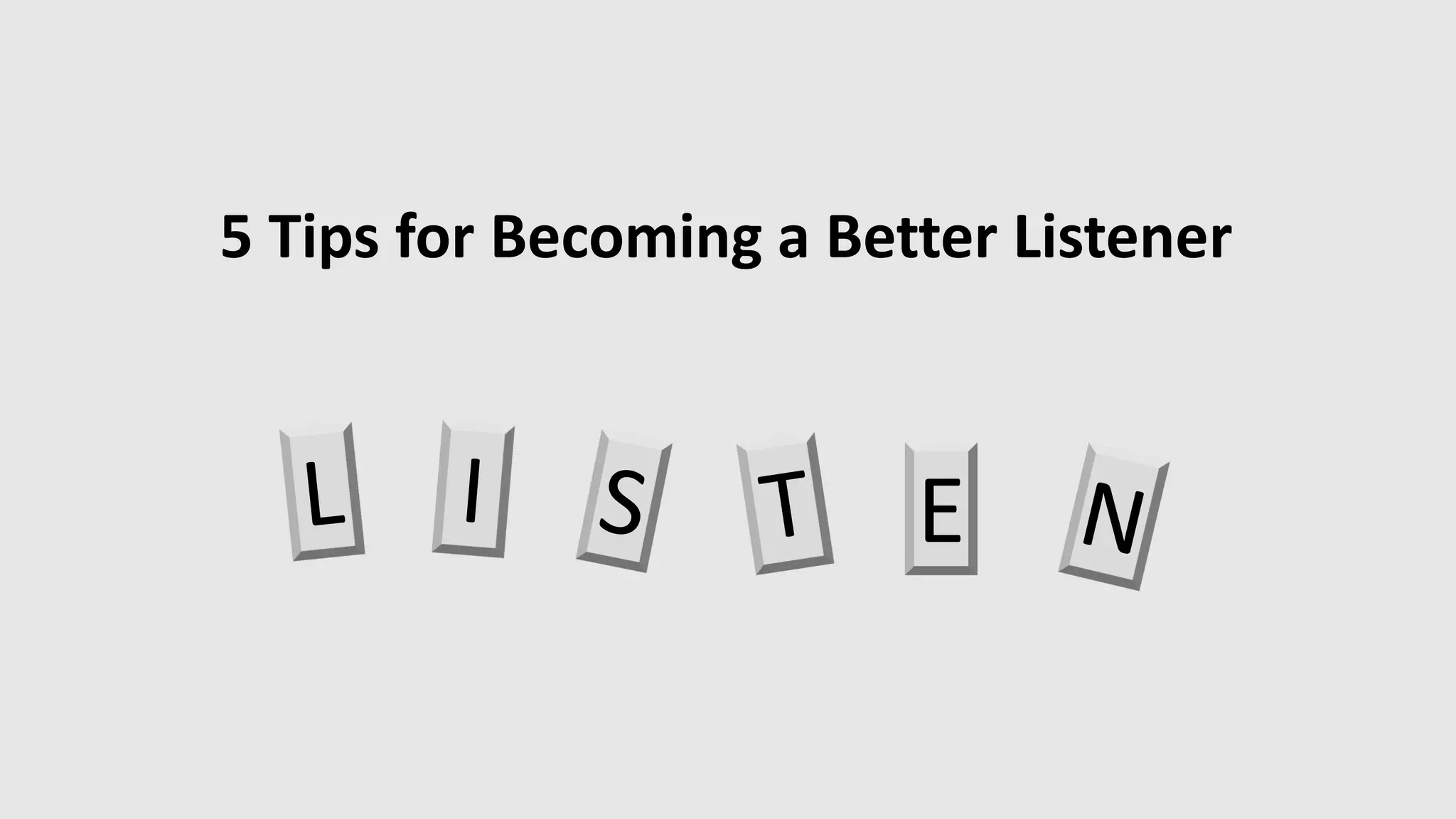
5 Tips for Becoming a Better Listener
E
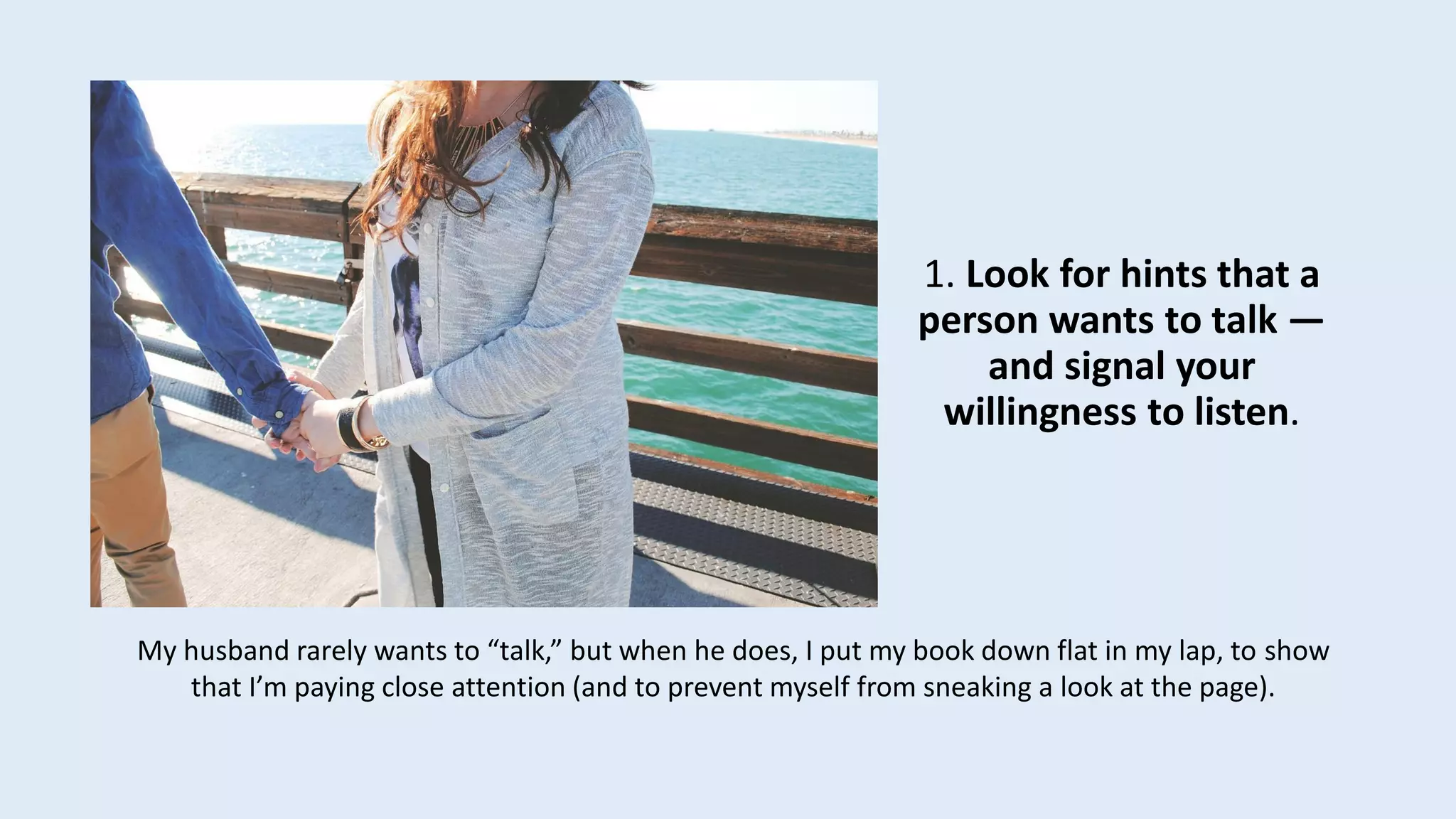
1. Look for hints that a
person wants to talk —
and signal your
willingness to listen.
My husband rarely wants to “talk,” but when he does, I put my book down flat in my lap, to show
that I’m paying close attention (and to prevent myself from sneaking a look at the page).
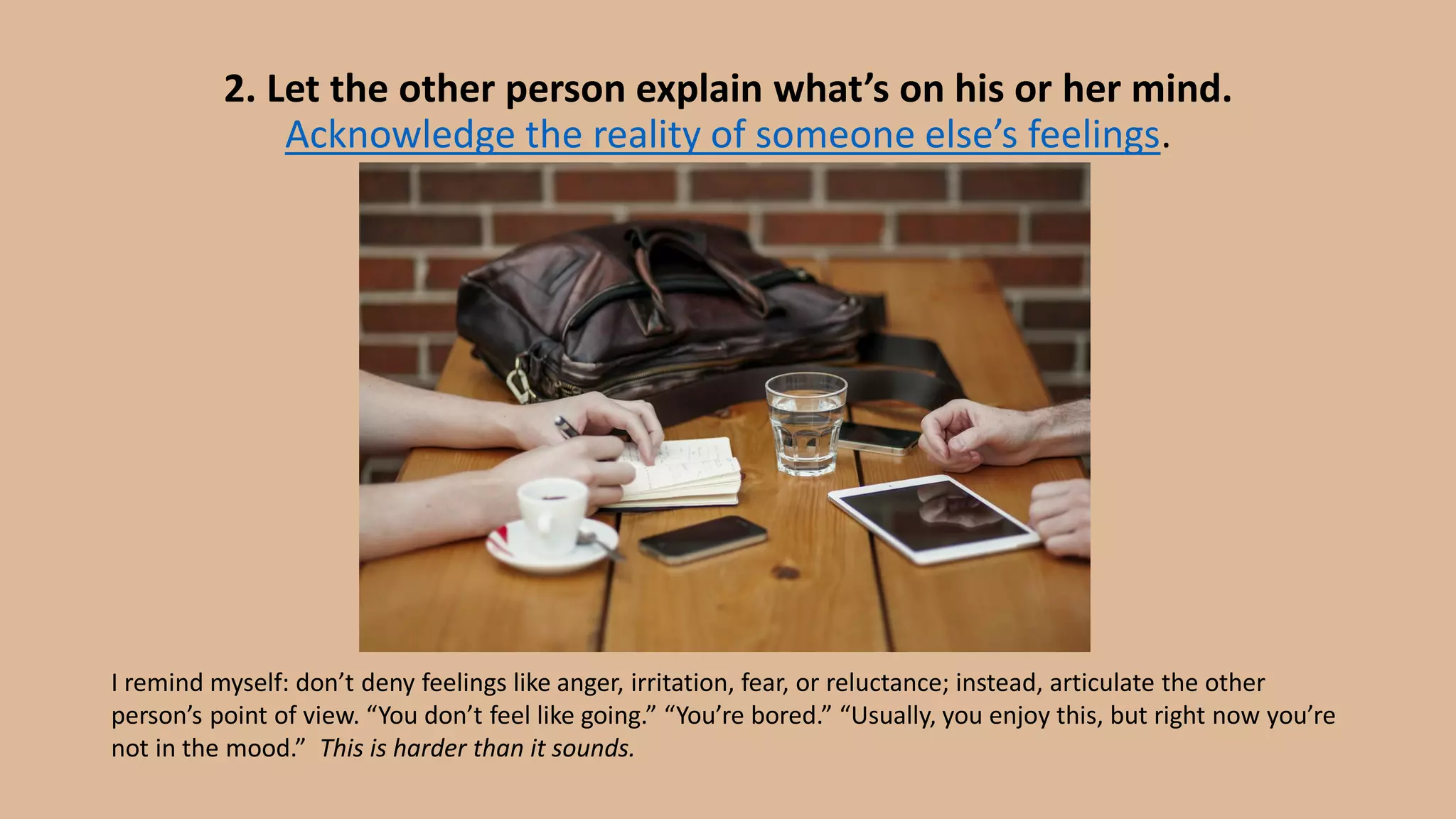
2. Let the other person explain what’s on his or her mind.
Acknowledge the reality of someone else’s feelings.
I remind myself: don’t deny feelings like anger, irritation, fear, or reluctance; instead, articulate the other
person’s point of view. “You don’t feel like going.” “You’re bored.” “Usually, you enjoy this, but right now you’re
not in the mood.” This is harder than it sounds.
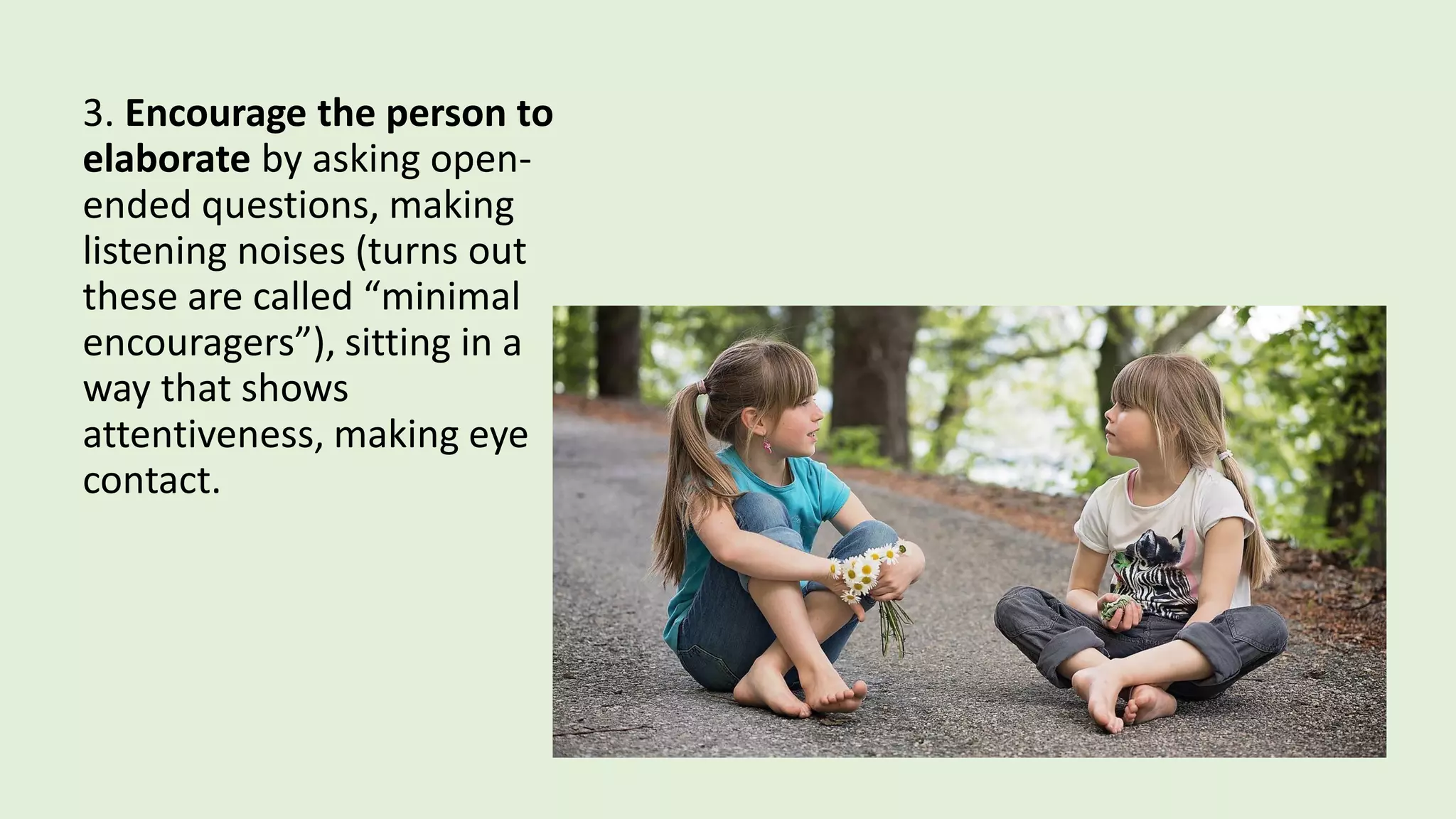
3. Encourage the person to
elaborate by asking open-
ended questions, making
listening noises (turns out
these are called “minimal
encouragers”), sitting in a
way that shows
attentiveness, making eye
contact.
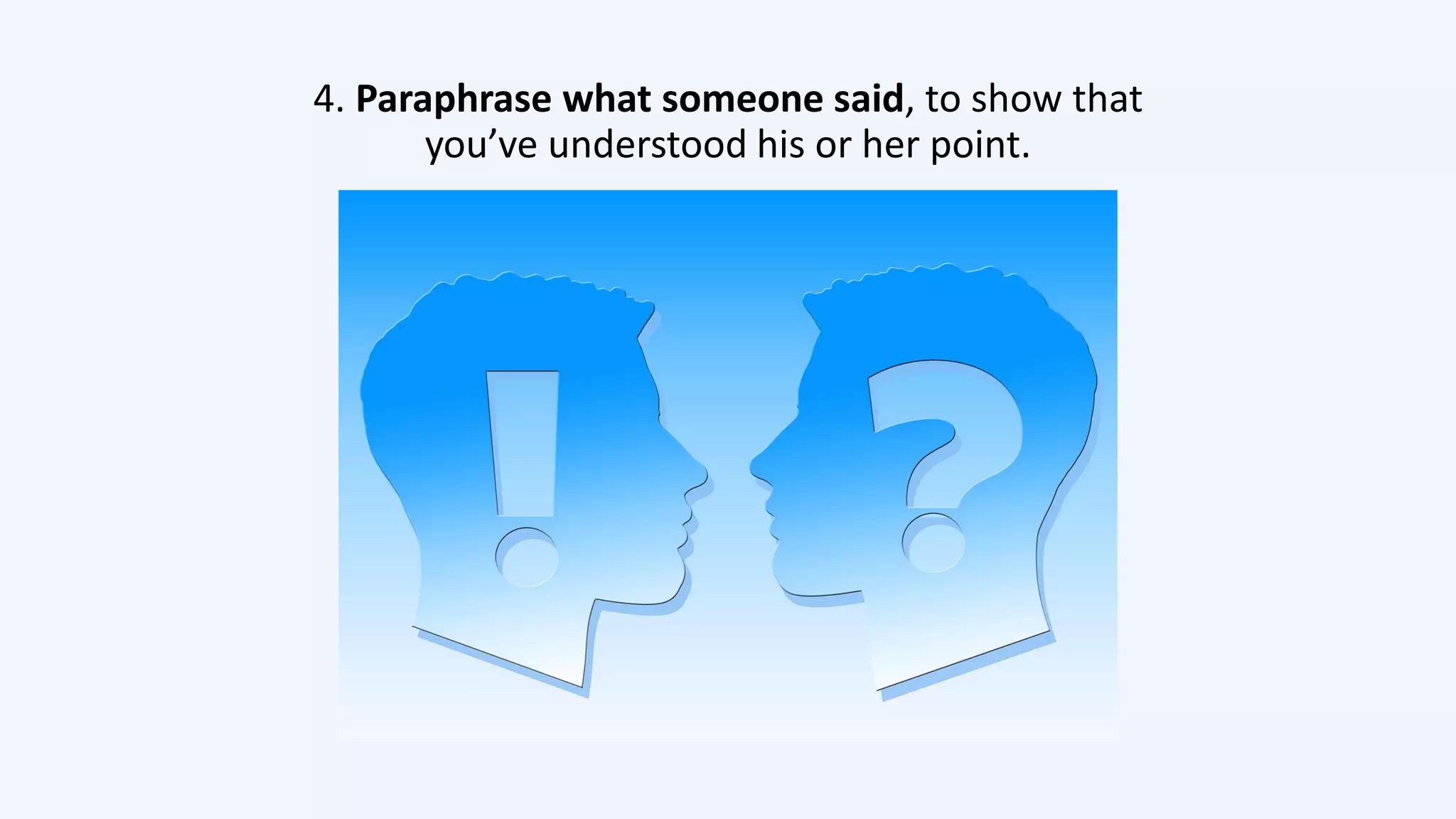
4. Paraphrase what someone said, to show that
you’ve understood his or her point.
5. Ask questions and listen to try to help work on a possible
solution — but don’t rush to fix things.
Learn more tips for a happier life
and healthier habits
at GretchenRubin.com

5 Tips for Becoming a Better Listener

  • 1.
    5 Tips forBecoming a Better Listener E
  • 2.
    1. Look forhints that a person wants to talk — and signal your willingness to listen. My husband rarely wants to “talk,” but when he does, I put my book down flat in my lap, to show that I’m paying close attention (and to prevent myself from sneaking a look at the page).
  • 3.
    2. Let theother person explain what’s on his or her mind. Acknowledge the reality of someone else’s feelings. I remind myself: don’t deny feelings like anger, irritation, fear, or reluctance; instead, articulate the other person’s point of view. “You don’t feel like going.” “You’re bored.” “Usually, you enjoy this, but right now you’re not in the mood.” This is harder than it sounds.
  • 4.
    3. Encourage theperson to elaborate by asking open- ended questions, making listening noises (turns out these are called “minimal encouragers”), sitting in a way that shows attentiveness, making eye contact.
  • 5.
    4. Paraphrase whatsomeone said, to show that you’ve understood his or her point.
  • 6.
    5. Ask questionsand listen to try to help work on a possible solution — but don’t rush to fix things.
  • 7.
    Learn more tipsfor a happier life and healthier habits at GretchenRubin.com