BY: DON GABOR
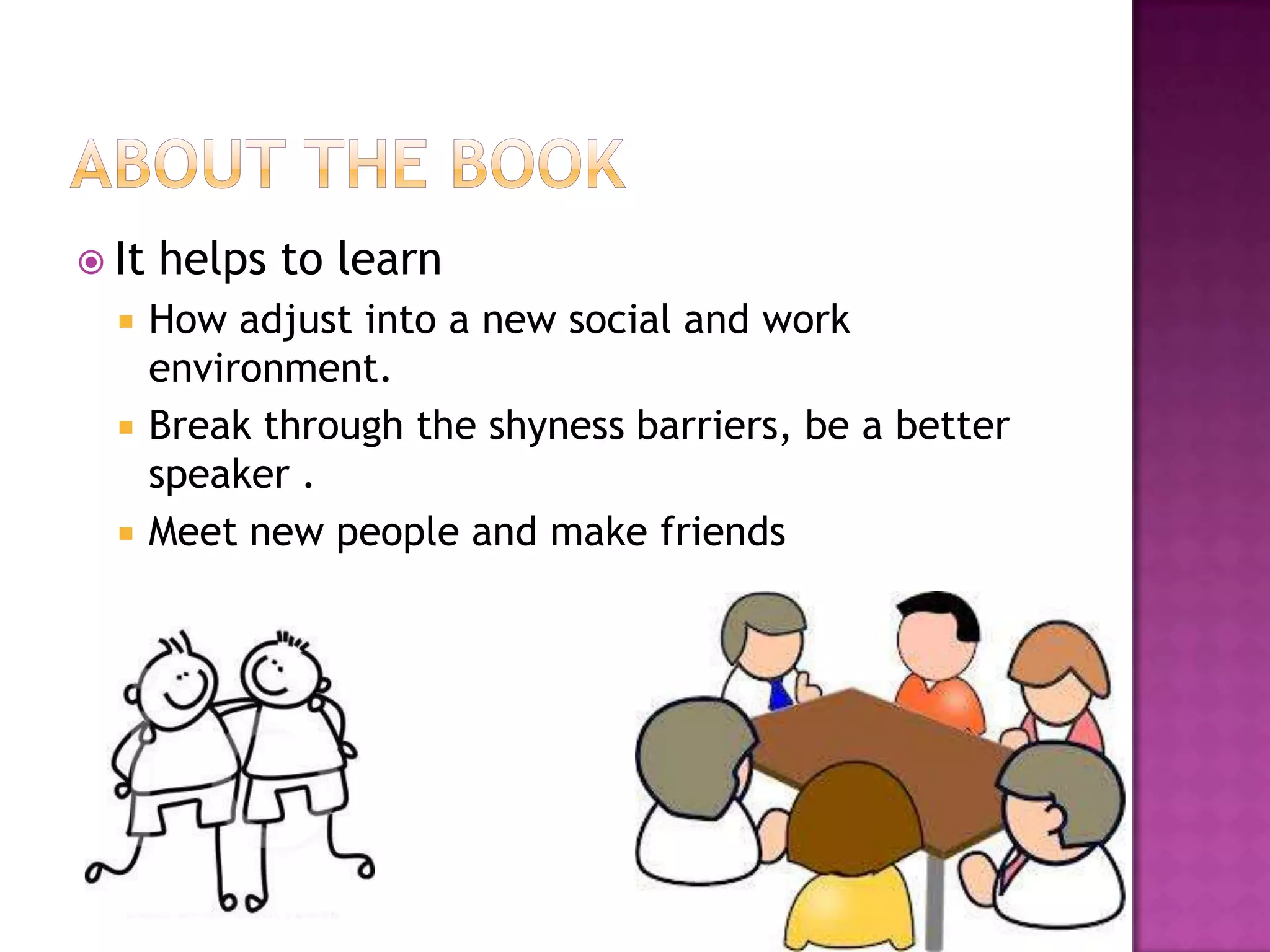
 It helps to learn
 How adjust into a new social and work
environment.
 Break through the shyness barriers, be a better
speaker .
 Meet new people and make friends
 Body language + tone of voice + words = total
communication
 Body language speaks before we speak
 Communicates feelings, ideas, attitudes before
we speak.
 Projects level of receptivity
 First impression should be friendly and open
 Each letter represents a nonverbal gesture
 Will encourage others to talk with you
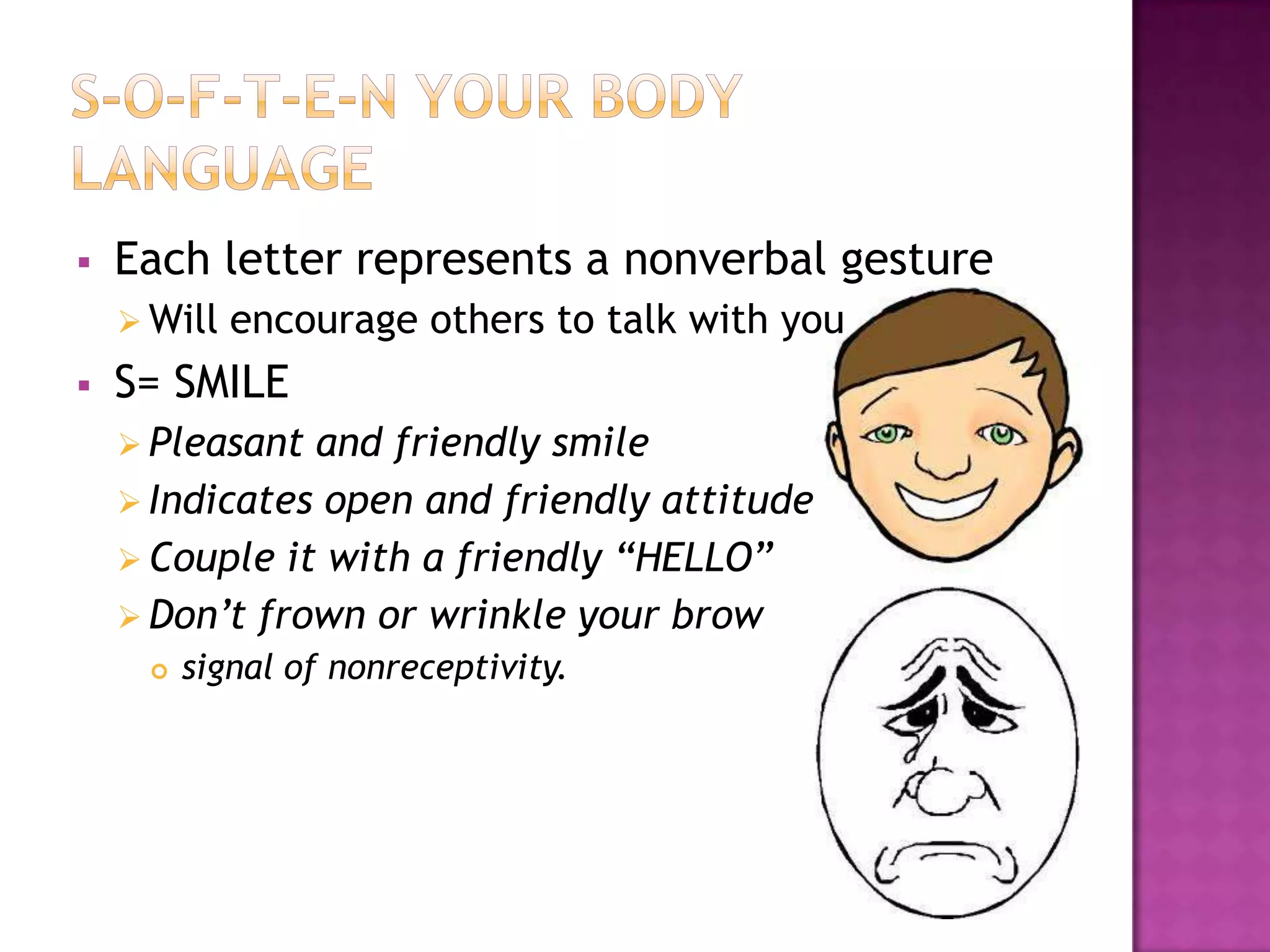
 S= SMILE
 Pleasant and friendly smile
 Indicates open and friendly attitude
 Couple it with a friendly “HELLO”
 Don’t frown or wrinkle your brow
 signal of nonreceptivity.
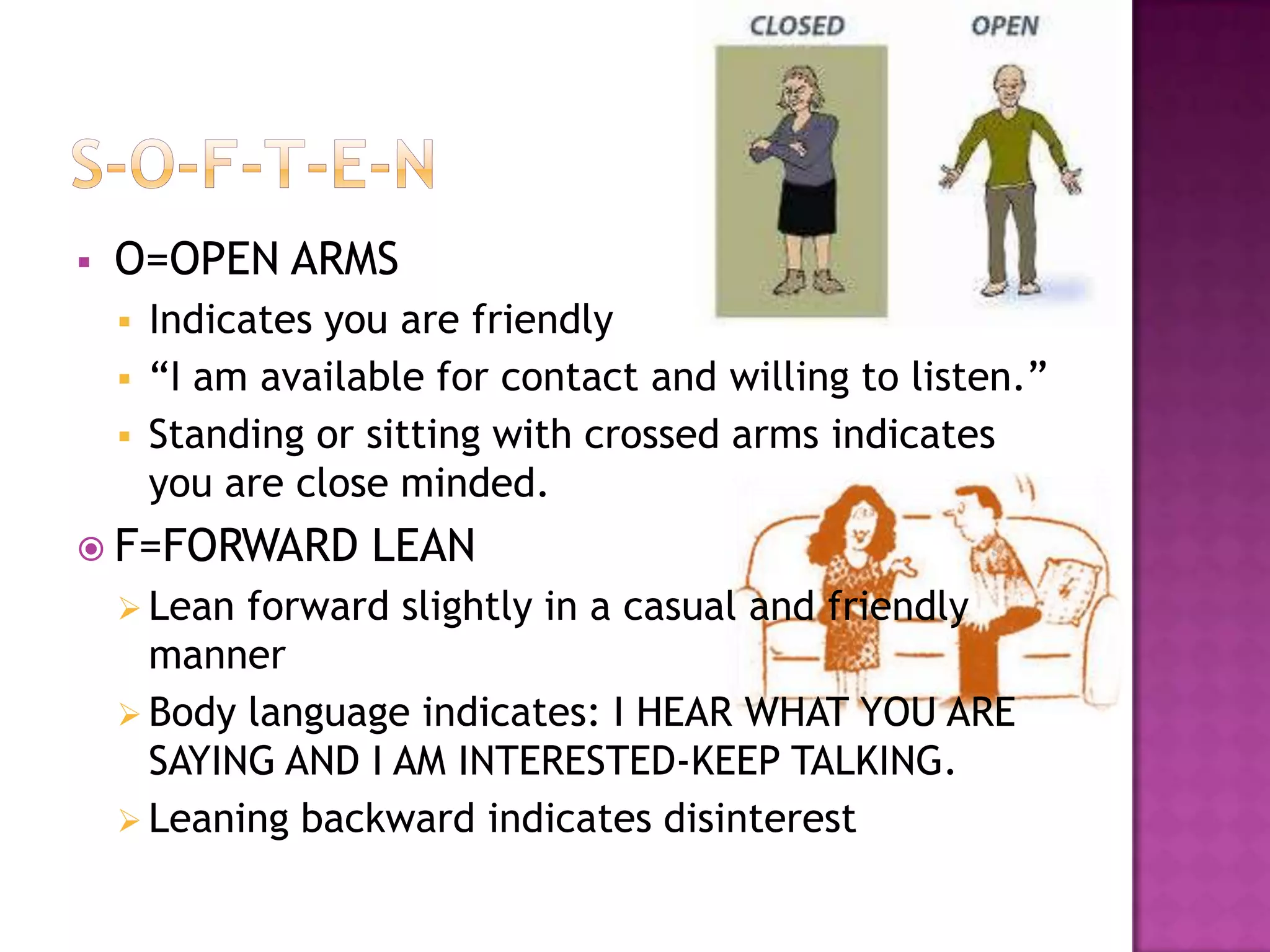
 O=OPEN ARMS
 Indicates you are friendly
 “I am available for contact and willing to listen.”
 Standing or sitting with crossed arms indicates
you are close minded.
 F=FORWARD LEAN
 Lean forward slightly in a casual and friendly
manner
 Body language indicates: I HEAR WHAT YOU ARE
SAYING AND I AM INTERESTED-KEEP TALKING.
 Leaning backward indicates disinterest
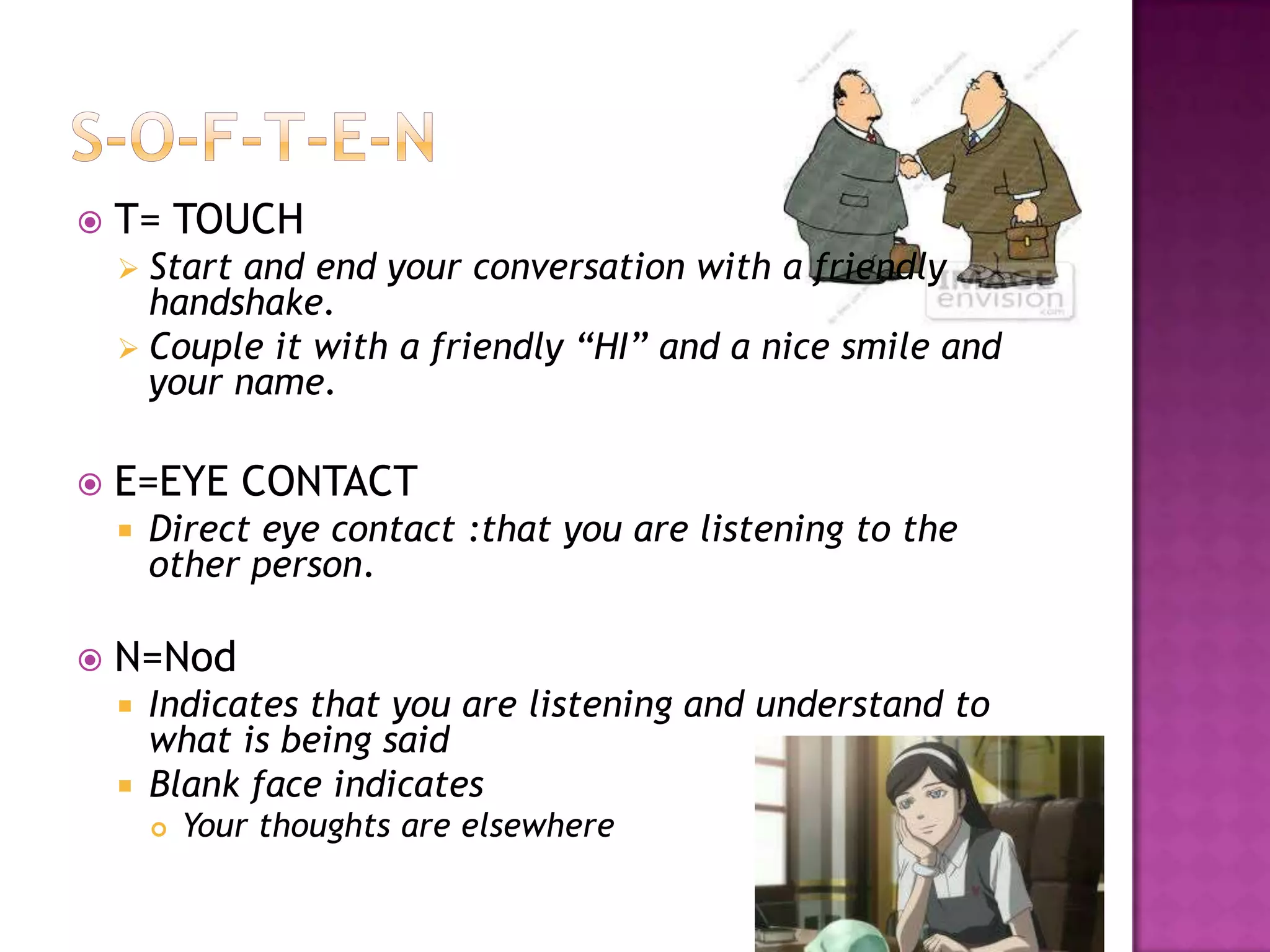
 T= TOUCH
 Start and end your conversation with a friendly
handshake.
 Couple it with a friendly “HI” and a nice smile and
your name.
 E=EYE CONTACT
 Direct eye contact :that you are listening to the
other person.
 N=Nod
 Indicates that you are listening and understand to
what is being said
 Blank face indicates
 Your thoughts are elsewhere
 Establish eye contact and smile and then
follow the simple procedure
 RISK VERSUS REJECTION
 Don’t fear the risk of being rejected
 Be the first one to say hello
 Indicates :you are confidence and friendly
 ASK EASY-TO-ANSWER RITUAL QUESTION
 Give a compliment to someone followed by an
easy –to-answer ritual question.
 Focus on the situation you are in
 Look outward-not inward
 Balance the two-way information exchange
 Discuss the topics/events that are important
to you.
 Change the topics using free information
 Refer to free information- “I heard you mention
earlier……”
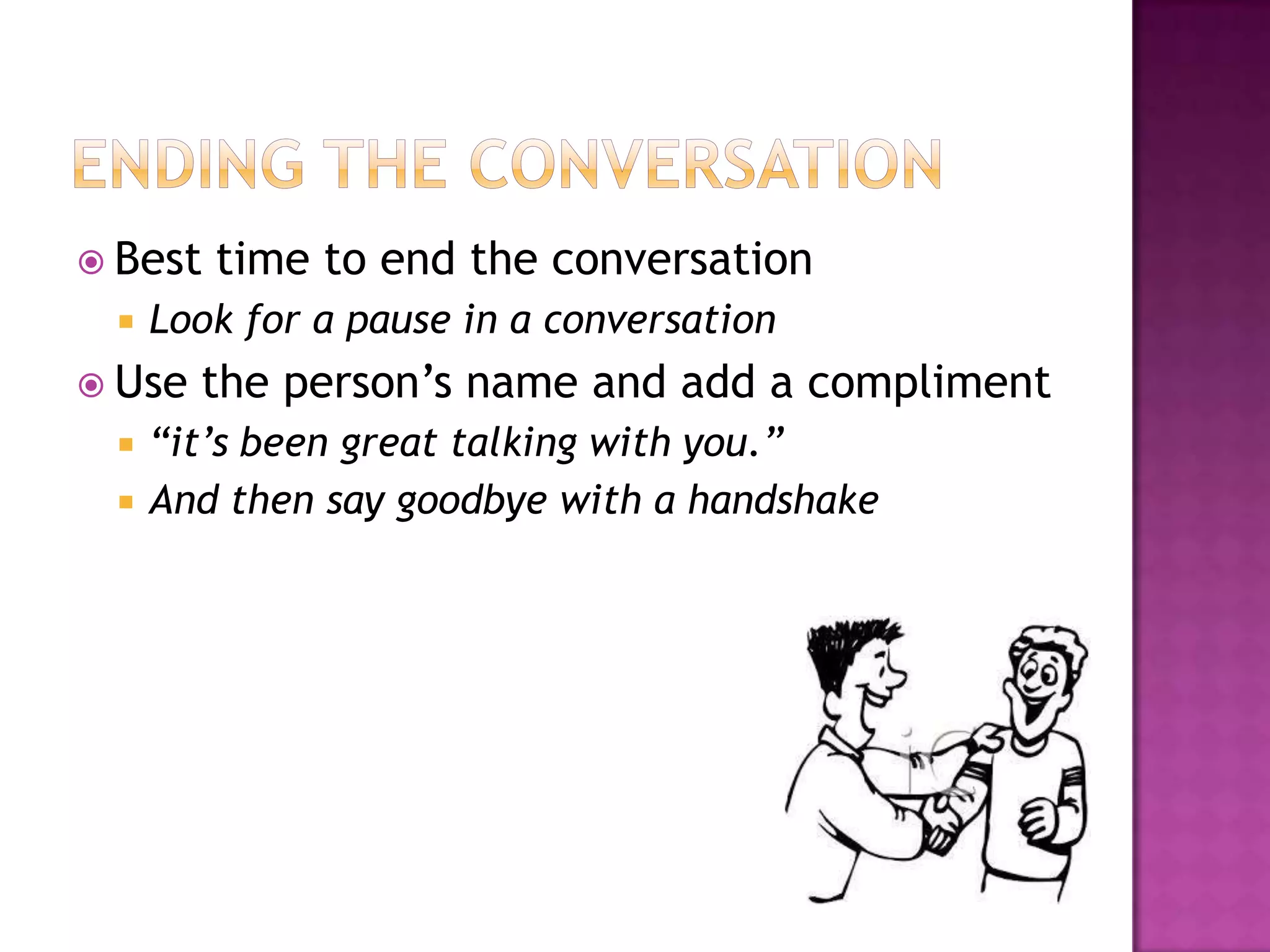
 Best time to end the conversation
 Look for a pause in a conversation
 Use the person’s name and add a compliment
 “it’s been great talking with you.”
 And then say goodbye with a handshake
 All you need is 5 seconds to make a great first
impression.
 1st second
 Focus on the moment of introduction
 2nd second
 Listen for the name ,every letters in the name.
 3rd second
 Repeat the name aloud
 4th second
 Think of someone you know with the same name.
 5th second
 Use the name during and at the end of the
conversation
 They tend to prevent others to open up with
you.
 “I’m right- you’re wrong.”
 If you don’t agree with someone say -“it seems to
me..” , “I believe..”
 Never say “you are dead wrong” , “from where
have you got this idea.”
 “It doesn’t matter to Me”
 Indicates that you are not taking any responsibility in
decision process.
 Express your preference
 “Tell me something I don’t know”
 “I’m Boring”
Focus on the positive events in your life and talk
about them
 Someone you can trust , share common
interests
 Good friendship can begin at any stage of
life.
 Components of good friendship:
 Respect, love, fun, learning, understanding
o Not always easy
o It take time ,commitment, lot of trust.
o Take the initiative and reach out to others
o Show genuine interest in people
o Develop trust
o Reveal some of your personal information and
feelings
o Share your common interests
 Plan a activity around your mutual interest.
 Invitation could be: “I remember when we talked
last time you said you like(activity) so I was
wondering, are you interested in joining me for
….”
 Do what you can for your friends.
 If you are a good friend , you will have good
friends.
 In best friendships learning ,laughing and
developing never stops.
 C-H-A-T
 C=candid
 Straight forward approach
 They talk about
 Sports, crime, business politics
 Do
 Show interest in their business and personal goals
 Ask for their opinion and advice
 Don’t
 Get into debates with them
 H= hang back
 Reserved , soft spoken, excellent listener
 Takes little time to open up, but when they
open they feel more comfortable
 People think they are shy, unwilling to
communicate
 They talk about
 Food cooking books restaurants
relationships, dance
 Do ask for their views, feelings that concern
people
 Don’t get aggressive with them
 A= Accurate
 Technical approach
 See everything as a problem and want to have
all the answers
 They talk about
 Science& math's ,stock markets, how things work
 Don’t change the topic frequently
 Do praise their technical knowledge
 T= Talkative
 Energetic who can talk about anything except
technical things
 Fun and friendly person who is open to contact
 Sometimes they fail to listen
 Do laugh at their jokes
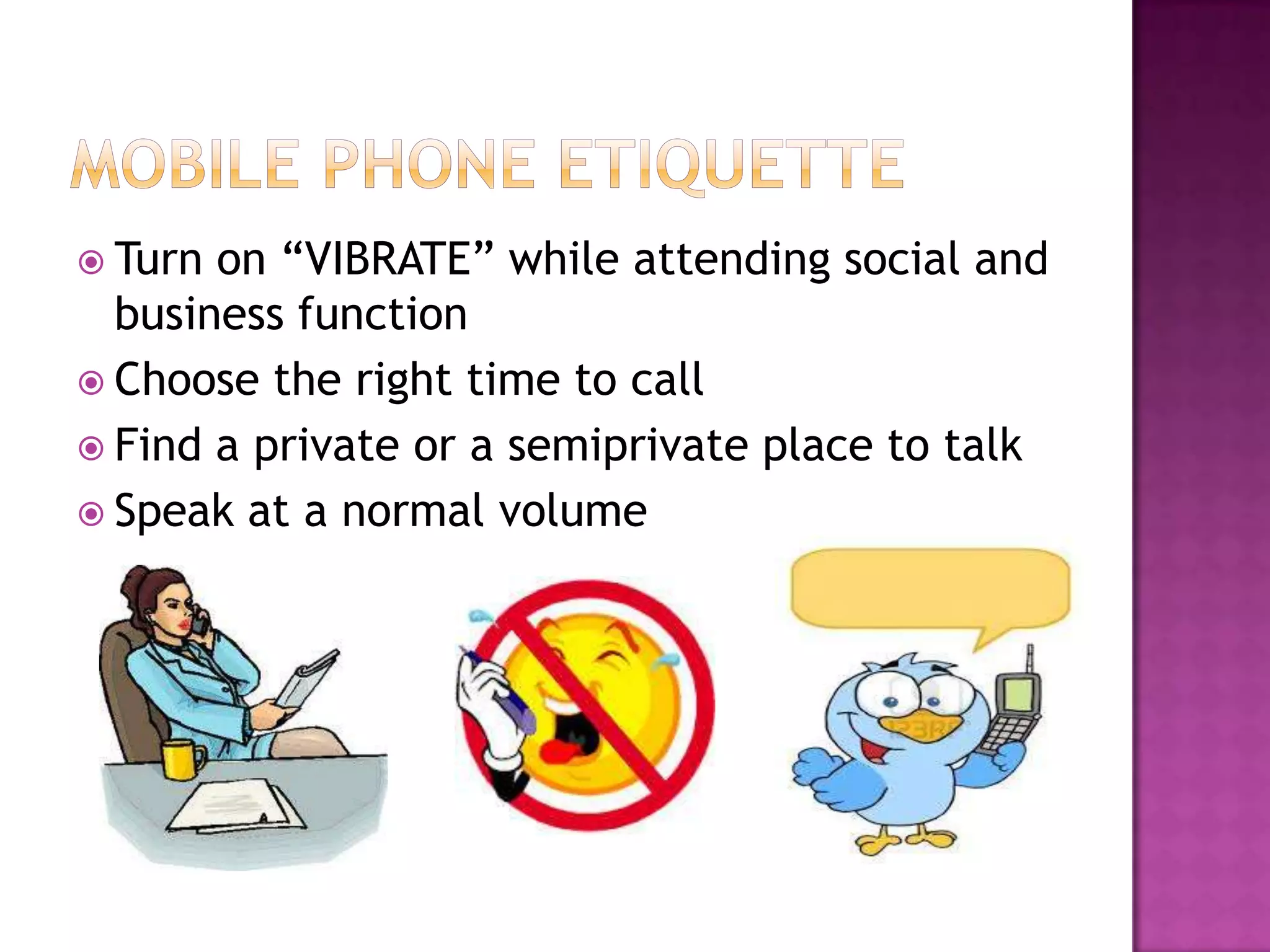
 Turn on “VIBRATE” while attending social and
business function
 Choose the right time to call
 Find a private or a semiprivate place to talk
 Speak at a normal volume
 Chat room : is a website where ongoing
conversations about particular topics takes
place.
 Do lurk before you leap
 Observe how people in a chat room
communicates before participating in discussion
 Don’t flame other members of the group if
you disagree with what they say.
How to start a conversation and make friends

How to start a conversation and make friends

  • 1.
  • 2.
     It helpsto learn  How adjust into a new social and work environment.  Break through the shyness barriers, be a better speaker .  Meet new people and make friends
  • 3.
     Body language+ tone of voice + words = total communication  Body language speaks before we speak  Communicates feelings, ideas, attitudes before we speak.  Projects level of receptivity  First impression should be friendly and open
  • 4.
     Each letterrepresents a nonverbal gesture  Will encourage others to talk with you  S= SMILE  Pleasant and friendly smile  Indicates open and friendly attitude  Couple it with a friendly “HELLO”  Don’t frown or wrinkle your brow  signal of nonreceptivity.
  • 5.
     O=OPEN ARMS Indicates you are friendly  “I am available for contact and willing to listen.”  Standing or sitting with crossed arms indicates you are close minded.  F=FORWARD LEAN  Lean forward slightly in a casual and friendly manner  Body language indicates: I HEAR WHAT YOU ARE SAYING AND I AM INTERESTED-KEEP TALKING.  Leaning backward indicates disinterest
  • 6.
     T= TOUCH Start and end your conversation with a friendly handshake.  Couple it with a friendly “HI” and a nice smile and your name.  E=EYE CONTACT  Direct eye contact :that you are listening to the other person.  N=Nod  Indicates that you are listening and understand to what is being said  Blank face indicates  Your thoughts are elsewhere
  • 7.
     Establish eyecontact and smile and then follow the simple procedure  RISK VERSUS REJECTION  Don’t fear the risk of being rejected  Be the first one to say hello  Indicates :you are confidence and friendly  ASK EASY-TO-ANSWER RITUAL QUESTION  Give a compliment to someone followed by an easy –to-answer ritual question.
  • 8.
     Focus onthe situation you are in  Look outward-not inward  Balance the two-way information exchange  Discuss the topics/events that are important to you.  Change the topics using free information  Refer to free information- “I heard you mention earlier……”
  • 9.
     Best timeto end the conversation  Look for a pause in a conversation  Use the person’s name and add a compliment  “it’s been great talking with you.”  And then say goodbye with a handshake
  • 10.
     All youneed is 5 seconds to make a great first impression.  1st second  Focus on the moment of introduction  2nd second  Listen for the name ,every letters in the name.  3rd second  Repeat the name aloud  4th second  Think of someone you know with the same name.  5th second  Use the name during and at the end of the conversation
  • 11.
     They tendto prevent others to open up with you.  “I’m right- you’re wrong.”  If you don’t agree with someone say -“it seems to me..” , “I believe..”  Never say “you are dead wrong” , “from where have you got this idea.”  “It doesn’t matter to Me”  Indicates that you are not taking any responsibility in decision process.  Express your preference  “Tell me something I don’t know”  “I’m Boring” Focus on the positive events in your life and talk about them
  • 12.
     Someone youcan trust , share common interests  Good friendship can begin at any stage of life.  Components of good friendship:  Respect, love, fun, learning, understanding
  • 13.
    o Not alwayseasy o It take time ,commitment, lot of trust. o Take the initiative and reach out to others o Show genuine interest in people o Develop trust o Reveal some of your personal information and feelings o Share your common interests
  • 14.
     Plan aactivity around your mutual interest.  Invitation could be: “I remember when we talked last time you said you like(activity) so I was wondering, are you interested in joining me for ….”  Do what you can for your friends.  If you are a good friend , you will have good friends.  In best friendships learning ,laughing and developing never stops.
  • 15.
     C-H-A-T  C=candid Straight forward approach  They talk about  Sports, crime, business politics  Do  Show interest in their business and personal goals  Ask for their opinion and advice  Don’t  Get into debates with them
  • 16.
     H= hangback  Reserved , soft spoken, excellent listener  Takes little time to open up, but when they open they feel more comfortable  People think they are shy, unwilling to communicate  They talk about  Food cooking books restaurants relationships, dance  Do ask for their views, feelings that concern people  Don’t get aggressive with them
  • 17.
     A= Accurate Technical approach  See everything as a problem and want to have all the answers  They talk about  Science& math's ,stock markets, how things work  Don’t change the topic frequently  Do praise their technical knowledge  T= Talkative  Energetic who can talk about anything except technical things  Fun and friendly person who is open to contact  Sometimes they fail to listen  Do laugh at their jokes
  • 18.
     Turn on“VIBRATE” while attending social and business function  Choose the right time to call  Find a private or a semiprivate place to talk  Speak at a normal volume
  • 19.
     Chat room: is a website where ongoing conversations about particular topics takes place.  Do lurk before you leap  Observe how people in a chat room communicates before participating in discussion  Don’t flame other members of the group if you disagree with what they say.