Pythagorean Theorem
                                                      Lesson 5


                                                                                 Tennessee
                                                                               Adult Education


This curriculum was written with funding of the Tennessee Department of Labor and Workforce Development and may not be reproduced in any way without written permission. ©
Squares
•Before solving Pythagorean Theorem
problems, a student must understand the
concept of squares and square roots.
•The square of a number is that number
multiplied by itself. For example, the square of 5
is 5 x 5 =25.
•In symbols, you write the square of a number
as a base and an exponent.
                             5²    exponent
     5 x 5 is written 5²
                            base
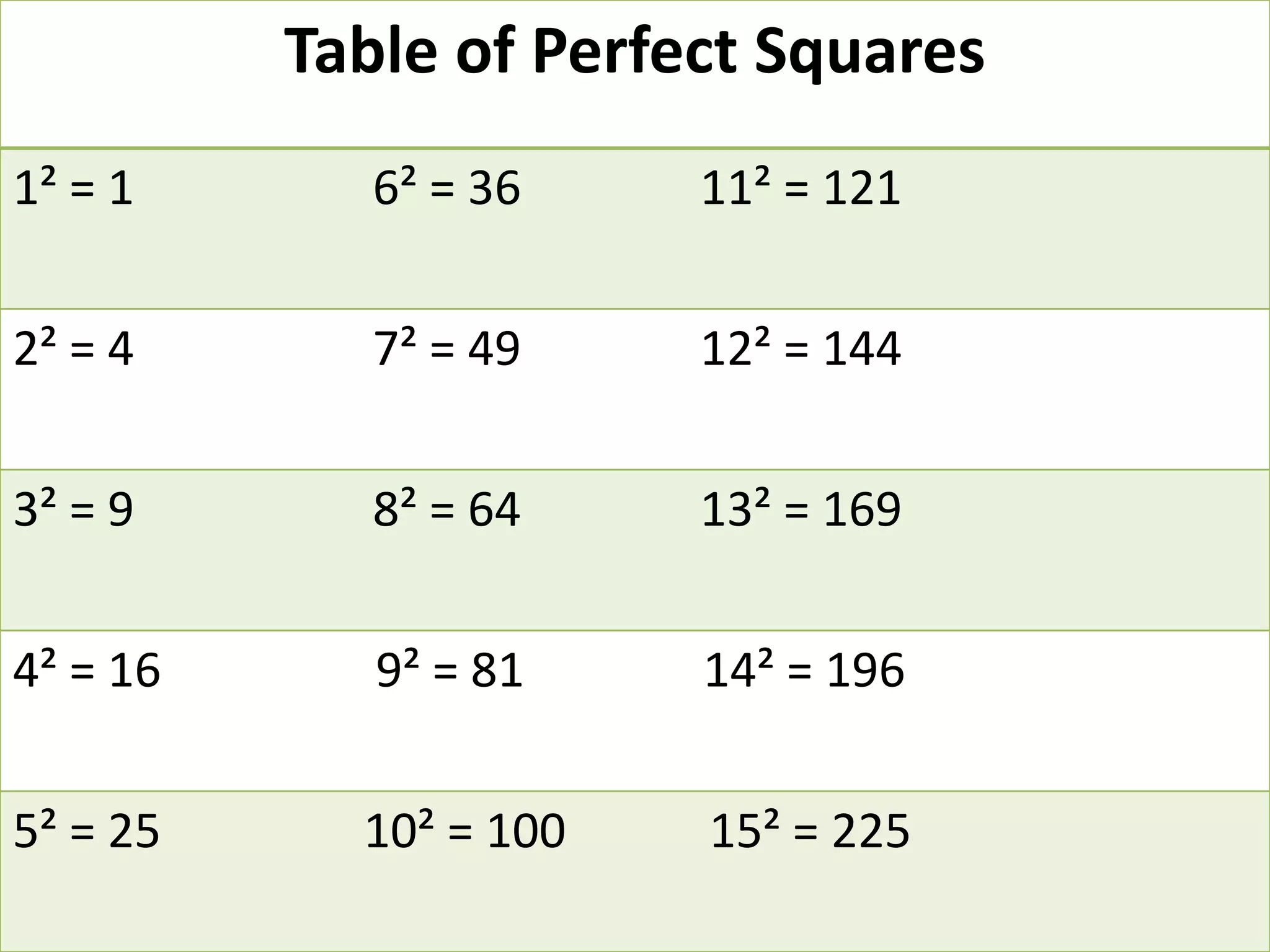
Table of Perfect Squares
1² = 1       6² = 36    11² = 121


2² = 4       7² = 49    12² = 144


3² = 9       8² = 64    13² = 169


4² = 16      9² = 81    14² = 196


5² = 25     10² = 100   15² = 225
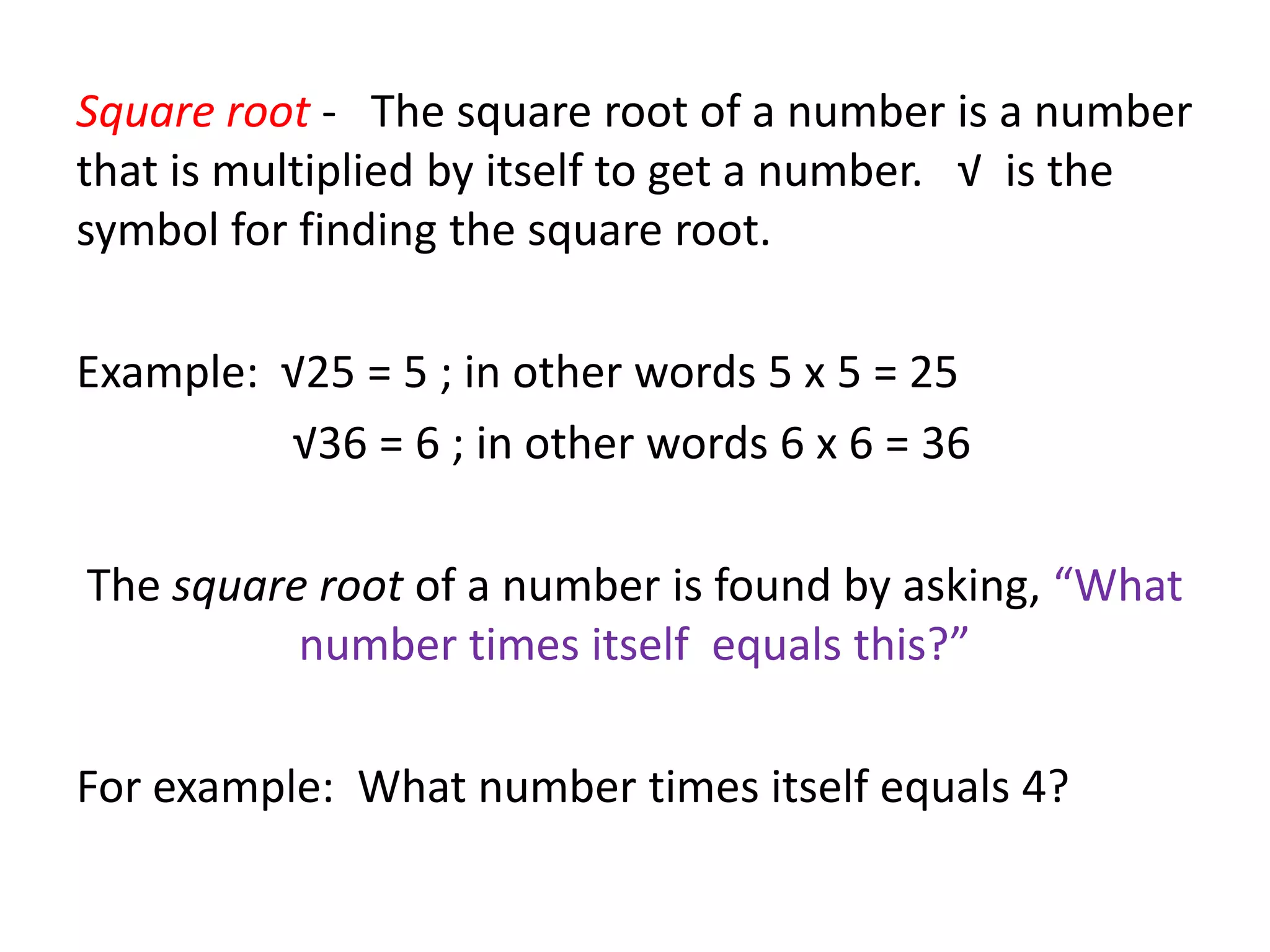
Square root - The square root of a number is a number
that is multiplied by itself to get a number. √ is the
symbol for finding the square root.

Example: √25 = 5 ; in other words 5 x 5 = 25
         √36 = 6 ; in other words 6 x 6 = 36

The square root of a number is found by asking, “What
          number times itself equals this?”

For example: What number times itself equals 4?
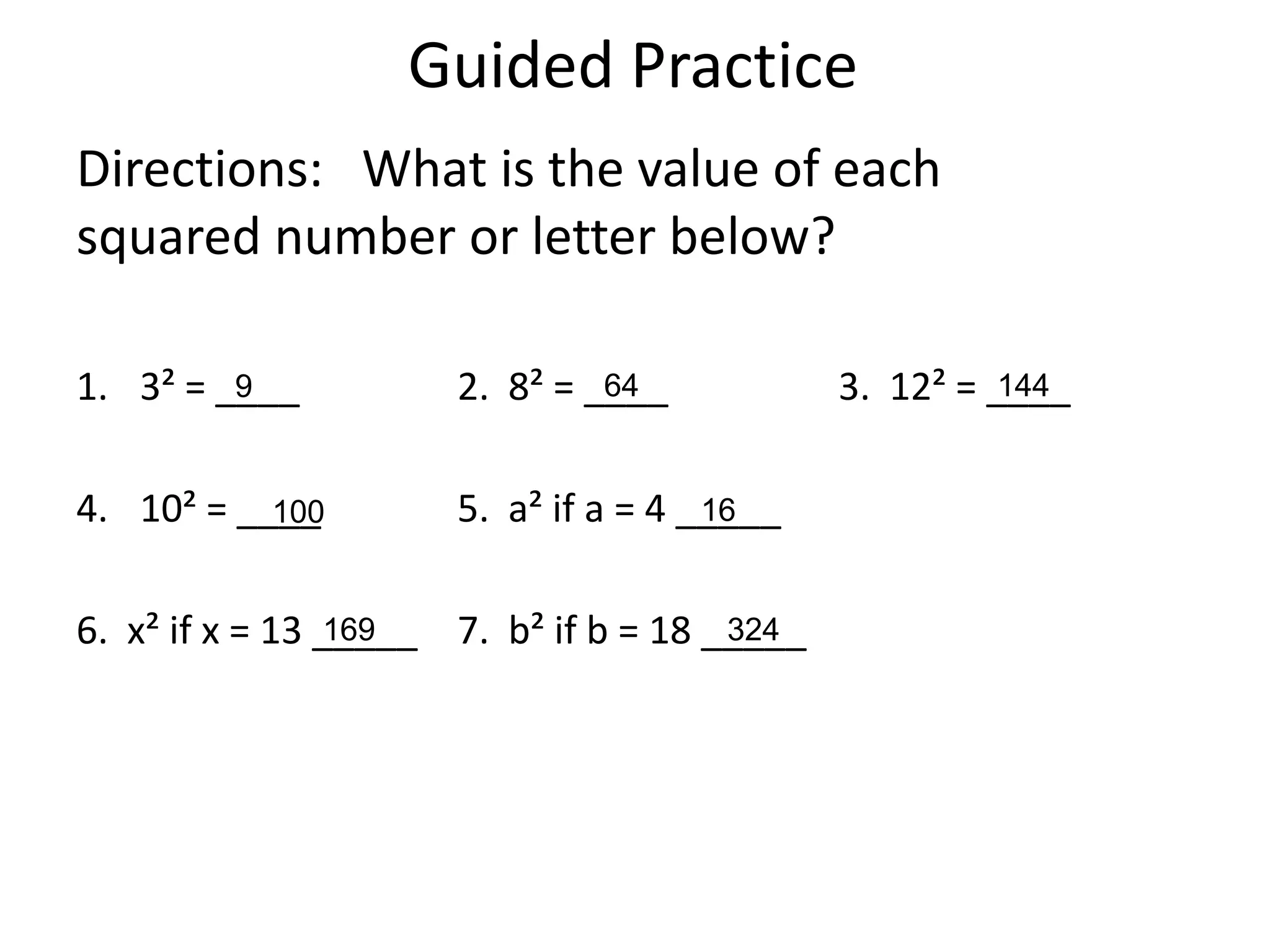
Guided Practice
Directions: What is the value of each
squared number or letter below?

1. 3² = ____
         9            2. 8² = ____
                               64             3. 12² = ____
                                                        144


4. 10² = ____
           100        5. a² if a = 4 _____
                                      16


6. x² if x = 13 _____ 7. b² if b = 18 _____
                 169                   324
Pythagorean Theorem
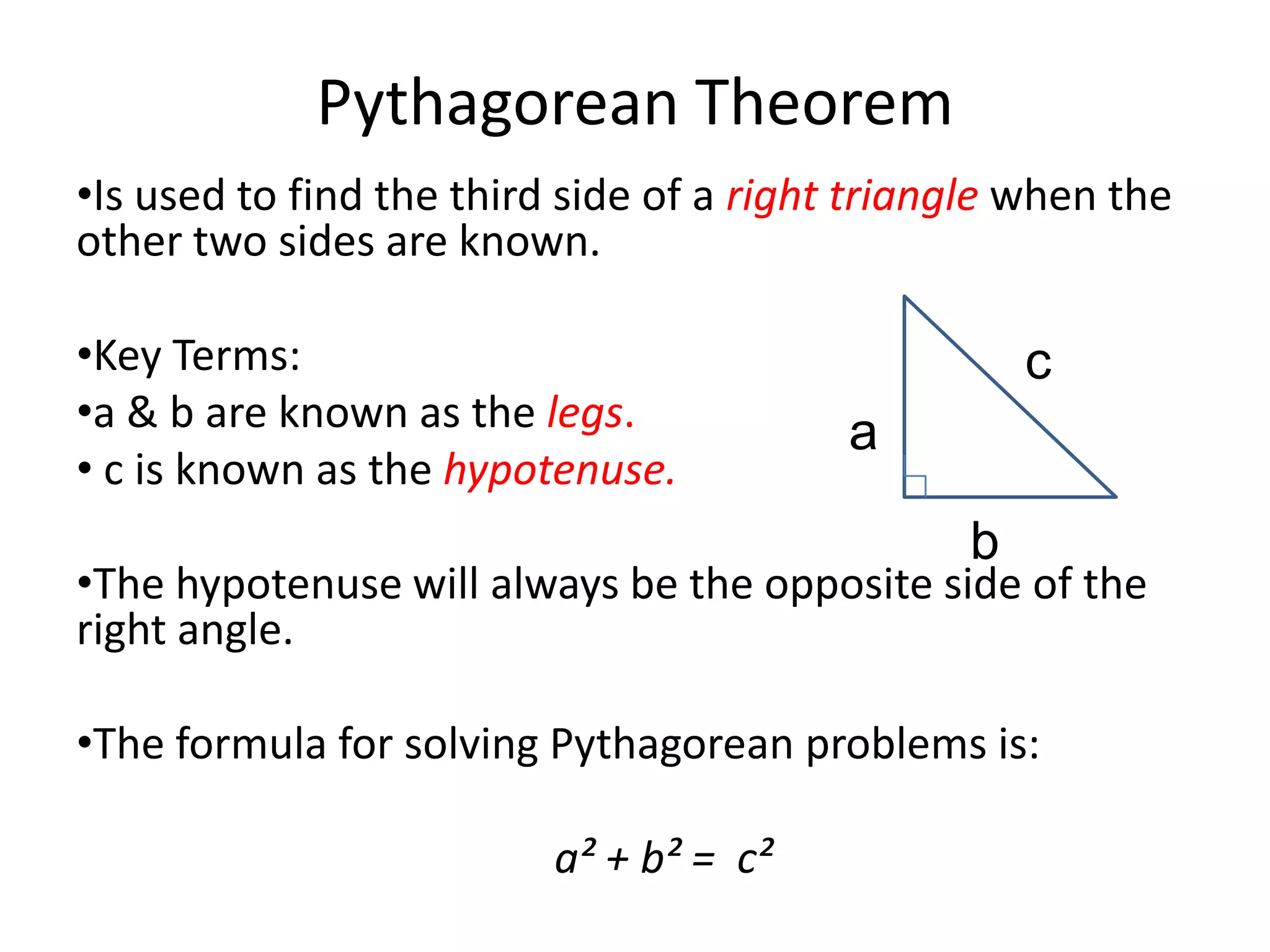
•Is used to find the third side of a right triangle when the
other two sides are known.

•Key Terms:                                         c
•a & b are known as the legs.             a
• c is known as the hypotenuse.
                                                b
•The hypotenuse will always be the opposite side of the
right angle.

•The formula for solving Pythagorean problems is:

                          a² + b² = c²
Pythagorean Theorem
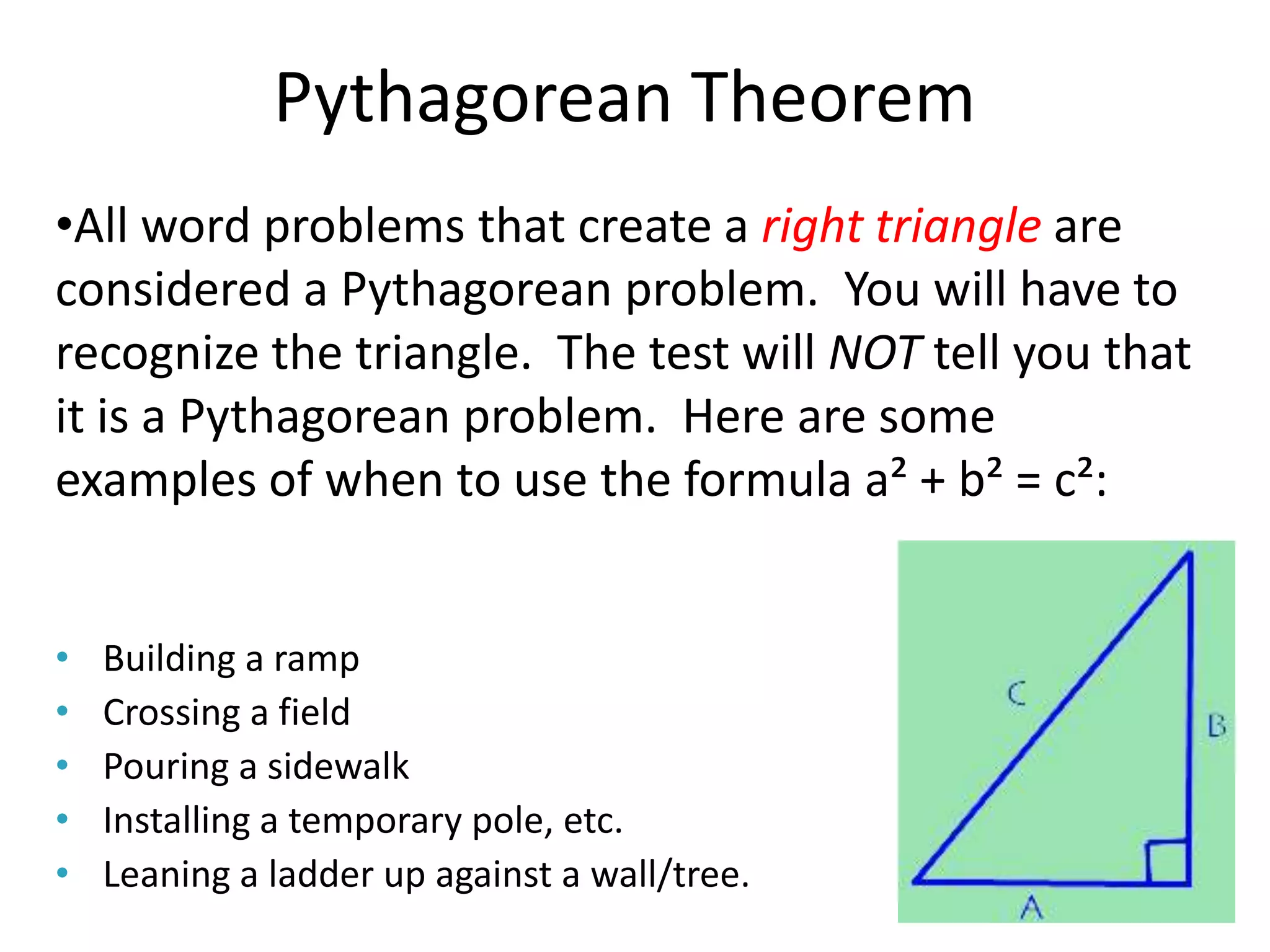
•All word problems that create a right triangle are
considered a Pythagorean problem. You will have to
recognize the triangle. The test will NOT tell you that
it is a Pythagorean problem. Here are some
examples of when to use the formula a² + b² = c²:


•   Building a ramp
•   Crossing a field
•   Pouring a sidewalk
•   Installing a temporary pole, etc.
•   Leaning a ladder up against a wall/tree.
Pythagorean Theorem
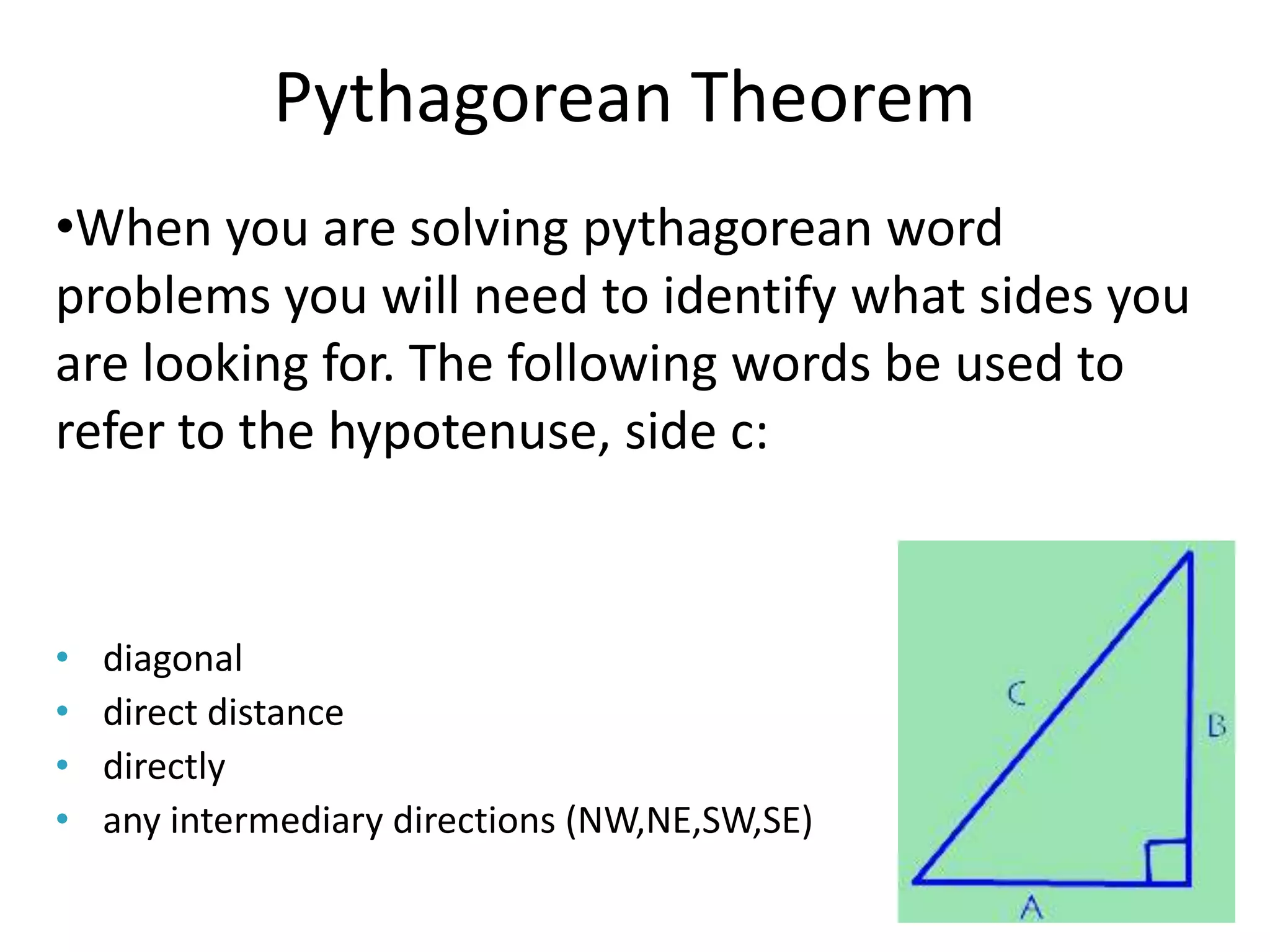
•When you are solving pythagorean word
problems you will need to identify what sides you
are looking for. The following words be used to
refer to the hypotenuse, side c:


•   diagonal
•   direct distance
•   directly
•   any intermediary directions (NW,NE,SW,SE)
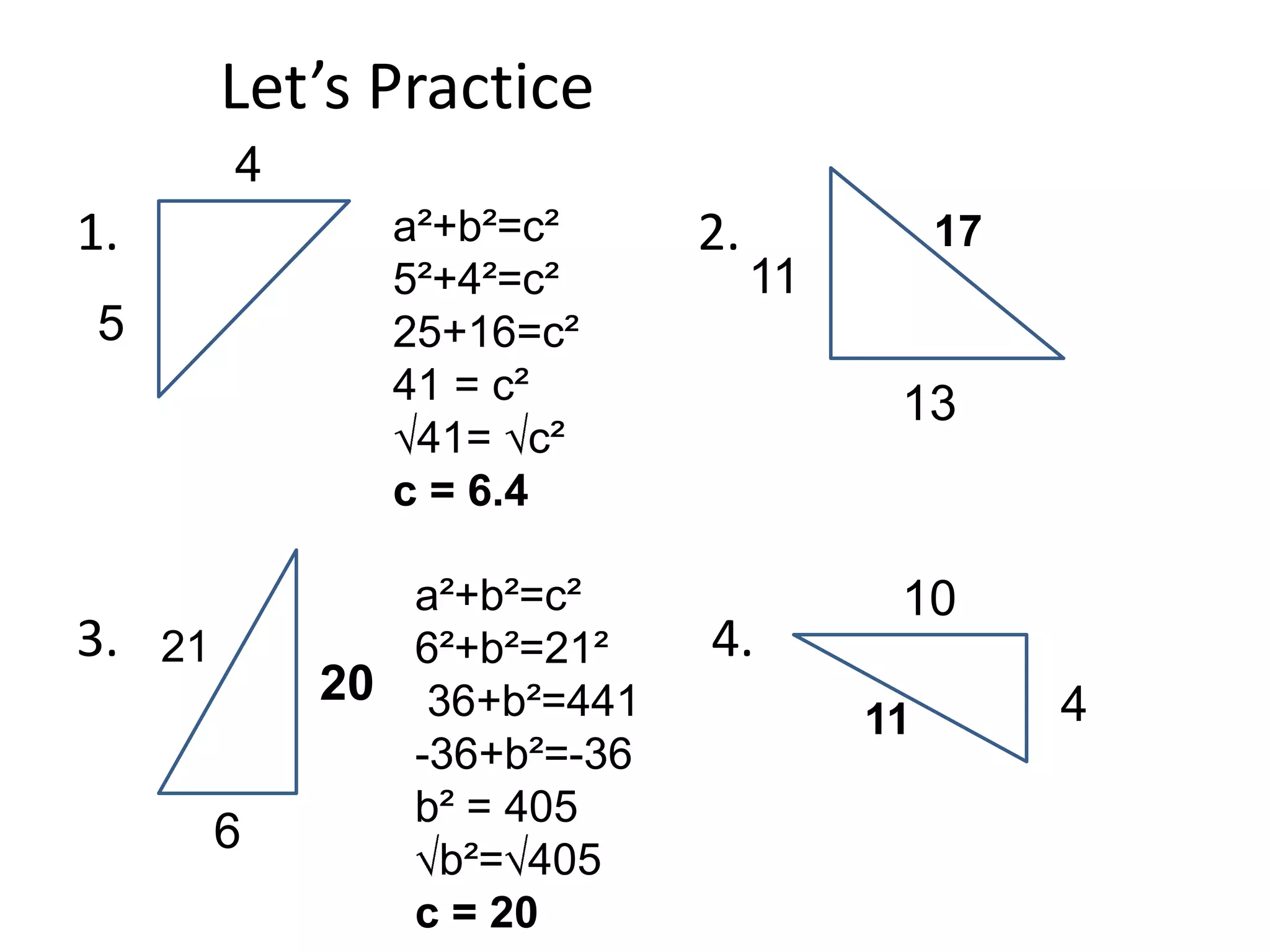
Let’s Practice
          4
1.              a²+b²=c²      2.             17
                5²+4²=c²           11
5               25+16=c²
                41 = c²                  13
                 41= c²
                c = 6.4

                 a²+b²=c²                10
3.   21          6²+b²=21²    4.
              20 36+b²=441                        4
                                        11
                 -36+b²=-36
                 b² = 405
          6
                  b²= 405
                 c = 20
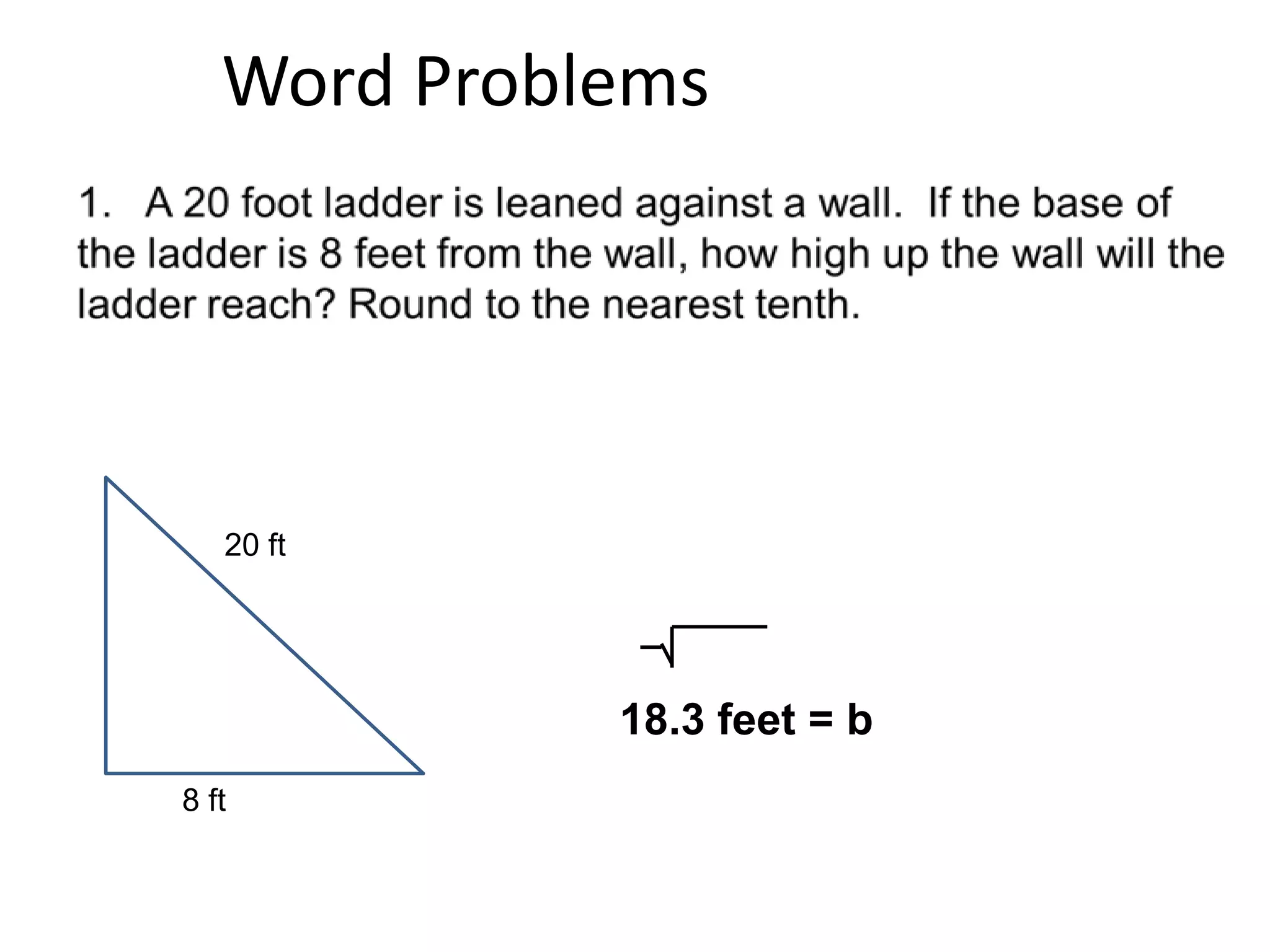
Word Problems


   20 ft


             18.3 feet = b
8 ft
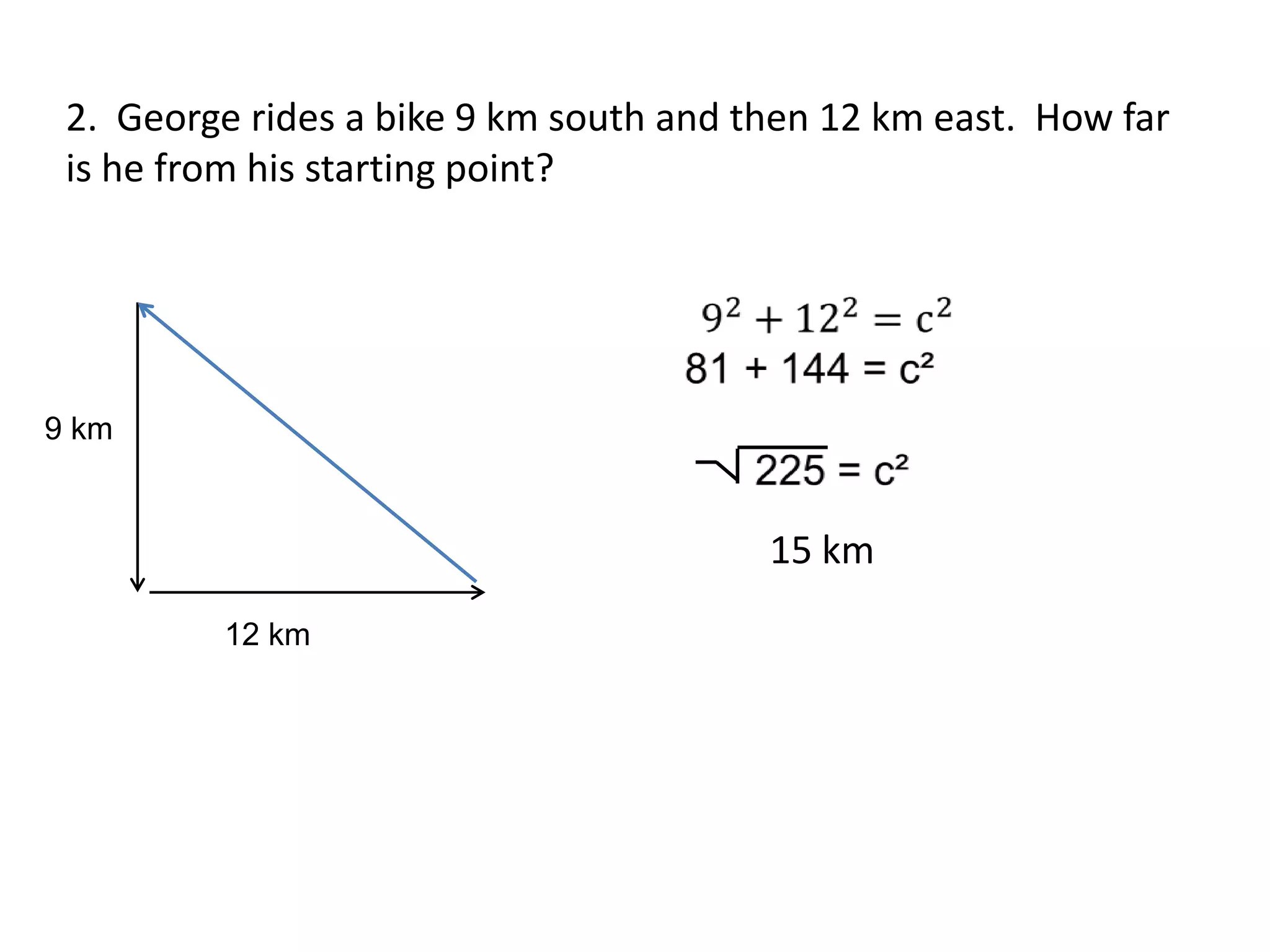
2. George rides a bike 9 km south and then 12 km east. How far
 is he from his starting point?


9 km


                                        15 km
         12 km
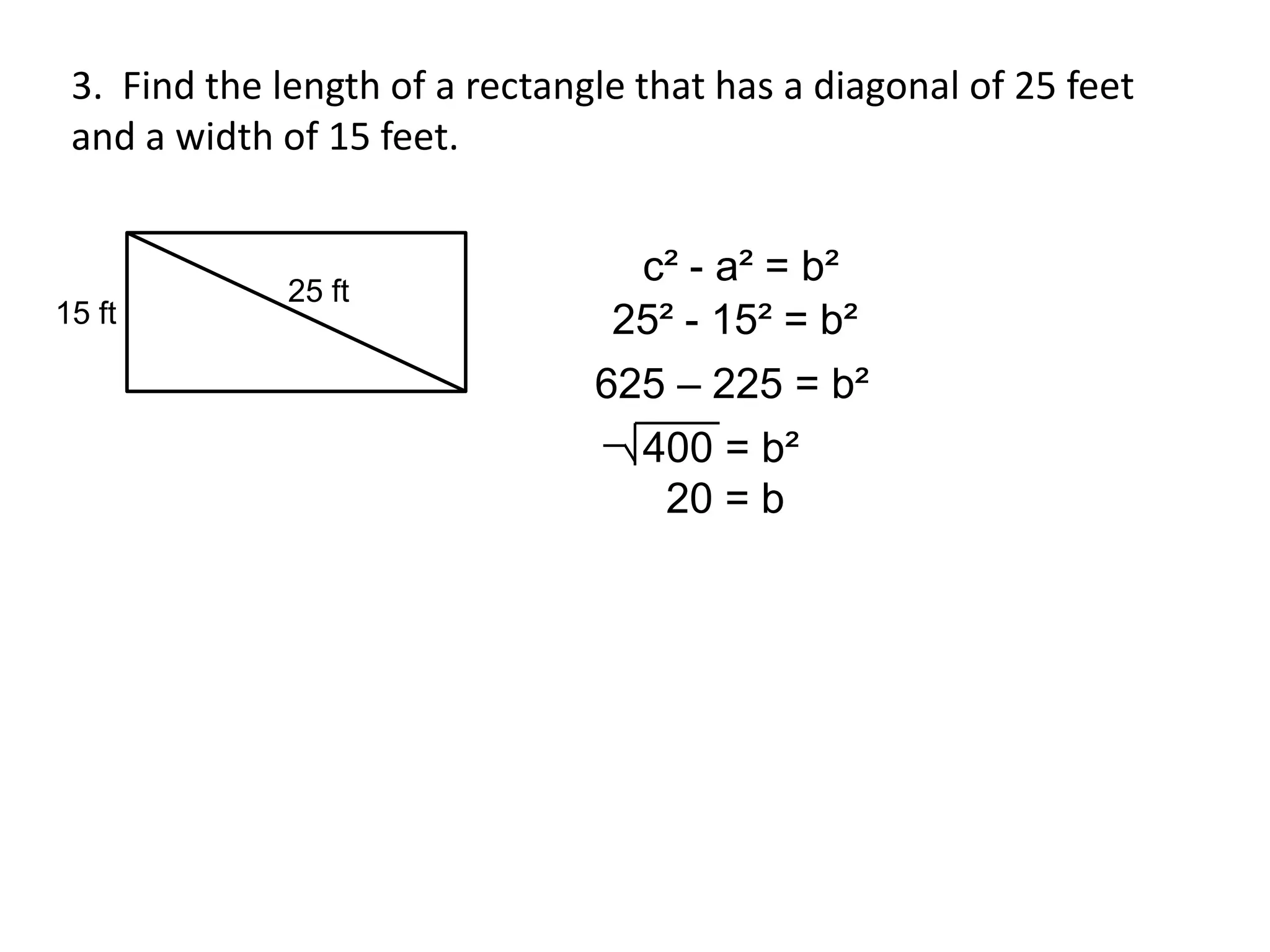
3. Find the length of a rectangle that has a diagonal of 25 feet
 and a width of 15 feet.


                                  c² - a² = b²
              25 ft
15 ft                            25² - 15² = b²
                                625 – 225 = b²
                                   400 = b²
                                    20 = b

5 Geometry Pythagorean Theorem

  • 1.
    Pythagorean Theorem Lesson 5 Tennessee Adult Education This curriculum was written with funding of the Tennessee Department of Labor and Workforce Development and may not be reproduced in any way without written permission. ©
  • 2.
    Squares •Before solving PythagoreanTheorem problems, a student must understand the concept of squares and square roots. •The square of a number is that number multiplied by itself. For example, the square of 5 is 5 x 5 =25. •In symbols, you write the square of a number as a base and an exponent. 5² exponent 5 x 5 is written 5² base
  • 3.
    Table of PerfectSquares 1² = 1 6² = 36 11² = 121 2² = 4 7² = 49 12² = 144 3² = 9 8² = 64 13² = 169 4² = 16 9² = 81 14² = 196 5² = 25 10² = 100 15² = 225
  • 4.
    Square root -The square root of a number is a number that is multiplied by itself to get a number. √ is the symbol for finding the square root. Example: √25 = 5 ; in other words 5 x 5 = 25 √36 = 6 ; in other words 6 x 6 = 36 The square root of a number is found by asking, “What number times itself equals this?” For example: What number times itself equals 4?
  • 5.
    Guided Practice Directions: Whatis the value of each squared number or letter below? 1. 3² = ____ 9 2. 8² = ____ 64 3. 12² = ____ 144 4. 10² = ____ 100 5. a² if a = 4 _____ 16 6. x² if x = 13 _____ 7. b² if b = 18 _____ 169 324
  • 6.
    Pythagorean Theorem •Is usedto find the third side of a right triangle when the other two sides are known. •Key Terms: c •a & b are known as the legs. a • c is known as the hypotenuse. b •The hypotenuse will always be the opposite side of the right angle. •The formula for solving Pythagorean problems is: a² + b² = c²
  • 7.
    Pythagorean Theorem •All wordproblems that create a right triangle are considered a Pythagorean problem. You will have to recognize the triangle. The test will NOT tell you that it is a Pythagorean problem. Here are some examples of when to use the formula a² + b² = c²: • Building a ramp • Crossing a field • Pouring a sidewalk • Installing a temporary pole, etc. • Leaning a ladder up against a wall/tree.
  • 8.
    Pythagorean Theorem •When youare solving pythagorean word problems you will need to identify what sides you are looking for. The following words be used to refer to the hypotenuse, side c: • diagonal • direct distance • directly • any intermediary directions (NW,NE,SW,SE)
  • 9.
    Let’s Practice 4 1. a²+b²=c² 2. 17 5²+4²=c² 11 5 25+16=c² 41 = c² 13 41= c² c = 6.4 a²+b²=c² 10 3. 21 6²+b²=21² 4. 20 36+b²=441 4 11 -36+b²=-36 b² = 405 6 b²= 405 c = 20
  • 10.
    Word Problems 20 ft 18.3 feet = b 8 ft
  • 11.
    2. George ridesa bike 9 km south and then 12 km east. How far is he from his starting point? 9 km 15 km 12 km
  • 12.
    3. Find thelength of a rectangle that has a diagonal of 25 feet and a width of 15 feet. c² - a² = b² 25 ft 15 ft 25² - 15² = b² 625 – 225 = b² 400 = b² 20 = b