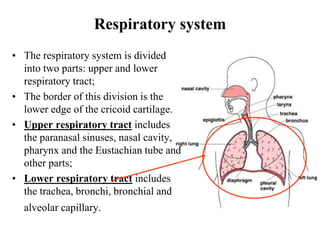
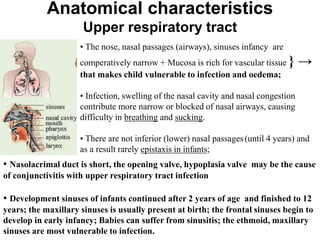
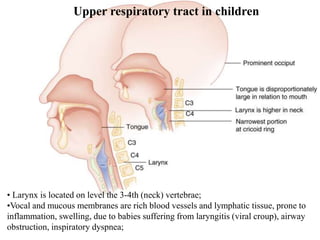
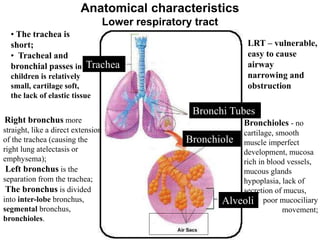
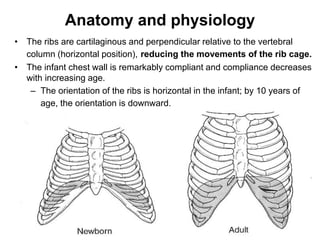
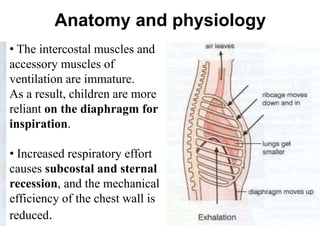
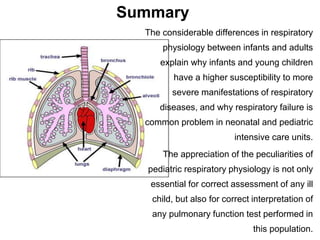
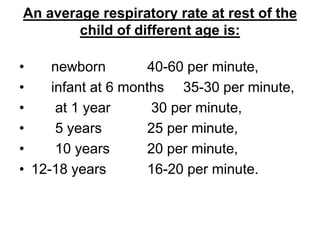
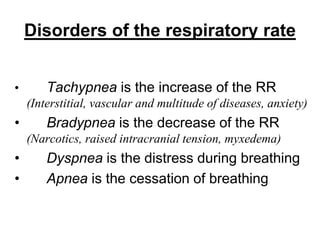
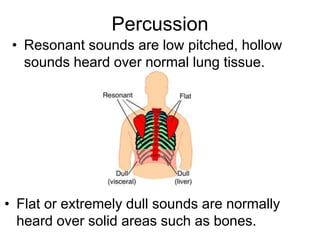
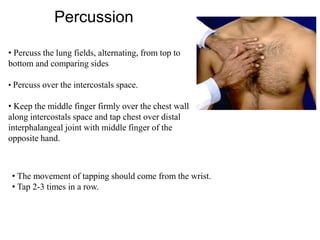
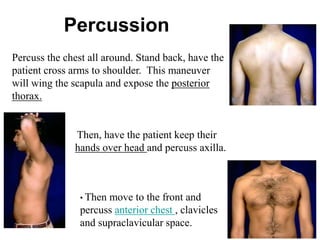
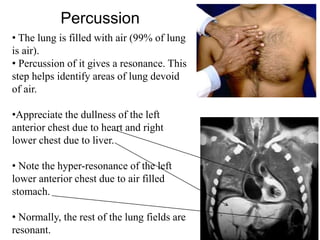
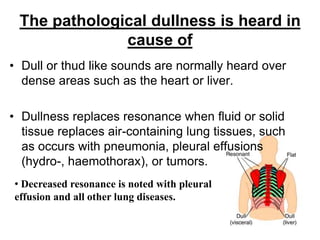
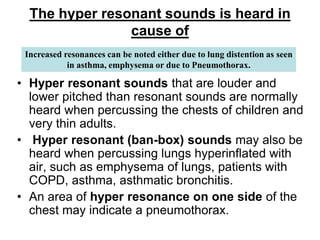
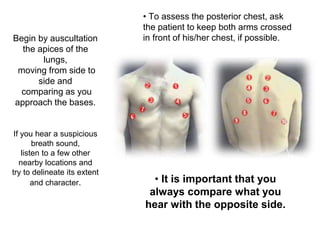
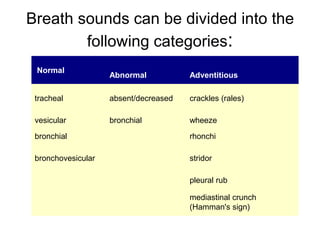
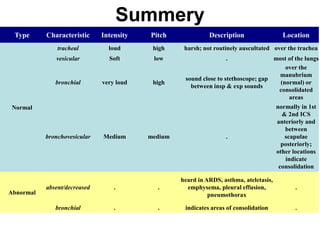
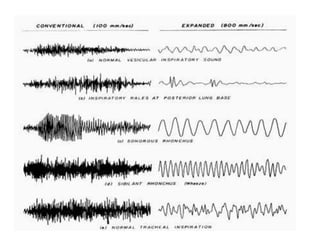
This document provides information on the anatomy and physiology of the pediatric respiratory system. It discusses the differences between the upper and lower respiratory tract in children. Key points include that the nasal passages, sinuses, and larynx are narrower in children, making them more vulnerable to infection. The trachea and bronchi are also smaller with less developed cartilage and muscle. This makes the lower respiratory tract more prone to obstruction. The document also covers respiratory rates, breath sounds, percussion findings, and common respiratory disorders in pediatrics.