
Difficulties and OpportunitiesNAGC  14th Annual Symposium June 25, 2010                                                               © Bo’s Place 2010Measuring Grief:
IntroductionsCorrine Walijarvi, MS, MBA, LMSWClinical Researcher, Bo’s PlacePhD student, University of Houston, Graduate College of Social WorkDoctoral Associate, University of HoustonAnn H. Weiss, MAT, MEd, LPCProgram Director, Bo’s Place
Bo’s Place Research Goals Promote quality researchMaintain the highest ethical standardsProvide results useful to practitionersProvide insights helpful to the bereavedCommunicate research and findingsOnline: NAGSSConferences
NAGSSAvailable at bosplace.0rgSummaries of peer-reviewed articlesBibliographical informationSummary of key findingsSummary of service provider implicationsTarget audience: service providers On-going program
Why is grief research difficult?Ethical concernsLack of consensus on definitionsWhat is grief?What is recovery? Resilience? Growth?Lack of appropriate measurementsTiming issuesControl and comparison groups
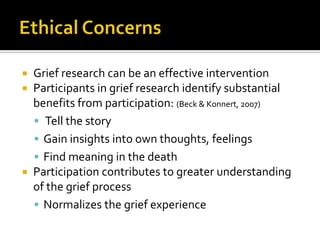
Ethical ConcernsGrief research can be an effective interventionParticipants in grief research identify substantial benefits from participation: (Beck & Konnert, 2007) Tell the storyGain insights into own thoughts, feelingsFind meaning in the deathParticipation contributes to greater understanding of the grief processNormalizes the grief experience
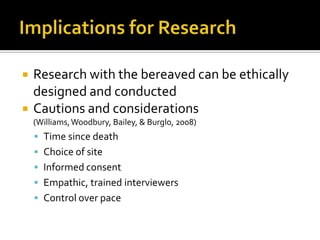
Implications for ResearchResearch with the bereaved can be ethically designed and conductedCautions and considerations (Williams, Woodbury, Bailey, & Burglo, 2008)Time since deathChoice of siteInformed consentEmpathic, trained interviewersControl over pace
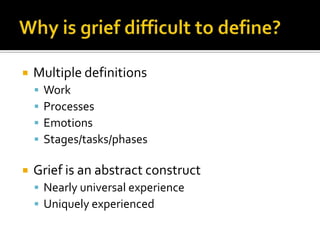
Why is grief difficult to define?Multiple definitions
Work
Processes
Emotions
Stages/tasks/phases
Grief is an abstract construct
Nearly universal experience
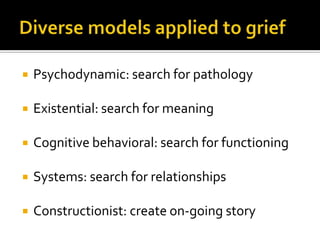
Uniquely experiencedDiverse models applied to griefPsychodynamic: search for pathologyExistential: search for meaningCognitive behavioral: search for functioningSystems: search for relationshipsConstructionist: create on-going story
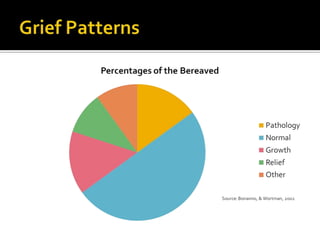
Grief Patterns
What about time frames?At what point is intense grief pathological?At what point should interventions be offered?How long should interventions last?How long should follow-ups occur?Does grief end?Much debate remains regarding timeframes
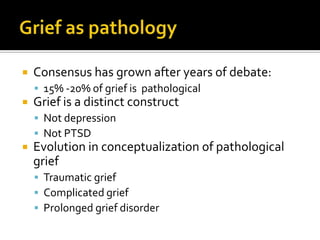
Grief as pathologyConsensus has grown after years of debate:
15% -20% of grief is  pathological
Grief is a distinct construct
Not depression
Not PTSD

403 a Walijarvi Weiss presentation

  • 1.
    Difficulties and OpportunitiesNAGC 14th Annual Symposium June 25, 2010 © Bo’s Place 2010Measuring Grief:
  • 2.
    IntroductionsCorrine Walijarvi, MS,MBA, LMSWClinical Researcher, Bo’s PlacePhD student, University of Houston, Graduate College of Social WorkDoctoral Associate, University of HoustonAnn H. Weiss, MAT, MEd, LPCProgram Director, Bo’s Place
  • 3.
    Bo’s Place ResearchGoals Promote quality researchMaintain the highest ethical standardsProvide results useful to practitionersProvide insights helpful to the bereavedCommunicate research and findingsOnline: NAGSSConferences
  • 4.
    NAGSSAvailable at bosplace.0rgSummariesof peer-reviewed articlesBibliographical informationSummary of key findingsSummary of service provider implicationsTarget audience: service providers On-going program
  • 5.
    Why is griefresearch difficult?Ethical concernsLack of consensus on definitionsWhat is grief?What is recovery? Resilience? Growth?Lack of appropriate measurementsTiming issuesControl and comparison groups
  • 6.
    Ethical ConcernsGrief researchcan be an effective interventionParticipants in grief research identify substantial benefits from participation: (Beck & Konnert, 2007) Tell the storyGain insights into own thoughts, feelingsFind meaning in the deathParticipation contributes to greater understanding of the grief processNormalizes the grief experience
  • 7.
    Implications for ResearchResearchwith the bereaved can be ethically designed and conductedCautions and considerations (Williams, Woodbury, Bailey, & Burglo, 2008)Time since deathChoice of siteInformed consentEmpathic, trained interviewersControl over pace
  • 8.
    Why is griefdifficult to define?Multiple definitions
  • 9.
  • 10.
  • 11.
  • 12.
  • 13.
    Grief is anabstract construct
  • 14.
  • 15.
    Uniquely experiencedDiverse modelsapplied to griefPsychodynamic: search for pathologyExistential: search for meaningCognitive behavioral: search for functioningSystems: search for relationshipsConstructionist: create on-going story
  • 16.
  • 17.
    What about timeframes?At what point is intense grief pathological?At what point should interventions be offered?How long should interventions last?How long should follow-ups occur?Does grief end?Much debate remains regarding timeframes
  • 18.
    Grief as pathologyConsensushas grown after years of debate:
  • 19.
    15% -20% ofgrief is pathological
  • 20.
    Grief is adistinct construct
  • 21.
  • 22.