


Grief and Suicide Prevention Education in Schools and Community Agencies 50 Minutes to  Make a Difference: Caitlin Burns, MSW The Caring Tree Program of Big Bend Hospice 14th Annual National Symposium for Children’s Grief Support
Objectives Assess the need for grief and suicide prevention education in schools and community agencies Identify 3 goals for effective classroom presentations List a minimum of 3 activities and/or techniques that can be utilized during classroom presentations to engage students and impart knowledge
Organizing our time together Why? Who? Where? When? What? How?
Why
Good first step to community outreach “ Captive” audience Teens are affected by loss everyday Suicide is the 3rd leading cause of death for young people 15-24 “ No one ever talks about this stuff”  (comment from teen after presentation) The more teens know about these issues the better they can advocate for themselves and those they care about Can help meet local and state education requirements and standards
Who and Where
Teens in: Public and private schools Juvenile justice facilities  Residential treatment programs Alternative schools  Potential courses: Health classes (HOPE) Life skills Psychology  Any class with an interested and engaged instructor  To whom are you offering the presentation  and where can you find them
2006 teens received at least one session of Grief 101 87 presentations to 12 high schools and community agencies To date 317 teens for suicide prevention education presentations (SPEP) 25 presentations to 1 middle school, 4 high schools and community agencies A typical year for the Caring Tree
Teachers Guidance counselors Administrators Program directors Agency staff Do you already have contacts at schools or local agencies?  Tools you can use when making contacts - general interest letters - “at a glance” fact sheets about benefits of grief  education and suicide prevention - “elevator pitch” to highlight your service Who are your partners?
When
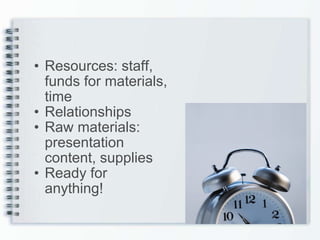
Resources: staff, funds for materials, time Relationships Raw materials: presentation content, supplies Ready for anything!
What and How
Presentations should be Informative Interactive Interesting Engaging * Grief 101 and SPEP for our purposes today, but think about what other potential topics your program or agency might be able to offer as classroom presentations (example: Hospice 101)
Presenters should be Knowledgeable Comfortable Flexible Efficient processors Rapport builders Not take themselves too seriously Non-judgmental Excited Passionate  Ready for anything
Grief 101 outline Defining grief Loss history Time to share and process personal losses Wave Model of Grief Evaluation survey Closing ritual
Activity options Grief 101 Defining grief: Any reaction to a perceived loss What is grief hand activity - How would you describe/define grief? - Name a loss other than a death that someone could experience. Name something you do for fun, to relieve stress, or to make yourself feel better. Do you get over it? Yes or No Any questions for presenters? Class pet example
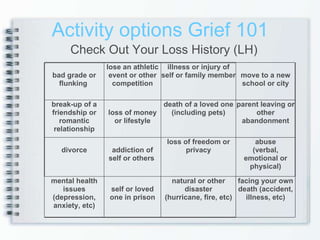
Activity options Grief 101 Check Out Your Loss History (LH) bad grade or flunking  lose an athletic event or other competition illness or injury of self or family member move to a new school or city break-up of a friendship or romantic relationship loss of money or lifestyle death of a loved one (including pets) parent leaving or other abandonment divorce addiction of self or others  loss of freedom or privacy abuse (verbal, emotional or physical) mental health issues (depression, anxiety, etc) self or loved one in prison natural or other disaster (hurricane, fire, etc) facing your own death (accident, illness, etc)
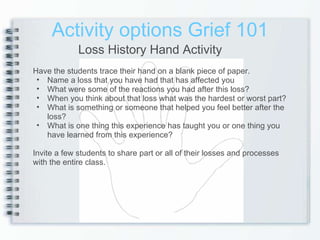
Activity options Grief 101 Loss History Hand Activity Have the students trace their hand on a blank piece of paper. Name a loss that you have had that has affected you What were some of the reactions you had after this loss? When you think about that loss what was the hardest or worst part? What is something or someone that helped you feel better after the loss? What is one thing this experience has taught you or one thing you have learned from this experience? Invite a few students to share part or all of their losses and processes with the entire class.
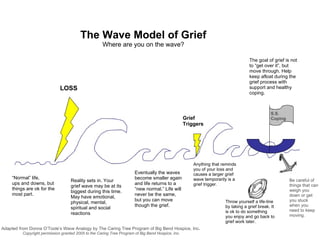
S.S.  Coping Grief Triggers The goal of grief is not to “get over it”, but move through. Help keep afloat during the grief process with support and healthy coping. “ Normal” life, ups and downs, but  things are ok for the most part. Reality sets in. Your grief wave may be at its biggest during this time. May have emotional, physical, mental, spiritual and social reactions Eventually the waves become smaller again and life returns to a “new normal.” Life will never be the same, but you can move though the grief. Anything that reminds you of your loss and causes a larger grief wave temporarily is a grief trigger.  Throw yourself a life-line by taking a grief break. It is ok to do something you enjoy and go back to grief work later. LOSS The Wave Model of Grief Where are you on the wave? Adapted from Donna O’Toole’s Wave Analogy by The Caring Tree Program of Big Bend Hospice, Inc . Copyright permission granted 2005 to the Caring Tree Program of Big Bend Hospice, Inc. Be careful of things that can weigh you down or get you stuck when you need to keep moving.
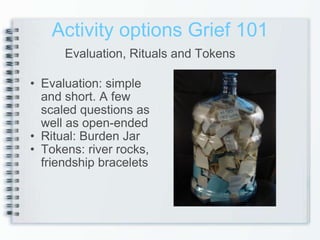
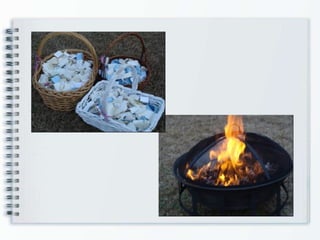
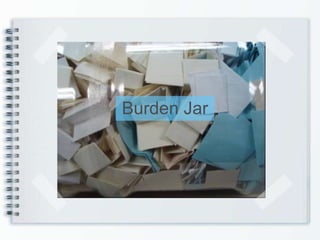
Activity options Grief 101 Evaluation: simple and short. A few scaled questions as well as open-ended  Ritual: Burden Jar Tokens: river rocks, friendship bracelets  Evaluation, Rituals and Tokens
 
SPEP outline Set the stage (Advocacy, Knowledge, Power) Why suicide prevention education is important? -local, state and national statistics How much do you know about suicide? (dispelling myths) -From the Maine Teen Suicide Prevention quiz Protective Factors Risk Factors Warning Signs Ways to help a friend Where to get help (local and national resources)
Activity options SPEP Protective Factors, Risk Factors, Warning Signs Hand Activity Name 1 thing that helps you feel connected, safe or like you belong Name 1 thing that makes you feel disconnected Name someone in your life that you trust completely What is one thing you have done to cope with a difficult situation? What is one thing you could say to a friend who is talking about completing suicide? Create a “student” Draw a stick figure on the board and ask the class to name it Talk about what this fellow “student” is usually like Then discuss how they would know that this “student” might need extra help Process the risk factors and warning signs they can look for
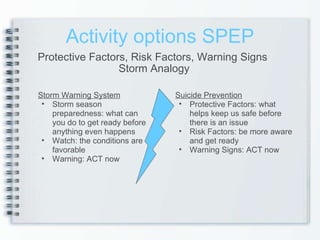
Activity options SPEP Protective Factors, Risk Factors, Warning Signs  Storm Analogy Storm Warning System Storm season preparedness: what can you do to get ready before anything even happens Watch: the conditions are favorable Warning: ACT now  Suicide Prevention   Protective Factors: what helps keep us safe before there is an issue Risk Factors: be more aware and get ready Warning Signs: ACT now
SPEP  Special notes and considerations Caring Tree still considers this a pilot program Know what is happening in your community (there might already be suicide prevention programs in place) Know about best practices  Reach out to local and state experts in your area to assist you Identify partners in schools and agencies to which youth can be directed for help Minimum: offer suicide prevention hotlines and resources in other grief education presentations Proceed with caution and arm yourself with as much education as possible
SPEP: Resources 1-800-273-TALK (8255) www.suicidepreventionlifeline.org www.helppromotehope.com www.sptsnj.org - Free online educator training www.suicidology.org www.samhsa.gov - Registry of Evidence-Based Practices in Suicide Prevention www.sprc.org - Best practices registry www.awristocrat.com - silicon bracelets
What youth have to say Grief 101 “ It was interesting and comforting as well as informing.” “ I think all high school students need to hear this presentation. It  really helped me see things differently. Thank you for coming, you made it clear to me that its okay to be sad, everything takes time.” “ It’s a message people need to hear.” “ It helps you know you’re not alone.” “ Very helpful, greatly informative and appreciated. Thank you. Very understanding.” “ It really lets you know that what you’re feeling is okay and normal.” SPEP “ Because it’s educational and if I’m not there to help maybe they can find hope in themselves.”  “ It can help save a life.” “ People never talk about this.” “ Everyone needs to know how to deal with this situation.” “ It helps for us to know there is something we can do to help.”
What teachers have to say “  Discussion of things to do to cope with grief and loss, the activity that shows all have losses and the rock to keep and the burden paper to burn.” “ The Wave Model and giving them the opportunity to share.” “ Keeping the topic non-taboo.” “ This is an ABSOLUTE for my classes.” “ Opening up the discussion about death. A lot of kids are afraid to talk about these issues-it helps them to talk in a non-judgmental atmosphere.” “ The activities, especially those that get students talking about their various types of losses or dealing with their own individual loss.”
Burden Jar
Caitlin Burns, MSW [email_address] www.bigbendhospice.org Caring Tree Program of Big Bend Hospice For more information contact: Thank You!

605 a Burns presentation

  • 1.
    Grief and SuicidePrevention Education in Schools and Community Agencies 50 Minutes to Make a Difference: Caitlin Burns, MSW The Caring Tree Program of Big Bend Hospice 14th Annual National Symposium for Children’s Grief Support
  • 2.
    Objectives Assess theneed for grief and suicide prevention education in schools and community agencies Identify 3 goals for effective classroom presentations List a minimum of 3 activities and/or techniques that can be utilized during classroom presentations to engage students and impart knowledge
  • 3.
    Organizing our timetogether Why? Who? Where? When? What? How?
  • 4.
  • 5.
    Good first stepto community outreach “ Captive” audience Teens are affected by loss everyday Suicide is the 3rd leading cause of death for young people 15-24 “ No one ever talks about this stuff” (comment from teen after presentation) The more teens know about these issues the better they can advocate for themselves and those they care about Can help meet local and state education requirements and standards
  • 6.
  • 7.
    Teens in: Publicand private schools Juvenile justice facilities Residential treatment programs Alternative schools Potential courses: Health classes (HOPE) Life skills Psychology Any class with an interested and engaged instructor To whom are you offering the presentation and where can you find them
  • 8.
    2006 teens receivedat least one session of Grief 101 87 presentations to 12 high schools and community agencies To date 317 teens for suicide prevention education presentations (SPEP) 25 presentations to 1 middle school, 4 high schools and community agencies A typical year for the Caring Tree
  • 9.
    Teachers Guidance counselorsAdministrators Program directors Agency staff Do you already have contacts at schools or local agencies? Tools you can use when making contacts - general interest letters - “at a glance” fact sheets about benefits of grief education and suicide prevention - “elevator pitch” to highlight your service Who are your partners?
  • 10.
  • 11.
    Resources: staff, fundsfor materials, time Relationships Raw materials: presentation content, supplies Ready for anything!
  • 12.
  • 13.
    Presentations should beInformative Interactive Interesting Engaging * Grief 101 and SPEP for our purposes today, but think about what other potential topics your program or agency might be able to offer as classroom presentations (example: Hospice 101)
  • 14.
    Presenters should beKnowledgeable Comfortable Flexible Efficient processors Rapport builders Not take themselves too seriously Non-judgmental Excited Passionate Ready for anything
  • 15.
    Grief 101 outlineDefining grief Loss history Time to share and process personal losses Wave Model of Grief Evaluation survey Closing ritual
  • 16.
    Activity options Grief101 Defining grief: Any reaction to a perceived loss What is grief hand activity - How would you describe/define grief? - Name a loss other than a death that someone could experience. Name something you do for fun, to relieve stress, or to make yourself feel better. Do you get over it? Yes or No Any questions for presenters? Class pet example
  • 17.
    Activity options Grief101 Check Out Your Loss History (LH) bad grade or flunking lose an athletic event or other competition illness or injury of self or family member move to a new school or city break-up of a friendship or romantic relationship loss of money or lifestyle death of a loved one (including pets) parent leaving or other abandonment divorce addiction of self or others loss of freedom or privacy abuse (verbal, emotional or physical) mental health issues (depression, anxiety, etc) self or loved one in prison natural or other disaster (hurricane, fire, etc) facing your own death (accident, illness, etc)
  • 18.
    Activity options Grief101 Loss History Hand Activity Have the students trace their hand on a blank piece of paper. Name a loss that you have had that has affected you What were some of the reactions you had after this loss? When you think about that loss what was the hardest or worst part? What is something or someone that helped you feel better after the loss? What is one thing this experience has taught you or one thing you have learned from this experience? Invite a few students to share part or all of their losses and processes with the entire class.
  • 19.
    S.S. CopingGrief Triggers The goal of grief is not to “get over it”, but move through. Help keep afloat during the grief process with support and healthy coping. “ Normal” life, ups and downs, but things are ok for the most part. Reality sets in. Your grief wave may be at its biggest during this time. May have emotional, physical, mental, spiritual and social reactions Eventually the waves become smaller again and life returns to a “new normal.” Life will never be the same, but you can move though the grief. Anything that reminds you of your loss and causes a larger grief wave temporarily is a grief trigger. Throw yourself a life-line by taking a grief break. It is ok to do something you enjoy and go back to grief work later. LOSS The Wave Model of Grief Where are you on the wave? Adapted from Donna O’Toole’s Wave Analogy by The Caring Tree Program of Big Bend Hospice, Inc . Copyright permission granted 2005 to the Caring Tree Program of Big Bend Hospice, Inc. Be careful of things that can weigh you down or get you stuck when you need to keep moving.
  • 20.
    Activity options Grief101 Evaluation: simple and short. A few scaled questions as well as open-ended Ritual: Burden Jar Tokens: river rocks, friendship bracelets Evaluation, Rituals and Tokens
  • 21.
  • 22.
    SPEP outline Setthe stage (Advocacy, Knowledge, Power) Why suicide prevention education is important? -local, state and national statistics How much do you know about suicide? (dispelling myths) -From the Maine Teen Suicide Prevention quiz Protective Factors Risk Factors Warning Signs Ways to help a friend Where to get help (local and national resources)
  • 23.
    Activity options SPEPProtective Factors, Risk Factors, Warning Signs Hand Activity Name 1 thing that helps you feel connected, safe or like you belong Name 1 thing that makes you feel disconnected Name someone in your life that you trust completely What is one thing you have done to cope with a difficult situation? What is one thing you could say to a friend who is talking about completing suicide? Create a “student” Draw a stick figure on the board and ask the class to name it Talk about what this fellow “student” is usually like Then discuss how they would know that this “student” might need extra help Process the risk factors and warning signs they can look for
  • 24.
    Activity options SPEPProtective Factors, Risk Factors, Warning Signs Storm Analogy Storm Warning System Storm season preparedness: what can you do to get ready before anything even happens Watch: the conditions are favorable Warning: ACT now Suicide Prevention Protective Factors: what helps keep us safe before there is an issue Risk Factors: be more aware and get ready Warning Signs: ACT now
  • 25.
    SPEP Specialnotes and considerations Caring Tree still considers this a pilot program Know what is happening in your community (there might already be suicide prevention programs in place) Know about best practices Reach out to local and state experts in your area to assist you Identify partners in schools and agencies to which youth can be directed for help Minimum: offer suicide prevention hotlines and resources in other grief education presentations Proceed with caution and arm yourself with as much education as possible
  • 26.
    SPEP: Resources 1-800-273-TALK(8255) www.suicidepreventionlifeline.org www.helppromotehope.com www.sptsnj.org - Free online educator training www.suicidology.org www.samhsa.gov - Registry of Evidence-Based Practices in Suicide Prevention www.sprc.org - Best practices registry www.awristocrat.com - silicon bracelets
  • 27.
    What youth haveto say Grief 101 “ It was interesting and comforting as well as informing.” “ I think all high school students need to hear this presentation. It really helped me see things differently. Thank you for coming, you made it clear to me that its okay to be sad, everything takes time.” “ It’s a message people need to hear.” “ It helps you know you’re not alone.” “ Very helpful, greatly informative and appreciated. Thank you. Very understanding.” “ It really lets you know that what you’re feeling is okay and normal.” SPEP “ Because it’s educational and if I’m not there to help maybe they can find hope in themselves.” “ It can help save a life.” “ People never talk about this.” “ Everyone needs to know how to deal with this situation.” “ It helps for us to know there is something we can do to help.”
  • 28.
    What teachers haveto say “ Discussion of things to do to cope with grief and loss, the activity that shows all have losses and the rock to keep and the burden paper to burn.” “ The Wave Model and giving them the opportunity to share.” “ Keeping the topic non-taboo.” “ This is an ABSOLUTE for my classes.” “ Opening up the discussion about death. A lot of kids are afraid to talk about these issues-it helps them to talk in a non-judgmental atmosphere.” “ The activities, especially those that get students talking about their various types of losses or dealing with their own individual loss.”
  • 29.
  • 30.
    Caitlin Burns, MSW[email_address] www.bigbendhospice.org Caring Tree Program of Big Bend Hospice For more information contact: Thank You!

Editor's Notes

  • #3 These are the goals as stated by the proposal, but I will attempt to cover much more
  • #4 The big overarching questions to ask yourself if you are considering offering these services
  • #6 There are so many stats and facts about suicide, include a fact and resource sheet as a supplement
  • #9 Estimates for Leon? As of 4/23/10
  • #10 Estimates for Leon?
  • #12 Estimates for Leon?
  • #14 In general for both topics
  • #16 In general for both topics
  • #17 Gucchi Mane the unicorn/pegasus Ray Ray the camel
  • #18 Processing the LH. What happened, how did you react or feel, what helped, what didn’t help
  • #20 Adapted by Caring Tree from Donna O’tooles Wave Model of Grief
  • #23 How many of you have been affected by a suicide?
  • #28 Both asked would you recommend this to a friend and why?
  • #29 What part was most helpful to your students?