Copyright © RLabs 2013
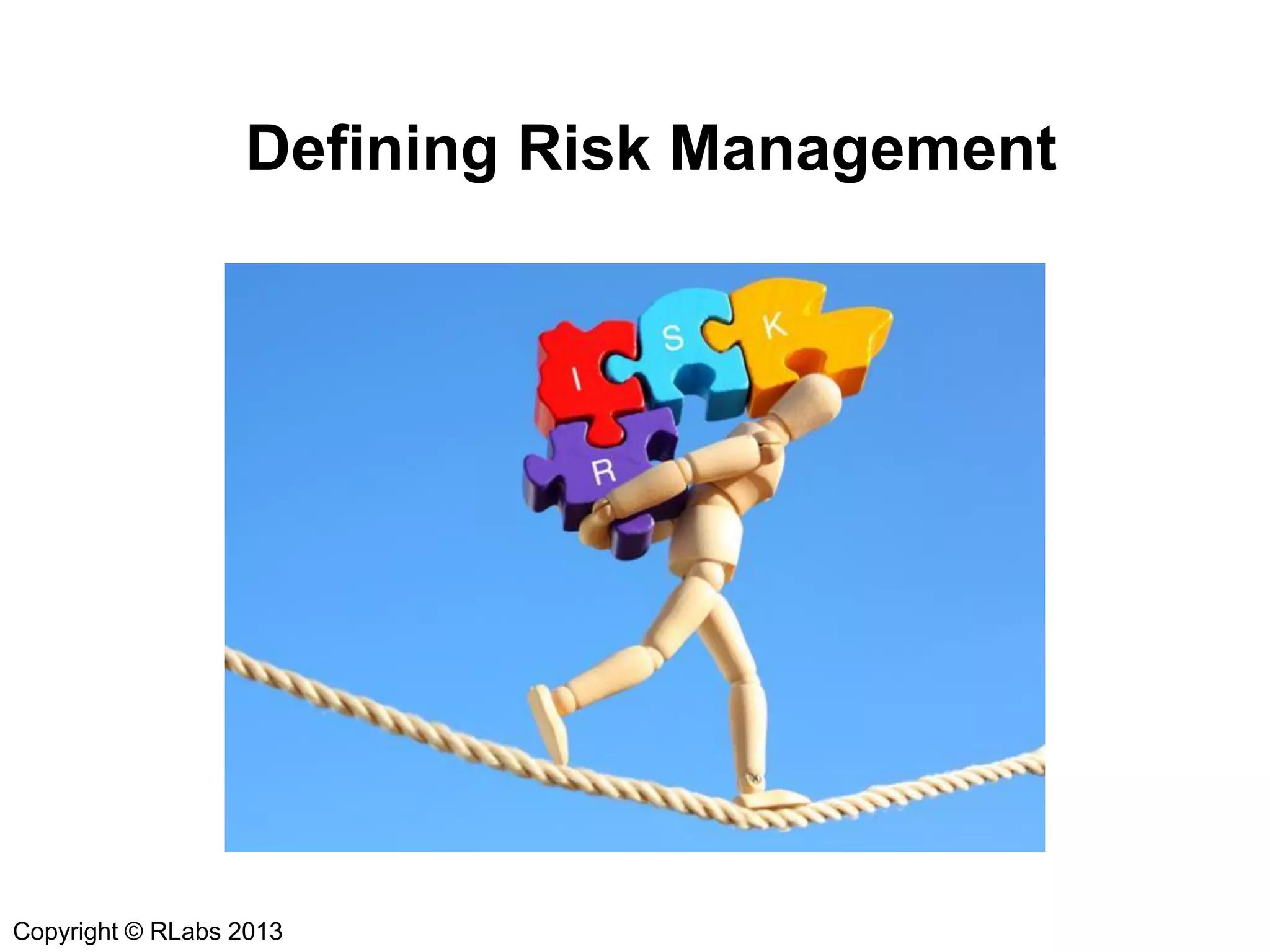
Defining Risk Management

Copyright © RLabs 2013
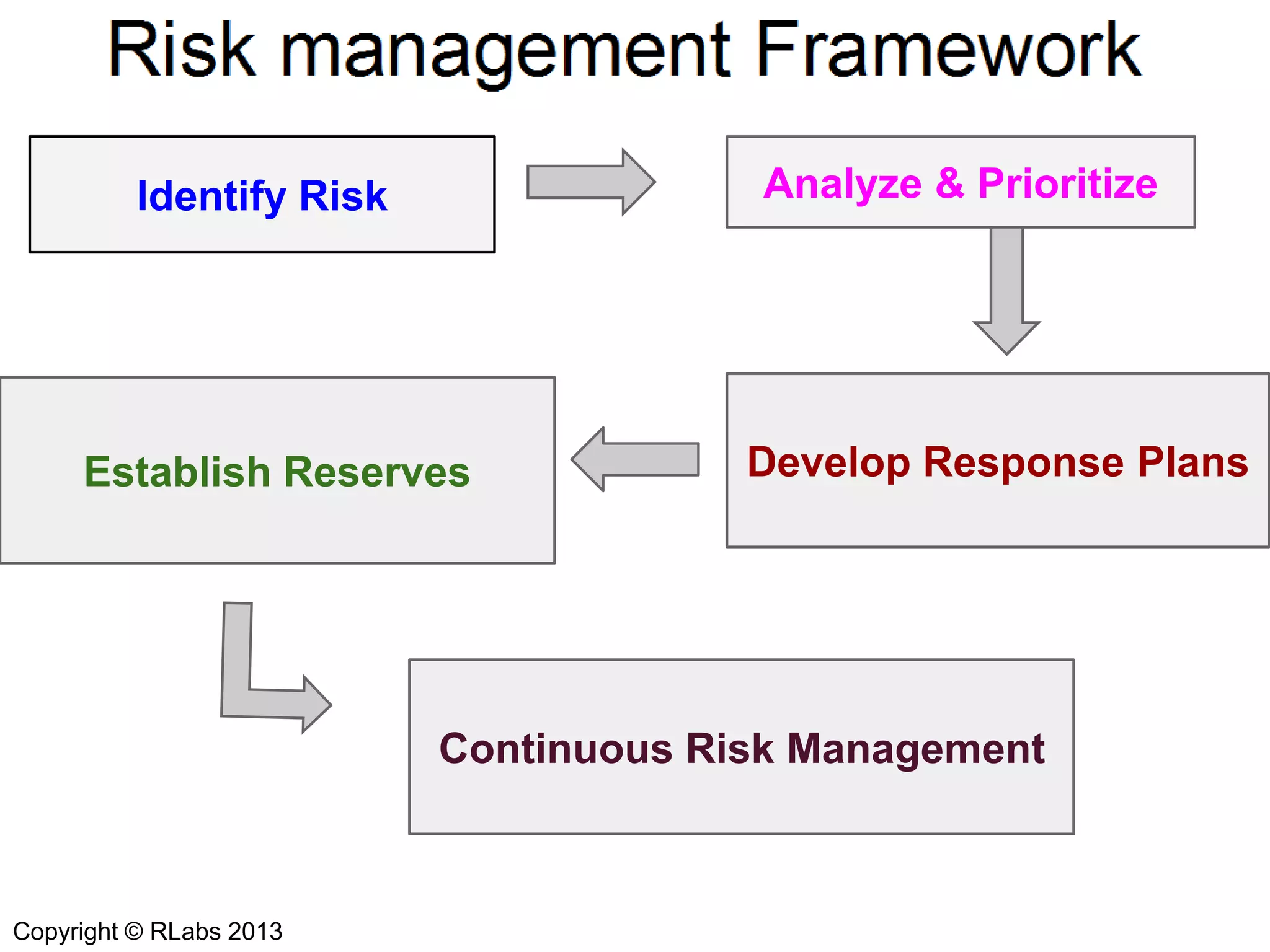
Analyze & Prioritize

Identify Risk

Establish Reserves

Develop Response Plans

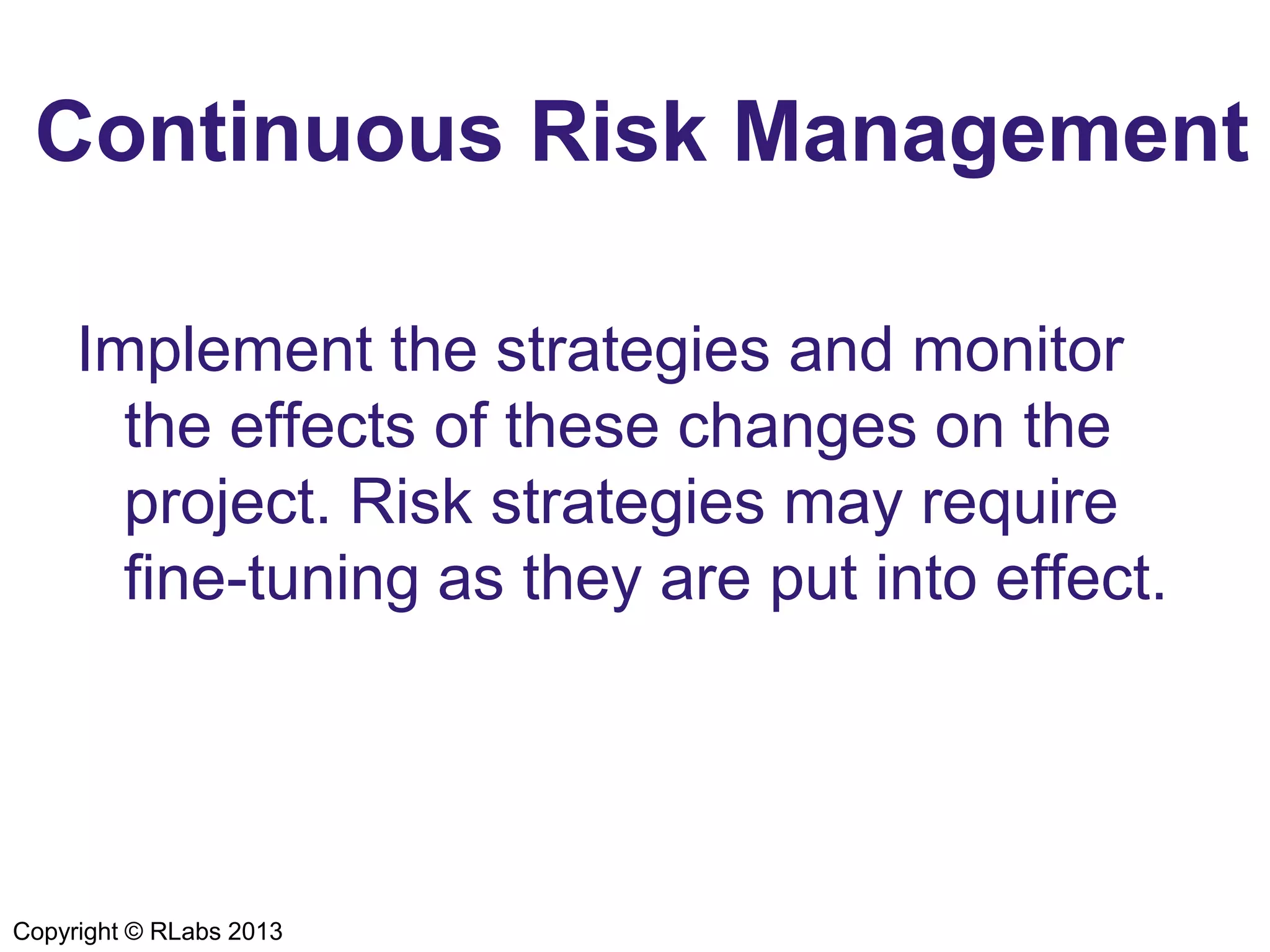
Continuous Risk Management

Copyright © RLabs 2013
Identify Risks
Systematically find all the factors that
threaten project objectives

Copyright © RLabs 2013
Analyze & Prioritize
Assess each risk in terms of its
possible damage and likelihood of
occurrence. Most projects have an
enormous number of potential risks.

Copyright © RLabs 2013
Develop a Response

Create strategies for reducing the
possible damage or the probability
that the risk will occur

Copyright © RLabs 2013
Establish Reserves
Set aside additional funding for the
project that will be used in case of
specific risks- the known risks- occur,
as well as funding for the unknown
risks

Copyright © RLabs 2013
Continuous Risk Management
Implement the strategies and monitor
the effects of these changes on the
project. Risk strategies may require
fine-tuning as they are put into effect.

Copyright © RLabs 2013
Murphy's risk
management law
The art of identifying risks begins with a
critical attitude. Because we're trying
to find problems before they emerge,
it's appropriate that "anything that can
go wrong will go wrong".
Copyright © RLabs 2013

4 project management risk management