Downloaded 105 times


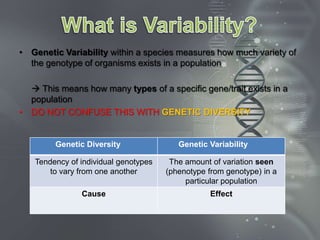

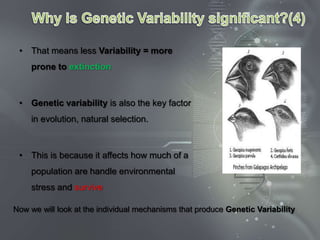
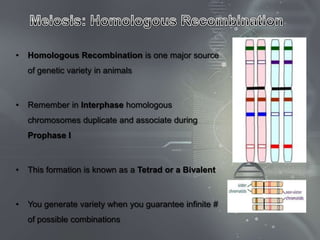
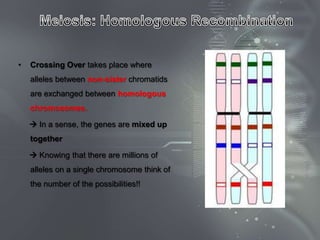
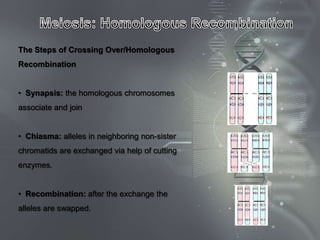
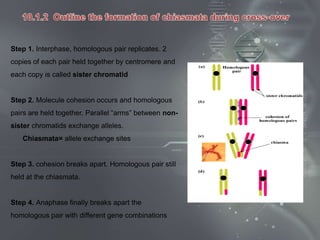
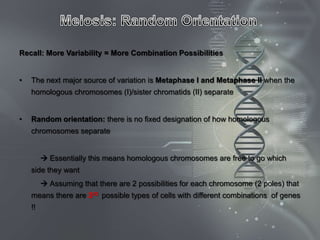
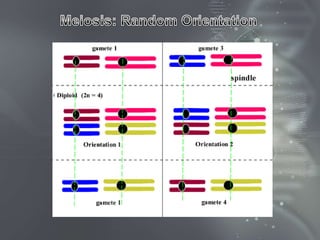
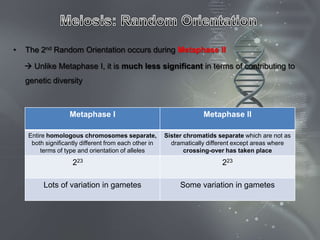
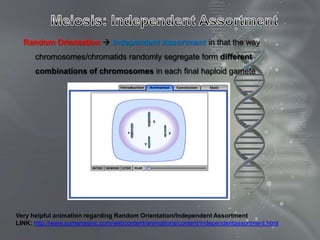
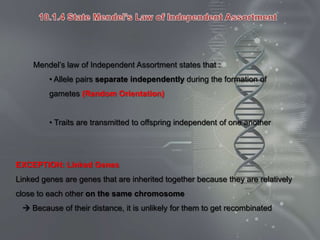
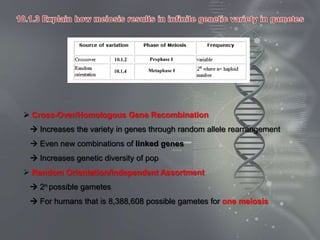


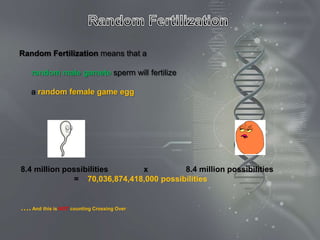
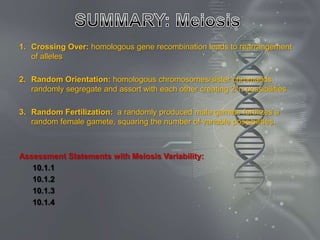

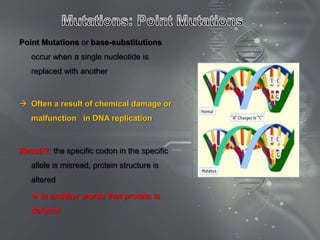
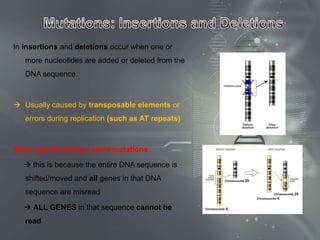

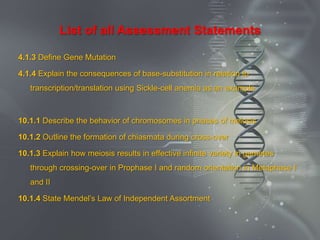

Genetic variability within a population measures the variety of genotypes that exist. It is important for biodiversity and a population's ability to adapt to environmental changes. Genetic variability is produced through three main sources: meiosis, mutations, and random mating. Meiosis involves crossing over during prophase I, which exchanges alleles between homologous chromosomes, producing new combinations. It also involves random orientation of homologous chromosomes during metaphase I and sister chromatids during metaphase II. This, along with random fertilization, results in an effectively infinite number of genetically unique gametes. Mutations, such as point mutations and insertions/deletions, introduce new variants over long periods of time and act as an evolutionary mechanism of diversity.


![6[1].2 form 5](https://cdn.slidesharecdn.com/ss_thumbnails/61-2-causesofvariation-120603003705-phpapp02-thumbnail.jpg?width=640&height=640&fit=bounds)


