Total Quality Management
              Chapter 3: Customer Satisfaction


         Atit Patumvan
         Faculty of Management and Information Sciences,
         Naresuan University


                     1
Agenda


 • Introduction

 • Who is the Customer?

 • Customer Perception of Quality?

 • Feedback

 • Using Customer Complaints

Atit Patumvan, Faculty of Management and Information Sciences, Naresuan University
Agenda (cont.)


 • Service Quality

 • Translating Needs into Requirements

 • Customer Retention


Atit Patumvan, Faculty of Management and Information Sciences, Naresuan University
Customer Satisfaction Organization


                 CEO

          Senior managers

      Function operational areas

       Front-line representative

              Customer
                     4
Customer Satisfaction Model

                           Customer needs


Company offer

                     5
Who is the Customer

• External Customer

 • Who uses the products or services.

 • Who purchases the products or services.

 • Who influences the sale of the products or services.

• Internal Customer

 • Every one in the business process


                            6
Categories of external Customers


• Current

• Prospective

• Lost Customer


                   7
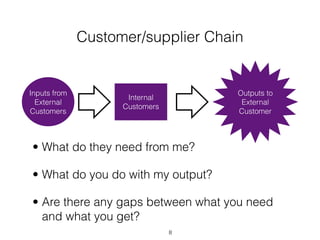
Customer/supplier Chain


Inputs from                         Outputs to
                     Internal
  External                           External
                    Customers
Customers                           Customer


• What do they need from me?

• What do you do with my output?

• Are there any gaps between what you need
  and what you get?
                                8
Customer Perception of Quality

• Performance

• Features

• Service

• Warranty

• Price

• Reputation
Feedback


• Comment Card

• Customer Questionnaire

• Focus Groups

• Toll-Free Telephone Numbers

• Customer Visits
Feedback      (cont.)


• Report Card

• The Internet and Computer

• Employee Feedback

• Mass Customization

• The American Customer Satisfaction Index
Using Customer Complaints

• Senior manager resolve the customer's concern

• Establish customer satisfaction measures and
  monitor

• Communicate complaint information to all
  people in the organization

• Provide a monthly complaint report to the
  quality council
Elements of Customer Service


• Organization

• Customer Care

• Communication

• Front-line people

• Leadership
Quantization


• Identify each market segment.

• Write down the requirements.

• Communicate the requirement.

• Organize processes.

• Organize physical spaces.
Customer Care

• Meet the customer's expectations.

• Get the customer's point of view.

• Deliver what is promised.

• Make the customer feel valued.

• Respond to all complaints.

• Over-respond to the customer.

• Provide a clean and comfortable customer perception area.
Communication

• Optimization the trade-off between time and
  personal attention.

• Minimize the number of contact points.

• Provide pleasant, knowledgeable, and
  enthusiastic employees.

• Write documents in customer-friendly
  language.
Front-line people

• Hire people who like people.

• Challenge them to develop better methods.

• Give them the authority to solve problems.

• Serve them as internal customers.

• Be sure they are adequately trained.

• Recognize and reward performance.
Leadership


• Lead by example.

• Listen to the front-line people.

• Strive for continuos process improvement.
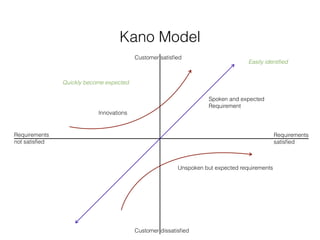
Kano Model
                                         Customer satisfied
                                                                                 Easily identified


               Quickly become expected

                                                                   Spoken and expected
                                                                   Requirement
                           Innovations


Requirements                                                                                 Requirements
not satisfied                                                                                 satisfied


                                                        Unspoken but expected requirements


                                         Customer dissatisfied
Voice of the Customer
How is the voice of the customer heard?                 Who is the customer?
                  Customer reports

            NBA
                        Design reviews
                                                                 Internal
              Surveys                                                                 External
                                 Interview

                  Focus groups
                                          Site visits

                                                                                                       Voice of the
                                                                                                       customer
                  Clarify verbatim                                          For listening

                                     Affinity diagrams

                     QDF                                                              For evaluating
                                                               Data control

                        IPD team meetings


How is the voice of the customer evaluated? Who has what responsibility?
Customer Retention

การบริหารเชิงคุณภาพ ชุดที่ 4

  • 1.
    Total Quality Management Chapter 3: Customer Satisfaction Atit Patumvan Faculty of Management and Information Sciences, Naresuan University 1
  • 2.
    Agenda • Introduction • Who is the Customer? • Customer Perception of Quality? • Feedback • Using Customer Complaints Atit Patumvan, Faculty of Management and Information Sciences, Naresuan University
  • 3.
    Agenda (cont.) •Service Quality • Translating Needs into Requirements • Customer Retention Atit Patumvan, Faculty of Management and Information Sciences, Naresuan University
  • 4.
    Customer Satisfaction Organization CEO Senior managers Function operational areas Front-line representative Customer 4
  • 5.
    Customer Satisfaction Model Customer needs Company offer 5
  • 6.
    Who is theCustomer • External Customer • Who uses the products or services. • Who purchases the products or services. • Who influences the sale of the products or services. • Internal Customer • Every one in the business process 6
  • 7.
    Categories of externalCustomers • Current • Prospective • Lost Customer 7
  • 8.
    Customer/supplier Chain Inputs from Outputs to Internal External External Customers Customers Customer • What do they need from me? • What do you do with my output? • Are there any gaps between what you need and what you get? 8
  • 9.
    Customer Perception ofQuality • Performance • Features • Service • Warranty • Price • Reputation
  • 10.
    Feedback • Comment Card •Customer Questionnaire • Focus Groups • Toll-Free Telephone Numbers • Customer Visits
  • 11.
    Feedback (cont.) • Report Card • The Internet and Computer • Employee Feedback • Mass Customization • The American Customer Satisfaction Index
  • 12.
    Using Customer Complaints •Senior manager resolve the customer's concern • Establish customer satisfaction measures and monitor • Communicate complaint information to all people in the organization • Provide a monthly complaint report to the quality council
  • 13.
    Elements of CustomerService • Organization • Customer Care • Communication • Front-line people • Leadership
  • 14.
    Quantization • Identify eachmarket segment. • Write down the requirements. • Communicate the requirement. • Organize processes. • Organize physical spaces.
  • 15.
    Customer Care • Meetthe customer's expectations. • Get the customer's point of view. • Deliver what is promised. • Make the customer feel valued. • Respond to all complaints. • Over-respond to the customer. • Provide a clean and comfortable customer perception area.
  • 16.
    Communication • Optimization thetrade-off between time and personal attention. • Minimize the number of contact points. • Provide pleasant, knowledgeable, and enthusiastic employees. • Write documents in customer-friendly language.
  • 17.
    Front-line people • Hirepeople who like people. • Challenge them to develop better methods. • Give them the authority to solve problems. • Serve them as internal customers. • Be sure they are adequately trained. • Recognize and reward performance.
  • 18.
    Leadership • Lead byexample. • Listen to the front-line people. • Strive for continuos process improvement.
  • 19.
    Kano Model Customer satisfied Easily identified Quickly become expected Spoken and expected Requirement Innovations Requirements Requirements not satisfied satisfied Unspoken but expected requirements Customer dissatisfied
  • 20.
    Voice of theCustomer How is the voice of the customer heard? Who is the customer? Customer reports NBA Design reviews Internal Surveys External Interview Focus groups Site visits Voice of the customer Clarify verbatim For listening Affinity diagrams QDF For evaluating Data control IPD team meetings How is the voice of the customer evaluated? Who has what responsibility?
  • 21.