
MARKET RESEARCH
Types of Market Research 
- Field Research 
- Desk Research
DESK RESEARCH 
(SECONDARY INFO) 
 Using information which has already 
been gathered
Examples of Desk Research 
 Newspaper articles 
 Competitors Websites 
 Trade journals
 Desk Research – Advantages 
 Less expensive to gather than Field Research 
 Information is more readily available 
 Desk Research – Disadvantages 
 Information may be out of date 
 Information may not be specific enough for 
your needs 
 Information may also be accessed by 
competitors
FIELD RESEARCH 
(PRIMARY INFO) 
 The business which collects the 
information will be the only one with 
access to it 
 Information does not exist and is 
gathered for a specific purpose
 Information gathered through field 
research is usually qualitative – peoples 
opinions and views e.g. someone rates 
the service in a restaurant as very good 
 These subjective opinions can then be 
converted into quantitative info – this is 
factual based on numbers – e.g. 5 people 
rated the service as very good
Examples of Field Research 
 Surveys 
 Interviews 
 Observations 
(See Field Research Methods)
 Field Research – Advantages 
 Information is more likely to meet your 
needs/for a specific purpose 
 Information is up-to-date 
 Field Research – Disadvantages 
 Costly to gather 
 Time consuming to gather 
 People may lie when answering your questions
Internal Information 
 Much of the information an organisation 
requires will already be held and created by its 
various departments. 
 For example the production figures for 
February, sales figures for March, absence 
figures for April
 Internal Sources – Advantages 
 Unique to the organisation therefore it is 
relevant 
 The source is reliable and known 
 Internal Sources – Disadvantages 
 Information may be out-dated or incomplete 
 The cost involved in keeping data on 
computers
External Information 
 Information which is found from outwith the 
organisation. 
 For example an article in a Sunday Newspaper, 
competitors website, survey to customers, 
focus group
 External Sources – Advantages 
 Easy to obtain, saving time in gathering 
 The information can be accessed quickly using 
the internet in some cases 
 External Sources – Disadvantages 
 Unreliable sources 
 Informaton may be out-dated
Task 
 Type ‘List of marketing research firms’ 
into Wikipedia 
 Choose and research one business from 
the UK and prepare a PowerPoint with 
info about that business 
 Include where it started, who started it, 
who it does research for, what kind of 
research it does and any other interesting 
info
Field Research Methods 
• Surveys (Questionnaires) 
• Other Methods
Methods of Surveying 
 Personal interview - where individuals are 
asked questions at home or in the street using a 
questionnaire. 
 Advantages: This allows for two-way communication. It 
allows for points to be clarified. Body Language can be 
read to add extra information. 
 Disadvantages: Time consuming to gather information 
from each interviewee. Expensive to pay interviewers for 
their time and training. 
 Telephone survey - where individuals are 
contacted at home and asked questions. 
 Advantages: This is a relatively inexpensive form of 
research as there is no travel costs. The response is 
immediate. 
 Disadvantages: People may not like taking part in a 
survey and hang up. Complicated surveys are unsuitable 
for this method.
Methods of Surveying 
 Postal survey - Where a list of questions is sent 
out through the post. 
 Advantages: This is a relatively inexpensive method as 
it does not require an interviewer. 
 Disadvantages: Time taken to collect the responses can 
be slow. It tends to yield a low return rate. 
 Online survey - Where a list of questions are 
answered using a website. 
 Advantages: This is a great way to gather information 
from a wide geographical area with little cost. 
 Disadvantages: Only people who have access to 
computers can complete the survey.
Methods of Surveying 
 Street survey - Where people in the street are 
asked a list of questions. 
 Advantages: This is a good method for choosing the 
candidates (target segments) you wan to survey. 
 Disadvantages: Requires employees to carry out the 
surveys which could cost extra for the training.
Other Field Research 
Methods 
 Hall Test - where consumers are invited to try a 
product and give their reactions. It allows 
qualitative information to be gathered. 
 Advantages: Researchers are able to collect visual 
information and reactions to products. 
 Disadvantages: Consumers may tell you what they 
think you want to hear. 
 Observation - where a person watches and 
records the behaviour of individuals. This 
provides quantitative information. 
 Advantages: Researchers are able to collect unbiased 
information as consumers do not know they are being 
watched. 
 Disadvantages: You cannot gain verbal or written 
responses from those observed.
Other Field Research 
Methods 
 Focus Groups – Involves specially selected 
groups of people. Usually led by an experienced 
chairperson who will encourage discussion. It 
allows for opinions, attitudes and feelings to be 
gathered. 
 Advantages: Researchers are able to generate a 
discussion which may yield extra information. 
 Disadvantages: This extra information can be hard to 
analyse and decisions may be based on the responses 
of a small group of people.
SAMPLING 
 The sample group should be made 
up of people that are representative 
of all the potential buyers of the 
product
CHOOSING A SAMPLE 
 Quota sampling is a method for 
selecting survey participants where the 
business can put a demand on who they 
want to sample (targeting). 
 The idea is to select subjects from each 
segment based on a specified proportion. 
 For example, an interviewer may be told 
to sample 200 females and 300 males 
between the age of 45 and 60.
 Random sampling is where a list of 
names is randomly generated to survey. 
Usually picked using computer software. 
 This means there is no bias shown when 
selecting participants however the people 
selected MUST be interviewed. 
 Unfortunately the software doesn’t reflect 
the population in proportion
 Stratified Random Sampling is where 
segments are identified to represent the 
population. After which a random sample 
of each segment is taken. 
 For example, if 60% of the population is 
female then the researcher will take 60% 
of the feedback from females
Types of Information 
 Written –Letters, reports, questionnaires, 
forms – whether on paper, e-mail, fax or 
on the Internet 
 Verbal – Face to face (meetings, 
interviews), pager, phone, voice mail, 
answering machine 
 Pictorial - Pictures, Videos, Signs, Displays 
 Graphical - Graphs, Charts, diagrams 
 Numerical – Figures, Prices, Percentages
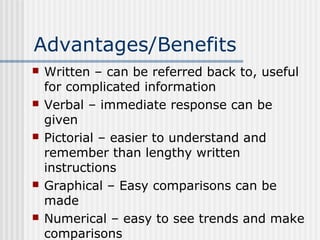
Advantages/Benefits 
 Written – can be referred back to, useful 
for complicated information 
 Verbal – immediate response can be 
given 
 Pictorial – easier to understand and 
remember than lengthy written 
instructions 
 Graphical – Easy comparisons can be 
made 
 Numerical – easy to see trends and make 
comparisons
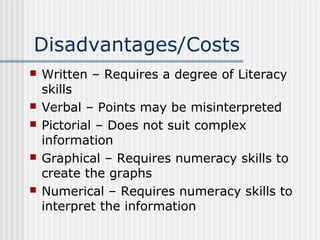
Disadvantages/Costs 
 Written – Requires a degree of Literacy 
skills 
 Verbal – Points may be misinterpreted 
 Pictorial – Does not suit complex 
information 
 Graphical – Requires numeracy skills to 
create the graphs 
 Numerical – Requires numeracy skills to 
interpret the information

34. Market Research

  • 1.
  • 2.
    Types of MarketResearch - Field Research - Desk Research
  • 3.
    DESK RESEARCH (SECONDARYINFO)  Using information which has already been gathered
  • 4.
    Examples of DeskResearch  Newspaper articles  Competitors Websites  Trade journals
  • 5.
     Desk Research– Advantages  Less expensive to gather than Field Research  Information is more readily available  Desk Research – Disadvantages  Information may be out of date  Information may not be specific enough for your needs  Information may also be accessed by competitors
  • 6.
    FIELD RESEARCH (PRIMARYINFO)  The business which collects the information will be the only one with access to it  Information does not exist and is gathered for a specific purpose
  • 7.
     Information gatheredthrough field research is usually qualitative – peoples opinions and views e.g. someone rates the service in a restaurant as very good  These subjective opinions can then be converted into quantitative info – this is factual based on numbers – e.g. 5 people rated the service as very good
  • 8.
    Examples of FieldResearch  Surveys  Interviews  Observations (See Field Research Methods)
  • 9.
     Field Research– Advantages  Information is more likely to meet your needs/for a specific purpose  Information is up-to-date  Field Research – Disadvantages  Costly to gather  Time consuming to gather  People may lie when answering your questions
  • 10.
    Internal Information Much of the information an organisation requires will already be held and created by its various departments.  For example the production figures for February, sales figures for March, absence figures for April
  • 11.
     Internal Sources– Advantages  Unique to the organisation therefore it is relevant  The source is reliable and known  Internal Sources – Disadvantages  Information may be out-dated or incomplete  The cost involved in keeping data on computers
  • 12.
    External Information Information which is found from outwith the organisation.  For example an article in a Sunday Newspaper, competitors website, survey to customers, focus group
  • 13.
     External Sources– Advantages  Easy to obtain, saving time in gathering  The information can be accessed quickly using the internet in some cases  External Sources – Disadvantages  Unreliable sources  Informaton may be out-dated
  • 14.
    Task  Type‘List of marketing research firms’ into Wikipedia  Choose and research one business from the UK and prepare a PowerPoint with info about that business  Include where it started, who started it, who it does research for, what kind of research it does and any other interesting info
  • 15.
    Field Research Methods • Surveys (Questionnaires) • Other Methods
  • 16.
    Methods of Surveying  Personal interview - where individuals are asked questions at home or in the street using a questionnaire.  Advantages: This allows for two-way communication. It allows for points to be clarified. Body Language can be read to add extra information.  Disadvantages: Time consuming to gather information from each interviewee. Expensive to pay interviewers for their time and training.  Telephone survey - where individuals are contacted at home and asked questions.  Advantages: This is a relatively inexpensive form of research as there is no travel costs. The response is immediate.  Disadvantages: People may not like taking part in a survey and hang up. Complicated surveys are unsuitable for this method.
  • 17.
    Methods of Surveying  Postal survey - Where a list of questions is sent out through the post.  Advantages: This is a relatively inexpensive method as it does not require an interviewer.  Disadvantages: Time taken to collect the responses can be slow. It tends to yield a low return rate.  Online survey - Where a list of questions are answered using a website.  Advantages: This is a great way to gather information from a wide geographical area with little cost.  Disadvantages: Only people who have access to computers can complete the survey.
  • 18.
    Methods of Surveying  Street survey - Where people in the street are asked a list of questions.  Advantages: This is a good method for choosing the candidates (target segments) you wan to survey.  Disadvantages: Requires employees to carry out the surveys which could cost extra for the training.
  • 19.
    Other Field Research Methods  Hall Test - where consumers are invited to try a product and give their reactions. It allows qualitative information to be gathered.  Advantages: Researchers are able to collect visual information and reactions to products.  Disadvantages: Consumers may tell you what they think you want to hear.  Observation - where a person watches and records the behaviour of individuals. This provides quantitative information.  Advantages: Researchers are able to collect unbiased information as consumers do not know they are being watched.  Disadvantages: You cannot gain verbal or written responses from those observed.
  • 20.
    Other Field Research Methods  Focus Groups – Involves specially selected groups of people. Usually led by an experienced chairperson who will encourage discussion. It allows for opinions, attitudes and feelings to be gathered.  Advantages: Researchers are able to generate a discussion which may yield extra information.  Disadvantages: This extra information can be hard to analyse and decisions may be based on the responses of a small group of people.
  • 21.
    SAMPLING  Thesample group should be made up of people that are representative of all the potential buyers of the product
  • 22.
    CHOOSING A SAMPLE  Quota sampling is a method for selecting survey participants where the business can put a demand on who they want to sample (targeting).  The idea is to select subjects from each segment based on a specified proportion.  For example, an interviewer may be told to sample 200 females and 300 males between the age of 45 and 60.
  • 23.
     Random samplingis where a list of names is randomly generated to survey. Usually picked using computer software.  This means there is no bias shown when selecting participants however the people selected MUST be interviewed.  Unfortunately the software doesn’t reflect the population in proportion
  • 24.
     Stratified RandomSampling is where segments are identified to represent the population. After which a random sample of each segment is taken.  For example, if 60% of the population is female then the researcher will take 60% of the feedback from females
  • 25.
    Types of Information  Written –Letters, reports, questionnaires, forms – whether on paper, e-mail, fax or on the Internet  Verbal – Face to face (meetings, interviews), pager, phone, voice mail, answering machine  Pictorial - Pictures, Videos, Signs, Displays  Graphical - Graphs, Charts, diagrams  Numerical – Figures, Prices, Percentages
  • 26.
    Advantages/Benefits  Written– can be referred back to, useful for complicated information  Verbal – immediate response can be given  Pictorial – easier to understand and remember than lengthy written instructions  Graphical – Easy comparisons can be made  Numerical – easy to see trends and make comparisons
  • 27.
    Disadvantages/Costs  Written– Requires a degree of Literacy skills  Verbal – Points may be misinterpreted  Pictorial – Does not suit complex information  Graphical – Requires numeracy skills to create the graphs  Numerical – Requires numeracy skills to interpret the information