El Pretérito
y
El Imperfecto
The Formula - Preterit
• When dealing with verbs that end in –ar, -er, and –ir, they
each look slightly different.
• Ejemplo: cantar pretérito (yo): cante
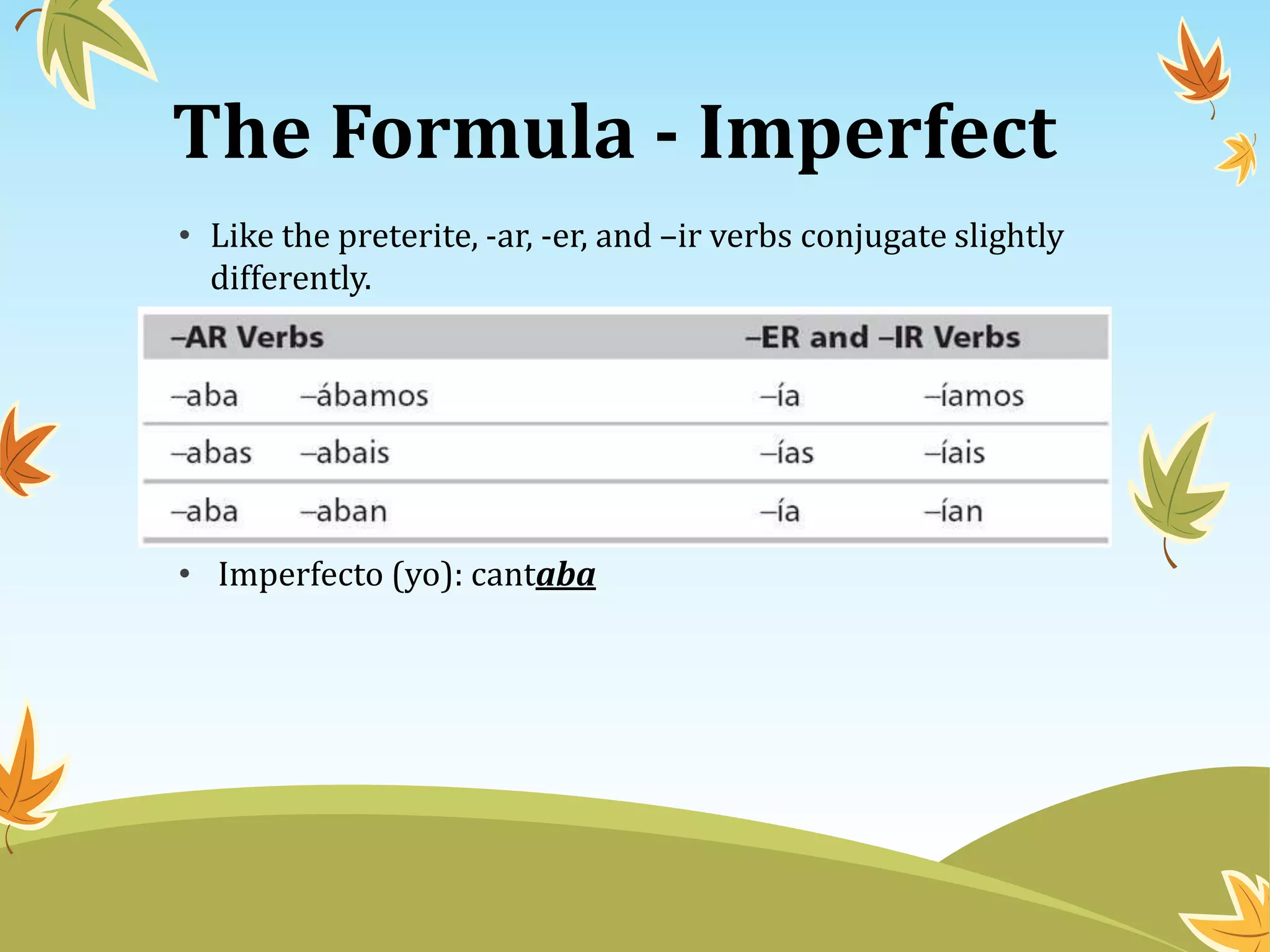
The Formula - Imperfect
• Like the preterite, -ar, -er, and –ir verbs conjugate slightly
differently.
• Imperfecto (yo): cantaba
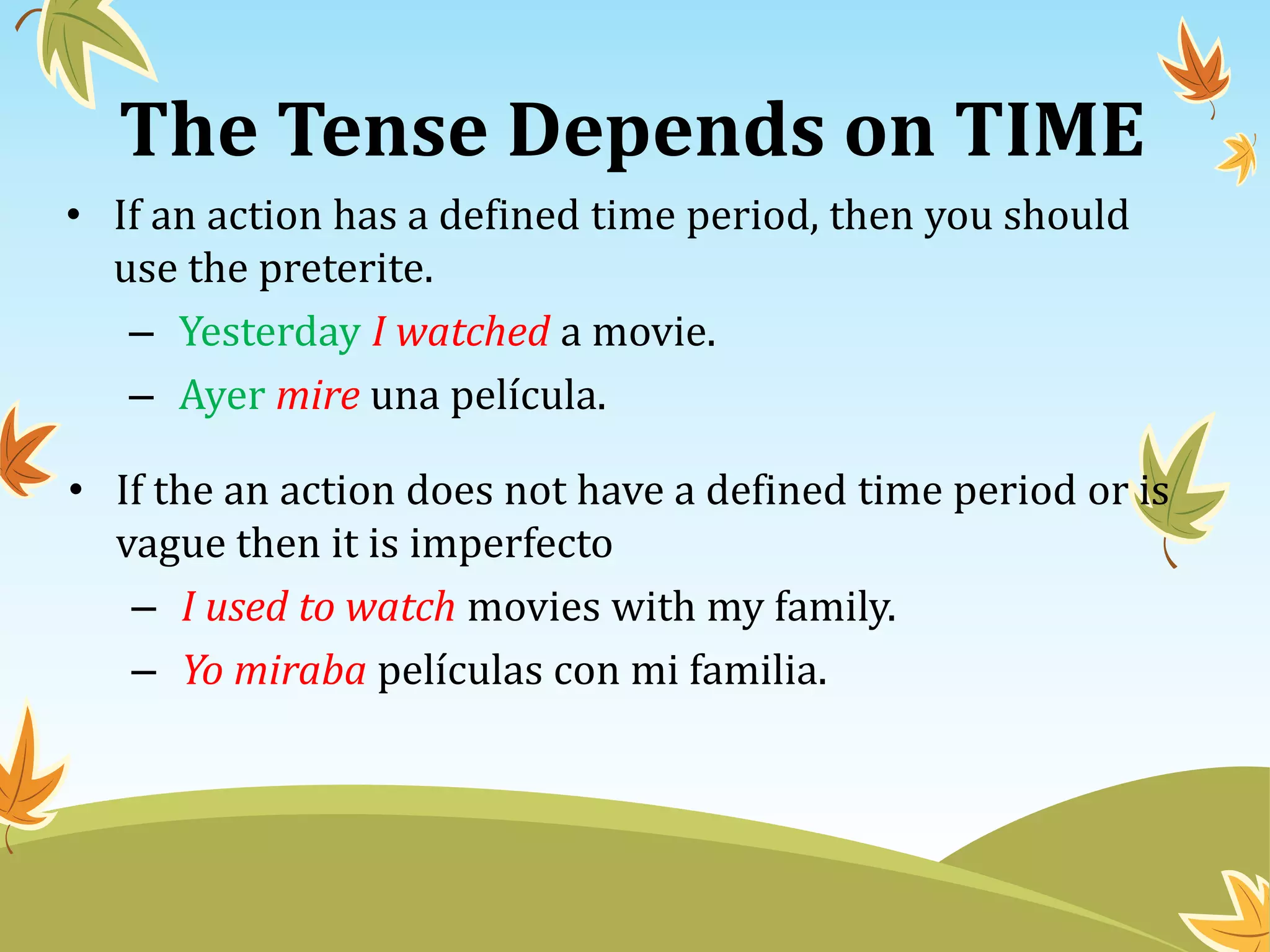
The Tense Depends on TIME
• If the an action does not have a defined time period or is
vague then it is imperfecto
– I used to watch movies with my family.
– Yo miraba películas con mi familia.
• If an action has a defined time period, then you should
use the preterite.
– Yesterday I watched a movie.
– Ayer mire una película.
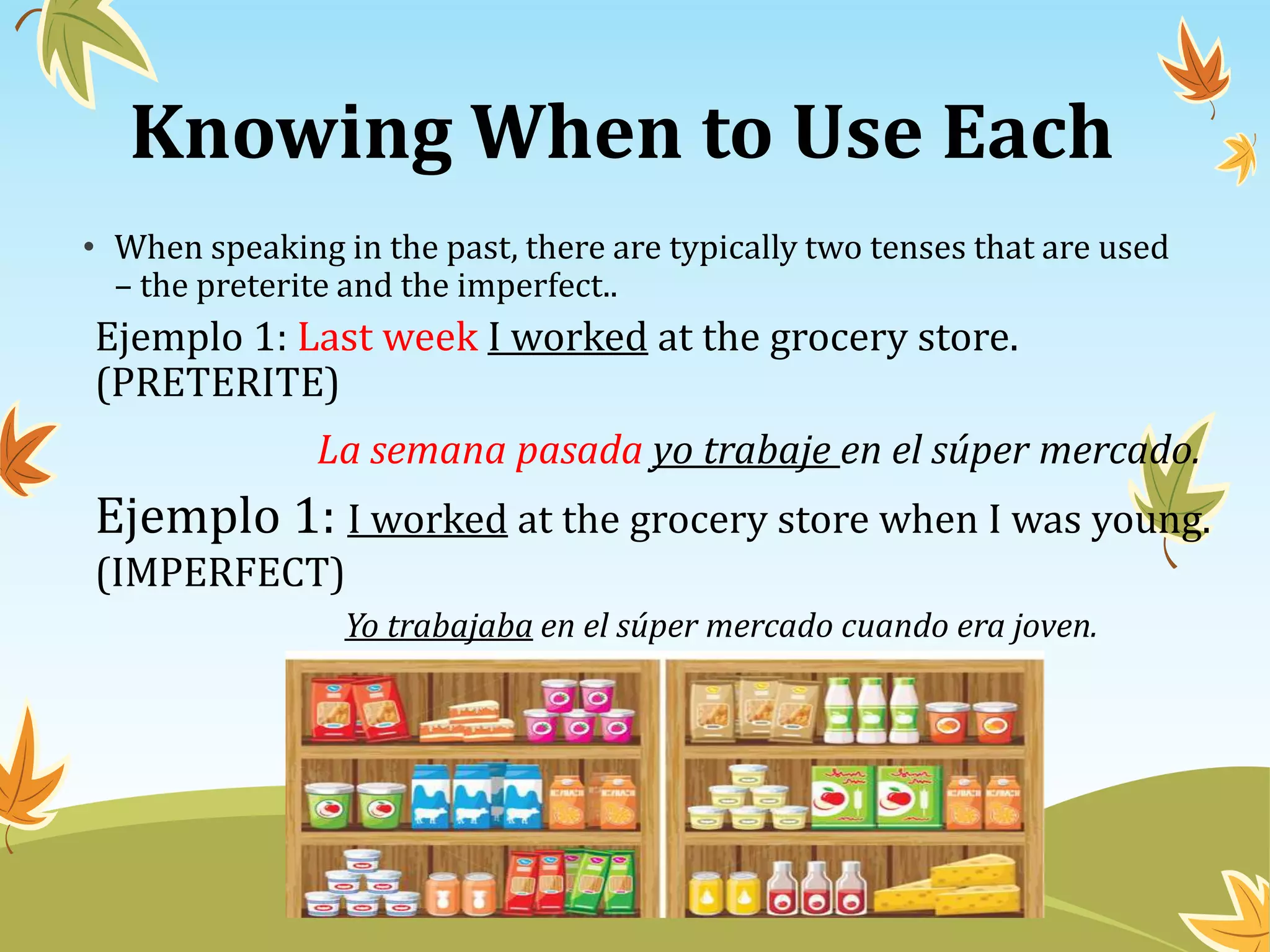
Knowing When to Use Each
• When speaking in the past, there are typically two tenses that are used
– the preterite and the imperfect..
Ejemplo 1: Last week I worked at the grocery store.
(PRETERITE)
La semana pasada yo trabaje en el súper mercado.
Ejemplo 1: I worked at the grocery store when I was young.
(IMPERFECT)
Yo trabajaba en el súper mercado cuando era joven.
Questions
• When might you use these tenses in the real world?
• Can these tenses be used interchangeably?
• Does every verb follow the exact formula when dealing
with the imperfect?
They can be used together too!
• I was cleaning my car when suddenly came the rain.
Yo limpiaba mi carro cuando de repente llego la lluvia.
The beginning of the rain happened DURING the cleaning of the car.
C l e a n i n g t h e c a r
The beginning
of rain
Other Uses for the Imperfect
• Setting up a situation
• John was walking across the street when…
• John caminaba a través de la calle cuando…
• Speaking in the past about stuff that “used” to happen
• I used to walk to school every day.
• Yo caminaba a mi escuela cada día.
• Conveying emotion while specific events are happening
• I was happy when John won the game
• Estaba (estar) alegre cuando John gano el partido.
Questions
• What would a heavy use of the imperfect by a speaker
mean?
• If you were asked about when you were a baby, what tense
would you use?
• If you were writing a fairy tale, would you start by using a
lot of imperfect or preterit to set the story up?
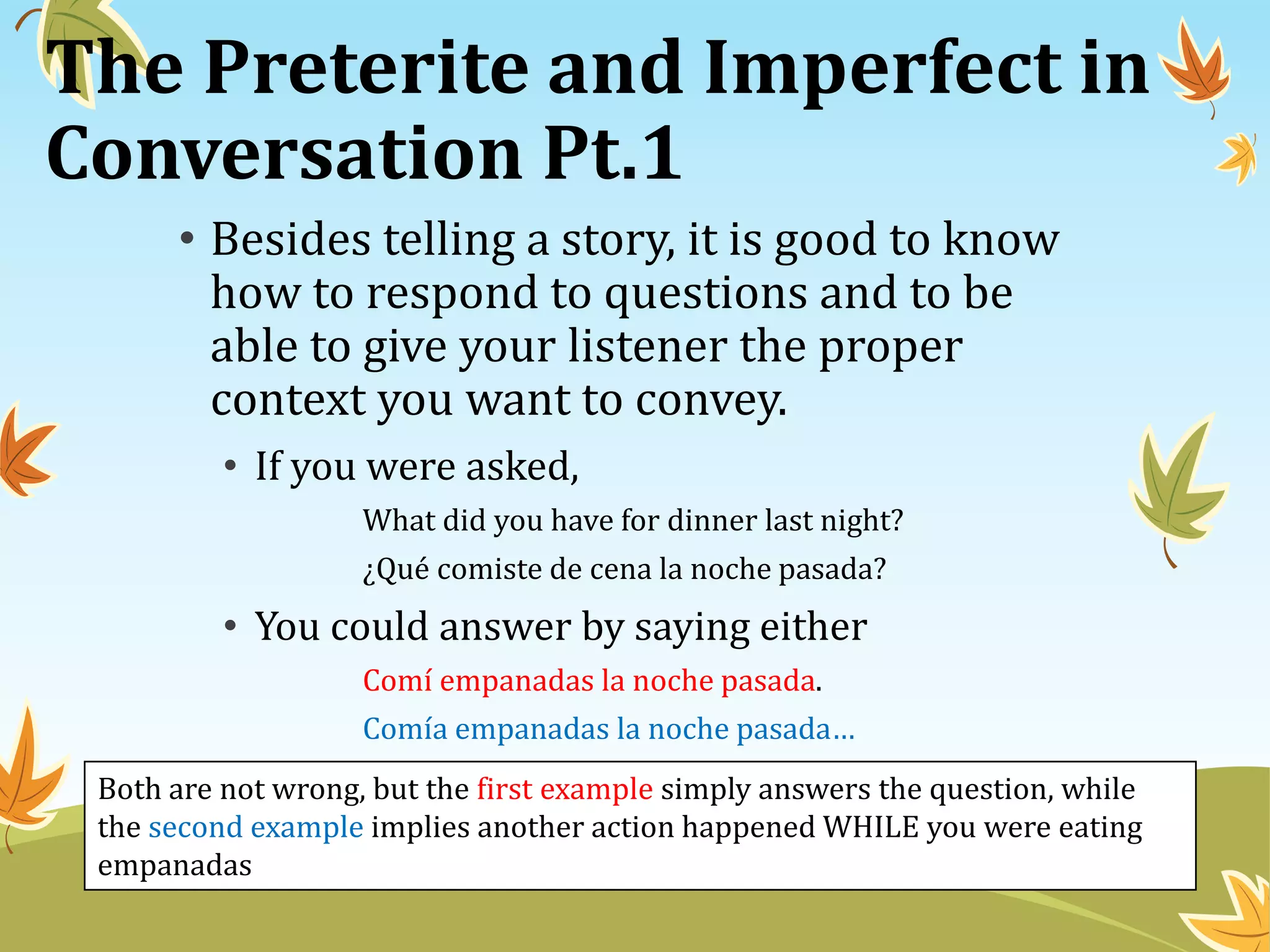
The Preterite and Imperfect in
Conversation Pt.1
• Besides telling a story, it is good to know
how to respond to questions and to be
able to give your listener the proper
context you want to convey.
• If you were asked,
What did you have for dinner last night?
¿Qué comiste de cena la noche pasada?
• You could answer by saying either
Comí empanadas la noche pasada.
Comía empanadas la noche pasada…
Both are not wrong, but the first example simply answers the question, while
the second example implies another action happened WHILE you were eating
empanadas
• As a speaker, you could also ASK questions using these
tenses, but remember that the tenses do change what you
are asking
• ¿Te gustó la comida? (Did you like the food?)...
This simply is a simple question
• ¿Te gustaba la comida…? (Did you enjoy food)
… This now implies a non specific non singular
time.
Conversations Pt. 2
Questions
• How many specific events can fit into an ongoing event?
• Are there multiple ways to answer a question?
• How would you as a lawyer, questioning a witness, ask
about his whereabouts while a crime occurred?
Video Explanation!
https://www.youtube.com/watch?v=xMoIZomZG0Q

El Pretérito y El Imperfecto

  • 1.
  • 2.
    The Formula -Preterit • When dealing with verbs that end in –ar, -er, and –ir, they each look slightly different. • Ejemplo: cantar pretérito (yo): cante
  • 3.
    The Formula -Imperfect • Like the preterite, -ar, -er, and –ir verbs conjugate slightly differently. • Imperfecto (yo): cantaba
  • 4.
    The Tense Dependson TIME • If the an action does not have a defined time period or is vague then it is imperfecto – I used to watch movies with my family. – Yo miraba películas con mi familia. • If an action has a defined time period, then you should use the preterite. – Yesterday I watched a movie. – Ayer mire una película.
  • 5.
    Knowing When toUse Each • When speaking in the past, there are typically two tenses that are used – the preterite and the imperfect.. Ejemplo 1: Last week I worked at the grocery store. (PRETERITE) La semana pasada yo trabaje en el súper mercado. Ejemplo 1: I worked at the grocery store when I was young. (IMPERFECT) Yo trabajaba en el súper mercado cuando era joven.
  • 6.
    Questions • When mightyou use these tenses in the real world? • Can these tenses be used interchangeably? • Does every verb follow the exact formula when dealing with the imperfect?
  • 7.
    They can beused together too! • I was cleaning my car when suddenly came the rain. Yo limpiaba mi carro cuando de repente llego la lluvia. The beginning of the rain happened DURING the cleaning of the car. C l e a n i n g t h e c a r The beginning of rain
  • 8.
    Other Uses forthe Imperfect • Setting up a situation • John was walking across the street when… • John caminaba a través de la calle cuando… • Speaking in the past about stuff that “used” to happen • I used to walk to school every day. • Yo caminaba a mi escuela cada día. • Conveying emotion while specific events are happening • I was happy when John won the game • Estaba (estar) alegre cuando John gano el partido.
  • 9.
    Questions • What woulda heavy use of the imperfect by a speaker mean? • If you were asked about when you were a baby, what tense would you use? • If you were writing a fairy tale, would you start by using a lot of imperfect or preterit to set the story up?
  • 10.
    The Preterite andImperfect in Conversation Pt.1 • Besides telling a story, it is good to know how to respond to questions and to be able to give your listener the proper context you want to convey. • If you were asked, What did you have for dinner last night? ¿Qué comiste de cena la noche pasada? • You could answer by saying either Comí empanadas la noche pasada. Comía empanadas la noche pasada… Both are not wrong, but the first example simply answers the question, while the second example implies another action happened WHILE you were eating empanadas
  • 11.
    • As aspeaker, you could also ASK questions using these tenses, but remember that the tenses do change what you are asking • ¿Te gustó la comida? (Did you like the food?)... This simply is a simple question • ¿Te gustaba la comida…? (Did you enjoy food) … This now implies a non specific non singular time. Conversations Pt. 2
  • 12.
    Questions • How manyspecific events can fit into an ongoing event? • Are there multiple ways to answer a question? • How would you as a lawyer, questioning a witness, ask about his whereabouts while a crime occurred?
  • 13.