Scoping
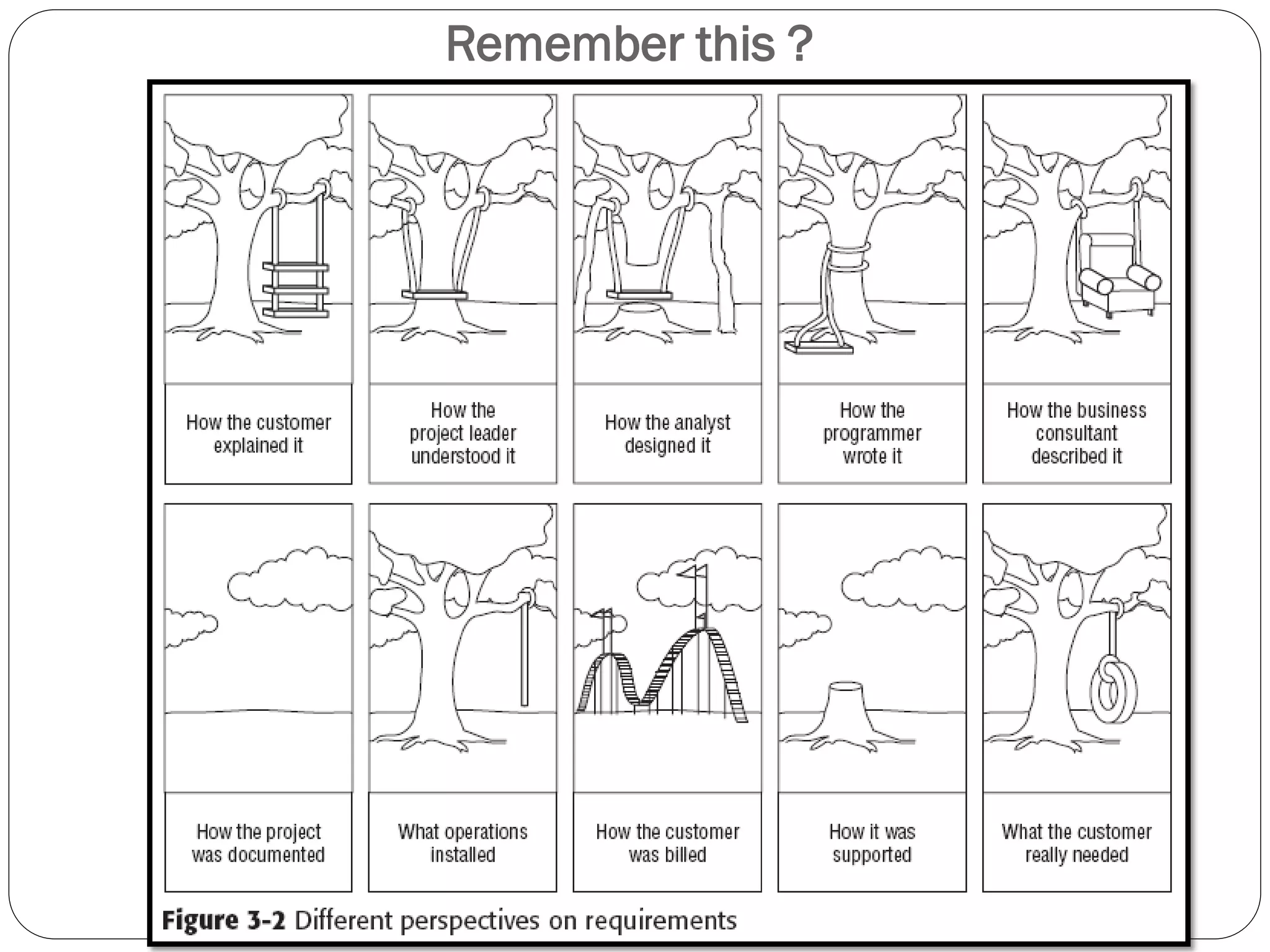
Remember this ?
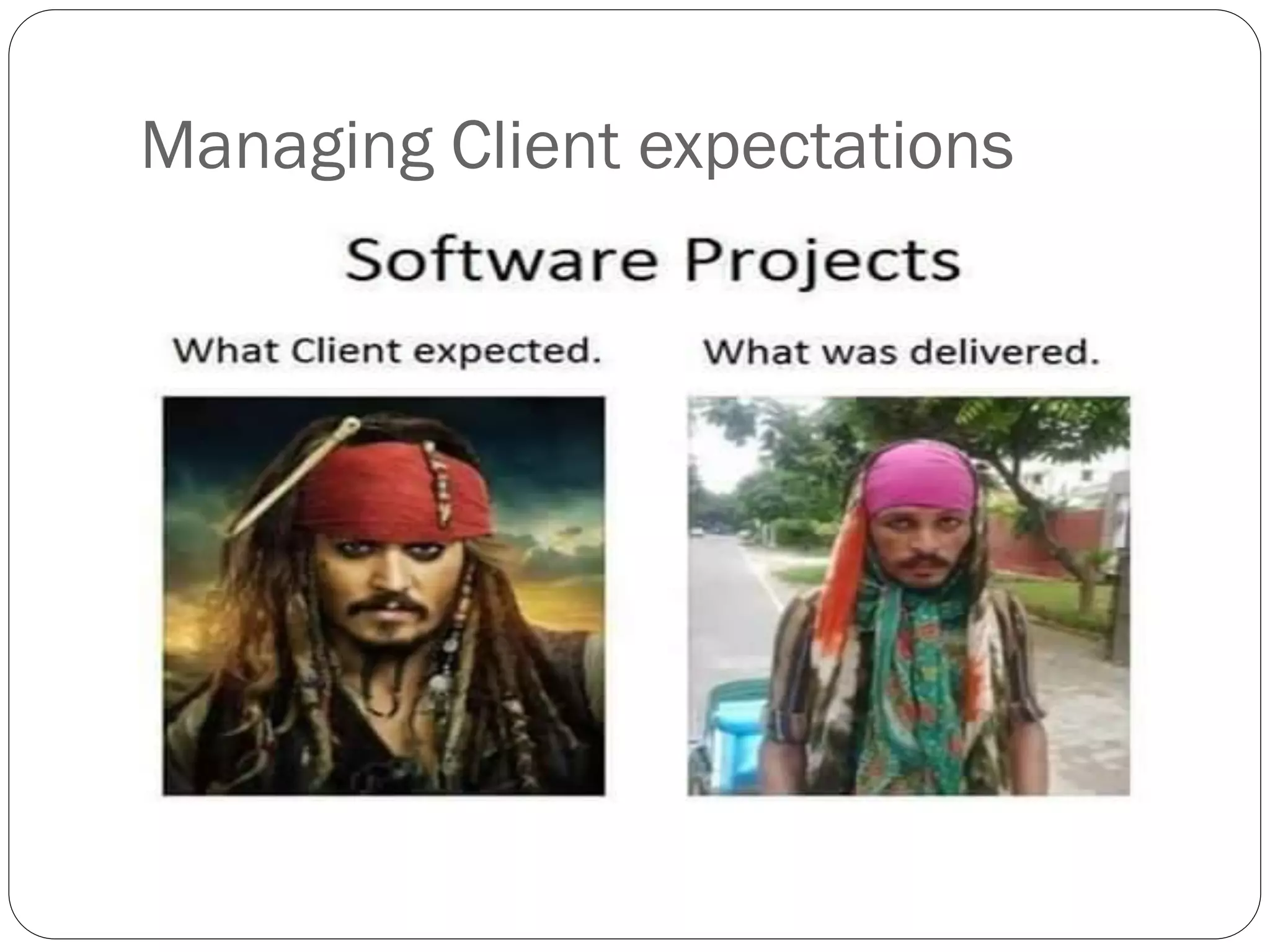
Managing Client expectations
1. Conditions of Satisfaction – (COS)
1. Conditions of Satisfaction
 You should begin every project with a communications tool
called Conditions of Satisfaction (COS).
 The COS is a structured conversation between the client (the
requestor) and the likely project manager (the provider).
 The deliverable from the COS is a one-page document (with
attachments) called the Project Overview Statement (POS).
The process of developing the COS
1. Request. A request is made.
2. Clarification. The provider explains what he or she heard as the
request.This conversation continues until the requestor is satisfied
that the provider clearly understands the request. Both parties have
now established a clear understanding of the request in the language
of the requestor.
3. Response. The provider states what he or she is capable of doing to
satisfy the request.
4. Agreement. The requestor restates what he or she understands the
provider will provide.The conversation continues until the provider is
satisfied that the requestor clearly understands what is being
provided.At this point, both parties have established a clear
understanding of what is being provided in the language of the
provider.
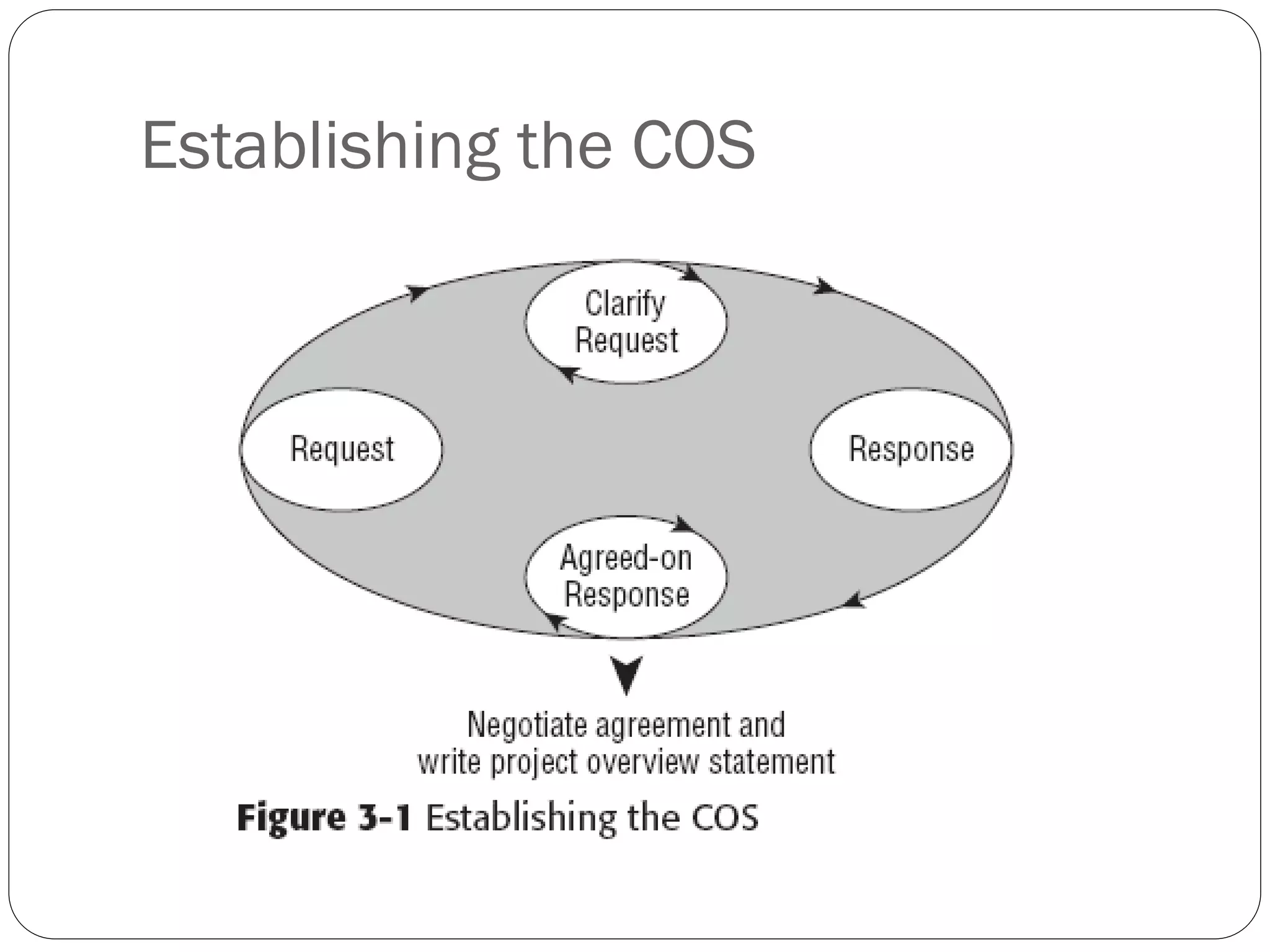
Establishing the COS
2. Planning and Conducting the Project
Planning Meeting
 There are a variety of ways to scope a project.At one
extreme is a formal multiple-day meeting and at the other
extreme is scoping on the back of a napkin over a cup of
coffee at the local coffee stand. Both extremes and all of the
variants in between are valid. It all depends.
 Purpose
 Attendees – (Client, PM and facilitator)
 Agenda
 Deliverables – (COS, Req Doc, Best fit PMLC, POS)
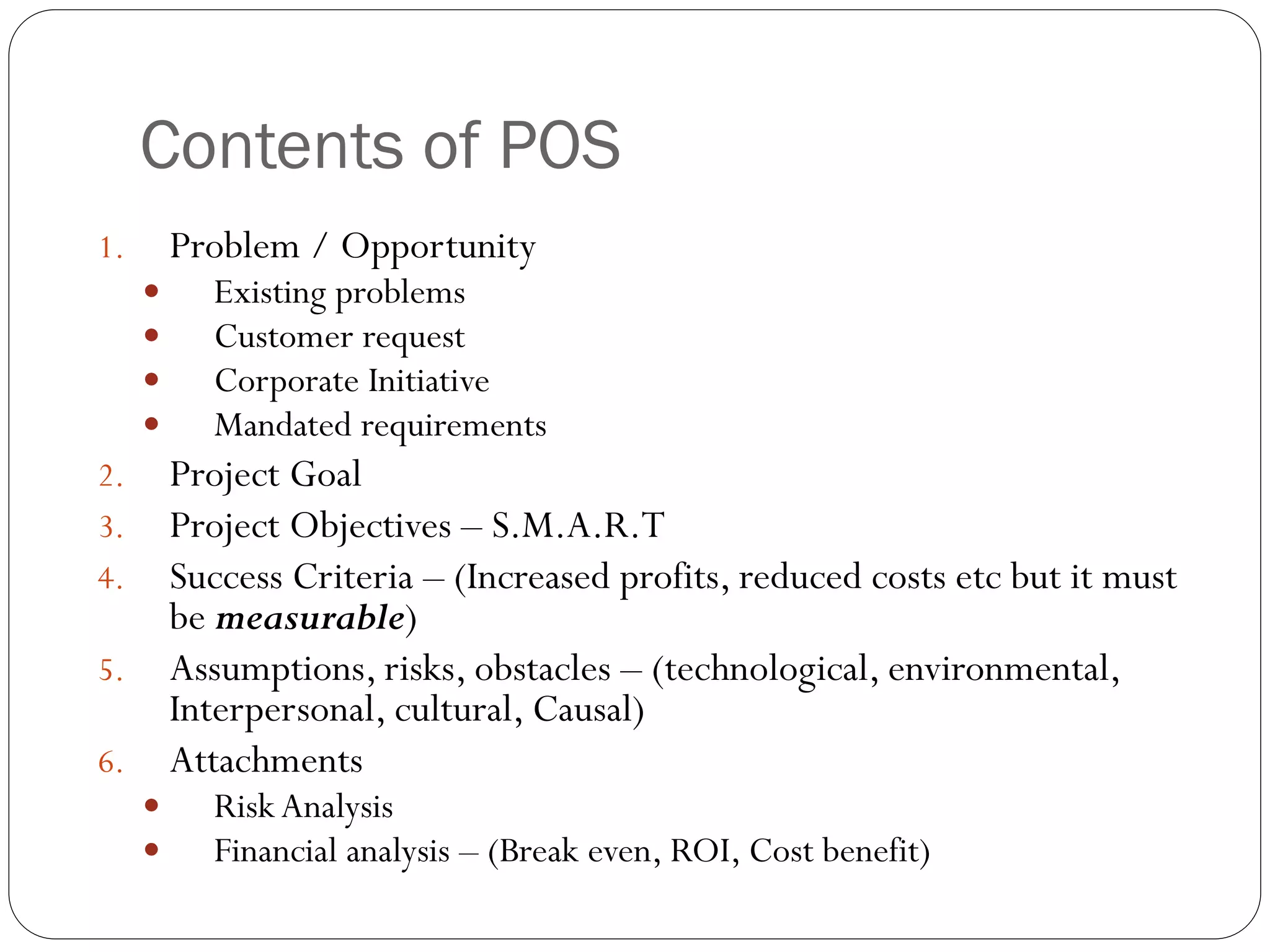
Contents of POS
1. Problem / Opportunity
 Existing problems
 Customer request
 Corporate Initiative
 Mandated requirements
2. Project Goal
3. Project Objectives – S.M.A.R.T
4. Success Criteria – (Increased profits, reduced costs etc but it must
be measurable)
5. Assumptions, risks, obstacles – (technological, environmental,
Interpersonal, cultural, Causal)
6. Attachments
 Risk Analysis
 Financial analysis – (Break even, ROI, Cost benefit)
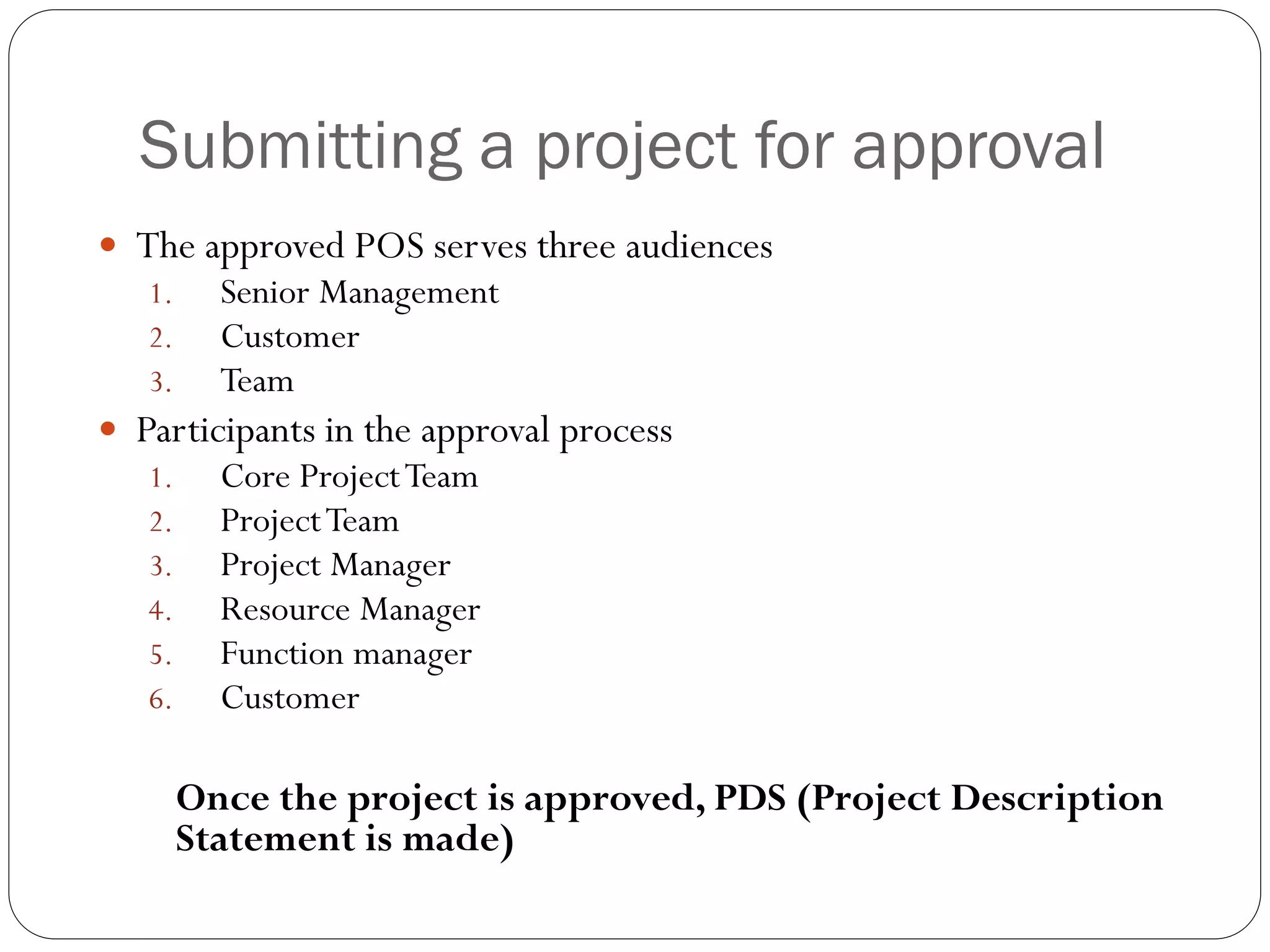
Submitting a project for approval
 The approved POS serves three audiences
1. Senior Management
2. Customer
3. Team
 Participants in the approval process
1. Core ProjectTeam
2. ProjectTeam
3. Project Manager
4. Resource Manager
5. Function manager
6. Customer
Once the project is approved, PDS (Project Description
Statement is made)
Case Study
 Prepare a POS for the project

3. traditional project management - ch3

  • 1.
  • 2.
  • 3.
  • 4.
    1. Conditions ofSatisfaction – (COS)
  • 5.
    1. Conditions ofSatisfaction  You should begin every project with a communications tool called Conditions of Satisfaction (COS).  The COS is a structured conversation between the client (the requestor) and the likely project manager (the provider).  The deliverable from the COS is a one-page document (with attachments) called the Project Overview Statement (POS).
  • 6.
    The process ofdeveloping the COS 1. Request. A request is made. 2. Clarification. The provider explains what he or she heard as the request.This conversation continues until the requestor is satisfied that the provider clearly understands the request. Both parties have now established a clear understanding of the request in the language of the requestor. 3. Response. The provider states what he or she is capable of doing to satisfy the request. 4. Agreement. The requestor restates what he or she understands the provider will provide.The conversation continues until the provider is satisfied that the requestor clearly understands what is being provided.At this point, both parties have established a clear understanding of what is being provided in the language of the provider.
  • 7.
  • 8.
    2. Planning andConducting the Project Planning Meeting  There are a variety of ways to scope a project.At one extreme is a formal multiple-day meeting and at the other extreme is scoping on the back of a napkin over a cup of coffee at the local coffee stand. Both extremes and all of the variants in between are valid. It all depends.  Purpose  Attendees – (Client, PM and facilitator)  Agenda  Deliverables – (COS, Req Doc, Best fit PMLC, POS)
  • 9.
    Contents of POS 1.Problem / Opportunity  Existing problems  Customer request  Corporate Initiative  Mandated requirements 2. Project Goal 3. Project Objectives – S.M.A.R.T 4. Success Criteria – (Increased profits, reduced costs etc but it must be measurable) 5. Assumptions, risks, obstacles – (technological, environmental, Interpersonal, cultural, Causal) 6. Attachments  Risk Analysis  Financial analysis – (Break even, ROI, Cost benefit)
  • 10.
    Submitting a projectfor approval  The approved POS serves three audiences 1. Senior Management 2. Customer 3. Team  Participants in the approval process 1. Core ProjectTeam 2. ProjectTeam 3. Project Manager 4. Resource Manager 5. Function manager 6. Customer Once the project is approved, PDS (Project Description Statement is made)
  • 11.
    Case Study  Preparea POS for the project