BY: BEATRIZ GARCIA MURCIA
     6ºB E.P SAN JORGE 2012
HEALTH AND ILLNESS
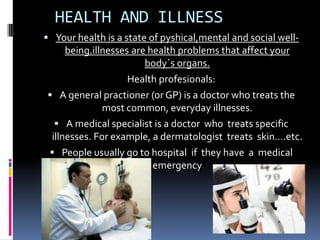
 Your health is a state of pyshical,mental and social well-
     being.illnesses are health problems that affect your
                        body´s organs.
                    Health profesionals:
 A general practioner (or GP) is a doctor who treats the
              most common, everyday illnesses.
   A medical specialist is a doctor who treats specific
 illnesses. For example, a dermatologist treats skin….etc.
 People usually go to hospital if they have a medical
                          emergency
Types of illnesses
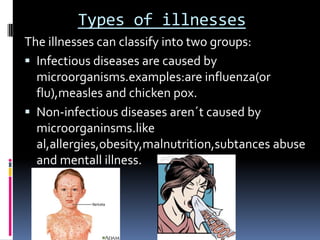
The illnesses can classify into two groups:
 Infectious diseases are caused by
  microorganisms.examples:are influenza(or
  flu),measles and chicken pox.
 Non-infectious diseases aren´t caused by
  microorganinsms.like
  al,allergies,obesity,malnutrition,subtances abuse
  and mentall illness.
Infectious diseases
Bacteria,viruses,protozoans and fungi are common microorganisms.Some of
them are not harmful to humans,but others can cause infectious diseases.
1.   Bacteria can cause diseases like tuberculosis,tetanus or salmonellosis. We
     can treat some bacterial infections with medicines called antibiotics.
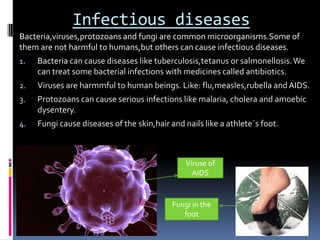
2.   Viruses are harmmful to human beings. Like: flu,measles,rubella and AIDS.
3.   Protozoans can cause serious infections like malaria, cholera and amoebic
     dysentery.
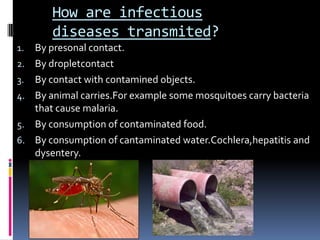
4.   Fungi cause diseases of the skin,hair and nails like a athlete´s foot.


                                                Viruse of
                                                  AIDS


                                            Fungi in the
                                               foot
How are infectious
        diseases transmited?
1.   By presonal contact.
2.   By dropletcontact
3.   By contact with contamined objects.
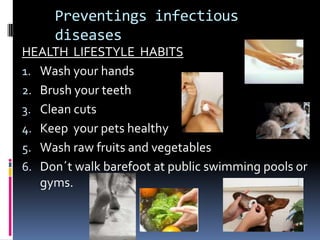
4.   By animal carries.For example some mosquitoes carry bacteria
     that cause malaria.
5.   By consumption of contaminated food.
6.   By consumption of cantaminated water.Cochlera,hepatitis and
     dysentery.
Preventings infectious
     diseases
HEALTH LIFESTYLE HABITS
1. Wash your hands
2. Brush your teeth
3. Clean cuts
4. Keep your pets healthy
5. Wash raw fruits and vegetables
6. Don´t walk barefoot at public swimming pools or
   gyms.
Vaccines
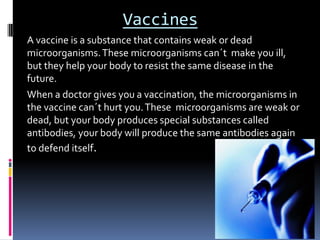
A vaccine is a substance that contains weak or dead
microorganisms. These microorganisms can´t make you ill,
but they help your body to resist the same disease in the
future.
When a doctor gives you a vaccination, the microorganisms in
the vaccine can´t hurt you. These microorganisms are weak or
dead, but your body produces special substances called
antibodies, your body will produce the same antibodies again
to defend itself.
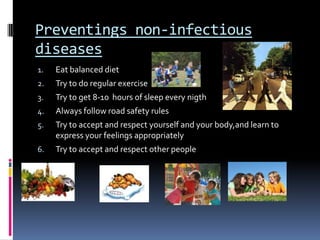
Preventings non-infectious
diseases
1.   Eat balanced diet
2.   Try to do regular exercise
3.   Try to get 8-10 hours of sleep every nigth
4.   Always follow road safety rules
5.   Try to accept and respect yourself and your body,and learn to
     express your feelings appropriately
6.   Try to accept and respect other people
BETTER SAFE
                 THAN SORRY!!!
                      XD


THE   END!!!!!

Project unit 5

  • 1.
    BY: BEATRIZ GARCIAMURCIA 6ºB E.P SAN JORGE 2012
  • 2.
    HEALTH AND ILLNESS Your health is a state of pyshical,mental and social well- being.illnesses are health problems that affect your body´s organs. Health profesionals:  A general practioner (or GP) is a doctor who treats the most common, everyday illnesses.  A medical specialist is a doctor who treats specific illnesses. For example, a dermatologist treats skin….etc.  People usually go to hospital if they have a medical emergency
  • 3.
    Types of illnesses Theillnesses can classify into two groups:  Infectious diseases are caused by microorganisms.examples:are influenza(or flu),measles and chicken pox.  Non-infectious diseases aren´t caused by microorganinsms.like al,allergies,obesity,malnutrition,subtances abuse and mentall illness.
  • 4.
    Infectious diseases Bacteria,viruses,protozoans andfungi are common microorganisms.Some of them are not harmful to humans,but others can cause infectious diseases. 1. Bacteria can cause diseases like tuberculosis,tetanus or salmonellosis. We can treat some bacterial infections with medicines called antibiotics. 2. Viruses are harmmful to human beings. Like: flu,measles,rubella and AIDS. 3. Protozoans can cause serious infections like malaria, cholera and amoebic dysentery. 4. Fungi cause diseases of the skin,hair and nails like a athlete´s foot. Viruse of AIDS Fungi in the foot
  • 5.
    How are infectious diseases transmited? 1. By presonal contact. 2. By dropletcontact 3. By contact with contamined objects. 4. By animal carries.For example some mosquitoes carry bacteria that cause malaria. 5. By consumption of contaminated food. 6. By consumption of cantaminated water.Cochlera,hepatitis and dysentery.
  • 6.
    Preventings infectious diseases HEALTH LIFESTYLE HABITS 1. Wash your hands 2. Brush your teeth 3. Clean cuts 4. Keep your pets healthy 5. Wash raw fruits and vegetables 6. Don´t walk barefoot at public swimming pools or gyms.
  • 7.
    Vaccines A vaccine isa substance that contains weak or dead microorganisms. These microorganisms can´t make you ill, but they help your body to resist the same disease in the future. When a doctor gives you a vaccination, the microorganisms in the vaccine can´t hurt you. These microorganisms are weak or dead, but your body produces special substances called antibodies, your body will produce the same antibodies again to defend itself.
  • 8.
    Preventings non-infectious diseases 1. Eat balanced diet 2. Try to do regular exercise 3. Try to get 8-10 hours of sleep every nigth 4. Always follow road safety rules 5. Try to accept and respect yourself and your body,and learn to express your feelings appropriately 6. Try to accept and respect other people
  • 9.
    BETTER SAFE THAN SORRY!!! XD THE END!!!!!