MARKETING
APPLICATION
Session 3
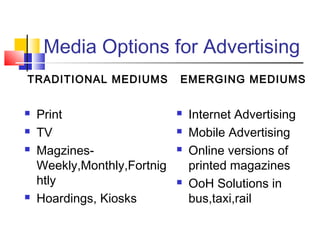
Media Options for Advertising
TRADITIONAL MEDIUMS
 Print
 TV
 Magzines-
Weekly,Monthly,Fortnig
htly
 Hoardings, Kiosks
EMERGING MEDIUMS
 Internet Advertising
 Mobile Advertising
 Online versions of
printed magazines
 OoH Solutions in
bus,taxi,rail
3 - 3
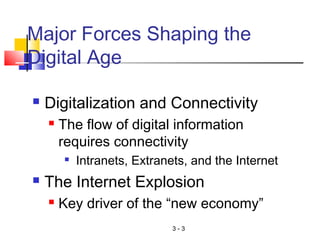
Major Forces Shaping the
Digital Age
 Digitalization and Connectivity
 The flow of digital information
requires connectivity

Intranets, Extranets, and the Internet
 The Internet Explosion
 Key driver of the “new economy”
3 - 4
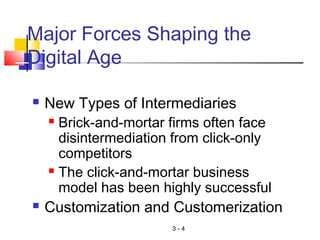
 New Types of Intermediaries
 Brick-and-mortar firms often face
disintermediation from click-only
competitors
 The click-and-mortar business
model has been highly successful
 Customization and Customerization
Major Forces Shaping the
Digital Age
3 - 5
Marketing Strategy in the
Digital Age
 E-business:
 uses electronic means and platforms
to conduct business.
 E-commerce:
 facilitates the sale of products and
services by electronic means.
3 - 6
Marketing Strategy in the
Digital Age
 E-marketing:
 Includes efforts that inform,
communicate, promote, and sell
products and services over the
Internet.
 E-commerce benefits both buyers
and sellers
3 - 7
Marketing Strategy in the
Digital Age
 Buyer Benefits of E-Commerce:
 Convenience
 Easy and private
 Greater product access/selection
 Access to comparative information
 Interactive and immediate
3 - 8
Marketing Strategy in the
Digital Age
 Seller Benefits of E-Commerce:
 Relationship building
 Reduced costs
 Increased speed and efficiency
 Flexibility
 Global access, global reach
Digital Media in Perspective…
Digital media refers to electronic media which works on binary
codes. Computing is based on binary codes.
Examples of Digital Mediums
 Internet or World Wide Web
 Mobile telephone
 E commerce portals
 Online Gaming
 Online editions of print materials
 Online ticket Booking
Internet & Mobile Applications
are gaining prominence…
 Increased Penetration of computing device
 Infrastructure Improvement (Broadband &
Better Connectivity)
 Very high penetration of mobile phones –
Masses as well as Classes (316 Mn)
 Internet is global medium, hence faster
acceptance
 Usage of internet on rise
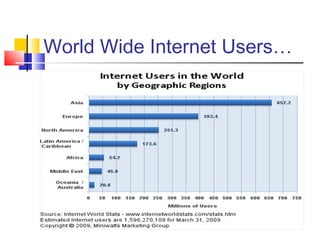
World Wide Internet Users…
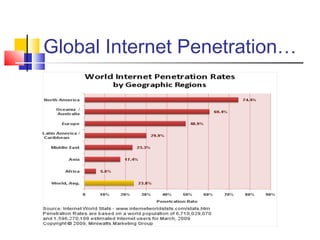
Global Internet Penetration…
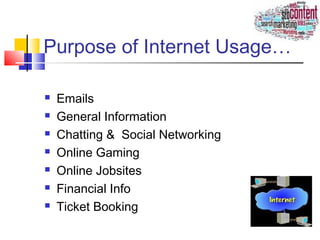
Purpose of Internet Usage…
 Emails
 General Information
 Chatting & Social Networking
 Online Gaming
 Online Jobsites
 Financial Info
 Ticket Booking
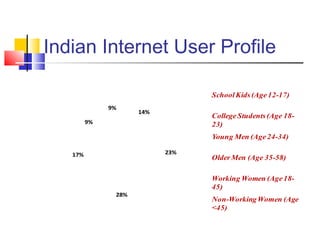
Indian Internet User Profile
14%
23%
28%
17%
9%
9%
SchoolKids (Age12-17)
College Students(Age 18-
23)
Young Men (Age24-34)
Older Men (Age 35-58)
Working Women (Age18-
45)
Non-WorkingWomen (Age
<45)
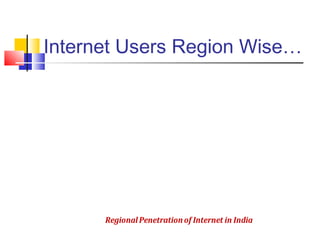
Internet Users Region Wise…
North,
21%
East,
15%
West,
31%
South,
33%
RegionalPenetrationof Internet in India
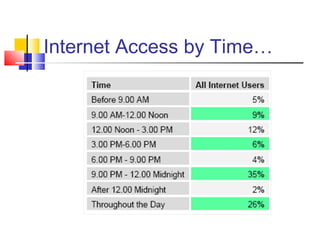
Internet Access by Time…
Positives of Digital
Advertising…
 Interactive
 Cost effective
 Measurable
 Customization to the user profile
 Low spillage
 Database creation
 Global Medium
Digital Ad Options…
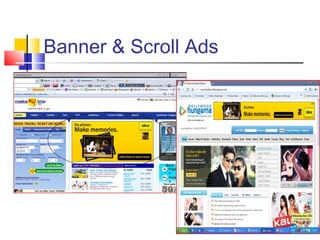
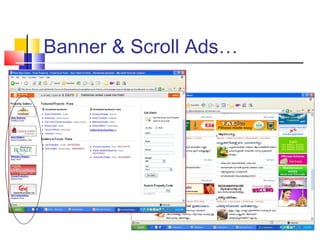
 Banner ads
 Scrolling ads
 Pop Ads
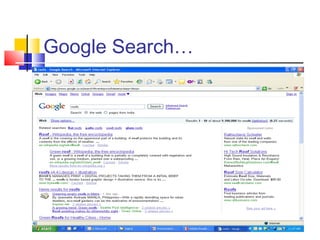
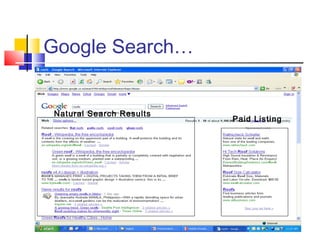
 Search Engine optimization –Google
Search
-Through text Search
- Through Placement
Banner & Scroll Ads
Banner & Scroll Ads…
Google Search…
Google Search…
Paid Listing
Natural Search Results
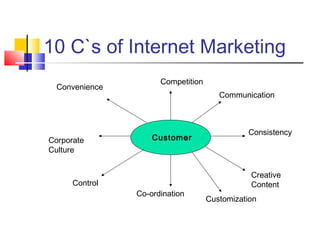
10 C`s of Internet Marketing
Competition
Communication
Consistency
Creative
Content
Customization
Co-ordination
Control
Corporate
Culture
Convenience
Customer
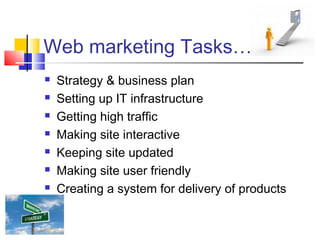
Web marketing Tasks…
 Strategy & business plan
 Setting up IT infrastructure
 Getting high traffic
 Making site interactive
 Keeping site updated
 Making site user friendly
 Creating a system for delivery of products
3 - 25
Promise and Challenges of E-
Commerce
 The Promise of E-Commerce
 The future of B2B E-commerce is
bright
 A few click-only companies may
succeed
 Most companies will integrate online
marketing into the marketing mix
3 - 26
Promise and Challenges of E-
Commerce
 Challenges: The Web’s Darker Side
 Few B2C companies are profitable

Limited exposure, skewed demographics

Navigating the web is often problematic
 Challenge: Legal and Ethical Issues
 Online privacy and security concerns
 Internet fraud, the digital divide, access by
vulnerable or unauthorized groups

3 digital marketing

  • 1.
  • 2.
    Media Options forAdvertising TRADITIONAL MEDIUMS  Print  TV  Magzines- Weekly,Monthly,Fortnig htly  Hoardings, Kiosks EMERGING MEDIUMS  Internet Advertising  Mobile Advertising  Online versions of printed magazines  OoH Solutions in bus,taxi,rail
  • 3.
    3 - 3 MajorForces Shaping the Digital Age  Digitalization and Connectivity  The flow of digital information requires connectivity  Intranets, Extranets, and the Internet  The Internet Explosion  Key driver of the “new economy”
  • 4.
    3 - 4 New Types of Intermediaries  Brick-and-mortar firms often face disintermediation from click-only competitors  The click-and-mortar business model has been highly successful  Customization and Customerization Major Forces Shaping the Digital Age
  • 5.
    3 - 5 MarketingStrategy in the Digital Age  E-business:  uses electronic means and platforms to conduct business.  E-commerce:  facilitates the sale of products and services by electronic means.
  • 6.
    3 - 6 MarketingStrategy in the Digital Age  E-marketing:  Includes efforts that inform, communicate, promote, and sell products and services over the Internet.  E-commerce benefits both buyers and sellers
  • 7.
    3 - 7 MarketingStrategy in the Digital Age  Buyer Benefits of E-Commerce:  Convenience  Easy and private  Greater product access/selection  Access to comparative information  Interactive and immediate
  • 8.
    3 - 8 MarketingStrategy in the Digital Age  Seller Benefits of E-Commerce:  Relationship building  Reduced costs  Increased speed and efficiency  Flexibility  Global access, global reach
  • 9.
    Digital Media inPerspective… Digital media refers to electronic media which works on binary codes. Computing is based on binary codes. Examples of Digital Mediums  Internet or World Wide Web  Mobile telephone  E commerce portals  Online Gaming  Online editions of print materials  Online ticket Booking
  • 10.
    Internet & MobileApplications are gaining prominence…  Increased Penetration of computing device  Infrastructure Improvement (Broadband & Better Connectivity)  Very high penetration of mobile phones – Masses as well as Classes (316 Mn)  Internet is global medium, hence faster acceptance  Usage of internet on rise
  • 11.
  • 12.
  • 13.
    Purpose of InternetUsage…  Emails  General Information  Chatting & Social Networking  Online Gaming  Online Jobsites  Financial Info  Ticket Booking
  • 14.
    Indian Internet UserProfile 14% 23% 28% 17% 9% 9% SchoolKids (Age12-17) College Students(Age 18- 23) Young Men (Age24-34) Older Men (Age 35-58) Working Women (Age18- 45) Non-WorkingWomen (Age <45)
  • 15.
    Internet Users RegionWise… North, 21% East, 15% West, 31% South, 33% RegionalPenetrationof Internet in India
  • 16.
  • 17.
    Positives of Digital Advertising… Interactive  Cost effective  Measurable  Customization to the user profile  Low spillage  Database creation  Global Medium
  • 18.
    Digital Ad Options… Banner ads  Scrolling ads  Pop Ads  Search Engine optimization –Google Search -Through text Search - Through Placement
  • 19.
  • 20.
  • 21.
  • 22.
  • 23.
    10 C`s ofInternet Marketing Competition Communication Consistency Creative Content Customization Co-ordination Control Corporate Culture Convenience Customer
  • 24.
    Web marketing Tasks… Strategy & business plan  Setting up IT infrastructure  Getting high traffic  Making site interactive  Keeping site updated  Making site user friendly  Creating a system for delivery of products
  • 25.
    3 - 25 Promiseand Challenges of E- Commerce  The Promise of E-Commerce  The future of B2B E-commerce is bright  A few click-only companies may succeed  Most companies will integrate online marketing into the marketing mix
  • 26.
    3 - 26 Promiseand Challenges of E- Commerce  Challenges: The Web’s Darker Side  Few B2C companies are profitable  Limited exposure, skewed demographics  Navigating the web is often problematic  Challenge: Legal and Ethical Issues  Online privacy and security concerns  Internet fraud, the digital divide, access by vulnerable or unauthorized groups